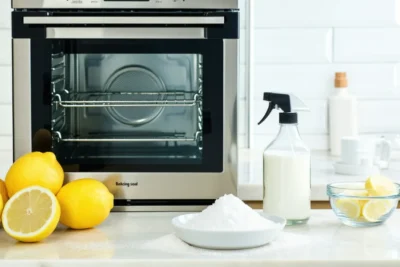
How to Clean a Washing Machine: Complete Guide (Works on All Brands)


How to clean a washing machine properly can transform your laundry results and extend your machine’s lifespan by years. After 18 years cleaning professionally across the UK, I’ve seen hundreds of washing machines that have never been cleaned – and the damage it causes is shocking. Black mould around the seal, limescale buildup in the drum, and that musty smell that transfers to supposedly “clean” clothes. I’ve cleaned everything from student flat machines caked in detergent residue to £2,000 machines in Kensington that still smell because no one’s maintained them.
The good news? Most washing machine problems are completely reversible. In this guide, I’ll show you exactly how to clean your washing machine using methods I’ve refined over nearly two decades. These techniques work on all brands – Bosch, Samsung, LG, Beko, Hotpoint – and use items you likely already have. You’ll eliminate odours, remove buildup, prevent breakdowns, and get your machine working like it did when new.
What you’ll learn:
- Complete deep cleaning method (15-20 minutes active time)
- How to clean every component: drum, seal, filter, detergent drawer
- Natural vs chemical cleaners – when to use each
- Brand-specific drum clean programmes
- Troubleshooting persistent smells and issues
- Maintenance schedule to keep it fresh
Quick Summary
Time needed: 15-20 minutes active work, 90 minutes total
Difficulty: Easy – suitable for anyone
You’ll need: White vinegar, bicarbonate of soda, microfibre cloth, old toothbrush
Key takeaway: Regular cleaning every month prevents 90% of washing machine problems and extends machine life by 5+ years
What You'll Need
For a complete washing machine deep clean, gather:
- White vinegar (distilled, clear) – 500ml (about 50p from any supermarket)
- Bicarbonate of soda – 100g (under £1)
- Washing up liquid – small squirt
- Microfibre cloths – 2-3 cloths
- Old toothbrush – for detailed scrubbing
- Small bowl or container – for soaking parts
- Rubber gloves – optional but recommended
- Torch or phone light – for inspecting filter and seal
For stubborn cases:
- Washing machine cleaner tablets – Dettol or Dr. Beckmann (£3-5)
- Limescale remover – for hard water areas
- Mould remover spray – for heavy seal contamination
How to Clean a Washing Machine – Complete Step-by-Step Guide
Step 1 – Clean the Detergent Drawer
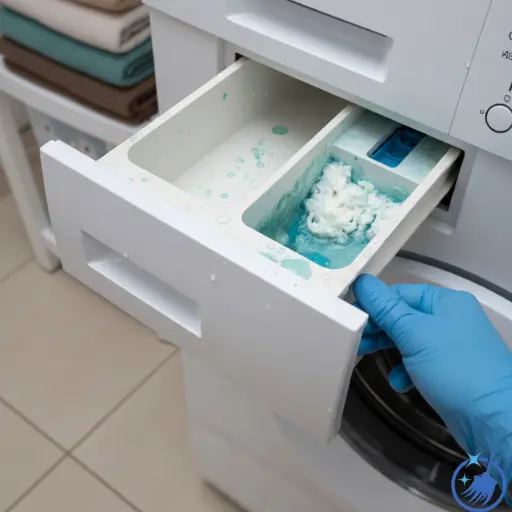
Pull the detergent drawer fully out of your machine. Most drawers have a small tab or button you press to release them completely – check your manual if it won’t come out. You need it fully removed to clean properly.
Run hot water over the drawer to loosen detergent and fabric softener residue. This sticky buildup is what causes that musty smell. Use an old toothbrush to scrub all compartments, paying special attention to the fabric softener section where sludge accumulates.
Fill a bowl with hot water and add 2 tablespoons of white vinegar. Soak the drawer for 10 minutes whilst you work on other parts. The vinegar dissolves mineral deposits and kills bacteria.
Why this matters: The detergent drawer is where bacteria thrive in damp, soap-filled conditions. This contamination transfers directly to your clothes with every wash.
Step 2 – Clean the Detergent Drawer Housing
Whilst the drawer soaks, tackle the housing where it sits. This area accumulates just as much grime but people always forget it.
Use your torch to inspect inside the drawer cavity. You’ll likely see black mould, detergent residue, or limescale. Spray with a 50/50 mix of white vinegar and water, or apply neat washing up liquid.
Scrub thoroughly with your toothbrush, reaching into all corners and the top of the cavity. Wipe clean with a damp microfibre cloth, then dry completely. Rinse your drawer from earlier, dry it, and replace it.
Step 3 – Clean the Door Seal (Gasket)
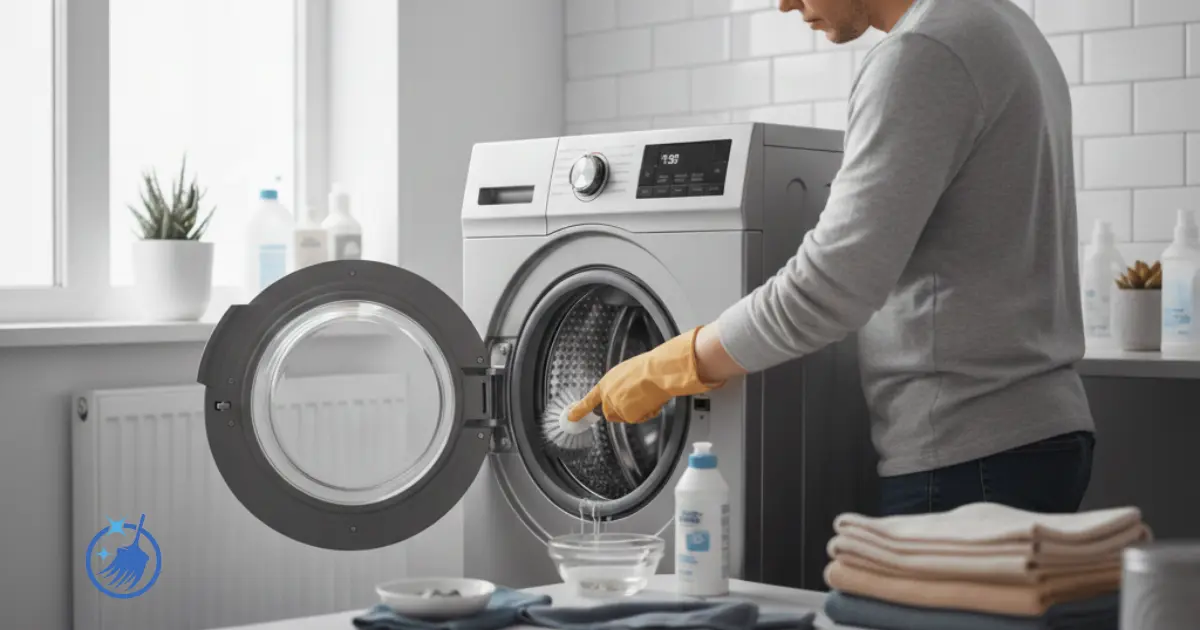
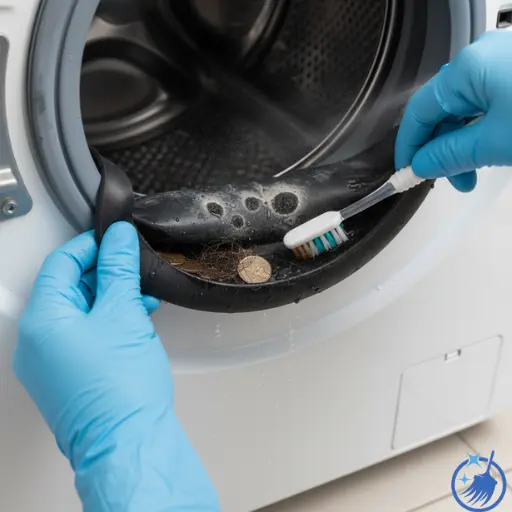
The rubber door seal is the most common source of washing machine odours. Pull back the rubber fold and you’ll likely find trapped water, hair, coins, and in severe cases, black mould.
Spray the entire seal with white vinegar or use a cloth dampened with vinegar solution. Pay particular attention to the bottom fold where water pools. Use your toothbrush to scrub any mould spots – work in a circular motion to lift the contamination.
For stubborn black mould that won’t shift with vinegar, apply a small amount of bleach diluted 1:10 with water. Leave for 5 minutes, scrub again, then rinse thoroughly with clean water. Dry the seal completely with a clean cloth.
Why this matters: The door seal traps moisture and creates the perfect environment for bacteria and mould. This is what causes that distinctive musty smell and the black marks on your clothes.
Step 4 – Clean the Drum with Bicarbonate of Soda
Add 100g (about 4 tablespoons) of bicarbonate of soda directly into the empty drum. Don’t put it in the detergent drawer – it goes straight into the drum.
Run the hottest wash cycle your machine offers – typically 90°C or 95°C. Use a full cycle, not a quick wash. The bicarbonate of soda is mildly abrasive and alkaline, so it scrubs away residue and neutralises odours whilst the hot water kills bacteria.
This cycle takes 90-120 minutes depending on your machine. You don’t need to watch it – go do something else.
Why this step is crucial: Bicarbonate of soda is alkaline, which counteracts the acidic residues from detergents and fabric softeners. It also deodorises naturally without harsh chemicals.
Step 5 – Run a Vinegar Rinse Cycle
After the bicarbonate cycle completes, add 500ml of white vinegar to the detergent drawer (main wash compartment). Run another hot wash cycle – again, the hottest setting available.
The vinegar dissolves limescale, removes soap scum, and kills any remaining bacteria. You might notice a vinegar smell during the cycle – this is normal and will disappear once complete.
When this cycle finishes, run one final rinse cycle with nothing added. This ensures all residue is flushed out and your machine is completely clean.
Step 6 – Clean the Filter
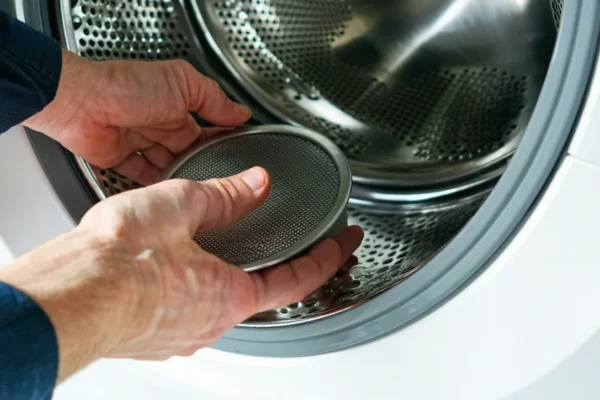
Your washing machine filter catches debris – coins, hair grips, tissues, lint, and small items. It needs cleaning every 1-2 months or the drain pump struggles and eventually fails.
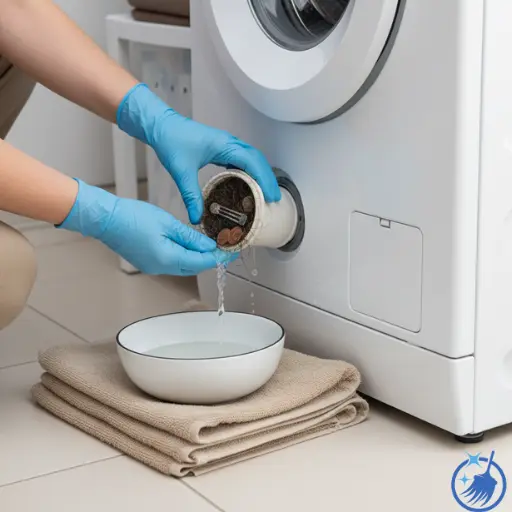
Locate your filter – it’s usually behind a small door panel at the front bottom of the machine. Check your manual if you can’t find it. Front-loaders have them; top-loaders typically don’t.
Place old towels underneath before opening – water will pour out. Slowly unscrew the filter anticlockwise. Have a shallow bowl ready to catch water. Pull the filter out and remove all debris.
Rinse the filter under hot water, scrub with your toothbrush to remove any residue, then replace it by screwing clockwise until tight. Close the panel door.
Why this matters: A blocked filter reduces wash performance, causes drainage issues, and puts strain on the pump. I’ve seen pumps fail after just 3 years because people never clean the filter.
Step 7 – Inspect and Wipe Down the Exterior
Wipe down the entire exterior of the machine with a damp microfibre cloth and washing up liquid. Don’t forget the top, sides, and control panel.
Check around the door frame for detergent splashes or residue. Clean the door glass inside and out – surprisingly, this gets grimy from minerals in the water.
Dry everything with a clean cloth to prevent water marks and maintain the finish.
Common Mistakes to Avoid
- Using too much detergent – Modern machines need far less than you think. Excess detergent doesn’t rinse away and builds up inside the drum, seal, and pipes. It creates the perfect food source for bacteria. Use the recommended amount on the detergent packaging, or even slightly less if you have soft water.
- Never running hot washes – If you only wash at 30°C or 40°C, bacteria and biofilm build up inside the machine. Run at least one 60°C+ wash per week, or a monthly 90°C maintenance wash to kill bacteria.
- Closing the door immediately after washing – This traps moisture inside and creates ideal conditions for mould growth. I always leave my door and drawer open for at least 2 hours after every wash to allow air circulation.
- Ignoring the filter – Most people have never cleaned their washing machine filter. This causes 60% of drainage issues and pump failures I see. Clean it every 1-2 months without fail.
- Using fabric softener in every wash – Fabric softener is the main culprit for buildup in the drawer and seal. It’s thick, sticky, and doesn’t rinse away completely. I recommend using it in 1 out of every 3-4 washes maximum, or switching to white vinegar (50ml in the fabric softener compartment) as a natural alternative.
- Mixing vinegar and bleach – Never use these together in a cleaning session. The chemical reaction creates toxic chlorine gas. If using bleach on mould, rinse thoroughly before doing your vinegar cycle.
- Overloading the machine – Cramming too many clothes in prevents proper rinsing. Detergent residue remains on clothes and builds up in the machine. Fill the drum no more than 3/4 full for a standard load.
How often should you clean your washing machine?
| Cleaning Task | Frequency | Why |
|---|---|---|
| Wipe door seal | After every wash | Prevents mould growth and removes trapped moisture |
| Clean detergent drawer | Monthly | Stops bacterial growth and unpleasant odours |
| Deep clean drum (bicarbonate & vinegar) | Monthly | Removes buildup, kills bacteria, eliminates smells |
| Clean filter | Every 1-2 months | Prevents drainage issues and pump strain |
| Check and clean seal thoroughly | Monthly | Catches mould before it becomes severe |
| Professional service clean | Annually | Checks internal components and hoses |
Special circumstances:
- Hard water areas: Deep clean every 2-3 weeks using descaling products
- Heavy use (daily washes): Deep clean every 2-3 weeks
- Light use (2-3 washes weekly): Deep clean every 6 weeks is acceptable
- After illness in household: Run a 90°C cycle with bleach-based cleaner
Best Products for Cleaning Your Washing Machine
Budget Option (Under £2)
White vinegar and bicarbonate of soda – Available at any supermarket for less than £2 total. This combination handles 95% of cleaning needs. White vinegar dissolves limescale and kills bacteria. Bicarbonate of soda scrubs away residue and neutralises odours. I’ve used this method for 18 years professionally.
Where to buy: Tesco, Sainsbury’s, Asda – own-brand versions work perfectly Cost per clean: Approximately 70p
Mid-Range Option (£3-6)
Dr. Beckmann Service-It Deep Clean – £3.50 at most supermarkets. This is my go-to when a machine hasn’t been cleaned in years or has severe buildup. It’s more powerful than vinegar for heavy limescale and uses enzymes to break down organic residue.
Dettol Washing Machine Cleaner – £4.99 for 5 sachets. Each sachet does one clean. Good for bacterial contamination and gives a fresh smell. Works well in hard water areas.
Where to buy: Available in most UK supermarkets and online Cost per clean: 70p-£1.50
Premium Option (£8-15)
Calgon 3-in-1 – £12 for 75 tablets. Technically a maintenance product rather than a cleaner, but prevents limescale buildup between cleans. I use this in hard water areas (London, parts of the Midlands and South East) where limescale is a constant battle.
Affresh Washing Machine Cleaner – £8.99 for 3 tablets (imported from the US). Very effective for severe odour problems and uses oxygen-based cleaning rather than harsh chemicals.
Where to buy: Amazon, larger supermarkets Cost per clean: £2.50-4
Professional Favourite
For clients with persistent issues or expensive machines (Miele, Siemens), I use white vinegar and bicarbonate as the monthly routine, then Dr. Beckmann Service-It every 3 months as a quarterly deep clean. This two-tier approach keeps machines in perfect condition year-round and costs under £15 annually.
Troubleshooting – When Your Washing Machine Won't Come Clean
Problem: Persistent Musty Smell After Cleaning
The smell is likely coming from biofilm buildup in the pipes or drum back that a standard clean can’t reach.
Solution: Run three consecutive hot washes (90°C):
- First wash: 500ml white vinegar
- Second wash: 200g bicarbonate of soda
- Third wash: Washing machine cleaner tablet (Dettol or Dr. Beckmann)
If the smell persists after this, you may have a drainage issue causing standing water. Check the drain hose isn’t kinked and the standpipe drains freely. Call a technician if the problem continues.
Problem: Black Marks on Clothes
This indicates either mould in the seal transferring to fabrics, or disintegrating rubber components inside the drum.
Solution: First, inspect the door seal carefully. If you see black mould, clean aggressively with a bleach solution (1 part bleach to 10 parts water), scrub with a toothbrush, rinse thoroughly, and dry. Run a 90°C empty wash afterwards.
Check inside the drum for any rubber pieces or debris. If you find rubber fragments, the seal may be perishing and needs replacement – a job for a professional (£80-120 including parts and labour).
Problem: Won't Drain Properly
Usually a blocked filter or kinked drain hose.
Solution: Clean the filter following Step 6 above. Check inside the filter housing with a torch for any obstructions. Inspect the drain hose (the corrugated pipe at the back) – make sure it’s not kinked or clogged. Disconnect and flush it through if needed.
If the machine still won’t drain, the pump may have failed. This requires professional repair.
Problem: Excessive Vibration or Noise
Often caused by limescale on the drum or worn shock absorbers, but sometimes just an unbalanced load.
Solution: For limescale, run a descaling cycle using Calgon or a dedicated descaler product. For mechanical issues, ensure the machine is level (use a spirit level on top), the feet are adjusted correctly, and you’re not overloading.
If vibration is severe and recent, check nothing is stuck between the drum and outer tub – remove the filter and shine a torch up into the space.
Problem: White Residue on Clothes
This is undissolved detergent or limescale deposits.
Solution: You’re using too much detergent, especially if you have soft water. Reduce the amount by half and see if it improves. Run an empty 90°C wash with 500ml vinegar to clear residue from the system.
Switch to liquid detergent if you currently use powder in hard water areas – it dissolves more readily.
When to Call a Professional
I recommend calling a washing machine technician if:
- The smell persists after the three-cycle deep clean method
- You find excessive rust or degraded rubber components
- The machine won’t drain after cleaning the filter and checking hoses
- There’s a burning smell (indicates motor or belt issues)
- Water leaks from anywhere other than a loose filter
- Error codes appear that aren’t resolved by cleaning
A service call costs £60-100 typically, but catches problems before they become expensive repairs.
Cleaning Different Types of Washing Machines
Front-Loading Washing Machines
These are the most common in the UK. The method I’ve outlined above is designed for front-loaders. Pay extra attention to:
- Door seal: The rubber fold traps moisture – wipe after every wash
- Filter: Located at the bottom front, clean every 1-2 months
- Detergent drawer: Pull out completely to clean the housing behind
Front-loaders are prone to seal mould because the door is vertical and water pools at the bottom. Always leave the door ajar between washes.
Top-Loading Washing Machines
Less common in the UK but some households still have them. The cleaning process differs slightly:
- No filter: Most top-loaders don’t have a user-accessible filter
- No seal issues: The lid opens upward so there’s no rubber seal to trap moisture
- Drum access: Fill the drum with hot water, add vinegar and bicarbonate, let it soak for an hour, then complete the cycle
- Agitator: If your top-loader has a central agitator, clean around the base where residue collects
Top-loaders generally have fewer odour issues because they drain more completely and air circulation is better.
Washer-Dryer Combinations
Follow the washing machine cleaning method above, plus:
- Lint filter: Clean after every drying cycle – crucial for fire safety
- Condenser unit: If it’s a condenser dryer, the unit needs cleaning monthly
- Run dryer cycle after cleaning: This helps dry out internal components
Washer-dryers are more prone to mould because moisture from drying cycles adds to the damp environment.
Brand-Specific Drum Clean Programmes
Many modern washing machines include automatic cleaning cycles. Here’s how to use them on common UK brands:
Beko Washing Machines:
- Select “Drum Clean” programme (usually near the spin/drain options)
- Add washing machine cleaner tablet to the drum
- Run without clothes
- Duration: Approximately 70 minutes at 70°C
LG Washing Machines:
- Select “Tub Clean” cycle
- Add bleach or washing machine cleaner to detergent drawer
- Run empty
- Do this monthly for best results
- Duration: 90 minutes at 60°C
Samsung Washing Machines:
- Press and hold “Spin” and “Soil Level” buttons simultaneously for 3 seconds
- Eco Drum Clean cycle activates
- Add cleaner if desired (not required)
- Duration: 90 minutes at 70°C
Bosch Washing Machines:
- Select “Drum Clean” at 90°C
- Add washing machine cleaner
- Run empty
- Duration: 100 minutes
Hotpoint Washing Machines:
- Some models have “Auto Clean”
- If not, run a 90°C cotton cycle empty with cleaner
- Check your specific model manual
Natural vs Chemical Cleaners for Washing Machines
When Natural Cleaners Work Best
White vinegar and bicarbonate of soda handle routine maintenance perfectly:
- Monthly preventative cleaning
- Mild to moderate odours
- Light limescale buildup (soft water areas)
- General freshening and bacteria control
- Safe for all machine types and ages
- Won’t damage seals, pipes, or components
I use natural cleaners for 90% of my washing machine maintenance. They’re effective, cheap, and environmentally friendly.
Advantages:
- Non-toxic and safe if you have children or pets
- Costs under £2 per clean
- No harsh chemical residue
- Biodegradable
- Won’t damage machine components
Limitations:
- Less effective on severe limescale (hard water areas)
- Takes longer to work on stubborn buildup
- Won’t kill all mould species (some resistant strains need bleach)
When You Need Chemical Cleaners
Reach for commercial washing machine cleaners when:
- Severe limescale buildup: Hard water areas (London, Cambridge, parts of the Midlands) need stronger descaling agents
- Heavy mould contamination: Black mould that won’t shift with vinegar needs bleach-based products
- First clean in years: Machines that have never been cleaned need industrial-strength products initially
- Persistent odours: When natural methods haven’t worked after 2-3 attempts
- Bacterial contamination: After illness in the household
Recommended chemical cleaners:
- Bleach (diluted): Kills all bacteria and mould. Use 100ml in the detergent drawer, run a 60°C cycle. Never mix with vinegar or other cleaners.
- Dr. Beckmann Service-It: Contains oxygen bleach and citric acid. Excellent for deep cleaning without harsh chemicals.
- Dettol Washing Machine Cleaner: Antibacterial formula. Good for eliminating persistent odours.
- Calgon: Prevents limescale rather than removing it. Use ongoing in hard water areas.
My Professional Recommendation
Use a hybrid approach:
- Monthly: Natural clean (vinegar and bicarbonate)
- Quarterly: Chemical deep clean (Dr. Beckmann or Dettol)
- As needed: Bleach cycle if mould appears
- Ongoing: Calgon in every wash if you have very hard water
This gives you the benefits of both approaches whilst minimising chemical use and cost.
Pro Tips From a Professional Cleaner
Insider Tips
After cleaning thousands of washing machines across the UK, here’s what I’ve learned:
- The hot wash myth – You don’t need 90°C cycles for every clean. A 60°C cycle kills 99.9% of bacteria and uses 30% less energy. Save 90°C for quarterly deep cleans or when someone’s been ill.
- Vinegar placement matters – Always put white vinegar in the detergent drawer, not directly in the drum. In the drawer, it mixes gradually throughout the cycle. In the drum, it gets diluted immediately and is less effective.
- The 3/4 rule – Never fill the drum more than 3/4 full. Clothes need space to agitate and rinse properly. Overloading is the primary cause of detergent residue buildup.
- Evening washes are better – I always wash in the evening so I can leave the door open all night for maximum drying time. Morning washes mean you’re often closing a damp machine before bed.
- White vinegar vs white wine vinegar – Use distilled white vinegar (clear), not white wine vinegar. White wine vinegar is for cooking and won’t clean effectively. White vinegar costs about 50p per litre at Tesco, Asda, or Sainsbury’s.
- The sock trap – Small items like socks and baby clothes slip past the drum and get stuck in the space between the drum and outer tub. This causes drainage issues and terrible smells as they decompose. Use a mesh laundry bag for small items to prevent this.
- Detergent drawer position – After cleaning the drawer, don’t push it in fully. Leave it open by 1-2cm. This allows air circulation and prevents the damp conditions where bacteria thrive. I’ve done this for 12 years and my drawer stays clean 3x longer.
- Hard water test – Don’t know if you have hard water? Put a few drops of washing up liquid in a jar of tap water and shake. If it foams easily, you have soft water. If it barely foams, you have hard water and need to clean more frequently with descaling products.
Conclusion
Learning how to clean a washing machine properly will save you hundreds of pounds in repairs and replacements over your machine’s lifetime. The method I’ve shared – bicarbonate wash, vinegar rinse, plus regular seal and filter maintenance – prevents 90% of common washing machine problems. It takes 15 minutes of hands-on time monthly, costs under £2, and keeps your machine running efficiently for 10-15 years instead of the UK average of 7-8 years.
The key is consistency. Clean your washing machine every month without fail. Mark it in your calendar, set a phone reminder, whatever works for you. Once it becomes routine, you’ll notice fresher-smelling laundry, fewer breakdowns, and lower energy bills from a machine operating at peak efficiency. After 18 years of professional cleaning, I can tell you that prevention is infinitely easier than dealing with severe mould, failed pumps, or having to replace a machine years before its time.
Start with a deep clean today using the steps above, then commit to monthly maintenance. Your washing machine – and your clothes – will thank you.
Frequently Asked Questions
How often should you clean your washing machine?
You should deep clean your washing machine once a month using bicarbonate of soda and white vinegar. Additionally, wipe the door seal after every wash, clean the detergent drawer monthly, and clean the filter every 1-2 months. If you have hard water or use your machine daily, increase deep cleaning to every 2-3 weeks.
Why does my washing machine smell even after cleaning?
A persistent smell after cleaning usually indicates biofilm buildup in the pipes, a blocked filter, or standing water in the drum. Run three consecutive 90°C washes with vinegar, bicarbonate, and a washing machine cleaner tablet. Check the filter is clean and the drain hose isn’t kinked. If the smell continues, there may be a drainage issue requiring professional attention.
Can you use bleach to clean a washing machine?
Yes, but with caution. Add 100ml of bleach to the detergent drawer and run a 60°C empty cycle. This kills mould and bacteria effectively. However, never mix bleach with vinegar or other cleaners as it creates toxic chlorine gas. Always rinse the machine thoroughly after using bleach by running an additional rinse cycle.
What is the best thing to clean a washing machine with?
For routine monthly cleaning, white vinegar (500ml) and bicarbonate of soda (100g) work best. This combination costs under £2 and handles 95% of cleaning needs. For severe buildup or limescale in hard water areas, use Dr. Beckmann Service-It Deep Clean or Dettol Washing Machine Cleaner every 3 months alongside your regular vinegar and bicarbonate routine.
How do you clean a smelly washing machine seal?
Pull back the rubber seal and spray with white vinegar or a vinegar-water solution. Use an old toothbrush to scrub away mould and debris, paying attention to the bottom fold where water pools. For stubborn black mould, apply diluted bleach (1:10 ratio), leave for 5 minutes, scrub, rinse thoroughly, and dry completely. Prevent future mould by wiping the seal after every wash and leaving the door open between uses.
Can you put vinegar in the washing machine with clothes?
Yes, white vinegar is an excellent natural fabric softener and deodoriser. Add 50ml to the fabric softener compartment during the rinse cycle. It softens clothes, removes detergent residue, and eliminates odours without leaving a vinegar smell. However, for cleaning the machine itself, always run the vinegar cycle with an empty drum.
How to clean washing machine filter?
Locate the filter behind the small panel at the bottom front of your machine. Place towels underneath, then slowly unscrew the filter anticlockwise – water will pour out. Pull out the filter, remove all debris (coins, hair, lint), rinse under hot water, and scrub with an old toothbrush. Replace by screwing clockwise until tight. Do this every 1-2 months to prevent drainage issues.
How long does a washing machine drum clean cycle take?
Most brand-specific drum clean programmes take 70-100 minutes. Beko drum clean runs for approximately 70 minutes at 70°C. LG tub clean takes 90 minutes at 60°C. Samsung Eco Drum Clean runs for 90 minutes at 70°C. Manual deep cleaning using bicarbonate and vinegar requires two full wash cycles, totalling approximately 3-4 hours including both cycles.
Is white wine vinegar the same as white vinegar for cleaning?
No. White vinegar (distilled vinegar) is clear, has 5% acidity, and is designed for cleaning. White wine vinegar is made from wine, has a slightly different acidity, and is meant for cooking. For washing machine cleaning, always use distilled white vinegar, which costs about 50p per litre at Tesco, Asda, or Sainsbury’s.
What causes black marks on clothes from washing machine?
Black marks are usually caused by mould growing in the door seal transferring to fabrics, or deteriorating rubber components shedding particles. Clean the seal thoroughly with a bleach solution, checking all folds for mould. If marks continue, inspect the drum for rubber fragments – this indicates the seal is perishing and needs professional replacement (£80-120 including labour).
You May Also Like
How to Clean Washing Machine Filter: Complete Guide 2026

How to Clean Artificial Grass: Complete Maintenance Guide