How to Clean Blinds: Professional Cleaner’s Complete Guide (2025)

How to clean blinds is something I’m asked about constantly, and I completely understand why. After 18 years cleaning homes across the UK, I’ve seen blinds that look spotless from a distance but are actually caked in dust, grease, and even mould when you look closer. The good news? Cleaning blinds is far easier than most people think, and you don’t need any special equipment. In the next ten minutes, I’ll show you exactly how to clean every type of blind properly, whether they’re Venetian, roller, vertical, or wooden. These are the same methods I use in clients’ homes, and they work brilliantly on all materials.
What You’ll Learn:
- Quick daily cleaning methods that take under 5 minutes
- Deep cleaning techniques for stubborn stains and mould
- Specific guidance for Venetian, vertical, roller, and wooden blinds
- How to clean blinds without taking them down
- Common mistakes that damage blinds (and how to avoid them)
Quick Summary
Time needed: 5-15 minutes (depending on blind type and cleaning depth)
Difficulty: Easy
You’ll need: Microfibre cloth, warm water, mild washing-up liquid, optional: white vinegar
Key takeaway: Regular dusting prevents the need for deep cleaning, and most blinds can be cleaned whilst hanging.
What You'll Need
The beauty of cleaning blinds is that you probably already have everything required:
- Microfibre cloths (at least 2)
- Warm water
- Mild washing-up liquid (Fairy works perfectly)
- Bucket or bowl
- Optional: White vinegar (for stubborn stains and mould)
- Optional: Feather duster or vacuum with soft brush attachment
- Optional: Old sock or tea towel (brilliant for Venetian blinds)
How to Clean Blinds – Step-by-Step Guide
Step 1 – Dust Your Blinds First
Before any wet cleaning, always remove loose dust. This prevents you from creating muddy streaks when you wipe.
For most blind types, use a dry microfibre cloth and wipe from top to bottom. If you have a vacuum cleaner with a soft brush attachment, that works brilliantly too – just use it on the lowest setting to avoid damaging delicate materials.
Why this matters: Dust mixed with water creates a paste that’s harder to remove than the original dust. Always dry dust first.
Step 2 – Prepare Your Cleaning Solution
Fill a bucket or bowl with warm (not hot) water and add a small squirt of washing-up liquid. You want just enough to create a few bubbles – too much soap leaves residue.
Step 3 – Clean According to Blind Type
This is where the method varies depending on what type of blinds you have:
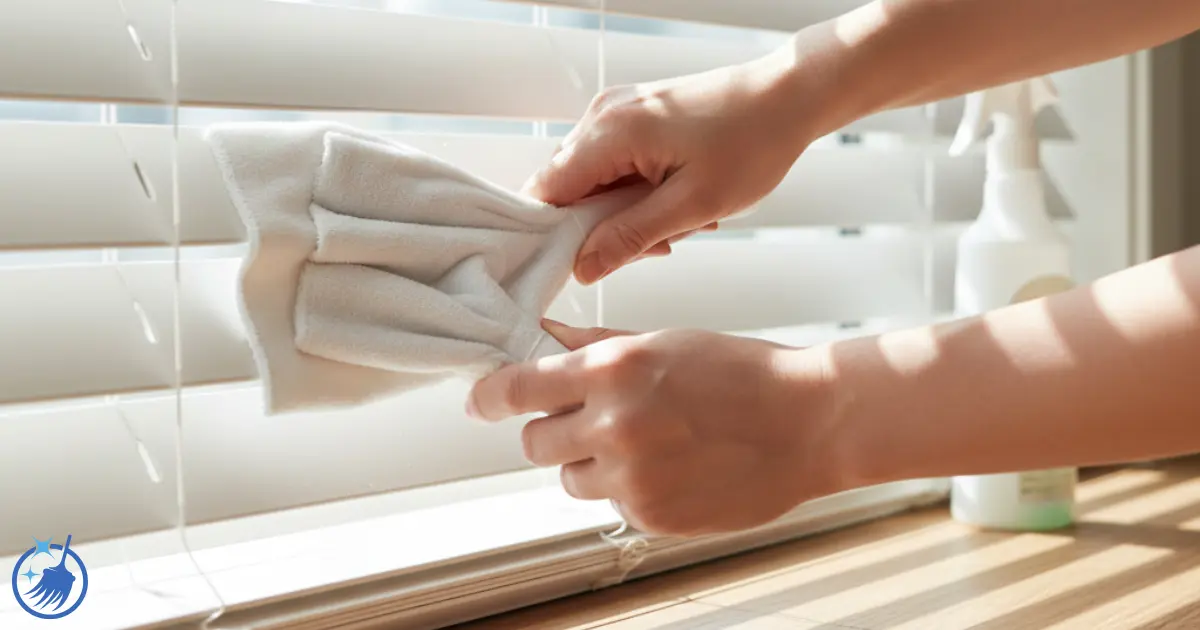
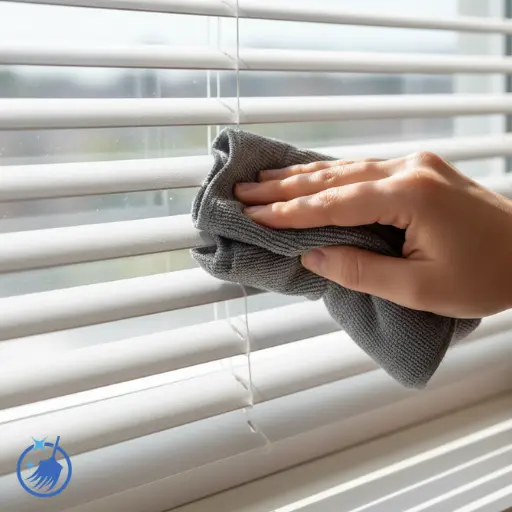
For Venetian Blinds (Horizontal Slats): Dampen a microfibre cloth in your cleaning solution and wring it out thoroughly – it should be damp, not dripping. Close the slats in one direction and wipe each slat from left to right, cleaning both sides as you go. Then close them in the opposite direction and repeat. This ensures you clean every surface.
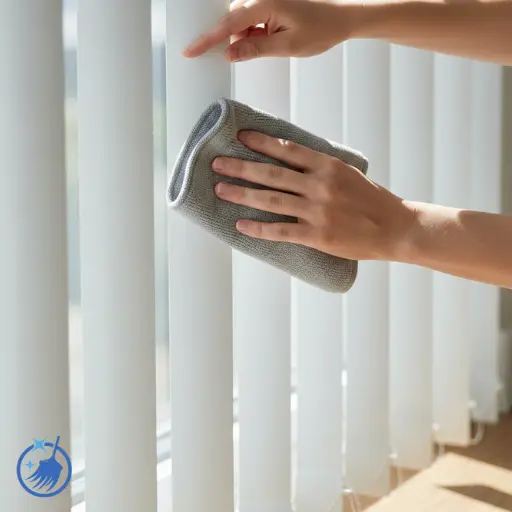
For Vertical Blinds: These are the easiest. Simply wipe each panel from top to bottom with your damp cloth. The vertical orientation means dust doesn’t settle as heavily as on horizontal blinds.
For Roller Blinds: Roll the blind down fully. Wipe from top to bottom with a damp cloth, working in straight lines. Never scrub roller blinds in circular motions – this can damage the fabric backing.
For Wooden Blinds: Extra care needed here. Use a barely damp cloth and wipe gently along each slat. Never soak wooden blinds or leave them wet, as this damages the finish and can cause warping.
Step 4 – Tackle Stubborn Stains
For marks that won’t shift with plain water and washing-up liquid, add one tablespoon of white vinegar to your cleaning solution. Apply this to the stain with a cloth and leave it for 30 seconds before wiping clean.
Kitchen blinds often have grease stains. For these, use slightly warmer water (still not hot) and a bit more washing-up liquid. Fairy cuts through grease beautifully.
Step 5 – Dry Thoroughly
After cleaning, go over the blinds with a dry microfibre cloth. This prevents water marks and stops moisture sitting in crevices where mould can develop.
For wooden blinds, this step is crucial – never leave them to air dry whilst damp.

Common Mistakes to Avoid
After nearly two decades of professional cleaning, I’ve seen every possible blind cleaning disaster. Here are the mistakes that cause the most damage:
- Using a hoover without proper attachment – The hard nozzle scratches blinds and can bend slats. Always use the soft brush attachment, and only on the lowest suction setting. I’ve had to replace clients’ blinds because their regular cleaner used full suction.
- Soaking fabric blinds in the bath – Unless they’re specifically machine-washable vertical blinds, soaking damages the shape and backing. Most fabric blinds should only be spot-cleaned or professionally dry-cleaned.
- Using abrasive cleaning products – Bleach, bathroom cleaners, and kitchen degreasers are too harsh. They damage protective coatings and discolour materials. Stick to washing-up liquid and water.
- Cleaning wooden blinds with excess water – Wood absorbs moisture and swells. I’ve seen wooden blinds warp so badly they couldn’t close properly, all from over-wet cleaning. A barely damp cloth is all you need.
- Putting non-washable vertical blinds in the washing machine – Not all vertical blinds are machine-washable. Check the manufacturer’s label first. I once had a client who put their expensive Roman blinds in on a hot wash – they came out destroyed.
- Rolling up roller blinds whilst damp – This creates the perfect environment for mould and mildew. Always let roller blinds dry completely whilst hanging down before rolling them back up.
How Often Should You Clean Your Blinds?
Based on my professional experience, here’s the cleaning frequency that keeps blinds in excellent condition:
| Cleaning Task | Frequency | Why |
|---|---|---|
| Light dusting | Weekly | Prevents dust building up into stubborn grime |
| Damp wiping | Monthly | Removes marks before they become stains |
| Deep clean | Every 3-4 months | Keeps blinds looking new, prevents discolouration |
| Mould check (bathroom/kitchen blinds) | Weekly | Catches mould early when it’s easiest to remove |
Kitchen blinds need more frequent cleaning due to cooking grease. I recommend wiping these fortnightly rather than monthly.
How to Clean Different Blind Types – Detailed Guidance
Cleaning Venetian Blinds Without Taking Them Down
This is the method I use in 90% of client homes. It’s quick, effective, and means you don’t have to wrestle with brackets and fixings:
- Close the slats completely in one direction
- Dust each slat with a dry microfibre cloth or feather duster
- Dampen a cloth in warm soapy water and wring thoroughly
- Wipe each slat from the centre outwards to both edges
- Close the slats in the opposite direction and repeat steps 2-4
- Dry immediately with a clean, dry cloth
For Venetian blinds in kitchens where grease accumulates, add a tablespoon of white vinegar to your cleaning solution. The acidity cuts through grease brilliantly.
Cleaning Vertical Blinds (Including Fabric)
Vertical blinds are wonderfully low-maintenance because their position naturally sheds dust. Here’s my approach:
For PVC/Plastic Vertical Blinds: Simply wipe each panel from top to bottom with a damp cloth. These are the most forgiving blind type – you can be quite firm with your wiping.
For Fabric Vertical Blinds: More care needed. Dust first with a dry cloth or vacuum on the lowest setting with the soft brush attachment. For stains, spot-clean only – dampen a cloth and dab (don’t rub) the mark. Rubbing can damage the fabric backing.
Some fabric vertical blinds are machine-washable. Check the manufacturer’s instructions. If they are, remove them carefully, roll each panel loosely, and place in a pillowcase before washing on a delicate cycle with mild detergent. Hang to dry immediately – never tumble dry.
Cleaning Roller Blinds
Roller blinds are among the easiest to maintain:
- Roll the blind down fully
- Dust with a dry microfibre cloth, working top to bottom
- For marks, dampen a cloth and wipe in straight vertical lines
- For stubborn stains, use a tiny amount of mild detergent on the spot
- Wipe with a clean damp cloth to remove soap residue
- Leave the blind down until completely dry
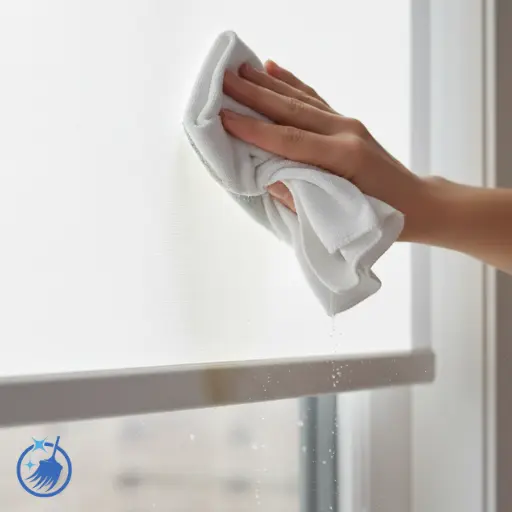
For Waterproof Roller Blinds (Bathrooms): These can handle more moisture. You can wipe them thoroughly with a damp cloth and they’ll dry quickly. Check weekly for early signs of mould, particularly around the bottom edge.
Cleaning Wooden Blinds
Wooden blinds require the gentlest approach. I treat them the same way I’d clean wooden furniture:
- Dust with a dry microfibre cloth or feather duster
- For any marks, barely dampen a cloth – it should feel almost dry
- Wipe each slat gently along the grain
- Dry immediately with a separate dry cloth
- Optional: Apply furniture polish (test on an inconspicuous area first)
Never use water on unsealed wood blinds. If you’re unsure whether yours are sealed, treat them as if they’re not – better safe than sorry.
How to Remove Mould from Blinds
Mould on blinds is incredibly common, particularly in bathrooms and kitchens where condensation is an issue. I deal with this regularly, and the good news is it’s usually easy to fix if caught early.
For Plastic/PVC Blinds: Mix equal parts white vinegar and water in a spray bottle. Spray directly onto the mould, leave for 5-10 minutes, then wipe clean with a damp cloth. The vinegar kills the mould spores and prevents regrowth.
For Fabric Blinds: More challenging. Spray a white vinegar solution onto a cloth (not directly onto the blind) and dab the mouldy areas. Don’t saturate the fabric. For severe mould on fabric blinds, professional dry cleaning or replacement is often the best option.
For Wooden Blinds: Wipe mould gently with a barely damp cloth – wood doesn’t respond well to vinegar solutions. If mould persists, the wood may be damaged and need replacing.
Preventing Mould:
- Open bathroom windows after showers to reduce humidity
- Use an extractor fan whilst cooking
- Wipe bathroom blinds weekly with a dry cloth
- Never roll up damp blinds
- Consider waterproof blinds for high-moisture areas
Best Cleaning Tools for Blinds
I’ve tested dozens of blind cleaning tools over the years. Here’s what actually works:
Budget Option (Under £5): Microfibre cloths from Poundland or Wilko work brilliantly. I buy packs of 10 and wash them after each cleaning session. Paired with an old sock for Venetian blinds, this is all most people need.
Mid-Range Option (£5-15): A blind cleaning brush with multiple prongs (available from Lakeland or Amazon for around £8-12). These speed up Venetian blind cleaning significantly. Make sure it has soft bristles – hard ones scratch.
What Doesn’t Work:
- Feather dusters (they spread dust rather than collecting it)
- Furniture polish sprays (leave sticky residue that attracts more dust)
- Kitchen roll (falls apart when damp and leaves bits stuck to blinds)
- Steam cleaners (too much moisture for most blind types)
Professional Cleaner's Blind Cleaning Kit
After years of testing, here’s what I carry:
- Pack of microfibre cloths (£3 from Wilko) – Buy multiple colours to avoid cross-contamination
- White vinegar (65p from Tesco) – Tackles mould and cuts grease
- Fairy washing-up liquid (£1.50) – Gentle but effective
- Old cotton socks – Free and perfect for Venetian blinds
- Soft brush vacuum attachment – Usually comes with your vacuum
Total cost: Under £7, lasts for months
Troubleshooting – When Blinds Won't Come Clean
Problem: Blinds look clean but smell musty This indicates hidden mould, often in mechanisms or behind slats. Clean with a white vinegar solution (50/50 vinegar and water) and ensure the room is well-ventilated whilst drying.
Problem: Greasy film won’t shift (common on kitchen blinds) Use warmer water (still not hot) with extra washing-up liquid. For stubborn grease, make a paste of bicarbonate of soda and water, apply gently with a cloth, leave for 2 minutes, then wipe clean.
Problem: Water marks after cleaning You’re using too much water or not drying thoroughly. Always wring cloths well and dry immediately after cleaning. For existing water marks, wipe with a barely damp cloth and dry immediately.
Problem: Blinds yellowing or discoloured This is usually from smoke (if anyone smokes indoors) or age. Try cleaning with a solution of warm water and biological washing powder (one teaspoon per litre). If this doesn’t work, the blinds may need replacing – discolouration is often permanent.
Problem: Fabric blinds shrinking after washing Unfortunately, this is permanent damage. The fabric wasn’t machine-washable. Going forward, only spot-clean fabric blinds unless the manufacturer explicitly states they’re machine-washable.
When to Call a Professional:
- Severe mould infestation that won’t shift
- Blinds that are stuck and won’t open/close
- Extensive damage to mechanisms
- Antique or very expensive blinds that need specialist care
- Large commercial blinds or those in hard-to-reach areas
Professional blind cleaning costs £3-8 per blind depending on size and type. It’s worth it for blinds that are valuable or particularly tricky.
Pro Tips From a Professional Cleaner
Insider Secrets
After cleaning thousands of blinds in homes across the UK, here’s what I’ve learned:
- Clean from top to bottom, always – Any dust or drips fall downwards as you work. If you start at the bottom, you’ll end up cleaning the same areas twice.
- The sock method is genuinely brilliant – Slip an old sock over your hand, dampen it slightly, and you can grip both sides of a Venetian blind slat at once. This cuts cleaning time in half.
- Prevention beats cure – Weekly dusting takes 2 minutes and prevents the hour-long deep clean later. I have clients who dust blinds whilst waiting for the kettle to boil.
- Kitchen blinds need different treatment – The grease from cooking builds up invisibly. Even if they look clean, kitchen blinds benefit from monthly cleaning with extra washing-up liquid.
- Test everything first – Always test cleaning solutions on an inconspicuous area before cleaning the whole blind. I once damaged expensive linen blinds by not testing first – never again.
- Timing matters – Clean blinds on a warm, dry day when you can open windows. They’ll dry faster and you reduce the risk of mould from trapped moisture.
- Don’t forget the mechanisms – Dust builds up in the cords, chains, and winding mechanisms. A quick wipe of these whilst you’re cleaning the blinds keeps everything working smoothly.
Conclusion
Cleaning blinds doesn’t need to be the dreaded chore many people think it is. With the right approach – regular dusting, gentle cleaning solutions, and methods suited to your specific blind type – you can keep them looking fresh for years. The methods I’ve shared are exactly what I use in clients’ homes every day, and they work on every blind type from budget roller blinds to expensive wooden Venetians.
Remember: weekly dusting prevents the need for intensive cleaning, always test cleaning solutions first, and never use too much water. Master these basics and your blinds will stay in excellent condition throughout their lifetime. The small investment of 5-10 minutes weekly saves hours of scrubbing later and keeps your home looking its best.
Frequently Asked Questions
How often should I clean blinds?
Dust your blinds weekly to prevent buildup, wipe them down with a damp cloth monthly, and deep clean every 3-4 months. Kitchen and bathroom blinds need more frequent cleaning due to grease and moisture – I recommend fortnightly wiping for these. Regular light cleaning prevents the need for intensive deep cleaning sessions.
How to clean Venetian blinds without taking them down?
Close the slats completely in one direction and wipe each slat with a damp microfibre cloth from the centre outwards. Then close them in the opposite direction and repeat. Use the sock method for speed – slip a damp sock over your hand and grip both sides of each slat at once. This takes about 10 minutes for an average window.
Can you put vertical blinds in the washing machine?
Only if the manufacturer explicitly states they’re machine-washable – check the label first. Most fabric vertical blinds aren’t machine-washable and will shrink or lose their backing adhesive if washed. For washable ones, place in a pillowcase, wash on delicate with mild detergent, and hang to dry immediately. Never tumble dry. PVC vertical blinds should never go in a washing machine.
How to clean mould off blinds?
Mix equal parts white vinegar and water, spray onto the mould (or onto a cloth for fabric blinds), leave for 5-10 minutes, then wipe clean. Vinegar kills mould spores and prevents regrowth. For severe mould on fabric blinds, professional dry cleaning or replacement is often necessary. Always dry blinds thoroughly after cleaning to prevent mould returning.
How do professionals clean blinds at home?
Professional cleaners dust first with a microfibre cloth or vacuum with soft brush attachment, then wipe with a damp cloth and mild washing-up liquid solution. We work from top to bottom to avoid re-cleaning areas, use minimal water to prevent damage, and dry immediately. For Venetian blinds, we use the sock method – gripping both sides of each slat at once with a sock-covered hand.
Does baking soda clean blinds?
Bicarbonate of soda (baking soda) can clean blinds, particularly for stubborn grease stains. Make a paste with water and apply gently with a cloth, leave for 2 minutes, then wipe clean. However, it’s mildly abrasive so shouldn’t be used on wooden or delicate blinds as it can scratch the surface. For most cleaning, washing-up liquid and water work just as well without any risk of damage.
How to clean wooden blinds without removing them?
Dust with a dry microfibre cloth or feather duster, working along each slat. For any marks, barely dampen a cloth (it should feel almost dry) and wipe gently along the grain. Dry immediately with a separate dry cloth. Never soak wooden blinds or leave them wet. The key is using minimal moisture – wooden blinds need far less water than other types.
How to clean roller blinds without taking them down?
Roll the blind down fully and wipe from top to bottom with a damp microfibre cloth, working in straight vertical lines. Never scrub in circular motions as this can damage the fabric backing. For stains, use a small amount of washing-up liquid on the spot, then wipe with a clean damp cloth to remove soap residue. Leave the blind down until completely dry before rolling it back up.
Why do my blinds smell musty even after cleaning?
Musty smells indicate mould, often hidden in mechanisms, behind slats, or in the fabric backing. Clean with a 50/50 white vinegar and water solution, which kills mould spores. Ensure the room is well-ventilated whilst drying and never roll up blinds whilst damp. If the smell persists, the mould may have penetrated too deeply and the blinds might need replacing.
How to clean fabric blinds without removing them?
Vacuum gently using the soft brush attachment on the lowest setting, or dust with a dry microfibre cloth. For stains, spot-clean only – dampen a cloth with water and mild washing-up liquid, dab (don’t rub) the mark. Never saturate fabric blinds as this can damage the backing. For extensive staining, professional dry cleaning is safer than attempting to wash them yourself.
You May Also Like
How to Clean a Sink Drain: Complete Step-by-Step Guide
How to Deep Clean Your Kitchen: Complete Step-by-Step Guide