How to Clean Roller Blinds: Quick & Easy Professional Methods

How to clean roller blinds is one of the easiest blind cleaning tasks, and yet so many people put it off for months thinking it’ll be complicated. After 18 years as a professional cleaner across UK homes, I can tell you that roller blinds are genuinely the simplest blind type to maintain. Unlike Venetian blinds with all those individual slats, or vertical blinds with multiple panels, roller blinds are just one continuous surface that you can wipe down in minutes. The key is knowing whether your specific roller blind can handle water – because whilst PVC roller blinds can practically be hosed down, blackout roller blinds need far gentler treatment or you’ll damage that special light-blocking coating. In the next few minutes, I’ll show you exactly how to clean roller blinds properly whether they’re fabric, blackout, PVC, or mesh, plus how to tackle stubborn mould and kitchen grease without removing them from the window.
What You’ll Learn:
- How to clean roller blinds in under 10 minutes without removing them
- Which roller blind types can be soaked and which absolutely can’t
- How to remove mould from bathroom roller blinds safely
- The best method for greasy kitchen roller blinds
- Weekly maintenance that prevents deep cleaning
Quick Summary
Time needed: 5-10 minutes for routine cleaning
Difficulty: Easy – roller blinds are the simplest blind type to clean
You’ll need: Microfibre cloth, warm water, washing-up liquid
Key takeaway: Most roller blinds can be cleaned whilst hanging with just a damp cloth. Only heavily soiled ones need removal, and blackout blinds should never be soaked.
What You'll Need
Roller blind cleaning requires minimal equipment:
- Microfibre cloths (at least 2-3)
- Warm water
- Mild washing-up liquid (Fairy works perfectly)
- Bucket or bowl
- Optional: White vinegar (for mould and grease)
- Optional: Bicarbonate of soda (for stubborn stains)
- Optional: Vacuum with soft brush attachment
- Optional: Soft sponge (never use abrasive sponges)
First Step – Identify Your Roller Blind Type
Before you start cleaning, you must know what type of roller blind you have. Using the wrong method can permanently damage them – particularly blackout blinds, which I’ve seen destroyed by well-meaning clients who soaked them.
Fabric Roller Blinds
Most common type. Usually polyester or cotton blend, sometimes with a light acrylic coating. Feel soft and textile-like.
Key characteristics:
- Soft fabric texture
- Can be wiped with damp cloth
- Should NOT be soaked in bathtub
- Require gentle handling
Blackout Roller Blinds
Designed to block light completely. Have a special rubber or acrylic backing that’s extremely sensitive to harsh treatment.
Key characteristics:
- Thick, heavy material
- Completely opaque
- Dark backing (usually black, grey, or white)
- NEVER soak these – the backing will peel or bubble
Critical warning for blackout blinds: These are the most delicate roller blind type. Too much water, harsh chemicals, or scrubbing damages the light-blocking coating irreparably. I’ve replaced several for clients who didn’t realise this.
PVC / Vinyl Roller Blinds
Waterproof and extremely forgiving. Often used in kitchens and bathrooms.
Key characteristics:
- Smooth, plastic-like feel
- Completely waterproof
- Can be soaked and scrubbed
- Most durable roller blind type
Sunscreen / Mesh Roller Blinds
Semi-transparent woven material that blocks UV whilst allowing visibility. Usually PVC or polyester mesh.
Key characteristics:
- See-through or semi-transparent
- Woven texture
- Very durable
- Can handle thorough cleaning
Not sure which you have? Feel the back of your blind in an edge area. If it’s rubbery or thickly coated, it’s blackout. If it’s smooth and plasticky, it’s PVC. If it feels like regular fabric, it’s standard fabric. If you can see through it, it’s sunscreen mesh.
How to Clean Roller Blinds – Step-by-Step Guide
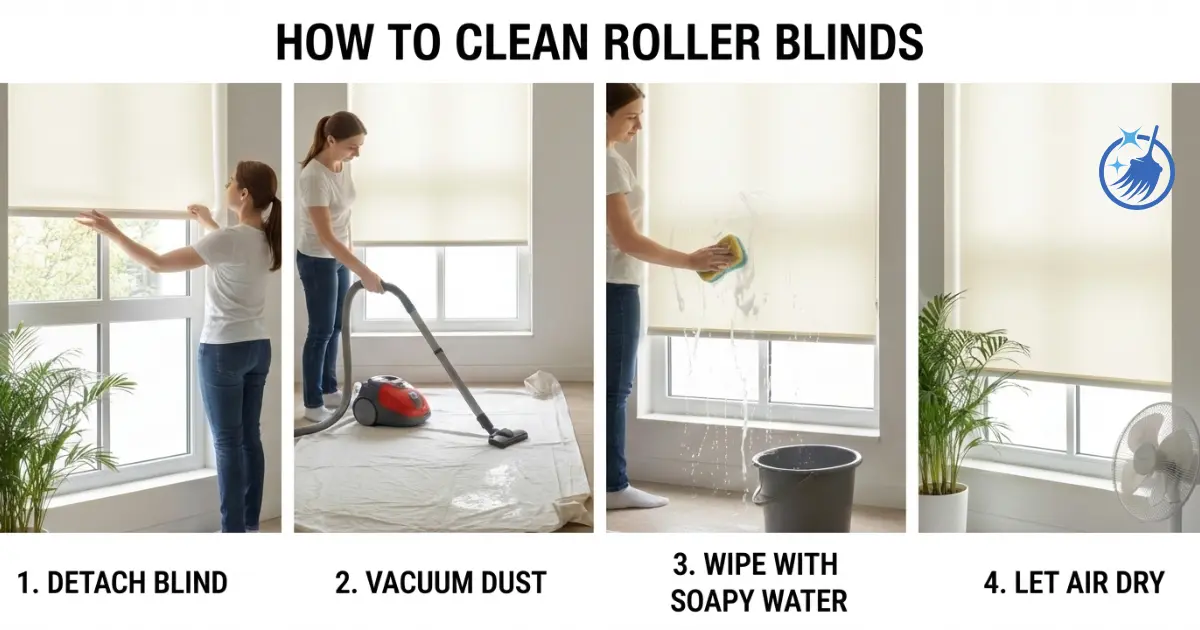
Step 1 – Pull Down and Vacuum
Roll the blind fully down so you can access the entire surface. This also lets you see all the dirty areas clearly.
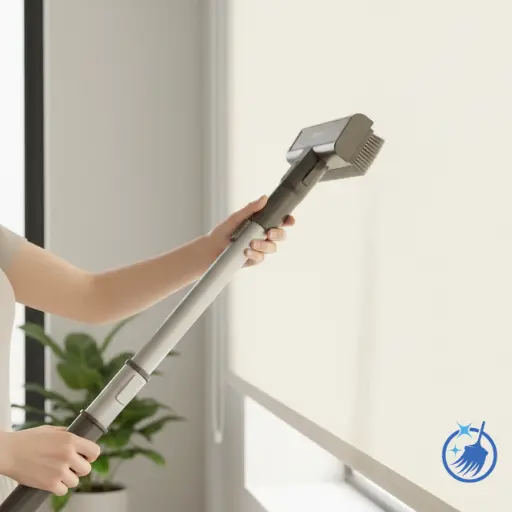
Use a vacuum cleaner on the lowest setting with the soft brush attachment. Run it over both the front and back of the blind to remove loose dust, pet hair, and cobwebs.
If you don’t have a vacuum or soft brush attachment, use a dry microfibre cloth and wipe the blind from top to bottom to remove loose dust.
Step 2 – Prepare Cleaning Solution
For most roller blinds, simple warm water with a squirt of washing-up liquid is perfect:
Fill a bucket with warm (not hot) water and add a small amount of Fairy or similar mild washing-up liquid. You want barely visible bubbles – too much soap leaves residue that attracts dust.
For blackout roller blinds: Use even less soap – just a tiny drop. Excess soap can damage the backing.
For kitchen roller blinds with grease: Add one tablespoon of white vinegar to the water. The acidity cuts through cooking grease brilliantly.
For mouldy bathroom roller blinds: Equal parts white vinegar and water (see detailed mould section below).
Step 3 – Wipe Clean in Vertical Strokes
This is where roller blinds shine – they’re so much faster to clean than other blind types.
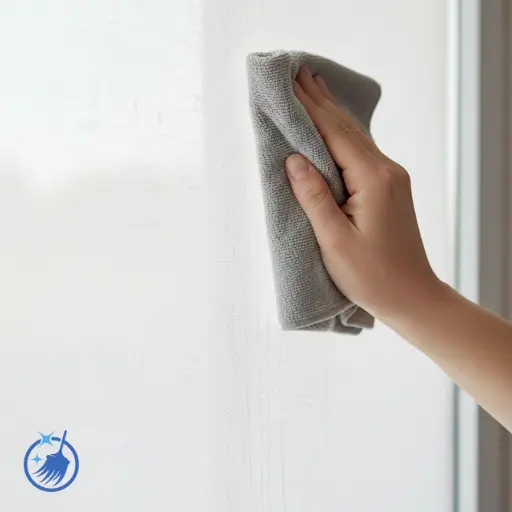
Dampen your microfibre cloth in the cleaning solution and wring it out thoroughly. The cloth should be damp, not dripping wet.
Starting at the top of the blind, wipe downwards in long, straight vertical strokes. Work your way across the entire width of the blind. The vertical motion prevents streaking.
Important: Never scrub in circular motions or use excessive pressure, particularly on fabric and blackout blinds. Gentle, straight wipes are all you need.
Step 4 – Rinse and Dry
Rinse your cloth in clean water, wring it out well, and go over the blind again to remove any soap residue.
Then use a completely dry microfibre cloth and wipe the blind from top to bottom to remove excess moisture.
Step 5 – Clean the Bottom Bar and Mechanism
People often forget this, but the bottom bar collects dust and the mechanism needs occasional attention.
Wipe the bottom bar with your damp cloth, paying attention to the corners where dust accumulates. Check the rolling mechanism at the top – if it’s become stiff or squeaky, you can apply a tiny amount of silicone-based lubricant (available from B&Q for about £4).
How to Clean Roller Blinds Without Taking Them Down
The method I’ve just described works whilst the blind hangs at the window, which is how I clean roller blinds in 95% of client homes. It’s quick, safe, and effective for routine cleaning.
When cleaning whilst hanging works best:
- Regular monthly maintenance
- Light to moderate soiling
- All roller blind types
- Quick cleaning (5-10 minutes)
When you might need to remove the blind:
- Extremely heavy soiling or grease buildup
- Large stains that need intensive treatment
- PVC/vinyl blinds that can be bathtub-soaked
- When mechanisms need servicing
For most roller blinds, you’ll never need to remove them. The hanging method works brilliantly.
How to Clean Different Types of Roller Blinds
Cleaning Fabric Roller Blinds
Standard fabric roller blinds need gentle treatment but are more forgiving than blackout blinds.
Method:
- Vacuum both sides to remove dust
- Mix warm water with minimal washing-up liquid
- Wring cloth until barely damp
- Wipe in long vertical strokes from top to bottom
- Rinse with clean damp cloth
- Dry with clean towel
- Leave extended until completely dry
For stains on fabric roller blinds: Mix one teaspoon of washing-up liquid with one cup of warm water. Add one teaspoon of white vinegar for stubborn marks. Dab the stain gently with a cloth dampened in this solution – never rub vigorously. Blot with a clean damp cloth, then with a dry cloth.
Cleaning Blackout Roller Blinds (Critical Guidelines)
Blackout blinds are the most delicate and need the gentlest approach. The special backing that blocks light is sensitive to water, chemicals, and scrubbing.
Safe Method for Blackout Blinds:
- Vacuum gently on lowest setting
- Use a cloth dampened (not wet) with plain warm water
- Very light amount of washing-up liquid if needed
- Dab gently – never scrub
- Rinse immediately with barely damp cloth
- Dry thoroughly
- Leave fully extended until bone dry
What NEVER to use on blackout roller blinds:
- Vinegar (damages the backing)
- Bleach (causes peeling and discolouration)
- Harsh chemicals
- Abrasive sponges or brushes
- Excessive water
- Hot water
- Soaking or bathtub cleaning
I once had a client who soaked their expensive blackout blinds in the bath thinking it would clean them better. The rubber backing bubbled, peeled, and the blinds were completely ruined. Blackout blinds cost £40-100 each, so this mistake was expensive.
For stubborn marks on blackout blinds: Use a barely damp cloth with the tiniest amount of mild washing-up liquid. Dab very gently. If the mark won’t shift after 2-3 gentle attempts, leave it – aggressive cleaning will damage the blind more than the mark detracts from its appearance.
Cleaning PVC / Vinyl Roller Blinds
These are wonderfully forgiving – the easiest roller blind type to clean.
Method (whilst hanging):
- Vacuum both sides
- Mix warm soapy water – you can use more soap than for other types
- Wipe thoroughly with damp cloth
- You can apply more pressure than with other blind types
- Rinse with clean damp cloth
- Dry with towel
Bathtub Deep Clean Method (for heavily soiled PVC blinds):
This is brilliant for kitchen PVC roller blinds covered in grease:
- Remove the blind from its brackets (most twist or pull out)
- Roll it loosely – don’t fold it
- Place in bathtub
- Fill tub with warm water until blind is covered (about 10-15cm)
- Add washing-up liquid and half a cup of white vinegar
- Let soak for 20-30 minutes
- Wipe each section with a soft sponge or cloth
- Drain tub and rinse blind thoroughly with clean water (shower attachment works brilliantly)
- Unroll blind and hang it somewhere to drip dry – I use a shower rail or outdoor washing line
- Leave until completely dry before rehanging
This method takes about 45 minutes total but gets PVC blinds cleaner than any other method. I use it for restaurant kitchens where grease buildup is severe.
Cleaning Sunscreen Mesh Roller Blinds
Mesh blinds are durable and can handle more vigorous cleaning than solid fabric blinds.
Method:
- Vacuum both sides thoroughly – dust gets trapped in the mesh
- Mix warm soapy water
- Use a soft brush or cloth to clean the mesh
- You can scrub gently – mesh is quite tough
- Rinse with clean water
- Shake gently to remove excess water
- Leave extended to air dry
Sunscreen mesh blinds are perfect for conservatories and south-facing windows. They handle frequent cleaning well.
How to Remove Mould from Roller Blinds
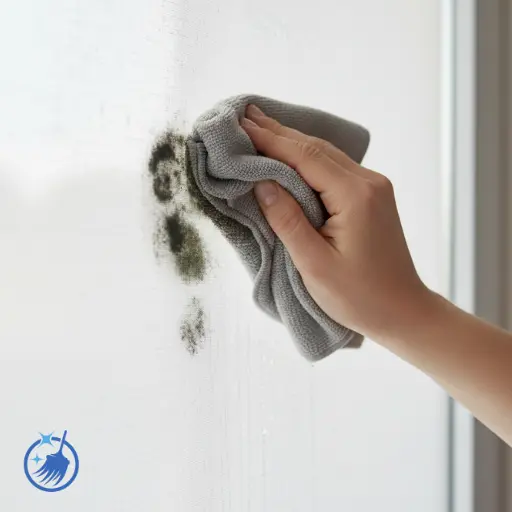
Mould on roller blinds is incredibly common in bathrooms and poorly ventilated rooms. The good news is it’s usually easy to remove if you catch it early.
For Fabric Roller Blinds (Not Blackout)
- Vacuum outside to remove loose mould spores (don’t do this indoors – spreads spores)
- Mix equal parts white vinegar and warm water in a spray bottle
- Spray onto the mouldy areas
- Leave for 5-10 minutes (vinegar kills mould spores)
- Wipe clean with a damp cloth
- Dry thoroughly
- If possible, hang the blind outside in sunlight – UV kills remaining mould naturally
For PVC / Vinyl Roller Blinds
Same method as fabric, but you can be more thorough. For stubborn mould:
- Mix warm water with white vinegar
- Add one teaspoon of bicarbonate of soda
- Wipe mouldy areas thoroughly
- For severe mould, use a very weak bleach solution (half teaspoon bleach in one litre water)
- Rinse very thoroughly after using bleach
- Dry completely
For Blackout Roller Blinds
More challenging because you can’t use vinegar or strong solutions:
- Use plain warm water only
- Dab mouldy areas very gently
- Dry immediately
- If mould returns after this treatment, the blind may need replacing
Blackout blinds in bathrooms are prone to mould because the backing traps moisture. If mould is a recurring problem, replace blackout blinds with PVC blinds in high-moisture rooms.
Preventing Mould on Roller Blinds:
- Open bathroom windows after showers
- Use extractor fans whilst bathing
- Wipe bathroom blinds dry if condensation settles on them
- Check weekly for early signs of mould
- Never roll up damp blinds
- Ensure good room ventilation
How to Remove Grease from Kitchen Roller Blinds
Kitchen roller blinds accumulate cooking grease that’s often invisible until you try to clean them. Here’s my professional method developed from years of cleaning restaurant blinds:
For Light to Moderate Grease (whilst hanging):
- Mix warm water with washing-up liquid and one tablespoon white vinegar
- Use a cloth dampened in this solution
- Wipe the blind thoroughly from top to bottom
- Go over greasy areas 2-3 times
- Change to a fresh cloth halfway through
- Rinse with clean damp cloth
- Dry thoroughly
The washing-up liquid cuts grease, and the vinegar dissolves sticky residue.
For Heavy Grease Buildup:
PVC roller blinds can be removed and bathtub-soaked (see method above). For fabric blinds that can’t be soaked:
- Mix warm water, extra washing-up liquid, and white vinegar
- Make a paste of bicarbonate of soda and water
- Apply paste to greasy areas with a soft cloth
- Leave for 10 minutes
- Wipe clean with damp cloth
- Rinse thoroughly
- Dry completely
Prevention tip: Wipe kitchen roller blinds fortnightly even if they look clean. Grease builds up invisibly, and once it’s thick and yellowed, it’s far harder to remove.
How to Clean Stained Roller Blinds
Stains on roller blinds vary from food splatters to mysterious marks. Here’s how to tackle them:
Fresh Stains (caught quickly): Blot immediately with a clean cloth. Don’t rub – this spreads the stain. Then dab with a cloth dampened in warm soapy water.
Set Stains:
- Mix one teaspoon washing-up liquid with one cup warm water
- Add one teaspoon white vinegar
- Dab the stain gently – work from the outside in to prevent spreading
- Blot with a clean damp cloth
- Repeat until stain lifts
- Dry thoroughly
Stubborn Stains: Make a paste of bicarbonate of soda and water. Apply to the stain, leave for 15 minutes, then wipe gently. This works brilliantly on protein-based stains like food or blood.
For yellowed white roller blinds: Mix bicarbonate of soda with warm water (one tablespoon per litre). Wipe the blind thoroughly. For PVC blinds, you can soak them in this solution in the bathtub for 30 minutes.
If you’re dealing with other blind types and want to compare cleaning methods, our guide on how to clean blinds covers everything from Venetian to Roman blinds.
How Often Should You Clean Roller Blinds?
Based on 18 years of professional cleaning, here’s what keeps roller blinds in excellent condition:
| Cleaning Task | Frequency | Why | Time Required |
|---|---|---|---|
| Light dust/vacuum | Weekly | Prevents dust becoming grime | 2-3 minutes |
| Damp wipe clean | Monthly | Removes marks before they set | 5-10 minutes |
| Deep clean | Every 3-4 months | Keeps blinds fresh | 10-20 minutes |
| Kitchen blinds | Fortnightly | Grease builds up quickly | 8-12 minutes |
| Bathroom blinds (mould check) | Weekly | Catches mould early | 1-2 minutes |
Roller blinds in bedrooms and living rooms need the least maintenance. Kitchen and bathroom blinds need more frequent attention.
Monthly Roller Blind Maintenance
Week 1: Quick vacuum or dust (2 minutes)
Week 2: Quick vacuum or dust (2 minutes)
Week 3: Quick vacuum or dust (2 minutes)
Week 4: Damp wipe clean (8 minutes)
Total monthly time: 14 minutes
Result: Pristine roller blinds year-round
Common Mistakes to Avoid
After nearly two decades cleaning roller blinds professionally, I’ve seen every possible mistake. Here are the ones that cause real damage:
- Soaking blackout roller blinds – The number one mistake I see. The special backing bubbles, peels, and becomes useless. Blackout blinds should only ever be wiped with a barely damp cloth.
- Rolling up damp blinds – This creates perfect conditions for mould. Always leave roller blinds fully extended until completely dry, even if it takes several hours.
- Using harsh chemicals – Bleach, bathroom cleaners, and strong degreasers damage roller blind materials and coatings. Washing-up liquid and water work perfectly.
- Scrubbing too hard – Roller blinds don’t need aggressive scrubbing. Gentle wiping is more effective and doesn’t damage the material.
- Using hot water – Hot water can damage adhesives and backings, particularly on blackout blinds. Always use warm (not hot) water.
- Forgetting to vacuum first – Mixing water with dust creates muddy streaks that are harder to clean than dry dust. Always vacuum or dust before wet cleaning.
- Using abrasive sponges or brushes – These scratch and damage roller blind surfaces. Stick to soft cloths and sponges only.
Troubleshooting – When Roller Blinds Won't Come Clean
Problem: Water marks after cleaning
You’ve used too much water or haven’t dried properly. Wipe with a barely damp cloth in straight vertical strokes, then dry immediately. For existing water marks, try wiping with a completely dry microfibre cloth using gentle pressure.
Problem: Sticky residue remains
This is usually cooking grease or product buildup. Use warm water with white vinegar (one tablespoon per litre) and wipe thoroughly. For stubborn cases, use the bicarbonate of soda paste method.
Problem: Mould keeps returning
The room has poor ventilation or excess moisture. Improve airflow (open windows, use extractor fans), check for leaks or condensation issues, and consider replacing fabric blinds with PVC ones in high-moisture areas.
Problem: Blackout blind backing is peeling
Unfortunately, this is permanent damage, usually from excess water or harsh chemicals. The blind needs replacing. Going forward, only ever use a barely damp cloth on blackout blinds.
Problem: Blind won’t roll up smoothly
Dust or debris in the mechanism. Clean the rolling mechanism at the top with a dry cloth. If it’s still stiff, apply a tiny amount of silicone lubricant. Never use oil-based products – they attract more dust.
Problem: Yellowing on white fabric blinds
UV damage or smoke exposure. Try the bicarbonate of soda solution (one tablespoon per litre of warm water). If yellowing persists after this treatment, it’s likely permanent.
When to Call a Professional:
- Extensive mould that returns despite cleaning and improved ventilation
- Damaged mechanisms that won’t roll properly
- Very large blinds (over 2.5 metres) that are difficult to clean safely
- Expensive or delicate blinds needing specialist care
Professional roller blind cleaning costs around £5-10 per blind. Worth it for valuable blinds or if mechanisms need servicing.
Pro Tips From a Professional Cleaner
After cleaning thousands of roller blinds across UK homes and businesses, here’s what makes the biggest difference:
1. Morning cleaning is best
Natural daylight shows every mark, streak, and spot of dust. Clean roller blinds in the morning and you’ll see exactly where you need to focus. Artificial evening light hides imperfections that are obvious the next day.
2. Kitchen roller blinds need proactive cleaning
Don’t wait until grease is visible. By then, it’s sticky and yellowed. Wipe kitchen roller blinds fortnightly with a vinegar solution even if they look clean. This prevents buildup.
3. The shower trick for PVC blinds
For PVC roller blinds that can handle water, you can actually clean them in the shower. Unroll them completely, hang over the shower rail, and rinse with warm water whilst wiping with a cloth. Brilliant for quick deep cleans.
4. Sunlight kills mould naturally
If you can remove a mouldy fabric blind and hang it outside in direct sunlight for a few hours, the UV naturally kills mould spores. This works better than most products.
5. Test everything first
Always test cleaning solutions on an inconspicuous area (back bottom corner) before cleaning the whole blind. This 30-second test has saved me from damaging expensive blinds countless times.
6. Two-cloth method prevents streaks
Keep one cloth for washing and a separate cloth for drying. Never dry with the same cloth you used for washing – this just spreads dirty water around.
7. Vacuum both sides
Many people only vacuum the room-facing side, but dust settles on both surfaces. Always vacuum the window-facing side too.
8. Roller blinds are actually easier than other types
If you’re comparing blind types for new purchases, roller blinds are genuinely the easiest to maintain. Compared to the multiple slats on Venetian blinds or individual panels on vertical blinds, roller blinds are one continuous surface you can wipe in minutes.
Maintenance Tips to Keep Roller Blinds Cleaner Longer
Small habits dramatically reduce cleaning time:
1. Vacuum weekly whilst cleaning floors
When you’re vacuuming the room anyway, quickly run the brush attachment over your roller blinds. Takes 30 seconds per blind and prevents dust buildup.
2. Open bathroom windows after showers
Reduces moisture by about 70%, preventing mould on bathroom roller blinds. This one habit saves hours of mould scrubbing.
3. Use extractor fans whilst cooking
Reduces grease settling on kitchen roller blinds significantly. The difference is remarkable – I have clients who do this and their kitchen blinds stay clean three times longer.
4. Never roll up damp blinds
This is the single most important maintenance tip. Damp blinds = mould. Always leave extended until bone dry.
5. Wipe spots immediately
Food splatters, fingerprints, or marks are far easier to remove when fresh. Keep a microfibre cloth handy and wipe spots as they happen.
6. Consider blind placement
Roller blinds in high-traffic areas (kitchens, bathrooms) need more maintenance than bedroom or living room blinds. Factor this in when choosing blind types for different rooms.
When to Replace Roller Blinds
Replace your roller blinds if:
- Fabric is torn, frayed, or has permanent holes
- Blackout backing is peeling, bubbling, or cracking extensively
- Mould returns within days despite cleaning and improved ventilation
- Rolling mechanism is broken beyond repair
- Blind won’t stay up or constantly falls down
- Material is severely faded or discoloured beyond cleaning
- PVC is warped or cracked
Quality roller blinds should last 7-12 years with proper maintenance. If yours are failing sooner, they’re either low quality or haven’t been maintained properly.
Conclusion
Cleaning roller blinds is genuinely one of the easiest home maintenance tasks once you know the right method for your specific blind type. The key is understanding that blackout blinds need gentle treatment whilst PVC blinds can handle vigorous cleaning, that vertical wiping prevents streaking, and that you should never roll up damp blinds. Most roller blinds can be cleaned in under 10 minutes without removal, making them far more convenient than multi-slat blind types.
The methods I’ve shared are exactly what I use in client homes every day, from budget fabric roller blinds to expensive blackout models. They work across all materials, all soiling levels, and all room types from kitchens to bedrooms. Remember: weekly dusting prevents monthly scrubbing, immediate spot-cleaning saves deep cleaning later, and proper drying prevents mould. Master these basics and your roller blinds will stay looking fresh for years with minimal effort.
Frequently Asked Questions
How to clean roller blinds without taking them down?
Roll the blind fully down, vacuum both sides to remove dust, then wipe with a damp microfibre cloth in straight vertical strokes from top to bottom. Use warm water with a drop of washing-up liquid, wring the cloth well so it’s barely damp, and dry with a clean towel. Leave extended until completely dry. Takes 5-10 minutes and works for all roller blind types.
How often should I clean roller blinds?
Vacuum or dust weekly (takes 2-3 minutes), wipe with a damp cloth monthly (takes 5-10 minutes), and deep clean every 3-4 months. Kitchen roller blinds need fortnightly cleaning due to grease buildup, whilst bathroom blinds should be checked weekly for mould. Weekly dusting prevents the need for intensive deep cleaning.
Can you wash roller blinds in the bath?
Only PVC, vinyl, and sunscreen mesh roller blinds can be bathtub-washed. Remove the blind, place in a tub lined with a towel, soak in warm soapy water with white vinegar for 20-30 minutes, wipe clean, rinse thoroughly, and hang to dry completely. Never bathtub-soak fabric or blackout roller blinds – it will damage them permanently.
How to clean mould off roller blinds?
Mix equal parts white vinegar and water, spray or wipe onto mouldy areas, leave 5-10 minutes, then wipe clean and dry thoroughly. Vinegar kills mould spores and prevents regrowth. For blackout blinds, use plain water only as vinegar damages the backing. If mould returns repeatedly, improve ventilation or replace with PVC blinds in moisture-prone areas.
How to clean blackout roller blinds?
Blackout blinds need the gentlest treatment. Vacuum gently, then wipe with a cloth barely dampened in plain warm water. Use minimal washing-up liquid if needed. Never soak, scrub vigorously, or use vinegar, bleach, or harsh chemicals – these damage the light-blocking backing. Dry immediately and leave fully extended until completely dry.
How to clean greasy kitchen roller blinds?
Mix warm water with washing-up liquid and one tablespoon white vinegar. Wipe the blind thoroughly with a damp cloth, going over greasy areas 2-3 times. For PVC blinds with heavy grease, remove and soak in bathtub with vinegar solution for 20-30 minutes. Clean kitchen blinds fortnightly to prevent grease building into sticky, yellowed residue.
How to remove stains from roller blinds?
Mix one teaspoon washing-up liquid with one cup warm water, add one teaspoon white vinegar for stubborn stains. Dab the stain gently working from outside to centre – never rub. Blot with clean damp cloth and repeat until stain lifts. For set-in stains, make a paste with bicarbonate of soda and water, apply for 15 minutes, then wipe clean.
Can you put roller blinds in the washing machine?
No, never put roller blinds in a washing machine. The agitation will damage the material, crease it permanently, and likely break the rolling mechanism components. Hand cleaning whilst hanging or bathtub soaking for waterproof types only are the safe methods. Fabric and blackout blinds especially would be destroyed in a washing machine.
How long do roller blinds take to dry?
Depends on material and ventilation. PVC blinds dry in 30-60 minutes when wiped dry after cleaning. Fabric blinds take 1-3 hours to air dry. Blackout blinds take 2-4 hours. Never roll up blinds until completely dry – this causes mould. Good airflow (open windows) speeds drying significantly.
Why do my roller blinds smell musty?
Musty smell indicates mould, often from rolling up damp blinds or poor room ventilation. Clean with white vinegar solution (equal parts vinegar and water) which kills mould spores causing odours. Ensure blinds are completely dry before rolling up. Improve room ventilation with windows and extractor fans. For fabric blinds, sprinkle bicarbonate of soda, leave one hour, then vacuum.
You May Also Like
How to Clean a Sink Drain: Complete Step-by-Step Guide
How to Deep Clean Your Kitchen: Complete Step-by-Step Guide