How to Clean Venetian Blinds: Professional’s Complete Guide

How to clean Venetian blinds is the question I’m asked most often by new clients, and I completely understand why. After 18 years cleaning homes across the UK, I’ve seen people avoid cleaning their Venetian blinds for months because they think it’s a massive job. Here’s the truth: it isn’t. With the right method – which I’ll show you in the next ten minutes – you can clean an entire window’s worth of Venetian blinds in about 15 minutes without removing them from the wall.
The trick is knowing which technique to use for your specific blind material, because wooden Venetian blinds need completely different treatment than aluminium or faux wood. These are the exact methods I use in client homes every single day, and they work brilliantly on everything from budget plastic blinds to expensive real wood.
What You’ll Learn:
- How to clean Venetian blinds without taking them down (saves 30 minutes)
- Specific methods for wood, faux wood, aluminium, and plastic Venetian blinds
- How to remove stubborn kitchen grease and mould
- The sock trick that cuts cleaning time in half
- Weekly maintenance that prevents intensive cleaning
Quick Summary
Time needed: 10-15 minutes for routine cleaning
Difficulty: Easy with the right technique
You’ll need: Microfibre cloths, warm water, washing-up liquid, old sock
Key takeaway: Venetian blinds are easier to clean than most people think – the sock method lets you clean both sides of each slat at once, and you rarely need to remove them.
What You'll Need
Here’s everything required to clean Venetian blinds properly:
- Microfibre cloths (at least 3 – one for washing, one for drying, one spare)
- Warm water
- Mild washing-up liquid (Fairy works perfectly)
- Bucket or bowl
- Old sock (brilliant for the two-sided cleaning method)
- Optional: White vinegar (for grease and mould)
- Optional: Furniture polish (for wooden blinds only)
- Optional: Vacuum with soft brush attachment
- Optional: Clean tea towel
For wooden Venetian blinds, you’ll also want wood-safe cleaner or furniture polish – I use Pledge or Mr Sheen.
First Step – Identify Your Venetian Blind Type
Before you start cleaning, you absolutely must know what your blinds are made from. The wrong cleaning method can permanently damage them. I learned this the hard way early in my career when I soaked a client’s expensive wooden blinds – they warped so badly they couldn’t close properly.
Wooden Venetian Blinds
Real timber, usually stained or varnished. Feel smooth and slightly cool to touch. These are the most delicate and need minimal water.
Key characteristics:
- Heavier than other types
- Visible wood grain
- Never feel plasticky
- Usually more expensive
Faux Wood / PVC Venetian Blinds
Made from PVC or composite materials designed to look like wood. These are moisture-resistant and far more forgiving.
Key characteristics:
- Lighter than real wood
- Slightly plasticky feel when you touch them
- Perfect for bathrooms and kitchens
- Can handle much more water
Aluminium Venetian Blinds
Metal slats, lightweight, often silver or white. These can be washed quite thoroughly but bend easily if you’re too rough.
Key characteristics:
- Very light
- Metallic feel
- Can dent or bend
- Often quite thin
Plastic Venetian Blinds
Budget option, usually white or cream. Very forgiving and easy to clean.
Key characteristics:
- Cheapest option
- Completely waterproof
- Can be cleaned vigorously
- Often found in rental properties
Not sure which you have? Do the water test in an inconspicuous area (back top corner): dampen a cloth and press it against one slat for 5 seconds. If water soaks in or the slat feels soft, it’s real wood. If water beads on the surface, it’s faux wood or plastic.
How to Clean Venetian Blinds – Step-by-Step Guide
Step 1 – Close and Dust First
This is crucial. Always remove loose dust before any wet cleaning, otherwise you’ll create muddy streaks.
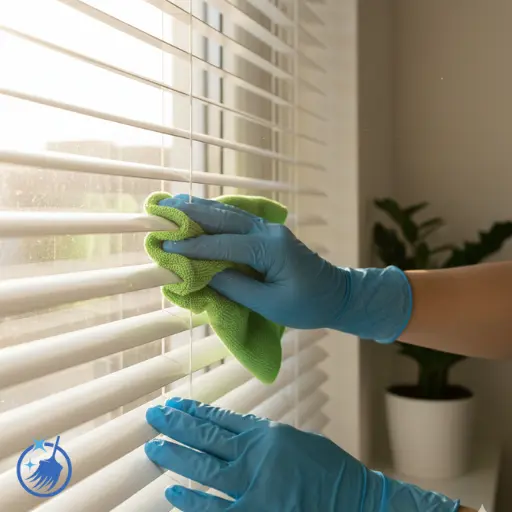
Close the blinds completely so all slats tilt in one direction. Use a dry microfibre cloth and wipe each slat from left to right (or right to left – pick a direction and stick with it). Work from top to bottom.
Alternatively, use a vacuum cleaner on the lowest setting with the soft brush attachment. I do this in clients’ homes when the blinds are particularly dusty – it’s faster than wiping.
Once you’ve cleaned one side, rotate the blinds so the slats tilt in the opposite direction and repeat the dusting process.
Step 2 – Prepare Your Cleaning Solution
Fill a bucket with warm (not hot) water and add a small squirt of washing-up liquid. You want barely visible bubbles – too much soap leaves sticky residue that attracts more dust.
For wooden Venetian blinds, skip this step entirely. You’ll use furniture polish or wood cleaner instead (see the specific section below).
For kitchen Venetian blinds with grease buildup, add one tablespoon of white vinegar to the water. The acidity cuts through cooking grease brilliantly.
Step 3 – Clean Venetian Blinds Using the Sock Method (Game-Changer)
This is the professional method that transforms Venetian blind cleaning from a tedious chore into a quick task.
The Sock Method:
- Take an old sock (cotton works best) and slip it over your hand like a glove
- Close the blinds so all slats tilt one direction
- Dampen the sock in your cleaning solution and wring it out well
- Grip one slat between your thumb and fingers through the sock – you’re holding both the top and bottom of the slat at once
- Slide your hand from the centre of the slat outwards to the edge in one smooth motion
- You’ve just cleaned both sides of that slat simultaneously
- Repeat for each slat, working from top to bottom
- Rotate the blinds and repeat if needed (though often one pass is enough)
This method is absolutely brilliant. What used to take 30 minutes now takes 10-12 minutes.
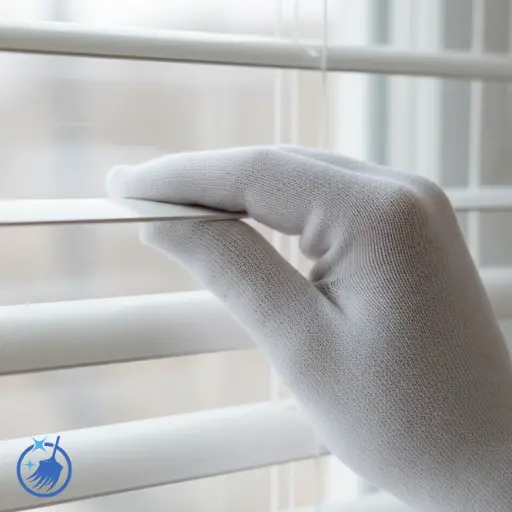
Alternative if you don’t have a sock: Use a microfibre cloth folded over your hand, or fold the cloth and grip the slat between the two layers. Not quite as effective as the sock but still faster than wiping each side separately.
Step 4 – Dry Immediately
This step is crucial, particularly for wooden and aluminium blinds.
Use a clean, dry microfibre cloth or tea towel and wipe each slat to remove any remaining moisture. This prevents water spots and, for wooden blinds, prevents the moisture from damaging the wood or finish.
For faux wood and plastic blinds, you can let them air dry, but I always wipe them dry anyway – it takes 2 minutes and prevents any streaking.
Step 5 – Clean the Cords and Mechanisms
People often forget this, but the cords and winding mechanisms collect dust too.
Wipe the pull cords with a barely damp cloth. For the headrail and mechanisms, use a dry cloth to remove dust. If the winding mechanism becomes stiff, you can apply a tiny amount of silicone-based lubricant (available from B&Q or Screwfix for about £4).
How to Clean Different Types of Venetian Blinds
Cleaning Wooden Venetian Blinds
Wooden blinds need the gentlest approach. Water is their enemy – too much can cause warping, swelling, and damage to the varnish.
Method:
- Dust thoroughly with a completely dry microfibre cloth
- For any marks or dirt, apply furniture polish (Pledge or Mr Sheen) to your cloth – never spray directly on the slats
- Wipe each slat gently along the wood grain
- Buff with a clean, dry cloth immediately
- Done
For stubborn marks on wooden blinds: Barely dampen a cloth – it should feel almost dry when you touch it. Wipe the mark gently, then dry immediately. If this doesn’t work, use a tiny amount of wood cleaner designed for furniture. Test in an inconspicuous area first.
What NEVER to use on wooden Venetian blinds:
- Vinegar (damages the finish)
- Harsh cleaners
- Excess water
- Abrasive sponges
- Bleach
I’ve seen expensive wooden Venetian blinds destroyed by well-meaning clients who soaked them thinking more cleaning equals better results. With wooden blinds, less is genuinely more.
Cleaning Faux Wood Venetian Blinds
These are wonderfully forgiving. They’re designed to look like wood but handle moisture like plastic.
Method: Use the sock method described earlier with warm soapy water. You can be quite thorough with faux wood blinds – they won’t warp or swell.
For heavily soiled faux wood blinds (see bathtub method below): These can even be removed and soaked, which makes them perfect for kitchens where grease builds up.
Cleaning Aluminium Venetian Blinds
Aluminium blinds are easy to clean but need a gentle touch because they bend easily.
Method:
- Use the sock method with warm soapy water
- Grip each slat gently – don’t squeeze too hard or you’ll bend them
- Wipe in smooth motions without applying excessive pressure
- Dry thoroughly to prevent water spots
For white aluminium blinds that have yellowed: Mix one tablespoon of bicarbonate of soda per litre of warm water. Use this solution to wipe the slats. For stubborn yellowing, make a paste of bicarb and water, apply gently, leave for 5 minutes, then wipe clean.
Cleaning Plastic Venetian Blinds
These are the most durable and can handle the most vigorous cleaning.
Method: Standard sock method with soapy water. You can apply more pressure than with other types, and they can handle repeated cleaning without damage.
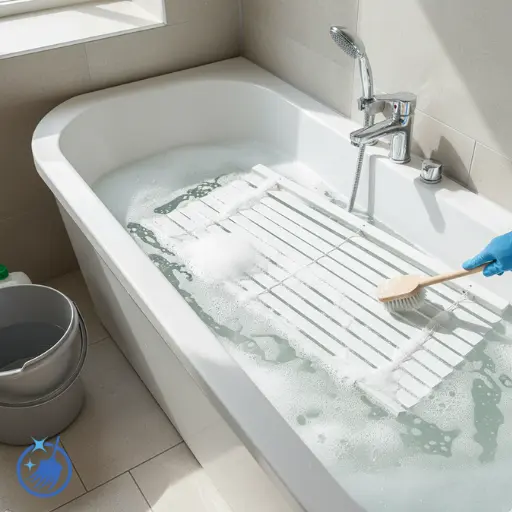
How to Deep Clean Venetian Blinds in the Bath
For Venetian blinds that are extremely dirty – particularly kitchen blinds covered in cooking grease – the bathtub method is brilliant. This works for faux wood, aluminium, and plastic Venetian blinds only. Never do this with real wooden blinds.
Bathtub Deep Cleaning Method:
- Prepare the bath: Place an old towel or sheet in the bathtub to prevent scratching
- Remove the blind: Most Venetian blinds have clips that release when you push them – check your specific model
- Lay it down gently: Place the entire blind assembly flat in the bath
- Fill with water: Use warm (not hot) water until the blind is covered – usually about 10-15cm deep
- Add cleaning solution: Squirt in washing-up liquid and add half a cup of white vinegar
- Soak: Leave for 20-30 minutes for heavy grease, or 10 minutes for general dirt
- Wipe each slat: Use a soft sponge or cloth to wipe both sides of every slat
- Rinse thoroughly: Drain the bath, then rinse the blind with clean water (a shower attachment works brilliantly)
- Dry completely: This is crucial – shake off excess water, then wipe every slat with dry towels
- Air dry: Prop the blind up somewhere with good airflow (I lean them against a garden fence or shower screen)
- Rehang when completely dry
This method takes about 45 minutes total but gets blinds cleaner than any other method. I use it for clients’ kitchen blinds that haven’t been cleaned in years.
How to Clean Venetian Blinds Without Taking Them Down
The methods I’ve described so far all work whilst the blinds are hanging. This is how I clean Venetian blinds in 95% of client homes because it’s faster and doesn’t require fiddling with brackets and mechanisms.
Quick Summary of the No-Removal Method:
- Close blinds one direction
- Dust both sides thoroughly
- Use the sock method with damp cloth
- Dry each slat
- Done in 10-15 minutes
The only time I remove Venetian blinds is for the deep bathtub clean when they’re extremely soiled.
How to Remove Grease from Venetian Blinds
Kitchen Venetian blinds accumulate cooking grease that’s often invisible until you try to clean them. Here’s my professional method:
For Light Grease (whilst hanging):
- Warm water + extra washing-up liquid + one tablespoon white vinegar
- Use the sock method, going over each slat 2-3 times
- Change to a clean damp sock/cloth halfway through
- Dry thoroughly
For Heavy Grease:
- Remove and use the bathtub method with white vinegar
- For extremely stubborn grease, make a paste of bicarbonate of soda and water
- Apply paste to greasy areas with a soft cloth
- Leave for 5 minutes
- Wipe clean and rinse
I clean kitchen Venetian blinds for several restaurant owners, and the bathtub method with vinegar is the only thing that properly shifts that sticky, yellowed grease that builds up over months.
How to Remove Mould from Venetian Blinds
Mould on Venetian blinds usually happens in bathrooms or poorly ventilated rooms.
For Faux Wood and Plastic Blinds:
- Mix equal parts white vinegar and water
- Apply to mouldy areas with a cloth
- Leave for 10 minutes (vinegar kills mould spores)
- Wipe clean with a damp cloth
- Dry thoroughly
- Ensure good ventilation to prevent recurrence
For Aluminium Blinds: Same method as faux wood – vinegar is safe on aluminium.
For Wooden Venetian Blinds: Don’t use vinegar (it damages the finish). Instead:
- Use wood-safe cleaner on a barely damp cloth
- Wipe mouldy areas gently
- Dry immediately
- Apply furniture polish
If mould returns repeatedly, the blinds are in too humid an environment. Consider replacing wooden blinds with faux wood or PVC for high-moisture areas.
For general advice on different blind types and when to use each cleaning method, our complete guide on how to clean blinds covers everything from roller to Roman blinds.
How Often Should You Clean Venetian Blinds?
Based on 18 years of professional cleaning, here’s what actually keeps Venetian blinds in excellent condition:
| Cleaning Task | Frequency | Why | Time Required |
|---|---|---|---|
| Quick dust | Weekly | Prevents heavy buildup | 3-5 minutes |
| Sock method clean | Monthly | Removes grime before it becomes stubborn | 10-15 minutes |
| Deep clean | Every 3-4 months | Keeps blinds looking new | 15-45 minutes |
| Kitchen blinds | Fortnightly | Cooking grease builds up faster | 12-18 minutes |
The difference between clients who maintain their Venetian blinds weekly versus those who ignore them for months is dramatic. Weekly dusting takes 3 minutes and prevents the hour-long deep clean later.
Monthly Venetian Blind Maintenance Schedule
Week 1: Quick dust both sides (3 minutes)
Week 2: Quick dust both sides (3 minutes)
Week 3: Quick dust both sides (3 minutes)
Week 4: Sock method clean (12 minutes)
Total monthly time: 21 minutes
Result: Blinds stay pristine year-round
Common Mistakes to Avoid
After nearly two decades cleaning Venetian blinds, I’ve seen every possible mistake. Here are the ones that cause genuine damage:
- Using too much water on wooden blinds – I’ve replaced three sets of warped wooden blinds for clients who soaked them thinking it would clean them better. Wood swells when wet. Use minimal moisture only.
- Bending aluminium slats by gripping too hard – Aluminium is soft and bends easily. Once bent, slats rarely return to their original shape. Always grip gently.
- Cleaning in circular motions – Always wipe along the length of the slat (left to right or right to left). Circular motions can leave visible swirl marks.
- Using the vacuum on full power – The suction pulls slats out of position and can damage delicate mechanisms. Lowest setting only, with soft brush attachment.
- Spraying furniture polish directly onto wooden blinds – This creates drips that are difficult to remove and can damage the finish. Always spray onto your cloth first.
- Forgetting to dry aluminium blinds – Water spots on aluminium are difficult to remove once dried. Always wipe dry immediately after cleaning.
- Putting non-waterproof blinds in the bath – Only faux wood, plastic, and aluminium Venetian blinds can be bathtub-cleaned. Real wood will be destroyed.
Troubleshooting – When Venetian Blinds Won't Come Clean
Problem: Slats keep looking dusty even after cleaning
You’re spreading dust rather than removing it. Use a fresh cloth for each pass, or switch to the sock method which traps dust more effectively. Also ensure you’re working from top to bottom – starting at the bottom pushes dust onto clean slats.
Problem: Streaks appear after cleaning
Too much soap in your water, or you’re not drying properly. Reduce the washing-up liquid to barely visible bubbles and always dry immediately with a clean cloth.
Problem: Sticky residue on kitchen blinds
This is cooking grease mixed with dust. Standard cleaning won’t shift it. Use the bathtub method with white vinegar, or wipe with a solution of warm water, extra Fairy, and vinegar. Go over each slat 3-4 times.
Problem: White marks on aluminium blinds
Dried water spots. Wipe with a 50/50 white vinegar and water solution, then buff with a dry cloth. Prevent by drying thoroughly after cleaning.
Problem: Wooden blinds looking dull
The finish needs restoring. After cleaning, apply furniture polish (Pledge or Mr Sheen) and buff gently. This brings back the shine.
Problem: Yellowing on white plastic blinds
UV damage or smoke residue. Mix bicarbonate of soda paste (bicarb + water), apply gently, leave 10 minutes, wipe clean. For severe yellowing, this might not fully restore whiteness – it may be permanent.
When to Call a Professional:
- Extensive mould that returns after cleaning
- Mechanisms broken or severely stiff
- Large blinds (over 2 metres) that are difficult to handle safely
- Antique or very expensive blinds needing specialist care
Professional Venetian blind cleaning costs around £8-15 per blind depending on size. Worth it for valuable or delicate blinds.
Pro Tips From a Professional Cleaner
After cleaning thousands of Venetian blinds across UK homes, here’s what I’ve learned:
1. The sock method is genuinely transformative
I resisted using it for years, thinking it was gimmicky. Then a colleague showed me how much time it saves. Now I use it in every single client home. Buy cheap cotton socks from Primark (6 for £2.50) specifically for cleaning – once they’re worn out, you’ve got built-in cleaning gloves.
2. Work in sections for large windows
For big windows with many slats, clean 10-15 slats at a time, then dry those before moving to the next section. This prevents the first slats drying with water spots whilst you’re still cleaning the bottom ones.
3. Kitchen blinds need proactive cleaning
Don’t wait until grease is visible. By then, it’s sticky and difficult to remove. Wipe kitchen Venetian blinds fortnightly with the vinegar solution even if they look clean.
4. Use different cloths for washing and drying
Never dry slats with the same cloth you used for washing. Keep one damp cloth for cleaning and one completely dry cloth for drying. This prevents streaks.
5. Morning light reveals everything
Clean Venetian blinds in the morning when natural light shows every speck of dust and streak. Artificial light at night hides imperfections that are obvious the next day.
6. Test products on hidden areas first
Always test furniture polish, vinegar solutions, or any new product on the back top corner of one slat before using it on the entire blind. This 30-second test has saved me from damaging expensive blinds multiple times.
7. Faux wood is genuinely better for most homes
Unless you specifically want the prestige of real wood, faux wood Venetian blinds are superior for practical purposes. They look identical, cost less, handle moisture better, and are far easier to maintain. I have faux wood in my own home.
If you’re dealing with other blind types and want comparison advice, check out our guide on how to clean vertical blinds which covers the easiest-to-maintain blind option.
Tools That Make Venetian Blind Cleaning Easier
Budget Options (Under £5):
- Old cotton socks – Free from your drawer
- Microfibre cloths from Poundland or Wilko (£2.50 for pack of 5)
- Washing-up liquid you already have
Mid-Range (£5-15):
- Venetian blind cleaning tool with multiple prongs (£8-12 from Lakeland or Amazon)
- Quality microfibre cloths from Astonish (£4 for 4)
- Furniture polish for wooden blinds (£3-5)
Premium (£15+):
- Professional blind cleaning duster (£15-20)
- Specialist wood cleaner for expensive wooden blinds (£8-12)
What I Actually Use: Honestly? Cheap cotton socks and Wilko microfibre cloths. The fancy tools look good but don’t clean better than the sock method, and they cost far more. Save your money.
Maintenance Tips to Keep Venetian Blinds Cleaner Longer
These small habits dramatically reduce cleaning time:
1. Dust weekly whilst waiting for the kettle
Three minutes of dusting weekly prevents 30 minutes of intensive cleaning monthly. I have clients who do this religiously – their Venetian blinds are 10 years old and still look nearly new.
2. Keep kitchen windows open whilst cooking
Reduces grease settling on blinds by about 60%. The difference is remarkable.
3. Close blinds partway when you’re out
Fully open slats collect more dust. Partially closed slats (at about 45 degrees) still let light in but minimise dust accumulation.
4. Use extractor fans in bathrooms
Reduces moisture and prevents mould forming on blinds. Run the fan during and for 20 minutes after showers.
5. Vacuum edges of window frames weekly
Dust collects here and transfers onto blinds. Quick vacuum of the window frame area prevents this.
6. Don’t smoke indoors
Smoke residue creates sticky yellowing that’s nearly impossible to remove from Venetian blinds.
When to Replace Venetian Blinds
Replace your Venetian blinds if:
- Slats are permanently bent and won’t sit flat
- Wooden blinds are warped from water damage
- The rotating mechanism is broken beyond simple repair
- Coating or paint is peeling off extensively
- Mould returns repeatedly despite cleaning and improved ventilation
- Tapes (on wooden blinds with decorative tapes) are frayed or discoloured beyond cleaning
Quality Venetian blinds should last 10-15 years with proper maintenance. If yours are failing sooner, they’re either low quality or haven’t been maintained properly.
Conclusion
Cleaning Venetian blinds doesn’t need to be the dreaded chore most people think it is. The sock method transforms it from a tedious 30-minute task into a quick 10-minute job, and once you know which technique suits your blind material, it becomes genuinely straightforward. Remember the key principles: always dust before wet cleaning, use minimal water on wooden blinds, work from top to bottom, and dry immediately. Weekly maintenance prevents intensive cleaning sessions.
The methods I’ve shared are exactly what I use in client homes every single day, from budget plastic Venetian blinds to expensive real wood. They work across all materials, all levels of soiling, and all home environments from kitchens to bedrooms. Master these basics and your Venetian blinds will stay looking pristine for years with minimal effort. <!– INTERNAL LINKS: Add 2-3 related article links here once published –>
Related guides:
- How to Clean Roller Blinds
- How to Remove Stubborn Stains from Fabric
- Best Natural Cleaning Solutions for Your Home
Frequently Asked Questions
How to clean Venetian blinds without taking them down?
Use the sock method: slip a damp sock over your hand, close the blinds, grip each slat between your thumb and fingers, and slide from centre to edge. This cleans both sides simultaneously whilst the blind hangs. Takes 10-15 minutes for a standard window. Works on all Venetian blind types except heavily soiled ones that need bathtub soaking.
How often should I clean Venetian blinds?
Dust weekly (takes 3-5 minutes), clean with damp cloth monthly (takes 10-15 minutes), and deep clean every 3-4 months. Kitchen Venetian blinds need cleaning fortnightly due to grease buildup. Weekly dusting prevents dust becoming stubborn grime that requires intensive cleaning. Maintained this way, Venetian blinds stay pristine with minimal effort.
How to clean wooden Venetian blinds?
Dust with a dry microfibre cloth, then wipe each slat with furniture polish applied to your cloth (never spray directly on the wood). Buff immediately with a clean dry cloth. Never soak wooden blinds or use excess water – this causes warping. For stubborn marks, use a barely damp cloth, wipe gently along the grain, then dry immediately.
Can you put Venetian blinds in the bath?
Faux wood, plastic, and aluminium Venetian blinds can be bathtub-cleaned. Place a towel in the bath first, lay the blind flat, cover with warm soapy water plus white vinegar, soak for 20-30 minutes, wipe each slat, rinse, and dry completely before rehanging. Never do this with real wooden Venetian blinds – it will destroy them.
How to clean greasy Venetian blinds?
Mix warm water with washing-up liquid and one tablespoon white vinegar. Use the sock method, going over each slat 2-3 times. For heavy grease, remove the blind and use the bathtub method with vinegar. Kitchen Venetian blinds need fortnightly cleaning to prevent grease building into sticky, yellowed residue that’s difficult to remove.
How to clean aluminium Venetian blinds?
Dust first, then use the sock method with warm soapy water. Grip slats gently – aluminium bends easily. Dry immediately to prevent water spots. For yellowing on white aluminium blinds, wipe with bicarbonate of soda solution (one tablespoon per litre of water). Avoid harsh chemicals that can damage the protective coating.
How to clean Venetian blinds easily?
The sock method is easiest: slip a damp sock over your hand and grip both sides of each slat at once. This cuts cleaning time in half compared to wiping each side separately. Close the blinds, work from top to bottom, and dry each slat after cleaning. Takes about 10 minutes for a standard window once you’ve practiced the technique.
How to clean faux wood Venetian blinds?
Faux wood blinds are the most forgiving. Use the sock method with warm soapy water – you can be quite thorough as they won’t warp. For heavy soiling, they can be removed and bathtub-cleaned. Perfect for kitchens and bathrooms as they handle moisture brilliantly and clean easier than real wood whilst looking identical.
How to deep clean Venetian blinds?
Remove the blind (faux wood, plastic, or aluminium only – never real wood), place in bathtub lined with a towel, fill with warm water and washing-up liquid plus white vinegar, soak 20-30 minutes, wipe each slat with a sponge, rinse thoroughly, and dry completely before rehanging. Takes 45 minutes total but gets blinds cleaner than any other method.
How to remove mould from Venetian blinds?
Mix equal parts white vinegar and water, apply to mouldy areas, leave 10 minutes, wipe clean, and dry thoroughly. Vinegar kills mould spores and prevents regrowth. For wooden Venetian blinds, use wood-safe cleaner instead of vinegar. If mould returns repeatedly, improve ventilation or replace wooden blinds with moisture-resistant faux wood blinds for that room.
You May Also Like
How to Clean a Sink Drain: Complete Step-by-Step Guide
How to Deep Clean Your Kitchen: Complete Step-by-Step Guide