Can You Put Vertical Blinds in the Washing Machine?

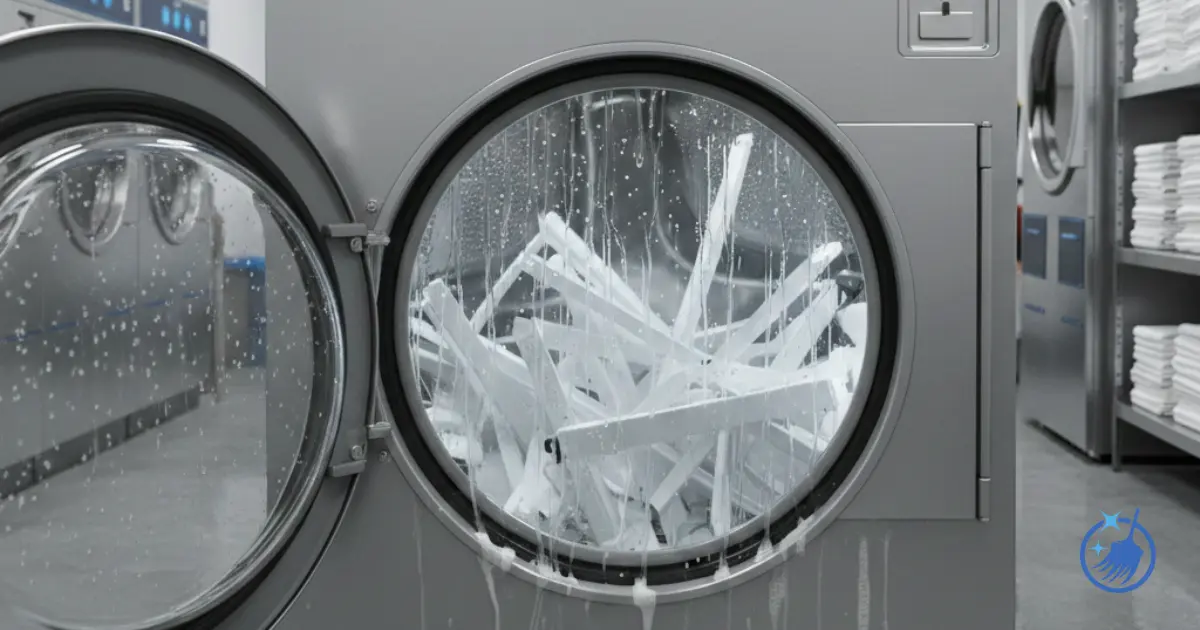
Can you put vertical blinds in the washing machine is one of those questions where the answer “it depends” genuinely applies. I’ve been asked this hundreds of times in my 18 years as a professional cleaner, and I’ve also seen the aftermath when people get it wrong – permanently warped, shrunk, or damaged blinds that end up in the bin.
The short answer? Some fabric vertical blinds can be machine washed if done correctly, but most shouldn’t be. PVC, vinyl, and blackout blinds should never go near a washing machine.
In this guide, I’ll show you exactly how to tell if your blinds are machine washable, the proper method if they are, why so many blinds get ruined in the wash, and the safer alternatives that give better results without the risk.
Here’s what you’ll learn: how to check if your specific blinds can be machine washed, the exact washing machine settings that won’t damage fabric blinds, why blackout and PVC blinds are never machine washable, and the hand washing method that’s actually easier and safer for most blinds.
Quick Summary
Time needed: 1-2 hours (including drying)
Difficulty: Moderate (risk of damage if done wrong)
You’ll need: Pillowcase or laundry bag, mild detergent, 30°C gentle cycle
Key takeaway: Only plain polyester fabric blinds without backing can be machine washed; PVC, vinyl, and blackout blinds will be ruined
The Most Important Rule: Check the Care Label First
Before you even consider putting vertical blinds in the washing machine, find the care label. It’s usually on the back of the headrail or on one of the end slats.
If the label says:
- “Machine washable” – You can proceed (following proper method)
- “Hand wash only” – Don’t machine wash
- “Wipe clean” – Don’t machine wash
- “Dry clean only” – Definitely don’t machine wash
- No label at all – Assume they’re not machine washable
I cannot stress this enough: if the manufacturer says don’t machine wash, don’t do it. They’ve tested their product and know what damages it. I’ve seen countless people ignore care labels and ruin expensive blinds.
The care label isn’t being overly cautious – it’s giving you accurate information about what the materials can handle.
Which Vertical Blinds Can Go in the Washing Machine?
Not all vertical blinds are created equal. Material makes all the difference.
Fabric Vertical Blinds That Might Be Machine Washable
Plain polyester fabric blinds:
- Lightweight polyester without backing
- Simple weave with no coating
- Flat fabric with no stiffening
- Usually the cheapest fabric blinds
These are the only type I’d ever consider machine washing, and even then only if the care label specifically allows it.
Signs your fabric blinds might be washable:
- They feel soft and flexible
- No backing material visible
- They don’t have a stiff, rigid feel
- Plain solid colours (not printed patterns)
Fabric Vertical Blinds That Are NEVER Machine Washable
Blackout vertical blinds:
- Have a foam or rubber backing
- The backing breaks down in water
- Creates bubbling and peeling
- Permanently damaged after one wash
I’ve seen blackout blinds destroyed in the wash more than any other type. The foam backing literally disintegrates.
Thermal-backed blinds:
- Similar issue to blackout blinds
- The thermal layer separates from fabric
- Cannot be repaired once damaged
Stiffened or coated fabric:
- Has a protective coating that washes off
- The stiffening treatment dissolves
- Blinds become limp and misshapen
Patterned or printed blinds:
- Prints can run or fade
- Colours bleed together
- Pattern distorts as fabric shrinks unevenly
Very old fabric blinds:
- Fabric has degraded over time
- More likely to tear or disintegrate
- Not worth the risk
PVC and Vinyl Vertical Blinds
Can they be machine washed?
Absolutely not. Never. Under no circumstances.
Why not?
- Heat warps them permanently
- Agitation bends and twists them
- They crack and split
- They curl at the edges
- Cannot be straightened once warped
PVC and vinyl blinds must be cleaned in place with a damp cloth. That’s the only safe method.
I’ve never once seen PVC blinds survive a washing machine cycle. They come out looking like twisted ribbon. Straight into the bin.
How to Machine Wash Vertical Blinds (If They're Suitable)
If you’ve checked the care label and confirmed your plain polyester fabric blinds are machine washable, here’s the only safe method:
Step 1 – Remove the Blinds Properly
Take down each slat carefully by releasing the clips at the top. Most vertical blind slats have a small tab you squeeze to release them from the track.
Remove the chain connector from the bottom of each slat. Some slats have weights in pockets at the bottom – take these out too.
Keep all the clips, chains, and weights together in a bag. You’ll need these when rehanging.
Step 2 – Prepare the Slats
Don’t just chuck 20 loose slats into the washing machine. This is asking for tangles and damage.
Roll each slat loosely and place inside a pillowcase or large mesh laundry bag. Don’t cram too many in – 5-6 slats per bag maximum.
Secure the pillowcase or bag closed properly. You don’t want slats escaping and wrapping around the drum.
Step 3 – Set the Washing Machine Correctly
This is crucial. Wrong settings will ruin your blinds even if they’re technically machine washable.
Temperature: 30°C maximum. Cold water is even safer.
Cycle: Gentle, delicate, or hand wash cycle only. Never regular or heavy duty.
Spin: No spin at all, or the absolute lowest spin setting your machine offers. High spin twists and creases fabric permanently.
Detergent: Small amount of mild liquid detergent. No bleach, no fabric softener, no stain removers.
Most washing machines in the UK have a delicates or wool cycle at 30°C with low spin – this is ideal.
Step 4 – Wash and Monitor
Start the cycle and check after 5 minutes that everything’s running smoothly. If you hear banging or unusual noises, stop immediately.
The wash cycle should be quiet and gentle. Loud thumping means something’s out of balance or the slats have escaped the bag.
Don’t add anything else to the wash. Blinds need the full drum space to move freely without bunching up.
Step 5 – Remove and Dry Immediately
Take the blinds out as soon as the cycle finishes. Don’t leave them sitting in the machine getting creased.
Remove slats from the pillowcase or laundry bag straight away.
Gently shake each slat to straighten it out whilst it’s still damp.
Step 6 – Air Dry Properly
You have two options for drying:
Option 1: Hang immediately (recommended)
- Rehang damp slats back on the track
- Close them so they hang straight
- Let them air dry whilst hanging
- Takes 3-4 hours in a well-ventilated room
- Weight pulls them straight as they dry
Option 2: Lay flat
- Lay slats flat on clean towels
- Don’t overlap them
- Turn once during drying
- Takes 4-6 hours
- Requires more space
I always rehang damp blinds rather than laying flat. Gravity does the work of keeping them straight, and they dry faster with air circulation around them.
Open windows or use a fan to speed up drying. Never use radiators, heated airers, or direct heat – this causes shrinkage and warping.
Why Washing Machines Ruin Most Vertical Blinds
Even when you follow all the rules, washing machines still damage blinds more often than you’d think. Here’s what goes wrong:
The agitation is too harsh – Even gentle cycles move more vigorously than hand washing. This stresses fabric and seams.
Slats twist during spin – Any spin, even minimal, creates twisting forces that crease fabric permanently.
Uneven shrinkage – Different parts of the slat shrink at different rates, causing warping.
Weights deform pockets – Even after removing weights, the pockets they sat in get stretched and distorted.
Edges fray – The constant movement in water weakens stitching and causes fraying.
Fabric loses body – Any stiffening treatment washes out, leaving blinds limp and saggy.
I’ve spoken to countless people who followed instructions perfectly and still ended up with damaged blinds. The washing machine just isn’t designed for this type of item.
This is why I almost always recommend hand washing or cleaning blinds whilst hanging – both methods are gentler and give you more control.
The Safer Alternative: Hand Washing Vertical Blinds
Hand washing gives far better results with much lower risk of damage. It takes a bit longer but it’s honestly not that much effort.
Method for Hand Washing Vertical Blinds
Fill your bathtub with lukewarm water (not hot) and add a small squirt of mild washing up liquid or laundry detergent. You want barely any suds.
Remove blinds from the track, taking out weights and chains as described earlier.
Submerge slats in the water and gently agitate with your hands. Don’t scrub, twist, or wring – just move them gently through the water.
Let them soak for 10-15 minutes if they’re heavily soiled. For light cleaning, 5 minutes is plenty.
Drain the dirty water and refill with clean lukewarm water for rinsing. Swish the blinds through the clean water to remove all soap.
Drain again and gently press (don’t wring) excess water from each slat.
Hang immediately on the track to dry, or lay flat on towels.
Why this works better:
- You control the agitation
- No harsh spinning
- You can feel if fabric is getting damaged
- Gentler on stitching and edges
- Less risk of shrinkage
- Takes about the same time as machine washing
I hand wash fabric blinds in my own home and for clients. It’s more predictable and I’ve never had a disaster, unlike with machine washing where even careful people sometimes ruin blinds.
What Happens When You Machine Wash the Wrong Blinds
Let me paint you a picture based on what I’ve seen over 18 years:
Blackout blinds after washing:
- The foam backing bubbles and peels
- Creates permanent lumpy texture
- Backing separates in chunks
- Blinds become semi-transparent where backing’s gone
- Absolutely ruined – cannot be fixed
PVC/vinyl blinds after washing:
- Come out twisted like corkscrews
- Edges curled and bent
- Surface cracked in places
- Will not straighten even when dried
- Look like melted plastic – completely unusable
Coated fabric blinds after washing:
- Coating washes away leaving streaky patches
- Colour fades unevenly
- Fabric becomes floppy and limp
- Lose their ability to hang straight
- Look shabby and worn even if they were new
Patterned blinds after washing:
- Colours bleed into each other
- Patterns distort as fabric shrinks
- Print can actually wash off in patches
- End up looking tie-dyed (not in a good way)
Every single one of these scenarios means new blinds. There’s no fixing them. That’s why I’m so cautious about recommending machine washing.
When Machine Washing Might Be Worth the Risk
I’m not saying never machine wash vertical blinds. There are times when it makes sense despite the risks:
Consider machine washing when:
- Blinds are cheap (under £30 replacement cost)
- They’re already stained or damaged
- You’re replacing them soon anyway
- The care label specifically says machine washable
- They’re plain polyester with no backing
- Hand washing isn’t physically possible for you
Don’t machine wash when:
- Blinds cost over £50
- They’re fairly new
- You care about keeping them perfect
- There’s any doubt about material
- No care label exists
- Hand washing is an option
Basically, only risk machine washing if you can afford to replace them when it goes wrong. Because there’s always a chance it will go wrong, even when you do everything right.
The Best Cleaning Method for Most Vertical Blinds
After 18 years of cleaning every type of blind, here’s what I genuinely recommend for most people:
For regular maintenance: Clean blinds whilst hanging using a damp microfibre cloth. Takes 10 minutes, zero risk, works perfectly well. I covered this in detail in my guide on cleaning vertical blinds without removing them.
For deep cleaning: Hand wash in the bathtub as described above. Yes, it’s a bit more effort than throwing them in the machine, but you’ll get better results with far less risk.
For heavily soiled or very old blinds: Sometimes replacement is honestly the best option. If blinds are so grotty they need machine washing, they might be beyond saving anyway.
Machine washing should be your last resort, not your first option. It’s just too risky for most vertical blinds, regardless of material.
Alternatives to Washing Machine Cleaning
If hand washing seems like too much hassle and machine washing is too risky, you have other options:
Professional Blind Cleaning
Professional blind cleaners have ultrasonic cleaning systems that clean without damaging blinds. Costs £3-5 per blind typically, so £15-30 for an average room.
Worth it for expensive blinds or if you’re not confident cleaning them yourself.
Steam Cleaning (Fabric Only)
Handheld steam cleaners work brilliantly on fabric blinds whilst they’re hanging. The steam lifts dirt without saturating fabric.
Hold the steamer 5-8cm away and move in vertical passes. Let dry completely before closing blinds.
Never steam PVC or vinyl – the heat warps them.
Spot Cleaning
For specific stains rather than overall dirt, spot cleaning is safest and easiest. Dab the stain with barely-damp cloth and mild detergent.
This approach works for most cleaning needs and carries virtually no risk.
Similar to cleaning other household items, often the simplest method is the safest and most effective.
Common Questions and Mistakes
"Can I wash vertical blinds on a cold wash?"
Cold wash is safer than 30°C, but temperature isn’t the main risk. The agitation and spin are what cause most damage. Cold wash reduces shrinkage risk but doesn’t eliminate damage from twisting and creasing.
"What if I just do a short cycle?"
Duration isn’t the issue – it’s the intensity of movement. Even a 15-minute delicate cycle can twist and damage blinds. Hand washing for 10 minutes is gentler than any machine cycle.
"My mum always washed hers and they were fine"
Older blinds were often made differently – simpler materials, better construction. Modern blinds, especially cheap ones, use thinner fabrics and cheaper construction that doesn’t survive washing. Also, survival bias – you remember the ones that survived, not the ones that got thrown out.
"Can I put the headrail in the washing machine?"
Absolutely not. Never wash the headrail or any mechanism parts. These contain clips, springs, and sometimes ball bearings that rust and seize up when wet. Wipe clean with damp cloth only.
"What about washing fabric blinds with the weights still in?"
No. Weights bash around in the machine and damage both the blinds and potentially your washing machine drum. They also stretch and distort the pockets they sit in. Always remove weights before washing.
How to Dry Vertical Blinds After Washing
Whether you’ve hand washed or machine washed (despite my warnings), proper drying is crucial:
Never use:
- Tumble dryer (shrinks and warps irreparably)
- Radiator (causes shrinkage and can scorch)
- Direct sunlight (fades colours)
- Heated airer (uneven drying and shrinkage)
- Iron (melts or scorches most blind materials)
Always do:
- Rehang damp on track to dry
- Open windows for air circulation
- Use fans to speed drying (on cool setting)
- Ensure complete drying before closing blinds (3-4 hours minimum)
Damp blinds closed together create the perfect environment for mould. Always let them dry completely whilst spread open.
If you notice any musty smell after drying, the blinds weren’t dried thoroughly enough. You’ll need to wash again or potentially replace them if mould has set in.
Maintaining Your Washing Machine for Delicate Items
If you do occasionally wash blinds or other delicate items, keep your washing machine in good condition for the best results.
Regular machine maintenance helps with all washing, not just blinds. I’ve written a complete guide on how to clean a washing machine that covers keeping it running perfectly.
A clean machine washes better and is gentler on delicate items. Build-up of detergent residue or limescale affects how smoothly the drum moves and how well items rinse.
When to Replace Rather Than Wash
Sometimes the honest answer is that blinds are beyond saving and need replacing:
Replace rather than wash when:
- Blinds are over 10 years old (fabric degrades)
- Heavy staining that won’t lift with spot cleaning
- Fabric has yellowed or faded significantly
- Seams are fraying or splitting
- Slats have permanent creases or warping
- Persistent musty smell that won’t wash out
- Visible mould throughout the fabric
- Replacement cost is under £50 for the window
I’ve seen people spend hours cleaning ancient blinds that frankly look terrible even after washing. Sometimes £40 for new blinds beats hours of effort on old ones.
New blinds from Argos, Dunelm, or online retailers aren’t expensive. Plain fabric vertical blinds for standard windows cost £20-50. Factor in your time and the risk of ruining them in the wash, and replacement often makes more sense than cleaning.
Pro Tips From 18 Years of Blind Cleaning
Insider Tips
After cleaning thousands of blinds across UK homes, here’s what I’ve learned about washing them:
- Test a single slat first – If you’re determined to machine wash, test one slat first. If it survives and looks good, proceed with the rest. If it’s damaged, you’ve only lost one slat instead of the whole set.
- Document before washing – Take photos of blinds before washing. If they come out different lengths or shapes, you’ll know they’ve shrunk or warped.
- Mark slats by position – Number slats before removing them (use tape on the back). This helps you rehang them in the correct order, which matters if they’ve faded unevenly.
- Check insurance – Some home insurance covers accidental damage to fixtures. If you ruin expensive blinds in the wash, it might be worth claiming.
- Budget for replacement – Before machine washing any blinds, find the replacement cost. If you’re not comfortable losing that amount, don’t risk it.
Can you put vertical blinds in the washing machine? Yes, sometimes – but in most cases, you shouldn’t. Plain polyester fabric blinds with no backing can survive machine washing if done carefully, but PVC, vinyl, blackout, and coated blinds will be ruined.
I’ve been cleaning homes across the UK for 18 years, and I’ve seen far more disasters from machine washing blinds than successes. The risk usually isn’t worth the slight time saving over hand washing or cleaning in place.
If you’re determined to machine wash, follow the method exactly: gentle cycle, 30°C maximum, no spin, use a pillowcase, and air dry by rehanging immediately. But honestly? Cleaning blinds whilst they’re hanging or hand washing in the bath gives better results with virtually no risk.
Your vertical blinds will last years longer if you clean them gently and regularly rather than subjecting them to the washing machine. A damp cloth monthly beats a risky machine wash annually.
Related guides:
- How to Clean Vertical Blinds – Complete guide for all vertical blind types
- How to Clean Vertical Blinds Without Removing Them – The safest cleaning method
- How to Clean Blinds – General guide covering all blind types
- How to Clean Roller Blinds – Different fabric blind cleaning
- How to Clean Venetian Blinds – Horizontal slat cleaning
- How to Clean a Washing Machine – Keep your machine in top condition
Frequently Asked Questions
Can you put vertical blinds in the washing machine?
Some plain polyester fabric vertical blinds can be machine washed on a gentle 30°C cycle with no spin, placed inside a pillowcase. However, PVC, vinyl, blackout, thermal-backed, and coated fabric blinds will be permanently damaged by machine washing and should never be washed this way.
Can you wash fabric vertical blinds in the washing machine?
Only plain polyester fabric blinds without backing or coating, and only if the care label specifically allows it. Use a gentle cycle at 30°C maximum, place blinds in a pillowcase, use minimal spin, and air dry by rehanging immediately. Most fabric vertical blinds should be hand washed instead.
What happens if you wash blackout vertical blinds?
Blackout vertical blinds will be ruined if machine washed. The foam or rubber backing breaks down in water, causing bubbling, peeling, and separation from the fabric. This damage is permanent and cannot be fixed. Blackout blinds must be spot cleaned or professionally cleaned only.
Can PVC vertical blinds go in the washing machine?
Never put PVC or vinyl vertical blinds in a washing machine. The heat and agitation will warp, bend, crack, and curl them permanently. They come out twisted and unusable. PVC and vinyl blinds must be cleaned with a damp cloth whilst hanging – no other method is safe.
How do you wash vertical blinds without ruining them?
The safest method is hand washing in a bathtub with lukewarm water and mild detergent. Soak for 10-15 minutes, rinse thoroughly, gently press out excess water (don’t wring), and rehang damp to air dry. This gives better results than machine washing with far less risk of damage.
What temperature should you wash vertical blinds?
If machine washing is appropriate for your blinds (plain polyester only), use 30°C maximum on a gentle cycle. Cold water is even safer. Never use hot water as this causes shrinkage and can melt or damage coatings. Most damage comes from agitation and spin rather than temperature.
Can you tumble dry vertical blinds?
Never tumble dry vertical blinds. The heat causes severe shrinkage, warping, and can melt or scorch the fabric. Always air dry by rehanging damp blinds on the track or laying flat on towels. Allow 3-4 hours drying time with good air circulation before closing the blinds.
How often should you wash vertical blinds?
Most vertical blinds don’t need washing. Clean them monthly with a damp cloth whilst hanging, which is sufficient for maintenance. If deep cleaning is needed, once or twice a year maximum. Frequent washing degrades fabric and increases risk of damage – prevention through regular light cleaning is better.
What's the best way to clean vertical blinds?
The best method is cleaning them whilst hanging using a damp microfibre cloth with warm soapy water, wiping each slat top to bottom and drying immediately. This takes 10-15 minutes, carries no risk of damage, and works for all blind types including PVC and blackout blinds.
Can you wash vertical blinds with the weights in?
No, always remove weights before washing. Weights bash around in the washing machine and can damage both the blinds and the machine drum. They also stretch and distort the pockets they sit in. Remove all weights, chains, and connectors before any washing method.
You May Also Like

How to Clean Shower Tiles: Complete Guide for 2026
How to Clean Shower Mold: Complete Removal Guide 2026