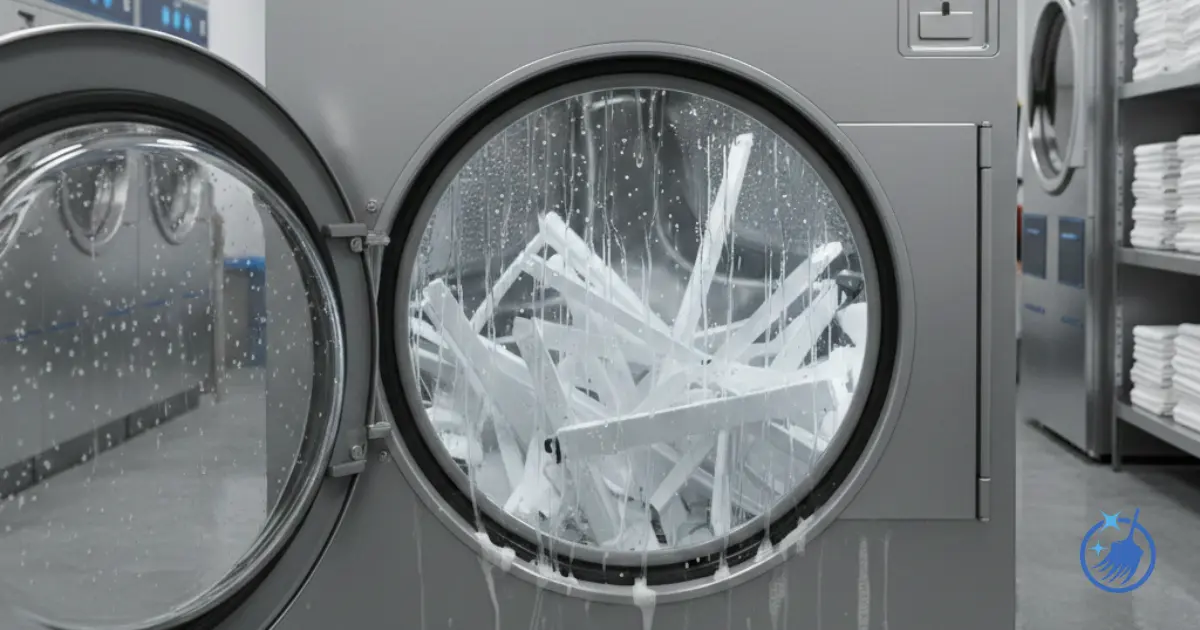
Short answer: only if the care label says so. A few plain, unbacked polyester vertical blind vanes can take a cold or 30°C delicate wash inside a pillowcase, with no spin and no tumble dryer. PVC, vinyl, blackout, thermal-backed and coated vanes should never go in a washing machine, and neither should the headrail, chains or weights.
If the label is missing or you are not sure what the vanes are made of, treat them as not washable. Hand washing in the bath or wiping them while they hang is slower to describe but kinder to the material, and it is what most manufacturers recommend for blinds. The rest of this guide covers how to tell which type you have, the machine method for the few that qualify, and the safer routes for everything else.
| Your blind vanes | Machine wash? | Better method |
|---|---|---|
| PVC or vinyl | No, heat and agitation warp them | Wipe in place with warm soapy water, see our guide on cleaning PVC vertical blinds |
| Plain polyester fabric, label says machine washable | Possibly, on a delicate wash | Hand wash flat is still the lower-risk option |
| Blackout, thermal or foam-backed fabric | No, the backing can peel and bubble | Spot clean or wipe in place |
| Stiffened or coated fabric | No, the finish can wash out | Spot clean, then air dry |
| Printed or patterned fabric | Not advised, colour may run | Test a hidden spot, then hand wash |
| Vanes with sewn-in weights | No, unless the weights come out first | Hand wash with weights removed |
Read the care label before you touch a clip
The care label is usually on the back of the headrail or on the end of a vane. Manufacturers write it for the materials and construction of that particular blind, so it overrides general advice, including this article.
- Machine washable: you can follow the method below, still on the gentlest setting.
- Hand wash only, wipe clean or spot clean: do not machine wash.
- Dry clean only: do not machine wash or soak. See our guide to dry cleaning at home if you want to know what is realistic, otherwise use a professional blind cleaner.
- No label: assume not machine washable and test a hidden corner of a vane when hand washing.
Keeping the original packaging or fitting instructions is worth it for next time, since they sometimes name the fabric. If a supplier’s website lists the blind, the product page often gives the care instructions too.
What the vanes are made of decides everything
Plain polyester fabric, the only realistic candidate
Lightweight, soft, unbacked polyester with a simple weave is the only vertical blind fabric that has a chance in a machine, and only when the label allows it. It tends to feel flexible rather than stiff, shows no foam or rubber layer on the back and is usually a plain colour rather than a printed pattern.
A quick check you can do without washing anything: turn a vane over and look at the back. A different coloured or rubbery layer, a shiny coating, or a vane that feels noticeably heavier and stiffer than a plain curtain lining all point to a backed or coated blind. Bend a corner gently. Plain fabric folds softly, whereas plastic springs back or shows a crease line.
Fabrics that should never be machine washed
- Blackout and thermal-backed vanes. They have a foam, rubber or acrylic backing bonded to the fabric. Water and agitation can make it bubble, peel and separate, and that cannot be repaired.
- Stiffened or coated vanes. The stiffening treatment is what keeps the vane hanging straight. A wash can leave it limp, streaky and misshapen.
- Printed or patterned vanes. Dyes and prints can run, fade or distort as the fabric moves and shrinks unevenly.
- Old or sun-weakened vanes. Fabric that has been in a bright window for years is more likely to split at the seams or tear when wet.
- PVC and vinyl. These are plastic rather than fabric. Warm water and a tumbling drum can warp and curl them for good. Wipe them clean in place instead.
If you are unsure which of these you have, it is simpler to follow the in-place routine in cleaning vertical blinds without removing them, or the general vertical blinds guide. For fabric specifically, cleaning fabric vertical blinds goes into more detail.
The machine method, for blinds the label allows
Before you start, vacuum or dust each vane lightly while it still hangs, so loose grit does not get worked into the fabric. Pre-treat any single mark by dabbing it with a little diluted detergent on a cloth, and check a hidden spot for colour transfer first. Make sure the window sill and floor are covered or clear, because the headrail is easiest to handle with both hands free.
If the label says machine washable and the vanes are plain fabric, work through these steps. Do not skip the bagging or the spin setting, because those are where most of the damage happens.
- Take the vanes down. Squeeze or turn the clip or hook at the top of each vane to release it from the carrier. Unclip the bottom chain and slide out any weights. Keep clips, chain, and weights together in a bag, as you will need them to rehang.
- Number them. A small piece of masking tape on the top corner of each vane lets you rehang them in the original order, which matters if they have faded unevenly in the sun.
- Bag them loosely. Roll or fold each vane without creasing and put them in a pillowcase or large mesh laundry bag, a handful per bag, then tie or zip it shut. Loose vanes tangle in the drum and around the door seal.
- Choose the gentlest programme. Cold or 30°C at most, on a delicates, wool or hand wash programme, with no spin or the lowest spin your machine has. Add a small amount of mild liquid detergent. Leave out bleach, fabric softener and stain remover.
- Listen for trouble. After a few minutes, make sure the drum is turning quietly. Loud thumping can mean the bag is unbalanced or a vane has come loose, so stop and fix it.
- Take them out straight away. Do not let them sit damp and creased in the drum. Shake each vane out gently.
Never tumble dry. Heat can shrink and warp blind fabric beyond repair. Air dry only, away from radiators, heated airers and direct hot sun.
Rehanging and checking the result
Clip each vane back in the order you numbered, reattach the bottom chain and slide the weights in last. Run the blind open and closed a couple of times. If a vane has a crease, rehang it damp and let the weight work on it, rather than ironing, because heat can mark or melt the fabric. A vane that has clearly shrunk or curled at the edge will not recover, and the sensible next step is to replace that vane.
Drying them so they hang straight
The best option is to rehang the vanes while they are still damp, with the headrail open so that air can circulate between them. Gravity and the weights then pull each vane straight as it dries. If that is not practical, lay them flat on clean towels without overlapping and turn them once. A window open or a fan on a cool setting helps. Leave the blinds fully open until they are completely dry, because damp vanes pressed together can go mouldy and smell musty.
Why a hand wash usually wins
Even a gentle machine programme moves a vane around more than a person would. Agitation stresses seams and stitching, spinning twists and creases the fabric, and different parts of a vane can shrink at different rates, so it can come out wavy. The weight pockets can stretch even when empty, and any stiffening can leave the fabric. None of that is guaranteed to happen, but it is why a care label that permits machine washing is not a promise of a perfect result.
Hand washing also lets you treat the vanes differently. A heavily marked bottom edge, where hands, pets and radiators do the most damage, can be given a little more attention than the top, which only collects dust.
How to hand wash vertical blind vanes
- Take the vanes down as above, removing chains and weights.
- Run lukewarm water into the bath or a large basin and add a small squirt of mild washing-up liquid or laundry detergent. You want very few suds.
- Lay the vanes in the water and move them gently with your hands. Do not scrub, twist or wring.
- Leave heavily soiled vanes to soak for 10 to 15 minutes. Lightly dusty ones need only a few minutes.
- Drain, refill with clean lukewarm water and swish to rinse out the soap. Repeat if they still feel slippery.
- Press the water out gently between towels rather than wringing, then rehang them damp or lay them flat to dry.
You control the pressure, and you can see and feel if the fabric is struggling. That is the real advantage, and it takes about the same time as setting up a machine load. For hot or hot-ish water, do not exceed what the care label says. Vertical blinds that are only a bit dusty may not need washing at all. A monthly pass with a duster or a damp microfibre cloth, as in our guide on how to clean blinds, keeps most of the grime from building up.
Stubborn marks on hand washed vanes
Greasy film, common on blinds near a cooker, usually responds to a slightly stronger washing-up liquid solution applied with a cloth and rinsed well. Fingermarks and dusty streaks on the lower edge rarely need more than the same solution and a soft cloth. Anything that survives that, such as ink, paint or old tea, is worth treating as a spot-cleaning job on its own: dab, do not rub, work from the outside of the mark inwards, and stop if colour starts to come off on the cloth. Rinse the treated area with a clean damp cloth so no detergent is left behind to attract more dust.
What goes wrong when the wrong blind is washed
| Type | What usually happens | Can it be fixed? |
|---|---|---|
| Blackout or thermal backing | Backing bubbles, peels and comes away in patches, leaving thin, uneven vanes | No, replace the vanes |
| PVC or vinyl | Vanes twist, curl at the edges and may crack | No, they rarely flatten again |
| Coated or stiffened fabric | Coating washes out, leaving streaks and limp, floppy vanes | Rarely |
| Printed fabric | Colours bleed or fade in patches, the pattern can distort | No |
| Weighted vanes washed with weights in | Pockets stretch, weights can bang around the drum | Replace damaged vanes |
Individual vanes can usually be replaced on their own, which is cheaper than a whole new set, so it is worth checking before you bin an entire blind.
When risking the machine can make sense
It is a judgement about what you can afford to lose. The label should allow it and the vanes should be plain, unbacked fabric. Beyond that, the sensible cases are:
- The blinds are cheap to replace and you are replacing them soon anyway.
- They are already badly stained, so there is little to lose.
- You cannot physically manage hand washing in a bath.
- You are willing to test one vane first. If it survives a wash and dries flat, the others are more likely to be fine.
Avoid it for new, expensive or made-to-measure blinds, for anything with doubtful materials, and for blinds with no label. Take photos before washing and check the measurements afterwards. If the vanes come out noticeably shorter or wavy, they have shrunk or warped, and a retailer is unlikely to treat that as a fault. Some home insurance policies cover accidental damage to fixtures, but check your own policy before relying on it.
Other ways to get blinds clean without a wash
If the problem is dust and a little grime rather than stains, you may not need to wash anything. Close the blind so that the vanes overlap, wipe one way, then open them the other way and repeat for the reverse side. It is faster than taking them down and removes most of what makes them look grubby.
Wiping and spot cleaning
A barely damp microfibre cloth with a drop of mild detergent handles most marks on fabric or PVC. Work top to bottom on each vane, then go over it with a dry cloth. For fabric, dab rather than rub so the stain does not spread. Our guides on roller blinds and Venetian blinds use the same principle for other blind types.
Steam, for fabric only
A handheld steamer can freshen fabric vanes while they hang. Keep it moving and a few centimetres away, check the manufacturer’s instructions first, and let the fabric dry completely before closing the blind. Never steam PVC or vinyl, as the heat distorts them.
A professional blind cleaner
Specialist blind cleaning firms exist and may be worth asking about for expensive or made-to-measure blinds. Ask what method they use, whether they take the blinds away, and whether they cover damage. Prices vary, so get a quote.
Replace, don’t wash
Some blinds are past saving. Consider replacing or swapping out individual vanes when:
- Fabric is yellowed, faded or brittle from long sun exposure.
- Seams are fraying or splitting.
- Vanes are permanently creased or warped.
- There is visible mould, or a musty smell that returns after drying.
- Stains have not shifted with spot cleaning.
It also helps to think about the room. Blinds in a kitchen, bathroom or smoking household collect more grease and moisture and may need more frequent attention than the ones in a spare bedroom, and if the headrail mechanism has become stiff or the carriers are cracked, new fittings may be a better use of money than new fabric.
Compare what a replacement vane or set costs against the time you would spend cleaning. For a basic plain fabric blind, replacing is sometimes the more sensible choice than spending an afternoon on tired fabric.
What helps, and what to buy
You can do all of this with a bath, towels and a kitchen cloth. These are the extras that make it easier. The links are Amazon UK searches, so compare sizes and reviews yourself. As an Amazon Associate we earn from qualifying purchases.
| Item | What to look for | Best for |
|---|---|---|
| Blind duster brush | Soft bristles or microfibre that wrap both sides of a vane | Regular dusting so washing is rarely needed |
| Fabric stain remover | Colour-safe formula that is suitable for the fabric; test a hidden spot first | Spot cleaning a single mark on fabric vanes |
| Large mesh laundry bag | Zip closure and fine mesh; large enough to hold vanes loosely | Protecting vanes if the label allows machine washing |
| Replacement blind vanes | Measure the width and drop and check the headrail fitting type | Swapping out damaged vanes instead of the whole set |
Keeping the washing machine itself in good order matters too if you wash anything delicate in it. See how to clean a washing machine, and the best washing machine cleaners in the UK for what to use. The rest of our cleaning guides are on the home page.
Questions people ask about washing vertical blinds
What if my vertical blinds have no care label?
Assume they are not machine washable. Test a hidden corner of one vane with a damp cloth and a drop of mild detergent, and check for colour transfer. If the supplier’s website or the fitting instructions name the fabric, follow that. Otherwise hand wash or wipe in place, never use a machine.
Can you wash vertical blinds in the bath?
Yes, for most fabric vanes this is the usual safe route. Use lukewarm water and a small amount of mild detergent, and keep them flat. Do not do this with PVC or vinyl vanes, which are better wiped in place, and avoid soaking blackout or backed fabric because the backing can lift.
Can I use bleach on vertical blinds?
Avoid it. Bleach can strip colour, weaken fabric and damage coatings or backing, and it is not needed for ordinary dirt. Mild detergent and water do the job. Never mix bleach with other cleaning products, because some combinations release harmful fumes.
How do I get a musty smell out of fabric vertical blinds?
A musty smell usually means the vanes stayed damp or have mould. Wash or wipe them with mild detergent, rinse well and dry them thoroughly with the blind open and a window or fan helping. Visible mould that returns after cleaning is a reason to replace the vanes.
How often should vertical blinds be cleaned?
Dust them every few weeks with a duster or damp microfibre cloth, more often in kitchens or by open windows. A deeper clean once or twice a year is usually enough. Frequent full washing wears fabric faster, so regular light cleaning is better.
Do I need to take the headrail down to wash the vanes?
No. Only the vanes come off, and only if you are washing them. The headrail, carriers, chains and weights should not be soaked. Wipe them with a damp cloth and dry them before rehanging, since moisture can rust metal parts and make the mechanism stiff.
Can I buy single replacement vanes?
Often yes, from blind suppliers and online sellers. Measure the width and drop of a vane, note the top fitting and the colour or fabric, and take a photo. An exact match in fabric can be hard if the blind is old, so some people replace a whole set at once.