How to Clean a Dishwasher: Simple Method That Actually Works


How to clean a dishwasher properly is something I get asked about constantly. Last month, a client called me out to repair her “broken” dishwasher—dishes weren’t coming clean, strange smells, poor drainage. After 18 years as a professional cleaner, I knew exactly what the problem was before I arrived. Twenty minutes and £2 worth of vinegar later, her dishwasher was working perfectly. The issue? She’d never cleaned it once in three years.
Your dishwasher cleans your dishes, but nothing cleans the dishwasher itself. Food particles, grease, limescale, and detergent residue build up in the filter, spray arms, and hidden crevices. This reduces cleaning performance, causes unpleasant odours, and can lead to expensive repairs or breakdowns. In the next 30 minutes, I’ll show you exactly how to deep clean your dishwasher using items from your kitchen cupboard.
Quick Summary
Time needed: 15 minutes active, 2 hours waiting time
Difficulty: Easy
You’ll need: White vinegar, bicarbonate of soda, washing up liquid, clean cloths
Key takeaway: Monthly cleaning with vinegar and bicarbonate keeps your dishwasher running efficiently and prevents breakdowns
What You'll Need
For a basic dishwasher clean:
- White vinegar (500ml bottle, about £1 from any supermarket)
- Bicarbonate of soda (500g box, 50p-£1)
- Washing up liquid (Fairy or supermarket own-brand)
- Clean microfibre cloths or tea towels
- Old toothbrush or small soft brush
- Warm water
- Rubber gloves (optional but recommended)
For stubborn limescale or deep cleaning:
- Commercial dishwasher cleaner (Finish Machine Cleaner £3-5, or own-brand alternatives)
- Descaling solution (for hard water areas)
- Cotton buds for spray arm holes
How to Clean a Dishwasher – Step-by-Step Guide
Step 1 – Empty and Inspect the Dishwasher (2 minutes)
Remove all dishes, cutlery, and racks from your dishwasher. Check inside the drum for any large debris—I’ve found everything from bottle tops to fragments of broken plates hiding in there. Pull out the bottom rack completely to access the filter area.
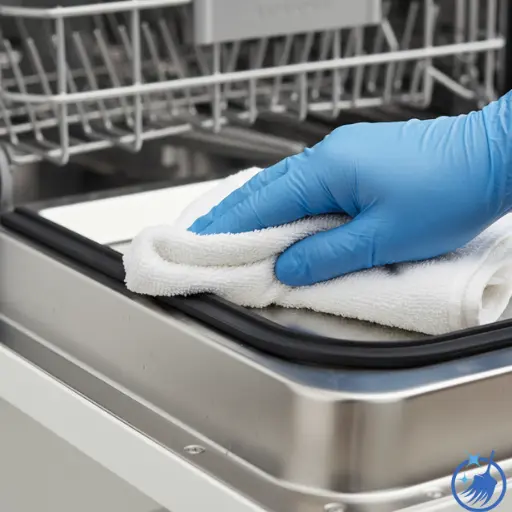
Take this opportunity to look at the door seals and edges. These rubber seals trap food particles and grime that never get washed away during normal cycles. You’ll probably spot black mould or grease buildup if you’ve never cleaned them before.
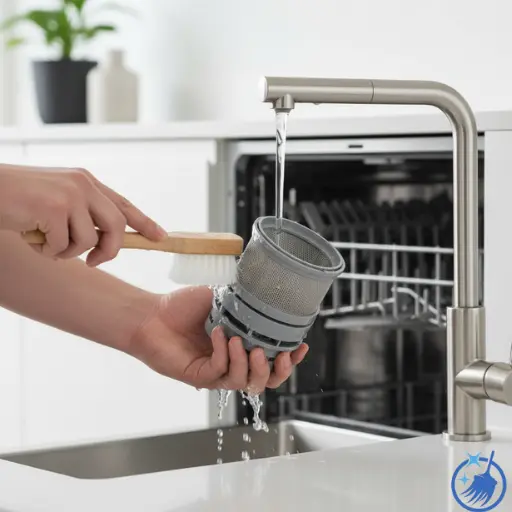
Step 2 – Remove and Clean the Filter (5 minutes)
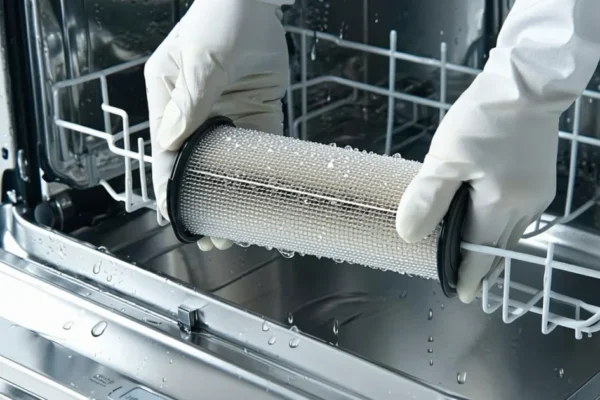
This is the most important step. Your dishwasher filter catches food particles to prevent them clogging the drain. Most people never clean it, which is why their dishwasher stops working properly.
Locate your filter: It’s at the bottom of the dishwasher, usually in the centre or back corner. On most models, it’s a cylindrical mesh component that twists or lifts out.
Remove carefully: Turn anticlockwise (usually) and lift out. Some filters have two parts—a coarse outer filter and a fine inner mesh. Separate them both.
Wash thoroughly: Rinse under hot running water. Use an old toothbrush to scrub away stuck-on food, grease, and grime. I spend a good 2-3 minutes on this because a clean filter makes the biggest difference to performance.
Check the filter housing: With the filter removed, look into the cavity below. Use your fingers (wearing gloves) or a cloth to remove any debris sitting there. I once found a complete chicken bone lodged in a client’s filter housing.
Step 3 – Clean the Spray Arms (5 minutes)
The spray arms distribute water throughout the dishwasher. Tiny holes in these arms get blocked with limescale and food particles, reducing water pressure and cleaning effectiveness.
Remove the spray arms: The bottom arm usually twists or clips off. The top arm may need you to unscrew a plastic nut in the centre. Check your manual if you’re unsure—different brands have different mechanisms.
Inspect the holes: Hold them up to the light. You’ll likely see some holes are partially or completely blocked. This is especially common in hard water areas.
Clear blocked holes: Use a cocktail stick, toothpick, or straightened paperclip to poke through each hole. For stubborn limescale, soak the spray arms in a bowl of white vinegar for 30 minutes, then clear the holes.
Rinse thoroughly: Run them under hot water, shaking to remove dislodged debris. Ensure water flows freely through all holes before reinstalling.
Step 4 – Clean Door Seals and Edges (3 minutes)
This area accumulates grime because normal wash cycles don’t reach it. It’s also where mould grows most easily.
Mix a small amount of washing up liquid with warm water. Dip a cloth in the solution and wipe all around the door seal, paying particular attention to the folds and crevices. Use an old toothbrush for stubborn areas.
Check the hinges, the bottom edge where the door closes, and any detergent dispenser areas. These spots collect surprising amounts of grease and food residue.
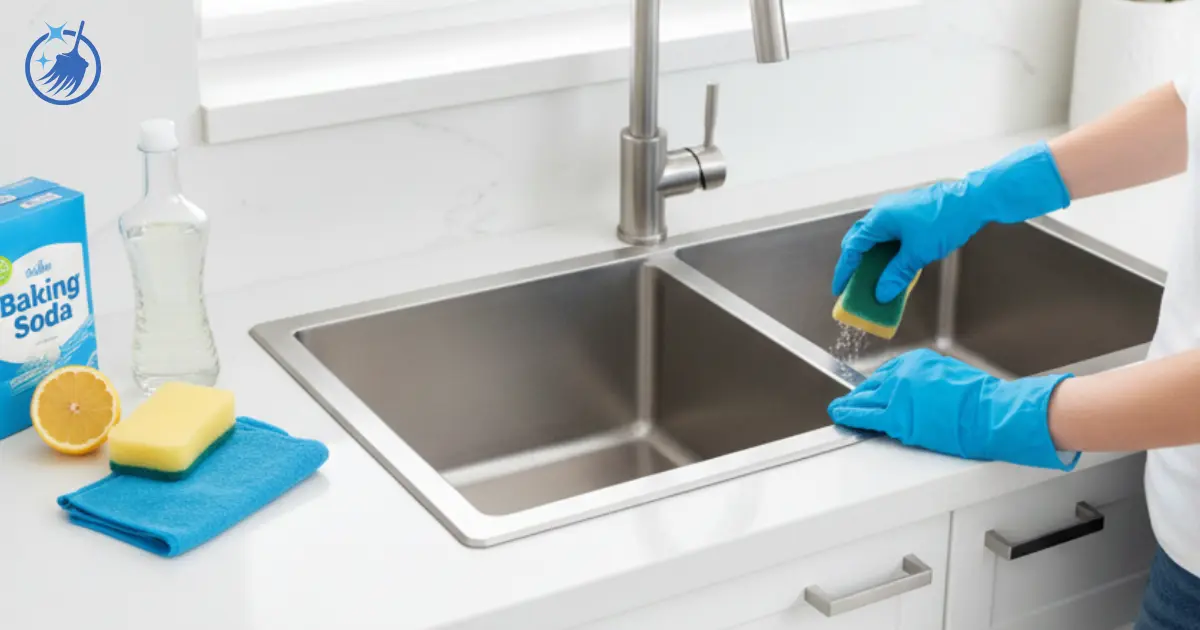
For black mould on seals, make a paste of bicarbonate and water. Apply with an old toothbrush, scrub gently, then wipe clean with a damp cloth.
Step 5 – Run a Vinegar Cycle (1 hour)
Replace the spray arms and filter. Pour 500ml (about one pint) of white vinegar into the bottom of the empty dishwasher. Don’t put it in the detergent dispenser—pour it directly into the base.
Run a hot cycle. I use the longest, hottest cycle available (usually 65-70°C). The vinegar circulates through the entire system, dissolving limescale, cutting through grease, and neutralising odours.
Why this works: White vinegar is acidic (acetic acid), which breaks down mineral deposits and soap scum. It’s completely safe for all dishwasher components and costs a fraction of commercial cleaners.
Leave the door open for 30 minutes after the cycle finishes to let everything air dry and allow vinegar smells to dissipate.
Step 6 – Run a Bicarbonate Cycle (1 hour)
Sprinkle one cup (about 200g) of bicarbonate of soda across the bottom of the dishwasher. Run another hot cycle—a shorter one is fine this time.
The bicarbonate deodorises, removes any remaining stains, and leaves the dishwasher fresh and clean. It also neutralises any lingering vinegar smell and brightens the interior.
Step 7 – Clean the Exterior (5 minutes)
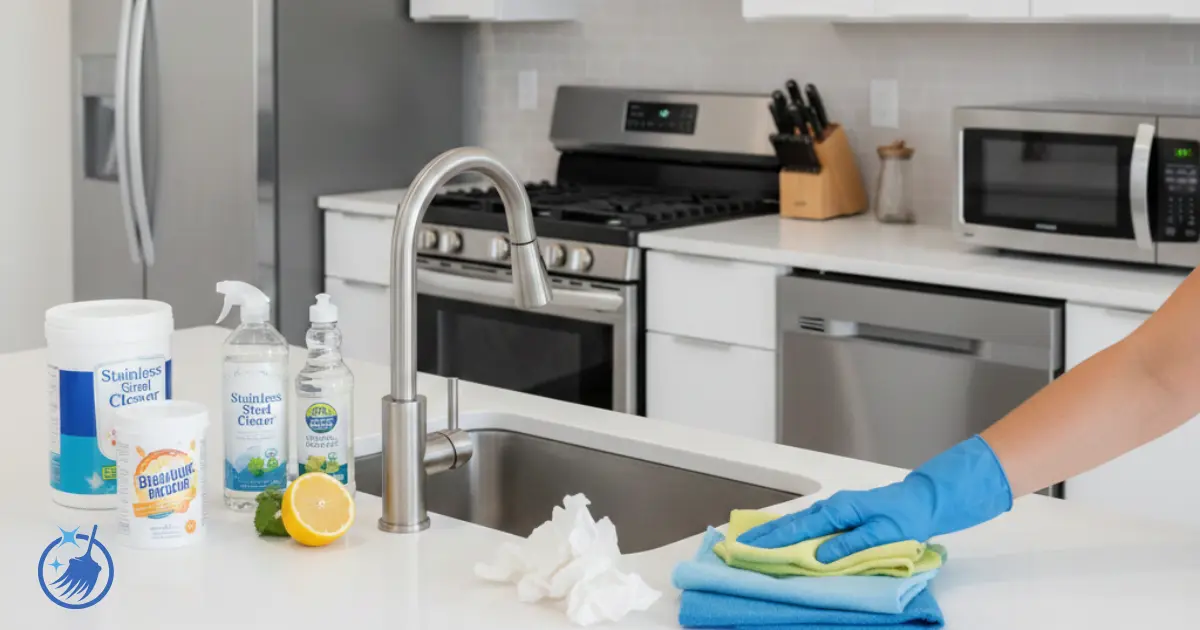
Mix washing up liquid with warm water. Dampen a cloth and wipe down the outside of the dishwasher, including the door front, handle, and control panel.
For stainless steel fronts, wipe in the direction of the grain to avoid streaks. Dry with a clean cloth to prevent water marks.
Complete Cleaning Checklist
Every time you clean your dishwasher, check you’ve done:
- ✓ Removed and scrubbed the filter thoroughly
- ✓ Cleaned spray arm holes (all of them)
- ✓ Wiped door seals and edges
- ✓ Run vinegar cycle on hottest setting
- ✓ Run bicarbonate cycle
- ✓ Cleaned the exterior
- ✓ Left door open to air dry
Total time: 30 minutes work, 2 hours waiting
How Often Should You Clean Your Dishwasher?
Based on 18 years of professional experience, here’s my recommended cleaning schedule:
| Cleaning Task | Frequency | Why |
|---|---|---|
| Remove visible debris from filter | After each wash | Prevents blockages and maintains drainage |
| Wipe door seals | Weekly | Stops mould growth and keeps seals fresh |
| Clean filter thoroughly | Every 2 weeks | Essential for performance and hygiene |
| Full deep clean (vinegar + bicarbonate) | Monthly | Removes limescale, grease, and odours |
| Clean spray arms | Every 3 months | Maintains water pressure and distribution |
| Descale (hard water areas) | Every 3 months | Prevents limescale buildup affecting performance |
If you live in a hard water area (most of the UK), you may need to clean more frequently. If your dishwasher starts smelling or dishes aren’t coming clean, do an immediate deep clean regardless of schedule.
How to Clean Dishwasher Filter Properly
The filter deserves special attention because it’s the single most important component for cleaning performance. Here’s my detailed method:
Weekly quick clean: After running a wash, let the dishwasher cool for 10 minutes. Remove the filter, rinse under hot water for 30 seconds, and replace. Takes less than a minute but makes a huge difference.
Fortnightly deep clean: Remove the filter and separate all components (coarse and fine filters). Soak in a bowl of hot water with a squirt of washing up liquid for 15 minutes. Scrub every part with an old toothbrush, paying attention to the mesh. Rinse thoroughly and check that water flows freely through all parts.
For heavily soiled filters: If food is baked on, soak overnight in hot water with a tablespoon of bicarbonate. In the morning, the debris will brush away easily.
Signs your filter needs immediate cleaning:
- Dishes coming out dirty with food particles
- Water pooling in the bottom after a cycle
- Unpleasant smell when you open the door
- Dishwasher making unusual noises during wash
- Cycle taking longer than normal
I’ve seen dishwashers where the filter was so clogged, water couldn’t drain at all. The owner thought the machine was broken and was about to spend £400 on a new one. Five minutes of filter cleaning solved the problem completely.
How to Clean Dishwasher Spray Arms
Blocked spray arms are the second most common cause of poor cleaning performance. Here’s exactly how to clean them properly:
Visual inspection: Before removing them, run your dishwasher empty and stop it mid-cycle. Open the door (carefully—hot steam will escape) and check if the spray arms are rotating freely. If they’re not spinning or spinning slowly, they’re likely blocked.
Removal technique:
- Bottom arm: Usually twists anticlockwise and lifts out, or has a clip underneath
- Top arm: Often requires unscrewing a plastic nut in the centre. Turn anticlockwise.
- Some models: Have a third spray arm at the very top for the cutlery basket area
Deep cleaning method:
- Remove spray arms and rinse under hot water
- Fill a washing-up bowl with equal parts white vinegar and hot water
- Submerge spray arms completely and soak for 30-60 minutes
- Use a cocktail stick or straightened paperclip to clear each hole
- Use a bottle brush to clean inside the arms themselves
- Rinse thoroughly under hot running water
- Shake vigorously to remove water and dislodged debris
- Hold up to light to ensure all holes are clear
Common issues:
- Limescale (white crusty deposits): Soak in neat white vinegar for an hour, then clear holes
- Grease (sticky residue): Wash in very hot water with plenty of washing up liquid
- Food particles: Clear mechanically with cocktail sticks

Spray arms should spin freely when you flick them with your finger. If they’re stiff or don’t rotate, check for debris around the mounting point.
How to Clean a Smelly Dishwasher
A smelly dishwasher is usually caused by one of three things: a dirty filter, food trapped in the door seal, or standing water. Here’s how to eliminate odours completely:
Immediate fixes:
Clean the filter thoroughly: 90% of dishwasher smells come from here. Remove, scrub, soak if needed, and ensure it’s spotless.
Check the drain: Sometimes water doesn’t drain completely and sits in the bottom, going stagnant. If you see standing water after a cycle, you have a drainage problem. Clean the filter and check the drain hose isn’t kinked.
Scrub door seals: Food particles trapped in the rubber seals rot and smell terrible. Mix bicarbonate with water into a paste, scrub thoroughly with an old toothbrush, then wipe clean.
Deep deodorising method:
Run this sequence whenever your dishwasher smells:
- Remove everything: Take out racks and clean the filter
- First cycle – Vinegar: Pour 500ml white vinegar in the base, run the hottest cycle
- Second cycle – Bicarbonate: Sprinkle 200g bicarbonate in the base, run hot cycle
- Third cycle – Lemon (optional): Place half a lemon on the top rack, run short hot cycle
This three-cycle deep clean eliminates even the most stubborn odours. The vinegar kills bacteria causing the smell, the bicarbonate neutralises odours, and the lemon leaves a fresh scent.
Preventing smells:
- Scrape plates before loading (rinsing isn’t necessary, but scraping is)
- Run your dishwasher regularly—don’t let dirty dishes sit for days
- Leave the door ajar after a cycle to let moisture escape
- Clean the filter fortnightly without fail
- Keep the door seal clean and dry
How to Clean Dishwasher with Vinegar and Bicarbonate
This is my go-to method for monthly deep cleaning. It’s natural, cheap, and incredibly effective. Here’s exactly how I do it:
Step 1 – Preparation (5 minutes):
- Empty the dishwasher completely
- Remove and clean the filter thoroughly
- Wipe down door seals
- Remove any visible debris from the bottom
Step 2 – Vinegar cycle (1 hour):
- Pour 500ml (1 pint) white vinegar directly into the bottom of the dishwasher
- Do NOT add any detergent or put vinegar in the dispenser
- Run the longest, hottest cycle available (usually 65-70°C)
- Leave the door open for 30 minutes after the cycle to air out
Step 3 – Bicarbonate cycle (1 hour):
- Sprinkle 200g (1 cup) bicarbonate of soda evenly across the bottom
- Run a hot cycle—can be shorter than the vinegar cycle
- Leave door open afterwards to dry
Why this combination works:
Vinegar (acidic): Dissolves limescale, cuts through grease, kills bacteria, neutralises odours, and removes soap scum. The acid breaks down mineral deposits that build up in the spray arms, heating element, and pipes.
Bicarbonate (alkaline): Absorbs odours, acts as a gentle abrasive for stains, brightens the interior, neutralises any remaining vinegar, and creates a fresh environment.
Together, they provide a complete clean that matches or exceeds commercial cleaners costing ten times as much.
Cost comparison:
- Finish Dishwasher Cleaner: £4-5 per use
- Vinegar + bicarbonate: About 60p per deep clean
I’ve been using this method for 18 years on my own dishwasher and countless client machines. It’s never failed me once.
How to Deep Clean a Dishwasher
When your dishwasher hasn’t been cleaned in months (or ever), or when it’s not performing well, you need more than basic maintenance. Here’s my deep cleaning protocol:
Complete deep clean (allow 3-4 hours including cycle times):
Phase 1 – Dismantling and Manual Cleaning (30 minutes):
- Remove all racks, cutlery basket, and removable parts
- Wash racks in hot soapy water in the sink or bath
- Remove and thoroughly clean the filter
- Remove spray arms and soak in vinegar solution
- Clean door seals, edges, and hinges with washing up liquid
- Wipe down the interior walls and door
Phase 2 – Spray Arm Deep Clean (30 minutes):
- While soaking in vinegar, use this time to clear all spray arm holes
- Use a bottle brush to clean inside the spray arms
- Ensure they spin freely when reinstalled
Phase 3 – First Hot Cycle – Commercial Cleaner (1.5 hours): For a neglected dishwasher, I start with a commercial cleaner like Finish Machine Cleaner (£4). Place the bottle in the bottom rack as directed and run the hottest cycle. This tackles heavy limescale and grease buildup.
Phase 4 – Second Hot Cycle – Vinegar (1.5 hours): Follow with 500ml vinegar in the base, running another hot cycle. This removes any residue from the commercial cleaner and provides additional descaling.
Phase 5 – Final Cycle – Bicarbonate (1 hour): Finish with bicarbonate to deodorise and brighten.
Optional extras for severe cases:
- Limescale removal: Use a dedicated descaler if you see thick white deposits
- Mould treatment: Make a paste of bicarbonate and water, apply to mouldy seals, leave for an hour, then scrub
- Drain cleaning: If water drains slowly, the hose may be partially blocked
After a deep clean, your dishwasher should look, smell, and perform like new.
How to Remove Limescale from Dishwasher
Limescale is a particular problem in hard water areas (most of England and Wales). It appears as white, chalky deposits on the heating element, spray arms, and interior surfaces.
Signs of limescale buildup:
- White residue on dishes and glasses after washing
- Decreased water pressure from spray arms
- Visible white crust on heating element or walls
- Dishwasher not heating water properly
- Increased energy bills (limescale reduces heating efficiency)
Removing limescale:
Method 1 – White Vinegar (mild to moderate limescale): Pour 1 litre of white vinegar into the bottom of the dishwasher. Run the hottest cycle, stopping it halfway through. Leave the vinegar sitting for 2-3 hours (overnight is fine). Restart and complete the cycle. The acid dissolves limescale throughout the system.
Method 2 – Commercial Descaler (heavy limescale): Products like Finish Dishwasher Descaler (£5-6) or Calgon dishwasher descaler are stronger than vinegar. Follow packet instructions exactly. Usually involves running an empty hot cycle with the product.
Method 3 – Citric Acid (natural alternative): Mix 100g citric acid powder (£2 from chemists or baking sections) in 500ml warm water. Pour into the dishwasher and run a hot cycle. Citric acid is stronger than vinegar but gentler than commercial descalers.
For spray arms: Soak overnight in neat white vinegar. The limescale will soften and can be wiped away in the morning.
For heating element: You can’t remove this for cleaning, but running descaling cycles regularly will keep it clear.
Prevention in hard water areas:
- Keep the salt dispenser topped up (essential)
- Use rinse aid (reduces spotting and limescale on dishes)
- Run a vinegar cycle monthly, not just when you notice problems
- Consider installing a water softener if limescale is severe
Best Products for Cleaning Your Dishwasher
After testing dozens of products over 18 years, here are my genuine recommendations for different budgets and needs:
Budget Option (Under £2)
White vinegar (50p-£1) and bicarbonate of soda (50p-£1): This combination is my standard recommendation. Works for 95% of cleaning situations, costs almost nothing, and is completely natural. Available from any supermarket.
Washing up liquid (£1-2): Fairy or supermarket own-brand. Essential for cleaning filters, seals, and racks manually.
Mid-Range Option (£3-6)
Finish Dishwasher Cleaner (£4-5): The market leader. Works well for limescale and grease removal. I use this quarterly on my own dishwasher as a “deep” clean, using vinegar for monthly maintenance.
Ecover Dishwasher Cleaner (£3-4): Plant-based alternative. Less harsh chemicals, works almost as well as Finish. Good choice if you prefer eco-friendly products.
Astonish Dishwasher Cleaner (£1 from Poundland): Surprisingly effective for the price. I buy this for clients on tight budgets and it performs well.
Premium/Professional (£6+)
Affresh Dishwasher Cleaner (£8-10 for 6 tablets): From the USA, now available in UK from Amazon. Excellent for removing limescale and grease. More expensive but very effective.
Bosch/Siemens Dishwasher Cleaner (£6-8): If you have a Bosch or Siemens dishwasher, their own-brand cleaner is formulated specifically for their machines. Worth the extra money if you want optimum performance.
For Specific Problems
Heavy limescale: Finish Dishwasher Descaler (£5-6) or Oust Dishwasher Descaler (£3-4)
Grease buildup: Dr Beckmann Dishwasher Cleaner (£3-4)
Odours: Bicarbonate of soda (50p) – better and cheaper than any commercial product
Stainless steel exterior: Cif Stainless Steel Spray (£2-3)
My professional choice: I use white vinegar monthly for maintenance, Finish cleaner quarterly for deep cleaning, and bicarbonate whenever needed for odours. This combination costs me about £15 per year and keeps my dishwasher in perfect condition.
Common Dishwasher Cleaning Mistakes to Avoid
- Using too much detergent – Excess detergent doesn’t rinse away completely, leaving residue that builds up and causes cloudy glasses and poor cleaning. Use the recommended amount only, and less if you have soft water.
- Never cleaning the filter – This is the biggest mistake I see. The filter catches all the food particles, but it doesn’t magically empty itself. Clean it fortnightly or your dishwasher will fail to clean dishes and may break down completely.
- Ignoring the spray arms – Blocked spray arms reduce water pressure dramatically. Your dishwasher might be running perfectly but can’t clean dishes because water isn’t reaching them. Check and clean spray arms every 3 months.
- Overloading the dishwasher – Cramming too much in prevents water circulation and blocks the spray arms from rotating. Space items properly and never block the detergent dispenser.
- Using the wrong cycle – Running quick or eco cycles all the time means the dishwasher never gets hot enough to properly clean itself. Run a hot cycle at least weekly.
- Putting vinegar in the detergent dispenser – Always pour vinegar directly into the bottom of the dishwasher. If you put it in the dispenser, it releases too late in the cycle and gets diluted immediately.
- Mixing cleaning chemicals – Never mix vinegar with bleach (creates toxic gas). Never use bleach in your dishwasher at all—it damages seals and can corrode components.
- Closing the door immediately after a cycle – This traps moisture inside, promoting mould growth and causing musty smells. Always leave the door ajar for at least an hour after a cycle.
- Neglecting the door seal – Food particles and grease trapped in the seal rot and smell terrible. Wipe it weekly with soapy water.
- Running it without salt or rinse aid – If you have hard water, the salt prevents limescale buildup. Rinse aid prevents spotting and helps drying. Both are essential, not optional.
How to Clean an Oven with a Dishwasher Tablet
This has become hugely popular online, and I get asked about it constantly. Here’s the truth: it works, but not as magically as social media suggests.
The method:
- Wet a dishwasher tablet (the solid type, not liquid capsules)
- Use it like a scrubbing stone on oven glass and interior surfaces
- The tablet dissolves as you scrub, lifting grease and grime
- Wipe away residue with a damp cloth
My honest assessment after testing it dozens of times:
What works well:
- Oven door glass – removes grease and gets it sparkling clear
- Light to moderate baked-on grease
- Stainless steel surfaces
- Quick freshening up between deep cleans
What doesn’t work so well:
- Heavy, carbonised buildup (needs a proper oven cleaner)
- Getting into corners and edges
- Large ovens (you’ll use multiple tablets at £3-4 each)
Cost comparison:
- One dishwasher tablet: 20-30p (or more for premium brands)
- Bicarbonate paste (bicarbonate + water): About 5p
- Specialist oven cleaner (Mr Muscle): £3-4
My verdict: For light cleaning or oven glass, it works reasonably well. For a proper deep clean, use a dedicated oven cleaner or make a paste from bicarbonate and water—it’s cheaper and just as effective.
If you’re going to try it, use the cheapest tablets you can find (own-brand from Tesco or Asda). Don’t waste expensive Finish Quantum tablets on oven cleaning when they’re designed for dishwashing.
Pro Tips From a Professional Cleaner
Insider Tips From 18 Years of Dishwasher Maintenance
After servicing hundreds of dishwashers, here’s what I’ve learned:
- Run it hot weekly – Even if you usually use eco cycles, run a hot intensive cycle once a week. This cleans the dishwasher itself and prevents grease buildup. I do mine every Sunday evening.
- Scrape, don’t rinse – Contrary to popular belief, rinsing dishes before loading wastes water and isn’t necessary. Just scrape food particles into the bin. Modern dishwashers and detergents are designed to handle food residue.
- Load strategically for self-cleaning – Face dirty surfaces toward the spray arms. The force of water helps clean the dishwasher interior as it bounces off dishes. Loading carelessly means some areas never get water flow.
- Check the drain after every wash – Spend 10 seconds checking for any debris in the filter area after each cycle. Remove it immediately. This prevents buildup and takes virtually no time.
- The baking paper trick – Hate cleaning the filter? Place a piece of baking paper with holes punched in it over the filter (underneath, not on top). It catches large particles before they reach the filter. Replace after each wash. Works brilliantly for preventing filter clogs.
- Use less detergent in soft water areas – If you have soft water, you need less detergent than the packet suggests. Excess detergent leaves residue and makes cleaning harder. Start with half the recommended amount and adjust.
- Empty from the bottom up – Always empty the bottom rack first, then the top. This prevents water that’s collected in upturned cups on the top rack from dripping onto clean dishes below.
- Clean in summer – Schedule your quarterly deep clean for warm, dry days. You can prop the door fully open for faster drying and better ventilation. Winter deep cleans take much longer to dry.
Conclusion
Knowing how to clean a dishwasher properly is essential for maintaining its performance and extending its lifespan. Regular filter cleaning, monthly vinegar and bicarbonate cycles, and attention to spray arms will keep your dishwasher running efficiently for years.
The basic routine is simple: clean the filter fortnightly, wipe door seals weekly, and run a full vinegar and bicarbonate deep clean monthly. This takes about 30 minutes of actual work each month and costs less than £2. In return, you get better cleaning performance, no odours, lower energy bills, and a dishwasher that lasts a decade or more instead of breaking down after five years.
My own dishwasher is 11 years old and works as well as it did when new. The only thing I’ve ever replaced is the door seal (£8 part, fitted myself in 10 minutes). Regular cleaning is the reason. It’s far cheaper than buying a new dishwasher every few years because you’ve neglected the one you have.
Start with the basic clean today. Empty your dishwasher, clean that filter properly, and run a vinegar cycle. You’ll notice the difference immediately—cleaner dishes, fresher smell, and quieter operation. Make it a monthly habit and you’ll never have dishwasher problems again. <!– INTERNAL LINKS: Add 2-3 related article links here once published –>
Related guides you might find helpful:
- How to Clean a Washing Machine
- How to Clean an Oven Quickly and Effectively
- How to Remove Limescale from Kettle and Taps
Frequently Asked Questions
How often should I clean my dishwasher?
Clean your dishwasher filter every two weeks by removing, rinsing, and scrubbing it thoroughly. Wipe door seals weekly to prevent mould buildup. Run a full deep clean with vinegar and bicarbonate monthly to remove limescale, grease, and odours. In hard water areas, you may need to clean more frequently—every 2-3 weeks instead of monthly. If your dishwasher starts smelling or dishes aren’t coming clean, do an immediate deep clean regardless of your regular schedule.
Can I use vinegar and baking soda together in my dishwasher?
Don’t mix vinegar and bicarbonate together directly—they’ll neutralise each other immediately in a fizzing reaction. Instead, use them in separate cycles. First, run a hot cycle with 500ml white vinegar poured into the bottom of the empty dishwasher. When that cycle completes, sprinkle 200g bicarbonate in the bottom and run a second hot cycle. This sequence provides maximum cleaning effect—vinegar dissolves limescale and grease, then bicarbonate deodorises and brightens.
Why does my dishwasher smell even after cleaning?
Persistent smells usually indicate trapped food in the filter, door seal, or drain. Remove and thoroughly clean the filter, scrubbing away all debris. Check the door seal folds for trapped food particles and scrub with bicarbonate paste. Ensure water drains completely after cycles—standing water goes stagnant and smells terrible. Run a full deep clean: vinegar cycle, then bicarbonate cycle, then another hot empty cycle. If smell persists, check the drain hose for clogs or kinks preventing proper drainage.
Is it safe to use bleach in a dishwasher?
No, never use bleach in your dishwasher. Bleach damages rubber seals and gaskets, can corrode metal components, leaves harmful residue on surfaces that will touch dishes, and creates toxic fumes when mixed with other cleaning products. White vinegar is a safer, equally effective alternative that won’t damage your dishwasher. For stubborn stains or mould, use bicarbonate paste instead of bleach—it’s gentler but still effective.
How do I clean a dishwasher filter that won't come out?
Some dishwasher filters are fixed and can’t be removed—check your user manual to confirm. For removable filters that seem stuck: ensure you’re turning in the correct direction (usually anticlockwise), run a hot cycle first to soften any grease or debris making it sticky, gently wiggle while turning rather than forcing it, and check if there’s a release button or secondary locking mechanism. If genuinely stuck, don’t force it—you’ll damage the thread. Call the manufacturer’s helpline for model-specific advice. For fixed filters, clean in situ using a brush and running water.
What's the best thing to clean a dishwasher with?
White vinegar is the most effective all-round dishwasher cleaner for regular maintenance. Pour 500ml in the bottom and run a hot cycle monthly to remove limescale, grease, and odours. For heavy limescale buildup, commercial descalers like Finish Dishwasher Cleaner work faster. For deodorising, nothing beats bicarbonate of soda. My professional recommendation: use vinegar monthly for maintenance, a commercial cleaner quarterly for deep cleaning, and bicarbonate whenever you notice odours. This combination costs about £15 per year and keeps your dishwasher in perfect condition.
Can I put dishwasher racks in the washing machine?
No, dishwasher racks should never go in a washing machine. The agitation will damage both the racks and your washing machine. Instead, wash racks in your bath, kitchen sink, or outdoors with hot soapy water and a soft brush. For stubborn buildup, soak them in a bath with hot water and washing up liquid for 30 minutes first. Rinse thoroughly, dry with a towel, and replace in the dishwasher. This method is gentler and more effective than attempting to machine wash them.
Why are my dishes still dirty after washing?
Dirty dishes after washing usually indicate a blocked filter, clogged spray arms, or overloading. Check and clean the filter immediately—a blocked filter reduces water circulation dramatically. Inspect spray arms for blocked holes and clean them thoroughly. Ensure you’re not overcrowding the dishwasher—items should have space between them for water flow. Check you’re using enough detergent and that it’s not expired. Run a hot cycle instead of eco cycle occasionally. If problems persist after cleaning, your dishwasher may have a mechanical fault requiring professional repair.
How do I remove white residue from my dishwasher?
White residue is limescale from hard water. Fill a dishwasher-safe bowl with 500ml white vinegar and place it on the bottom rack. Run the hottest cycle available. For heavy buildup, run a second cycle with another 500ml of vinegar. To prevent recurrence, keep the salt reservoir topped up (essential in hard water areas), use rinse aid to prevent mineral deposits, and run monthly vinegar cycles. For very stubborn deposits, use a commercial dishwasher descaler like Finish Descaler, following packet instructions. Regular descaling prevents buildup from returning.
Can you clean a dishwasher with just vinegar?
Yes, white vinegar alone effectively cleans your dishwasher. Pour 500ml directly into the bottom of an empty dishwasher and run the hottest cycle. Vinegar dissolves limescale, cuts through grease, kills bacteria, and neutralises odours. For complete cleaning, follow with a bicarbonate cycle—sprinkle 200g in the bottom and run another hot cycle. The bicarbonate deodorises and brightens. However, if you only have time for one cycle, vinegar alone will still provide significant cleaning benefits and is far better than doing nothing.
How long does a dishwasher cleaning cycle take?
A standard hot dishwasher cycle for cleaning takes 1.5-2 hours depending on your model. For a complete deep clean with vinegar followed by bicarbonate, allow 3-4 hours total (two separate cycles). If you’re manually cleaning the filter, spray arms, and seals first, add another 30 minutes. The actual hands-on work is only about 30 minutes—the rest is waiting for cycles to complete. Schedule cleaning for a morning when you’ll be home all day, so everything’s complete and dried by evening. Never rush the drying phase – moisture encourages mould growth.
You May Also Like
How to Clean Glass Stovetop: Complete UK Guide 2026
How to Clean Dryer Vent: Complete UK Guide for 2026