Short answer: wash the basket and drawer in warm washing-up liquid water once they are cool enough to handle, keep water away from the heating element and the main unit, and deal with baked-on grease using a bicarbonate of soda paste rather than anything abrasive. A routine wash takes about five minutes. A proper deep clean takes around fifteen, plus a little soak time for stuck-on residue.
The part people skip is the heating element, and it is behind most of the smoking and burnt smells. This guide covers the basket, the element, the exterior and the vents, what the dishwasher can and cannot do, and how often each job really needs doing. Always read your own manual as well, because models differ in what is removable and what is dishwasher safe.
Disclosure: Cleaners Guide is a participant in the Amazon Associates programme, so if you buy through links on this page we may earn a small commission at no extra cost to you. It never changes our recommendations, and prices and availability change, so always check the current price before buying.
What to use on each part
| Part | Clean it with | Avoid |
|---|---|---|
| Basket, drawer and crisping plate | Warm soapy water and a soft sponge | Steel wool, and the dishwasher unless your manual says it is safe |
| Heating element | A dry soft brush, then a barely damp cloth once cold | Water, sprays or soaking |
| Baked-on grease | A bicarbonate of soda paste left for 10 minutes | Metal scourers on the non-stick |
| Exterior and control panel | A damp cloth, then a dry microfibre cloth | Spraying cleaner into the vents or buttons |
| Vents and the drawer slot | A dry brush or a lightly damp cloth | Letting crumbs and grease collect |
Most of it is already in the kitchen. For a routine wash you need washing-up liquid, warm water, a soft sponge or microfibre cloth and an old toothbrush for crevices. Keep the toothbrush with the cleaning kit so it never ends up back in the bathroom. For grease, add bicarbonate of soda and, if you want the stronger paste, a small bottle of 3% hydrogen peroxide from a chemist. White vinegar is optional. You do not need a dedicated air fryer cleaning spray, since plain soap, bicarbonate and a soft brush do the same work for much less.
Dual drawers, oven-style and basket models
The method stays the same whatever the shape, but the details change. Dual-drawer machines have two baskets, two plates and often a divider, so wash each part separately and check that the second drawer slot has not collected crumbs. Oven-style air fryers with racks and trays have a larger cavity with a fan at the back, so wipe the walls and the glass door as well, and brush the fan guard gently when the unit is cold. Models with a stirring paddle need that removed and washed too. If you cook raw chicken or other raw meat, wash every part that touched it in hot soapy water straight away, and wash your hands and the sponge afterwards.
Wash the basket and drawer after cooking
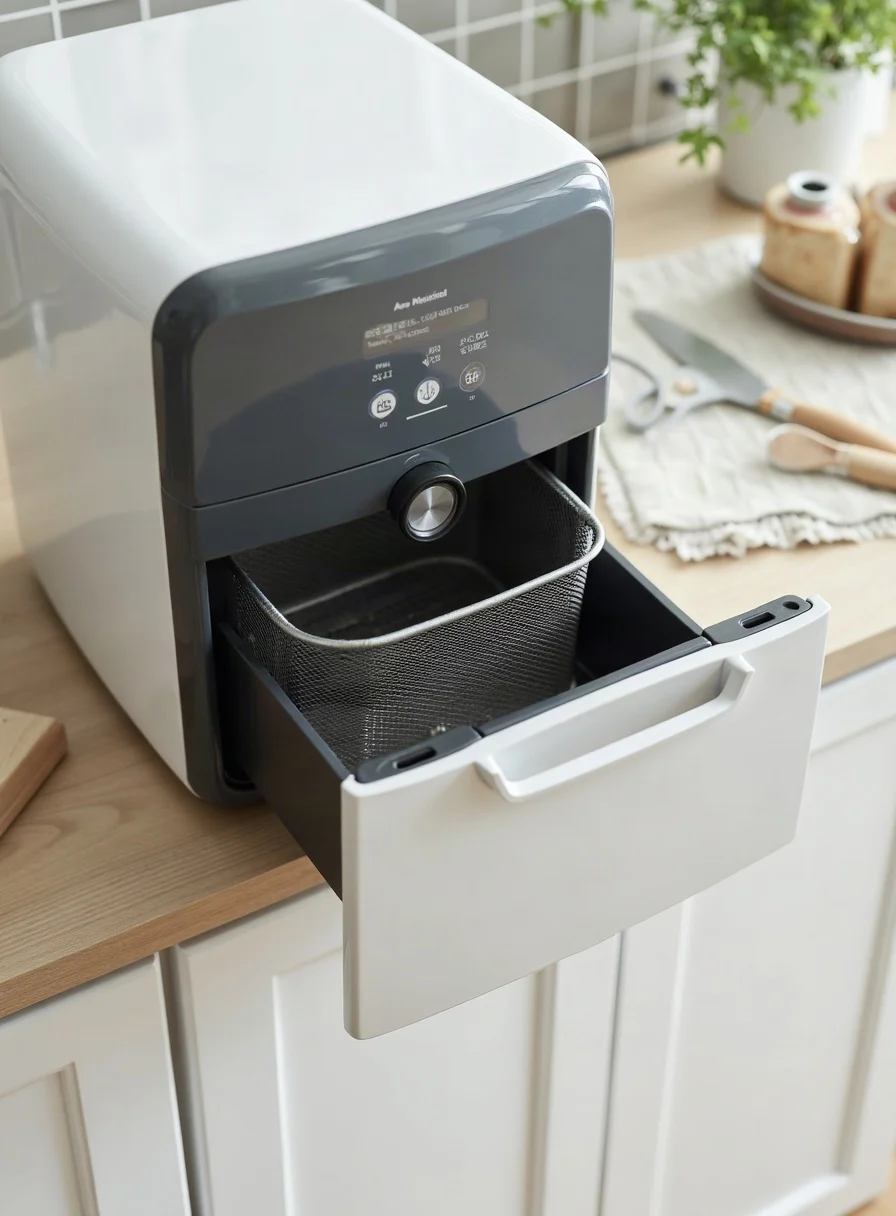
Switch off and unplug the air fryer when you have finished. Give it around ten minutes to cool: a little warmth helps grease come away, but a very hot basket can burn you, and plunging hot metal into cold water is hard on the coating. Take out the basket, drawer, crisping plate or any other removable parts. Water should never reach the main unit.
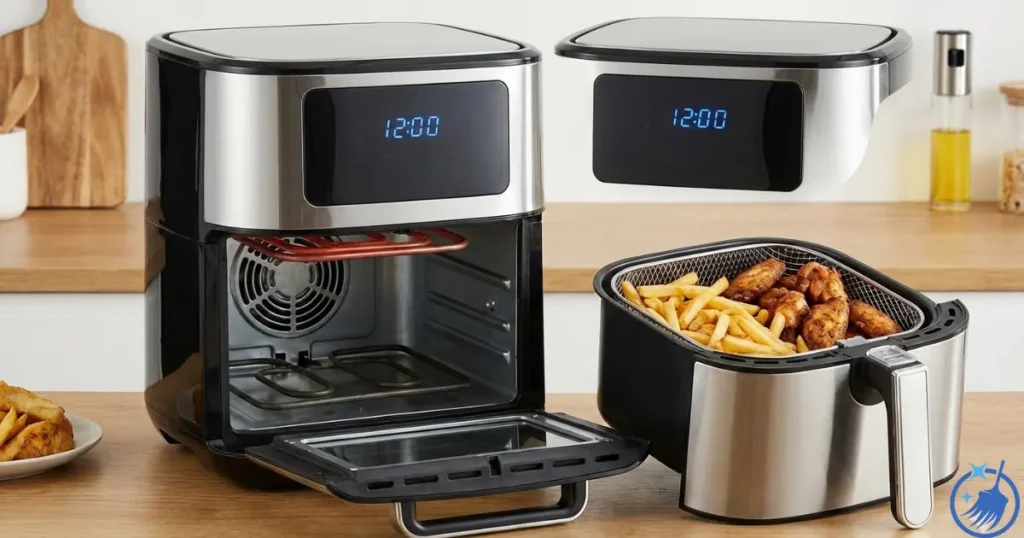
Fill the sink with warm water and a good squirt of washing-up liquid, then leave the parts to soak for a couple of minutes while you clear up. Wipe off food with the soft side of a sponge, working from the inside of the basket outwards so you are not dragging crumbs back over clean areas. Rinse well under warm running water, because leftover detergent can give off an odd smell the next time the machine heats up, and dry everything before putting it back.
A non-scratch sponge is worth having for this job, since the basket and plate are usually coated. Look for a soft or non-scratch side marked as safe for non-stick, and avoid the green abrasive pads sold for pans. Non-scratch sponges are cheap and last a while. Old toothbrushes are handy for the holes and the corners of the basket.
Getting baked-on grease off the basket
Bacon, sausages, fish and marinated meat leave the heaviest residue. For this, sprinkle two tablespoons of bicarbonate of soda into the damp basket, add about a tablespoon of warm water and stir it into a paste. Work it into the stuck-on areas with a toothbrush, paying attention to corners and the holes, then leave it for ten minutes and rinse thoroughly. Bicarbonate is a mild abrasive and helps lift grease without scratching, which is why it suits coated surfaces better than a scourer. Our piece on whether baking soda and vinegar really clean explains where it helps and where it does not.
For a basket that has been neglected for months, a stronger paste is two tablespoons of bicarbonate of soda, two tablespoons of 3% hydrogen peroxide and a couple of pumps of washing-up liquid. Spread it over the dark patches, scrub gently with a soft brush for a couple of minutes, then rinse very well. Use it only on the basket and plate, never inside the main unit, and mix it fresh rather than storing it in a closed container. If the coating is already flaking, scrubbing harder will not help and it is time to look at a replacement basket.
A spray degreaser is a reasonable shortcut if you would rather not make a paste. Choose one that says it is safe for non-stick and food contact surfaces, spray the basket only, and rinse it as you would after washing-up liquid. A general kitchen degreaser spray is plenty, and you do not need anything marketed specifically for air fryers. If you are unsure, our guide to removing grease from kitchen cabinets covers what degreasers do and which surfaces they suit. Once the basket is clean, it is worth reading how to deal with burnt-on food in pans if the plate is badly caked.
The heating element and the inside of the unit
This is the step most people never do. With the machine unplugged and fully cold, tip it on its side or look up into the cavity and find the heating element, the coil at the top. Sweep it gently with a dry soft brush or a clean toothbrush to remove crumbs and dust. If you can see greasy residue, wipe it with a cloth that is barely damp, wrung out until it is nearly dry, and follow with a dry cloth. Food and grease that sit on the element burn the next time it heats, which causes smoke and a burnt smell.
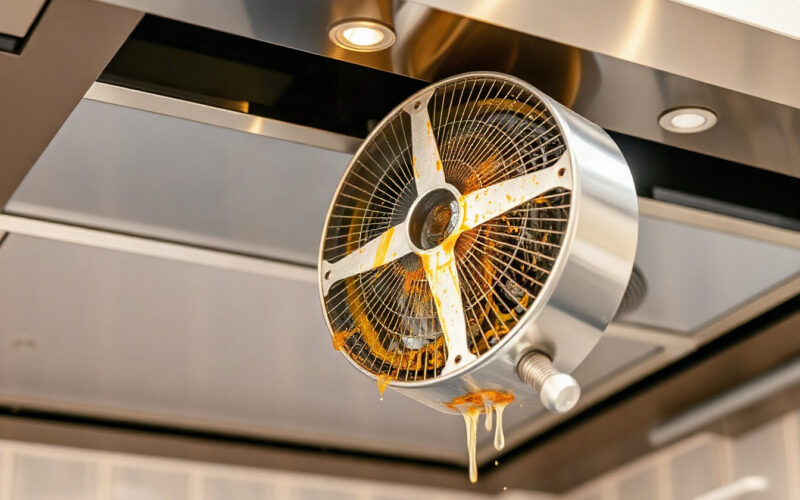
While you are there, wipe the inside walls of the cavity and the slot the drawer slides into, where crumbs and splatter gather. Do the outside last: a damp cloth for the body, a dry microfibre cloth for the control panel so moisture does not creep behind the buttons, and a quick pass over the air vents. The vents need to stay clear for airflow, so brush out dust but do not spray anything into them. If the machine has a display attached to the basket, treat that part as hand wash only. For another small appliance with a similar element, our guide to cleaning extractor fan filters shows the same degreasing approach and cleaning a toaster covers crumb removal around heating wires.
Dishwasher or sink?
It depends on the model, and the manual or the manufacturer’s website is the only reliable answer. Many baskets, drawers and crisping plates are marked dishwasher safe, but plenty of budget coatings are not, and parts with a display, a wooden or bamboo accessory or a printed finish are usually hand wash only. If a part comes out dull, rough or peeling, stop using the dishwasher for it and wash by hand from then on. The coating is what stops food sticking, so it is worth protecting.
Even when a part is dishwasher safe, a sink wash is often quicker, uses less energy and is gentler. Heavily greasy parts also tend to come out of the dishwasher still marked, so soak and scrub first. Our comparison of dishwasher versus hand washing goes into the trade-offs in more detail.
Why it smokes or smells, and what to check
Smoke from an air fryer usually comes from one of four causes, and cleaning fixes the first.
- Old grease on the element or in the cavity. Even a thin film burns once the machine reaches cooking temperature. Clean it as above.
- Food too close to the element. An overfilled basket can touch the coil and scorch. Leave a gap at the top and shake or turn food partway through.
- The wrong oil, or too much of it. Oils with a low smoke point, such as extra virgin olive oil, smoke more readily at high heat. A light spray or brush of a neutral oil is usually enough, since air fryers need very little.
- Fat dripping into a hot, empty drawer. Fatty foods such as bacon and sausages drop grease that can smoke if it builds up. Empty the drawer between batches.
If the unit is smoking heavily or you smell burning plastic rather than fat, switch it off and unplug it, and stop using it until you know why. Check the manual or contact the manufacturer, because that is not a grease problem. After cooking fish or other strong-smelling food, wash the basket straight away and leave the drawer out to air. A common home tip is to run the empty machine for a few minutes with a couple of lemon slices in the basket, but check that your manual allows running it empty first.
How often to clean each part
| Task | How often | Why |
|---|---|---|
| Wash basket and drawer | After every use | Stops grease baking on |
| Baking-soda deep clean of the basket | Every week or two if you cook greasy food often, otherwise monthly | Removes the film that builds up between washes |
| Check and brush the heating element | Every week or two | Prevents smoke and burnt smells |
| Wipe the exterior, vents and drawer slot | Weekly | Keeps dust and crumbs out of the airflow |
| Full inspection of coating and seals | Monthly | Catches flaking early |
Liners can cut the cleaning down. Reusable silicone mats or perforated paper liners catch drips and stop food sticking, and a pack of reusable air fryer liners or disposable perforated ones is a sensible buy if you cook greasy food often. Pick the right size for your basket, leave the perforations clear so air can circulate, and never put paper in the machine unweighted by food, because it can lift into the element during preheating. Liners still need washing, so rinse silicone ones after each use.
For other small appliance cleaning in the same kitchen, our guide to cleaning an oven covers the larger version of the same job, and the wider cleaning products section has more on degreasers.
Three more air fryer questions
Can I use vinegar to clean my air fryer?
Yes, on the removable parts. A mix of white vinegar and water on a soft cloth helps with light grease and smells, and you should rinse afterwards. Never pour it into the main unit. For stuck-on residue bicarbonate of soda usually does more, and vinegar can dull some finishes if left on, so do not soak parts in it.
Why does my air fryer smell after cleaning?
Usually it is leftover washing-up liquid or a damp part going back in before it has dried. Rinse everything thoroughly and dry the basket and drawer completely. If a smell persists, check for grease on the element or inside the cavity, which burns off with a plasticky or fatty smell when the machine heats.
Is it safe to keep using a basket with flaking coating?
Manufacturers generally advise against it. Flaking means the non-stick is breaking down, so food will stick more and you may see small pieces in your food. Stop using the damaged part, check your manual or contact the manufacturer about a replacement basket, and avoid abrasive scrubbing in future.