How to Clean a Mattress: Quick & Deep Clean Guide

How to clean a mattress is one of the most searched cleaning queries in the UK, and after 18 years of professional cleaning, I understand why. Last week alone, I cleaned three mattresses for clients who’d never touched theirs in over five years. Each one was home to an estimated 10 million dust mites. The good news? In the next 20 minutes, I’ll show you exactly how to clean your mattress using items you already have at home. This method works on all mattress types, requires minimal effort, and will transform your sleeping environment completely.
You spend a third of your life on your mattress. Every night, you lose about half a litre of moisture through sweat, plus dead skin cells and hair. This creates the perfect breeding ground for dust mites and bacteria. I’ve seen mattresses that looked clean on the surface but harboured years of accumulated grime underneath. Proper cleaning isn’t just about appearances—it’s about your health and sleep quality.
Quick Summary
Time needed: 20 minutes active, 2-8 hours waiting time
Difficulty: Easy for basic clean, moderate for deep clean
You’ll need: Vacuum, bicarbonate of soda, white vinegar, clean cloths
Key takeaway: Regular cleaning with simple ingredients keeps your mattress fresh and extends its life by years
What You'll Need
For a basic clean:
- Vacuum cleaner with upholstery attachment
- Bicarbonate of soda (500g box, about 50p from any supermarket)
- White vinegar (£1 from Tesco or Asda)
- Clean microfibre cloths or tea towels
- Cold water
- Spray bottle
For stubborn stains and deep cleaning:
- Mild washing up liquid (Fairy works well)
- Hydrogen peroxide 3% (£2 from Boots or Superdrug)
- Essential oils like lavender or eucalyptus (optional)
- Steam cleaner (optional, for deep clean only)
How to Clean a Mattress – Step-by-Step Guide
Step 1 – Strip and Vacuum Thoroughly (5 minutes)
Remove all bedding—sheets, pillowcases, duvet covers, and your mattress protector. Wash these on the hottest setting your machine allows. Open windows to create good ventilation.
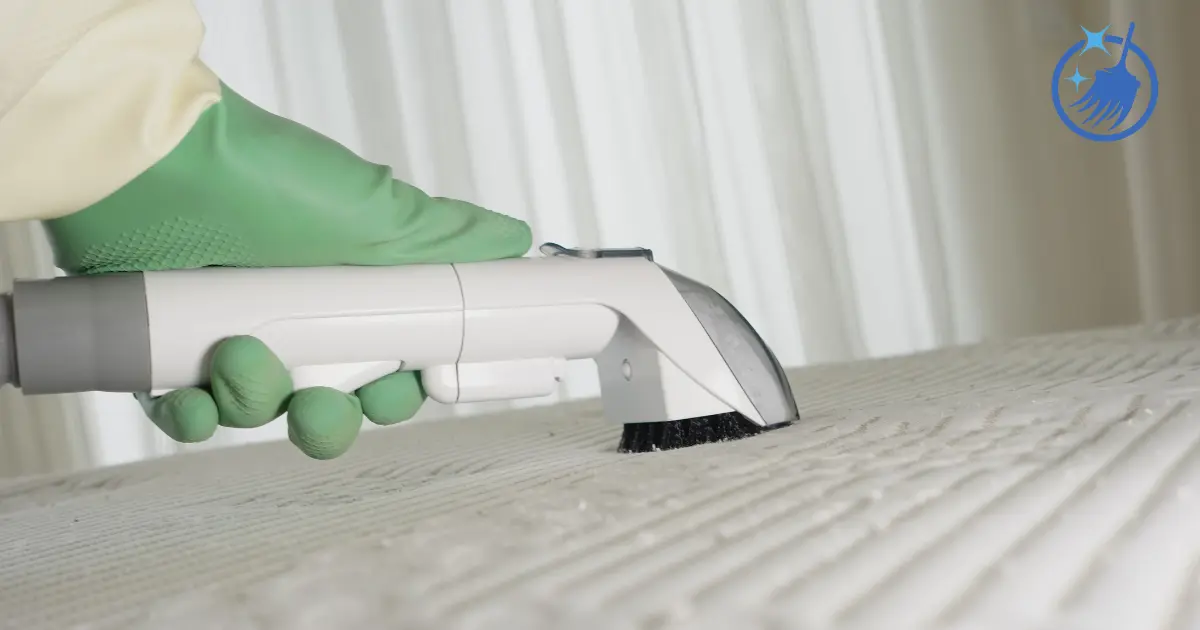
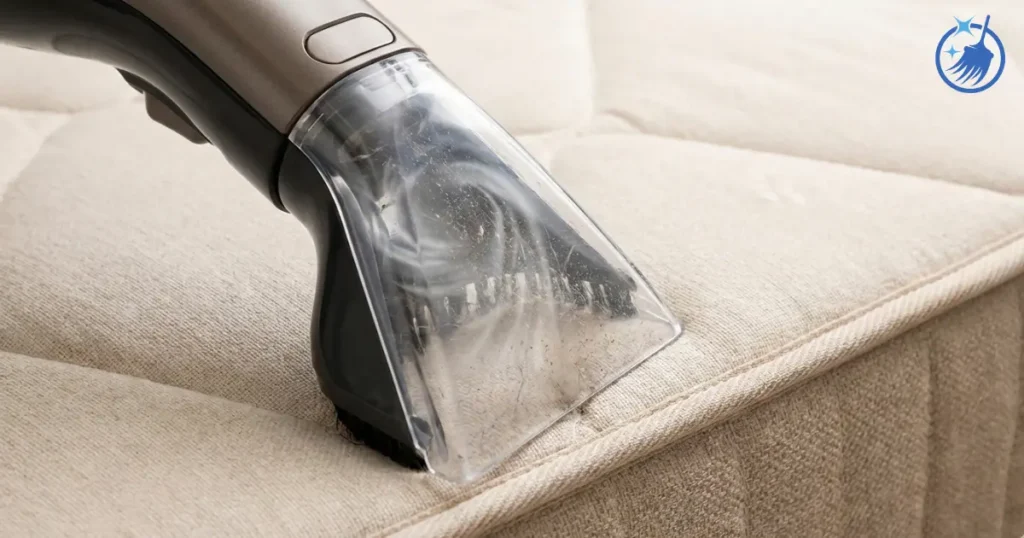
Using your vacuum’s upholstery attachment, vacuum the entire mattress surface in overlapping strokes. Pay extra attention to seams, edges, and button tufts where dust accumulates. Use small circular motions to lift embedded debris. I always vacuum both sides of the mattress if it’s flippable.
This step removes surface dust, dead skin cells, and dust mites. Most people underestimate how much debris hides in a mattress—you’ll likely see a noticeable difference in your vacuum’s dust container.
Step 2 – Spot Clean Any Stains (5 minutes)
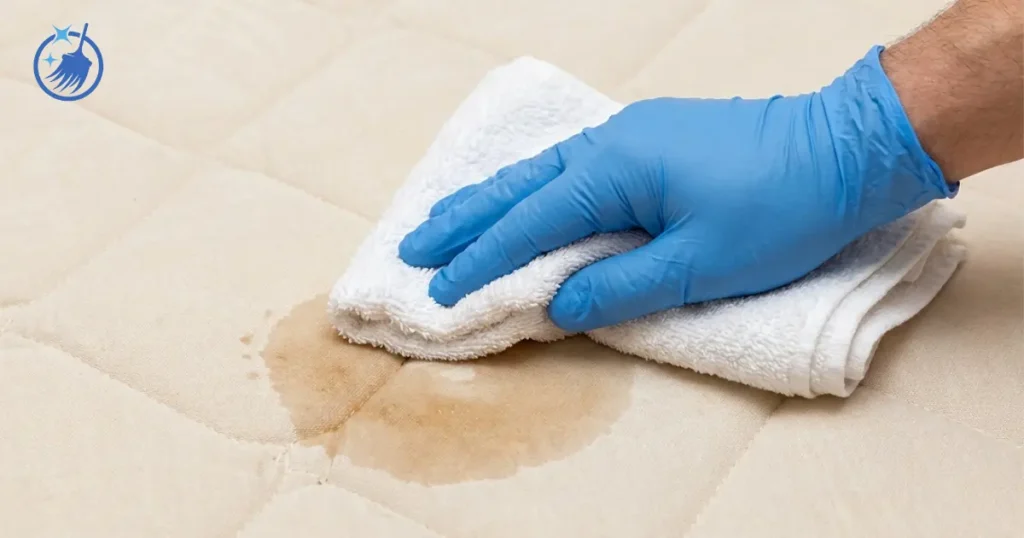
Mix a teaspoon of washing up liquid with 250ml cold water in your spray bottle. Lightly spray the stained area—don’t soak it. Using a clean cloth, gently blot the stain working from the outside edges toward the centre. This prevents the stain from spreading.
Keep blotting with fresh areas of your cloth until the stain lifts. Never scrub or rub aggressively. I’ve seen people push stains deeper into the mattress core by scrubbing too hard, making them impossible to remove.
For tougher stains, you may need specific treatments (covered in the sections below for urine, blood, and other stains).
Step 3 – Deodorise with Bicarbonate of Soda (10 minutes active, 2-8 hours waiting)
This is the most important step for freshness. Sprinkle bicarbonate of soda liberally over the entire mattress surface. Don’t be shy—I use about 250g (half a standard box) for a double mattress. Use your hands to rub it gently into the fabric.
Leave it for at least 2 hours, though overnight produces the best results. The bicarbonate absorbs odours, moisture, and oils. I schedule this step in the morning so the mattress is ready by bedtime.
For enhanced freshness, mix 10 drops of lavender or eucalyptus essential oil with your bicarbonate of soda before applying. This leaves a subtle, pleasant scent.
Step 4 – Vacuum Again (5 minutes)
After the waiting period, thoroughly vacuum the entire mattress surface to remove all bicarbonate residue. Use multiple passes to ensure you’ve collected everything. Any powder left behind will create a gritty feeling on your sheets.
Step 5 – Air and Dry Completely
Leave your mattress exposed to air for at least another hour with windows open. If possible, prop it upright against a wall to promote airflow around all sides. Direct sunlight is ideal—UV rays naturally kill bacteria and dust mites.
Never replace bedding on a damp mattress. I’ve been called to homes where people made the bed too soon and ended up with mould problems within weeks.
Common Mistakes to Avoid
- Over-wetting the mattress – Using too much water takes days to dry properly and can lead to mould growth. Less is always more with mattress cleaning. I use damp cloths, never soaking wet ones.
- Skipping the vacuum step – Many people apply bicarbonate straight away. This just coats the surface dirt instead of removing it. Always vacuum first to expose the fabric.
- Using bleach – Bleach damages mattress fabrics, can cause yellowing, and creates harmful fumes in your bedroom. I’ve never needed bleach in 18 years of cleaning mattresses professionally.
- Ignoring the manufacturer’s care label – Memory foam, latex, and traditional spring mattresses have different cleaning requirements. Check your label before steam cleaning or using excessive moisture.
- Rubbing stains instead of blotting – Rubbing pushes stains deeper into the mattress core. Always blot gently from the outside edges inward.
- Making the bed before it’s completely dry – Even slightly damp mattresses can develop mould and mildew. If in doubt, wait an extra few hours.
How Often Should You Clean a Mattress?
| Cleaning Task | Frequency | Why |
|---|---|---|
| Quick vacuum and air | Every 3-4 weeks | Removes surface dust and prevents buildup |
| Full clean with bicarbonate | Every 3-6 months | Deep deodorising and maintenance |
| Deep clean or steam clean | Twice yearly | Kills dust mites and bacteria thoroughly |
| Rotate/flip | Every 3 months | Ensures even wear and extends lifespan |
If you use a quality mattress protector (which I strongly recommend), you can extend these intervals slightly. However, the protector needs washing every 4-6 weeks on a hot cycle.
How to Deep Clean a Mattress at Home
When your mattress needs more than a basic clean—perhaps it’s several years old, smells musty, or you’ve never cleaned it before—follow this deep cleaning routine.
Complete the basic steps first: Always start with thorough vacuuming and spot cleaning as described above.
Apply bicarbonate liberally: For deep cleaning, I use a full 500g box for a double mattress. Leave it on for a minimum of 8 hours, preferably 24 hours. The longer it sits, the more odours and moisture it absorbs.
Consider steam cleaning: If your mattress care label permits, use a handheld steam cleaner. Work in small sections with slow, overlapping strokes. Keep the steamer moving—never hold it in one place. Steam kills dust mites, bacteria, and allergens without chemicals.
I charge clients £80-120 for this service, but you can hire a steam cleaner from Homebase or B&Q for about £25 a day and do it yourself.
Address both sides: If your mattress is flippable, repeat all steps on both sides. For single-sided mattresses, at least vacuum the underside and check for any signs of damage or mould.
Clean your bed frame: While the mattress is off, hoover your bed frame, slats, or divan base. I’ve found dead spiders, children’s toys, and accumulated dust that’s been there for years. This debris just transfers back to your clean mattress otherwise.
Deep Clean Checklist
Before you start deep cleaning:
- Check your mattress care label for any restrictions
- Choose a warm, dry day for faster drying
- Plan to start in the morning (allows full drying time)
- Have spare bedding ready if your mattress isn’t dry by evening
- Remove the mattress from the bed frame if possible for all-round access
How to Clean a Mattress That Has Been Peed On
I get calls about urine-stained mattresses at least twice a week. Whether it’s from young children, elderly relatives, or pets, knowing how to clean pee out of a mattress properly is essential. The key is speed and the right technique.
For Fresh Urine Stains (Immediate Treatment)
Act within minutes: The faster you respond, the better your results. Fresh urine is much easier to remove than dried stains.
Blot up liquid immediately: Use clean tea towels or kitchen roll to press firmly into the wet area. Keep blotting with fresh towels until you’re not absorbing any more liquid. Don’t rub or wipe.
Apply white vinegar solution: Mix equal parts white vinegar and cold water in a spray bottle. Spray the affected area generously—the vinegar neutralises the ammonia in urine and prevents odours from setting.
Blot again: Use fresh cloths to blot the vinegar solution, drawing out more of the urine with it.
Cover with bicarbonate: Sprinkle a thick layer of bicarbonate over the entire damp area. You should use at least 100g (half a cup) for a typical accident. The bicarbonate absorbs remaining moisture and neutralises any lingering odours.
Wait 8-12 hours: Leave the bicarbonate overnight if possible. It will clump together as it absorbs moisture—this is normal.
Vacuum thoroughly: Remove all bicarbonate residue. You may need to vacuum multiple times to collect all the clumped powder.
For Dried or Old Urine Stains
Dried urine requires a stronger approach. I use this method for stains that are days, weeks, or even months old:
Create a stronger cleaning solution: Mix 240ml (half a pint) of hydrogen peroxide 3% with 3 tablespoons of bicarbonate and 2-3 drops of washing up liquid. This creates a gentle fizzing reaction that lifts set stains.
Apply to the stained area: Spray or pour the solution onto the stain, ensuring it penetrates the fabric. You should see some fizzing action.
Leave for 1 hour: This gives the peroxide time to break down the urine compounds.
Blot with cold water: Use a cloth dampened with cold water to blot the area, lifting out the cleaning solution and dissolved stain.
Apply bicarbonate: Once you’ve blotted away most of the moisture, cover with bicarbonate as before. Leave overnight and vacuum thoroughly the next day.
This method works on stains I’ve seen that were over a year old. The mattress won’t look brand new, but the stain and odour will be dramatically reduced.
How to Get Urine Smell Out of a Mattress
Even after removing the visible stain, urine odour can persist. Here’s my professional method for eliminating the smell completely:
Ensure complete stain removal first: Follow the cleaning steps above thoroughly. Lingering odour usually means some urine remains in the mattress.
Use an enzyme cleaner if needed: For persistent smells, especially from pet urine, an enzyme-based cleaner breaks down the organic compounds causing the odour. I recommend Simple Solution (£5-8 from Pets at Home). Apply according to package directions.
Multiple bicarbonate applications: Sometimes one application isn’t enough. I’ve applied bicarbonate, left it overnight, vacuumed, then repeated the process 2-3 times for particularly stubborn odours.
Create a vinegar and essential oil spray: Mix 500ml water with 100ml white vinegar and 10 drops of lavender or eucalyptus oil. Lightly mist the entire mattress after cleaning. This leaves a fresh scent and helps neutralise any remaining odours.
Maximise air circulation: Open windows, use fans, and if possible, move the mattress near a window for direct sunlight. UV rays naturally kill odour-causing bacteria.
Check for deep penetration: If you’ve tried everything and smell persists, the urine may have soaked through to the mattress core or even the bed base. In severe cases, especially with repeated accidents in the same spot, replacement might be the only solution.
How to Clean Blood Off a Mattress
Blood stains look dramatic but aren’t as difficult as you’d think if you act quickly. I clean blood from mattresses regularly—nosebleeds and period leaks are more common than people admit.
For Fresh Blood Stains
Cold water only: This is crucial. Dab a cloth in cold water and blot the blood stain immediately. Cold water keeps the blood liquid so it can be absorbed.
Make a mild cleaning solution: Mix 500ml cold water with a teaspoon of washing up liquid.
Blot repeatedly: Dampen a clean cloth with the solution and press into the stain. Use a clean area of cloth for each blot. You should see the blood transferring to your cloth.
Continue until clear: Keep blotting with fresh cloths until no more blood transfers. This usually takes 5-10 minutes for fresh stains.
Rinse with cold water: Use a cloth dampened with plain cold water to remove any soap residue.
Dry thoroughly: Blot with a dry towel to remove excess moisture, then allow to air dry completely.
For Dried Blood Stains
Dried blood is more stubborn but still manageable. I’ve successfully removed blood stains that were weeks old using this method:
Rehydrate the stain: Dampen the dried blood with cold water. Let it sit for 5 minutes to soften.
Create a bicarbonate paste: Mix 2 tablespoons bicarbonate with enough cold water to form a thick paste.
Apply and wait: Spread the paste over the stain and leave for 30 minutes. The bicarbonate breaks down the proteins in blood.
Gently scrub: Using a soft brush or cloth, gently work the paste into the stain in circular motions.
Blot with cold water: Remove the paste with a cloth dampened in cold water. Repeat the paste application if needed.
Finish with hydrogen peroxide for stubborn stains: If traces remain, dab a small amount of hydrogen peroxide 3% directly on the stain. It will foam when it contacts blood. Blot after a few minutes with cold water.
How to Clean Sick Off a Mattress
Dealing with vomit on a mattress is unpleasant, but I’ve handled it countless times in my 18 years. The key is acting fast and being thorough.
Remove solids immediately: Wearing rubber gloves, carefully scrape or pick up any solid matter using kitchen roll or disposable paper towels. Seal these in a plastic bag and dispose of them outside your home.
Blot liquid: Use absorbent cloths or more kitchen roll to soak up as much liquid as possible. Press firmly and work from the outside edges inward.
Apply cleaning solution: Mix warm water (not hot) with a tablespoon of washing up liquid and 60ml white vinegar. The vinegar cuts through the acidity and helps neutralise odours. Apply with a spray bottle or cloth and blot thoroughly.
Second clean for stubborn residue: If needed, make a paste of bicarbonate and water. Apply to remaining stained areas and leave for 15 minutes before blotting clean.
Deodorise heavily: Once the area is clean, cover the entire section with a thick layer of bicarbonate. Vomit has a penetrating smell, so be generous. Leave for at least 8 hours, preferably overnight.
Vacuum and air: Vacuum thoroughly the next day. Keep windows open and use fans to circulate air. You may need to repeat the bicarbonate application if odour persists.
Sanitise if needed: Once dry, you can lightly spray with a fabric sanitiser like Dettol Antibacterial Fabric Spray (£3 from most supermarkets) for extra reassurance.
How to Clean a Memory Foam Mattress
Memory foam requires gentler treatment than traditional spring mattresses. I’ve damaged memory foam by using too much water, so I learned these techniques the hard way.
Vacuum carefully: Use your vacuum’s soft brush attachment on the lowest suction setting. Memory foam is delicate, and aggressive vacuuming can damage the structure.
Minimal moisture for spot cleaning: Mix a tiny amount of mild detergent with water—I mean genuinely tiny, like half a teaspoon to 500ml water. Barely dampen a cloth with this solution and gently dab stains. Use as little liquid as humanly possible.
Blot dry immediately: After any spot cleaning, use dry cloths to blot and absorb as much moisture as you can. Memory foam retains water and takes ages to dry.
Light bicarbonate application: Apply a thin layer of bicarbonate—much less than you’d use on a traditional mattress. Leave for 3-4 hours maximum, then vacuum on low setting.
Extended drying time: Memory foam can take 12-24 hours to dry completely if it gets damp. Never rush this step. I’ve seen mould develop in memory foam that was made up too soon after cleaning.
Check manufacturer guidelines: Some memory foam mattresses specifically prohibit certain cleaning methods. Always check your care label first.
How to Steam Clean a Mattress
Steam cleaning is one of the most effective deep cleaning methods, killing 99.9% of dust mites and bacteria without chemicals. However, it’s not suitable for all mattress types.
Check compatibility first: Steam cleaning works well on traditional spring mattresses and some hybrid types. Never use it on memory foam, latex, or any mattress where the care label advises against excessive heat or moisture.
Vacuum thoroughly first: Steam cleaning on a dusty mattress just moves the dirt around. Always vacuum comprehensively before you start.
Use a handheld steam cleaner: I use a Polti or Karcher steam cleaner (you can hire these for £20-30 a day from tool hire shops). Attach the upholstery tool.
Work in sections: Divide your mattress into imageable sections—I typically do six sections for a double mattress. Work one section at a time, ensuring even coverage.
Keep moving: Hold the steamer about 5cm from the surface and move it slowly in overlapping strokes. Never hold it in one place for more than 2 seconds. The goal is to heat the surface without saturating it.
Don’t over-steam: One pass per area is usually enough. Multiple passes on the same spot will over-wet the mattress.
Allow extended drying: After steam cleaning, the mattress needs at least 4-6 hours to dry in a well-ventilated room, longer in humid conditions or during winter. I schedule steam cleaning for morning starts on warm, dry days.
Open windows and use fans: Maximum ventilation speeds drying and prevents damp smells from developing.
Best Products for Cleaning Your Mattress
After testing hundreds of products over 18 years, here are my honest recommendations for different budgets:
Budget Option (Under £5)
White vinegar and bicarbonate of soda: Available from any supermarket for under £2 combined. This is my go-to combination for 90% of mattress cleaning jobs. It works as well as products costing ten times as much.
Fairy Liquid or own-brand washing up liquid: A few drops mixed with water creates an excellent spot cleaner. One bottle lasts months. Cost: 50p-£2.
Mid-Range Option (£5-15)
Vanish Oxi Action Crystal White Powder: Excellent for stubborn stains. Mix with cold water to create a paste. Available from Tesco, Sainsbury’s, Asda for £5-7.
Dr Beckmann Carpet Stain Remover: Despite the name, this works brilliantly on mattress stains. The brush applicator is convenient. About £4 from Wilko or supermarkets.
Hydrogen peroxide 3%: Medical-grade from Boots or Superdrug for £2. Exceptional for protein stains like blood and urine.
Premium/Professional (£15+)
Bissell Upholstery Cleaning Solution: If you own or hire a Bissell cleaner, their branded solution works well. Around £15-20.
Vax Platinum Power Carpet Cleaning Solution: Can be used for spot cleaning on mattresses. About £18 from Currys.
Professional enzyme cleaner (for pet stains): Simple Solution or Nature’s Miracle cost £8-15 but are worth it for persistent pet urine. Available from Pets at Home.
My Professional Favourite
Astonish Oxy Plus: Costs £1 from Poundland or B&M. This is my secret weapon. It’s cheap, widely available, and works on virtually every type of stain. I buy it by the dozen.
Sarah's Essential Shopping List
If you only buy three things:
- Bicarbonate of soda (500g box) – £1 or less
- White vinegar (500ml bottle) – £1 or less
- Hydrogen peroxide 3% (small bottle) – £2
Total cost: Under £5
These three items handle 95% of mattress cleaning situations I encounter professionally.
How to Clean a Mattress Topper
Mattress toppers need different treatment depending on their material. I clean dozens of these every month, and the material type makes all the difference.
For Machine-Washable Toppers
Check the care label first: Many toppers can be machine washed, but some can’t. Never assume.
Use a large capacity machine: Toppers are bulky. I use the machines at my local laundrette (about £8 for a large load) for anything over single-bed size.
Gentle cycle, cold water: Hot water can shrink or damage some topper materials. A gentle cycle prevents excessive agitation.
Mild detergent only: Skip the fabric softener—it can affect the topper’s properties and reduce its effectiveness.
Air dry flat: Most toppers shouldn’t be tumble dried. Lay flat on a clean surface indoors or outdoors if dry. This can take 24-48 hours, so plan ahead.
For Memory Foam Toppers (Not Machine Washable)
Vacuum both sides: Use a soft brush attachment and gentle suction.
Spot clean stains: Mix a teaspoon of mild detergent with 500ml water. Use minimal moisture on a cloth to dab stains. Work the cloth almost dry before touching the foam.
Thin bicarbonate layer: Apply lightly, leave for 3-4 hours, then vacuum thoroughly on low setting.
Air thoroughly: Stand the topper on its edge in a well-ventilated room for several hours. Direct sunlight is ideal if possible.
Allow complete drying: Memory foam retains moisture. Don’t replace it on your mattress until it’s completely dry, which may take 12-24 hours.
For Feather or Down Toppers
Professional cleaning recommended: I send feather and down toppers to a professional cleaner. Washing them at home often results in clumping or damage.
Spot clean between professional cleans: For minor stains, use a barely damp cloth with mild detergent. Blot thoroughly and air dry completely.
Shake and air regularly: Every few weeks, give the topper a good shake outdoors to redistribute filling and remove dust.
Pro Tips From a Professional Cleaner
Insider Tips From 18 Years in the Business
After cleaning thousands of mattresses, here’s what I’ve learned:
- The “sunshine method” works wonders – On a sunny day, prop your mattress at an angle near an open window. Six hours of direct sunlight kills dust mites and bacteria naturally, plus it eliminates musty smells completely. This costs nothing and works brilliantly.
- Rotate while cleaning – When I clean a mattress, I rotate it 180 degrees at the same time. This means you’re getting even wear and distributing body impressions. Do this every time you clean—it’s free maintenance.
- Layer your protection – I use both a mattress protector and a mattress topper. The topper takes the daily wear, the protector guards against spills. Both are washable. This means your actual mattress stays pristine for years.
- Time your deep cleans strategically – I always deep clean mattresses on the first warm, dry day of spring and autumn. The low humidity and fresh air mean rapid drying times and you can open windows without freezing. Never deep clean during a wet British winter unless you have no choice.
- The credit card trick for stains – For fresh liquid spills, use a credit card or similar to gently scrape the liquid toward the edges where you can blot it. This prevents it from soaking deeper into the mattress. I’ve stopped many stains from setting using this simple trick.
- Create a mattress cleaning schedule – I set phone reminders for the first Monday of March, June, September, and December. Takes 30 seconds to set up and means you never forget. Your mattress will thank you.
Conclusion
Knowing how to clean a mattress properly transforms your sleeping environment and protects your health. Whether you’re tackling fresh urine stains with cold water and vinegar, removing stubborn blood marks with hydrogen peroxide, or simply refreshing your mattress with bicarbonate, the methods in this guide will give you professional results at home.
I’ve spent 18 years perfecting these techniques, and the same principles apply whether you’re cleaning a £200 budget mattress or a £2,000 luxury model. Regular maintenance—vacuuming every few weeks, spot cleaning immediately, and deep cleaning twice yearly—extends your mattress lifespan by years and creates a healthier place to sleep.
Start with the basic clean today. Strip your bed, vacuum thoroughly, apply bicarbonate, and let it work its magic. By tonight, you’ll notice the difference. Your mattress will smell fresh, feel cleaner, and you’ll sleep better knowing you’re not sharing your bed with millions of dust mites. <!– INTERNAL LINKS: Add 2-3 related article links here once published –>
Related guides you might find helpful:
- How to Clean a Duvet
- How to Remove Stains from Bed Sheets
- How to Choose the Best Mattress Protector
Frequently Asked Questions
How often should I clean my mattress?
Vacuum and air your mattress every 3-4 weeks when you change your bedding. Do a full clean with bicarbonate of soda every 3-6 months, and deep clean or steam clean twice yearly. If you use a mattress protector and change it regularly, you can extend these intervals slightly. Homes with pets, allergies, or young children benefit from more frequent cleaning.
Can I clean my mattress without bicarbonate of soda?
Yes, you can clean a mattress without bicarbonate by vacuuming thoroughly, spot cleaning with mild washing up liquid and water, and using a fabric refresher spray to eliminate odours. However, bicarbonate is highly effective, inexpensive (under £1), and widely available, so I recommend keeping it on hand. It’s my most-used cleaning product for mattresses.
How long does it take for a mattress to dry after cleaning?
Light spot cleaning typically dries in 2-4 hours with good ventilation. A full clean with moderate moisture takes 4-6 hours. Deep cleaning or steam cleaning requires 6-12 hours, sometimes longer in humid conditions or winter. Always err on the side of caution—it’s better to wait an extra hour than risk mould by making the bed too soon. Use fans and open windows to speed drying.
Can I steam clean any type of mattress?
No, steam cleaning isn’t suitable for all mattresses. Traditional spring mattresses and most hybrid types can be steam cleaned safely. However, memory foam, latex, and some specialty mattresses can be damaged by the heat and moisture from steam. Always check your manufacturer’s care instructions first. If in doubt, contact the manufacturer directly before attempting steam cleaning.
Is it safe to use bleach on a mattress?
I strongly advise against using bleach on mattresses. Bleach damages fabric fibres, can cause yellowing or discolouration, and leaves harsh chemical residues that are unpleasant to sleep on. It also creates harmful fumes in your bedroom. In 18 years of professional cleaning, I’ve never needed bleach. White vinegar, hydrogen peroxide, or mild detergent handle every situation safely and effectively.
How do I clean a wet mattress?
If your mattress gets soaked from a spill, leak, or flooding, act immediately. Use absorbent towels to blot as much moisture as possible, pressing firmly. Stand the mattress on its side or edge to promote airflow around all surfaces. Open windows and use fans or a dehumidifier. Apply bicarbonate to absorb remaining moisture once you’ve blotted all you can. If the mattress stays damp for more than 24 hours, mould may develop and replacement becomes necessary.
Can I use washing up liquid to clean my mattress?
Yes, washing up liquid makes an excellent mattress cleaner. Mix a small amount (half a teaspoon) with cold water (500ml) and use this solution for spot cleaning most stains. Fairy Liquid is particularly effective because it cuts through oils and grease. Always use sparingly—you want a damp cloth, not a wet one. Blot with plain water afterwards to remove any soap residue.
Why does my mattress smell even after cleaning?
Persistent odours usually indicate that moisture or staining remains deep in the mattress core. Common causes include: not allowing enough time for bicarbonate to work (leave it overnight for best results), insufficient drying time (leading to musty smells), or deep-set urine that’s penetrated to the mattress centre. Try repeating the bicarbonate treatment 2-3 times, ensure complete drying between attempts, and consider using an enzyme cleaner for protein-based odours.
How do I know if my mattress needs replacing rather than cleaning?
Replace your mattress if: it’s over 8-10 years old with visible sagging or lumps, you wake up with aches and pains that weren’t there before, extensive staining or odours persist despite thorough cleaning, you can see or feel springs poking through, significant mould growth has developed (especially if it’s penetrated deep into the mattress), or if you simply no longer sleep comfortably on it. Sometimes a mattress has reached the end of its useful life, and no amount of cleaning will restore it.
Can I use essential oils when cleaning my mattress?
Yes, essential oils add a pleasant scent and some, like tea tree and eucalyptus, have natural antibacterial properties. Add 8-10 drops to your bicarbonate before applying it to the mattress. Alternatively, mix a few drops with water in a spray bottle and lightly mist after cleaning. Avoid applying oils directly to the mattress fabric, as they can stain. Lavender, eucalyptus, tea tree, and chamomile work particularly well for bedroom scents.
You May Also Like