Suede is the leather that punishes enthusiasm. A wet cloth, a hairdryer or a squirt of the wrong cleaner can stiffen it, stain it or flatten the soft nap for good, and unlike smooth leather there is no polishing it back. The safest approach is to start with the gentlest method that could work, and only move up when it does not. That order is the backbone of this guide: what can go wrong, what to check before you touch the shoes, the dry methods that solve most problems, then the stronger options and the cautions that go with them.
Disclosure: Cleaners Guide is a participant in the Amazon Associates programme, so if you buy through links on this page we may earn a small commission at no extra cost to you. It never changes our recommendations. Prices and availability change, so always check the current price before buying.
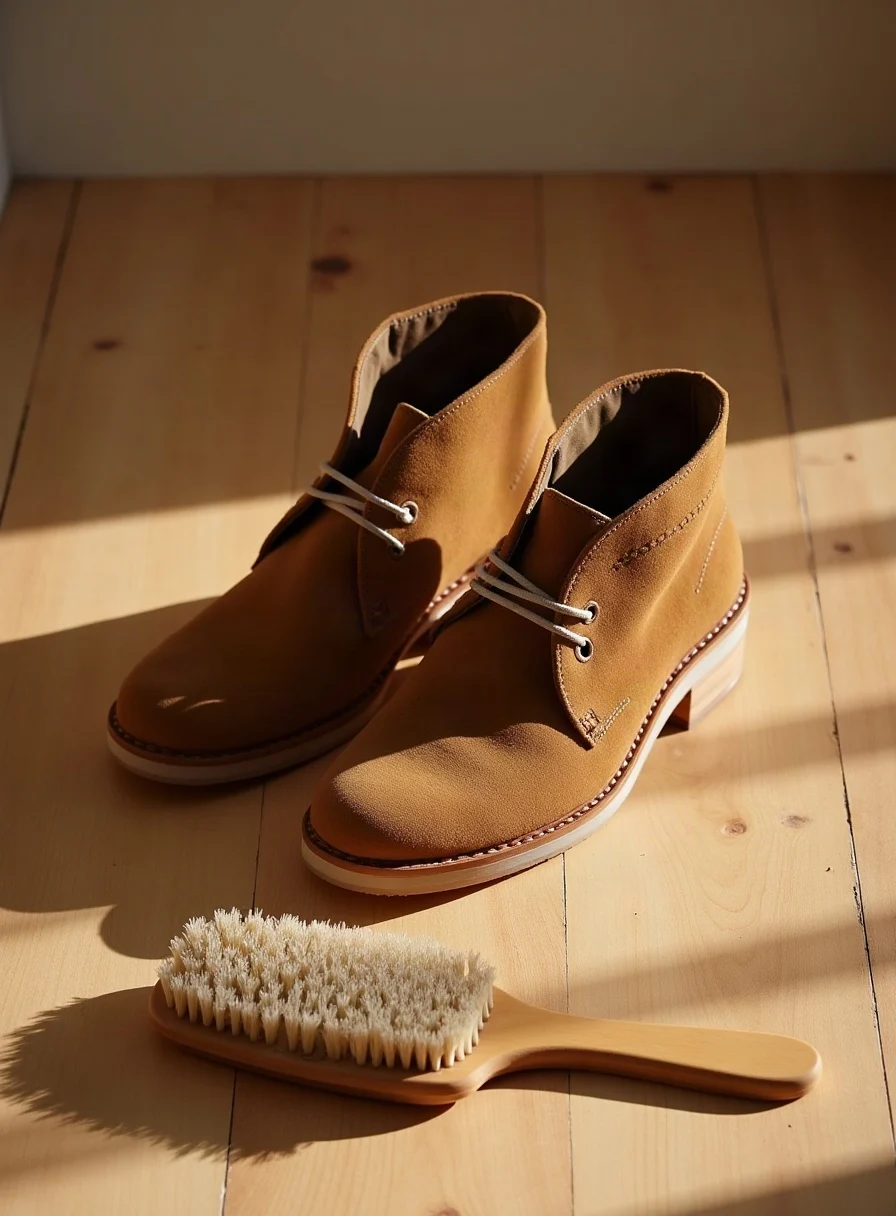
What can go wrong, and what to check first
Suede is the underside of animal hide that has been buffed to raise a short, velvety nap. Because it is porous and has not been sealed the way smooth leather has, it soaks up liquid, holds on to dirt and marks easily. These are the mistakes that do the lasting damage:
- Washing machine or soaking. Agitation, soaking and heat can shrink and stiffen suede and strip its natural oils. There is no fixing a pair that has been machine-washed.
- Heat to speed up drying. Radiators, hairdryers and direct sun cause shrinkage, hardening and creases. Always dry at room temperature.
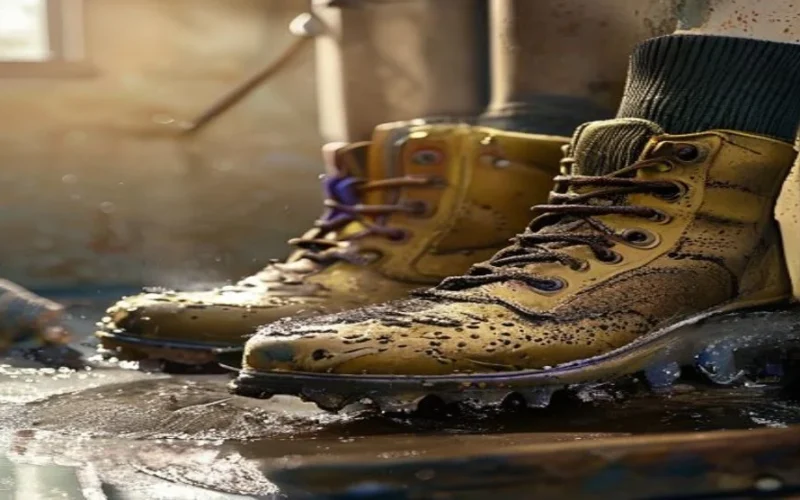
- Cleaning wet. Wet mud and wet marks smear and sink in. Let the suede dry first, even if that means waiting overnight.
- Shoe polish and leather conditioner. These are made for smooth leather. They clog the nap, darken it and leave a sheen you cannot undo.
- Hard rubbing. Rubbing wears the nap away and leaves bald, shiny patches. Dab and brush instead.
- Skipping the patch test. Dyes in coloured suede can run or fade with water, vinegar or alcohol.
| Material | What it is | How to treat it |
|---|---|---|
| Suede | The soft underside of the hide, buffed to a velvety nap | Dry methods first, minimal liquid, no heat |
| Nubuck | Outer side of the hide, buffed to a fine nap, usually tougher | Similar to suede, but check the label for the maker’s advice |
| Treated or water-resistant suede | Sealed or sprayed at the factory | Follow the maker’s care instructions, which may allow more moisture |
| Synthetic microsuede | Fabric that imitates suede | Often tolerates gentle washing, so check the label |
Read the label and test a hidden spot
Look for the care label inside the shoe or on the box, and check the manufacturer’s website if the pair is expensive. Some suede is treated or sold as water-resistant, and some shoes use nubuck, which is similar but made from the outer side of the hide and behaves slightly differently, or synthetic microsuede, which can usually take more moisture. If the maker says to avoid water entirely, stick to the dry methods. Before using anything liquid, test a hidden spot such as the inside of the tongue or under the heel, let it dry and look for colour change. Coloured suede, especially red, blue and pink, is the most likely to run.
Some products carry their own risks. Rubbing alcohol is flammable, so keep it away from flames and use it in a ventilated room. Suede protector sprays should be used outdoors or in a well-ventilated space, away from children and pets, and left to dry completely before the shoes are worn. Follow the directions on each can.
The safest method: clean it dry
Dry the shoes first
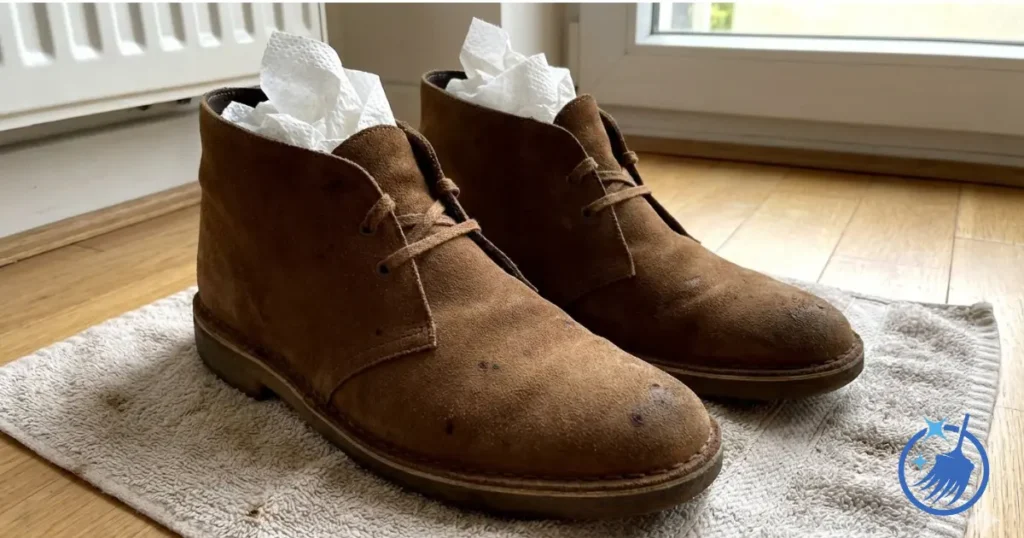
If the suede is damp from rain, mud or a spill, stop and leave it alone. Take out the laces and insoles, stuff the shoes with plain white paper such as kitchen roll, which absorbs moisture and keeps the shape, and leave them at room temperature. Avoid coloured paper or newspaper, which can transfer ink onto wet suede. Drying typically takes 12 to 24 hours, so be patient. Change the paper once if it becomes soaked.
Brush
When the suede is bone dry, use a suede brush, or a clean soft toothbrush in a pinch, to brush away loose dirt and dust. Brush gently in one direction, with the grain of the nap, and use slightly more pressure on scuffs to lift the fibres. Mud that has dried flakes off best from the outside of the patch inwards. Brushing after each wear takes seconds and stops dirt from settling in, which is the most effective way to cut down on harsher cleaning later.
Erase
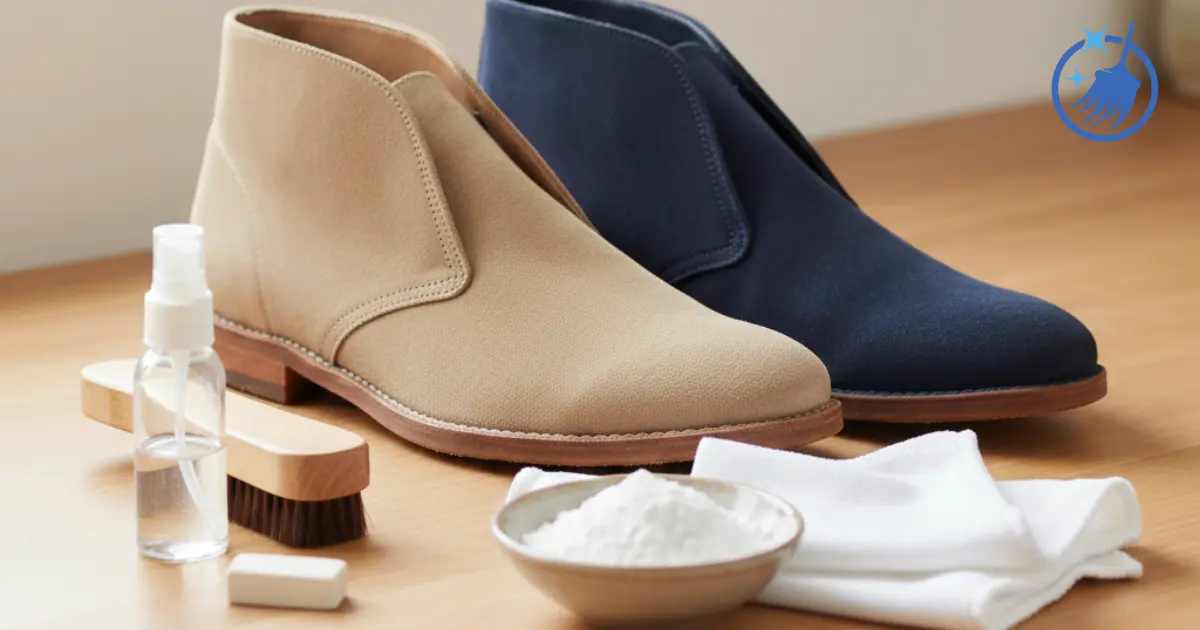
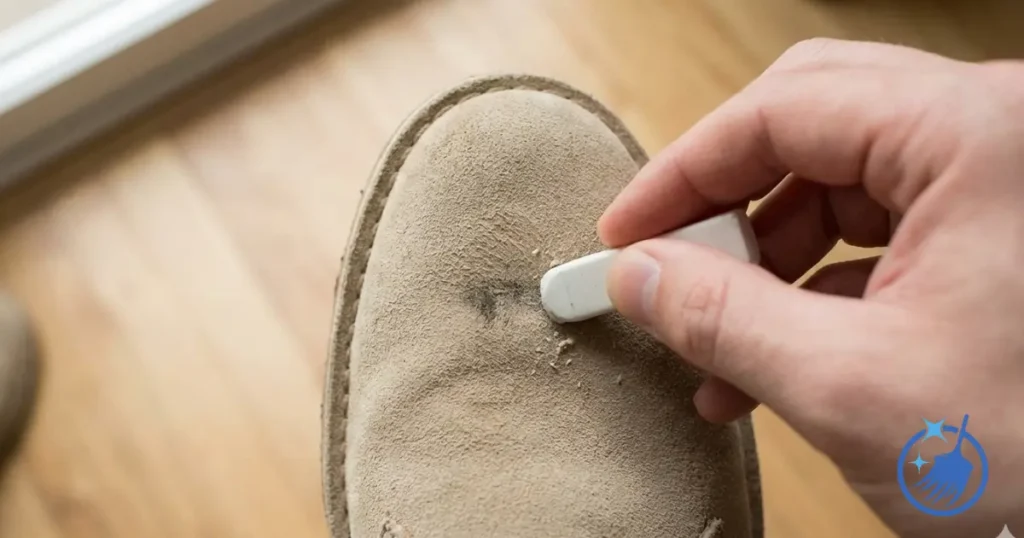
For small marks, use a suede eraser or a clean white pencil rubber, with light circular motions. The aim is to lift the dirt from the surface, not to sand the nap down. Brush again afterwards to even out the texture. A suede brush and eraser are the two tools that do most of the work, and they are worth buying as a pair. A suede brush with brass and nylon bristles and a rubber crepe side is a good all-round choice, and a brush and eraser kit is the simplest way to get both.
If you are cleaning suede car seats or other upholstery, the same dry-first principle applies, as our guide to cleaning suede car seats explains. For boots that live outdoors in winter, our guide to cleaning Uggs covers the sheepskin side of things.
If you want a routine to follow
- Let the shoes dry fully at room temperature with white paper inside.
- Remove laces and insoles, and brush the whole shoe in one direction.
- Use an eraser on scuffs, then brush again to even the nap.
- Check the result in daylight before reaching for anything wet.
- Treat remaining stains one at a time, with the gentlest method for each, testing first.
- Let the shoes dry again, brush, and apply a protector once they are completely dry.
Stronger options, and what each one risks
Move on to these only when brushing and erasing have not worked. Use as little liquid as you can, test first, and let the suede dry fully between attempts.
Water marks
Counterintuitively, the best fix for a water stain is to wet the whole panel evenly. The stain is a tide mark from uneven drying. Fill a spray bottle with plain water, mist the entire shoe lightly until it is evenly damp but not soaking, brush gently in one direction, dab off excess with a clean cloth, then dry slowly with paper inside. The shoe will look darker while wet and return to its colour as it dries. It works particularly well on pale suede. This is the riskiest of the water methods, so avoid it on shoes with a label that bans water, and never soak or hold suede under a tap.
Salt marks and stubborn stains
A cloth dampened (not dripping) with white vinegar is a common home method for winter salt marks and stubborn spots, dabbed from the outside of the mark inwards. Rubbing alcohol is used the same way. The area will darken briefly and lighten as it dries. Let the shoes dry naturally for at least 12 hours and then brush up the nap. Repeat if needed, and stop if the colour starts to lift onto the cloth. Vinegar is acidic, and on white or cream suede it can sometimes cause slight yellowing, so use plain damp-cloth methods there. Do not combine vinegar with other cleaning products.
Grease and oil
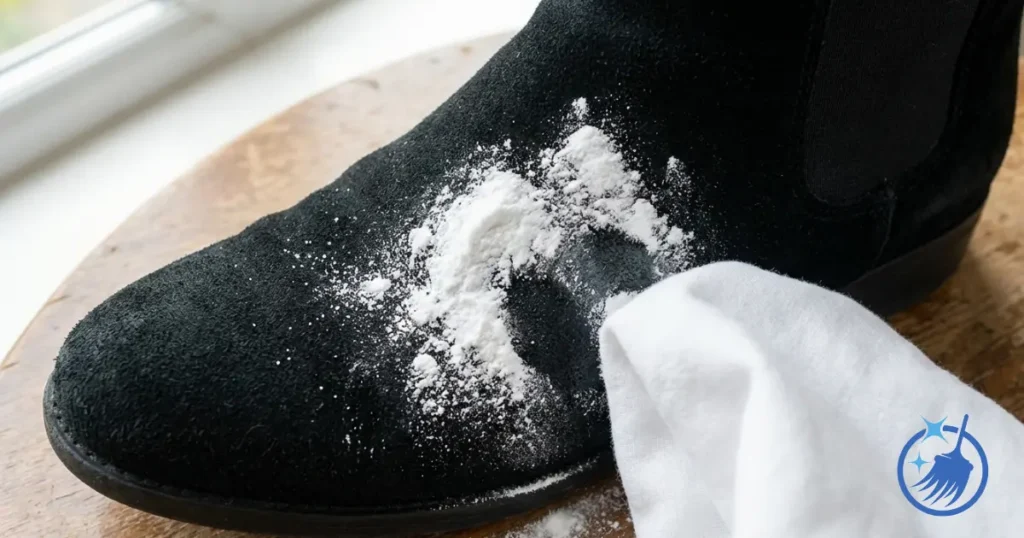
Grease will not respond to water or vinegar, so absorb it instead. Cover the mark with bicarbonate of soda, cornflour or talcum powder, press it in lightly with a clean cloth and leave it for 6 to 8 hours or overnight. Brush off the powder the next day. If a shadow remains, try a tiny drop of washing-up liquid on a barely damp cloth, dab, wipe with a clean damp cloth to remove soap, and dry. Repeat the powder step for older stains, and leave it for up to 48 hours with a clean cloth and a light weight on top if the stain is deep. Oil that has soaked in for months may need a professional.
Colour-specific cautions
White and cream suede shows every mark, so the even-wetting method and bicarbonate of soda paste are the usual choices. For yellowing, spread a thin paste of bicarbonate of soda and water, leave it for 30 minutes, brush it off and dry. Black and dark suede hides dirt, but water marks show as pale patches, so even wetting is still needed. Beige, tan and brown show mud and dust, so regular brushing matters most. Coloured suede needs a patch test every time, and gentle methods such as brushing and a light water mist are safer than vinegar or alcohol. More on trainers made with suede panels is in our white trainers guide.
| Problem | Safest first move | If that fails |
|---|---|---|
| Dry dirt and dust | Brush in one direction | A suede eraser |
| Wet mud | Let it dry completely, then brush | Eraser, then a damp cloth with vinegar |
| Scuffs and marks | A suede eraser or clean pencil rubber | Brush, then a barely damp cloth |
| Water stain | Even misting of the whole panel | Repeat once more after full drying |
| Oil or grease | Powder left on overnight | A drop of washing-up liquid on a barely damp cloth |
| Salt or stubborn stain | A cloth dampened with white vinegar | Rubbing alcohol on a cloth, tested first |
Caught in the rain
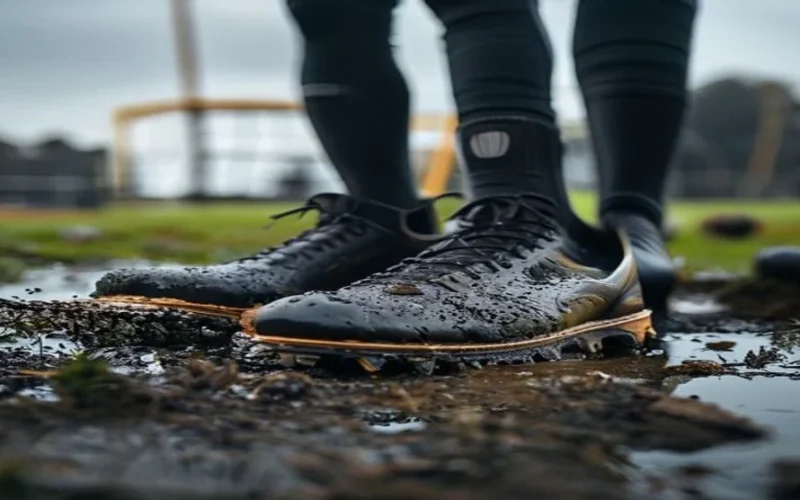
Suede can survive a shower if you deal with it properly. Blot off surface water with a towel without pressing hard, stuff the shoes with white paper straight away to keep their shape and draw out moisture, and leave them somewhere at room temperature with some airflow, away from radiators. Change the paper when it is soaked. Once fully dry, brush the nap back up. If a tide mark shows, use the even-wetting method above.
Smelly suede, laces and insoles
Smells come from damp and sweat in the lining, not the suede itself. Take out removable insoles and wash or replace them as their label allows, and wash laces separately in warm soapy water. A scattering of bicarbonate of soda inside the shoe overnight, tipped out in the morning, takes up some odour. Let the shoes air out between wears rather than wearing the same pair on consecutive days.
When suede still will not come clean
- Darker after cleaning: too much liquid was used and the shoe is still damp inside. Restuff with fresh paper and give it another 24 hours. If it stays dark after two days, a suede-specific conditioner or a professional may be needed.
- Flat, matted nap: brush in different directions until the fibres lift. Some guides suggest holding the shoe briefly above steam from a kettle before brushing, but heat and moisture are the exact things that damage suede, so a gentle brush or an eraser is the safer route.
- White marks or cloudiness: usually soap residue or hard-water minerals. Dab with a cloth dampened with distilled water, let it dry, then brush.
- Grease that has not shifted: repeat the powder treatment and leave it longer, or take it to a cobbler.
- Mould on stored shoes: take them outside and brush off loose mould, wearing a mask if you are sensitive to spores. Wipe lightly with a cloth dampened with equal parts white vinegar and water, test first, dry completely and brush. Store with shoe trees in a dry place. If mould keeps coming back, the problem is damp storage. Our guide on what kills mould covers the wider picture.
Large bleach marks, serious colour loss or leather that has become brittle and cracked are cases for a professional leather cleaner or cobbler. It is worth doing for expensive shoes, and many cobblers offer suede cleaning and re-colouring. Get a quote first, because the price varies from shop to shop.
What to buy, and what to skip
You can clean suede with very little, and the most valuable purchase is a decent brush. Start with a suede cleaning kit that includes a brush and an eraser, since the brush is the part that lasts for years. If dry methods leave a mark behind, a dedicated suede and nubuck cleaner is worth having, but read the label for the surfaces it covers and whether it suits coloured suede, and test it on a hidden spot. The third purchase is a suede protector spray, which helps repel water and stains. Choose one that says it is for suede and nubuck, apply it to clean dry shoes outdoors, let it dry fully, and reapply as the directions say. A protector reduces risk but does not make suede waterproof. Skip anything marketed for smooth leather, including polish and cream, and skip abrasive sponges.
Looking after suede between cleans
| Task | How often | Why |
|---|---|---|
| Quick brush | After every wear | Removes dirt before it settles |
| Light clean with brush and eraser | Weekly for regularly worn pairs | Keeps the nap even |
| Deeper clean | When stained, or monthly if worn a lot | Deals with embedded marks |
| Protector spray | Per the product directions, often every few weeks to months | Maintains stain and water resistance |
Store suede somewhere cool and dry, out of direct sunlight, which fades colour. Shoe trees or acid-free tissue help the shoes hold their shape and absorb moisture. Avoid sealed plastic bags, which trap damp, and use a breathable fabric bag or the box with the lid slightly ajar. Check the forecast before wearing suede, because a sudden shower soaks it quickly. A pair of shoes you brush after every wear needs far less rescuing, and our wider cleaning products section has more on what to keep at home. You will also find other guides on the Cleaners Guide home page.
To apply a protector: clean and fully dry the shoes first, take them outside, hold the can at the distance printed on the label and spray in light, even passes rather than one heavy coat. Let the first coat dry before adding another, keep the shoes out of the rain until the label says it is safe to wear them, and brush the nap lightly once it is dry. Never spray near a flame, and keep the can away from heat.
Six suede questions
Can you use a magic eraser or baby wipe on suede?
Better not. Melamine sponges are abrasive and can rub away the nap, and baby wipes contain moisture and often oils or fragrance that can mark suede. Use a proper suede eraser or a clean pencil rubber, then a brush. If a wet method is needed, use a lightly damp cloth with plain water and test it first.
Will a protector spray change the colour of suede?
It can darken some suede slightly, and effects vary by product and colour. Test on a hidden area first, apply it to clean dry shoes in light, even coats, and let it dry fully before wearing. A protector helps resist water and stains but does not make suede waterproof, so avoid heavy rain.
Is it worth paying a cobbler to clean suede shoes?
For expensive shoes, large stains, old grease marks or colour loss, yes. A cobbler can use specialist products and re-dye if needed, which is hard to do safely at home. For everyday scuffs and dirt, a brush, an eraser and patience will do. Ask for a price before you hand them over.
Can I put suede shoes in the washing machine?
No. Soaking and tumbling can stiffen suede, leave water stains, loosen glue and distort the shape, and the damage is hard to reverse. Clean suede dry with a brush and eraser first, then spot-treat with a barely damp cloth. If a pair is badly soiled, ask a cobbler rather than risking a wash.
How do I clean suede trainers?
Remove the laces, let any mud dry, then brush the suede panels in one direction with a suede brush. Use a suede eraser on scuffs and marks. Trainers often combine suede with mesh, leather or rubber, so check the label and keep water away from the nap. Finish with a protector spray once dry.
How can I clean suede boots?
Stuff them with paper so they keep their shape, let mud dry, then brush off in one direction. Use a suede eraser on marks and a barely damp cloth for salt marks, drying at room temperature away from heat. Brush the nap back up when dry and apply a protector, since winter wet is the main risk.