
Table of Contents
- 1 Why PVC Vertical Blinds Are the Smart Choice for Easy Cleaning
- 2 What You’ll Need to Clean PVC Vertical Blinds
- 3 Quick Daily and Weekly Maintenance
- 4 Deep Cleaning PVC Vertical Blinds: Two Proven Methods
- 5 Tackling Specific Problems on PVC Vertical Blinds
- 6 Cleaning and Maintaining Your Headrail
- 7 Common Mistakes That Damage PVC Vertical Blinds
- 8 How Often Should You Clean PVC Vertical Blinds?
- 9 The Benefits of Regular PVC Blind Maintenance
- 10 When to Replace Rather Than Clean
- 11 Conclusion
- 12 Frequently Asked Questions About Cleaning PVC Vertical Blinds
📖 43 min read
If you’ve got PVC vertical blinds in your kitchen or bathroom, here’s brilliant news: you’ve chosen the absolute easiest type of blind to keep clean. Unlike fabric blinds that absorb every splatter and require careful handling, PVC vertical blinds simply wipe clean with a damp cloth. No machine washing, no expensive dry cleaning, and certainly no hours of scrubbing required.
The beauty of PVC (also called vinyl) vertical blinds lies in their non-absorbent surface. That kitchen grease? Gone with a quick wipe. Bathroom condensation? Not a problem. Even stubborn marks that would permanently stain fabric blinds come off PVC with minimal effort. This is precisely why PVC blinds are the go-to choice for high-moisture areas and busy households across the UK.
But here’s what most people don’t realise: whilst PVC blinds are wonderfully low-maintenance, there’s a right way and a very wrong way to clean them. Use hot water, and you’ll warp the slats. Chuck them in the washing machine (yes, some people try this), and you’ll destroy the clips. Ignore them completely, and even PVC blinds will accumulate a grimy layer that’s harder to shift.
In this guide, you’ll discover exactly how to keep your PVC vertical blinds looking factory-fresh, from quick weekly maintenance that takes just five minutes to deep cleaning methods for heavily soiled blinds. We’ll cover everything from removing stubborn kitchen grease to tackling bathroom mould, plus the crucial mistakes that could damage your blinds permanently. Whether your PVC blinds simply need a light dust or require serious attention after months of neglect, you’ll find the solution here.
Quick Summary
Time needed: 10-30 minutes (depending on method)
Difficulty: Easy
You’ll need: Microfibre cloth, warm water, mild washing-up liquid, vacuum with brush attachment
Key takeaway: PVC vertical blinds are the easiest blinds to clean because they’re moisture-resistant and non-absorbent, requiring only warm water and mild detergent for most cleaning tasks.
Why PVC Vertical Blinds Are the Smart Choice for Easy Cleaning
Before we dive into cleaning methods, let’s understand why PVC vertical blinds stand head and shoulders above other blind types when it comes to maintenance.
PVC (polyvinyl chloride) is a rigid plastic material with a smooth, sealed surface. Unlike fabric vertical blinds that act like sponges, soaking up moisture, grease, and stains, PVC simply repels them. When you splash tomato sauce whilst cooking or get toothpaste on your bathroom blinds, the marks sit on the surface rather than penetrating the material. This single property makes all the difference.
This is exactly why interior designers consistently recommend PVC vertical blinds for kitchens and bathrooms. In a kitchen, you’re dealing with grease particles that float through the air every time you cook. Fabric blinds absorb these oils, becoming sticky and discoloured over time. PVC blinds? A quick wipe with soapy water, and they’re pristine again.
Bathrooms present a different challenge: constant humidity and the risk of mould. Fabric blinds in bathrooms often develop mildew that’s nearly impossible to remove completely. PVC blinds, being non-porous, don’t provide the damp surface that mould loves. Even if mildew does appear, it sits on the surface where you can easily wipe it away.
The longevity benefits are significant too. Well-maintained PVC vertical blinds can last 10-15 years, whilst fabric blinds typically need replacing every 5-7 years. When you consider that proper PVC blind maintenance takes less time than cleaning fabric alternatives, the choice becomes obvious.
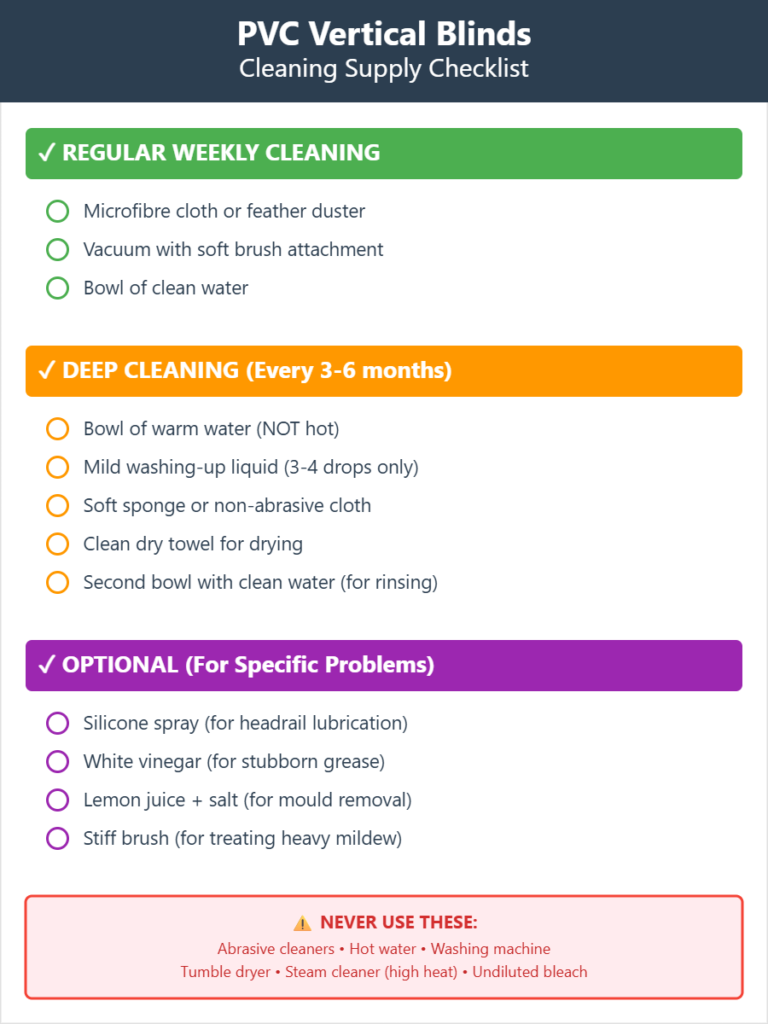
What You’ll Need to Clean PVC Vertical Blinds
One of the brilliant things about cleaning PVC vertical blinds is that you won’t need to purchase specialist products. Everything required is probably already in your cleaning cupboard.
For Regular Weekly Cleaning:
- Microfibre cloth or feather duster
- Vacuum cleaner with soft brush attachment
- Clean bowl of water (that’s it, genuinely)
For Deep Cleaning:
- Bowl of warm water (never hot)
- Mild washing-up liquid like Fairy (3-4 drops maximum)
- Soft sponge or non-abrasive cloth
- Clean dry towel for drying
- Second bowl of clean water for rinsing
Optional Items for Specific Problems:
- Silicone spray for lubricating the headrail mechanism
- White vinegar for stubborn grease marks
- Lemon juice and salt for mould removal
- Stiff brush for pre-treating heavy mildew
What You Should Never Use:
- Abrasive scourers or cream cleaners
- Boiling or very hot water
- Bleach (except as a last resort for severe mildew on white blinds)
- Washing machine or tumble dryer
- Steam cleaners on high heat settings
Quick Daily and Weekly Maintenance
The secret to keeping PVC vertical blinds looking new isn’t intensive deep cleaning. It’s regular light maintenance that stops dirt accumulating in the first place. Think of it like washing up: cleaning one dinner plate takes seconds, but a sink full of week-old dishes requires serious effort.
Dusting Without Removing Blinds
For the majority of homes, a weekly dust is all your PVC blinds need. This takes 5-10 minutes maximum and prevents the gradual buildup that eventually requires deep cleaning.
Method 1: Vacuum with Soft Brush Attachment
This is the most efficient approach, especially if you’re already vacuuming the room. Use the soft brush attachment (never the hard floor brush, which can scratch PVC):
- Start at the top slat and work downwards. This ensures dust doesn’t resettle on already-cleaned slats.
- Keep the suction on a low setting. PVC slats are rigid, but excessive suction can pull them off their clips or cause them to bend.
- Gently run the brush along the length of each slat, covering both sides.
- Work methodically from left to right so you don’t miss any slats.
The beauty of vacuuming is that it actually removes dust rather than just redistributing it around the room. If you have allergies or asthma, this method is particularly beneficial.
Method 2: Microfibre Cloth or Feather Duster
If you don’t have a vacuum handy or you’re doing a very quick tidy:
- Close the blinds fully so the slats overlap slightly.
- Starting from the top, wipe or dust each slat from one end to the other.
- Use long, smooth strokes rather than short, choppy movements.
- Don’t forget to dust both sides by rotating the blinds.
Microfibre cloths are superior to traditional dusters because their fibres trap dust rather than spreading it. Feather dusters work well too, but you’ll need to shake them outside regularly to remove accumulated dust.
Method 3: Vertical Blind Cleaning Tool
These multi-pronged dusters are specifically designed for vertical blinds. They have several finger-like extensions that wrap around each slat, cleaning both sides simultaneously. Whilst not essential, they do speed up the process considerably if you have multiple sets of blinds.
Spot Cleaning for Minor Marks
Spotted a fingerprint or a small splash? Don’t wait until your next deep clean. PVC blinds are so easy to spot clean that it takes literally seconds.
- Dampen a clean cloth with plain water (no soap needed for fresh marks).
- Gently wipe the affected area.
- Immediately dry with a clean, dry cloth to prevent water spots.
That’s it. For PVC blinds, this simple method removes most fresh marks instantly. The key is acting quickly before the mark has time to set or attract dust.
For slightly more stubborn marks like dried toothpaste or food splashes:
- Add a single drop of washing-up liquid to your damp cloth.
- Gently rub the mark.
- Wipe again with a clean damp cloth (no soap) to remove any residue.
- Dry immediately.
Deep Cleaning PVC Vertical Blinds: Two Proven Methods

Whilst regular dusting keeps your PVC vertical blinds presentable, they’ll eventually need a more thorough clean. How often depends on your specific situation. Kitchen blinds might need deep cleaning monthly, whilst bedroom blinds could go six months or longer.
Here are two effective methods. Choose based on how dirty your blinds are and how much time you have.
| Factor | Method 1: In-Situ Cleaning | Method 2: Bath Cleaning |
|---|---|---|
| Best For | Light to moderate dirt | Heavy soiling, grease buildup |
| Time Required | 20-30 minutes | 1-2 hours (including drying) |
| Effort Level | Low | Moderate |
| Blinds Position | Stay hanging on headrail | Must be removed completely |
| Drying Time | 15-30 minutes | 2-4 hours |
| Risk of Damage | Very low | Low (if done correctly) |
| Frequency | Every 3-6 months | Once or twice yearly |
| Ideal Situations | Regular maintenance, quick refresh | Annual deep clean, kitchen grease, severe stains |
| Tools Needed | Bowl, cloths, water, detergent | Bathtub, towels, cloths, drying space |
Method 1: Cleaning While Hanging (In-Situ)
This approach is perfect for lightly to moderately soiled blinds and has a huge advantage: you don’t need to remove the blinds from the headrail. It’s quicker, easier, and there’s no risk of breaking clips during removal and refitting.
When to use this method:
- Light to moderate dirt accumulation
- General dustiness with some marks
- Regular maintenance cleaning
- If you’re short on time
- When you’re nervous about removing blinds
Step 1: Thorough Pre-Dusting
Before introducing any water, remove all loose dust using the vacuuming or dusting methods described above. This crucial step prevents you from creating muddy streaks when you start wiping with a damp cloth. Spend a good 5 minutes on this stage, it makes the actual cleaning far easier.
Step 2: Prepare Your Cleaning Solution
Fill a bowl with warm (not hot) water from the tap. Add 3-4 drops of mild washing-up liquid and swirl gently to mix. You want barely any bubbles. If the water looks overly soapy, you’ve added too much detergent, and it’ll leave streaky residue.
Step 3: Wipe Each Slat Individually
Dip your cloth in the solution and wring it out thoroughly. The cloth should be damp, not dripping wet. Excess water runs down the slats, creating drip marks and potentially damaging the weights at the bottom.
Working from top to bottom:
- Wipe the full length of one slat using smooth, consistent pressure.
- Rotate the blinds to access the reverse side and repeat.
- Move to the next slat.
Take your time here. Rushing leads to missed spots and streaky results. Put on a podcast or some music and work methodically through each slat.
Step 4: Rinse Away Soap Residue
This is the step many people skip, and it’s why their blinds end up looking streaky or attracting dust more quickly. Soap residue acts like a magnet for dust particles.
Use a separate bowl of clean, plain water:
- Rinse your cloth thoroughly in the clean water.
- Wring it out well again.
- Wipe each slat once more to remove any soap.
Step 5: Dry Immediately
Don’t leave your blinds to air dry. Water spots and streaks form as water evaporates, leaving behind mineral deposits (especially problematic if you have hard water).
Use a clean, dry cloth or towel:
- Wipe each slat immediately after rinsing.
- Pay particular attention to the edges where water collects.
- If it’s a warm day, you can open windows to speed up any remaining drying.
Time Required: 20-30 minutes for an average-sized window
This method leaves your PVC vertical blinds looking refreshed without the hassle of removal. For most households, this level of cleaning every 3-6 months, combined with weekly dusting, keeps blinds in excellent condition.
Method 2: Deep Cleaning with Removal
When blinds are heavily soiled, particularly kitchen blinds with accumulated grease or bathroom blinds with stubborn marks, removing them for a proper bath clean delivers superior results. Yes, it takes more effort, but the transformation is remarkable.
When to use this method:
- Heavy grease buildup (common in kitchens)
- Multiple stubborn stains
- Blinds that haven’t been cleaned in over a year
- Visible discolouration across multiple slats
- When you’re already doing a major room clean
Step 1: Careful Removal
Before starting, lay some towels on a flat surface (dining table works perfectly) where you’ll place the slats.
To remove each slat:
- First, unclip the bottom chain from each slat. These connect at the bottom and simply unhook.
- Slide out the weights from the bottom of each slat. Keep these somewhere safe.
- At the headrail, hold the top of the slat firmly.
- Tilt the slat to approximately 45 degrees.
- Gently pull the clip outward to release it from the headrail hook.
If your slats have a pattern or design, keep them in order as you remove them. You can lay them out sequentially or number them lightly with a pencil on the back.
Step 2: Pre-Cleaning on Flat Surface
With all slats removed and laid flat, give them a thorough vacuum or wipe with a dry cloth. This removes the loose dust and debris that would otherwise create dirty water in your bath.
Step 3: Bath Preparation and Soaking
Fill your bathtub with lukewarm water. Test the temperature with your hand. It should feel comfortably warm, similar to bathwater for a baby. Never hot.
Add 3-4 drops of mild washing-up liquid. Swish the water around to distribute the soap evenly. Again, you want minimal bubbles.
Carefully lower the slats into the water, laying them flat. Don’t bunch them up or fold them. If your bath isn’t long enough to fit the full length, you can clean them in sections, moving them around in the water.
Here’s the crucial bit: only soak for 5-10 minutes maximum. Longer soaking can:
- Strip fire-retardant coatings (many blinds have these)
- Damage any glued components
- Cause the PVC to become overly soft and lose its rigidity
Step 4: Gentle Scrubbing
After soaking, use a soft sponge or cloth to wipe each slat:
- Work from top to bottom on each slat.
- Apply gentle pressure. You’re removing dirt, not scrubbing paint off a wall.
- For stubborn marks, focus on those specific areas rather than scrubbing the entire slat vigorously.
- Flip each slat to clean the reverse side.
If you encounter particularly stubborn grease (common on kitchen blinds), add a tiny bit more washing-up liquid directly to your sponge and work on that specific area. Rinse immediately afterwards.
Step 5: Thorough Rinsing
Drain the soapy water and rinse the bath clean. Then either:
- Rinse each slat individually under the shower attachment, or
- Fill the bath with clean water and swish each slat through it
The goal is removing every trace of soap. Run your fingers along a slat. If it feels slippery, it needs more rinsing.
Step 6: Proper Drying Technique
This is where many people go wrong and end up with stretched or damaged slats.
Do not:
- Hang wet blinds on the headrail
- Peg them to a washing line
- Put them in a tumble dryer
- Leave them crumpled in the bath
Instead:
- Wipe each slat with a clean towel to remove excess water.
- Lay slats completely flat on clean, dry towels.
- Place in a warm room (not in direct sunlight or near a radiator).
- Leave until completely dry. This typically takes 2-4 hours, depending on humidity.
Some people use a hairdryer on a cool setting to speed things up, which is fine. Just keep it moving and don’t focus heat on one spot.
Step 7: Rehanging
Only rehang when slats are bone dry. Any moisture trapped between slats can lead to mould.
- Replace the weights into the bottom of each slat.
- Insert the top clip back into each slat if you removed them.
- Hook each slat back onto the headrail, reversing the removal process.
- Reattach the bottom chain, connecting each slat in sequence.
- Test the operation to ensure everything moves smoothly.
Time Required: 1-2 hours including drying time
Whilst this method requires more effort, the results are worth it. Heavily soiled PVC blinds come out looking virtually brand new.
Tackling Specific Problems on PVC Vertical Blinds
Even low-maintenance PVC blinds occasionally face challenges beyond routine cleaning. Here’s how to handle the most common issues.
| Stain Type | Cleaning Solution | Method | Precautions |
|---|---|---|---|
| Fresh Grease | Warm water + washing-up liquid | Wipe with damp cloth | Act quickly before it sets |
| Heavy Grease | Warm water + washing-up liquid + white vinegar | Soft brush in circular motions, may need 2-3 applications | Test on small area first |
| Light Mould | Stiff brush + damp cloth | Brush top to bottom, wipe immediately | Work in same direction |
| Stubborn Mould | Lemon juice + salt paste | Apply, leave 10-15 mins, wipe clean | Dry thoroughly after |
| Severe Mildew (white blinds) | 4-6 drops bleach per cup water | Apply to affected areas only, 5 mins max | Only for white/cream, rinse thoroughly |
| Severe Mildew (coloured blinds) | 3-5 drops colour-safe bleach per cup water | Apply carefully, don’t soak | May cause fading, last resort only |
| General Yellowing | Equal parts white vinegar + warm water | Wipe, leave 5 mins, rinse | May need multiple applications |
| Nicotine Staining | 2 parts vinegar to 1 part water | Wipe repeatedly, expect multiple treatments | Consider specialist cleaner for heavy staining |
| Fingerprints/Light Marks | Plain water only | Quick wipe with damp cloth | Dry immediately |
| Water Spots | White vinegar solution or dry microfibre cloth | Buff gently | Prevention: always dry after cleaning |
Removing Stubborn Grease Stains
Kitchen blinds take a real battering. Every time you fry food or use the oven, microscopic grease particles float through the air and settle on surfaces, including your blinds. Over time, this creates a sticky, yellowish residue.
For Fresh Grease: Mild washing-up liquid and warm water usually suffice. The key is regular cleaning before buildup becomes heavy.
For Established Grease:
- Mix warm water with washing-up liquid (slightly stronger than usual: 5-6 drops).
- Use a soft brush (an old toothbrush works brilliantly) to gently agitate the greasy areas.
- Work in small circular motions.
- Wipe clean with a damp cloth.
- Rinse thoroughly and dry.
For Really Stubborn Grease: Add 2 tablespoons of white vinegar to your warm soapy water. Vinegar cuts through grease exceptionally well. Apply with a cloth, leave for 2-3 minutes, then wipe clean.
You may need to repeat the process 2-3 times for very heavy buildup. Don’t be tempted to use stronger chemicals as these can damage the PVC surface or strip its finish.
Mould and Mildew Removal from Bathroom Blinds
Bathroom condensation creates an ideal environment for mould. Even though PVC doesn’t absorb moisture like fabric, mildew spores can still settle and grow on the surface.
For Light Surface Mould:
- Take a stiff brush (an old washing-up brush or scrubbing brush).
- Gently brush the affected area, always working in the same direction (top to bottom).
- This dislodges the mould from the PVC surface.
- Wipe immediately with a damp cloth to remove the loosened spores.
- Dry thoroughly.
For More Stubborn Mould: Mix equal parts lemon juice and salt to create a paste:
- Apply the paste directly to mouldy areas.
- Leave for 10-15 minutes.
- Wipe away with a damp cloth.
- Rinse with clean water and dry.
Lemon juice is mildly acidic and has natural antifungal properties, whilst salt acts as a gentle abrasive. Together, they’re surprisingly effective at removing bathroom mould.
For Severe Mildew (Last Resort): If mould persists after trying gentler methods, you can use a diluted bleach solution, but only on white or very light cream PVC blinds:
- Mix 4-6 drops of household bleach with one cup of water.
- Apply with a cloth to affected areas only.
- Leave for 5 minutes (no longer).
- Rinse immediately and thoroughly with clean water.
- Dry completely.
For coloured PVC blinds, use colour-safe bleach instead (3-5 drops per cup of water).
Preventing Future Mould:
- Ventilate your bathroom properly. Open windows or run extractor fans during and after showers.
- Wipe windowsills regularly to prevent mould spreading to blinds.
- Consider using a dehumidifier if your bathroom is particularly prone to condensation.
- Clean bathroom blinds monthly rather than waiting for mould to appear.
- Keep blinds open when possible to allow air circulation.
Dealing with Yellowing and Discolouration
White or cream PVC blinds can develop a yellowish tinge over time, particularly in bathrooms (from humidity) or near windows with strong sunlight. Nicotine staining in smokers’ homes causes similar discolouration.
For General Yellowing:
- Mix equal parts white vinegar and warm water.
- Wipe each slat thoroughly with this solution.
- Leave for 5 minutes.
- Wipe again with clean water.
- Dry immediately.
The mild acidity of vinegar often lifts yellowing caused by general grime buildup.
For Nicotine Staining: This requires more aggressive treatment:
- Use a stronger vinegar solution (2 parts vinegar to 1 part water).
- You may need to repeat the process several times.
- For very heavy staining, a specialist nicotine cleaner might be necessary.
For Sun Damage: Unfortunately, if UV light has actually degraded the PVC material, the yellowing is permanent. No cleaning method will reverse this. At this point, you’re looking at replacement rather than restoration.
Cleaning and Maintaining Your Headrail
Whilst everyone focuses on the slats themselves, the headrail is equally important. This is the track at the top from which your blinds hang, containing the mechanism that allows them to open, close, and rotate.
Over time, the headrail accumulates a shocking amount of dust, cobwebs, and debris. This not only looks unsightly but can affect how smoothly your blinds operate.
When to Clean: Deep clean your headrail whenever you remove slats for cleaning. For in-situ cleaning, tackle the headrail every 6 months.
Cleaning Process:
With slats removed:
- Use a damp cloth to wipe along the full length of the headrail.
- Pay particular attention to the track where slats hang. Dust collects heavily here.
- Use a vacuum crevice tool to reach into corners and tight spaces.
- Cotton buds dipped in soapy water work brilliantly for detailed cleaning around mechanisms.
If you can’t remove slats:
- Dust as thoroughly as possible with a microfibre cloth.
- A can of compressed air (sold for cleaning keyboards) blasts dust from areas you can’t reach with a cloth.
Lubrication for Smooth Operation:
If your blinds have started sticking or don’t glide smoothly when opening and closing, the headrail mechanism needs lubrication:
- Purchase silicone spray from any hardware shop (£3-5).
- Spray a tiny amount into the track. One quick spray, no more.
- Use a cloth to wipe the spray along the track length, coating the inside.
- Operate the blinds several times to distribute the lubricant.
- Wipe away any excess to prevent it transferring to slats.
Repeat this lubrication every 6 months or whenever operation becomes stiff. It takes two minutes and extends the life of your blind mechanism considerably.
Common Mistakes That Damage PVC Vertical Blinds
Even though PVC blinds are durable, certain cleaning approaches can damage them permanently. Here’s what to avoid.
Never Use Washing Machines
Despite PVC’s durability, washing machines are far too aggressive. The agitation breaks plastic clips, damages weights, and can cause slats to crack or warp. Some people put blinds in pillowcases, thinking this protects them. It doesn’t. The mechanical action is simply too rough for blinds’ delicate hanging mechanisms.
If you’re tempted by this shortcut, remember that removing and correctly cleaning slats in the bath takes less time than dismantling, machine washing, and then discovering you’ve damaged components that require replacement.
Interested in what CAN go in the washing machine? Check our guide on whether you can put vertical blinds in the washing machine for fabric alternatives.
Avoid Hot Water at All Costs
Hot water and PVC don’t mix. The material softens, warps, and loses its rigid shape. Even water that feels comfortably warm to you can be too hot for PVC. If you have a bottom weight attached with glue (many blinds do), hot water dissolves this glue, and the weight falls off.
Always use lukewarm water. If in doubt, err on the cooler side.
Don’t Soak Excessively
A 5-10 minute soak is sufficient for even heavily soiled blinds. Leaving them submerged for 30 minutes, an hour, or overnight (yes, some people do this) can:
- Strip fire-retardant treatments
- Weaken the PVC structure
- Damage printed patterns
- Cause colour fading
Set a timer when soaking blinds. It’s easy to get distracted and leave them longer than intended.
Avoid Abrasive Cleaners and Scourers
PVC has a smooth, often slightly glossy finish. Abrasive cream cleaners, scouring pads, or stiff brushes scratch this surface. Once scratched, PVC looks dull and actually attracts dirt more readily.
Stick to soft cloths, sponges, and gentle detergents. The smooth surface of undamaged PVC is inherently easy to clean, but scratched PVC becomes progressively harder to maintain.
Never Dry in Direct Sunlight
Whilst it’s tempting to hang cleaned blinds outside for quick drying, direct sunlight causes several problems:
- PVC can warp in strong heat
- UV light accelerates yellowing and brittleness
- Colours fade more rapidly
Dry indoors, laid flat, away from direct sunlight and heat sources.
Don’t Fold or Crease When Wet
Wet PVC is more pliable than dry PVC. If you fold or crease it whilst damp, those creases become permanent. They won’t “drop out” as they might with fabric.
Always keep slats flat during cleaning and drying.
Avoid Tumble Dryers
This should go without saying, but it bears repeating: never put PVC blinds in a tumble dryer. The heat warps them beyond recognition. Even on a cool setting, the tumbling action can crack or bend slats.
Air drying flat is the only safe method.
How Often Should You Clean PVC Vertical Blinds?
One question we’re constantly asked: what’s the ideal cleaning frequency for PVC vertical blinds? The answer depends on several factors, but here’s a realistic schedule that keeps blinds in excellent condition without becoming a time-consuming chore.
| Room Type | Weekly Dusting | Spot Cleaning | Deep Cleaning | Special Considerations |
|---|---|---|---|---|
| Kitchen | Yes | Weekly | Monthly to 6-weekly | Grease buildup from cooking requires frequent attention |
| Bathroom | Yes | Monthly mould check | Every 2-3 months | Check for condensation damage and mould growth |
| Living Room | Yes | As needed | Every 4-6 months | High traffic areas may need more frequent cleaning |
| Bedroom | Yes | As needed | Every 6 months | Typically the cleanest room, less frequent deep cleaning needed |
| Office/Study | Yes | As needed | Every 4-6 months | Regular use but less exposure to moisture and grease |
| Spare Room | Fortnightly | As needed | Twice yearly | Lower traffic means less frequent maintenance |
| Conservatory | Yes | Weekly | Every 2-3 months | Higher dust accumulation and humidity levels |
Weekly Quick Maintenance:
Dust or vacuum your PVC blinds once per week. This takes 5-10 minutes and prevents gradual buildup. If you’re already vacuuming the room, add blinds to your routine. They’re in that room anyway, so it’s not really extra work.
For very low-traffic rooms like spare bedrooms, you can extend this to fortnightly dusting.
Monthly Spot Checks:
Once a month, do a closer inspection:
- Look for any marks or stains
- Check bathroom blinds for early signs of mould
- Spot clean anything you notice
This inspection takes two minutes but catches problems before they become serious.
Deep Cleaning Every 3-6 Months:
How often you need thorough cleaning depends on the room:
Kitchen Blinds: Monthly to 6-weekly. Cooking creates grease buildup that’s easier to remove frequently than in one major clean.
Bathroom Blinds: Every 2-3 months. Check monthly for mould, but deep clean quarterly unless you notice problems.
Living Areas: Every 4-6 months. These rooms are less problematic than kitchens or bathrooms.
Bedrooms: Every 6 months. Bedrooms are typically the cleanest rooms in your home.
Rarely Used Rooms: Twice yearly. Even unused rooms accumulate dust.
Factors That Increase Cleaning Frequency:
Certain situations mean you’ll need more frequent cleaning:
- Pets: Animal hair and dander accumulate on blinds. Increase frequency by about 50%.
- Smoking: Nicotine creates sticky deposits. Clean monthly at minimum.
- Allergies: If household members have dust allergies, weekly dusting becomes crucial.
- Near Busy Roads: Traffic pollution increases dust accumulation significantly.
- Coastal Areas: Salt air carries fine salt particles that settle on blinds.
- Construction Nearby: Building work creates enormous amounts of dust.
The Benefits of Regular PVC Blind Maintenance
Still wondering if the effort is worthwhile? Consider these advantages of keeping your PVC vertical blinds properly cleaned.
Dramatically Extended Lifespan
Well-maintained PVC vertical blinds regularly last 10-15 years. Neglected blinds might only manage 5-7 years before looking shabby enough to require replacement. Given that a decent set of made-to-measure PVC blinds costs £80-200+, regular cleaning saves considerable money.
Consistently Attractive Appearance
Clean blinds transform a room’s appearance. You might not consciously notice dirty blinds day-to-day (you see them constantly, so the gradual deterioration isn’t obvious), but guests certainly will. More importantly, you’ll notice the dramatic improvement when they’re suddenly clean again.
Healthier Indoor Environment
Dirty blinds harbour dust mites, pollen, pet dander, and mould spores. For anyone with allergies, asthma, or respiratory sensitivities, this matters enormously. Regular cleaning significantly improves indoor air quality.
The difference is particularly noticeable in bedrooms. Many people sleep worse than they realise due to allergens in dusty blinds right next to their bed.
Easier Cleaning Long-Term
This might seem paradoxical, but the more frequently you clean, the easier each cleaning session becomes. Ten minutes of light cleaning beats two hours of scrubbing hardened grime. Regular maintenance means you’re always dealing with fresh dirt that wipes away easily, never tackling months of accumulated crud.
Smoother Operation
Clean, well-lubricated mechanisms operate smoothly and quietly. Stiff, sticky blinds are frustrating to use. Regular headrail cleaning and lubrication keeps everything working properly.
Better Light Control
Dirty PVC blinds, especially in kitchens, develop a greasy film that affects their appearance and reduces their effectiveness at controlling light. Clean blinds block light more effectively and look crisper when closed.
When to Replace Rather Than Clean
PVC vertical blinds are remarkably durable, but nothing lasts forever. Sometimes, cleaning isn’t the answer, and replacement becomes the more sensible option.
Persistent Mould Beyond Cleaning
If mould has deeply infiltrated your blinds despite repeated cleaning attempts, especially if it’s causing health problems, replacement is warranted. Whilst PVC itself doesn’t absorb moisture, very old blinds can develop microscopic cracks where mould embeds itself.
Warping or Permanent Creasing
If slats no longer hang straight, perhaps from accidental exposure to heat or incorrect drying methods, no amount of cleaning will fix the structural damage.
Brittle, Cracking PVC
UV exposure over many years makes PVC brittle. If clips break frequently or slats crack when handling them, the material has reached the end of its usable life.
Broken Mechanisms
If the headrail mechanism no longer operates smoothly despite cleaning and lubrication, or if multiple components have broken, replacement often costs less than repairs.
Staining Beyond Removal
Some stains, particularly deep-set nicotine staining or severe discolouration from chemical damage, become permanent. If your blinds still function but look irreparably stained, replacement might be purely aesthetic, but that’s valid if appearance matters to you.
Cost-Benefit Analysis
Consider the time and products required for repeated cleaning attempts versus replacement cost. If you’ve spent hours trying to revive badly damaged blinds with minimal improvement, that time has value. Sometimes accepting that blinds have reached their natural end makes more sense than continued frustration.
Desire for Updated Style
Perfectly functional blinds that simply look dated don’t need replacing from a practical standpoint, but there’s nothing wrong with wanting a fresh look. If your PVC blinds are 10+ years old, modern equivalents offer better UV protection, improved mechanisms, and contemporary colours.
Similar considerations apply to other blind types. Our guides on cleaning roller blinds and cleaning Venetian blinds can help you maintain your other window coverings.
Conclusion
Cleaning PVC vertical blinds is genuinely straightforward when you understand the basic principles: lukewarm water, mild detergent, gentle handling, and proper drying. Unlike fabric blinds that absorb stains and require careful treatment, PVC’s non-porous surface makes it wonderfully forgiving and easy to maintain.
The key to keeping your PVC vertical blinds looking factory-fresh isn’t intensive scrubbing or expensive products. It’s simply regular light maintenance. A weekly dust takes five minutes. Monthly spot cleaning prevents marks becoming permanent. Quarterly deep cleaning keeps blinds pristine. This modest time investment protects your original purchase and means you’re never facing a major cleaning project.
For those trickier situations, greasy kitchen blinds, mouldy bathroom blinds, or stubborn stains, remember that patience beats aggression. Multiple gentle cleaning attempts with mild solutions are always preferable to harsh chemicals or rough scrubbing that might damage the PVC surface.
Start with the basic weekly dusting routine. It’s the single most effective step in blind maintenance and requires minimal effort. Once you’ve established that habit, everything else becomes simpler. Your PVC vertical blinds will reward this small effort by looking brilliant and lasting years longer than neglected alternatives.
For more comprehensive blind maintenance advice, explore our complete guide on how to clean vertical blinds covering all blind materials, or learn the best methods for cleaning vertical blinds without removing them when you’re short on time.
Frequently Asked Questions About Cleaning PVC Vertical Blinds
Can you wash PVC vertical blinds in the washing machine?
No, never put PVC vertical blinds in a washing machine under any circumstances. Whilst PVC itself is durable and moisture-resistant, washing machines cause multiple types of damage that cleaning can’t fix. The mechanical agitation breaks the plastic clips at the top of each slat, these clips become brittle over time and can’t withstand tumbling action.
The weights at the bottom often come loose or break, and the constant movement can crack or warp the PVC slats themselves. Even protective measures like placing blinds in pillowcases or using gentle cycles don’t prevent this damage.
Hand cleaning with warm water and mild detergent is actually quicker than the faff of fitting blinds into a machine, and it delivers better results without any risk. The bath cleaning method described above takes about 30 minutes and leaves your blinds genuinely clean rather than damaged.
What’s the best cleaner for PVC vertical blinds?
The best cleaner for PVC vertical blinds is also the simplest: warm water mixed with 3-4 drops of mild washing-up liquid like Fairy. This combination removes 95% of dirt, grease, and stains you’ll encounter on PVC blinds without any risk of damage. The beauty of this approach is that washing-up liquid is specifically designed to cut through grease whilst being gentle on surfaces, making it perfect for kitchen blinds.
For particularly stubborn grease marks, add a tablespoon or two of white vinegar to your warm soapy water. The vinegar’s mild acidity helps dissolve built-up grease. You genuinely don’t need specialist blind cleaning products, which often cost considerably more whilst offering no real advantage over standard household items.
Avoid anything abrasive, cream cleaners, or products containing bleach as your regular cleaner. The smooth PVC surface doesn’t need aggressive chemicals, just regular gentle cleaning with basic soap and water.
Can you use bleach on PVC blinds?
Bleach should only be used on PVC vertical blinds as an absolute last resort for severe mildew problems, and only on white or very light cream coloured blinds. If you must use bleach, dilute it heavily: just 4-6 drops of household bleach per cup of water. Apply this weak solution only to affected areas, leave for no more than 5 minutes, then rinse immediately and thoroughly with clean water.
For coloured PVC blinds, you’d need to use colour-safe bleach instead, at 3-5 drops per cup of water, though even this carries risks of fading. The problem with bleach is that whilst it kills mould effectively, it also weakens the PVC material over time, making it more brittle and prone to cracking. It can also cause discolouration and permanent damage to the surface finish.
Try gentler methods first: lemon juice and salt paste works surprisingly well on mould, or white vinegar solution for general cleaning. Only move to diluted bleach if you’ve attempted these safer alternatives multiple times without success. If mould is so severe that gentle methods won’t shift it, honestly consider whether the blinds have reached the end of their life rather than repeatedly attacking them with harsh chemicals.
How do you clean PVC vertical blinds without taking them down?
Cleaning PVC vertical blinds whilst they’re still hanging is straightforward and works brilliantly for light to moderate dirt. Start by thoroughly dusting every slat using either a vacuum with a soft brush attachment or a microfibre cloth, working from top to bottom to prevent dust resettling on cleaned areas. Next, prepare a bowl of warm water with 3-4 drops of washing-up liquid mixed in.
Dampen a soft cloth in this solution and wring it out well so it’s not dripping. Working methodically, wipe each slat individually from top to bottom, then rotate the blinds to clean the reverse side. The key is keeping your cloth damp rather than wet to prevent water running down and creating drip marks. After cleaning all slats with the soapy solution, rinse your cloth thoroughly in clean water and wipe each slat again to remove soap residue.
Finally, immediately dry each slat with a clean dry cloth to prevent water spots. This entire process takes about 20-30 minutes for an average window and leaves your PVC blinds looking refreshed without any of the hassle of removal and refitting. For more detailed guidance, see our article on how to clean vertical blinds without removing them.
How often should you clean PVC vertical blinds?
The ideal cleaning schedule for PVC vertical blinds depends on the room they’re in and your household conditions, but here’s a realistic routine: dust or vacuum weekly (takes 5-10 minutes), spot clean monthly to catch any marks before they set, and deep clean every 3-6 months. Kitchen blinds need more attention due to airborne grease, ideally a monthly deep clean or at least every 6-8 weeks.
Bathroom blinds should be checked monthly for mould and deep cleaned quarterly. Living room and bedroom blinds can go 4-6 months between proper cleans if you’re keeping up with weekly dusting. Certain factors mean you’ll need to clean more frequently: homes with pets need about 50% more frequent cleaning due to hair and dander, smoking indoors requires monthly cleaning minimum to prevent nicotine buildup, and if anyone has dust allergies, that weekly dusting becomes crucial rather than optional.
Houses near busy roads accumulate more pollution dust, and coastal properties deal with salt particles in the air. The secret to easy maintenance is actually cleaning more often with light methods rather than waiting until blinds look obviously dirty and require serious scrubbing effort.
Why are PVC vertical blinds easier to clean than fabric blinds?
PVC vertical blinds are dramatically easier to clean than fabric alternatives because of their fundamental material properties. PVC is non-porous and non-absorbent, meaning liquids, grease, and stains sit on the surface rather than soaking into the material. When you splash something on PVC blinds, you can simply wipe it off with a damp cloth. Compare this to fabric blinds, which absorb spills, grease, and moisture like a sponge.
Fabric vertical blinds often require careful spot treatment, professional dry cleaning, or extremely gentle hand washing because aggressive cleaning damages the fibres. With PVC, you can be more robust in your approach because the smooth plastic surface can handle normal cleaning without risk of damage. Kitchen grease that permanently stains fabric blinds wipes clean from PVC with soapy water.
Bathroom mould that embeds itself in fabric fibres sits on PVC’s surface where you can remove it easily. Additionally, PVC blinds dry in a couple of hours, whilst fabric blinds can take 24 hours or more. This moisture-resistant quality makes PVC the obvious choice for bathrooms and kitchens where fabric would struggle. You get the practicality of easy maintenance without sacrificing the clean, professional look that vertical blinds provide.
How do you remove mould from PVC vertical blinds?
Removing mould from PVC vertical blinds is thankfully much easier than removing it from fabric because the mould sits on the surface rather than growing into the material. For light surface mould, take a stiff brush like an old washing-up brush and gently scrub the affected areas, always working in the same direction from top to bottom.
This dislodges the mould spores from the PVC. Immediately wipe with a damp cloth to remove the loosened spores and dry thoroughly. For more stubborn mould that won’t shift with brushing alone, create a paste by mixing equal parts lemon juice and salt. Apply this directly to the mouldy areas, leave for 10-15 minutes, then wipe away with a damp cloth, rinse with clean water, and dry completely.
The lemon juice’s natural acidity and antifungal properties combined with salt’s gentle abrasive action tackle most bathroom mould effectively. Only if these gentler methods fail should you consider using diluted bleach (4-6 drops per cup of water), and then only on white or cream blinds.
Prevention is genuinely easier than repeatedly treating mould: ventilate your bathroom properly by opening windows or running extractor fans during and after showers, wipe windowsills regularly to prevent mould spreading, and most importantly, clean your bathroom blinds monthly rather than waiting for visible mould to appear. Keep blinds open when possible to allow air circulation rather than leaving them closed in a damp bathroom environment.
Can you put PVC vertical blinds in the bathtub to clean them?
Yes, you can absolutely clean PVC vertical blinds in the bathtub, and this is actually the recommended method for heavily soiled blinds. The process is safe and effective when done correctly. Fill your bathtub with lukewarm water, never hot, as hot water can warp PVC and damage the glue holding weights in place. Add just 3-4 drops of mild washing-up liquid and swish to distribute.
Carefully lay the slats flat in the water and soak for 5-10 minutes maximum. This short soaking time is crucial because longer periods can strip fire-retardant coatings or damage the PVC structure. After soaking, gently wipe each slat with a soft sponge or cloth from top to bottom, focusing on any stubborn marks. Drain the soapy water and rinse each slat thoroughly under the shower attachment or in clean water to remove all soap residue.
The drying process is where many people go wrong: never hang wet PVC blinds back on the headrail or peg them to a washing line as this causes stretching. Instead, wipe each slat with a clean towel to remove excess water, then lay them completely flat on dry towels in a warm room away from direct sunlight. Leave until bone dry before rehanging, which typically takes 2-4 hours. This bath method transforms really grimy blinds and is well worth the effort once or twice a year.
Can you use a steam cleaner on PVC vertical blinds?
You can use a steam cleaner on PVC vertical blinds but only with significant caution and at low to medium heat settings. PVC can tolerate moderate heat, but high-temperature steam can cause the material to warp, lose its shape, or develop a cloudy appearance. If you’re considering steam cleaning, first ensure you’ve removed all loose dust by vacuuming or wiping dry, otherwise you’ll create muddy streaks.
Use the steam cleaner’s lowest heat setting and keep it moving constantly rather than focusing on one spot. Hold the steamer several inches away from the blind surface rather than pressing it directly against the PVC. Be particularly careful around any glued components like bottom weights, as steam heat can soften adhesives. The main advantage of steam cleaning is that it sanitises whilst cleaning, which appeals to people concerned about bacteria or allergens.
However, honestly, for most situations, the traditional warm water and mild detergent method delivers equally good results without any heat-related risks. Steam cleaning makes most sense for spot cleaning small areas or sanitising bathroom blinds between deep cleans, but it shouldn’t replace proper washing with soap and water for heavily soiled blinds. If you do opt for steam cleaning, test on a small inconspicuous area first to ensure your specific blinds tolerate it well.
What temperature water should I use to clean PVC blinds?
Always use lukewarm or warm water to clean PVC vertical blinds, never hot water. The ideal temperature is similar to what you’d use for washing your hands comfortably, around 30-35 degrees Celsius. If the water feels hot to your touch, it’s too hot for PVC blinds. Hot water causes several serious problems with PVC: it makes the material soften and become overly pliable, which leads to warping and loss of the rigid shape that keeps blinds hanging straight.
If your blinds have bottom weights attached with glue, hot water dissolves this adhesive, causing weights to fall off. Hot water can also cause PVC to develop a cloudy or milky appearance that’s permanent and makes blinds look old and damaged. Some PVC blinds have printed patterns or colours, and excessive heat can cause these to fade or blur. Even very warm water over time degrades the PVC structure, making it more brittle and prone to cracking.
The good news is that lukewarm water works perfectly well for cleaning. PVC’s smooth, non-porous surface means dirt and grease haven’t penetrated the material, so you don’t need hot water’s extra cleaning power. Mild detergent in comfortably warm water removes everything you need to shift. If in doubt about temperature, err on the cooler side. Your blinds will still come clean, and you’ll avoid any risk of heat damage.
Can you tumble dry PVC vertical blinds?
Absolutely not, never put PVC vertical blinds in a tumble dryer under any circumstances, not even on a cool setting. Tumble dryers are catastrophic for PVC blinds in multiple ways. The heat, even on supposedly cool settings, warps the PVC material beyond recognition. You’ll end up with twisted, bent, misshapen slats that won’t hang straight and can’t be straightened again.
The tumbling action itself cracks and breaks PVC, particularly if the material has become warm and more pliable from the dryer heat. Plastic clips shatter, weights break, and you’ll find yourself with a pile of damaged components rather than clean blinds. Even if you somehow avoided structural damage, the dryer creates permanent creases in PVC that never drop out.
Some types of PVC can actually melt or become sticky in tumble dryer heat, creating an awful mess. The only safe drying method for PVC vertical blinds is air drying laid completely flat. After washing, wipe each slat with a clean towel to remove excess water, lay them flat on dry towels in a warm room with good air circulation, and leave them until completely dry.
This takes 2-4 hours typically, but it’s simply waiting time rather than active work. If you’re desperate to speed things up, you can use a hairdryer on a cool setting, keeping it moving constantly and holding it at least a foot away from the blinds. Patience with proper air drying protects your investment in blinds that likely cost £80-200+ to replace.
How do you prevent PVC vertical blinds from yellowing?
Preventing yellowing in PVC vertical blinds requires understanding what causes it in the first place. The main culprits are UV exposure from sunlight, humidity in bathrooms, nicotine from smoking, and general grime buildup. To minimise yellowing, use window film or curtains on very sunny windows to reduce direct UV exposure during peak sunlight hours, though obviously this somewhat defeats the purpose of having blinds for light control.
More practically, clean your PVC blinds regularly before grime has time to set and discolour the surface. That weekly dusting and quarterly deep cleaning routine genuinely prevents the gradual yellowing that comes from dirt accumulation. In bathrooms, proper ventilation is crucial because constant humidity accelerates yellowing in white PVC. Always run your extractor fan during and after showers, or open windows to let moisture escape.
For smokers’ homes, monthly cleaning becomes essential because nicotine creates yellowish-brown staining that’s extremely difficult to remove once established. Using a diluted white vinegar solution (equal parts vinegar and water) during regular cleaning helps prevent yellowing by removing substances before they stain. Interestingly, some yellowing is inevitable with white PVC over many years simply due to UV exposure and age.
There’s no magic prevention method for this natural material degradation. However, blinds that are regularly cleaned and properly maintained will stay white dramatically longer than neglected alternatives. If your blinds have started yellowing, cleaning with a vinegar solution can sometimes reverse early-stage discolouration, but severe yellowing from sun damage is usually permanent and indicates the blinds are reaching the end of their natural lifespan.
Are PVC vertical blinds suitable for all rooms?
PVC vertical blinds work brilliantly in most rooms but truly excel in certain environments. They’re absolutely ideal for kitchens and bathrooms because their moisture-resistant, wipe-clean surface handles humidity, splashes, and grease without any problems that would destroy fabric blinds. Office spaces benefit from PVC blinds because they’re low-maintenance and professional-looking.
Conservatories are another excellent application since PVC tolerates temperature fluctuations and humidity better than fabric. Living rooms and bedrooms can certainly use PVC vertical blinds, though here you’re choosing purely based on aesthetic preference rather than practical necessity since these rooms don’t present the challenging conditions that make PVC essential.
Some people find PVC blinds less elegant or homely than fabric alternatives for bedroom use, which is purely subjective. The only room where you might hesitate is a very sunny room with large windows getting intense, direct sunlight for hours daily. Prolonged UV exposure does eventually cause PVC to become brittle and potentially yellow, though this takes many years.
Even in sunny rooms, regular rotation of the blinds so different slats face the sun helps distribute wear. Overall, PVC vertical blinds’ combination of easy maintenance, durability, and moisture resistance makes them suitable for virtually any room, with kitchens and bathrooms being where they really prove their worth compared to other blind types.
Found this helpful? Share it: