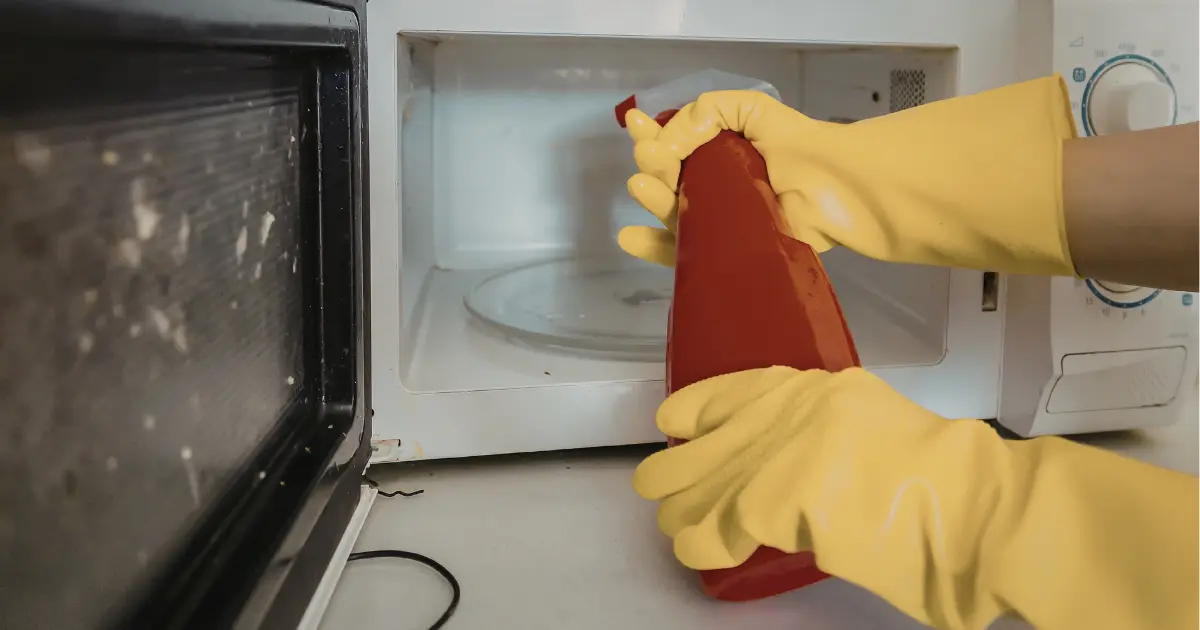
How to Clean a Leather Jacket: The Complete UK Guide (2025)

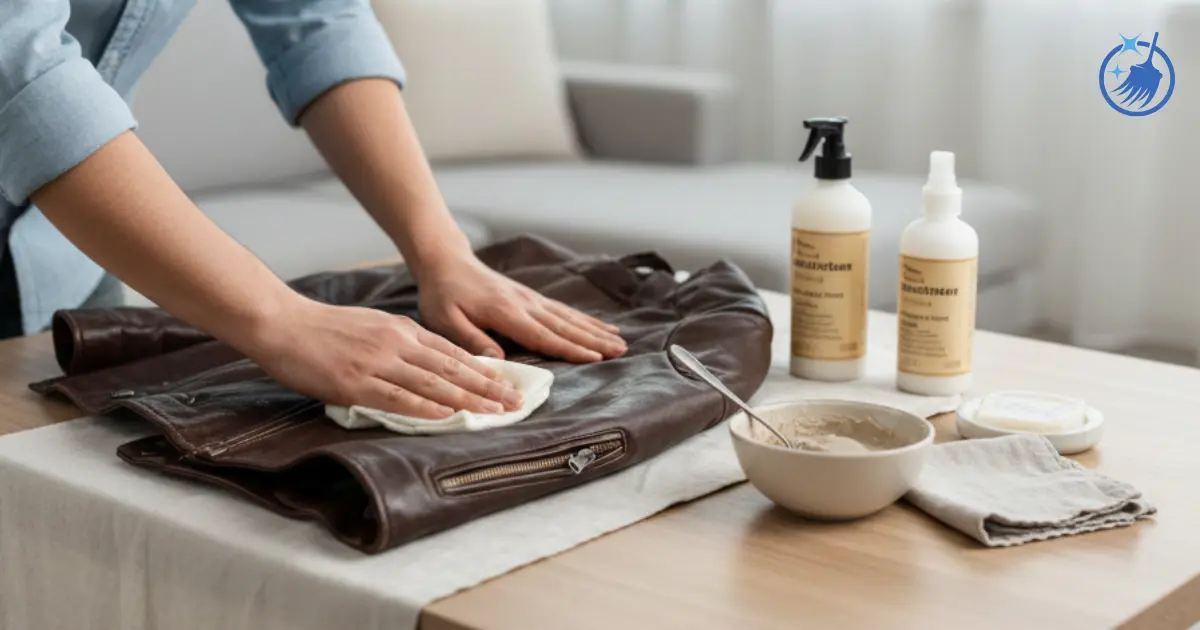
How to clean a leather jacket properly is something I’ve taught countless clients who’ve accidentally damaged expensive jackets with the wrong methods. After 18 years as a professional cleaner, I’ve seen £500 designer leather jackets ruined by people who threw them in the washing machine, used harsh chemicals, or dried them with a hairdryer. The truth is, leather is surprisingly forgiving if you use the right techniques, but absolutely unforgiving if you don’t. I’ll show you exactly how to clean all types of leather jackets – real leather, faux leather, and suede – including the tricky stuff like mould removal, cleaning the lining, and getting rid of that awful thrift store smell.
What makes this guide different is that I’ll be brutally honest about when you should pay for professional cleaning and when you can safely do it yourself. I run a cleaning business, so recommending DIY cleaning actually costs me money. But I’d rather you have accurate information than waste £40 on professional cleaning for a jacket you could clean at home in 20 minutes.
Quick Summary
Time needed: 15-30 minutes for basic cleaning; 1-2 hours for deep cleaning or mould removal
Difficulty: Easy for surface cleaning; moderate for problem-solving
You’ll need: Mild soap, white cloths, leather conditioner, soft brush, white vinegar for mould
Key takeaway: Never wash leather in water or use heat to dry it. Gentle wiping, immediate conditioning, and air drying are the keys to success
What You'll Need
For Basic Leather Jacket Cleaning
- Mild soap (baby shampoo, saddle soap, or castile soap – about £2-4)
- Clean white cloths (at least 4-5)
- Leather conditioner (£5-12 from supermarkets or Amazon)
- Soft brush (old toothbrush works)
- Bowl of lukewarm water
- Padded hanger
For Problem Cleaning (Mould, Stains, Smells)
- White vinegar (50p from any supermarket)
- Bicarbonate of soda (under £1)
- Rubbing alcohol/surgical spirit (£2-3 from chemists)
- Cotton buds
- Talcum powder or cornflour (for grease stains)
- Suede brush (£3-5 if you have suede)
What to Absolutely Avoid
- Washing machine (destroys leather completely)
- Bleach or harsh chemicals
- Ammonia-based cleaners
- Hairdryers, radiators, or direct heat
- Wire brushes or abrasive scourers
- Excess water
Understanding Your Leather Type – Critical First Step
Before you clean anything, identify what type of leather you have. Different leathers need different treatments.
Real/Genuine Leather (Smooth Finish)
This is the most common – cow, lamb, goat, or pig leather with a smooth, slightly shiny surface. Feel it – if it’s smooth and doesn’t have a fuzzy texture, it’s smooth leather.
Examples: Most motorcycle jackets, bomber jackets, fashion jackets from high street shops
Cleaning difficulty: Easy to moderate
Suede and Nubuck Leather
Fuzzy, velvety texture. Looks matte, not shiny. Suede is made from the underside of the hide.
Examples: Suede jackets, some designer pieces, vintage 70s-style jackets
Cleaning difficulty: Moderate to difficult – very easy to damage
Faux Leather (PU, Vegan, Synthetic)
Man-made material that looks like leather. Usually cheaper, feels slightly plastic-y. Check the label – it will say “100% polyurethane” or “vegan leather” rather than “genuine leather.”
Examples: Budget jackets from Primark, ASOS, Boohoo; intentionally vegan products
Cleaning difficulty: Easy – more forgiving than real leather
Specialty Leathers
- Patent leather: Super shiny, glossy finish
- Distressed leather: Intentionally worn-looking, with variations in colour
- Aniline leather: Very soft, absorbs water easily, shows marks
- Sheepskin/Shearling: Leather with attached wool/fur
Each needs slightly different care. I’ll cover all of them in this guide.
The Spot Test – Never Skip This
I cannot stress this enough: always test any cleaning product on a hidden area first. I’ve seen too many jackets ruined because people skipped this step.
How to spot test:
- Find a hidden area – inside pocket, under collar, inside hem
- Dampen a cotton bud with your cleaning solution
- Gently rub a small spot (about 1cm)
- Wait 10 minutes
- Check for: colour change, leather stiffening, finish damage, or discolouration
If anything looks wrong, don’t proceed. Take it to a professional instead.
For expensive jackets (£200+), vintage pieces, or designer brands, I always recommend professional cleaning. The £30-50 cost is worth it compared to ruining a £400 jacket.
How to Clean a Leather Jacket at Home – Step-by-Step Guide
This method works for smooth, genuine leather jackets in good condition.
Step 1 – Remove Surface Dust and Dirt
- Take the jacket outside and shake it vigorously
- Use a soft, dry cloth to wipe the entire surface
- Pay attention to creases, under collar, and pocket areas where dust accumulates
- For stubborn surface dirt, use a very soft brush (like a clean makeup brush) in gentle circular motions
This step alone makes many jackets look 70% better. Surface dust is half the problem with leather jackets that haven’t been cleaned in ages.
Step 2 – Prepare Your Cleaning Solution
- Fill a small bowl with lukewarm water (not hot, not cold – test with your hand)
- Add 2-3 drops of mild soap (baby shampoo, saddle soap, or castile soap)
- Mix gently to create light suds
- This weak solution won’t damage leather but will lift dirt
Important: You want barely soapy water. If you can see lots of bubbles, you’ve used too much soap.
Step 3 – Wipe the Leather
- Dampen (don’t soak) a clean white cloth in the soapy water
- Wring it out thoroughly – it should be damp, not wet
- Gently wipe the entire jacket in sections
- Work in the direction of any grain or texture
- Focus on dirty areas: collar, cuffs, front near the zip, pockets
- Don’t scrub hard – gentle pressure and multiple passes work better
- Rinse and wring out your cloth frequently to avoid spreading dirt
For stubborn dirt on collars and cuffs:
- Add slightly more pressure
- Make gentle circular motions
- Use a soft toothbrush dipped in the solution for textured areas
- Never scrub aggressively – you’ll damage the finish
Step 4 – Remove Soap Residue
- Rinse your cloth completely in clean water
- Wring it out until barely damp
- Wipe the entire jacket again to remove all soap
- This step is crucial – soap residue dries stiff and attracts dirt
- Check for soap by running your hand over the leather – it should feel smooth, not slippery
Step 5 – Dry the Jacket Properly
This is where people make the most mistakes.
- Gently pat the jacket with a clean, dry towel to remove excess moisture
- Hang on a wide, padded hanger (wire hangers leave marks)
- Place in a well-ventilated room away from direct heat
- Never use: hairdryers, radiators, heaters, direct sunlight, tumble dryers
- Let it air-dry naturally for 12-24 hours
Why no heat? Heat causes leather to shrink, crack, and stiffen permanently. I’ve seen jackets shrink two sizes from someone putting them near a radiator.
Step 6 – Condition the Leather (Essential)
Once completely dry, you must condition. This step separates amateur cleaning from professional results.
- Choose a leather conditioner (I use Leather Honey or Chamberlain’s – both £8-12 and last for years)
- Apply a small amount to a clean cloth (pea-sized for each section)
- Rub into the leather in gentle circular motions
- Work in sections – sleeves first, then front, then back
- Pay extra attention to areas that flex: elbows, shoulders, armpit seams
- Let the conditioner absorb for 20-30 minutes
- Buff off any excess with a clean, dry cloth
Conditioning replaces the natural oils that cleaning removes. Skip this step and your jacket will dry out and crack within months.
How to Clean Faux Leather Jackets
Faux leather (PU, vegan leather, synthetic) is actually easier to clean than real leather.
Basic Cleaning Method
- Mix washing-up liquid (2-3 drops) in warm water
- Dampen a cloth and wipe the entire jacket
- You can use more water than with real leather – faux leather doesn’t absorb it
- Rinse with a clean damp cloth
- Pat dry with a towel
- Hang to air-dry (still no heat)
For Stubborn Dirt on Faux Leather
- Make a paste with bicarbonate of soda and water
- Apply to dirty spots with a soft cloth
- Rub gently in circles
- Wipe off with a damp cloth
- Dry thoroughly
No conditioning needed – faux leather doesn’t dry out like real leather. But it does crack eventually from age, and there’s nothing you can do about that. Faux leather typically lasts 2-5 years before showing wear.
How to Clean Suede and Nubuck Leather Jackets
Suede is high-risk. I always recommend professional cleaning for expensive suede, but here’s how to clean it yourself if needed.
For Light Cleaning
- Use a suede brush (£3-5 from shoe shops) – this is essential, don’t skip it
- Brush in one direction to lift dirt and restore the nap (fuzzy texture)
- For stubborn spots, use a suede eraser (like a pencil eraser designed for suede)
- Rub gently in one direction
- Brush again after erasing
For Water Marks on Suede
- Lightly dampen the entire affected panel with a spray bottle of water
- This sounds counterintuitive, but it works – you’re evening out the water absorption
- Blot with a clean towel
- Let it dry completely
- Brush with a suede brush
What NOT to Do to Suede
- Don’t use water directly (except for water marks)
- Don’t use soap or leather cleaner
- Don’t use conditioner
- Don’t brush too hard or against the nap
- Don’t attempt to clean serious stains yourself
Honestly, suede is one material where I almost always recommend professional cleaning. The risk of permanent damage is too high for DIY on expensive pieces.
How to Clean Leather Jacket Lining
The lining gets disgusting – sweat, body oils, and deodorant stains accumulate. Cleaning it is trickier than the leather exterior.
For Removable Linings
Some jackets have zip-out linings. If yours does, you’re lucky:
- Remove the lining completely
- Check the care label
- Most can be hand-washed or machine-washed on delicate
- Use cold water and gentle detergent
- Air-dry flat or hanging
- Iron on low if needed before reattaching
For Permanent Linings (Most Common)
This is harder because you can’t soak it without damaging the leather.
Method:
- Turn the jacket inside out and hang it
- Mix 1 part white vinegar to 2 parts water in a spray bottle
- Very lightly mist the lining (don’t soak it)
- Immediately wipe with a damp cloth
- Focus on underarm areas, collar, and anywhere that touches skin
- Use a soft brush for stubborn stains
- Wipe again with a cloth dampened in clean water
- Hang to dry inside-out in a well-ventilated space
For seriously smelly linings:
- Sprinkle bicarbonate of soda inside while the jacket is inside-out
- Leave overnight (put it in a large bag so bicarbonate of soda doesn’t spread)
- Shake out thoroughly
- Vacuum the lining if needed
- Follow with the vinegar spray method above
I clean jacket linings every 3-4 months in summer when I wear mine regularly. It prevents that horrible musty smell developing.
How to Remove Mould and Mildew from Leather Jackets
Mould is common on thrifted jackets, or jackets stored in damp conditions. It looks like white, green, or black fuzzy spots.
Safety First
Mould spores are harmful to breathe. Do this work:
- Outside or in a very well-ventilated room
- Wearing a mask if possible
- Away from carpets and soft furnishings
Mould Removal Method
- Take the jacket outside and brush off visible mould with a soft brush
- The spores spread, so do this away from your house
- Mix equal parts white vinegar and water (1:1 ratio)
- Dampen a white cloth with the solution
- Wipe all mouldy areas thoroughly
- The vinegar kills mould and prevents regrowth
- Wipe again with a clean damp cloth to remove vinegar
- Hang outside in fresh air for several hours
- Once completely dry (24+ hours), condition the leather generously
For stubborn mould:
- Use rubbing alcohol instead of vinegar
- Apply with a cotton bud to affected spots only
- The alcohol kills mould and evaporates quickly
- Wipe with a damp cloth after
- Condition thoroughly
After mould cleaning:
- Store the jacket in a dry, well-ventilated space
- Never store leather in plastic bags (they trap moisture)
- Use a fabric garment bag instead
- Add silica gel packets to the storage area
I’ve cleaned dozens of mouldy vintage leather jackets from charity shops. The vinegar method works brilliantly if you catch it early. But if the mould has been there for years and the leather feels dry and damaged, professional restoration might be the only option.
How to Remove Smells from Leather Jackets
Leather absorbs odours like a sponge – cigarette smoke, body odour, damp mustiness, thrift store smell.
For Light Odours
- Hang the jacket outside on a breezy day for 4-6 hours
- Fresh air and sunlight (indirect) remove most smells naturally
- This is free and surprisingly effective
For Stubborn Smells
The vinegar method:
- Mix 1 part white vinegar to 3 parts water
- Lightly mist the jacket interior and exterior
- Don’t soak – just a light misting
- Hang to dry in a ventilated space
- The vinegar smell disappears as it dries, taking other odours with it
The bicarbonate of soda method:
- Turn the jacket inside-out
- Place it in a large bin bag with an open box of bicarbonate of soda (don’t pour it directly on)
- Seal the bag loosely
- Leave for 48-72 hours
- Remove and air outside
For cigarette smoke smell:
This is the hardest to remove. Try:
- Combination of vinegar spray and bicarbonate of soda method
- Repeat 2-3 times
- Professional ozone treatment (£30-50) if DIY methods fail
- Some smoke damage is permanent in very porous leathers
For Thrift Store Smell
That distinctive musty, old smell from charity shops:
- Clean the entire jacket inside and out using the basic method
- Pay special attention to the lining
- Spray with vinegar solution
- Air outside for a full day
- Condition generously
- Store with cedar balls or lavender sachets
I’ve bought dozens of vintage leather jackets from charity shops. The smell usually comes from years of storage in musty conditions. It takes 2-3 cleaning sessions to remove completely, but it’s worth it for a £20 vintage find.
How to Clean White Leather Jackets
White leather shows every mark and yellows over time. It needs special care.
Regular Cleaning for White Leather
- Clean more frequently than dark leather – every 2-3 wears
- Use the basic cleaning method but with extra care
- Always use white cloths (coloured cloths can transfer dye)
- Never let dirt sit – it stains white leather permanently
For Yellowing White Leather
- Mix equal parts water and white vinegar
- Add a squeeze of lemon juice
- Dampen a cloth and wipe the yellowed areas
- Don’t use on the whole jacket unless it’s uniformly yellowed
- Wipe with clean water after
- Condition immediately
For Stains on White Leather
Ink stains:
- Dab with rubbing alcohol on a cotton bud
- Work quickly – ink sets fast
- Blot, don’t rub
Makeup stains:
- Use makeup remover wipes or micellar water
- Gently dab the stain
- Wipe with damp cloth after
- Condition the area
General stains:
- Make a paste of bicarbonate of soda and water
- Apply to the stain only
- Leave for 10 minutes
- Wipe off with damp cloth
- Condition the area
White leather is high-maintenance. I owned a white leather jacket for 3 years and cleaned it every other wear. Even then, it gradually yellowed. That’s normal for white leather – it’s a battle you’ll eventually lose.
How to Clean Vintage and Thrifted Leather Jackets
Buying second-hand leather requires extra cleaning because you don’t know its history.
Initial Deep Clean for Thrifted Jackets
- Take it outside and shake vigorously
- Check all pockets (I’ve found money, receipts from the 1980s, and once, someone’s driving license)
- Inspect thoroughly for damage, moths, or mould
- Air outside for 24 hours before bringing into your home
- Follow the complete cleaning method above
- Clean the lining thoroughly
- Treat any mould immediately
- Condition generously – vintage leather is often very dry
Special Considerations for Vintage Leather
- Old leather is more fragile – use gentler pressure
- Some vintage leathers have finishes that don’t exist anymore – spot test carefully
- Labels may have faded – you might not know the leather type
- Vintage doesn’t always mean quality – some old jackets are cheap leather that hasn’t aged well
I buy most of my leather jackets from charity shops. My best find was a 1970s leather trench coat for £15 that appraised at £200+. But I’ve also bought jackets that fell apart after cleaning because the leather had degraded too much. It’s a gamble with vintage.
How to Spot Clean Leather Jacket Stains
Sometimes you just need to tackle one stain without cleaning the whole jacket.
For Grease and Oil Stains
- Immediately sprinkle talcum powder or cornflour on the stain
- Let it sit overnight – the powder absorbs the oil
- Brush off gently
- If the stain remains, dab with a tiny bit of washing-up liquid on a damp cloth
- Wipe with clean water
- Dry and condition the area
For Water Stains
Ironic, but water stains leather:
- Lightly dampen the entire affected panel (not just the stain)
- This evens out the water absorption
- Pat with a clean towel
- Let it dry naturally
- Condition the area
For Makeup Stains (Collar, Shoulders)
- Use a makeup remover wipe or micellar water
- Gently dab – don’t rub
- Wipe with a damp cloth
- Dry and condition
For Mud
- Let the mud dry completely
- Brush off dried mud with a soft brush
- Wipe with a barely damp cloth
- Dry and condition
For Bugs (Motorcycle Jackets)
- Don’t let bug splatter sit – it etches into leather
- Dampen a cloth with warm soapy water
- Gently wipe immediately after riding
- For dried bugs, soften with a damp cloth first, then wipe
- Condition frequently if you ride often
I ride a motorcycle, so my leather jacket gets bug splatter constantly. I wipe it down after every long ride. This 5-minute habit prevents permanent damage.
How to Clean Motorcycle Leather Jackets
Motorcycle leather is thicker and tougher than fashion leather, but the same principles apply.
Regular Maintenance for Riding Jackets
- Wipe down after every ride with a dry cloth
- Clean properly every 2-3 weeks of regular use
- Condition monthly – motorcycle leather flexes constantly and dries out faster
- Check armor pockets for sweat buildup
For Heavily Soiled Motorcycle Jackets
- Remove all armor if possible
- Follow the complete cleaning method
- Pay extra attention to cuffs, collar, and elbow areas
- Clean the lining – motorcycle jackets get very sweaty
- Condition generously, especially at flex points
For Road Rash (Scrapes from Falls)
If you’ve come off your bike and scraped the leather:
- Clean the area gently
- Assess the damage – deep scrapes need professional repair
- Light scuffs can sometimes be minimized with leather dye or conditioner
- Consider professional restoration for expensive jackets
Safety note: If your jacket protected you in a crash, check it thoroughly. Impact can damage the internal structure even if the leather looks OK. When in doubt, replace it – your life is worth more than a jacket.
How to Clean Specific Leather Types
Lambskin Leather
The softest, most delicate leather. Use minimal water and extra gentle pressure. Condition frequently.
Cowhide Leather
Most common and durable. Can handle more robust cleaning than lambskin.
Goat Leather
Lighter weight than cowhide but still durable. Clean as you would cowhide.
Pig Leather
Has distinctive pore pattern. Slightly less durable. Be gentle.
Patent Leather
The super-shiny finish:
- Use only water and mild soap
- Never use conditioner – it dulls the shine
- Buff with a soft cloth
- Use patent leather cleaner for serious marks
Distressed Leather
Intentionally worn-looking:
- Be very gentle – the distressing can be damaged
- Use minimal water
- Don’t try to “fix” the distressed appearance
Nubuck
Like suede but made from the outer hide:
- Use a nubuck brush
- Special nubuck cleaner for stains
- Never use water or conditioner
- Professional cleaning recommended
Common Leather Jacket Cleaning Mistakes
- Machine washing – The single most common disaster I see. The agitation and water destroy leather completely. The jacket comes out stiff, misshapen, and often unwearable. Never, ever put leather in a washing machine.
- Using too much water – Leather should be barely damp during cleaning. Soaking leather causes it to lose its shape, stiffen, and sometimes rot. I’ve seen jackets that were soaked and never recovered.
- Drying with heat – Radiators, hairdryers, tumble dryers, direct sunlight – all cause irreversible shrinkage and cracking. A client once put her leather jacket on a radiator overnight. It shrank from a size 12 to what looked like a child’s size 8. Complete loss.
- Skipping conditioning – Cleaned leather that isn’t conditioned dries out and cracks within months. Conditioning is not optional – it’s essential.
- Using harsh chemicals – Bleach, ammonia, acetone, vinegar (in high concentrations), alcohol (too much) – all damage leather. Stick to mild soap and dedicated leather products.
- Scrubbing too hard – Gentle pressure and patience work better than aggressive scrubbing. Scrubbing damages the finish and creates light patches.
- Not spot testing – Every leather reacts differently. Test everything first, even products specifically designed for leather.
When to Use Professional Leather Cleaning
Save your money on professional cleaning for everyday maintenance, but pay for it when:
Always professional:
- Suede or nubuck jackets worth £100+
- Designer pieces (AllSaints, Schott, Belstaff, etc.)
- Vintage jackets worth £200+
- Jackets with extensive mould or water damage
- Serious staining you can’t remove
- Damaged leather that needs repair
- Patent leather with finish damage
Maybe professional:
- Expensive smooth leather (£200+)
- White leather with serious yellowing
- Motorcycle jackets after a crash
- Jackets with smells that won’t budge after 2-3 home cleaning attempts
Usually safe at home:
- Everyday fashion leather jackets
- Faux leather
- Light cleaning and maintenance
- Spot cleaning small stains
- Lining cleaning
Professional leather cleaning costs £30-60 in the UK. It’s worth it for pieces you can’t afford to replace.
How Often Should You Clean Your Leather Jacket?
| Activity Level | Quick Wipe | Full Clean | Condition | Professional |
|---|---|---|---|---|
| Rarely worn (2-3 times/month) | After each wear | Twice yearly | Every 6 months | Every 2-3 years |
| Regular wear (1-2 times/week) | After each wear | Monthly | Every 3 months | Annually |
| Heavy wear (4+ times/week) | After each wear | Every 2 weeks | Monthly | Twice yearly |
| Motorcycle riding | After each ride | Every 2-3 weeks | Monthly | Annually |
The more you wear it, the more frequently you need to clean and condition. But over-cleaning is also bad – it strips natural oils. Find the balance based on how dirty it actually gets.
How Much Does Leather Jacket Cleaning Cost?
DIY at Home
- Mild soap: £2 (lasts for many cleanings)
- Leather conditioner: £8-12 (lasts 1-2 years)
- White vinegar: £0.50
- Cloths: £5 for a pack
- Total investment: £15-20
- Cost per cleaning: Under £1
Professional Dry Cleaning
- Standard leather jacket: £30-40
- Motorcycle jacket: £35-50
- Suede or nubuck: £40-60
- Designer/specialty: £50-80
If you wear leather regularly, learning to clean it yourself saves £200-400 per year. The DIY investment pays for itself after 2-3 cleanings.
Storing Leather Jackets to Prevent Cleaning Issues
Proper storage prevents many problems:
- Always hang on wide, padded hangers (wire hangers leave permanent dimples)
- Store in a cool, dry place with good air circulation
- Never store in plastic – use breathable fabric garment bags
- Keep away from direct sunlight (fades leather)
- Keep away from heat sources (dries and cracks leather)
- Don’t fold – permanent creases form
- Add cedar balls or lavender sachets to prevent moths and musty smells
- Leave space around the jacket – cramming causes permanent creases
Before storing for summer:
- Clean thoroughly
- Condition generously
- Ensure it’s completely dry
- Check every 6-8 weeks during storage
I’ve bought vintage jackets from people who stored them improperly. Jackets folded for years have creases that never fully come out. Jackets stored in plastic develop mould. Proper storage is part of maintenance.
Pro Tips From a Professional Cleaner
Insider Tips
After 18 years cleaning leather professionally, here’s what I’ve learned:
- The clothes brush habit – Brush your leather jacket with a soft clothes brush after every wear. Two minutes of brushing removes surface dirt before it penetrates the leather, cutting your actual cleaning needs in half.
- Coffee grounds for smells – Put fresh coffee grounds in a small cloth bag and leave it in a sealed container with your jacket overnight. The coffee absorbs odours beautifully. Much better than those scented sprays.
- The ice cube trick for gum – If you get chewing gum on leather, freeze it with an ice cube, then gently chip it off. Never try to peel or scrub gum – it smears and stains.
- Vaseline for scuffs – Tiny scuff marks often disappear with a dab of petroleum jelly rubbed in gently, then buffed off. Works surprisingly well on dark leather.
- The hanger investment – Spend £15 on proper wooden jacket hangers. Cheap wire hangers from the dry cleaners ruin the shoulder shape permanently. I learned this after destroying the shoulders on a £300 jacket.
Environmental Considerations
Leather cleaning at home is more eco-friendly than professional dry cleaning:
- No harsh chemical solvents
- Minimal water usage
- No plastic dry cleaning bags
- No transportation emissions
If you care about environmental impact, maintaining leather jackets well so they last 10-20 years is far better than buying cheap faux leather that needs replacing every 2-3 years.
Knowing how to clean a leather jacket properly saves you hundreds of pounds per year and extends the life of your jacket from 3-5 years to potentially decades. The key is understanding that leather is skin – it needs gentle cleaning, thorough drying, and regular conditioning to stay supple and beautiful. Whether you’ve got a designer piece, a motorcycle jacket, a charity shop find, or a faux leather budget buy, the principles are the same: minimal water, no heat, gentle products, and immediate conditioning after cleaning.
I’ve brought back leather jackets that clients thought were ruined – mouldy vintage pieces, jackets from house fires with smoke damage, second-hand finds that reeked. Most leather can be saved with the right approach. But I’ve also seen expensive jackets destroyed in minutes by people who threw them in the washing machine or dried them on a radiator.
Start with simple maintenance – wiping after each wear, brushing regularly, conditioning every few months. This prevents most serious problems. Save the deep cleaning for when it’s actually needed. And for the expensive, delicate, or seriously damaged pieces, paying a professional £40 is worth it compared to replacing a £300 jacket.
Your leather jacket is an investment. Treat it properly, and it will last for years, developing that beautiful patina that only well-maintained leather achieves.
Frequently Asked Questions
Can you wash a leather jacket?
Never wash a leather jacket in a washing machine or soak it in water. Clean it by wiping with a barely damp cloth and mild soap, then conditioning. The machine’s agitation and excess water destroy leather permanently – it shrinks, stiffens, and loses shape. For faux leather, you can use slightly more water, but still never machine wash it.
How do you clean a leather jacket at home?
Wipe with a damp cloth and mild soap (baby shampoo works well), focusing on collar, cuffs and dirty areas. Remove soap with a clean damp cloth, air-dry completely away from heat, then condition with leather conditioner. The whole process takes 20-30 minutes plus drying time. Never use excess water or heat.
How do you remove mould from a leather jacket?
Brush off visible mould outside, then wipe with equal parts white vinegar and water. Vinegar kills mould and prevents regrowth. Wipe again with clean water, air-dry completely for 24 hours, then condition generously. For stubborn mould, use rubbing alcohol instead of vinegar. Always work outside or in ventilated spaces – mould spores are harmful.
How do you clean the lining of a leather jacket?
Turn the jacket inside-out, spray lightly with 1 part vinegar to 2 parts water (don’t soak), immediately wipe with a damp cloth, then dry inside-out in a ventilated space. For smell removal, sprinkle bicarbonate of soda inside overnight, shake out thoroughly, then use the vinegar spray method. Never soak the lining as water damages the leather exterior.
Can you dry clean a leather jacket?
Yes, but only at specialist dry cleaners experienced with leather – not all dry cleaners handle leather properly. Professional leather cleaning costs £30-60 in the UK. It’s worth it for expensive designer pieces, suede, nubuck, or seriously damaged jackets. For regular maintenance of smooth leather fashion jackets, home cleaning works perfectly well.
How do you clean faux leather jackets?
Wipe with warm water and washing-up liquid using a damp cloth. Faux leather tolerates more water than real leather. For stubborn dirt, use a bicarbonate of soda paste. No conditioning needed – faux leather doesn’t absorb oils. Air-dry away from heat. Faux leather is more forgiving than real leather but will eventually crack from age regardless of care.
How do you clean suede leather jackets?
Use a suede brush to lift dirt and restore the nap texture. For spots, use a suede eraser. Never use water, soap, or conditioner on suede – it damages the finish permanently. For serious stains or expensive suede, use professional cleaning. Suede is high-risk for DIY cleaning and easily ruined with wrong products.
How do you get smells out of a leather jacket?
Hang outside on a breezy day for 4-6 hours, spray lightly with diluted vinegar solution (1:3 ratio), or seal in a bag with bicarbonate of soda for 48 hours. For cigarette smoke, repeat treatments 2-3 times. Clean the lining thoroughly as most smells come from inside. Some smoke damage in porous leather is permanent and needs professional ozone treatment.
How often should you clean a leather jacket?
Wipe with a dry cloth after each wear, properly clean every 2-4 weeks if worn regularly, and condition every 3-6 months. Motorcycle jackets need cleaning every 2 weeks with monthly conditioning due to constant flexing and exposure. Rarely worn jackets only need cleaning twice yearly. Over-cleaning strips natural oils, so clean based on actual dirt, not a fixed schedule.
How do you clean white leather jackets?
Use the standard mild soap method but with white cloths only (coloured cloths transfer dye). Clean every 2-3 wears as white shows all marks. For yellowing, use diluted vinegar with lemon juice, wipe, then condition immediately. White leather requires high maintenance and will gradually yellow over time regardless of care – this is normal aging for white leather.
You May Also Like
How Much to Dry Clean a Wedding Dress in the UK (2026)
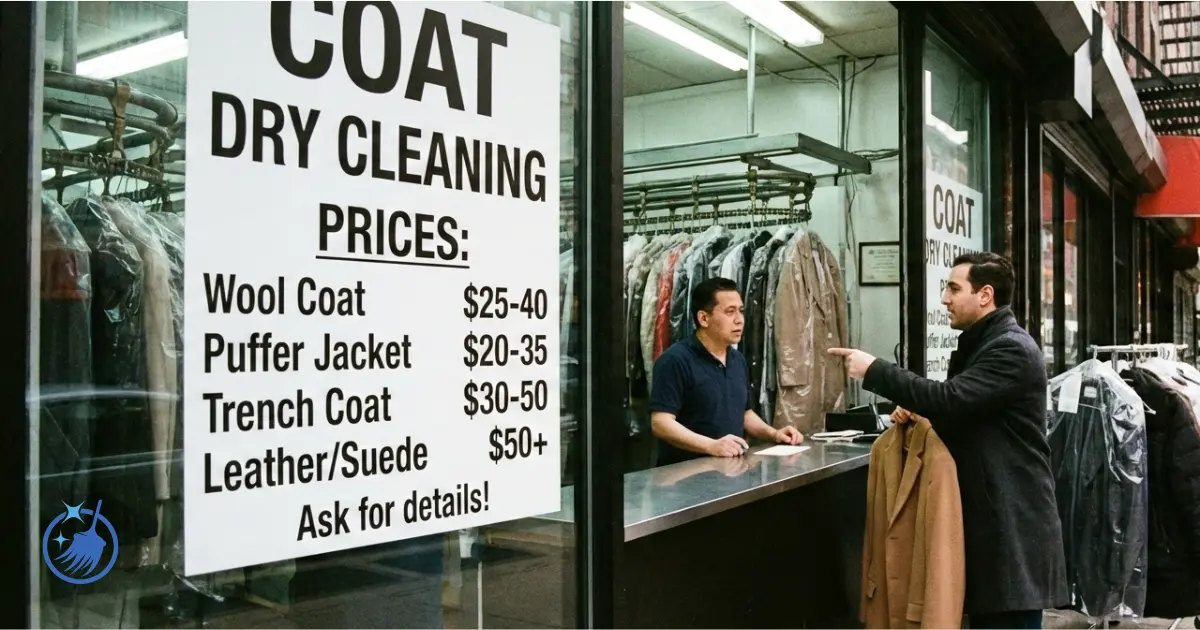
How Much to Dry Clean a Coat: Complete UK Pricing Guide (2026)