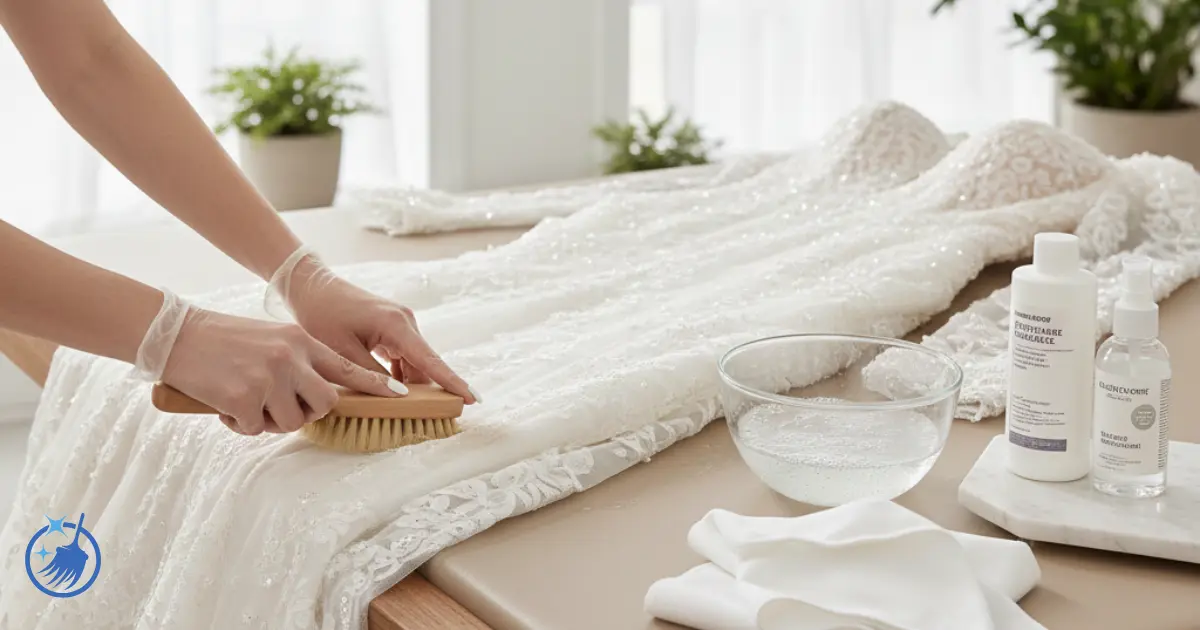
Before you do anything to a garment marked dry clean only, check the label. It is the manufacturer’s instruction for how the item survives cleaning, and some of them are strict for good reason: a tailored jacket can lose its shape, a silk blouse can water-mark permanently, and a velvet cushion can crush flat. Others are cautious, and plenty of everyday items, such as wool jumpers and unlined curtains, can be handled gently at home.
This guide starts with what can go wrong, then works from the lowest-risk options (airing, brushing and steaming) up to hand washing, with the items you should leave alone clearly marked. Home dry cleaning is, strictly speaking, a misnomer. Real dry cleaning uses solvents in a machine, so what you can do at home is refresh, spot clean or wash gently.
Disclosure: Cleaners Guide is a participant in the Amazon Associates programme, so if you buy through links on this page we may earn a small commission at no extra cost to you. It never changes our recommendations, we suggest products because they work and we point out cheaper options where they do the same job. Prices and availability change, so always check the current price before buying.
What can go wrong with dry-clean-only clothes
| Risk | Fabrics most affected | What it looks like |
|---|---|---|
| Shrinkage | Wool, some silks, some rayon | The garment is a size smaller and will not stretch back |
| Dye bleed | Dark or bright dyes, vintage pieces | Colour runs onto the fabric around it or into the water |
| Water spotting | Silk, satin, some taffetas | Rings or marks that remain after drying |
| Loss of structure | Tailored jackets, lined coats, interfaced collars | Bubbling, puckering, wavy lapels and a misshapen shoulder |
| Felting | Wool and cashmere agitated in warm water | Thick, matted fabric that has lost its softness |
| Crushed pile | Velvet, velveteen | Flat, shiny patches that never recover |
| Damage to trim | Beads, sequins, glue-on decoration | Falling off, rusting or clouding |
Heat is the most common trigger for the first and fifth items, so anything you do at home should use cool or lukewarm water and low heat. Pulling, wringing and rubbing also cause the damage, so the rule is to press, not squeeze. If a garment could not be replaced, or you could not afford to lose it, a professional is the safe choice, and the rest of this guide should be read as options for everyday clothes.
Read the label and do a spot test
What the care label symbols mean
Look at the symbols before the words. A circle means professional cleaning is the manufacturer’s instruction, and letters inside tell the cleaner which solvents are suitable. A circle with a cross through it means do not dry clean at all. A tub with a cross means do not wash, and a hand in a tub means hand wash only. A garment with only a circle on it may still be gently hand washable, but the maker has not tested it that way, and you take the risk. If something goes wrong, you are unlikely to get a refund.
Which labels are genuine, and which are cautious
Often a real warning:
- Fabrics that shrink badly when wet, such as some wools and silks
- Dyes that run badly
- Tailored structure such as canvas interfacing and shoulder pads
- Delicate embellishments that cannot take water or agitation
- Fabrics that water-spot permanently, such as some silks and satins
More cautious, and frequently washable gently by hand:
- Linen that creases easily
- Viscose and rayon, which are fragile when wet but often cope with gentle hand washing
- Wool jumpers and cardigans without structure
- Most curtains and soft furnishings
- Unstructured, unlined dresses
Even then, the label is a better guide than a general rule. Treat the lists above as a prompt to test, not a licence to wash.
How to spot test
- Find a hidden area, such as an inside seam, under a collar or inside a hem.
- Dampen a white cloth with the method you plan to use, whether plain water or a weak solution of the detergent.
- Dab the hidden spot gently, wait five minutes, then press a dry white cloth against it.
- Check for colour on the white cloth, puckering, a change in texture or a water mark that stays after it dries.
If you see any of those, do not go ahead at home. If the test is clean, you can carry on. Repeat the test each time, even for items you have washed before, because dyes and fabrics change with age and washing.
Lowest-risk options: air, brush and steam
Most clothes that feel stale are not actually dirty. Hang them outside on a dry, breezy day (out of strong sunlight) for a few hours. Brush wool and tailoring with a soft clothes brush to lift dust and lint. Hanging a garment in a steamy bathroom while you shower will also relax light creases. These cost nothing and carry almost no risk.
Steaming
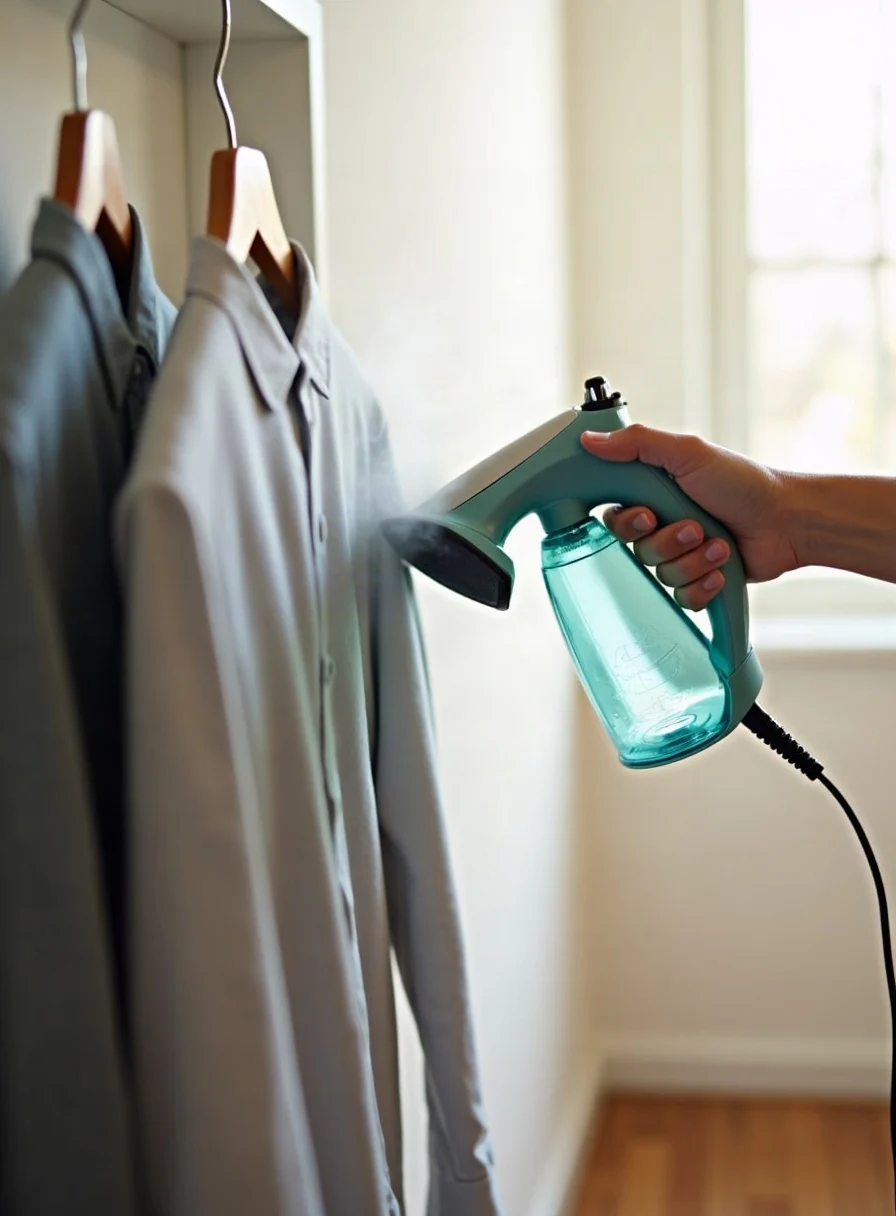
A steamer freshens and smooths fabric and can ease odours, and it works without soaking the garment. Our featured pick for this job is a handheld clothes steamer, though a garment steamer with a hanging pole suits a larger wardrobe. Look for one that heats quickly, has a water tank big enough for a jacket, a fabric guard or brush head and a safety cut-out. Never fill it with anything other than water unless the manual allows it. Adding essential oils can clog it or stain fabric.
- Hang the garment on a sturdy hanger and let the steamer heat up fully.
- Hold it 10 to 15 cm from the fabric and move slowly up and down.
- Pay attention to underarms, collars and any area that touches skin.
- Leave it to air until it is completely dry, often around 30 minutes.
- For velvet, keep further away, 15 to 20 cm, and do not touch the nap with the nozzle.
Steam freshens fabric and relaxes creases. It does not remove dirt, stains or body oils, and heavy wrinkles need an iron. Steam is also not a disinfectant in the way people assume, so see our piece on whether steam cleaning kills germs. Mind your hands and face too, because the steam is hot enough to scald.
Home dry cleaning kits
A home dry cleaning kit is a bag with a treated cloth that you tumble in the dryer on low heat. The heat makes the cloth release vapour that freshens the garment. It is a refresh for items that are not very dirty, not a deep clean, and kits are best for knits, dresses, skirts and trousers. Our alternative pick is a branded kit with a stain-pretreating stick for items that need a pre-treatment. Both do roughly the same job. Choose by what the pack says about fabrics, and read it before you buy.
Kits suit: knitwear, plain dresses, trousers, skirts, lightweight suits between professional cleans, and some curtains if they fit the bag. Kits do not suit: truly dirty clothes, heavy coats, serious stains, and anything too big for the bag.
- Empty the pockets and pre-treat visible stains by dabbing, not rubbing, with the stain remover supplied.
- Put the garment in the bag with the cloth, and use fewer garments than the maximum on the pack. Overloading stops the vapour circulating.
- Seal the bag fully and set your tumble dryer to a low heat for the time on the pack, typically around 15 to 30 minutes. Do not add anything else.
- Take the garment out straight away, hang it, steam out any creases and air it for a couple of hours before wearing.
Clean the dryer’s lint filter before and after, and never leave a dryer running unattended. Kits are not suited to heavy coats, grubby clothes, serious stains or anything too big for the bag. They also do not replace washing.
Hand washing a dry-clean-only item
This is a proper clean, but it is where the damage happens, so only do it after a clean spot test and a look at the label. Use a gentle detergent made for delicates or wool, or a small amount of baby shampoo. A stain pretreatment designed for delicates helps on a mark, and a delicate stain remover is our pick for that, tested on a hidden patch first.
- Fill a clean sink or basin with lukewarm water, not hot and not cold, and dissolve about a teaspoon of gentle detergent.
- Turn the garment inside out if you can, submerge it and press it down. Leave it for five to ten minutes. Longer soaking can harm fibres.
- Move it very gently. Press the water through with open hands for about two minutes, concentrating on underarms, collars and cuffs. Do not wring, twist or rub the fabric against itself.
- Rinse in clean lukewarm water until it runs clear and the detergent smell has gone. Two or three rinses is typical.
- Remove water without wringing. Press the water out while the garment is still in the sink, lift it with its weight supported, lay it on a clean white towel, roll the two together and press the roll firmly. Unroll and reshape.
- Dry flat on a dry towel, or hang it if the fabric is light. Keep it away from radiators and direct sun.
| Item | Typical drying approach |
|---|---|
| Wool jumper or cardigan | Flat on a towel, turned over partway, often a day or two |
| Silk blouse or scarf | Hang away from heat, usually within hours |
| Polyester or viscose dress | Hang on a padded hanger, around a day |
| Wool coat or jacket | Flat on towels, several days, never on a radiator |
Drying times vary a lot with fabric, thickness and room temperature, but as a rough guide silk blouses can dry in hours while a wool jumper or coat can take a day or two flat. Heavy items hung wet stretch out of shape.
Item by item
Whatever the item, the safest order is the same: air it, brush it, steam it, spot clean, then wash by hand, and only then consider a professional if it is still not right. Skip to the item you have.
Suits
A structured jacket has canvas interfacing, shoulder pads and a lining that react differently to water, so do not wash it at home. Brush it, steam it between wears, spot clean marks straight away with a damp cloth and use a kit only for light refreshing. Have it professionally cleaned when it really needs it, not on a fixed timetable, because cleaning too often wears the cloth. Suit trousers made of plain wool can sometimes be hand washed after a spot test on an inside seam. Hang them by the waistband while slightly damp to hold the crease.
Curtains
Most curtains can be cleaned at home, which can save a good deal compared with professional cleaning. Check the label first, as lined, interlined, pleated or heavy curtains often cannot be washed. Take down the hooks, shake the curtains out outdoors, then use the delicate cycle with cold water or hand wash in the bath with minimal detergent, since residue shows on curtain fabric. Rinse well and rehang while still slightly damp, because the weight pulls out creases. Steam any that remain once they are up. Never wash velvet curtains at home. Vacuum them with the upholstery attachment and steam from 15 cm away. For voiles and nets, see our guide to cleaning net curtains, and for cost information see what it costs to dry clean curtains.
Coats
Wool coats are generally too heavy and structured for home washing. Spot clean marks, brush off lint, steam, and air them outdoors on a dry day. Lighter, unlined jackets can sometimes be hand washed in a bath after a thorough spot test and dried flat on towels, which may take several days. Hanging a wet coat stretches it. Our notes on what dry cleaning a coat costs may help you decide.
Wool, including cashmere
Wool is more forgiving than its reputation if you follow the rules: no hot water, no vigorous agitation, no wringing, a wool-specific or very gentle detergent, and drying flat. Fill a basin with cool water and wool wash, soak for about ten minutes, press the water through gently and rinse two or three times in cool water. Roll in a towel, reshape on a flat towel and dry away from heat and direct sunlight, turning it over partway. This suits wool jumpers, cardigans, lambswool, merino and cashmere, as long as the label does not say otherwise.
Silk
Silk is high-risk. Some plain silk washes well, while others water-spot permanently or shrink. Plain silk scarves and some blouses that pass the spot test can be washed. Avoid washing silk that is labelled for dry cleaning because of water spotting, structured silk, silk with beading or trim, and expensive silk. If you do wash a plain piece, use cool water and a teaspoon of baby shampoo or gentle detergent, soak for five minutes at most, rinse very quickly in cool water, roll in a towel and hang it to dry. Iron on the lowest setting while slightly damp. Never wash silk ties, since the interfacing inside does not survive and they come out puckered. Any silk you could not bear to lose is better left to a professional.
Velvet
The raised pile flattens when wet and does not recover, so do not wash velvet. Brush it with a soft clothes brush along the pile, steam it from 15 to 20 cm away without touching, vacuum velvet furniture with an upholstery attachment, and have stains treated professionally. Some people dab stains with a cotton bud dampened with clear alcohol, but this can lift dye, so test on a hidden area first or avoid it altogether.
Dresses, skirts and trousers
Unlined, unstructured dresses in polyester, viscose or cotton are the most likely candidates for gentle hand washing. Check for linings, boning, stiffened waistbands, pleats and trims, which are the parts that fail. Viscose and rayon weaken when wet, so handle them more carefully than any other fabric on this list: support the weight, never wring, and reshape on a towel. Pleated skirts rarely keep their pleats after washing, so these are a job for a professional. Hang trousers by the waistband with clips and a trouser hanger once they are slightly damp.
Leather and suede
Leave actual cleaning to a specialist. Water stiffens and discolours leather and spots suede. At home you can wipe leather with a slightly damp cloth, condition it, and brush suede with a suede brush. Our guide to cleaning a leather jacket goes through what is safe, and what is not.
A small garment-care station
If you plan to care for delicates regularly, keep a few things together: a steamer, a soft clothes brush, a gentle detergent, a spray bottle for plain water, white towels for rolling and drying, decent wooden or padded hangers, a flat drying rack, a lint roller and a fabric shaver for pilling. A home dry cleaning kit and a stain remover for emergencies round it off. None of it is essential, and most households already own half of it.
Spot cleaning a single stain
Act quickly, work gently, and blot rather than rub. Always test the product first, particularly on dark or coloured dry-clean-only fabric.
- Grease: sprinkle bicarbonate or cornflour on the mark for 20 to 30 minutes to absorb the oil, brush it off and blot any remaining mark with a cloth dampened with a little diluted white vinegar. Let it air dry.
- Coffee, tea and wine: blot at once, then dab with a solution of one part white vinegar to two parts water on a white cloth, blotting with a dry cloth between dabs. Repeat until it lifts. Vinegar is acidic and should be avoided on silk and any fabric that fails the spot test.
- Ink: dab with rubbing alcohol on a cotton bud, working from the outside of the stain inwards and blotting. Alcohol can lift dye and damage acetate, so test it first.
- Makeup: dab with a makeup remover wipe or micellar water, then blot with a clean white cloth.
Let each spot air dry, and if a ring appears, the garment needs professional help rather than more water.
Mistakes that cause most of the damage
- Too much heat. High heat shrinks wool, melts synthetics and sets stains. Use low dryer and iron settings.
- Overloading a kit bag. Fewer garments circulate more vapour and clean better.
- Wringing. It stretches and breaks fibres. Roll in a towel instead.
- Hanging heavy wet items. Wet wool and thick knits stretch out of shape, so dry them flat.
- Standard detergent on delicates. Biological or strong detergents are too harsh for wool and silk, so use one made for delicates.
- Skipping the spot test. Five minutes can save the garment.
When to use a professional, and how often
Professional cleaning is the sensible choice for structured tailored suits and jackets, silk ties, leather and suede, designer or expensive pieces, anything marked with the crossed-out tub, items with complex pleating, beading or sequins, and serious stains. Wedding dresses are a specialist job, and our piece on dry cleaning a wedding dress explains the process. Expensive wool coats, silk garments, and vintage fabrics, which weaken with age, sit in the middle. Decide on the spot test and how much the garment matters to you. When in doubt, choose caution, because replacing a ruined garment costs more than a cleaning bill.
You can also reduce how often anything needs cleaning. Air and steam between wears, brush wool and spot clean marks promptly, and avoid cleaning after every wear. Over-cleaning wears clothes out faster. The table is a rough guide only.
| Item | At home | Professional |
|---|---|---|
| Wool jumpers | Hand wash after several wears | Only if needed |
| Suits | Steam and brush after wearing | When visibly dirty or smelly, not on a fixed timetable |
| Wool coats | Spot clean and air | Roughly once a year, or when needed |
| Silk blouses | Hand wash if the test passes | If not washable |
| Dresses | Wash if washable | Occasionally if not |
| Curtains | Wash or vacuum if the label allows | Every few years |
| Trousers | Hand wash if the label allows | Occasionally |
| Ties | Never | When visibly dirty |
If you do use a professional, point out stains and say what caused them, mention any home treatment you have already tried, and ask whether they will check pockets, buttons and trims before cleaning. Keep the care label attached, since it helps the cleaner choose the right process.
On the question of chemicals, perchloroethylene (perc) is a solvent used by some dry cleaners that is regulated for environmental and health reasons, and many cleaners now use alternatives or wet cleaning. If that matters to you, ask how your cleaner treats clothes. For the items that suit it, home care also avoids the plastic covers and the trips to the cleaners.
Questions about cleaning dry-clean-only clothes
Can you wash dry clean only clothes at home?
Often, but not always. Unstructured cotton, linen, polyester and wool can usually be hand washed gently after a clean spot test. Tailored suits, silk ties, leather, suede, velvet, beaded items and anything with a do-not-wash symbol should stay with a professional. The label is the manufacturer’s guidance, so washing against it is at your own risk.
What can I use instead of dry cleaning?
Air the garment, brush it, steam it, spot clean marks promptly, and hand wash with a gentle detergent if the spot test passes. A home dry cleaning kit is another option for freshening lightly worn clothes. These methods keep clothes pleasant between cleans but do not replace a real clean for heavily soiled or structured items.
Is home dry cleaning as good as professional dry cleaning?
For freshening and light cleaning of unstructured items, it is a reasonable substitute. For structured tailoring, heavy stains, oily marks and delicate or valuable garments, a professional has the equipment, solvents and experience that a kit or a basin does not. Use home methods for upkeep and professionals for the difficult jobs.
Can you put dry clean only items in the washing machine?
Occasionally, for robust items with cautious labels such as some cotton, polyester, and unlined curtains, using a delicate cycle, cold water and a mesh bag. Never machine wash wool, silk, structured garments or anything with interfacing, leather, suede or fragile trim. If you are not sure, hand washing is gentler, and your washing machine’s own manual may list what it can handle.
Is dry cleaning bad for the environment?
It can be. Perc, one of the most widely used solvents, is regulated because of concerns about its effect on health and the environment, though many cleaners now use other solvents or wet cleaning. Cleaning at home uses water and detergent, but it still uses energy and water, so it is not automatically greener for every garment.
Does vinegar or vodka dry clean clothes?
Neither is true dry cleaning. Diluted white vinegar can help with some odours and stains, but it is acidic and not suitable for every fabric. Vodka sprays are sometimes recommended for freshening, but the alcohol can affect dyes and some finishes, and it does not reliably disinfect. Steaming and airing are safer. Always spot test first.