How to Clean Headstones: The Complete UK Guide to Safe Memorial Care

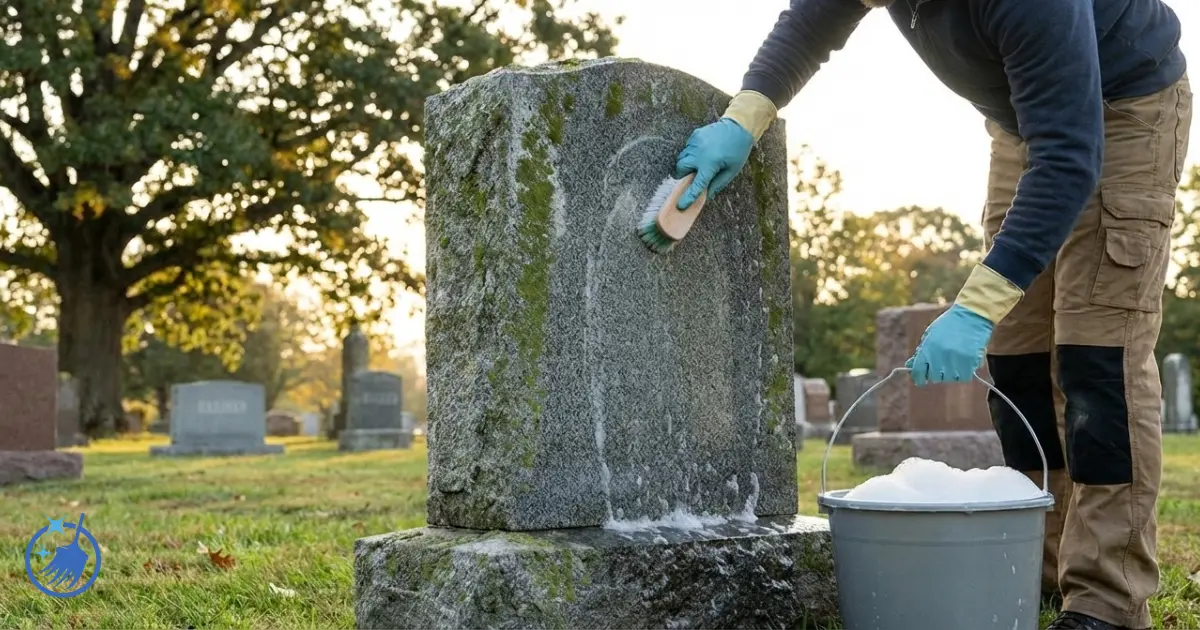
Standing in front of a weathered gravestone, tracing your fingers across letters barely visible beneath layers of moss and grime, you feel the weight of time. These aren’t just markers in stone. They’re the last physical connection to someone’s story, carefully chosen and placed by grieving families who wanted something permanent. Something lasting.
But permanence doesn’t mean invincible.
Rain, frost, pollution, and biological growth work quietly but relentlessly. That sharp inscription from 1985 starts to blur. The white marble from 2010 develops dark streaks. The Victorian sandstone your great-grandfather commissioned begins to crumble at the edges. What was meant to last centuries can fade within decades if left to the elements.
Here’s what makes headstone cleaning tricky: the biggest threat isn’t neglect. It’s good intentions with the wrong approach. A bottle of household cleaner. A wire brush from the shed. A pressure washer hired for the weekend. These well-meaning efforts cause more permanent damage than years of gentle weathering ever would.
The truth is simpler than most people think. Water, patience, and the right technique can restore most headstones safely. But you need to know which stones can handle cleaning, which products are genuinely safe (spoiler: not the ones under your kitchen sink), and when to recognise that a memorial needs professional conservation rather than DIY care.
This guide covers everything. We’ll walk through how to assess whether your stone should be cleaned at all, the safest step-by-step methods for different materials (granite, marble, limestone, and more), what never to use (even if the internet says otherwise), and how to tackle specific problems like moss, lichen, and stubborn staining. You’ll also learn the UK-specific regulations around cleaning memorials and when it’s time to call in experts rather than risk irreversible damage.
Whether you’re maintaining a family grave, volunteering in a cemetery, or researching ancestral headstones, you’ll finish this article knowing exactly how to preserve these memorials properly.
Quick Summary
Time needed: 30-60 minutes per headstone
Difficulty: Easy to moderate (depends on stone condition)
You’ll need: Soft brushes, clean water, microfibre cloths, plastic scraper (optional D2 biological solution for stubborn growth)
Key takeaway: Most headstones clean safely with just water and gentle brushing, but the wrong products or techniques cause permanent damage that can’t be undone.
Before You Touch That Headstone: Critical Considerations
The first rule of headstone cleaning is knowing when not to clean. It sounds counterintuitive, but sometimes the kindest thing you can do for an old memorial is leave it alone.
Assessing Your Headstone's Condition
Walk up to the stone and really look at it. Not a quick glance, but a proper inspection. Run your eyes across the surface slowly. Check the edges, the base, the top. Look for:
Signs to stop immediately:
- Flaking or peeling surface layers
- Cracks running through the stone
- Crumbling edges or corners
- Loose or unstable positioning
- Shallow or barely visible inscriptions
- Surface that feels powdery or chalky to touch
If you spot any of these, step back. Cleaning a damaged stone often accelerates deterioration. What seems like dirt might actually be the only thing holding deteriorated stone together. One gentle scrub could remove the last readable letters from an inscription that’s survived 150 years.
Understanding Different Stone Types
Not all headstones are created equal. The material determines everything about how (and whether) you should clean it.
Granite is the workhorse. Hard, dense, low porosity. If your stone is shiny and dark (often black, grey, or pink), it’s probably granite. These are the most forgiving for DIY cleaning.
Marble looks beautiful but it’s a nightmare to maintain. White or cream-coloured with a slightly translucent quality, marble is porous as a sponge. It absorbs stains like you wouldn’t believe. Bird droppings left for a week can leave permanent marks. Even worse, it reacts with acid, so anything remotely acidic (including rainwater in polluted areas) slowly dissolves the surface.
Limestone and sandstone are the soft, pale stones you see in older churchyards. Often yellowy-beige or light grey, sometimes with a rough texture. These are even more delicate than marble. Many old limestone headstones are best left to weather naturally because any cleaning will remove more stone than dirt.
Slate splits in layers, so it flakes easily. Usually dark grey or blue-black with a matt finish. Be extremely gentle with slate because aggressive cleaning can cause the layers to separate.
UK Cemetery Regulations and Permissions
Before you start cleaning, you need to know if you’re even allowed to. UK cemetery rules vary by location and ownership.
Church of England churchyards often require permission from the incumbent (the vicar) before you clean any memorial. Some churchyards have specific conservation policies that restrict cleaning altogether, especially for historic stones.
Local authority cemeteries usually allow families to maintain their own plots, but check with the cemetery office first. They may have guidelines about approved products and methods.
Private cemeteries set their own rules. Some are strict, others aren’t bothered. Always ask.
Listed or scheduled monuments require formal consent for any work. If you’re cleaning a historically significant memorial, you could be breaking the law without permission.
The legal side isn’t just bureaucracy. These rules exist because too many well-meaning people have accidentally destroyed irreplaceable historic memorials. A quick phone call to the cemetery office saves potential legal trouble and ensures you’re not about to damage something protected.
Essential Tools and Materials for Safe Headstone Cleaning
Walk into most garden sheds and you’ll find everything you need to ruin a headstone permanently. Wire brushes, pressure washers, bleach, vinegar. The tools people instinctively reach for are precisely the ones that cause irreversible damage.
Proper headstone cleaning doesn’t need fancy equipment. It needs the right equipment.
What You Actually Need
For basic water-only cleaning:
- Soft-bristled brushes (nylon or natural fibre, multiple sizes)
- Microfibre cloths or lint-free cloths
- Plastic buckets (at least two, for clean and dirty water)
- Spray bottles
- Plastic scraper (for moss and debris)
- Old soft toothbrush (for detailed lettering)
- Pump sprayer (makes larger jobs much easier)
- Cotton wool buds (for intricate carved details)
For tougher jobs:
- D2 Biological Solution (industry standard for biological growth)
- pH-neutral, non-ionic stone cleaner
- Protective gloves (nitrile or rubber)
- Safety goggles (if using any cleaning solution)
- Knee pad or cushion (you’ll be kneeling)
What never to bring:
- Wire brushes (scratch and gouge the stone)
- Metal scrapers (same problem)
- Pressure washer (blasts away stone along with dirt)
- Household cleaning products (all of them)
- Scouring pads (too abrasive)
- Anything from under your kitchen sink
The key principle is softness. Everything that touches the stone should be softer than the stone itself. This is why plastic scrapers work but metal ones don’t. Why nylon brushes are fine but wire ones aren’t.
Safe Cleaning Solutions: What Actually Works
Water is your first choice. Always. Sounds almost too simple, but clean water genuinely removes most dirt, dust, and light organic growth. Start here before considering anything stronger.
Distilled water is technically better because it contains no minerals that could leave deposits, but realistically, clean tap water works fine for most situations.
When water alone doesn’t cut it, you need something that kills biological growth (moss, lichen, algae) without damaging stone. Here’s what conservation professionals actually use:
D2 Biological Solution is the gold standard. It’s what they used on the Washington Monument. It works by penetrating the stone and killing biological growth at the root level, then continues working after application. No scrubbing required. Safe for all natural stone types. The downside is patience. It takes weeks to months to see full results.
Wet & Forget uses quaternary ammonium compounds, which the National Center for Preservation Technology and Training (NCPTT) has approved for gravestone cleaning. You spray it on and let weather do the work. Green algae disappears in one to two weeks. Stubborn black stains take one to two months.
Non-ionic cleaners work for general dirt without affecting stone chemistry. They don’t react with the minerals in stone, which is why they’re safe.
A very weak solution of washing-up liquid and water can work for light dirt, but rinse thoroughly. We’re talking a few drops in a bucket, not the amount you’d use for dishes.
What About "Natural" Cleaners?
The internet loves recommending vinegar, lemon juice, or baking soda for cleaning gravestones. These are terrible ideas.
Vinegar and lemon juice are acids. Stone, especially marble and limestone, is alkaline. Acid plus alkaline equals a chemical reaction that etches and dissolves the stone surface. This isn’t gradual. It happens immediately. Even a single application can cause permanent damage.
Baking soda is abrasive. Yes, it’s gentle compared to sandpaper, but stone is softer than you think. Scrubbing with baking soda acts like very fine sandpaper, wearing away the surface with every rub.
Shaving cream is another myth that won’t die. It’s supposedly good for cleaning because it “lifts dirt without chemicals.” Reality: shaving cream contains numerous chemicals, can leave residue, may stain porous stone, and doesn’t offer any advantages over water.
The “natural cleaner” trend comes from a good place (avoiding harsh chemicals), but the safest natural cleaner is the one that’s been used for thousands of years. Water.
Step-by-Step Guide: How to Clean a Headstone Safely
Right, you’ve assessed the stone, gathered your tools, and checked you’re allowed to proceed. Now for the actual cleaning.
Timing matters. Pick an overcast day with mild temperatures and no rain forecast for at least four to five hours. Avoid cleaning in direct sun (causes streaking and rapid drying) or when frost is expected. Early morning or late afternoon works well.
The Water-Only Method (Your Default Approach)
This method works for about 90% of headstones. Only move to cleaning solutions if water demonstrably fails after multiple attempts.
Step 1: Initial clearing Remove loose debris first. Leaves, twigs, grass clippings, bird droppings. Use your hands (gloved) or a soft brush. Don’t scrape yet. Just clear the obvious stuff.
Step 2: Thorough wetting Completely saturate the entire stone with clean water. Use a spray bottle or pump sprayer. Get every surface wet. This serves three purposes: it prevents the stone from absorbing dirt you’re about to disturb, it softens any growth or grime, and it shows you exactly where the problem areas are.
Step 3: The cleaning technique Here’s where most people go wrong. They scrub from top to bottom, which means dirty water runs over areas they’ve just cleaned.
Work from bottom to top instead. Counterintuitive but crucial. Clean the lowest section first, then move up. This way, when dirty water runs down, it flows over areas you haven’t cleaned yet rather than re-staining your work.
Use gentle circular motions with your soft brush. No pressure. Let the bristles do the work through movement, not force. Keep the brush and stone wet constantly. Rinse your brush in clean water every few strokes.
Step 4: Continuous rinsing After brushing each section, rinse it immediately with fresh, clean water. Don’t let dirty water or loosened material sit on the surface. Use your spray bottle or pour clean water from a bucket.
Step 5: Detail work Carved lettering and decorative details need extra attention. Use your small detail brush or old toothbrush with clean water. Be gentle around painted or gilded letters, which can be accidentally removed with over-enthusiastic cleaning.
Cotton wool buds work brilliantly for tight crevices and deeply carved details where brushes can’t reach.
Step 6: Final rinse and drying Once you’ve cleaned the entire stone, give it a final thorough rinse with clean water. Then leave it alone. Let it air dry naturally. Don’t wipe it down, don’t rub it with cloths. Just walk away and let nature do its work.
Using Biological Cleaners for Stubborn Growth
When water alone doesn’t work and you’re dealing with moss, lichen, or algae that’s really established itself, biological cleaners become necessary.
Before applying any cleaning solution:
- Test on an inconspicuous area first (bottom edge, back of stone)
- Wait 24 to 48 hours to check for any adverse reaction
- Only proceed if the test area shows no discolouration or damage
Application process for D2 Biological Solution:
Pre-wet the entire stone completely. This is critical. The stone should be saturated before any cleaner touches it.
Apply D2 according to the product instructions (usually diluted 1:1 with water). Spray or brush it on, ensuring complete coverage of all affected areas. Don’t worry about getting every millimetre perfect. Biological cleaners don’t work through scrubbing; they work through chemical action.
For lichen (the most stubborn growth), apply a second coat after 15 minutes. This drives the solution deeper into the growth.
Then do nothing. Seriously. Walk away. D2 continues working for weeks after application. The dead growth will gradually weather away naturally, or you can gently brush it off during your next visit (weeks or months later).
Application process for Wet & Forget:
Similar principle but even less labour-intensive. Apply to a dry surface (unlike D2), saturate all growth thoroughly, and then leave it. Rain and wind gradually remove the dead material over the following weeks.
Light green algae usually disappears within one to two weeks. Black staining can take one to two months. This isn’t a quick fix, but it’s the safest effective method for stubborn biological growth.
Rinsing after application:
Some conservationists recommend rinsing biological cleaners off after four hours. Others say leaving them on is fine. When in doubt, rinse. Use plenty of clean water to remove all residue.
Removing Moss and Lichen Properly
Moss looks like soft green cushions or mats. Lichen appears as flat crusty patches, often grey, green, or orange. Both grow on stone surfaces and can cause staining and moisture retention that damages the stone underneath.
For moss:
- Wet it thoroughly with water
- Use a plastic scraper to gently lift the bulk away
- Brush remaining fragments with a soft brush and water
- Apply biological cleaner to kill roots and prevent regrowth
For lichen: This is harder. Lichen bonds tightly to stone and trying to force it off damages the surface. Never scrape or pick at lichen aggressively.
Apply D2 or another biological solution using the double-application method (second coat 15 minutes after the first). Then wait. Proper lichen removal takes months. The dead lichen will eventually loosen and can be gently brushed away, or it will weather off naturally.
If lichen has been present for decades, the stone beneath may be a different colour where the lichen protected it from weathering. This discolouration is permanent. Removing the lichen reveals what was always there; it doesn’t create new staining.
Material-Specific Cleaning Guides
The stone type dictates everything about your cleaning approach. What works brilliantly on granite can destroy marble. Here’s how to handle each common material.
How to Clean Granite Headstones
Granite is the easiest stone to maintain. It’s hard, dense, and resists both staining and weathering exceptionally well.
For polished granite (shiny, mirror-like finish): A damp microfibre cloth often does the entire job. Wipe the surface gently to remove dust and light dirt. For tougher grime, use water and a soft cloth. That’s honestly it. The polished surface repels most growth and stains.
For honed granite (matt, non-reflective finish): Slightly more prone to organic growth than polished granite, but still straightforward. Use the standard water-and-soft-brush method. Biological cleaners work well if moss or algae have established.
Frequency: Once or twice yearly is plenty. Granite doesn’t need regular maintenance.
Common issues: Even granite can develop staining from metal fixtures (rust marks) or organic matter left sitting too long. Catch these early. Once staining penetrates deeply, professional restoration may be needed.
Granite is forgiving, but that doesn’t mean you can use harsh chemicals or abrasive tools. The same safety principles apply to all stone types.
How to Clean Marble Headstones
Marble is beautiful, traditional, and high-maintenance. If granite is a Land Rover, marble is a vintage sports car that needs constant care.
Why marble is difficult:
- Extremely porous (absorbs stains rapidly)
- Reacts with acids (even weak ones cause permanent etching)
- Soft enough that abrasion shows quickly
- Expensive to restore if damaged
The only safe cleaning method: Water and a lint-free cloth. That’s the full list. No cleaners, no solutions, nothing else.
Wet the cloth, wring it out so it’s damp (not dripping), and gently wipe the surface. For carved details, use cotton wool buds with water. Be extraordinarily gentle around painted or gilded lettering.
Stain prevention is crucial: Visit marble headstones regularly (ideally every few months) to remove any organic matter before it stains. Fallen leaves, flower petals, grass clippings, bird droppings. All of these can leave permanent marks if left for weeks.
Frequency: At least twice yearly, preferably more often. Regular light maintenance prevents the stubborn staining that requires professional intervention.
When to call professionals: Every five to six years, consider having a marble headstone professionally cleaned and sealed. Professional stone sealers reduce staining and make routine maintenance easier. This isn’t cheap, but it’s far less expensive than restoration after damage.
If your marble headstone already has staining you can’t remove with water, don’t experiment with stronger cleaners. You’ll make it worse. Contact a memorial mason who specialises in marble restoration.
How to Clean Limestone Headstones
Limestone is softer and more porous than marble. Many historic headstones are limestone, especially in older churchyards. These require extreme delicacy.
The conservation dilemma: Old limestone headstones often have a weathered patina that’s part of their character and historical value. Removing all discolouration can make them look out of place and can actually remove stone along with the weathering.
If you decide to clean: Use only water and the gentlest possible brushing. Work very slowly. Stop immediately if you notice any stone coming away with the dirt.
Many conservation experts recommend not cleaning historic limestone at all unless absolutely necessary for legibility. The weathering is part of the memorial’s history.
For newer limestone: Modern limestone headstones with good surface integrity can handle gentle cleaning with water. Biological cleaners work for growth but use them cautiously and always test first.
Frequency: Only as needed, never more than annually.
How to Clean Sandstone Headstones
Sandstone has a slightly gritty texture and is usually pale yellow, tan, or reddish-brown. Like limestone, it’s soft and porous.
Approach: Similar to limestone. Water-only cleaning with extreme gentleness. Sandstone can be brushed slightly more firmly than limestone but still requires care.
The grain structure of sandstone means it can trap dirt between grains. Use a soft brush to work into these tiny crevices, but don’t force it.
Common issue: Sandstone often develops a green tinge from algae growth. This responds well to biological cleaners applied gently, but expect the process to take time.
How to Clean Slate Headstones
Slate is distinctive. Usually dark grey or blue-black with a matt finish, slate splits in thin layers (which is why it’s used for roofing).
The delamination risk: The layered structure means aggressive cleaning can cause the layers to separate. Once delamination starts, it accelerates. Be extremely gentle.
Cleaning approach: Water and soft cloth for light cleaning. Very gentle brushing if needed. Never allow slate to stay wet for extended periods, as moisture between layers promotes delamination.
Frequency: Only when visibly dirty, maximum once yearly.
Similar techniques apply when cleaning other stone surfaces around your property. The principles of gentleness and appropriate materials remain consistent across different cleaning tasks, much like how to clean quarry tiles requires understanding the material properties before choosing your method.
Common Mistakes That Damage Headstones Permanently
Good intentions aren’t enough. Some mistakes cause damage that cannot be undone, no matter how much money you throw at restoration. Here’s what never to do.
Mistake 1: Using Household Cleaners
That bottle of bathroom cleaner, kitchen spray, or multi-surface solution under your sink? It’s formulated for tiles, plastic, porcelain. Not natural stone. Most contain one or more of these damaging ingredients:
- Bleach (sodium hypochlorite) – dissolves stone at a chemical level
- Acids (citric, acetic, phosphoric) – etch and pit the surface
- Salts – deposit and crystallise within porous stone, causing spalling
- Surfactants – can stain porous materials
Even products that claim to be “natural” or “stone-safe” often contain problematic ingredients. Unless a product specifically states it’s safe for marble and limestone (the most sensitive stones), don’t use it.
Mistake 2: Pressure Washing
A pressure washer seems logical. It’s powerful, efficient, removes stubborn dirt easily. It also removes your headstone’s surface layer along with that dirt.
The pressurised water jet acts like sandblasting. It strips away weathered stone, enlarges cracks, drives water deep into the stone, erodes carved details, and can remove inscriptions entirely in some cases.
There is no “safe” pressure setting for historic or delicate headstones. The risk isn’t worth the time saved. Even granite, whilst more resistant, can be damaged by pressure washing around carved lettering.
Mistake 3: Wire Brushes and Metal Scrapers
Metal is harder than most stone. Scrubbing with wire brushes or metal scrapers creates permanent scratches, gouges, and scores in the surface. These don’t disappear. They become water traps that accelerate weathering and provide sites for biological growth to establish.
Brass wire brushes aren’t better. Softer metal still scratches stone. Use plastic scrapers for stubborn deposits and soft-bristled brushes for everything else.
Mistake 4: Scrubbing Too Hard
Even with the right tools, excessive pressure causes damage. Remember, every time you clean, you remove microscopic amounts of stone. That’s unavoidable. But aggressive scrubbing removes substantially more.
Over multiple cleanings, hard scrubbing can noticeably reduce detail, shallow inscriptions, and weather the surface prematurely. If something isn’t coming off easily, the answer isn’t more pressure. It’s more patience, more water, or a biological cleaner.
Mistake 5: Cleaning Too Frequently
Well-meaning maintenance can become obsessive. Some people clean family graves monthly. This is far too often.
Even the gentlest water-only cleaning removes minute amounts of stone. Do it monthly for ten years and you’ve done 120 cleanings. That adds up to noticeable surface loss.
Appropriate frequency:
- Granite: once or twice yearly
- Marble: twice yearly (light cleaning/inspection)
- Limestone/sandstone/slate: only as needed, maximum once yearly
More frequent visits to remove leaves and debris are fine. But actual washing and brushing should be infrequent.
Mistake 6: Not Rinsing Thoroughly
Any cleaning solution, no matter how safe, needs complete removal. Residue left on porous stone can:
- Attract more dirt (creating staining patterns)
- Crystallise inside the stone (causing internal damage)
- Discolour the surface
- Promote biological growth in some cases
After using any cleaner, rinse until you’re sure you’ve removed every trace, then rinse again just to be certain.
Mistake 7: Cleaning Damaged Stones
If a stone is already cracked, flaking, or structurally compromised, cleaning accelerates deterioration. Water penetrates cracks and works deeper into existing damage. Brushing dislodges loose material. What looks like a simple clean can trigger partial collapse of a fragile stone.
The hardest but most important skill is recognising when not to clean. If you’re unsure whether a stone can handle cleaning, err on the side of caution. Leaving it alone does no additional harm. Cleaning the wrong stone does irreversible damage.
Debunking Common Myths
“Bleach is fine if you dilute it enough” – No. Even heavily diluted bleach causes damage. The chemical reaction occurs regardless of concentration.
“Vinegar is natural so it’s safe” – Natural doesn’t mean safe. Arsenic is natural. Vinegar is acetic acid, which etches stone.
“Shaving cream cleans without chemicals” – Shaving cream is chemicals. Multiple chemicals. It offers no advantages over water and introduces unnecessary risks.
“Pressure washing on the lowest setting is okay” – Any pressure sufficient to clean effectively is sufficient to cause damage.
“If it works on my patio, it works on gravestones” – Your patio is modern concrete or manufactured stone designed to be durable. Headstones, especially older ones, are natural stone with very different properties.
When to Call Professional Headstone Cleaners
Sometimes DIY isn’t appropriate. Certain situations require specialist knowledge, equipment, and insurance that professionals provide.
Signs You Need Professional Help
Structural issues:
- Cracks, chips, or flaking
- Leaning or unstable positioning
- Sections broken or missing
- Base or foundation problems
Any structural damage needs assessment by a qualified memorial mason before cleaning. They may recommend repair, stabilisation, or leaving the stone as-is.
Severe staining:
- Deep rust stains (from metal fixtures)
- Biological growth that’s penetrated deeply
- Discolouration that doesn’t respond to gentle methods
- Paint or tar contamination
These problems often require specialist treatments or equipment beyond DIY capability.
Historic or listed memorials:
- Pre-1850 stones (generally)
- Listed buildings or scheduled monuments
- Memorials in conservation areas
- Stones with significant genealogical or historic value
These require conservation-grade approaches that preserve historical integrity. Using standard cleaning methods, even careful ones, may be inappropriate.
Faded or shallow inscriptions: If lettering is barely visible, cleaning might remove the last traces. Professional assessment determines whether re-leading, regilding, or other restoration is possible.
High-value family memorials: When the emotional or financial value is significant, professional cleaning provides peace of mind. The cost is modest compared to the risk of accidental damage.
What Professionals Offer
Expertise: They can identify stone types accurately, assess structural integrity, choose appropriate conservation methods, and recognise when cleaning would cause more harm than good.
Proper equipment: Specialist brushes, professional-grade biological treatments, pure water systems, and safe lifting/stabilisation equipment.
Insurance: Professionals carry liability insurance. If something goes wrong, you’re covered. If you damage a stone yourself, you’re personally responsible for repair costs.
Restoration services: Beyond cleaning, memorial masons offer re-lettering, regilding, repair of chips and cracks, relevelling, and full restoration of severely weathered stones.
Questions to Ask Potential Contractors
Before hiring someone to clean or restore a headstone:
- How long have you worked with memorials specifically?
- Are you a member of NAMM (National Association of Memorial Masons)?
- What methods and products will you use?
- Do you have insurance covering memorial work?
- Can you provide references and photographs of similar projects?
- What do you recommend for this specific stone?
- Will you assess the stone before starting work?
Be cautious of anyone who guarantees specific results without first examining the stone, suggests aggressive cleaning methods, or can’t explain their approach clearly.
Maintenance and Long-Term Preservation
Cleaning is reactive. Maintenance is proactive. A good maintenance routine minimises the need for intensive cleaning and extends the memorial’s lifespan significantly.
Setting Up a Care Schedule
Annual deep inspection (spring recommended):
- Examine the entire stone for new cracks or damage
- Check stability and positioning
- Assess biological growth levels
- Look for staining or discolouration
- Test that the stone remains secure at the base
Quarterly light visits:
- Remove fallen leaves and organic debris
- Clear grass clippings from base
- Remove bird droppings promptly
- Check flower containers haven’t rusted
- Quick visual check for new issues
Post-storm checks: After severe weather (heavy wind, frost, flooding), visit briefly to ensure the stone remains stable and hasn’t suffered damage.
Preventing Common Problems
Organic staining: Fallen leaves, flower petals, and grass clippings all contain pigments and tannins that stain porous stone. Remove these promptly, ideally within days rather than weeks.
Rust damage: Replace metal flower holders with plastic, stone, or ceramic alternatives. Check for hidden metal (wire in floral tributes, metal ties, shepherds hooks) and remove it.
Moisture issues: If a headstone sits in constant shade or poor drainage causes the base to stay wet, biological growth accelerates. Consider whether tree trimming might improve sunlight exposure, or whether drainage improvements are possible (consult cemetery management).
Improper tributes: Some well-meaning tributes cause damage. Adhesive decorations, sellotape, and stickers leave residue and can pull stone surface away when removed. Inform family members about appropriate ways to decorate memorials.
Protective Treatments and Sealers
Should you seal a headstone?
This is controversial among conservation professionals. Arguments for and against:
Benefits of sealing:
- Reduces staining on porous stones (especially marble)
- Makes routine cleaning easier
- Can slow weathering in harsh environments
- Inhibits biological growth
Concerns about sealing:
- Traps moisture if applied incorrectly
- May change the stone’s appearance slightly
- Requires professional application for best results
- Not appropriate for all stone types or ages
- Needs reapplication every 5 to 10 years
General guidance: Modern marble and limestone headstones benefit most from protective sealers. Use only breathable impregnating sealers (not surface coatings). Never seal historic stones without conservation advice. DIY sealing often causes more problems than it solves, so use professionals.
Creating a Memorial Care Plan
If you’re responsible for a family memorial long-term, document your approach:
- Stone details (type, date, condition)
- Cleaning frequency and methods used
- Products and tools kept for the purpose
- Photographs dated and filed
- Contact details for professional services if needed
- Notes on any repairs or treatments
- Cemetery contact information
This organised approach ensures consistency, helps anyone who takes over care in future, and provides a record if problems develop.
The same careful attention to preservation applies to many cleaning situations. Understanding material properties and using appropriate methods matters whether you’re maintaining memorials or cleaning brass at home, where different metal types require different approaches.
Special Situations and Advanced Topics
Some headstone cleaning scenarios need specific approaches beyond the standard methods.
Cleaning Very Old or Historic Headstones
Pre-Victorian gravestones (pre-1837) often have significant historic value. Georgian and earlier stones (18th century and older) may be irreplaceable historical records.
The conservation approach: Historic preservation prioritises stabilisation over appearance. A weathered but structurally sound historic stone is better than a clean but damaged one.
Before cleaning any historic headstone:
- Research the stone’s significance (local history groups, genealogical societies)
- Check if it’s a listed structure
- Photograph extensively, including inscriptions from multiple angles
- Consider whether cleaning benefits preservation or just aesthetics
- Consult local conservation officers if uncertain
Many historic stones are better left with their natural patina. The weathering tells its own story about time and place.
Dealing with Painted or Gilded Lettering
Inscriptions are often highlighted with paint or gold leaf. These finishes deteriorate over time and require careful handling.
When cleaning around painted letters: Use only damp cloths, never scrubbing. Even gentle brushing can remove paint. Clean the surrounding stone normally but switch to gentle dabbing around inscriptions.
If paint is already failing: Don’t try to clean it off or “tidy it up”. Partial paint removal looks worse than paint left alone. Professional re-painting or regilding by a memorial mason restores the appearance properly.
Gold leaf: Extremely delicate. Don’t touch it directly. Don’t use water on it unless absolutely necessary. Dust very gently with a soft, dry brush. If gold leaf is damaged, only specialist conservators should attempt restoration.
Cleaning Bronze or Metal Memorials
Bronze plaques and metal additions to stone memorials need different care than the stone itself.
For bronze: Water and soft cloth usually suffice. Specialist bronze cleaners exist but aren’t usually necessary for memorials. Never use abrasive cleaners or tools. The green patina (verdigris) that develops is actually protective, and many conservators recommend leaving it rather than polishing bronze bright.
Rust removal: If metal fixtures have caused rust staining on stone, removal is difficult. Specialist rust removers for stone exist but need careful application. This is often a professional job because incorrect treatment makes staining worse.
When cleaning mixed materials (stone with metal plaques or decorative elements), protect one whilst cleaning the other. Cover metal with plastic or cloth when cleaning stone nearby, and vice versa.
Temperature Conversion and Timing
Speaking of temperature, it’s worth noting that whilst memorials are primarily a UK concern in this article, our work often takes us into various environmental conditions. Just as precision matters in memorial care, it matters in many other cleaning scenarios where temperature affects product effectiveness. If you’re interested in temperature-related information, understanding these conversions can occasionally be useful for product specifications. But for headstone cleaning, simply remember that mild, overcast days are ideal.
What If Cemetery Authorities Have Cleaned Incorrectly?
Sometimes cemetery maintenance contractors clean headstones using inappropriate methods (pressure washing, harsh chemicals). If this happens to a memorial you’re responsible for:
Document the damage with photographs immediately. Contact cemetery management in writing to report the issue and request they halt inappropriate cleaning practices. If the stone is privately owned (which most are), you may have grounds for complaint or even compensation for restoration costs. Consult NAMM or a conservation organisation for advice.
Going forward, you can request in writing that cemetery contractors don’t clean your family memorial without permission.
Product Recommendations for UK Buyers
Finding appropriate headstone cleaning products in the UK is straightforward once you know what to look for.
Where to Buy Proper Headstone Cleaners
D2 Biological Solution: Available from:
- Stone care specialists online
- Some memorial masons sell it directly
- Conservation supply companies
Expect to pay £25 to £40 for a 5-litre container. It goes a long way because you dilute it 1:1 with water.
Wet & Forget:
- Available on Amazon UK
- Garden centres (sometimes)
- Outdoor cleaning suppliers
The ready-to-use version costs approximately £15 to £20. The concentrate offers better value for multiple applications.
Non-ionic stone cleaners: Brands like Lithofin, HG, and Floorseal make appropriate products. Look for pH-neutral, non-ionic cleaners specifically approved for natural stone.
What about ordinary shops? Honestly, nothing you find in regular supermarkets or DIY stores is appropriate for headstone cleaning except plain water and soft brushes. Those businesses don’t stock conservation-grade stone cleaners because there’s insufficient demand. Buy specialist products online or from stone care suppliers.
Making Your Own Cleaning Solutions
Should you? Probably not. The cost difference between proper cleaners and DIY recipes is minimal, whilst the risk of getting proportions wrong and damaging stone is significant.
If you insist: The only genuinely safe DIY “recipe” is water. Possibly water with a couple of drops of washing-up liquid per bucket for light dirt, rinsed thoroughly.
Recipes you’ll find online involving baking soda, vinegar, lemon juice, hydrogen peroxide, or ammonia are all potentially damaging. Don’t use them.
Tools Worth Buying
Budget approach (under £30):
- Pack of soft brushes (various sizes)
- Microfibre cloths (pack of 10)
- Two plastic buckets
- Plastic scraper
- Spray bottle
- Old toothbrush Total cost approximately £20 to £25. Enough to clean most headstones safely.
Comprehensive kit (under £100): All the above plus:
- Pump sprayer (£15 to £25)
- D2 Biological Solution (£30 to £40)
- Knee pad for comfort
- Protective gloves
- Safety goggles Total cost approximately £80 to £100. Suitable for regular maintenance of multiple family memorials or volunteer conservation work.
What’s not worth buying: Electric scrubbers, pressure washers (for this purpose), expensive brush sets marketed specifically for gravestones (standard soft brushes work fine), and specialised “gravestone cleaning kits” that contain products you shouldn’t use anyway.
Legal and Ethical Considerations
Cleaning headstones sits at the intersection of property rights, cemetery regulations, and cultural respect. Understanding your legal position matters.
Who Owns a Headstone?
Generally in the UK: The family who purchased the memorial owns it, with rights of ownership typically specified in the cemetery deeds. Ownership usually passes through families like other property.
But: Cemetery authorities have oversight regarding safety and appropriate maintenance. They can require removal or repair of dangerous memorials, even if privately owned.
Church of England churchyards: Slightly different. The church has particular authority over what happens in consecrated ground, including memorial maintenance and decoration. Always check with the incumbent (vicar) before cleaning or altering a memorial in a churchyard.
Permission and Trespass
Can you clean any gravestone?
For family memorials: Yes, you almost certainly have implied permission as family members to maintain family graves.
For other people’s memorials: Technically you need permission from the memorial owner. In practice, if you’re doing sympathetic conservation work (especially in abandoned sections of cemeteries), most cemetery authorities appreciate the help.
For genealogical research: Many people clean stones they have no family connection to whilst researching genealogy. Cemetery authorities usually permit this, but check first. Some cemeteries have policies about who can clean what.
Commercial cleaning: If you’re cleaning for payment or running a business, you definitely need proper permissions and insurance.
Volunteers and Community Projects
Conservation groups often organise community headstone cleaning days. If you’re involved:
- Always get cemetery authority approval first
- Have a qualified person assess each stone before anyone cleans it
- Provide training in safe methods
- Ensure proper insurance coverage
- Keep records of work completed
- Never let untrained volunteers work on fragile or historic stones
Community projects accomplish wonderful preservation work, but only when organised properly with appropriate oversight.
Cultural Sensitivity
Different communities have varying traditions around graves. Some cultures discourage touching graves at all. Others have specific rituals or timing for cleaning. If you’re cleaning in sections of cemeteries used by particular religious or cultural groups, be aware of and respectful toward those traditions.
Similarly, approach wartime graves with appropriate respect. Commonwealth War Graves Commission maintains most military graves, and generally, they prefer to handle cleaning themselves.
Conclusion
A clean headstone isn’t just about appearance. It’s about preservation, respect, and maintaining connections across time. Every weathered inscription we can still read today exists because someone, at some point, understood that gentleness matters more than thoroughness, and that the wrong approach causes permanent damage no amount of expertise can repair.
The core principles are simple enough to remember:
- Water first, always
- Gentleness over pressure
- Know your stone type
- When uncertain, don’t
- Professionals exist for difficult situations
Most headstones clean safely with nothing more than water, soft brushes, patience, and respect for what these memorials represent. The stones that need more than that often need professional assessment rather than DIY experimentation.
Your action plan from here:
Visit the memorial when weather suits (mild, overcast, dry). Assess its condition honestly using the guidance in this article. If it seems stable and you’ve identified the stone type, gather your tools. Start with water only. Work gently from bottom to top. Rinse thoroughly. Let it dry naturally. Stand back and appreciate the work you’ve done, not just the cleaning itself but the act of care and remembrance it represents.
If you’re uncertain at any point, stop. Take photographs, document what you see, and consult a professional. There’s no shame in recognising your limitations. There’s significant shame in causing irreversible damage because you pressed forward despite doubts.
These stones were placed with love and intention. The best way we honour that is by preserving them carefully for whoever stands here next, tracing the letters with their fingers and wondering about the lives behind the names.
Frequently Asked Questions About Cleaning Headstones
Can I use bleach to clean a headstone?
No. Never use bleach on any headstone, regardless of stone type or how much you dilute it. Bleach (sodium hypochlorite) doesn’t just clean stone, it chemically reacts with it. The reaction dissolves the stone’s surface, alters its colour permanently, and weakens the structure. This happens even with heavily diluted bleach. Marble and limestone are particularly vulnerable because bleach reacts aggressively with calcium carbonate, but even granite suffers long-term damage. The deterioration continues after application, meaning you won’t see the full damage immediately. Use water or proper biological cleaners like D2 instead.
Is vinegar safe for cleaning gravestones?
No. Vinegar is acetic acid, and acid attacks stone. Marble, limestone, and sandstone react immediately with vinegar, creating permanent etching and dull spots on the surface. Even granite, whilst more resistant, can be damaged by repeated acid exposure. The “natural cleaner” trend has made vinegar popular, but natural doesn’t mean safe for stone. This applies to lemon juice and any other acidic cleaners as well. The only safe natural cleaner for headstones is plain water.
How often should you clean a headstone?
Maximum once or twice per year for most stones. Granite can be cleaned once or twice annually. Marble benefits from twice-yearly light cleaning to prevent staining, but be extremely gentle. Limestone, sandstone, and slate should only be cleaned when visibly necessary, no more than once yearly. Every cleaning removes microscopic amounts of stone, so frequent cleaning actually accelerates weathering rather than preventing it. Regular visits to remove leaves and debris are fine, but actual washing and brushing should be infrequent.
Do I need permission to clean a gravestone in the UK?
Usually yes, though it depends on the cemetery. Church of England churchyards typically require permission from the vicar before cleaning any memorial. Local authority cemeteries generally allow families to maintain their own plots but check with the cemetery office first. Private cemeteries set their own rules. For family memorials, you likely have implied permission, but it’s courteous and legally safer to confirm. For memorials unrelated to you, always get permission from both the cemetery authority and ideally from the family if traceable. Listed or scheduled monuments require formal consent for any work.
What's the best homemade headstone cleaner?
Water. Honestly, that’s the best and safest homemade solution. If you need slightly more cleaning power for light dirt, add a couple of drops of washing-up liquid to a full bucket of water, then rinse thoroughly afterwards. Beyond that, homemade recipes aren’t advisable. Most DIY formulas you find online (baking soda paste, vinegar solutions, hydrogen peroxide mixes) risk damaging stone. The cost difference between water and professional biological cleaners is minimal, whilst the risk of getting homemade proportions wrong is significant. Save your experimenting for less irreplaceable objects.
Can you pressure wash a headstone?
Absolutely not. Pressure washing blasts away the stone’s surface along with the dirt. The high-pressure water acts like sandblasting, stripping weathered stone, enlarging cracks, eroding carved details, and potentially removing inscriptions entirely. Even “low pressure” settings generate enough force to cause permanent damage. There is no safe pressure level for historic or delicate headstones. The time you save isn’t worth destroying something meant to last centuries. Use water and soft brushes instead, which take longer but preserve the memorial.
How do you remove black stains from a headstone?
Black stains usually indicate biological growth (algae, mould, or lichen) that has penetrated the stone surface. Start with water and gentle brushing. If that doesn’t work after multiple attempts, use a biological cleaner like D2 Biological Solution or Wet & Forget. Apply according to product instructions, then wait. These cleaners kill growth at the root level and continue working for weeks after application. Black staining typically takes one to two months to clear fully. Patience is essential. Scrubbing harder or using harsh chemicals won’t speed the process and will damage the stone. For very stubborn staining unresponsive to biological cleaners, consult a professional as it may require specialist treatment.
What kills lichen on gravestones?
D2 Biological Solution is the most effective treatment for lichen. Apply it using the double-application method: spray or brush on the solution, wait 15 minutes, then apply a second coat. This drives the treatment deeper into the lichen’s root structure. Then walk away and let it work. Proper lichen removal takes months, not hours. The dead lichen will gradually loosen and can be gently brushed away during future visits, or it will weather off naturally. Never try to scrape or pick lichen off forcefully, as it’s bonded tightly to the stone and forcing removal damages the surface underneath. Wet & Forget also works but takes longer than D2.
How do you clean a marble headstone safely?
Water and a lint-free cloth only. Nothing else. Wet the cloth (not dripping, just damp), and gently wipe the surface. For carved details, use cotton wool buds with water. Be extraordinarily careful around any painted or gilded lettering, which can be accidentally removed. Never use cleaning products, even those marketed as stone-safe, unless they specifically state suitability for marble. Marble is extremely porous and acid-sensitive, so it stains and etches easily. Prevention matters more than cleaning with marble. Visit regularly (every few months if possible) to remove fallen leaves, flower petals, and bird droppings before they stain. Consider professional cleaning and sealing every five to six years.
What's the best way to clean a granite headstone?
For polished granite (shiny finish), a damp microfibre cloth often does the entire job. Simply wipe gently to remove dust and light dirt. For honed granite (matt finish) or tougher grime, use water and a soft-bristled brush with gentle circular motions. Work from bottom to top, rinsing continuously with clean water. Granite is the most forgiving stone for cleaning, but the same safety principles apply. Avoid harsh chemicals, wire brushes, and excessive pressure. For stubborn biological growth, D2 or Wet & Forget work excellently on granite. The ease of cleaning granite makes it ideal for maintaining various stone surfaces, though each material has specific requirements.
Can you use shaving cream to clean headstones?
No. This is a persistent myth online, but shaving cream offers no advantages over water and introduces unnecessary risks. Shaving cream contains multiple chemicals (surfactants, propellants, fragrances, moisturisers) that can leave residue or stain porous stone. It has no special properties that make it better for cleaning than plain water. The myth likely spread because foam looks impressive in before-and-after photos, but water would achieve the same results more safely. Use water and soft brushes instead.
How long does it take to clean a headstone?
Between 30 minutes and two hours, depending on size, condition, and stone type. A small granite headstone with light dirt might take 30 minutes. A large marble memorial with carved details and moderate growth could take 90 minutes. Very neglected stones with heavy biological growth might need multiple sessions spaced weeks apart (initial cleaning, then follow-up after biological cleaner has worked). Don’t rush. Taking your time ensures you work gently and thoroughly. If you’re in a hurry, come back another day rather than cutting corners.
What should you not use to clean a gravestone?
Never use bleach, vinegar, lemon juice, ammonia, or any household cleaning products. Never use wire brushes, metal scrapers, pressure washers, or scouring pads. Avoid products containing acids, salts (sodium carbonate, bicarbonate, chloride, sulphate), or anything not specifically approved for natural stone. Don’t use shaving cream, baby oil, or other folk remedies you find online. Even some products marketed as stone cleaners are too harsh for delicate or porous memorials. When uncertain, stick with water. The safest approach is always water and soft brushes, escalating to biological cleaners like D2 only if water proves insufficient.
When should you not clean a headstone?
Don’t clean if the stone shows any cracks, flaking, or crumbling. Don’t clean if inscriptions are already very shallow or barely visible. Don’t clean historic stones (generally pre-1850) without conservation advice. Don’t clean in direct sunlight, freezing temperatures, or when rain is forecast within four to five hours. Don’t clean if you haven’t identified the stone type and confirmed appropriate methods. Don’t clean just because it’s weathered—weathering is often part of the memorial’s character, especially on older stones. If you’re uncertain whether cleaning is appropriate, consult a memorial mason or conservation specialist first. Doing nothing is better than causing accidental damage.
How much does professional headstone cleaning cost?
Professional cleaning typically costs between £50 and £200 for a standard headstone, varying by size, condition, stone type, and location. Basic cleaning of a small granite memorial might cost £50 to £80. Comprehensive cleaning and conservation of a large, delicate, or heavily soiled stone could reach £150 to £200 or more. Additional services increase costs: restoration work (re-lettering, regilding, repairs) can cost £200 to £500+, whilst full memorial restoration of severely damaged stones might exceed £1,000. Always get written quotes from multiple qualified memorial masons. Check they’re NAMM (National Association of Memorial Masons) members and carry appropriate insurance.
Can you clean a headstone with baking soda?
Not advisable. Whilst baking soda is gentler than many household products, it’s still mildly abrasive. Scrubbing with baking soda paste acts like very fine sandpaper, gradually wearing away the stone’s surface. This might seem negligible on one application, but repeated use or vigorous scrubbing removes material and can dull polished surfaces. Soft stones like marble, limestone, and sandstone are particularly vulnerable. Baking soda also leaves residue if not rinsed extremely thoroughly, which can attract dirt or affect the stone’s appearance. Water alone or proper biological cleaners are safer and more effective choices.
What is D2 cleaner and is it safe for headstones?
D2 Biological Solution is a professional-grade cleaner specifically formulated to remove organic growth (moss, lichen, algae, mould) from stone without damaging it. It’s considered the gold standard for gravestone cleaning and was even used on the Washington Monument in the US. D2 works by penetrating the stone and killing biological growth at root level, then continues working after application. It’s safe for all natural stone types when used correctly (always pre-wet the stone, apply as directed, rinse if recommended). The National Center for Preservation Technology and Training and numerous conservation organisations approve D2 for memorial conservation. It’s available from stone care specialists and some memorial masons, typically costing £25 to £40 for a 5-litre container.
How do you clean moss off a headstone?
Start by wetting the moss thoroughly with clean water. Use a plastic scraper to gently lift away the bulk of the growth—never use metal scrapers. Brush remaining fragments with a soft brush and water. For moss that’s deeply established, apply a biological cleaner like D2 or Wet & Forget to kill the roots and prevent immediate regrowth. Work gently. Moss that’s been present for years may have etched the stone slightly, and forcing removal can take stone surface with it. If the area gets little sunlight (under trees, north-facing), moss will likely return unless growing conditions change. Prevention through improved drainage or sunlight exposure works better than repeated aggressive cleaning.
Are there different methods for cleaning old vs new headstones?
Yes, absolutely. New headstones (last 30 to 40 years) generally have good structural integrity and can handle standard gentle cleaning with water and soft brushes, escalating to biological cleaners if needed. Old headstones (pre-1900, especially pre-Victorian) require much more caution. The weathering process has often made them fragile. Many conservation experts recommend not cleaning historic stones unless absolutely necessary for legibility, as the weathered patina is part of their historical character. If you do clean older stones, use only water with the gentlest possible technique, stopping immediately if any stone comes away with the dirt. When dealing with historic memorials, consult conservation specialists first.
Can you clean a headstone in winter?
You can, but it’s not ideal. The best time is spring through autumn on mild, overcast days. Winter cleaning is possible if temperatures are above freezing (both during cleaning and for at least five hours afterwards). Never clean when frost is present or forecast, as water trapped in the stone can freeze and expand, causing cracking and spalling. Cold water is also less effective at loosening dirt. If you must clean in winter, choose the mildest day possible, use room-temperature water if feasible, and ensure the stone can dry completely before temperatures drop. Generally, wait for better weather unless there’s urgent reason to clean immediately.
What's the difference between cleaning granite and marble headstones?
Granite is hard, dense, non-porous, and resistant to both staining and acid. It’s very forgiving. You can clean it with water and soft brushes quite confidently, and it responds well to biological cleaners if needed. Polished granite often needs just a damp cloth wipe. Marble is soft, extremely porous, and reacts with acids. It stains easily and permanently if organic matter sits on it. Marble requires water only (no cleaning products), extra-gentle technique, and much more frequent attention to prevent staining rather than remove it afterwards. Think of granite as low-maintenance and marble as high-maintenance. The techniques are similar (gentle, water-based) but marble demands far more caution and prevention-focused care.
Is it illegal to clean someone else's grave?
Not exactly illegal, but it’s legally grey and potentially problematic. Headstones are private property, usually owned by the family who purchased them. Technically, altering someone else’s property without permission could constitute trespass or property interference. In practice, cemetery authorities and families rarely object to respectful cleaning, especially in abandoned or neglected sections. However, if you damage a stone whilst cleaning without permission, you could be liable for restoration costs. Best practice: get permission from the cemetery authority for any cleaning, and make reasonable efforts to contact the family if traceable. For genealogical research or conservation projects, most cemeteries appreciate the help if you ask first and work carefully.
How do you clean a white marble headstone without damaging it?
White marble is particularly challenging because it shows every stain and discolouration clearly. Use only water and lint-free cloths. Wet the cloth (damp, not dripping) and gently wipe the surface. For stubborn marks, apply clean water and let it sit for a few minutes to soften deposits, then wipe again. Never scrub, never use cleaning products, never use abrasive tools. Prevention is crucial with white marble. Visit regularly to remove fallen leaves, petals, and bird droppings within days rather than weeks. Once staining has penetrated deeply into white marble, only professional cleaning and possibly re-polishing can restore the appearance. Consider having white marble headstones professionally sealed every five to six years to reduce staining.
What do professional headstone cleaners use?
Professionals typically use distilled or purified water systems, soft brushes specifically designed for stone conservation, biological cleaners like D2, non-ionic pH-neutral stone cleaners, and occasionally specialist treatments for specific problems (rust removers for stone, poultice treatments for deep staining). They often use low-pressure water delivery systems (not pressure washers, but controlled flow pumps) and have brushes with measured bristle hardness appropriate for different stone types. Importantly, they also use knowledge and experience to assess each stone individually and choose the safest effective approach. The products themselves aren’t necessarily exotic, but the expertise in applying them correctly makes the difference.
Can you clean a headstone with just water?
Yes, and you should try water alone first before considering any cleaning products. Plain water removes most surface dirt, dust, and light biological growth when used with soft brushes and patience. The technique matters more than the product. Pre-wet the stone thoroughly, brush gently in circular motions whilst keeping everything wet, rinse continuously with clean water, and allow to air dry. Water-only cleaning works for approximately 90% of routine maintenance situations. Only escalate to biological cleaners if water demonstrably fails after multiple attempts, or if you’re dealing with established moss, lichen, or algae growth that’s penetrated the stone surface. Water is free, completely safe, and often sufficient.
Should you seal a headstone after cleaning?
It depends. Modern marble and limestone headstones benefit from breathable impregnating sealers, which reduce staining and make future maintenance easier. However, sealing isn’t appropriate for all situations. Never seal historic stones without conservation advice. Never seal stones that are already damaged or damp. Never use surface-coating sealers (only breathable impregnating types). Sealing is generally a professional job because incorrect application traps moisture and causes more damage than benefit. For granite, sealing is usually unnecessary as it’s naturally resistant. If you’re considering sealing, consult a memorial mason who can assess whether it’s appropriate for your specific stone and apply it correctly if recommended. Sealers need reapplication every 5 to 10 years.
You May Also Like
How to Clean Tombstones with Shaving Cream: Safe Guide
Is It Legal to Clean Gravestones in the UK? Laws & Permissions