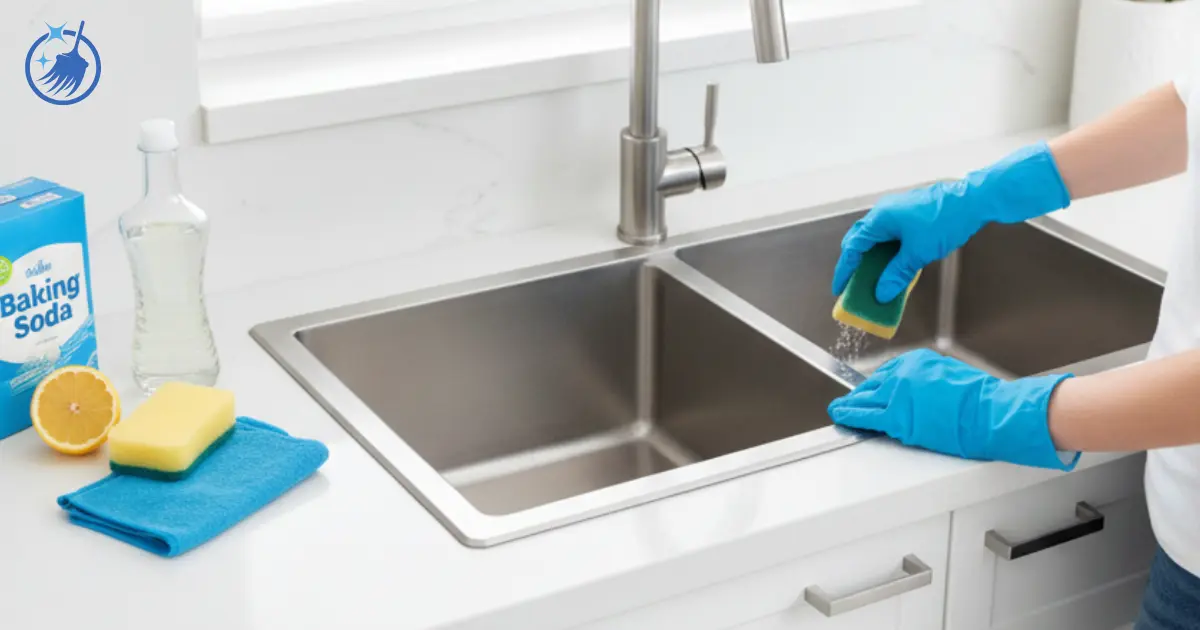
The short version: wash a stainless steel sink with warm water and washing-up liquid on a soft cloth or non-scratch sponge, always moving in the direction of the grain, then rinse and dry it. Bicarbonate of soda handles most stains, white vinegar handles limescale, and wire wool and abrasive scourers are the things to avoid. Hairline scratches are normal and tend to blend in over time.
If your sink looks dull, cloudy or stained, the cause is usually one of three things: limescale from hard water, residue left by cleaning products, or tea and food marks that were left to dry. Each has a different fix, and the sections below take them in turn.
Disclosure: Cleaners Guide is a participant in the Amazon Associates programme, so if you buy through links on this page we may earn a small commission at no extra cost to you. Product links are Amazon UK searches, so check the current price before buying.
The everyday clean, with the grain
This takes a few minutes and is all most sinks need. You will want warm water, washing-up liquid, a soft sponge or cloth and a dry microfibre cloth.
Clear it and rinse
Take out the washing-up bowl, plug, and anything left in the sink. Rinse with warm water to remove loose food and grit first. Crumbs and grit are what scratch the steel when you start scrubbing, so this step is worth doing properly.
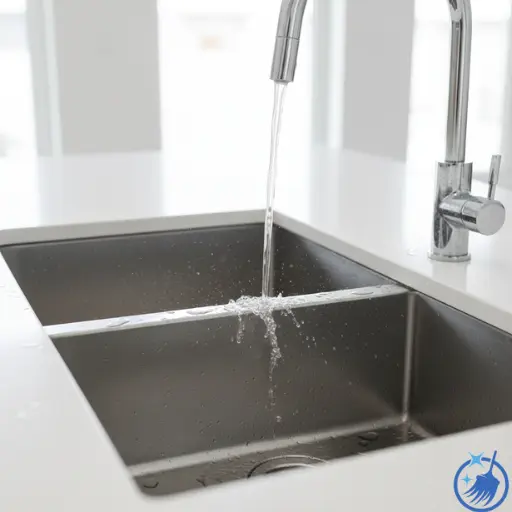
Find the grain
Look across the surface at an angle and you will see fine lines, usually running in one direction. That is the grain, from the way the steel was brushed. Cleaning along those lines hides marks. Scrubbing across them or in circles can leave visible patches. On sinks with a drainer, the grain sometimes runs in a different direction on the drainer from the bowl, so check each area.
Wash, rinse and dry
- Put a little washing-up liquid on the soft side of a sponge or a cloth.
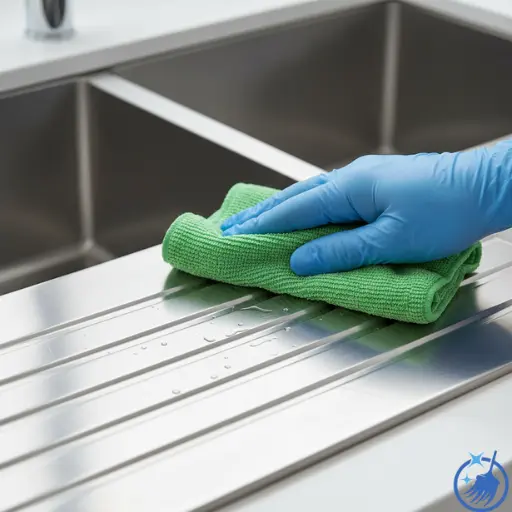
- Work along the grain, covering the bowl, drainer, sides and around the taps.
- Rinse well. Soap left behind dries into dull streaks, and in hard water areas it combines with minerals into a cloudy film.
- Dry with a clean, dry microfibre cloth, again along the grain. This one step prevents most water spots and limescale.
When marks will not wipe off
| Problem | What to use | Notes |
|---|---|---|
| Cloudy white film or limescale | Cloth soaked in white vinegar, left for a short while, then rinsed | Do not leave acid on for long, and rinse thoroughly |
| Tea and coffee stains | Bicarbonate of soda paste, rubbed gently with the grain | Hot water first helps loosen tannin |
| Rust-coloured spots | A cleaner made for stainless steel, such as one containing oxalic acid, used to the label | They usually come from steel wool, tins or cutlery left wet in the sink |
| Dried paint | Warm soapy water to soften, then a plastic scraper or old card | White spirit on a cloth for stubborn emulsion; test first and ventilate |
| Grease and general grime | Washing-up liquid; bicarbonate paste for baked-on bits | Rinse and dry afterwards |
| Burnt-on residue | Soak in hot soapy water, then bicarbonate paste | Never use a metal scourer |
Bicarbonate of soda, step by step
Sprinkle bicarbonate of soda over the damp sink, add a few drops of water to make a loose paste, and rub gently along the grain with a soft cloth. Leave it for a few minutes on stubborn marks, scrub lightly, then rinse and dry. It is a mild abrasive, which is why it lifts stains without cutting into the steel. For more on how it behaves, see our article on whether baking soda and vinegar really clean.
Limescale and hard water marks
If you live in a hard water area, limescale returns quickly around the taps and plughole. Lay a cloth soaked in white vinegar over the marks for 15 to 20 minutes, remove it, rub gently with bicarbonate paste, then rinse well and dry. A halved lemon dipped in bicarbonate does a similar job and smells pleasant. Rinse everything away afterwards. Do not leave vinegar or lemon sitting on the steel for hours.
Using vinegar first and then bicarbonate, as separate steps, works better than mixing them in the sink. Mixing makes a fizz but the result is mostly salty water, and the acid is no longer doing the job. Never mix vinegar with bleach, which releases harmful chlorine gas. Our list of cleaning products you should never mix covers the combinations to avoid.
Rust spots
A sink does not usually rust by itself. The spots come from other iron or steel items left wet in the bowl, such as wire wool, cans, old cutlery or cast iron pans. Remove the source, then use a stainless steel cleaner or a product containing a mild acid such as oxalic acid, strictly as the label instructs. Wear gloves, rinse well and keep it off other surfaces. Repeat if needed. If rust returns in the same place, a piece of iron may be embedded in the steel, or the surface may be damaged.
Plughole, overflow and taps
These are the places that stay grubby after the bowl looks clean. Lift out the plug and strainer and wash them in hot soapy water, scrubbing the underside with an old toothbrush, and wipe around the rim of the plughole. Clear the overflow slot if there is one, using a bottle brush or a cloth over a spoon handle. Around the taps, an old toothbrush and a drop of washing-up liquid reach the base, and a vinegar-dampened cloth lifts limescale from the spout. Rinse and dry each area, since standing water is what leaves new marks.
Keeping it hygienic
A sink handles raw food and dirty water, so hygiene matters as well as looks. Washing-up liquid and hot water remove most of the dirt and germs when followed by a rinse and dry, and drying matters because germs need moisture. After raw meat or fish has been in the sink, wash it with hot soapy water, rinse, and use a suitable disinfectant if you wish, following the label. Leave plenty of ventilation if you use any chemical, and never combine products. Washing cloths and sponges often, or replacing them, stops them spreading what you have just washed away. See our piece on whether kitchen sponges are dirty for more.
Our pick, and two alternatives
You do not need much, and bicarbonate and white vinegar do a lot. If you want something made for the job, here is how we would choose.
Featured pick: a non-abrasive stainless steel cleaner. A cream or spray made for stainless steel removes fingerprints, water marks and light film in one go and is easy to use at the end of the washing-up. Look for one that says it is suitable for sinks and food contact surfaces, with instructions to rinse, and avoid anything gritty. Browse stainless steel cleaners or the combined cleaner and polish products and pick one with clear directions. Caution: always test on a small area and rinse thoroughly afterwards.
Alternative one: stainless steel polish. Suits a sink that is clean but dull. A light polish brings back a uniform finish and helps water bead off, so it dries with fewer spots. Choose one labelled for stainless steel and, ideally, food-safe, and use sparingly. Too much leaves smears that attract fingermarks.
Alternative two: bicarbonate of soda. The cheapest option, and the one that covers most cleaning jobs. Suits anyone who wants to avoid specialist products. It is a mild abrasive, so use it gently with the grain and rinse completely.
For stains that need something stronger, scouring pastes are an option, but they are abrasive. Our The Pink Stuff guide and its review explain what it is good for. Use it very gently on a brushed finish and always along the grain.
Scratches, finishes and getting the shine back
Scratches are normal
A stainless steel sink will pick up fine scratches from pans, cutlery and cleaning. Light, hairline marks tend to merge into the brushed finish and give it a softer, worn-in look over time, so it is not worth worrying about them. Deeper gouges from metal scourers or heavy pans do not fade. They are worth avoiding, as is dragging cookware across the base. A bowl grid or mat protects the bottom of the sink, but lift it out and clean under it, because grit trapped beneath can scratch.
Your sink’s finish matters
| Finish | How it behaves | Care |
|---|---|---|
| Brushed or satin (the most common) | Shows fine lines, hides light wear | Always clean along the grain |
| Polished or mirror | Shows fingermarks and water spots | Dry after use; avoid vigorous scrubbing, which can dull the shine |
| Textured, linen or hammered | Hides scratches and marks | More forgiving, but still avoid wire wool |
If you are unsure what you have, check the maker’s care instructions. Manufacturers’ guidance beats general advice, particularly on any coating or special finish.
Restoring shine
Once the sink is clean and dry, a few drops of olive oil or baby oil on a soft cloth, buffed with the grain, evens the surface and helps water bead off. Wipe off any excess so it does not leave a film or a rancid smell, and only treat the areas that do not touch food directly, or wash again before using the sink for food. Plain flour buffed over a dry sink with a soft cloth is an old trick that picks up residue and leaves a soft shine. Brush it off and rinse. Neither method is magic, and a proper stainless steel polish does a similar job with less mess.
What to keep away from your sink
- Wire wool and metal scourers. They scratch deeply and leave iron fragments that rust.
- Abrasive powders and harsh scouring pads. Used often they dull the surface and leave visible scratch patterns.
- Bleach and chlorine products. Manufacturers often warn that these can mark or pit stainless steel if left in contact, so rinse any bleach off quickly or avoid it. Never mix bleach with other cleaners.
- Leaving wet steel items in the bowl. Steel wool pads, tins and cast iron cause rust marks.
- Leaving acidic or salty foods sitting. Lemon juice, vinegar dressings, tomato sauce, pickles and salt can mark the surface if left for hours, so rinse them away.
- Leaving tea bags, coffee grounds and damp cloths. They stain and trap moisture.
- Circular scrubbing. It breaks up the grain.
Cleaning products labelled for stainless steel still need to be rinsed. Check the label and wear gloves for stronger products, and ventilate the room when using acids.
A routine that keeps it looking good
| Task | How often | Why |
|---|---|---|
| Rinse and wipe dry | After each use | Prevents water marks and limescale |
| Wash with soap and water | Daily | Hygiene and shine |
| Bicarbonate scrub | Weekly, or when stains appear | Removes developing stains |
| Descale | Weekly in hard water areas, otherwise as needed | Keeps limescale from building |
| Polish | Monthly, if you like a shine | Evens the finish |
In hard water areas a small spray bottle of equal parts white vinegar and water under the sink makes the job easy. Spray, wipe and rinse after washing up, then dry. Wipe the taps too, because limescale builds up first around the base and spout. Sink maintenance fits neatly with the rest of the kitchen, including cleaning the sink drain, cleaning kitchen worktops and stainless steel pans, and our general advice on how to clean stainless steel, your dishwasher and other cleaning products and utensils. The rest of our home cleaning guides are on the home page.
A new sink can look scratchier at first, as there can be a manufacturing film or a fresh, sharp finish. Give it a few weeks of normal use before deciding it has been damaged.
When to get a second opinion
- Deep scratches that bother you. A stainless steel specialist or fabricator may be able to polish them out, depending on the finish.
- Rust that returns or pitting. Pits and corrosion mean the protective surface layer has been damaged, so contact the manufacturer or installer, particularly if the sink is under warranty.
- A finish that has worn or been marked by chemicals. Refinishing is sometimes possible, but may cost more than a replacement.
- Leaks, loose fittings or cracked sealant. Those are plumbing or fitting jobs for a competent professional, not cleaning jobs.
For most problems, though, patience, a soft cloth and the methods above are enough. If a stain has not shifted after two or three gentle attempts, stop and look at the cause. Stronger products and harder scrubbing usually do more harm than waiting and trying a different, milder approach, and a stubborn mark on a brushed finish often fades into the general wear.
Questions about stainless steel sinks
- How do you clean a stainless steel sink without scratching it? Use warm water, washing-up liquid and a soft cloth or non-scratch sponge, moving along the grain. Rinse and dry afterwards. Avoid wire wool, abrasive powders and circular scrubbing. Fine scratches are normal and fade into the finish.
- What is the best thing to clean a stainless steel sink with? Washing-up liquid for everyday cleaning, bicarbonate of soda for stains, and white vinegar for limescale. A stainless steel cleaner made for the job is an option if you prefer a ready-made product.
- How often should I clean it? Wipe and dry after each use, wash daily, and give it a scrub with bicarbonate when marks build up. In hard water areas, descale more often. Little and often works better than an occasional hard scrub.
- How do I remove limescale from a stainless steel sink? Lay a cloth soaked in white vinegar over the deposits for 15 to 20 minutes, then rub with bicarbonate paste along the grain. Rinse well and dry. Do not leave the acid on the surface for long periods.
- Can I use bleach on a stainless steel sink? It is best avoided. Manufacturers often advise against leaving bleach or chlorine products on stainless steel, as they can mark or pit it. If you do use one, dilute it as the label says, rinse thoroughly and never mix it with other products.
- How do I make a dull stainless steel sink shine? Clean and dry it first, then buff with a soft cloth along the grain. A stainless steel polish, or a tiny amount of oil wiped back to nothing, can even out the finish. Remove all excess so it does not look smeary.
- Why does my sink have rust spots? The sink is rarely the cause. Wire wool, tins, cast iron and cutlery left wet can leave iron behind that rusts. Remove the source, treat the marks with a suitable stainless steel cleaner and keep the sink dry.
- How do I get tea stains out of a stainless steel sink? Rub a paste of bicarbonate of soda and water into the stain along the grain. Leave it a few minutes, scrub gently, then rinse. Rinsing tea bags and cups away promptly stops stains forming.
- Is it normal for a stainless steel sink to scratch? Yes. Everyday use leaves fine scratches, and over time they blend into the finish. Deep gouges from metal scourers are worth avoiding, but hairline marks are not a fault.
- Can I use The Pink Stuff on a stainless steel sink? Scouring pastes are abrasive, so use a tiny amount, gently, along the grain, and rinse thoroughly. Test on a hidden area first, and avoid it on mirror-polished or coated finishes.