How to Clean Oven Door Glass: The Complete Guide (2025)

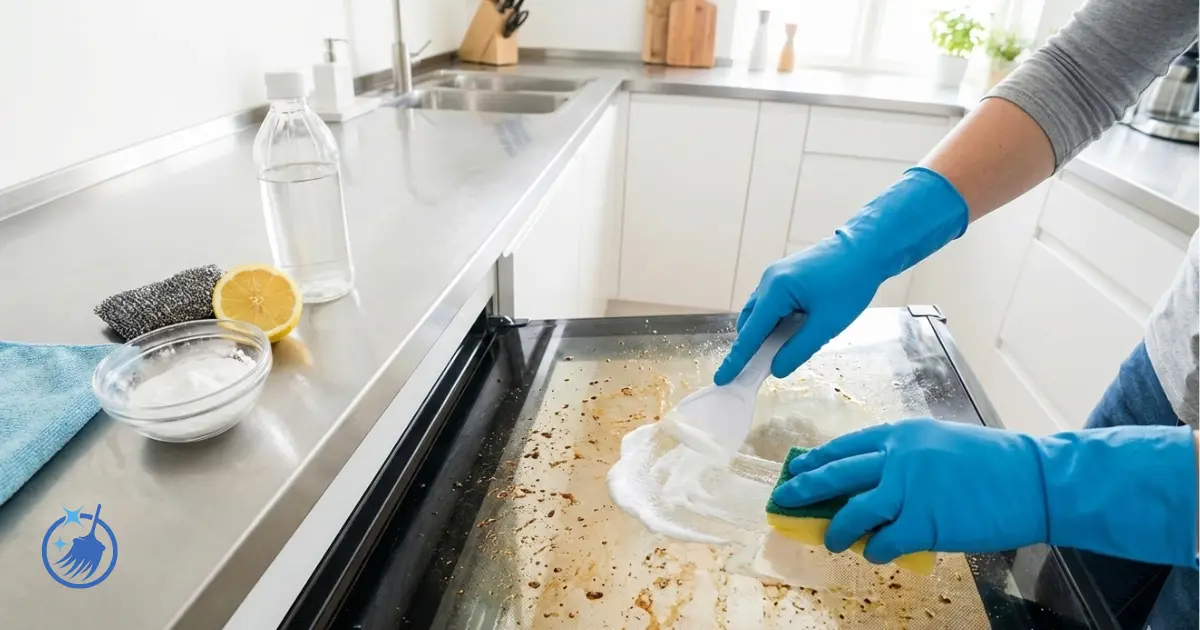
How to clean oven door glass is one of those jobs that people put off for months, then spend hours scrubbing with no results. I’ve seen it hundreds of times in my 18 years as a professional cleaner – clients apologising for the state of their oven glass, convinced it’s permanently stained. The truth is, even glass that looks brown with baked-on grease can come up completely clear, but you need the right method and a bit of patience. I’ll show you exactly how to clean oven door glass using techniques I’ve tested in real kitchens across the UK, including the professional trick for getting between those double glass panels that manufacturers don’t want you to know about.
What makes this guide different is that I’ll tell you when to use gentle methods and when you need something stronger. I’ll also be honest about what can’t be fixed – some older ovens have damaged glass that no amount of cleaning will restore. But for the 95% that can be saved, you’ll learn the exact methods I use when clients pay me to make their kitchens spotless.
Quick Summary
Time needed: 15-45 minutes (depending on grime level)
Difficulty: Easy to moderate
You’ll need: Bicarbonate of soda, white vinegar, microfibre cloths, optional razor blade scraper
Key takeaway: Never clean hot glass. Use bicarbonate of soda paste for 30 minutes on heavy grease, finish with vinegar spray for streak-free clarity
What You'll Need
- Bicarbonate of soda (under £1 from any supermarket)
- White vinegar (about 50p)
- Washing-up liquid (whatever you already have)
- Microfibre cloths (at least 3 – for cleaning, rinsing, and drying)
- Warm water
- Spray bottle (any empty one works)
- Optional: Razor blade scraper (£2-3 from Wilko or Screwfix)
- Optional: Wire coat hanger (for cleaning between glass)
- Optional: The Pink Stuff (£1 from Poundland for stubborn spots)
Understanding What You're Actually Cleaning
Oven door glass gets dirty in ways that regular windows don’t, which is why normal glass cleaner fails completely.
Grease splatter – This comes from roasting meat or anything fatty. It starts clear, then bakes on with repeated heating and turns brown or yellow. This is the most common type of oven glass dirtiness.
Burnt-on food – Tiny particles of food that splash onto the glass during cooking, then carbonise with heat. This creates black spots that seem impossible to remove.
Cloudy film – Either mineral deposits from steam, or residue from previous cleaning attempts. This makes the glass look dull even after cleaning.
Between-the-glass grime – The nightmare scenario. Most modern ovens have double-glazed doors, and somehow dirt gets between the two panes. This is visible but seemingly unreachable.
Each type needs a slightly different approach. Understanding what you’re dealing with saves time and prevents you using methods that won’t work.
Critical Safety Rules Before You Start
Rule 1 – Let It Cool Completely
This isn’t just about not burning yourself. Applying cold water or cleaner to hot glass can cause thermal shock, which makes the glass crack. I’ve seen this happen twice – once to a client’s expensive Bosch oven, once to someone who was in a hurry before guests arrived. Both times, the glass shattered.
Wait at least 2 hours after using the oven before cleaning. If the glass feels even slightly warm to touch, wait longer.
Rule 2 – Protect Oven Seals and Vents
The rubber seal around the oven door damages easily. Never spray cleaner directly onto it, and wipe carefully around it. Cleaners that seep into the seal can degrade the rubber, causing heat loss and higher energy bills.
Similarly, avoid getting cleaner into the vents at the bottom of the door. These allow air circulation, and liquid pooling there can cause rust or damage internal components.
Rule 3 – Test First on Older Ovens
If your oven is more than 15 years old, the glass might have a special coating that’s worn thin. Test any cleaning method on a small corner first. Modern ovens (post-2010) generally have tougher glass, but older ones can be surprisingly delicate.
How to Clean Oven Door Glass – Step-by-Step Guide
Step 1 – Initial Wipe Down (Always Start Here)
This removes loose dirt and grease, which helps the deep cleaning work better.
What to do:
- Mix warm water with 3-4 drops of washing-up liquid in a bowl
- Dampen a microfibre cloth in the soapy water
- Wipe the entire glass surface to remove loose debris
- Dry with a clean cloth
For lightly soiled glass (cleaned regularly), this might be enough. If you can still see brown staining, grease marks, or burnt spots, move to Step 2.
Step 2 – Bicarbonate of Soda Paste Application (The Main Method)
This is my go-to method for 90% of oven glass cleaning. It’s safe, effective, and works on all oven types.
What to do:
- In a small bowl, mix bicarbonate of soda with just enough water to create a thick paste – consistency of toothpaste
- Use about 4-5 tablespoons of bicarbonate of soda for a standard oven door
- Spread the paste generously over all the dirty glass using your hands or a spoon
- Make sure you cover every bit of staining – don’t be stingy with the paste
- Leave it for 30 minutes minimum (I usually leave it for 45 minutes to an hour for heavy grease)
- The paste will dry slightly – this is fine and actually helps it work
During this waiting time, the alkaline bicarbonate of soda breaks down the acidic grease and loosens burnt-on particles. Don’t rush this step.
After the waiting time:
- Dampen a microfibre cloth with warm water
- Wipe the paste off in circular motions – you’ll see brown grime coming off immediately
- Rinse your cloth frequently in clean water
- Keep wiping until all the paste is removed
- Dry with a clean, dry cloth
For most moderately dirty oven glass, this method alone gives you completely clear glass. If stubborn spots remain, move to Step 3.
Step 3 – Vinegar Spray for Stubborn Marks (And Streak-Free Finish)
After the bicarbonate of soda treatment, vinegar tackles any remaining grease and prevents streaking.
What to do:
- Fill a spray bottle with white vinegar (no need to dilute)
- Spray the glass liberally – it should be quite wet
- Let it sit for 5-10 minutes
- Wipe with a damp microfibre cloth
- Dry thoroughly with a clean, dry cloth
- Buff with a dry cloth for a streak-free shine
The vinegar cuts through any remaining grease film and removes the cloudy appearance that sometimes happens after using bicarbonate of soda. This combination – bicarbonate of soda paste followed by vinegar spray – is the professional one-two punch for oven glass.
Step 4 – Razor Blade Scraper for Burnt-On Spots (Use Carefully)
Sometimes you’ll find hard, black spots that won’t budge even after the paste and vinegar. This is carbonised food that’s essentially welded to the glass. A razor blade scraper is the only thing that removes it.
What to do:
- Spray the glass with soapy water – the glass must be wet
- Hold a single-edge razor blade at a 45-degree angle to the glass
- Push gently in one direction only (don’t saw back and forth)
- The burnt spot should lift off in one piece
- Wipe away the debris
- Never use a blade on dry glass – this scratches it
I use this method regularly on clients’ ovens with excellent results, but you must keep the glass wet and maintain that angle. If you’re nervous about using a blade, skip this step – the burnt spots are cosmetic and don’t affect oven function.
Buy a proper glass scraper (£2-3 from Wilko or Screwfix) rather than trying to hold a loose razor blade. The handle gives you better control and is much safer.
How to Clean Between Oven Door Glass Panels
This is the question I’m asked most often, and the answer frustrates people – there’s no easy way. But there are two methods that work.
Method 1: The Wire Hanger Technique (Quick but Limited)
This works if the gap between your glass panels is accessible from the bottom vent.
What to do:
- Straighten a wire coat hanger but leave the hook intact
- Wrap a thin microfibre cloth around the straight end
- Secure the cloth with an elastic band so it doesn’t slip off
- Spray the cloth with your vinegar and water mixture
- Insert the cloth-wrapped hanger through the bottom vent slot of the door
- Carefully manoeuvre it up between the glass panels
- Wipe as best you can – you’re working blind, so this takes patience
- Remove the hanger and check your progress
- Repeat with a clean cloth section
This method cleans perhaps 60-70% of the area between the panels. It’s not perfect, but it’s better than nothing and doesn’t require dismantling anything.
Method 2: Remove the Oven Door (Proper but More Involved)
For thorough cleaning, you need to separate the glass panels. This sounds daunting but is actually straightforward on most ovens.
What to do:
- Open the oven door fully (90 degrees)
- Locate the hinge locks on each side – these are small clips or levers
- Flip the hinge locks up or out (check your manual for your specific model)
- Close the door to about 45 degrees
- Grip the door firmly on both sides
- Lift upwards – the door should come free from the hinges
- Carry the door carefully to a work surface (kitchen table covered with a towel works well)
Once the door is off:
- Locate the screws holding the glass panels together (usually at the top)
- Remove these screws carefully
- Separate the glass panels – there are usually 2-3 layers
- Clean each panel individually using the bicarbonate of soda method
- Let everything dry completely before reassembling
- Reassemble in reverse order
- Reattach the door to the oven
I’ve done this dozens of times on different oven brands. It takes about 30-45 minutes total, including cleaning. The first time feels nerve-wracking, but once you’ve done it, you realise it’s quite simple.
Dealing with Different Types of Oven Glass Problems
Greasy Brown Film
This is the most common issue – the glass looks amber or brown rather than clear.
Best solution:
- Bicarbonate of soda paste for 45 minutes
- Vinegar spray after
- Should come completely clean in one treatment
Black Burnt-On Spots
Hard spots that feel rough to touch.
Best solution:
- Bicarbonate of soda paste first (loosens them)
- Razor blade scraper while wet
- Vinegar spray to finish
- Usually requires 2-3 passes with the scraper
Cloudy or Hazy Glass
Glass that looks dull even when there’s no visible dirt.
Best solution:
- This is often mineral deposits from steam
- White vinegar spray left for 10 minutes
- Wipe with microfibre cloth
- Buff dry immediately
- If cloudiness persists, it might be permanent etching from harsh cleaners (can’t be fixed)
Rainbow Staining (Oil Residue)
Iridescent patches that change colour when you move.
Best solution:
- This is oil that’s been repeatedly heated
- Washing-up liquid in hot water first
- Then bicarbonate of soda paste
- Finish with vinegar spray
- May require 2 treatments for complete removal
White Chalky Deposits
Looks like limescale on the glass.
Best solution:
- Definitely mineral deposits from hard water areas
- White vinegar spray and leave for 20 minutes
- Wipe away – should dissolve easily
- Repeat if needed for heavy deposits
Common Mistakes That Make Things Worse
- Using oven cleaner on the glass – Those heavy-duty oven cleaners (Oven Pride, Mr Muscle) are designed for the oven interior, not glass. They can damage glass coatings and make it permanently cloudy. I’ve seen this ruin two expensive Neff ovens. Never use oven cleaner on glass.
- Cleaning the glass hot – People do this thinking the heat helps the cleaner work. It doesn’t. It makes the cleaner evaporate too quickly, leaves streaks, and risks cracking the glass. Always wait for complete cooling.
- Scrubbing with abrasive pads – Green scourers, steel wool, or rough cloths scratch the glass invisibly. Over time, these micro-scratches make the glass look perpetually dirty because dirt sits in the scratches. Microfibre cloths only.
- Not removing bicarbonate of soda completely – If you leave residue, it dries into a white film that makes the glass look cloudy. Rinse thoroughly with multiple clean cloths.
- Using newspaper to buff – Old cleaning advice said newspaper polishes glass. It doesn’t work on oven glass and leaves ink smudges. Use microfibre cloths instead.
- Spraying cleaner directly into vents – The liquid runs inside the door and pools, potentially damaging electronics or causing rust. Always spray onto your cloth, not the oven.
How often should you clean oven door glass?
| Cleaning Task | Frequency | Why |
|---|---|---|
| Quick wipe after cooking | Every use | Prevents buildup |
| Light clean with soapy water | Weekly | Maintains clarity |
| Deep clean with bicarbonate of soda | Monthly | Removes accumulated grease |
| Clean between glass panels | Every 6 months | Keeps interior clear |
| Full door removal and clean | Annually | Thorough maintenance |
The more regularly you do light cleaning, the easier deep cleaning becomes. I wipe my own oven glass after every use (takes 30 seconds with a damp cloth once it’s cool) and do a bicarbonate of soda treatment every 6 weeks. This means it never gets to the brown, horrible state that requires hours of work.
Clients who never clean their oven glass call me when it’s so bad they can’t see through to check on their food. These jobs take 2+ hours of intensive work. Prevention is definitely easier than cure.
Best Products for Cleaning Oven Door Glass
Budget Option (Under £2)
Bicarbonate of soda and white vinegar. This is what I use in 95% of cases, including on my own oven. Costs about 60p for enough to clean your oven multiple times.
Mid-Range Option (£1-3)
The Pink Stuff paste (£1 from Poundland or B&M). This is a gentle abrasive cream that works brilliantly on stubborn spots. Apply it like bicarbonate of soda paste, leave for 20 minutes, wipe off. I keep a pot in my cleaning caddy as backup.
Tool Investment (£2-3)
Proper glass scraper with replaceable blades from Wilko or Screwfix. Safer and more effective than trying to hold a loose blade. Worth buying if you have persistent burnt-on spots.
What About Commercial Oven Glass Cleaners?
I’ve tested them – Astonish Oven Glass Cleaner (£2.50), Method Oven Cleaner (£4), and various supermarket own-brands. They work fine, but they’re not more effective than bicarbonate of soda and they cost more. The only advantage is convenience if you don’t want to mix your own paste.
My honest opinion? Save your money unless you need the convenience of a spray bottle.
Natural vs Chemical Methods for Oven Glass
Natural methods (bicarbonate of soda, vinegar) work for:
- All levels of grease and grime
- Regular maintenance
- Between-glass cleaning
- Safe for all oven types
- No harsh fumes
- 95% of oven glass cleaning needs
Chemical cleaners might be needed for:
- Honestly? I can’t think of a situation where they’re necessary
- Even the worst oven glass I’ve encountered responds to bicarbonate of soda paste if you’re patient
The natural methods genuinely work as well or better than chemicals. This isn’t me being preachy about eco-cleaning – it’s based on 18 years of testing both in real homes.
Removing Specific Stains From Oven Glass
Burnt Sugar (From Cakes or Pies)
This is genuinely difficult – burnt sugar turns almost glass-like and bonds to the oven glass.
Solution:
- Soak the area with very hot water for 10 minutes (pour it on, let it sit)
- While still wet, use a razor blade scraper at 45 degrees
- Follow with bicarbonate of soda paste for 30 minutes
- The hot water softens the sugar enough for the blade to work
Tomato Sauce Splatter
Acidic splatter that bakes into hard, red-brown spots.
Solution:
- Bicarbonate of soda paste for 45 minutes
- The alkaline paste neutralises the acid
- Usually comes off easily after this
- Vinegar spray to finish
Milk or Dairy Splatter
Leaves white, crusty deposits.
Solution:
- Hot soapy water soak first
- Then bicarbonate of soda paste
- These usually come off very easily
- More annoying than difficult
Smoke Damage (After Burning Food)
The entire glass has a grey-brown haze.
Solution:
- This is carbon deposits from smoke
- Bicarbonate of soda paste over the entire door
- Leave for a full hour
- May need to repeat the treatment
- Finish with vinegar spray for clarity
Pro Tips From a Professional Cleaner
Insider Tips
After cleaning hundreds of ovens, here’s what I’ve learned:
- Work in good lighting – Oven glass lies to you about how clean it is. What looks clean in dim kitchen lighting shows streaks in bright light. Clean during the day or use a torch to check your work.
- The waiting game wins – Clients always want to scrub harder when they should wait longer. Leaving bicarbonate of soda paste on for an hour beats scrubbing for 20 minutes every single time.
- Warm water beats cold – When mixing your bicarbonate of soda paste, use warm water. It activates faster and works more effectively. Not hot (that’s messy) but definitely warm.
- Double cloths for drying – Use one slightly damp cloth for the final wipe, then immediately buff with a completely dry cloth. This prevents any water marks forming.
- Clean from top to bottom – Any drips run downwards. If you start at the bottom, drips from cleaning the top dirty the bottom again. Always work from top to bottom, this applies to everything in cleaning, not just ovens.
When Oven Glass Can't Be Fixed
Sometimes glass is damaged beyond cleaning. Here’s when to accept it can’t be restored:
Permanent cloudiness from scratches – If previous owners or cleaners used steel wool or harsh abrasives, the glass has thousands of tiny scratches. Clean it makes it less dirty, but it will never be truly clear again.
Etched glass from chemicals – Strong chemicals, especially oven cleaner used on glass repeatedly, can etch the surface. This creates permanent clouding that no cleaning removes.
Cracks or chips – Obviously these can’t be cleaned away. Small chips usually don’t affect function, but cracks mean the glass needs replacing.
Delaminated double glazing – If moisture is permanently trapped between glass panels and they’ve started separating, cleaning won’t help. The seal has failed and needs professional repair.
Heat damage to special coatings – Some modern ovens have special reflective or easy-clean coatings on the glass. Excessive heat can damage these permanently. The glass works fine but looks odd.
If your oven glass falls into any of these categories, you have three options: live with it, replace just the glass (£30-80 depending on oven), or replace the whole door (£80-150). For most people, learning to live with cosmetic imperfection makes more sense than spending £100.
Preventing Oven Door Glass From Getting Dirty
Based on watching patterns in clients’ homes over years, here’s what actually prevents oven glass getting filthy:
Use baking trays underneath
- Roasting meat or anything that spits? Put a tray on the shelf below to catch splatter
- Reduces oven glass cleaning by about 70% in my experience
- Costs nothing, just requires remembering
Wipe splatter immediately
- When you spot fresh splatter after cooking, wipe it once the oven cools
- Takes 20 seconds with a damp cloth
- Fresh splatter wipes off easily; baked-on splatter requires serious work
Use oven-safe coverings
- Cover dishes with foil or lids when reheating
- Stops tomato sauce and fat splattering everywhere
- Especially important for pasta bakes and lasagne
Avoid very high temperatures when unnecessary
- Many people use 200°C+ for everything
- Most dishes cook fine at 160-180°C, just take slightly longer
- Lower temperatures mean less smoke and splatter
Clean spills from the oven floor
- Spills on the oven bottom create smoke when heated
- This smoke deposits on the glass
- Keep the oven interior reasonably clean
Cleaning oven door glass properly doesn’t require expensive products or hours of elbow grease. With bicarbonate of soda paste left on for 45 minutes, followed by a vinegar spray, even brown, greasy glass comes up completely clear. The key is patience – let the chemicals do the work instead of exhausting yourself with scrubbing. I’ve brought back hundreds of oven doors that clients thought were beyond help, using nothing more than a 70p box of bicarbonate of soda and basic microfibre cloths.
The between-glass cleaning is trickier, but even that’s manageable with either the wire hanger technique or by removing the door (which is far easier than it sounds). Your oven manual will have specific instructions for door removal – it’s designed to come off for cleaning. Don’t be intimidated by it.
Start with a thorough clean using the method in this guide, then maintain it with a quick wipe after each use. You’ll never face a seriously dirty oven door again, and you’ll save yourself hours of future scrubbing. That’s the professional cleaner’s secret – regular light maintenance beats infrequent deep cleaning every single time.
Frequently Asked Questions
How do you clean oven door glass naturally?
Mix bicarbonate of soda with water to make a thick paste. Spread it generously over the glass and leave for 30-45 minutes. Wipe off with a damp microfibre cloth, then spray with white vinegar and wipe again. This natural method removes even heavy grease and burnt-on stains without any chemicals. It’s what I use professionally in 95% of cases.
How do you clean between oven door glass panels?
Either use a wire coat hanger wrapped with a microfibre cloth inserted through the bottom vent, or remove the oven door completely. To remove the door, open it fully, unlock the hinge clips, close to 45 degrees, then lift upwards. Most oven doors have screws at the top holding the glass panels together. Separate them, clean individually, then reassemble.
Can you use a razor blade on oven glass?
Yes, but only when the glass is wet and held at a 45-degree angle. Spray soapy water on the glass first, then gently push the blade in one direction to remove burnt-on spots. Never use a blade on dry glass as this scratches it. Buy a proper glass scraper from Wilko or Screwfix for better control and safety.
Why is my oven glass cloudy after cleaning?
Either you’ve left bicarbonate of soda residue on the glass (rinse more thoroughly), you have mineral deposits from hard water (spray with vinegar and wipe), or the glass has been permanently etched by harsh chemicals used previously. If it’s etching, unfortunately this can’t be fixed. Always use gentle cleaners and rinse completely to prevent cloudiness.
What removes burnt grease from oven glass?
Bicarbonate of soda paste left on for 45 minutes to an hour is the most effective method. Make a thick paste, spread it over the grease, and wait – don’t scrub immediately. The alkaline paste breaks down the grease chemically. After waiting, wipe with a damp cloth, then spray vinegar to remove any remaining film and prevent streaking.
How often should you clean oven door glass?
Wipe the glass with a damp cloth after each use once cooled (takes 30 seconds). Do a light clean with soapy water weekly. Deep clean with bicarbonate of soda paste monthly if you cook regularly, or every 2-3 months if you cook infrequently. Clean between the glass panels every 6 months to a year. Regular light cleaning prevents heavy buildup.
Can you use oven cleaner on oven glass?
No, never use heavy-duty oven cleaner on glass. These products are designed for oven interiors and can damage glass coatings, causing permanent cloudiness. I’ve seen this ruin expensive ovens. Always use bicarbonate of soda and vinegar for glass, and save the oven cleaner for the interior metal surfaces only.
How do you clean the outside of oven door glass?
The outside usually only has fingerprints and light splatter. Use washing-up liquid in warm water with a microfibre cloth, or spray with diluted vinegar and wipe. For stubborn marks, use the same bicarbonate of soda paste method as the inside. Dry thoroughly to prevent water marks. The outside is much easier than the inside as it doesn’t get baked-on grease.
Does vinegar clean oven glass?
Yes, white vinegar works well on oven glass, especially for light grease, water marks, and cloudiness. Spray it on, leave for 5-10 minutes, then wipe with a microfibre cloth. However, for heavy baked-on grease, vinegar alone isn’t strong enough. Use bicarbonate of soda paste first, then finish with vinegar for the best results.
Can you clean oven glass with The Pink Stuff?
Yes, The Pink Stuff works excellently on oven glass. It’s a gentle abrasive paste similar to bicarbonate of soda but slightly stronger. Apply it to the glass, leave for 20-30 minutes, then wipe off with a damp cloth. It’s particularly good for stubborn black spots. At £1 from Poundland, it’s worth keeping as backup when bicarbonate of soda alone isn’t quite enough.
You May Also Like
How to Clean Glass Stovetop: Complete UK Guide 2026
How to Clean Dryer Vent: Complete UK Guide for 2026