The short answer: let the pan cool, soak it in hot soapy water, then boil a few tablespoons of bicarbonate of soda in it and scrape the loosened burn off with a wooden spoon. That clears most burnt pans. What changes is the pan: stainless steel, enamel and ceramic take the boil, non-stick and cast iron need gentler handling, and some pans are better replaced.
The sections below start with that main method, then cover each pan type, tougher burns (sugar, outside bases, stains), when a shop-bought cleaner is worth it, and how to tell whether the pan is still safe to use.
Disclosure: Cleaners Guide is a participant in the Amazon Associates programme, so if you buy through links on this page we may earn a small commission at no extra cost to you. It never changes our recommendations, we suggest products because they work and we point out cheaper options where they do the same job. Prices and availability change, so always check the current price before buying.
The method that works for most burnt pans
Do these in order. The first step often does most of the work, so check after each one before moving on.
How bad is the burn?
| Level | What it looks like | Where to start |
|---|---|---|
| Light | Food stuck and browned, metal still visible underneath | Soak, then a soft sponge |
| Medium | Dark brown or black patches, a thin but stubborn layer, common with rice, pasta and boiled-dry sauces | Soak, then the bicarbonate boil |
| Heavy | A thick, black, crusty layer over a large area | Soak, boil, then repeat or add the fizz |
| Sugar | Glassy, hard caramel bonded to the metal | Dissolve it in simmering water first |
Matching the effort to the burn matters. A method that is too gentle wastes hours on a heavy burn, while one that is too rough can damage the pan when the burn is light.
1. Let it cool, then soak
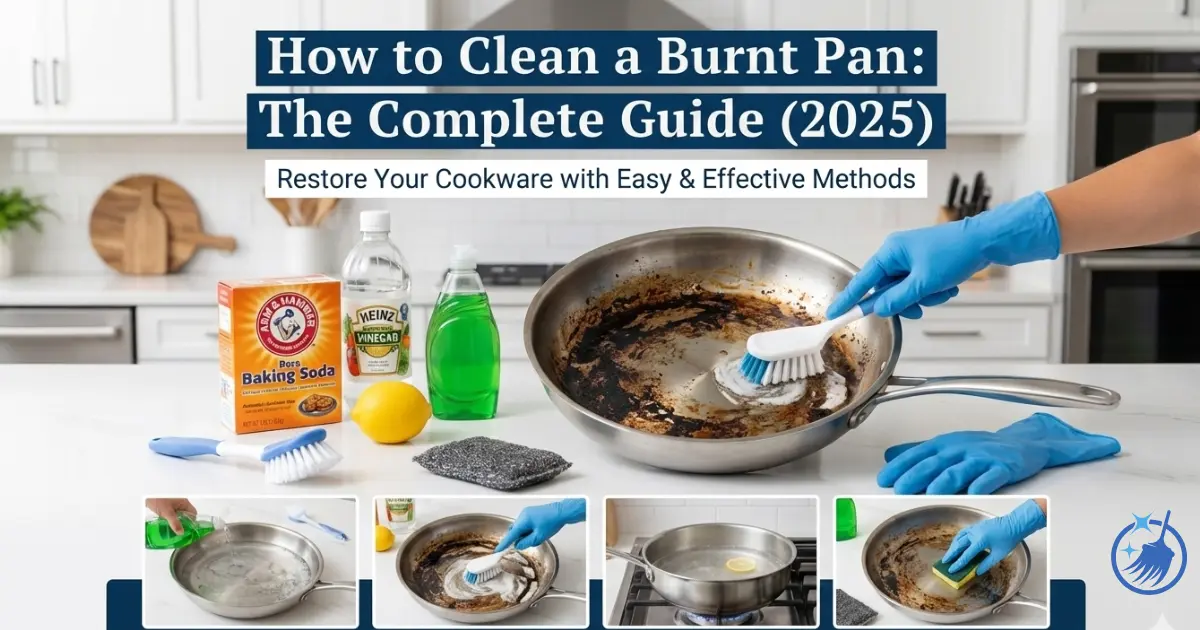
Leave the pan to cool for at least half an hour. Pouring cold water into a very hot pan can warp the base, and a warped pan rocks on the hob and heats unevenly. Once it is cool enough to handle, fill it with very hot water from the kettle, add a few drops of washing-up liquid and leave it for at least eight hours or overnight. Top it up with hot water once if you can. Next morning, nudge the loosened bits off with a wooden spoon or silicone spatula and see what is left. Light burns often wipe straight off after this.
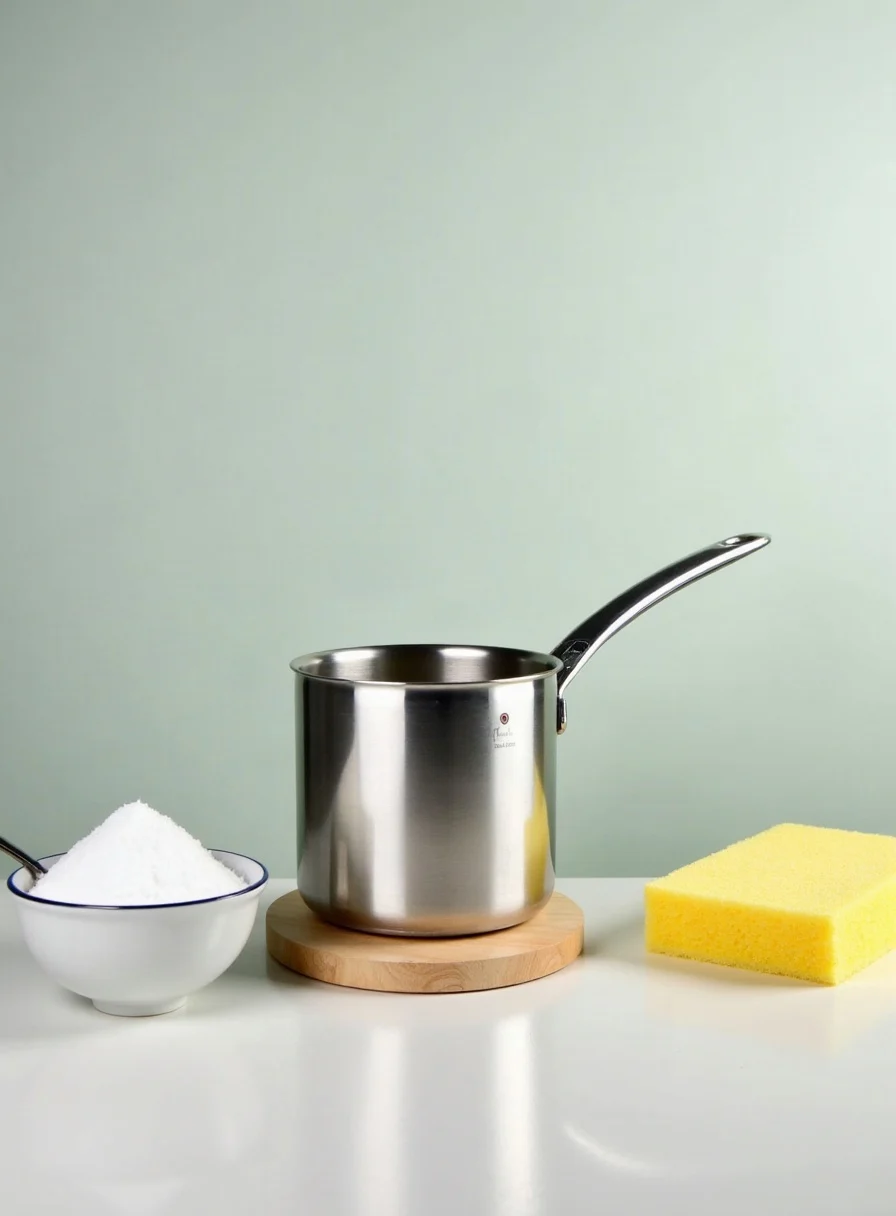
2. Boil bicarbonate of soda in it
For anything the soak did not shift, drain the pan, add fresh water to cover the burn by about 2 cm, and stir in about three tablespoons of bicarbonate of soda, or four or five for a heavy burn. Bring it to a rolling boil and keep it boiling for 10 to 15 minutes. You should see burnt flakes lifting. Switch off, let it cool until it is safe to handle, then scrape with the wooden spoon. The burn often comes away in sheets. Wash the pan normally afterwards. The alkaline water softens the carbonised layer, which is why boiling beats cold scrubbing.
If spots remain, make a paste of bicarbonate of soda with a little water, spread it on, leave it for 20 minutes and rub with a non-scratch pad, such as a pack of non-scratch scourer pads. Look for pads labelled safe for non-stick and stainless steel, and avoid anything described as heavy-duty.
Take care when boiling bicarbonate of soda. It can foam up and boil over, so use a pan with room to spare, add the powder to water that is not yet boiling, keep the heat steady and never leave it unattended. Wear oven gloves to lift the pan, and tip the water away carefully, because it stays very hot for a long time.
3. Repeat before you escalate
Badly burnt pans sometimes need the boil two or three times. Repeating a gentle method is better than reaching for steel wool or something harsh. Stay with one method at a time, and never mix cleaners, especially bleach with vinegar or ammonia, which can release toxic gas. Our list of cleaning products you should never mix is worth a look. Bleach is also no use here, since it does not lift burnt food and leaves a residue you do not want near cooking.
Never scrub a hot pan, as you risk a scald and a warped base. Never use steel wool on stainless steel or non-stick, because it scratches, and the fibres can rust and leave orange marks. Cast iron is the exception that tolerates steel wool, but only for rust, not routine cleaning.
Match the method to the pan
| Pan type | Best method | Avoid |
|---|---|---|
| Stainless steel | Soak, then a bicarbonate of soda boil, or a cleaner made for steel | Steel wool, which scratches |
| Non-stick | A warm soak and a soft sponge, with a gentle paste if needed | Boiling bicarbonate, abrasives and metal scrapers |
| Cast iron | Coarse salt scrub with a little oil, then re-season | Long soaking, vinegar and the dishwasher |
| Enamel or ceramic | Soak, then bicarbonate of soda boil or paste | Metal tools that chip the enamel |
| Uncoated aluminium | Short soak and a gentle paste | Long alkaline boils, which can darken the metal |
Stainless steel
Stainless steel is the most forgiving pan material, so all of the methods in this article suit it. Use the overnight soak and boil for the inside. For the outside base, mix bicarbonate of soda and water into a paste, leave it for 30 minutes and scrub gently. Heat stains and rainbow tints need something acidic or a cleaner made for steel, which is covered below. If you struggle with stainless generally, see our comprehensive guide to cleaning stainless steel and the one on stainless steel pans.
Heat tinting, the rainbow or gold sheen on steel, is a thin oxide layer and not food. It is harmless and does not affect cooking. A cloth dampened with white vinegar usually removes it, and a stainless steel cleaning powder will too. Pitting, chalky white marks from hard water and dark rings on the outside are separate issues, and also respond to a vinegar wipe followed by a thorough rinse and dry.
Non-stick
Non-stick coatings are easily damaged, so be gentle. Soak with washing-up liquid, then use a soft sponge and, if needed, a bicarbonate of soda paste applied lightly. Do not boil bicarbonate in a non-stick pan, soak it in vinegar for long, scrub hard or use metal utensils to scrape. Also avoid ever heating an empty non-stick pan, because overheating damages the coating.
If the coating is bubbling, peeling or flaking, stop using the pan and replace it. No cleaning will repair a damaged coating, and you do not want flakes in your food. The high heat that burnt the pan may well have damaged the coating already, so inspect it carefully. For a budget non-stick pan, replacing it can be more sensible than hours of careful cleaning.
Cast iron
Cast iron needs its seasoning, the baked-on oil layer, protected. Once the pan is cool, sprinkle coarse salt over the burnt area with a little cooking oil instead of washing-up liquid, and scrub with kitchen roll or a stiff brush. Rinse quickly with hot water, dry it straight away and thoroughly, because cast iron rusts, then wipe on a thin film of oil and warm it gently for a few minutes to refresh the seasoning. Do not soak it overnight, boil bicarbonate in it or use vinegar, which all strip seasoning. Badly rusted cast iron is a different job, involving steel wool and full re-seasoning.
Enamel and ceramic
These cope well with the soak and bicarbonate boil, but need gentle scrubbing. For staining on white enamel, a bicarbonate paste left on for a while works well. Use wooden or silicone tools only, because metal can chip the coating, and chipped enamel exposes the metal underneath. Check the maker’s care leaflet, as some premium enamelware has specific cleaning advice.
Aluminium
Uncoated aluminium reacts with strongly alkaline solutions, including a long bicarbonate boil, and can turn dull or dark grey. Stick to a short soak and a light paste, and accept that some discolouration may remain. Heavily burnt aluminium rarely returns to its original colour.
If it still looks burnt after the boil
| What is left | Likely reason | Try next |
|---|---|---|
| Thin brown film | Polymerised oil or food film, not carbon | A paste of bicarbonate of soda and a non-scratch pad |
| Black flecks that do not budge | Heavily carbonised food | Another soak, then a second boil, or the fizz method |
| Rainbow or blue-gold tint on steel | Heat staining, not food | A cleaner made for stainless steel, or a vinegar wipe |
| White or chalky patches | Hard water minerals | A cloth dampened with white vinegar, then rinse |
| Rough, pitted surface | Damage to the pan | Cleaning will not help, and the pan may need replacing |
Tougher burns and stains
The bicarbonate and vinegar fizz
When the plain boil leaves stubborn patches, try the classic fizz on a cool, drained pan. Sprinkle at least four tablespoons of bicarbonate of soda over the burn, then slowly pour about 100 ml of white vinegar over it. It foams, so work in a sink. Leave it for 15 to 20 minutes, add hot water to cover the area, bring to the boil, simmer for ten minutes, cool and scrape. The foam is a mild reaction that helps lift loose material, but the boil and the waiting do the most. Our piece on whether baking soda and vinegar clean explains the limits. Do not use this on cast iron or non-stick.
Burnt sugar, caramel and jam
Burnt sugar behaves differently from other burns, because it dissolves in water. Fill the pan with water, bring it to the boil and simmer until the caramel melts away. Hard sugar often releases within 15 to 20 minutes. Pour away the sugary water, and use bicarbonate of soda only for any dark residue left behind.
Burnt smell and brown stains: the lemon boil
If the pan looks clean but still smells burnt, cut two or three lemons into quarters, put them in the pan with enough water to cover the base by about 3 cm, and simmer for 10 to 15 minutes. Cool, scrub the inside with the lemon pieces, then rinse and wash. The citric acid helps with brown staining and the smell, and it is useful after burnt milk. Do not use this on cast iron, and keep it brief on uncoated aluminium.
The outside base
Burnt-on spills on the underside cannot be boiled away, so use the upside-down method. Place the pan upside down on an old tea towel in the sink, pour hot water over the base and sprinkle bicarbonate of soda over the wet surface. Leave it for 20 minutes, or longer for heavy burns. Squeeze lemon juice over it so it fizzes, then scrub with a damp non-scratch pad. Reapply a paste to stubborn patches. Rinse and dry. A badly burnt base can take a couple of rounds and 45 minutes or so of intermittent scrubbing.
When a cleaner is worth buying
Most burnt pans do not need shop-bought products, but two are useful. A stainless steel cleaning powder such as Bar Keepers Friend is worth having for steel that has stubborn heat tinting or rainbow marks after you have removed the burnt bulk. Mix it into a damp paste, rub gently with a cloth, then rinse thoroughly. The cleanser version is the same idea in a different format. It is for stainless steel only, so check the label before using it on anything coated, and wear gloves. The Pink Stuff is a mild abrasive paste for stubborn spots on enamel and ceramic, and our honest review of The Pink Stuff and guide to what it suits explain what to keep it away from.
Browse more cleaning products or our notes on utensils for the tools that save time. Kitchen basics are available at our home page too.
A final word on safety. A burnt pan on the hob can produce a lot of smoke, so switch off the heat, open windows and keep children and pets out of the kitchen. Smoking is not the same as burning: only move a smoking pan if it is safe to do so, using oven gloves. If a pan catches fire, do not move it and never throw water on it. Turn off the heat if it is safe, cover the pan with a fire blanket or a lid if you can, get everyone out and call 999 if the fire spreads. A working smoke alarm and a fire blanket in the kitchen are worth having. Leave the pan to cool fully before you clean it, because most of the damage from impatience happens at this stage.
When to replace the pan instead
Not every pan is worth saving. A pan is probably recoverable if the burn is on the cooking surface only, any non-stick coating is intact beneath the burn, the base has not warped, and it is stainless steel, enamel or cast iron.
Replace it if the coating is peeling, bubbling or flaking, if the base is warped and no longer sits flat, if you can see burn-through or metal that has changed in colour and texture, or if the burn is still firmly bonded after several rounds. A cheap pan that takes hours to clean may not be worth the effort. A pan whose base has degraded is unsafe to use, however clean it looks.
Why pans burn, and how to stop it
- Use medium heat for most cooking. Reserve high heat for boiling water and searing. Preheat the pan, then add oil, then food.
- Set a timer for rice, pasta, sauces and anything that simmers unattended, and do not leave the kitchen with something on the hob.
- Stir regularly. Porridge, rice and sauces need stirring every couple of minutes, and anything with sugar needs constant attention.
- Choose a thick base for everyday cooking. Heavier, thicker-based pans spread heat more evenly and are less likely to scorch than thin ones.
- Never heat an empty non-stick pan, and avoid very high temperatures, which damage the coating.
| Task | Frequency | Why |
|---|---|---|
| Wash after each use | Always | Stops residue building up |
| Bicarbonate of soda scrub | Monthly, or when food starts sticking | Removes light staining |
| Deep clean of burnt areas | As needed | When food sticks or burns |
| Check the non-stick coating | Every few months | Spot flaking early |
| Re-season cast iron | When it looks dull or food sticks | Keeps its natural non-stick layer |
Looking after pans so burns are easier next time
Wash pans soon after cooking, because food left to harden on the surface bakes on harder next time. Use a soft sponge for daily washing and keep the stronger methods for real burns. Do not stack non-stick pans directly on top of each other without a pan protector or a cloth between, because the coating scratches. Store cast iron somewhere dry. Over time, a few minutes of upkeep saves the hours that a burnt pan costs.
Burnt oven dishes and baking trays
The same principles apply, but you cannot boil water in most oven dishes. For glass or Pyrex, fill with hot (not boiling) water and a spoonful of bicarbonate of soda and soak overnight, then scrub with a paste. Do not pour cold water into a hot glass dish, because it can crack. For stubborn corners, press damp kitchen roll spread with paste into them and leave it for a few hours. For metal trays, cover the burn with bicarbonate of soda, spray with vinegar until it fizzes, leave for 30 minutes to two hours, then scrub with a scourer that suits the finish. Aluminium trays usually stay discoloured once heavily burnt, which is cosmetic, but our baking tray guide covers what is worth trying.
A pan that has burned once is not necessarily ruined, but it is worth noticing why it happened. If it keeps happening on the same ring, the hob may be running hot or the pan base may be too thin for it, and on induction hobs a poorly matched pan can create hot spots. Switching to a thicker base, a lower setting and a timer solves most repeat burns.
Burnt pan questions
How long should you soak a burnt pan?
Overnight is a good rule, and at least eight hours. Very hot soapy water works best, topped up once if you can. A longer soak, up to a day, can help with heavy burns. The water seeps under the burnt layer and loosens it, so it saves scrubbing. Do not soak cast iron or leave soapy water in an aluminium pan for days.
Can I use a dishwasher tablet on a burnt pan?
Some people dissolve a tablet in hot water, but it is strongly alkaline and not suitable for aluminium, non-stick, cast iron or some coated pans, where it can dull or damage the surface. If you try it on stainless steel, wear gloves, rinse thoroughly and never mix it with other products. Bicarbonate of soda is the gentler first choice.
How do I get burnt milk out of a pan?
Burnt milk leaves a brown film and a persistent smell. Soak in hot soapy water, then simmer a few tablespoons of bicarbonate of soda in water for ten minutes and scrape. If a smell lingers, simmer lemon quarters in water. Lift the pan off the heat before scraping, and let it cool.
How do I remove burnt sugar or caramel?
Add water and simmer. Burnt sugar dissolves in hot water, so a short boil usually melts it away without scrubbing. Pour away the sugary water carefully, because it is extremely hot, then use bicarbonate of soda for any dark traces. Use a spoon to stir rather than scraping hard.
Can you save a burnt non-stick pan?
Only if the coating underneath is intact. Soak it, then use a soft sponge and a light bicarbonate paste. If you see bubbling, peeling or flaking, replace it. A pan that was burnt dry may have overheated, which damages the coating even where it looks fine.
Is it safe to cook in a pan after cleaning off the burn?
Yes if the pan is stainless steel, enamel or cast iron with no damage, and if any non-stick coating is intact. Make sure all cleaner residue is rinsed off. Do not use a pan with a warped base that spins on the hob, a flaking coating or a degraded base.
Can a burnt pan go in the dishwasher?
Not until the burn is off, since the dishwasher will not shift it. Some pans, such as cast iron, non-stick with a hand-wash-only label and some aluminium, should never go in. Check the manufacturer’s instructions.
Is it safe to mix bicarbonate of soda and vinegar in a pan?
Yes, in an open pan or sink, because the foam is carbon dioxide gas, which is harmless in the open. Do not seal the mixture in a closed container, because the pressure can burst it. Keep it away from cast iron, non-stick and aluminium, and never combine either with bleach.