Table of Contents
- 1 What You’ll Need
- 2 Understanding Your Vertical Blind Material
- 3 How to Clean Vertical Blinds Without Removing – Step-by-Step
- 4 How to Clean Different Vertical Blind Materials
- 5 Spot Cleaning Stains Without Removing Blinds
- 6 Common Mistakes That Damage Vertical Blinds
- 7 How Often Should You Clean Vertical Blinds?
- 8 Steam Cleaning Vertical Blinds (Fabric Only)
- 9 When You Actually Need to Remove Vertical Blinds
- 10 Cleaning Vertical Blinds in Different Rooms
- 11 Preventing Vertical Blinds Getting Dirty
- 12 Troubleshooting Common Vertical Blind Problems
- 13 DIY vs Professional Blind Cleaning
- 14 Pro Tips From 18 Years of Cleaning Blinds
- 15 Frequently Asked Questions
📖 19 min read
How to clean vertical blinds without removing them is one of those tasks people avoid until their blinds look absolutely filthy. I’ve cleaned thousands of blinds across the UK in my 18 years as a professional cleaner, and I completely understand why people delay this job – it looks fiddly and time-consuming.
The good news? You don’t need to take vertical blinds down to clean them properly. In fact, I rarely remove blinds even on commercial jobs unless they’re absolutely caked in grease or haven’t been cleaned in years.
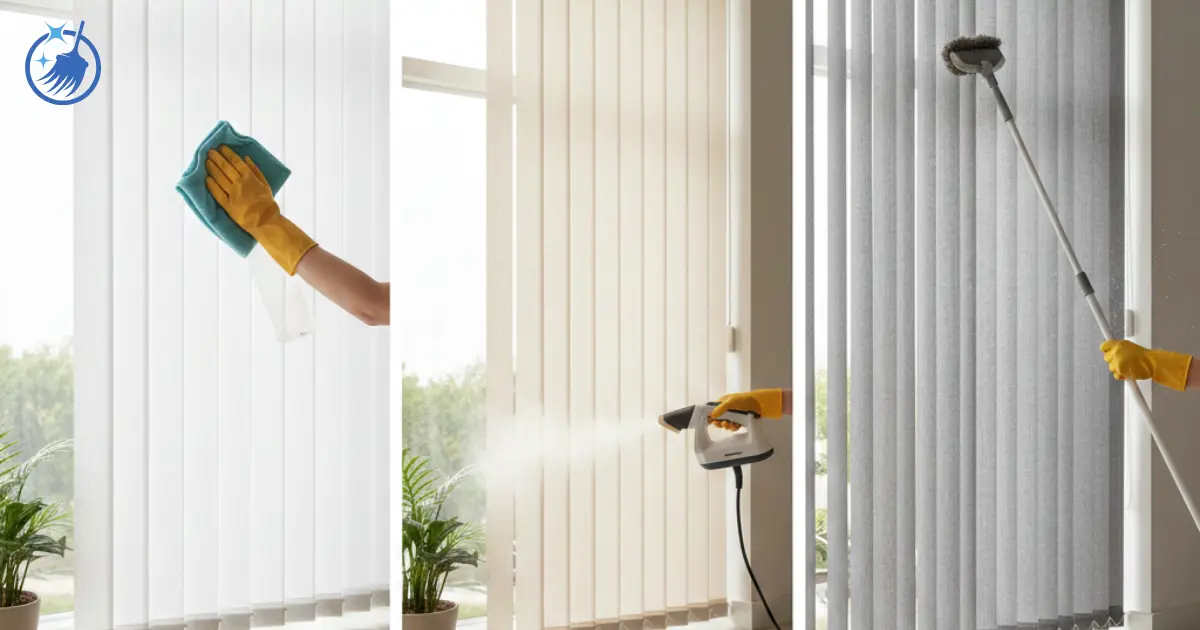
In this guide, I’ll show you exactly how to clean vertical blinds whilst they’re hanging, whether you’ve got fabric, PVC, or vinyl slats. You’ll learn the quickest method for regular maintenance, how to tackle stubborn grease in kitchens, and the mistakes that actually damage blinds.
Here’s what you’ll learn: the correct way to clean without warping slats, which materials can handle water and which can’t, the fastest method that takes just 10 minutes for an average window, and why removing blinds usually creates more work than it saves.
Quick Summary
Time needed: 10-15 minutes per window
Difficulty: Easy (just repetitive)
You’ll need: Microfibre cloths, warm soapy water, second dry cloth
Key takeaway: Always clean top to bottom, support slats whilst wiping, dry immediately to prevent warping
What You’ll Need
For basic cleaning (works for all vertical blind types):
- 2-3 microfibre cloths (one for cleaning, one for drying)
- Warm water
- Washing up liquid (just a squirt)
- Bowl or bucket
- Step stool if needed
For stubborn dirt or grease:
- White vinegar (for PVC/vinyl blinds only)
- Bicarbonate of soda (for tough stains)
- Soft brush (old toothbrush works perfectly)
- Spray bottle for applying cleaning solution
Optional extras:
- Vacuum cleaner with soft brush attachment
- Handheld steam cleaner (fabric blinds only, if manufacturer allows)
- Fabric protector spray (for fabric blinds after cleaning)
Understanding Your Vertical Blind Material
Before you start cleaning, you need to know what material your blinds are made from. The cleaning method differs significantly:
Fabric vertical blinds – Usually polyester, cotton blend, or blackout fabric. More delicate, can’t handle much moisture, need gentle cleaning. Common in bedrooms and living rooms.
PVC vertical blinds – Plastic-coated material. Very durable, can handle more water, resistant to stains. Common in kitchens and bathrooms.
Vinyl vertical blinds – Similar to PVC but thinner. Still water-resistant but slightly more delicate. Found in offices and rental properties.
Not sure which you have? Run your hand across the slat. Fabric feels soft and slightly textured. PVC/vinyl feels smooth and plastic-like. If you can bend it easily without creasing, it’s likely PVC or vinyl.
This matters because soaking fabric blinds ruins them, whilst PVC blinds can handle considerably more water. Get this wrong and you’ll end up with permanently warped or stained slats.
How to Clean Vertical Blinds Without Removing – Step-by-Step
Step 1 – Prepare the Blinds
Close your vertical blinds completely so all slats face the same direction. This gives you a flat surface to work with and makes cleaning much faster.
Check for any damaged slats or loose clips whilst you’re at it. Fix these before cleaning – a loose slat is more likely to bend or snap when wet.
Move any furniture away from the window to give yourself working space. You’ll need to reach the full height of the blinds comfortably.

Step 2 – Dust First (Never Skip This)
Before any wet cleaning, remove loose dust. This is absolutely crucial. If you skip this step, dust turns into muddy streaks when wet.
Use a microfibre cloth and wipe each slat from top to bottom in one smooth motion. Or use your vacuum’s soft brush attachment on low power.
Work systematically – start at one end and do every slat in order. This only takes 5 minutes for an average window but saves you loads of time later.
Step 3 – Mix Your Cleaning Solution
Fill a bowl with warm (not hot) water and add just a squirt of washing up liquid. You want barely any suds – too much soap leaves residue.
For PVC or vinyl blinds in kitchens with grease buildup, use a 3:1 mix of warm water to white vinegar instead. The vinegar cuts through grease brilliantly.
Never use this vinegar solution on fabric blinds – it can cause discolouration or water staining.
Step 4 – Clean Each Slat Individually
Dampen your microfibre cloth in the cleaning solution and wring it out thoroughly. It should be damp, not dripping wet.
Hold the slat gently near the bottom with your free hand to support it. Wipe from top to bottom in one smooth motion with the damp cloth.
Immediately dry the slat with a second dry cloth, using the same top-to-bottom motion. This prevents water marks and stops warping.
Move to the next slat and repeat. Work your way across the entire blind systematically.
Step 5 – Clean the Reverse Side
Once you’ve done one side of all slats, rotate them 180 degrees using the wand or chain control. This flips them to show the reverse side.
Repeat the cleaning process on this side – damp wipe top to bottom, then dry immediately.
Most blinds are equally dirty on both sides, especially in kitchens where grease circulates. Don’t skip the reverse side or your blinds won’t look properly clean.
Step 6 – Clean the Headrail and Track
Whilst the blinds are open, wipe the headrail (the top mechanism) with a damp cloth. Dust and cobwebs accumulate here and affect how smoothly blinds operate.
Check the track or runners where slats hang. Wipe these clean too – grime here causes slats to stick.
Use a cotton bud or small brush to get into tight corners around the brackets and clips.
Step 7 – Air Dry Before Closing
Leave the blinds open and spread out for 30 minutes after cleaning. Even though you’ve dried them with a cloth, they need air circulation to dry completely.
Don’t close them immediately or trapped moisture can cause mould, especially on fabric blinds.
Open a window if possible to speed up drying. On a warm day, blinds dry in 15-20 minutes. In winter or damp conditions, give them an hour.
How to Clean Different Vertical Blind Materials
Cleaning Fabric Vertical Blinds
Fabric blinds are the most delicate and need the gentlest approach. Too much water causes permanent water marks or warping.
Basic method:
- Dust thoroughly first
- Use barely damp cloth (wring it until nearly dry)
- Clean small sections at a time
- Dry immediately with a second cloth
- Never soak or saturate fabric
For stains on fabric blinds:
- Mix tiny amount of washing up liquid with water
- Dab (don’t rub) the stain gently with a nearly-dry cloth
- Blot with clean damp cloth
- Dry immediately
- Test on hidden area first
I’ve seen countless fabric blinds ruined by well-meaning people who used too much water. Less is absolutely more with fabric – if in doubt, use a drier cloth.
Cleaning PVC and Vinyl Vertical Blinds
PVC and vinyl blinds are far more forgiving and can handle more moisture. These are perfect for kitchens and bathrooms where they get greasy.
Standard method:
- Dust first
- Use damp cloth with soapy water
- Wipe firmly top to bottom
- Dry with second cloth
- Can use slightly wetter cloth than for fabric
For greasy kitchen blinds:
- Mix 1 part white vinegar to 3 parts warm water
- Dampen cloth in this solution
- Wipe each slat thoroughly
- The vinegar cuts grease brilliantly
- Dry with clean cloth
- The vinegar smell disappears as it dries
PVC blinds in my own kitchen get the vinegar treatment monthly. They’re constantly splattered with cooking grease, and vinegar shifts it better than any commercial cleaner I’ve tested.
Spot Cleaning Stains Without Removing Blinds
You don’t need to clean entire blinds if only a few slats are stained. Spot cleaning saves massive amounts of time.
For food splatter or fingerprints:
- Dampen cloth with soapy water
- Wipe the affected area only
- Dry immediately
- Repeat if needed
For stubborn marks on PVC/vinyl:
- Make a paste of bicarbonate of soda and water
- Gently rub the stain with this paste on a cloth
- Wipe clean with damp cloth
- Dry thoroughly
For ink or pen marks:
- Dab with rubbing alcohol on a cotton bud
- Work from outside of stain inward
- Don’t spread the stain wider
- Wipe clean and dry
For mould spots (bathroom blinds):
- Spray diluted bleach solution (1:10 with water)
- Leave for 5 minutes
- Wipe clean with damp cloth
- Dry thoroughly
- Only use on PVC/vinyl, never fabric
Spot cleaning specific stains as they happen prevents needing deep cleans. It’s similar to how cleaning specific areas on blinds saves time compared to doing entire window treatments.
Common Mistakes That Damage Vertical Blinds
1. Using too much water on fabric blinds – Water marks and warping are permanent. Always use barely-damp cloths on fabric and dry immediately.
2. Scrubbing horizontally across slats – This bends them. Always wipe vertically, top to bottom only.
3. Not supporting slats whilst cleaning – Unsupported slats bend under the pressure of wiping. Always hold them gently with your free hand.
4. Using harsh chemicals – Bleach (except diluted for mould), harsh bathroom cleaners, and solvents can discolour or damage blinds. Stick to mild solutions.
5. Leaving blinds wet – Moisture trapped between closed slats causes mould and water staining. Always air dry before closing.
6. Twisting slats to clean both sides – This puts stress on the hanging mechanism and bends slats. Use the control wand to rotate them properly.
How Often Should You Clean Vertical Blinds?
Based on 18 years of experience cleaning properties across the UK, here’s what actually works:
| Cleaning Task | Frequency | Why |
|---|---|---|
| Dust with microfibre cloth | Weekly | Prevents buildup requiring deep cleaning |
| Light wipe with damp cloth | Monthly | Maintains appearance between deep cleans |
| Full clean (both sides) | Every 3-4 months | Removes ingrained dirt and grease |
| Steam clean (if allowed) | Annually | Deep refresh for fabric blinds |
| Spot clean stains | Immediately | Prevents stains setting permanently |
Kitchen blinds need cleaning more often – monthly for the full clean due to grease and cooking splatters. Bedroom and living room blinds can go 4-6 months between full cleans if you dust them weekly.
Just like with other types of blinds, regular light maintenance beats occasional intensive cleaning every time.
Steam Cleaning Vertical Blinds (Fabric Only)
If your fabric vertical blinds are looking tired despite regular cleaning, steam cleaning can refresh them brilliantly. But this only works if the manufacturer allows it – check the care label first.
How to steam clean fabric vertical blinds in place:
Use a handheld steam cleaner (the same one you might use on upholstery or cleaning other household items).
Hold the steam nozzle 5-8cm away from the fabric. Never press it directly against the blind – this saturates the fabric.
Move in quick vertical passes from top to bottom. Don’t hold the steam in one spot.
Let each slat dry completely before moving to the next. Steam cleaning puts more moisture into fabric than damp wiping, so drying is crucial.
Open windows for ventilation and leave blinds spread out to dry for at least an hour after steaming.
I use steam cleaning on heavily soiled fabric blinds in rental properties between tenants. It shifts smells and refreshes the fabric brilliantly. But for regular maintenance, the damp cloth method is quicker and safer.
When You Actually Need to Remove Vertical Blinds
I’ve built a career cleaning things in place rather than dismantling them, but even I admit there are times when removing vertical blinds makes sense:
Remove and deep clean when:
- Blinds haven’t been cleaned in several years
- Heavy grease buildup that won’t shift with normal cleaning
- Persistent mould throughout fabric blinds
- Preparing a rental property for new tenants
- Moving house and want blinds spotless
- Blinds need washing machine cleaning (fabric only, if manufacturer allows)
Keep them hanging for:
- Regular maintenance cleaning
- Light to moderate dirt
- Spot cleaning individual stains
- Monthly or quarterly cleaning routines
- Quick refresh before guests arrive
Removing vertical blinds is actually quite fiddly. Each slat has a clip mechanism that’s easy to break if you’re not careful. Plus you need somewhere to lay out potentially 20+ slats whilst cleaning. In most cases, cleaning in place is faster and safer.
Cleaning Vertical Blinds in Different Rooms
Kitchen Vertical Blinds
Kitchens are the toughest environment for blinds. Cooking grease, steam, and food splatters create sticky buildup.
Best approach:
- Clean monthly minimum
- Use vinegar solution (3:1 water to vinegar)
- Wipe more firmly than in other rooms
- Pay extra attention to slats closest to the hob
- Consider PVC blinds rather than fabric for kitchens
I always recommend PVC blinds for kitchens. Fabric blinds in kitchens absorb grease and smells that never quite wash out.
Bathroom Vertical Blinds
Bathrooms accumulate soap scum, condensation, and sometimes mould on blinds.
Best approach:
- Ensure good ventilation (extractor fan or open window)
- Wipe weekly to prevent mould growth
- Use diluted bleach (1:10) for mould spots on PVC/vinyl
- Dry thoroughly after cleaning
- Never use fabric blinds in steamy bathrooms
Bathroom blinds benefit from being wiped after every shower or bath if possible. Just a quick wipe with a dry cloth removes condensation before it causes problems.
Living Room and Bedroom Vertical Blinds
These face the least challenging conditions – mainly dust and occasional fingerprints.
Best approach:
- Weekly dusting is usually sufficient
- Full clean every 3-4 months
- Spot clean marks as they appear
- Vacuum with soft brush attachment works well
These blinds last years with minimal maintenance. I’ve seen bedroom vertical blinds that still look perfect after 10 years because someone dusted them weekly.
Preventing Vertical Blinds Getting Dirty
Prevention beats cleaning every time. Here’s how to keep vertical blinds cleaner for longer:
Dust weekly – Thirty seconds with a microfibre cloth prevents months of buildup. Make it part of your routine when you do the windows.
Keep windows closed during cooking – Prevents grease settling on kitchen blinds. Use the extractor fan instead.
Improve bathroom ventilation – Reduces condensation and mould. Run extractor fans during and after showers.
Handle blinds with clean hands – Dirty hands transfer grease and marks to slats. Small thing, big difference.
Fix leaking window seals – Water ingress causes mould on blinds and walls. Address the source, not just the symptom.
Use curtains or sheers – A second layer of window covering protects blinds from direct sunlight and reduces dust settling.
Apply fabric protector – After cleaning fabric blinds, spray with fabric protector. This repels dust and makes future cleaning easier.
These simple habits mean cleaning vertical blinds every 4 months instead of monthly. They also extend blind lifespan significantly – I’ve seen well-maintained vertical blinds last 15+ years.
Troubleshooting Common Vertical Blind Problems
Slats Won’t Rotate Properly After Cleaning
This usually means the clips are catching. Wipe the hanging mechanism with a dry cloth to remove any moisture or debris. Make sure slats are completely dry before operating.
Water Marks on Fabric Blinds
Water marks are tricky. Try gently dabbing with distilled water (not tap water – minerals in tap water cause the marks). If that doesn’t work, the marks may be permanent. This is why using barely-damp cloths on fabric is so important.
Blinds Smell Musty After Cleaning
They weren’t dried properly. Take them down, wash if possible, or clean again and dry thoroughly with windows open and a fan running. Musty smell means mould is developing.
Slats Have Bent or Warped
Usually caused by too much pressure when cleaning or getting too wet. Minor warps sometimes straighten as they dry. Severe warping means replacement – bent slats don’t hang properly and look terrible.
Cleaning Hasn’t Removed Grease
Kitchen grease needs stronger action. Use the vinegar solution with firmer pressure. For really stubborn grease, bicarbonate of soda paste works well. If that fails, the grease may have bonded permanently to the material.
DIY vs Professional Blind Cleaning
Vertical blinds are one item where DIY genuinely makes sense for most people. Professional blind cleaning services exist, but the cost rarely justifies it for vertical blinds.
When DIY works well:
- Regular maintenance cleaning
- Light to moderate soiling
- Standard homes with 3-6 windows
- You’re physically able to reach the full height
- You have 30-60 minutes available
When professionals make sense:
- Large commercial spaces with dozens of windows
- Extremely high windows requiring special equipment
- You have mobility issues preventing you reaching
- Preparing rental properties with 10+ windows
- Blinds haven’t been cleaned in 5+ years
Professional blind cleaning costs £3-8 per vertical blind depending on size and condition. For an average home with 5 windows, that’s £15-40. You can clean them yourself in an hour for the cost of a bottle of washing up liquid.
I run a cleaning business, so you’d expect me to push professional services. But honestly? I tell residential clients to clean their own vertical blinds. Save the money for professional carpet cleaning or oven cleaning where we actually add significant value.
Pro Tips From 18 Years of Cleaning Blinds
Insider Tips
After cleaning thousands of vertical blinds across UK homes and businesses, here’s what I’ve learned:
- The two-cloth method is non-negotiable – One damp, one dry, used immediately one after the other. This prevents water marks and warping completely.
- Work on dry days – Blinds dry faster, reducing risk of mould and water marks. Avoid cleaning on damp winter days.
- Start from the window end – Work your way toward the door. This means you’re not constantly reaching over cleaned slats with dirty ones.
- Support slats at chest height – Hold them comfortably to reduce fatigue. Don’t reach high or bend low – move your step stool instead.
- Change water frequently – Dirty water just spreads dirt around. Fresh water and fresh cloths halfway through make a visible difference to results.
Cleaning vertical blinds without removing them is honestly one of the easiest blind cleaning jobs if you use the right technique. The key is understanding your blind material, using minimal moisture, and drying as you go.
I’ve cleaned vertical blinds in hundreds of UK homes over 18 years. The ones that look best aren’t necessarily the newest or most expensive – they’re the ones someone dusts weekly and wipes monthly with a barely-damp cloth. Ten minutes of regular maintenance beats hours of intensive cleaning every time.
Whether you’ve got fabric blinds in your bedroom or PVC blinds in your kitchen, the method is essentially the same: support the slat, wipe top to bottom, dry immediately. Master that simple technique and your vertical blinds will stay looking smart for years.
Related guides:
- How to Clean Vertical Blinds – Complete guide including when to remove them
- How to Clean Blinds – General guide covering all blind types
- How to Clean Venetian Blinds – Horizontal slat cleaning techniques
- How to Clean Roller Blinds – Different approach for fabric rollers
- Best Way to Clean Windows – Get the glass sparkling too
Frequently Asked Questions
Can you clean vertical blinds without taking them down?
Yes, absolutely. Clean vertical blinds in place by wiping each slat top to bottom with a barely-damp cloth, then drying immediately with a second cloth. Support slats whilst cleaning to prevent bending. This method works perfectly for regular maintenance and most stains.
What is the easiest way to clean vertical blinds?
The easiest method is dusting weekly with a microfibre cloth and doing a damp wipe monthly. For the damp wipe, use warm water with a drop of washing up liquid on a cloth wrung nearly dry. Clean each slat top to bottom, dry immediately, then rotate blinds and repeat on the reverse side.
How do you clean fabric vertical blinds in place?
Use a barely-damp microfibre cloth with minimal moisture – wring it until nearly dry. Wipe each fabric slat gently from top to bottom and immediately dry with a second cloth. Never soak fabric blinds as this causes permanent water marks and warping.
Can you use vinegar to clean vertical blinds?
Yes, but only on PVC or vinyl blinds, never fabric. Mix 1 part white vinegar to 3 parts warm water for cutting through kitchen grease. Apply with a damp cloth, wipe each slat, and dry immediately. Vinegar is brilliant for greasy kitchen blinds.
How often should you clean vertical blinds?
Dust vertical blinds weekly with a microfibre cloth to prevent buildup. Do a full damp clean every 3-4 months for living rooms and bedrooms, monthly for kitchens and bathrooms. Spot clean stains immediately as they occur to prevent them setting.
Can you steam clean vertical blinds?
Only fabric vertical blinds can be steam cleaned, and only if the manufacturer allows it (check the care label). Never steam clean PVC or vinyl blinds as heat warps them. Hold the steamer 5-8cm away and work in quick vertical passes, never saturating the fabric.
Why do my vertical blinds have water marks?
Water marks on vertical blinds are caused by using too much water, especially on fabric blinds, or not drying properly after cleaning. Minerals in tap water also contribute. Always use barely-damp cloths and dry immediately to prevent water marks.
How do you remove grease from vertical blinds?
For PVC or vinyl blinds, use a 3:1 mix of warm water to white vinegar. Apply with a damp cloth and wipe firmly. For stubborn grease, make a paste of bicarbonate of soda and water, gently rub the grease, then wipe clean and dry thoroughly.
Should you clean vertical blinds on both sides?
Yes, always clean both sides of vertical blinds. Clean one side completely, then rotate the slats 180 degrees using the control wand and clean the reverse side. Both sides accumulate equal amounts of dust and dirt, especially in kitchens.
What damages vertical blinds when cleaning?
Common damage includes using too much water (causes warping), scrubbing horizontally (bends slats), not supporting slats whilst cleaning (stress on clips), using harsh chemicals (discolouration), and twisting slats sideways (permanent bending). Always clean gently top to bottom with minimal moisture.
Found this helpful? Share it: