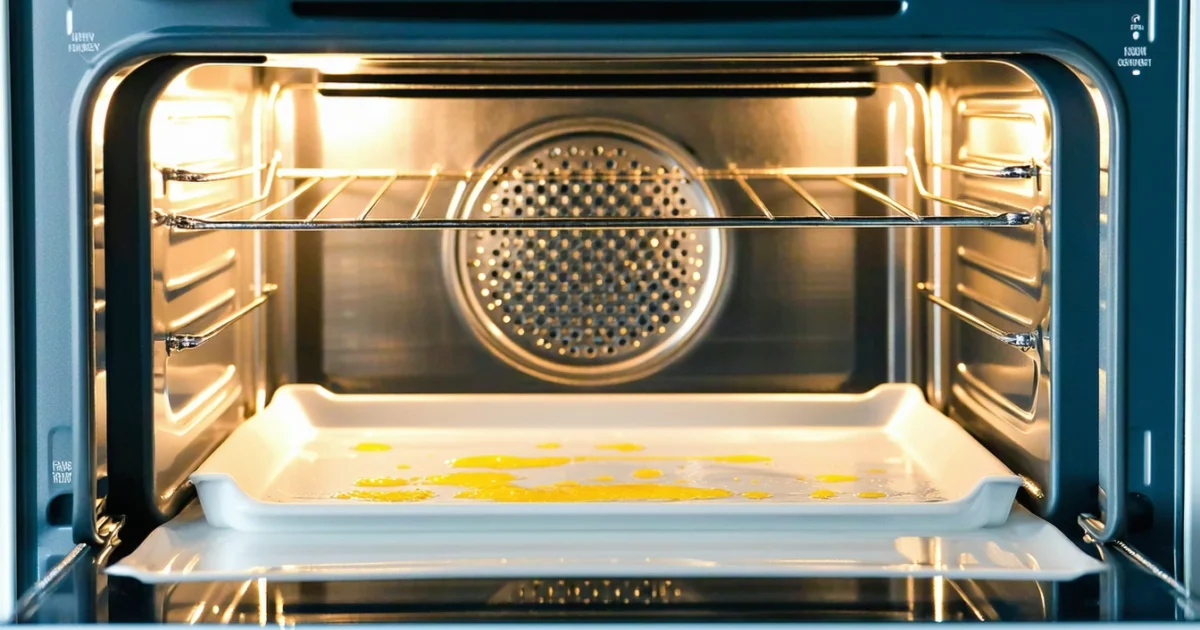
You open the oven door to take out a tray of chips and there it is again: the black ring where last month’s cheese bubbled over, a crust of fat in the corner, and a thin haze of smoke that has nothing to do with dinner. The tray is fine. The oven floor is the problem, and scrubbing it means a bottle of strong cleaner, rubber gloves and most of a Sunday afternoon.
An oven liner promises to take that job off your hands. It is a thin, removable sheet that catches drips so you can wipe them off at the sink instead of chiselling them off the oven. Used properly, it can do that. Used in the wrong oven, in the wrong place, it can also block heat, damage the oven or smoke. This guide is about telling the difference: what liners are, how to choose and fit one, how to look after it and what to do when it does not go to plan.
Disclosure: Cleaners Guide is a participant in the Amazon Associates programme, so if you buy through links on this page we may earn a small commission at no extra cost to you. It never changes our recommendations, we suggest products because they work and we point out cheaper options where they do the same job. Prices and availability change, so always check the current price before buying.
What a liner does, and the question to ask first
A liner is a flat sheet of heat-resistant material, usually PTFE-coated fibreglass or silicone, that you lay where drips fall. Spills land on it, harden slightly and wipe off. In theory the oven underneath stays clean, which cuts down on oven cleaner and on smoke from old grease burning off.
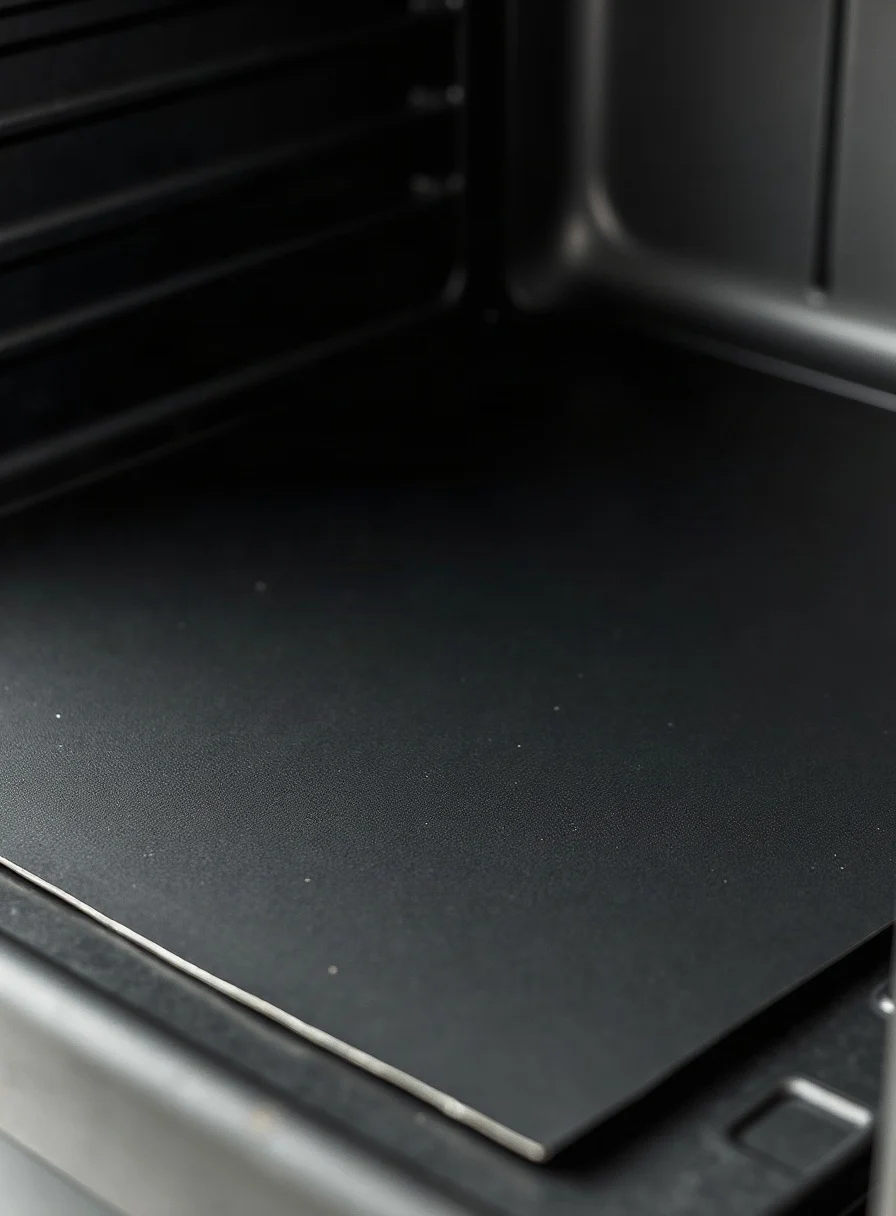
The catch is that an oven is not a plain box. In many electric ovens the base is enamelled and heated from underneath by an element, sometimes hidden beneath the floor. In fan ovens, air has to move freely round the cavity. Gas ovens have burners and flame ports at the bottom and vents that must stay clear. A sheet laid across any of these can trap heat, upset the temperature control, scorch the enamel or interfere with combustion.
It is worth being realistic about what to expect. A liner will not stop vapour settling on the walls, it will not clean itself, and it will not make a dirty oven clean. What it can do is catch the large drips and boil-overs that cause most of the baked-on mess, as long as it stays flat, stays clear of heat sources and gets washed regularly. In an oven that is already in poor shape, clean it first and treat the liner as upkeep.
Check the manual before you buy
Look in your oven’s instruction book for the words liner, foil or covering. Many manufacturers state plainly that the oven floor must not be covered with foil or liners, and some say the same of the walls and door. Doing it anyway can affect the warranty. If the manual forbids it, or you cannot find it, the safer alternatives are to place a liner or a tray on a lower shelf, not the floor, and to catch drips on a baking tray under the dish. The same applies to our guidance on self-cleaning ovens: the oven’s own cleaning system sets its own rules for what can be left inside.
If you cannot find the book, search for your oven’s model number on the maker’s website. It is usually on a plate on the door frame or the front edge of the cavity.
Other ways to keep the floor clean
A liner is only one of the options, and it is not always the best. The simplest spill defence is a deep roasting tin or a baking tray set on the shelf beneath whatever might bubble over. Pies, crumbles, lasagnes and pizzas drip, and a tray catches the lot. Cover joints with foil or a lid for the first part of cooking, so fat spits less, and avoid overfilling dishes. Wiping up a spill once the oven has cooled takes seconds, whereas a spill left to bake through several cooking sessions turns into carbon. Used this way, a liner or a tray becomes a back-up, not a substitute for good habits.
Choosing a liner: material, rating and size
| Type | Best for | Watch out for |
|---|---|---|
| PTFE-coated fibreglass sheet | Catching drips on a lower shelf or, where the maker allows, the floor of an oven | Check the maximum temperature on the pack. Overheating can release fumes, and damaged coating should be replaced |
| Heavy-duty reinforced mat | Thicker protection on a shelf under big roasts and bakes | Thicker is harder to fit round fan covers and can block airflow |
| Silicone mat or liner | Baking sheets and shelf trays, easy to wash and reuse | Silicone has its own temperature limit, and it should never touch an element |
| Aluminium foil | A quick tray liner placed under a dish on a shelf | Not for the oven floor. It can reflect heat and damage the enamel or element |
| Hob protector sheets | Gas or electric hob rings, not the oven | Never use in the oven, and check they are rated for the heat of the ring |
How hot will it go?
Liners are sold with a maximum temperature. Many are rated up to around 250 to 260°C, and some heavy-duty ones are rated higher, but the number printed on your pack is what matters. Compare it with the highest temperature your oven reaches, and with the grill, if you use it. PTFE that is overheated can give off fumes, and pet birds are especially sensitive to them, so if you keep birds, ventilate well and think twice about using PTFE products at the top of their range. Silicone has a temperature ceiling too, and it can smoke or degrade if it touches a hot element.
Liner or mat?
The words are used loosely. In practice, thin liners suit lining a shelf or floor and are the easiest to wipe, while thicker mats are better under items that drip a lot. Thickness matters in a fan oven, where a thick sheet near the fan can block airflow. Choose the thinnest product that does the job.
Fit and trimming
Measure the width and depth of the shelf or area you want to cover, then compare it with the size on the pack. Many liners are sold oversized so you can cut them down. Can you cut one? Most PTFE and fibreglass liners can be trimmed with sharp scissors, though check the pack, and cut so the edge stays clear of the walls and any element. Keep a gap of a few centimetres round the edge so air can circulate, and do not trim so far that the sheet curls or slides. Cut edges can fray, so smooth them or fold the edge under where the product allows.
Fitting one, step by step
- Switch the oven off and let it cool completely. Never fit or adjust a liner in a warm oven.
- Take out the shelves and trays so you can see the cavity properly. Wipe the floor and walls with a damp cloth and a little washing-up liquid, since a liner laid over old grease can smoke. (For a stubborn floor, see our guide to cleaning an oven.)
- Find the heating elements and any vents. The base element may be exposed or hidden under the floor. The fan sits at the back in fan ovens. Gas ovens have burner ports along the base.
- Decide where it goes. If the manual allows lining the floor, keep the sheet flat and well clear of any visible element, vents and the front door seal. If it does not, put the liner on the lowest shelf or on a tray beneath the dish.
- Lay it flat. Smooth out creases from the centre outwards, because folds are where heat and grease concentrate. Leave a gap round the edges.
- Close the door and check it seals properly. The liner must not be caught in the door or touch the seal.
- Heat the oven empty for a few minutes the first time, with a window open, to burn off any manufacturing smell. Stay in the kitchen, and switch off and take the liner out if you notice smoke or a burning smell.
- Cook as usual, but keep an eye on the sheet the first few times to see whether it moves, curls or discolours.
Will it change how the food cooks? On a shelf under a dish, a thin liner has little effect. Covering the floor of an oven that heats from below, or blocking vents, can change the temperature inside and cause uneven cooking, which is why the clearance matters. If your results change after fitting a liner, take it out and see whether the oven goes back to normal.
Looking after it
A liner that is left to build up grease will smoke, so give it a wipe after the oven has cooled. Lift it out, shake off any crumbs, and wipe it with a cloth and warm soapy water. Use a soft sponge. Steel wool, scourers and scrapers scratch PTFE coatings and shorten the life of the sheet. For a baked-on patch, a paste of bicarbonate of soda and water left for 15 to 20 minutes lifts it without scratching, and our piece on cleaning with lemon offers a mild alternative for greasy film. Rinse well and dry before putting it back.
Can you put it in the dishwasher? It depends. Some silicone liners are dishwasher-safe, usually on the top rack, while many PTFE-coated sheets are hand-wash only, because detergents and heat can damage the coating. Check the pack or the product page instead of guessing.
A simple routine
- After each messy cook: once the oven is cool, lift the liner out, shake off crumbs and look it over.
- Weekly, or when it looks greasy: wash with warm soapy water, rinse, dry and refit.
- Monthly: check for fraying, curling, tackiness or discolouration, and wipe round the cavity floor and walls.
- Every few months: take the liner out and clean the oven properly, since grease can sneak past the edges.
A liner makes cleaning easier but does not replace it. Fat vapour still settles on the walls and door, and the glass still needs attention now and then. Our guide to cleaning oven glass without scratching covers the door, and the extra effort pays off in an oven that smokes less and cooks more evenly.
When to replace it
- Cracks, tears, holes or fraying edges that let grease through
- Warping or curling that stops it lying flat
- Sticky or tacky patches, or flaking of the coating
- Brittle, discoloured or blistered areas, which suggest heat damage
- A smell that does not go after washing
Liners do not last forever, and how long depends on the material, how hot your oven runs and how roughly it is handled. Replace one when it shows the signs above, not on a fixed date.
If it did not work
Most problems come down to a handful of causes. Work through the list that matches what you see.
| What happened | Likely reason | What to do |
|---|---|---|
| It smokes or smells burnt | Old grease underneath or on top, too close to an element, or above its rated temperature | Switch off, let it cool, clean the oven and liner, and check the rating and clearance |
| The liner curls or warps | It is too thick for the space, or too close to heat | Trim or reposition it, use a flatter product or put it on a shelf |
| Spills still reach the oven floor | It is too small, or moved | Use a larger sheet or place a tray under the dish |
| Food cooks unevenly | The liner is blocking airflow or reflecting heat | Take it out and see if the oven returns to normal, then refit with more clearance |
| The liner sticks to the floor | Spilled sugar or a sticky glaze | Cool the oven, warm the area with a damp cloth and ease it free |
| The oven shows an error or trips | The sheet is touching a sensor or element | Take it out and read the manual, and call the manufacturer or a qualified engineer if it persists |
If a liner has melted onto the oven or you have a burnt smell that will not clear, do not scrape it with a metal tool. Let the oven cool, soften with a warm damp cloth, and lift with a plastic scraper. Anything that has damaged the element or the enamel needs a qualified repairer. When the floor itself is the problem, our guide to cleaning the oven glass and the racks covers the rest of the cavity.
When the liner comes out
| Cooking method | Liner? | Reason |
|---|---|---|
| Everyday baking and roasting | Usually fine, if the rating covers it | Temperatures are within the pack’s limit |
| Grilling | Take it out | Direct heat from above can exceed what the liner can take |
| Pizza stone or baking steel | Take it out | They need clear space, and some are placed on the floor |
| Self-clean or pyrolytic cycle | Take it out | Cycle temperatures are far above liner ratings |
| Very high-temperature cooking | Check the rating first | Some liners are not rated for the top of the oven range |
| Steam or combination oven | Check the manual | Vents and water systems must stay clear |
In a gas oven, do not line the floor at all unless the manufacturer says you can. The floor often hides the flame ports and air supply, and blocking them is a safety risk. If you have a gas oven and are worried, speak to a Gas Safe registered engineer.
What to buy
There are only three kinds of product worth looking at here, and the first covers most households. A reusable non-stick oven liner in PTFE-coated fibreglass is the all-rounder: look for a stated maximum temperature, a size you can trim, and a coating that is reinforced at the edges. A plain non-stick oven liner does the same job at a lower price and suits an oven you are happy to line only on a shelf. If you do a lot of roasting or baking with leaky dishes, a heavy-duty liner gives thicker protection, but make sure it does not touch the fan or walls. Both are sold in sizes that can be trimmed to your shelf or tray, so measure first.
If your problem is the hob and not the oven, a gas hob protector is a different product, made for the burner area. Do not put one in the oven. For general browsing, the search for reusable oven liners shows the range. As an Amazon Associate we earn from qualifying purchases. Do not buy on the strength of a picture: the maximum temperature, the material and the size are what separate a good liner from a poor one.
Other questions about oven liners
Can I use a liner in a fan oven?
Often yes, on a shelf, provided it is thin, lies flat and stays clear of the fan cover and vents. Blocking airflow causes uneven cooking, so check the manual and test with a normal dish before trusting it.
Are liners safe around food?
Look for products described as food safe or suitable for oven use, and use them as a drip catcher under food, not as a replacement for a baking tray, unless the product says it can hold food. Do not use a liner that is cracked, flaking or damaged.
How long does a liner last?
There is no standard answer. A careful cook with a moderate oven may get several years from a good one, while a liner exposed to hot spots or scrubbed with abrasives wears out much sooner. Replace it when it looks worn.
Can I use foil instead?
Foil on a tray or a lower shelf is fine for catching drips, but many makers warn against foil on the oven floor, where it can reflect heat, melt onto enamel or damage an element. Check the manual, and never cover vents.
What about the self-clean cycle?
Take everything out before you run it, including liners, shelves if the maker says so, and any foil. The heat is far above any liner rating. Read our guide to self-cleaning oven safety before you start, and keep the room well ventilated.
Anything sharp should stay away from a coated liner, so if you cook with metal tools, check the surface regularly. More on looking after cookware is in our utensils section, our glass stovetop guide covers the hob above, and the rest is on the home page.