Scratched oven glass is almost always self-inflicted. The glass in an oven door is tough, but it is not scratch-proof, and a pad, a gritty cloth or a blade held at the wrong angle will leave lines that trap grease from then on. The good news is that the gentlest methods are also the ones that work best, as long as you give them time instead of pressure.
Below you will find the main ways to clear the film and burnt-on spots side by side, then each method in detail, what to do about the glass between the panes, and what is realistic if the glass is already marked. Keeping the door clear in the first place is covered near the end, and our guide to oven liners goes deeper on catching spills before they reach the door.
Disclosure: Cleaners Guide is a participant in the Amazon Associates programme, so if you buy through links on this page we may earn a small commission at no extra cost to you. It never changes our recommendations, we suggest products because they work and we point out cheaper options where they do the same job. Prices and availability change, so always check the current price before buying.
Oven glass methods compared
| Method | Best for | Effort | Risk to the glass |
|---|---|---|---|
| Bicarbonate of soda paste, left 15 to 30 minutes | Everyday browning and grease on the inside face | Low. Mostly waiting | Low if kept wet. Do not scrub it dry |
| Washing-up liquid in warm water | Light grease, fingerprints, regular upkeep | Low | Very low |
| Equal parts white vinegar and water | Cloudy film and mineral marks after other cleaning | Low | Low. Keep it off door seals and rubber |
| Steam from a bowl of hot water | Softening a sticky film before wiping | Medium. Needs a safe set-up | Low, but hot water needs care |
| Dampened dishwasher tablet, gentle rub | Baked-on film that bicarb has not shifted | Medium | Low to medium. Keep it wet and use light pressure |
| Cream cleaner and a microfibre cloth | Light marks and a final polish | Low | Low. Buff off fully to avoid streaks |
| Single-edge razor scraper, flat on wet cool glass | Stubborn burnt-on spots | Medium. Needs a steady hand | Medium to high if the corner digs in |
| Steel wool, scouring pads, wire brushes | Nothing on oven glass | Hard work | High. These scratch |
The pattern is clear. The low-risk methods cost you time, not effort, so start at the top of the table and only move down if the glass still has marks after a proper attempt. The last row is there so you know what to leave in the cupboard.
Why oven glass clouds up, and how it gets scratched
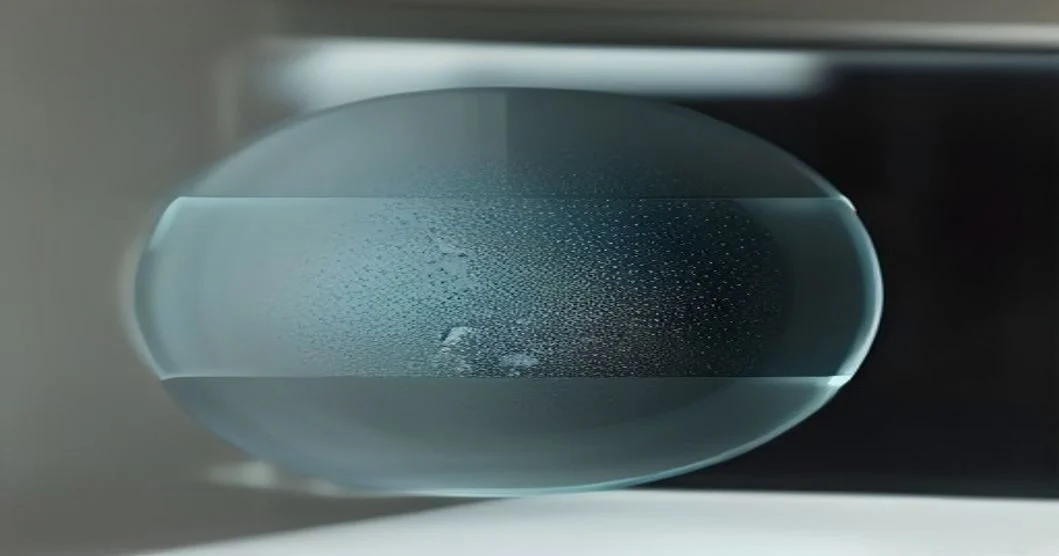
Fat spits from roasting joints, sugar from fruit crumbles and juices from pies all land on the door. Each time the oven heats, the film bakes a little harder. Fat that has been heated repeatedly turns into a hard, amber-brown varnish, which is why a door that looks only slightly grubby after a roast can feel almost glued on a month later. Sugary spills caramelise, and meat juices leave brown protein marks that cling just as tightly. Smoke from a burnt tray adds a grey-black layer on top.
Scratches have a different cause. They come from something harder than the glass being dragged across it, and that something is often a loose crumb of carbonised food or a grain of grit trapped under a cloth or pad. This is why wiping a dry, dirty door with a dry cloth is a bad idea: you are sliding every hard particle across the surface. Steel wool, wire brushes and abrasive scouring pads do the same thing on purpose. Once there are fine lines, grease sits in them and the door never looks quite clean again.
What the door is actually made of
Oven doors are normally built from several panes with an air gap between them, and the pane facing the oven is made of heat-resistant toughened glass. Toughened glass resists heat and knocks well, but it has a known weakness: if the surface or edge is badly damaged, it can fail suddenly. That is the real reason to avoid deep scratches and to stop using a door with chips or cracks. Many modern doors also have a printed or coated band round the edge and sometimes a reflective coating on an inner pane. These coatings are more delicate than the bare glass, so check what your manual says about cleaning agents before using anything stronger than detergent.
Start cool, start dry, start with the manual
- Let the oven cool completely. Cold liquid on hot glass is a risk, and warm glass also bakes cleaning products on so they streak. Wait until the door is cool to the touch, which can take an hour or more after a long roast.
- Switch the oven off at the control and make sure nothing is heating. If you plan to remove the door or an inner pane, also switch it off at the isolator or socket where you can do so safely.
- Pull out the racks and set them aside, as they get in the way and drip onto the floor of the oven. Our guide to cleaning oven racks covers what to do with them while the glass soaks.
- Look at the manual for anything about the door. It will say whether the inner panes lift out, how the hinge catches work, and which cleaners the maker rules out.
- Lift off loose debris first. Flake off dry crumbs with a plastic scraper or a folded piece of damp kitchen roll before any rubbing starts, so there is nothing hard left to drag.
A stain-by-stain guide
Different deposits respond to different treatments, and matching the two saves effort. Use this as a quick way to pick where to start.
| What you can see | What it usually is | Start with | If that fails |
|---|---|---|---|
| Yellow or amber film that smears under a finger | Fat that has been heated many times | Warm soapy water, then bicarb paste | Steam first, then a longer paste soak |
| Brown, hard, glossy spots | Caramelised sugar from fruit, glazes or sauces | Soak with a hot damp cloth laid over the spot for a few minutes, then paste | Plastic scraper on wet glass |
| Brown cloudy patches with a meaty smell | Protein from roast juices | Soapy water, then a vinegar and water wipe | Bicarb paste, left longer |
| Black, crusty islands | Burnt-on carbon from spills or smoking tins | Paste under cling film for a few hours | Plastic scraper, then a flat razor on wet cool glass if the manual allows |
| White or grey bloom or streaks that return after wiping | Leftover cleaner, soap residue or hard-water minerals | Wipe with equal parts white vinegar and water, then dry | Rinse twice with clean water and buff with a dry cloth |
| Fine lines that stay after cleaning | Scratches in the glass | Nothing removes these, see the section on scratches below | Ask the manufacturer about a replacement pane |
The gentle methods in detail
Bicarbonate of soda paste
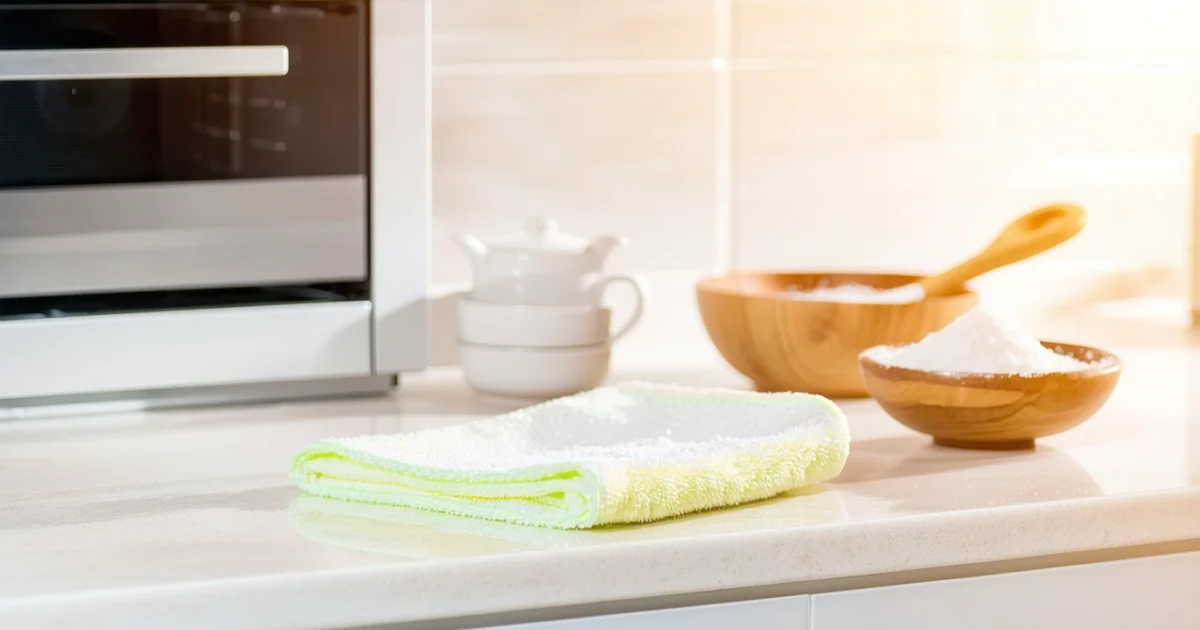
This is the method to begin with. Mix about three parts bicarbonate of soda to one part water until you have a spreadable paste. Bicarbonate is softer than glass, so a wet paste lifts grease without scratching, and it is mildly alkaline, which helps break down fats. Spread it in a thin layer over the glass with a damp cloth or soft sponge, working in light circles, and leave it for 15 to 30 minutes. For a thick film, cover the area with a damp cloth to stop the paste drying out, or leave it longer.
Wipe it away with a clean, damp microfibre cloth and rinse the cloth often. If the paste has dried to a crust, mist it with water first and let it soften instead of rubbing, because dried crystals are the part that can drag. Finish with a rinse wipe and a dry polish. For very old deposits, you can repeat the process, or cover the paste with cling film and leave it for a few hours. Add a few drops of washing-up liquid if the glass is very greasy.
Washing-up liquid and warm water
For regular upkeep, a couple of teaspoons of washing-up liquid in a litre of warm water is enough. Washing-up liquid is designed to cut grease, and warm soapy water softens a fresh film without any chemistry to worry about. Use a soft sponge or microfibre cloth, avoid pressing hard, rinse with clean water so no soap film is left, and dry straight away with a lint-free cloth. Soap residue is what makes glass streaky and attract dust, so the rinse matters more than the scrub.
White vinegar and water
Vinegar is better at dissolving mineral marks and hazy film than at lifting heavy grease, so use it after the paste or soapy wash, not instead of them. Mix equal parts white vinegar and water in a spray bottle, spray the cool glass, leave it for a few minutes and wipe with a microfibre cloth, then buff dry. Keep the spray off the rubber door seal and any painted or printed edges, as repeated contact can dull them. Do not combine vinegar with bleach or ammonia in the same cleaning session, since some mixtures release harmful gases, as our list of cleaning products you should never mix explains. If you want to see why vinegar and bicarb together are less useful than either alone, read whether baking soda and vinegar really clean.
Citrus works on a similar principle. Lemon juice and water in a spray bottle will cut a light film and leave a pleasant smell, and our piece on cleaning an oven with lemon covers the method. Use the same care near seals and printed edges.
Steam to loosen a sticky film
Steam softens baked-on grease so it wipes away with far less force. Put a heatproof bowl of very hot water inside the cool oven, close the door and leave it for 20 to 30 minutes, then take the bowl out carefully with oven gloves and wipe the glass with a damp cloth while it is still slightly warm. Take care when removing the bowl, as the water is scalding and the steam can burn. Do not switch the oven on to speed the process up, and never spray cold water onto glass that is hot. Steam is a good first step before the bicarb paste on heavily soiled doors.
A complete clean, in order
If you would rather follow one routine than choose between methods, this works for most doors and builds from the safest step to the more active ones.
- Let the oven cool fully and lay a towel along the bottom of the open door to catch drips.
- Flake off loose crumbs with a plastic scraper or damp kitchen roll, without pressing.
- Wash the glass with warm soapy water on a soft cloth to take off the loose grease, then wipe it with clean water.
- Spread bicarbonate paste in a thin layer over the stained areas and leave it for 15 to 30 minutes. Mist it if it starts to dry.
- Wipe the paste away with a damp microfibre cloth, rinsing the cloth often, and look again from several angles.
- Repeat the paste on any patches that remain, or move to a longer soak under cling film.
- Wipe once with equal parts vinegar and water if the glass looks hazy, then rinse with clean water.
- Dry and polish with a clean, dry microfibre cloth, using straight overlapping strokes so streaks do not form.
The whole process takes about an hour, but most of that is waiting. Hands-on time is usually ten or fifteen minutes, which is a good reason to put the paste on, go and do something else and come back.
When the gentle methods are not enough
Dampened dishwasher tablet
A dishwasher tablet contains strong degreasing agents, so it works on a baked-on film the paste leaves behind. Wear rubber gloves, wet the tablet and the glass, then rub with a small circular motion and light pressure, keeping the surface wet the whole time. Wipe off the residue with a damp cloth, rinse, and dry. Do not let the slurry dry on the door, and keep it off seals and coated edges. If it begins to feel gritty under the tablet, stop and rinse before you carry on.
Scrapers, plastic first
A plastic scraper or an old plastic card is the safest tool for crusted spots. Soften the spot with paste or soapy water first, then push the edge along the glass at a shallow angle, in one direction, rinsing the edge as you go. Plastic is softer than glass, so it will not cut it, though trapped grit can still mark the glass, so clean the tool often.
A razor scraper does work on burnt carbon, and it is the tool that gives people trouble. If you use one, keep it for cool, wet glass with a fresh blade, hold it as flat as you can, and push in one direction only. Never use a corner, never dry-scrape, and stop if the blade catches. Check your manual first, as some makers advise against blades altogether, particularly on coated glass. Keep blades covered and away from children, and discard blunt ones, since a dull blade needs more force and force is what scratches.
Commercial cleaners and ammonia
Shop-bought oven cleaners are strong alkalis. They can burn skin and eyes, and some are not suitable for door seals, aluminium or coated glass. If you decide to use one, read the label, wear gloves and eye protection, ventilate the kitchen, apply it only where the label says and follow the contact time exactly. Rinse every trace off the glass afterwards, because leftover cleaner continues to act and is what leaves a cloudy bloom. Never mix an oven cleaner with any other product. Test somewhere inconspicuous, such as a bottom corner, if your door has a coating. A dedicated glass cleaner such as an oven glass cleaner for appliances is a gentler alternative, and the instructions on the pack should say whether it is meant for oven doors.
See oven glass cleaners on Amazon →
Household ammonia is sometimes suggested for ovens. It gives off irritating fumes, must never be combined with bleach, and offers little that bicarbonate and a little patience do not. We would leave it in the cupboard for oven glass.
The glass between the panes
Smears that have crept between the panes cannot be reached from outside. Many ovens let you release the inner pane or lift the whole door off, so check the manual for the exact steps. Typically, you open the door fully, flip the hinge locks and lift it away, then lay it on a towel on a flat surface. Take the usual care: doors are heavy, glass is slippery when wet, and getting the hinges back in properly matters.
- Make sure the oven is cool and switched off, and put a towel on a flat worktop or table.
- Open the door fully and find the hinge locks or clips. Their design varies, so use the manual.
- Close the door slowly until it stops against the locks, then lift it up and out towards you, holding it with both hands at the sides.
- Lay it flat on the towel. Follow the manual to release any inner pane, noting how it sits so you can put it back the same way.
- Clean each face using the methods above, keeping water out of any vents along the top edge, and dry thoroughly.
- Refit the pane, then the door, by reversing the steps, and release the hinge locks. Close the door gently and check it seats evenly.
Do not attempt this if your manual does not describe a way of getting between the panes. Prising a door apart without the right instructions can damage seals and void a warranty. Some ovens also come with a pyrolytic or steam clean programme, which is the better route if your oven has one, as long as you follow the maker’s instructions. If you are unsure whether your oven has one, our piece on self-cleaning oven risks explains what to know first.
If your oven has a pyrolytic (high-heat self-clean) cycle, that is often the neatest answer to baked-on glass film, since the door glass stays in place and the cycle turns residue to ash that you wipe away. It comes with its own rules: remove racks and trays unless the maker says otherwise, keep the room ventilated, keep pets such as birds well away from the fumes, and never use oven cleaner before or during a cycle. Some doors get extremely hot during the cycle. Follow the instructions in your manual line by line.
Our guide on cleaning inside an oven door goes through the removal steps in more detail, and the wider routine is in our full oven cleaning guide.
The finish: rinse, dry and check the light
Most streaks are not dirt, they are the cleaner itself left behind. Finish every clean with a wipe of plain water on a freshly rinsed cloth. If your tap water is hard, a last wipe with a cloth wrung out in distilled or deionised water leaves fewer spots, though this is a nicety, not a necessity. Dry straight away with a lint-free microfibre cloth and use straight, overlapping strokes from top to bottom. Then look at the glass from a few angles with the oven light on or in daylight. Missed film shows at an angle and catches the light. Spot-treat anything left with a cotton bud dipped in paste, instead of repeating the whole clean.
Look after the cloths as well. Wash microfibre at the temperature on the label, skip fabric softener and keep the cloth you use on oven glass separate from any used on the floor or hob. A cloth with a bit of grit caught in it is one of the quieter causes of fine scratches.
Household shortcuts to leave alone
A few things in the cupboard look harmless and are not. Melamine sponges, often sold as magic erasers, work by acting as a very fine abrasive. On bare glass that may be tolerable, but on printed borders or coated panes they can leave dull patches, so test somewhere hidden or skip them. Kitchen scourers with a green abrasive side, wire wool, and stainless steel pot scrubbers all leave lines. Dry paper towels can pick up grit and drag it along, so use them damp or choose cloth.
Bleach is worth a mention too. It does nothing useful on baked-on fat, gives off fumes in a hot, enclosed space and can attack the rubber seal and metal trim. Since it is also the product people most often combine with other cleaners by accident, keeping it away from the oven altogether is simplest.
The outside of the door
The outer face of the door collects fingerprints, splashes and the odd greasy handprint, but it needs only a damp microfibre cloth with a drop of washing-up liquid, followed by a dry wipe. Do not spray liquid straight at the door, since it can run into the control panel, vents and the gap above the glass. Spray the cloth instead. For stainless steel or black glass fascias, wipe along the grain or in straight lines, and check the manual if it recommends a particular cleaner for the finish.
Kit that earns its place
None of this needs specialist gear, and you probably have most of it. If you are buying, these four items cover every method above.
| Product | Best for | What to look for | Watch out for |
|---|---|---|---|
| Bicarbonate of soda | The paste that does most of the work | A plain bicarbonate of soda sold for baking or cleaning, in a larger tub if you clean often | It must be fully rinsed. Leftover powder leaves a white haze |
| Cream cleaner | Light marks and a final polish | A mild cream cleaner whose label allows use on glass and ceramic | Only use it on cool glass and buff it off completely |
| Microfibre cloths | Wiping, rinsing and polishing | A multipack so you can keep one for washing and one for buffing dry | Wash without fabric softener, which makes cloths smear |
| Non-scratch cleaning pads | Gentle scrubbing of baked-on spots | Pads labelled non-scratch and safe for glass or non-stick surfaces | Test on a corner first and rinse them often so grit does not build up |
More cleaning advice for the rest of the kitchen is in our appliances guides, and a wider range of cleaning product explainers sits alongside it. Everything else is listed under other topics or on the home page.
Scratches, haze and cracks: what is realistic
Run a fingernail across the mark. If your nail does not catch, the line is shallow, and it may fade as the glass is cleaned properly, since much of what looks like a scratch is grease sitting in a groove. If your nail catches, the scratch has depth and cleaning will not remove it.
People try polishing compounds, cerium oxide paste or even toothpaste on oven glass. These are slow, unpredictable and not suited to toughened glass that has coatings, and heavy polishing can warp the view or leave a dull patch. A light haze may improve with careful repeated cleaning; a true scratch will normally stay. Treat polish kits as a cosmetic last try on minor marks, not a repair.
When to stop using the oven
Stop using the oven and contact the manufacturer or a Gas Safe registered engineer (for gas ovens) or a qualified appliance repairer if the glass is cracked, chipped at the edge, has a deep gouge or has ever made a popping sound. Damaged toughened glass can shatter, and a replacement door or inner pane is the proper fix. Your appliance model number, usually on a plate inside the door frame, helps in getting the right part. Warranty cover for glass is often limited when damage is caused by cleaning, so check the terms before you decide between a repair and a new part.
Keeping the glass clear between cleans
- Wipe the door after cooking. Once the oven is cool, a damp cloth removes a fresh film in seconds, before it can bake on again.
- Cover roasting dishes. A lid or foil tent cuts spitting, and a deeper tin catches bubbling juices. This also keeps the walls cleaner.
- Use the right shelf. Putting a tray on a lower shelf puts the splashes further from the door, and a baking tray under a pie or lasagne catches drips.
- Do not overfill dishes. Fruit pies and stews bubble over, and sugar is the stain that sticks hardest.
- Use a liner on the oven floor if the manufacturer allows it. Check the manual, as liners that block vents or touch heating elements can be a hazard.
- Clean on a schedule. A quick soapy wipe every few uses and a paste clean when you see a film is much less work than an annual scrub.
Busy cooking weeks
Christmas, big batch cooking and days with several trays on the go put much more fat and sugar into the air. If the oven is working hard, give the door a ten-second wipe with a damp cloth between batches once it has cooled a little, and use the bottom shelf for drip trays. Extractor use helps too, as grease vapour that is pulled out of the room is grease that does not settle on the glass. Our guide to cleaning extractor fan filters explains why clogged filters undo that benefit.
Which method should you choose?
For nearly everyone, the order is: lift off crumbs, soapy wash, bicarbonate paste, rinse and polish. That sequence handles ordinary grease and browning with no risk. Add steam if the film is thick, move to the dampened dishwasher tablet if a stubborn patch remains, and keep a razor scraper for a single burnt spot you cannot shift any other way. Skip steel wool, wire brushes and abrasive pads completely. If the glass is damaged, or you see cracks, stop and get it replaced.
- Light grease and fingerprints: warm soapy water and a soft cloth.
- Brown film that has built up over weeks: steam, then bicarb paste.
- Hazy or streaky glass: a vinegar and water wipe, a plain water rinse and a dry buff.
- A few burnt-on spots: paste under cling film, then a plastic scraper on wet glass.
- Marks that never move: they are probably scratches, so check the glass is safe and ask about a replacement.
Oven glass questions, answered briefly
- Can I use ordinary glass cleaner on an oven door? It is not a good idea as a routine. Many sprays contain ammonia or solvents, and some manuals warn against them on coated glass. A mild detergent solution, bicarb paste or a cleaner labelled for ovens or appliances is safer. Always check the label and your manual.
- How often should I clean the oven glass? A quick wipe after cooking and a proper clean every few weeks suits most households. Clean sooner after fatty roasts or spills. Fresh grease comes off easily, while repeated baking turns it into a hard varnish.
- Is it safe to clean oven glass while it is warm? No. Wait until the glass is cool to the touch. Cold liquid on hot glass is a risk, and warm glass dries cleaners too fast so they streak. Hot surfaces also cause burns.
- Can I take the oven door off to clean it? Many doors can be lifted off, but the method differs between makes. Follow the manual, support the weight with both hands and lay the door flat on a towel. If the manual does not cover it, do not guess.
- What is the best homemade cleaner for oven glass? Bicarbonate of soda mixed into a spreadable paste with water, left for 15 to 30 minutes and wiped off with a damp microfibre cloth, works for most people. Washing-up liquid in warm water is the best gentle option for regular upkeep.
- Why is there a stain between the glass panes? Grease vapour and steam can work their way into the gap through the vents. You can only reach it if the inner pane or door is designed to be removed, so follow the manual. Otherwise, ask the manufacturer or a service engineer.
- Will a razor blade scratch oven glass? It can, if it is used dry, at a steep angle or with a corner. On cool, wet glass with a fresh blade held flat, it can remove burnt spots, but check your manual first and stop if the blade catches or the glass has a coating.
- Can scratched oven glass be repaired? Light marks that are really grease usually clear with proper cleaning. True scratches generally cannot be removed from toughened glass. If the glass is deeply scratched, chipped or cracked, stop using the oven and arrange a replacement.
- Do oven liners keep the glass clean? They catch drips that would otherwise burn onto the oven floor, which helps indirectly, but they do not stop splatter on the door. Check the manual before using one, as liners must not block vents or touch elements.
- Can I use a dishwasher tablet on oven glass? Yes, as a stronger step for stubborn film. Wear gloves, keep the tablet and glass wet, use light pressure, and rinse all residue away. Keep it off door seals and coated edges, and do not let it dry on the glass.