That is the practical answer. The rest of this guide explains which type of oven you have, how to run a cycle with the least fuss, what the real hazards are, and what to do instead if you would rather not use the function at all.
First, which kind of self-cleaning oven is it?
The term covers three quite different systems, and the risks depend on which one you own. Your manual will name it, and the oven’s control panel often has a symbol or a programme called pyrolytic, clean, aqua clean or steam clean.
| System | How it works | Main concerns |
|---|---|---|
| Pyrolytic | Locks the door and heats the cavity to a very high temperature, commonly in the region of 400 to 500°C according to makers, for a couple of hours, turning residue to ash that you wipe out | Smoke and fumes, heat on the outside, door lock and component stress, harm to pet birds |
| Catalytic | Rough, porous wall panels absorb and slowly break down grease while the oven is used for cooking at normal temperatures | Panels wear out and cannot be cleaned with oven cleaner or abrasives. Floor, door and roof are often not covered |
| Steam or hydrolytic | A short low-temperature programme with water in the base softens grime so that you can wipe it out | Much milder, but you still have to wipe the oven by hand, and it works best on light soiling |
Most of this article is about pyrolytic ovens, since that is where the serious risks sit. If you have a catalytic oven, you are not meant to run a high-heat cycle at all, and if your oven only has a steam programme, the cautions below are much smaller.
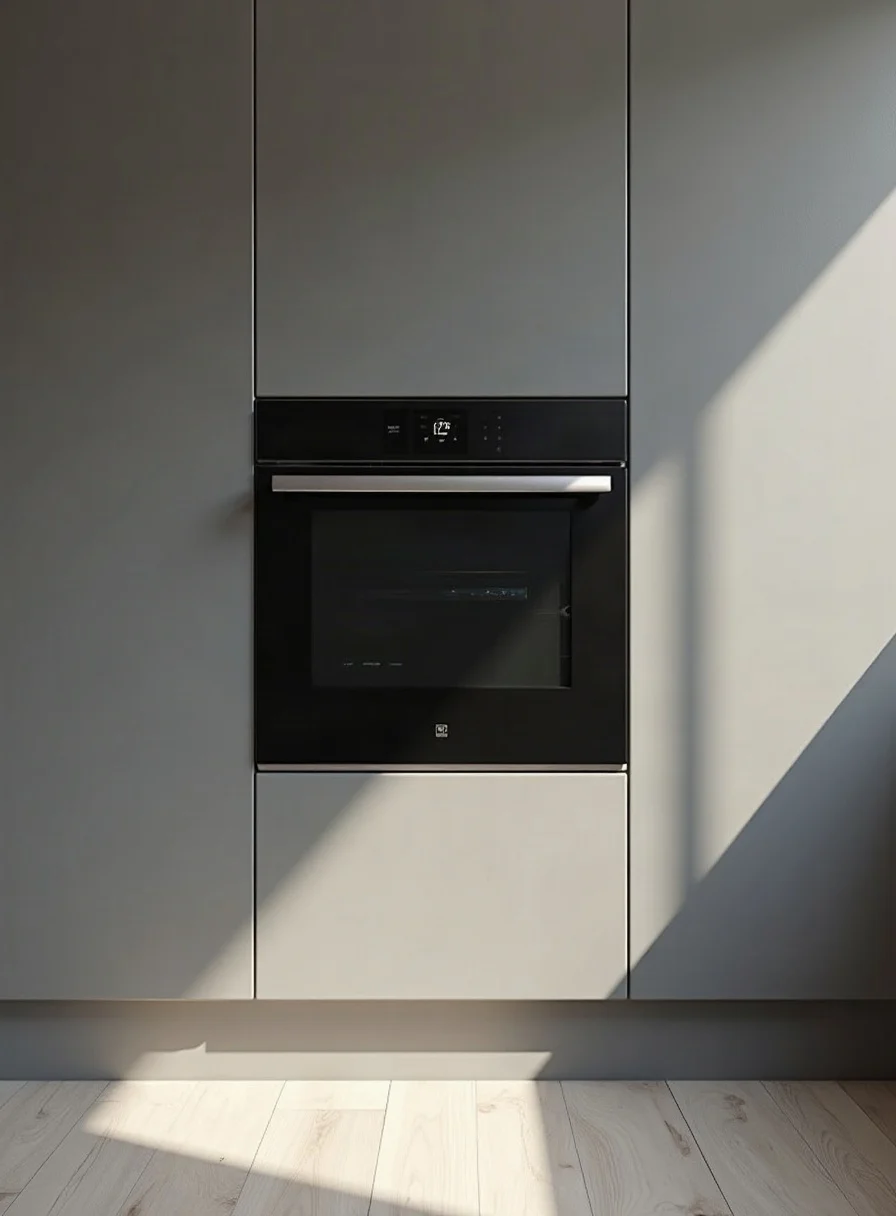
Looking after a catalytic oven
If your oven has catalytic liners, you do not run a cleaning cycle at all. The panels work as you cook, and the manual will tell you how to help them. Typically you run the oven empty at a high cooking temperature for a while to burn off a heavy build-up, you wipe fresh spills from the non-coated parts, and you never use oven cleaner, abrasive pads or a scraper on the coating, because it damages the porous surface. When the panels stop absorbing grease, they need replacing, and the maker or an appliance engineer can supply the correct ones.
Running a pyrolytic cycle safely, step by step
- Read the manual first. It tells you which parts to remove, how long the cycle takes and how long the door stays locked afterwards. Cycle times differ between models, and are typically a couple of hours, plus cooling time.
- Take out the racks, trays and anything else loose, unless the manual says they are pyrolytic-safe. Standard shelves can discolour or warp, and some grip rails are affected too. Wash them by hand instead; our guide to cleaning oven racks shows how.
- Remove liners, foil and any other coverings. They are not designed for these temperatures, as we explain in our guide to oven liners.
- Wipe out heavy spills and loose debris, especially fat and sugar. Large puddles of fat can flare up and produce a lot of smoke. A damp cloth is enough. Do not use oven cleaner beforehand, because residue of the cleaner will burn in the cycle.
- Clean the door seal by hand only, if at all. Do not scrub or soak it, and keep it away from the cleaning products. Check it is not cracked or loose.
- Ventilate. Open windows, switch on the extractor, and close the kitchen door so that fumes do not drift through the house. Check the oven vents are not blocked.
- Move pets, especially birds, to a different part of the house, with the door closed, or out of the home. See the section on fumes below.
- Choose your moment. Run it when you are at home, when no one sensitive to fumes is in the house, and when the kitchen is clear. Not overnight, and not just before you go out.
- Start the cycle and stay in the house. Check on the kitchen every so often from the doorway, and keep children away. The outside of the oven and nearby surfaces get hot.
- Leave the door locked until the oven releases it, then let it cool completely before wiping out the ash with a damp cloth. Wipe the glass last, using the advice in our guide to cleaning oven glass.
How long does a cycle take, and can you leave the house?
Cycles commonly run for roughly one and a half to three hours, followed by a cooling period before the door unlocks, but the figure in your manual is the one to use. You should not leave the house while the oven is running. If something goes wrong, such as a smoke alarm, a flare-up or a lock that fails, you need to be there to switch off and deal with it. Nor is it sensible to start a cycle and go to bed.
Fumes: what is in the smoke, and who is at risk
At very high temperatures, food residue, grease and any coating on the oven break down. The results are smoke, a strong burning smell and a mixture of gases that can irritate eyes, nose and throat. Combustion at high heat can also produce carbon monoxide, which is another reason to ventilate. The exact mix depends on the oven, how much residue it holds and how well it is ventilated.
What fumes does an oven release?
Mostly the products of burning fat and food: smoke particles, irritant vapours, carbon dioxide and some carbon monoxide. If the oven has a non-stick coating, or if something with a PTFE coating is left inside, heating it far above normal temperatures can release fumes that are especially harmful to birds. Stay out of the kitchen while the cycle runs, keep the room ventilated, and do not stand at the open window next to the oven.
Are self-cleaning ovens dangerous for pets?
Birds are the clear risk. Their respiratory systems are very sensitive to fumes from overheated PTFE and to smoke, and vets and bird charities warn that birds can die within minutes. Move them well away from the kitchen, ideally to another floor with the doors closed, or out of the home, before starting a cycle, and keep them away until the room has been aired and the oven has cooled. Cats, dogs and small mammals are less vulnerable, but smoke can still irritate them, so keep them out of the kitchen and watch for coughing or laboured breathing.
Ventilation that actually helps
Opening a single small window is not much use. Open one window or door at the far side of the room and another in the kitchen, so air moves through, and switch on the extractor or a fan blowing out. If you live in a flat with a recirculating hood, which does not send air outside, the hood will not clear fumes, so rely on windows. Keep the kitchen door shut and the windows in other rooms open if you can, so the smell is not carried round the house. Afterwards, air the room until the smell has gone, wipe down the surfaces that picked up smoke film, and wash any tea towels that were hanging nearby.
Why the outside of the oven gets hot
Because the cavity is far hotter than in normal cooking, the door, the top and the surrounding cabinets can become hot too. Keep children and pets away, do not store anything on top of the oven or hang anything over the door, and check the manual for the clearance round a built-in oven. If cabinet doors nearby feel very hot, or paint begins to blister, stop the cycle.
Who should avoid it?
- People with asthma, COPD or other lung conditions, who may react to even low levels of smoke. Run the cycle when they are out of the house, and ventilate well.
- Anyone who is pregnant or has an infant at home may prefer to avoid the cycle or run it while elsewhere, as a cautious approach, and should follow the manufacturer’s guidance.
- Anyone who shares a flat with poor ventilation or no window in the kitchen.
- Households with pet birds, unless the birds can be moved out reliably.
If you notice breathing trouble, chest tightness, dizziness or a headache during or after a cycle, switch off, get into fresh air and ventilate. Seek urgent medical help if symptoms are severe, and call 999 if someone collapses. In a home with gas appliances, a working carbon monoxide alarm is a sensible precaution at any time.
Fire, door locks and heat faults
Most cycles pass with nothing more than a smell. The risk comes from heavy spills left in the cavity, covers and liners left inside, and the stress of repeated high temperatures on components.
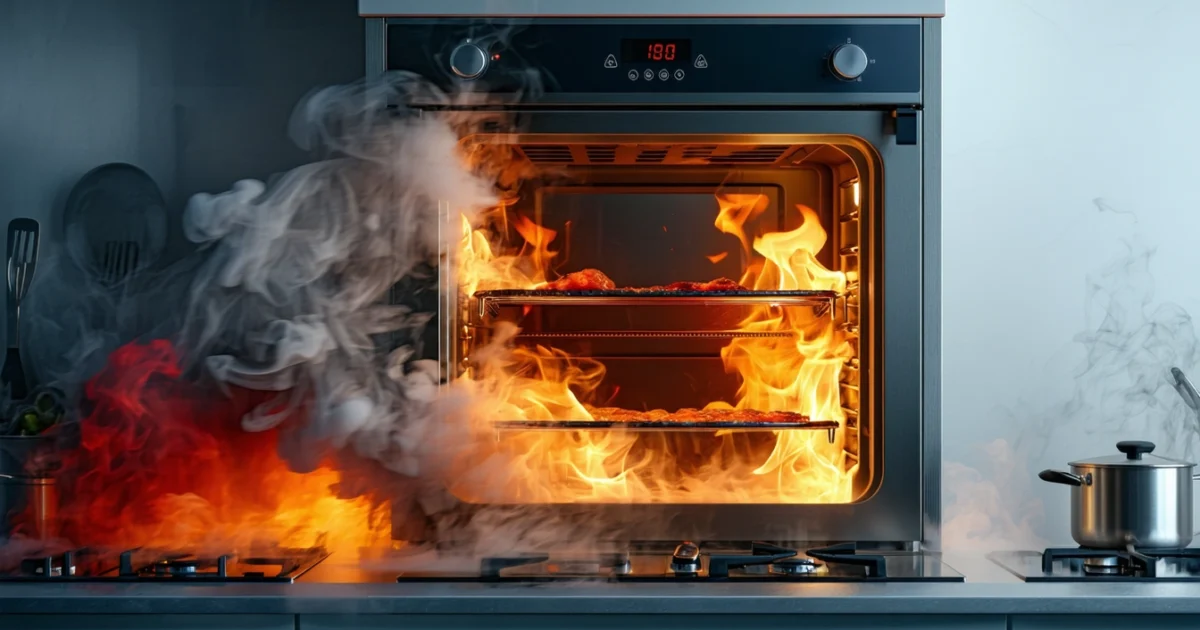
If there are flames or heavy smoke
- Do not open the door. Opening feeds the fire with oxygen, and the door will be locked and very hot.
- Switch the oven off at the controls, and at the isolator if you can reach it safely.
- Keep the door closed. Most small flare-ups of residue die down when the cycle stops and the oven cools.
- If flames or smoke continue, or you are unsure, leave the house, close the kitchen door behind you and call 999.
- Never throw water on a fat fire.
Does repeated use damage the oven?
Makers design pyrolytic ovens to withstand their cleaning cycle, with extra insulation and a locking door, so occasional use is within the design. But a cycle does put heavy thermal stress on seals, the door lock, the control electronics and the glass, and a fault that occurs during a cycle, such as a failed fan or a lock that will not release, is a good reason to follow the maker’s limits. Run it only when the oven actually needs it, and not routinely as a replacement for wiping up spills. A cycle on a lightly soiled oven gives very little benefit for the same stress.
When to stop and call someone
- The door will not unlock after the oven has cooled fully. Do not force it.
- An error code appears on the display, and does not clear when you switch off and wait.
- The glass, seal or lock looks cracked, warped or loose.
- A fuse trips or you smell burning plastic or hot electrics away from the cavity.
- The outside of the oven or the cabinets around it get very hot to touch.
Use the manufacturer or a qualified appliance engineer for repairs. For gas ovens, work on gas parts must be done by a Gas Safe registered engineer, and for electrical faults call a qualified electrician. Fixed-wiring concerns are not a DIY matter. Our appliances section has more on caring for kitchen equipment, and the Cleaners Guide home page lists everything else.
Gentler ways to get an oven clean
If the risks do not appeal, hand-cleaning is slower but needs no special preparation. The same sensible approach of ventilation, gloves and not mixing products applies in any room, and our bathroom deep clean shows it in practice.
Steam, for light soiling
If your oven has a steam clean programme, use it as the manual describes. Otherwise, put a heatproof bowl of water in the cool oven, heat gently for a short time, switch off, and wipe down once it is safe to touch. It softens fresh grime but will not shift carbon.
Bicarbonate of soda paste
Mix bicarbonate of soda with a little water to make a paste, spread it over the cool interior, leave it for several hours or overnight, then wipe it off with a damp cloth. Bicarbonate is alkaline, so it helps lift grease, and it needs no fumes or special equipment. Keep it off heating elements and fan covers, and rinse well. Our piece on homemade oven cleaner compares options, and cleaning with lemon suits light film.
Shop-bought oven cleaner
Gel and spray oven cleaners are the strongest hand-cleaning option. They are caustic, so wear gloves and eye protection, ventilate, follow the label exactly, and never use them on catalytic liners, pyrolytic enamel unless the label allows, or a hot oven. Never mix them with other cleaners (see cleaning products you should never mix). Rinse every trace out before you heat the oven, because residue will smoke. The whole process of cleaning an oven by hand is covered in our full oven cleaning guide.
A professional clean
An oven-cleaning service takes the work, and the smell, out of your hands. Prices vary with the oven size and how bad it is, so ask for a quote that says what is included, such as the racks and the door glass, and check that the cleaner uses products suitable for your model.
Keeping on top of it
| How often | What to do |
|---|---|
| After each messy cook | Wipe out spills once the oven has cooled, and use a tray under bubbling dishes |
| Every month or two | Wipe the cavity, door and seal, and wash racks and trays |
| Every few months, or when it smokes | A paste clean, or a proper manual clean |
| Only when needed | A pyrolytic cycle, if your oven has one and the manual allows |
A hand-cleaning kit, if you go that way
You do not need much. These five cover the job from start to finish, and the links open Amazon UK searches so you can compare current options. As an Amazon Associate we earn from qualifying purchases.
More questions about self-clean cycles
What is the difference between pyrolytic and catalytic cleaning?
Pyrolytic ovens use a high-heat cycle to turn residue into ash, then you wipe it out. Catalytic ovens have special porous panels that absorb grease during normal cooking and break it down gradually. They are gentler but only cover certain surfaces and wear out over time.
Can I use oven cleaner before a self-clean cycle?
No. Oven cleaner left in the cavity will burn and smoke during the cycle, and may damage the enamel. Wipe out loose debris with a damp cloth only. If you have used a cleaner, rinse thoroughly and let the oven dry before running a cycle.
Why does my oven smell afterwards?
A burnt smell is normal for a while as the residue burns off and the ash and insulation cool. Wipe out the ash, air the room and run the extractor. A smell that lingers for days, or smells of burning plastic, is worth a call to the manufacturer.
Can I leave the racks in?
Only if your manual says they are suitable. Many standard racks lose their finish, discolour, or stick in their runners after a cycle, so most people wash them by hand and put them back afterwards.
Is it worth using at all?
For a heavily soiled oven and a well-ventilated kitchen with no pet birds, many people find a cycle saves a lot of scrubbing. For lightly soiled ovens, a quick hand clean is safer, cheaper and kinder to the oven. Use it occasionally as a deep clean, not as routine.