Oven racks go from silver to brown to black without anyone noticing, and by the time you take them out the bars are coated in something hard, sticky or both. The fix depends on what you are looking at. A sticky brown film comes off with a soak. A black crust of carbonised fat needs a paste and a scrub or a caustic cleaner. Rust and flaking chrome are a different problem altogether, and no amount of soaking will cure them.
This guide starts with the symptoms, so you pick the right fix first time, then works from the easiest method to the hardest. It also covers the safety points the viral videos skip, including how to stop a bath soak from scratching or marking the tub, and when it is cheaper and safer to replace the racks. Trays as grubby as the racks? The same approaches work, and our guide on how to clean baking trays covers them.
What your racks are telling you
| What you see | Likely cause | Where to start |
|---|---|---|
| Sticky brown film that smears under a finger | Recent, uncarbonised grease and splatter | A hot soak with a dishwasher tablet or biological powder |
| Hard black crust, especially at the joints | Fat that has been baked on repeatedly until it carbonised | Bicarbonate paste and scrub, or a caustic oven cleaner for heavy cases |
| Grey-white or chalky patches | Detergent or mineral residue from a previous clean, or limescale from hard water | Rinse well and wipe with a cloth and white vinegar solution |
| Orange or brown specks on bare metal | Surface rust, often where plating has worn | Scrub gently with a nylon brush, dry thoroughly, and see the replacement section |
| Flaking or peeling silver coating | The chrome or plating is failing | Cleaning will not fix it, so consider replacing the racks |
| Smoky smell when the oven heats | Old grease burning off the racks and oven floor | Clean the racks and the oven floor, not just one |
| Telescopic runners that stick | Lubricating grease washed or burnt off | Do not soak them; see the questions at the end |
Most people have the first two rows. If your racks are black with years of carbonised fat, an overnight soak alone will not fix them. Anyone who tells you a single dishwasher tablet dissolves burnt-on grime has not tried it on genuinely bad racks.
Before you soak racks in the bath
Most soak methods use the bath because it is the only thing big enough. These cautions matter.
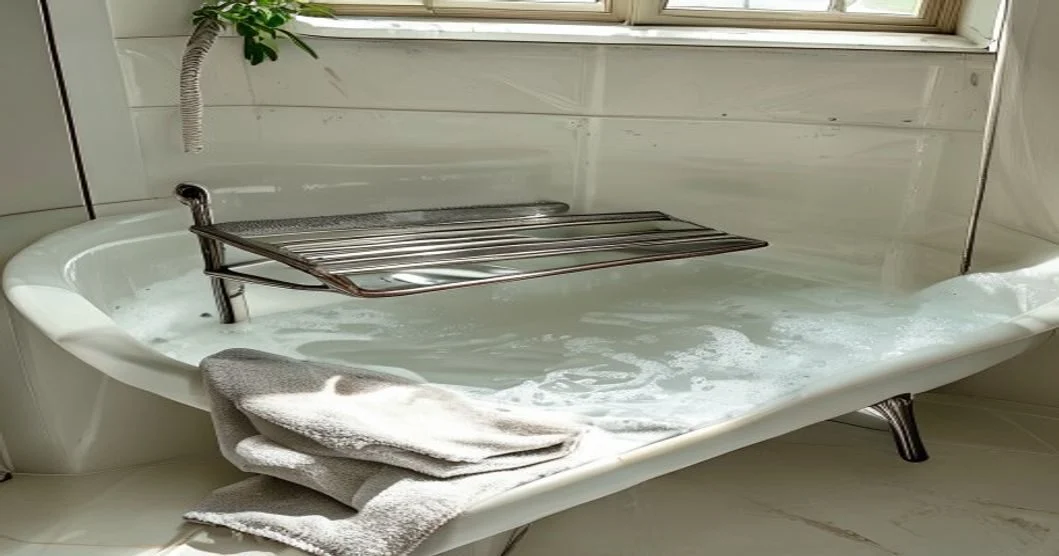
- Line the bath with an old towel first. Metal racks dragged across the bottom will scratch both enamel and acrylic, and those scratches do not polish out. Our enamel bath guide explains why the surface is so easily marked.
- Leave the foil out, and rinse the bath well. Dishwasher detergent is strongly alkaline and reacts with aluminium foil, which can leave grey-black marks on a bath if left too long. Rinse the bath thoroughly straight after any soak.
- No bath? Use a big storage box, a bucket for one rack at a time, or the kitchen sink with racks stood on their edge. A large washing-up bowl works for small racks.
- Wear rubber gloves. Hot water plus strong detergent is hard on skin over a long soak.
Fixes, from easiest to hardest
1. Dishwasher tablet soak (light to moderate grease)
Dishwasher tablets contain detergent ingredients, which may include enzymes and surfactants, that lift grease. On light-to-moderate grime this gives clean racks for almost no scrubbing, so it is the first thing to try.
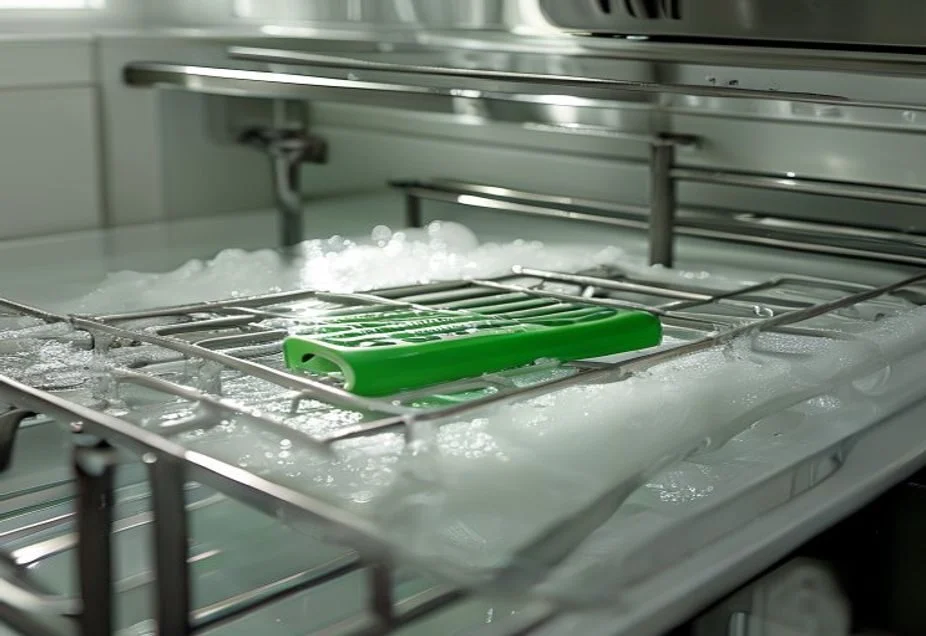
- Line the bath (or a big tub) with an old towel and lay the racks on top.
- Run in enough hot water to cover them completely.
- Drop in a dishwasher tablet (unwrap it if it has film) and swish to start it dissolving. One tablet per bath of water, two for very greasy racks.
- Leave to soak 2 to 3 hours for light grime, or overnight for more.
- Wipe the softened residue off with a sponge or cloth, scrubbing stubborn spots, then rinse and dry.
Verdict: excellent on regularly cleaned racks, underwhelming on heavy carbon, where it only lifts the top layer. If the racks come out better but not perfect, move to method 4 for the last stubborn patches rather than buying more tablets.
2. Biological washing powder soak
Biological (enzyme) laundry powder is made to break down fats and proteins, which is much of what is baked onto oven racks. Line the bath with a towel, lay the racks in, cover with hot water and stir in a generous cup of bio powder until it dissolves. Leave overnight, then wipe and rinse. It is often cheaper per clean than tablets and suits a whole set of big racks. Wear gloves, and do not use it on racks with a decorative or non-stick coating.
3. Running racks through the dishwasher
If your racks physically fit, and some manufacturers advise against it, a dishwasher cycle handles light grease with zero effort. Lay them flat, run the hottest cycle with a good tablet, and expect to clean the filter afterwards because grease and debris collect there. Our guide to cleaning a dishwasher filter shows how.
Two caveats. Heavy grease can clog or coat the dishwasher, so soak really bad racks first, and big metal racks can mark the interior. Check your oven manual too, as some coated racks must not be dishwashed or they lose their finish.
4. Bicarbonate of soda and vinegar paste (burnt-on grime)
When the racks are genuinely black and baked, this is the method that asks for effort in return. Bicarbonate is a mild abrasive and mild alkali that helps lift carbonised fat, and the vinegar fizz helps loosen it.
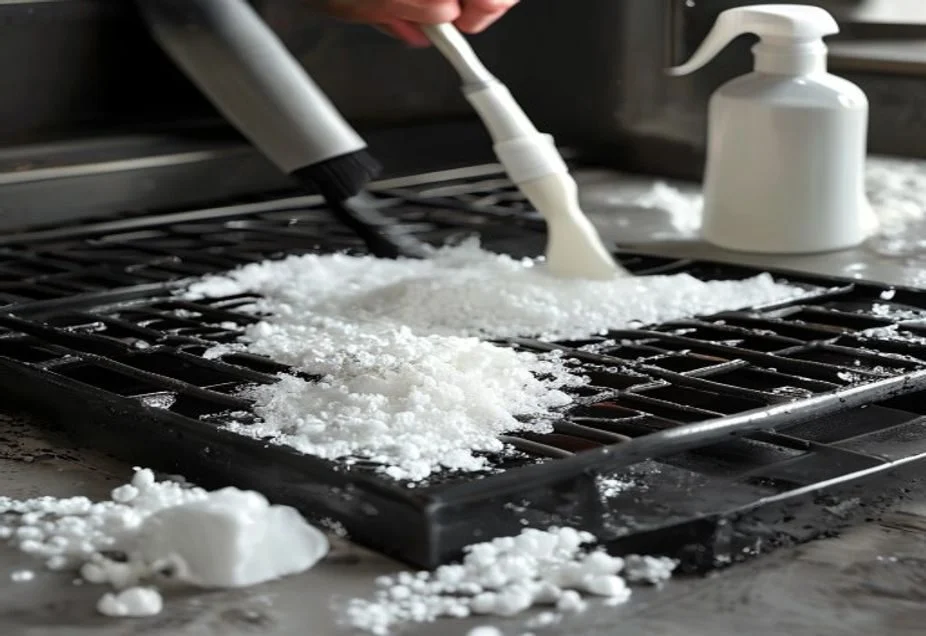
- Make a thick paste of bicarbonate of soda and a little water.
- Coat the racks all over, working it into the worst spots, and leave for at least an hour, or overnight for heavy build-up.
- Spray or drizzle white vinegar over the paste. It will fizz.
- Scrub with a stiff nylon brush, an old toothbrush or a nylon scourer, working along the bars.
- Rinse, and repeat on any patches that resist. A second round on stubborn spots beats scrubbing raw the first time.
For welded-on carbon at the joints, a stiff nylon brush plus patience does it. It is a cheap, low-fume home method that suits most kitchens. Avoid steel wool on chrome-plated racks, because it scratches the plating and leads to rust. The same chemistry does the heavy lifting in our guide to cleaning the oven itself, and if you would like a ready-made mix, see the homemade oven cleaner guide.
5. Oven cleaner spray (fastest on heavy carbon)
When you want heavy racks clean today and do not mind chemicals, an oven-cleaner spray is the quickest route. Follow the product label exactly. Lay the racks on newspaper or in a bin bag outside or in a very well-ventilated room, spray thoroughly, leave for the time on the instructions, then wipe and rinse. The caustic formula dissolves carbon that soaking cannot touch.
Safety is not optional. Most oven cleaners are caustic. Wear gloves and eye protection, ventilate well, keep the product off skin and aluminium, and never mix it with other cleaners. Check the label says it suits your rack finish, as some coated racks should not meet it. It is the method for a rental you are moving out of, or racks that are years past a soak.
How the five methods compare on time and effort
| Method | Hands-on effort | Waiting time | Best for |
|---|---|---|---|
| Dishwasher tablet soak | Low | 2 hours to overnight | Light to moderate grease |
| Biological powder soak | Low | Overnight | Whole sets of racks |
| Dishwasher cycle | Very low | One cycle | Light grease, racks that fit |
| Bicarbonate and vinegar paste | Medium to high | 1 hour to overnight | Baked-on carbon |
| Oven cleaner spray | Low, but needs safety kit | Per label | Heavy carbon, in a hurry |
Times are rough guides, since thickness of grease and water temperature both change the result. When in doubt, soak for longer rather than scrubbing harder.
Making soaks do the work: how to avoid scrubbing
If avoiding scrubbing is the goal, the answer is a longer soak, not a stronger arm. Start with genuinely hot water, which dissolves detergent and grease faster, and keep the racks fully submerged, because any part sticking out of the water is the part you will end up scrubbing. Overnight is the low-effort default. For what a long soak still will not lift, an oven cleaner is the other low-scrub option, trading effort for fumes.
What about the foil and tablet hack?
A popular version wraps the racks in aluminium foil before soaking with a tablet, on the theory that a reaction between the foil and the alkaline detergent supercharges the clean. Dishwasher detergent does react with aluminium, but the foil breaks down into grey flakes, can mark a metal bath, and plain soaking is simpler and cleaner. We would skip it. Use the foil to line the oven floor instead, to catch future drips, which genuinely reduces how often the racks get filthy.
Whichever method you used, finish by rinsing the racks well under the tap and drying them with a cloth before they go back in. Leftover detergent or paste can smoke or leave a smell when the oven heats, and racks put away wet are more likely to rust where the plating is worn. Slide them in, check they sit level, and run the oven empty at a moderate heat for a few minutes with the window open if you used a chemical cleaner, which burns off any trace. If a smell remains, wipe the oven floor, since old grease down there is often the real culprit.
Which product for which job
None of this needs specialist kit. These four cover the methods above. As an Amazon Associate we earn from qualifying purchases. The links are Amazon UK searches, so compare options and check the current price.
| Product | Best for | Check before buying |
|---|---|---|
| Dishwasher tablets | Moderate grease soaks, and the dishwasher cycle | Pick a standard tablet with no strongly scented or coloured extras; one per bath of water |
| Biological washing powder | Overnight soaks of a full set of racks | Biological, not non-bio, because the enzymes are the point; wear gloves |
| Oven cleaner spray | Heavy carbon and moving-out cleans | Label must allow use on your rack finish; follow ventilation and glove advice |
| Stiff nylon scrubbing brush | Paste method and joints | Nylon, not steel, to avoid scratching plating; a long handle saves your knuckles |
When to stop and replace the racks
Some racks are past saving, and it is safer to replace them than to keep scrubbing. Think about replacement if the chrome or plating is flaking, because it can come off in food. The same goes if the bars are rusting through, if racks are bent so they no longer slide or sit level, or if the grime survives two rounds of paste and a cleaner. Replacement racks are usually sold by oven model number, so check the model plate or the manual rather than guessing. If an oven cleaner has been used, wipe everything down and rinse thoroughly before cooking. Manufacturers warn against running racks through a pyrolytic self-clean cycle unless the manual says so, as the intense heat can discolour or damage them. See our piece on self-cleaning oven risks before you rely on one.
Keeping racks clean for longer
- Wipe racks while they are still warm after cooking, but not hot. Fresh grease wipes off, and baked-on grease is the problem you are trying to avoid.
- Use an oven liner or a baking tray on the shelf below roasts and pies to catch drips before they carbonise onto the bars. Our oven liner guide covers this.
- Give them a quick soak monthly rather than an annual archaeological dig. Little and often is far less work overall.
- Cover dishes that spit, like anything with a lot of fat, to cut the splatter that lands on the rack above.
Clean racks are one step of a full oven clean. The door glass, interior and shelves all benefit from being done together, which our complete oven cleaning guide walks through in order.
Oven rack questions
How often should oven racks be cleaned?
Wipe them after messy cooking and give them a proper clean about every one to three months if you use the oven regularly, or when grease starts to look sticky or dark. Small, frequent cleans take far less effort than letting grease carbonise for a year. If the smell of burning appears when you heat the oven, they are overdue.
Can I leave racks in during the self-clean cycle?
Check your manual. Many manufacturers advise removing racks before a pyrolytic self-clean cycle, because the heat can dull, discolour or damage them. Some ovens specify particular racks that can stay. If in doubt, take them out and clean them by hand.
Is steel wool safe on oven racks?
Not on chrome-plated racks. Steel wool scratches the plating, which can then rust and flake. Use a stiff nylon brush or a nylon scourer, or a non-scratch scouring pad, and let the soak or paste do the work. Plain bare steel racks are tougher, but a nylon pad is still the safer default.
Why have my oven racks gone rusty?
Rust usually appears where the plating has worn or flaked, and moisture sits on the bare metal. Soaking and not drying racks properly makes it worse. Scrub surface rust gently, dry the racks fully, and replace them if the coating is failing or rust keeps returning.
Can I use oven cleaner on chrome racks?
Many oven cleaners are suitable for chrome-plated racks, but check the label, because some products warn against aluminium and coated or non-stick finishes. Use gloves, ventilate, follow the contact time and rinse thoroughly afterwards. If the label does not mention racks, use a soak or paste instead.
Can I soak telescopic runners?
It is best not to. Telescopic or glide runners rely on lubricant, and a long soak can strip it, leaving them stiff or sticking. Wipe them with a damp cloth and a little washing-up liquid, dry them, and check the manual for the maker’s advice on re-lubricating.