How to Clean Gold Jewellery: Complete Home Cleaning Guide

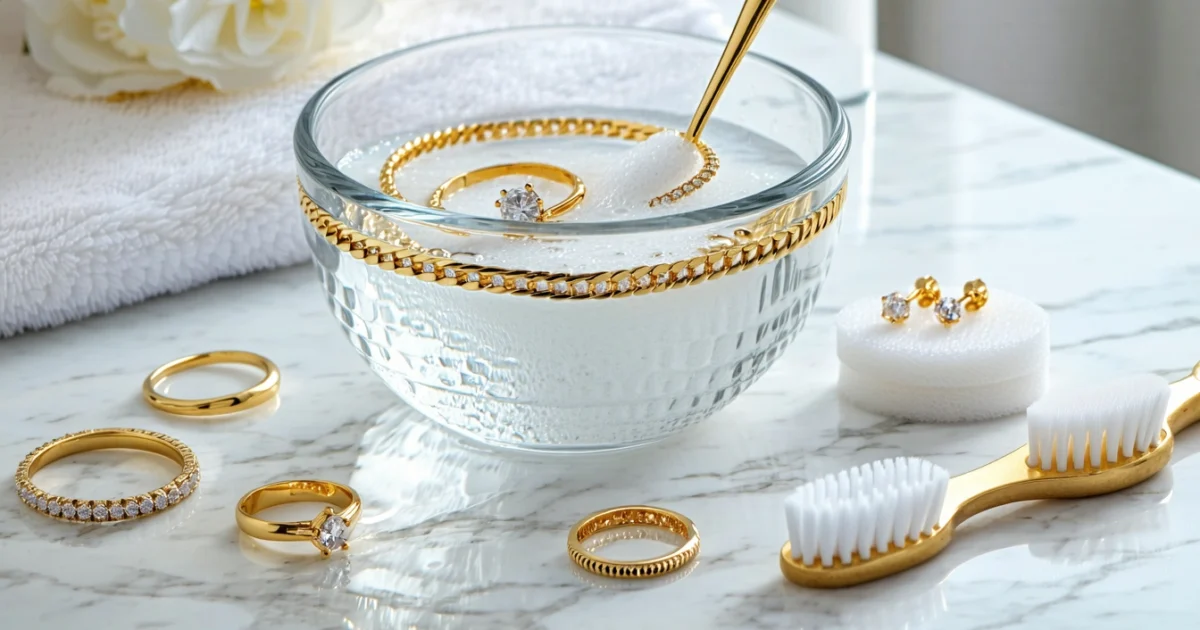
How to clean gold jewellery properly requires understanding your gold’s purity and using gentle, safe methods that won’t damage the metal or gemstones. Gold jewellery naturally accumulates dirt, oils, and tarnish over time, but with the right techniques, you can restore its original shine at home using simple household items like warm water, mild detergent, and baking soda.
Different gold purities (14k, 18k, 24k) require specific cleaning approaches to prevent damage. Additionally, pieces with diamonds or delicate gemstones need extra care during the cleaning process. Understanding these fundamentals helps you maintain your jewellery’s beauty while avoiding costly mistakes.
Regular cleaning prevents severe tarnishing and keeps your gold jewellery looking brilliant. Moreover, proper maintenance extends the lifespan of your precious pieces and maintains their value over time.
TL;DR
- Clean gold jewellery with warm water and mild detergent for regular maintenance
- Use baking soda paste or white vinegar solutions for stubborn tarnish
- Avoid harsh chemicals and abrasive materials that can scratch or damage gold
- Handle pieces with diamonds or gemstones with extra care during cleaning
- Clean regularly to prevent severe blackening and maintain jewellery’s value
Understanding Gold Jewelry and Why It Needs Cleaning
Gold jewelry requires specific cleaning approaches based on its purity level and composition. 14k gold contains 58.3% pure gold mixed with other metals like copper and silver, making it more durable but prone to tarnishing. Meanwhile, 18k gold contains 75% pure gold with fewer alloy metals, resulting in less tarnishing but requiring gentler cleaning methods. 24k gold represents pure gold that rarely tarnishes but remains extremely soft and susceptible to scratching during cleaning.
Different gold purities respond differently to cleaning solutions and techniques. Lower karat gold pieces often develop discoloration faster due to their higher alloy content. Furthermore, these alloy metals react with environmental factors, creating the need for more frequent maintenance.
Common Causes of Gold Tarnishing and Discoloration
Several factors contribute to gold jewelry losing its lustrous appearance over time. Body oils and sweat create a film on gold surfaces that attracts dirt and bacteria. Additionally, exposure to cosmetics, perfumes, and lotions causes chemical reactions with the metal alloys in gold jewelry.
Environmental pollutants also play a significant role in gold discoloration. Sulfur compounds in the air react with copper and silver alloys in lower karat gold, creating dark spots and overall dulling. Moreover, chlorine from swimming pools and cleaning products causes severe damage to gold’s surface integrity.
- Soap residue from handwashing accumulates in jewelry crevices
- Dead skin cells mix with natural oils to create stubborn buildup
- Humidity and moisture accelerate oxidation of alloy metals
- Contact with acidic substances like citrus fruits causes spotting
Why Gold Jewelry Turns Black or Dull
Gold jewelry develops a black or dull appearance through specific chemical processes that affect the alloy metals rather than pure gold itself. Copper oxidation creates greenish-black discoloration when exposed to moisture and acids. Similarly, silver tarnishing produces dark spots when sulfur compounds react with silver alloys in the gold mixture.
The blackening process accelerates under certain conditions that many jewelry wearers encounter daily. High humidity environments speed up oxidation reactions significantly. Consequently, people living in coastal areas or tropical climates notice faster discoloration of their gold pieces.
Important Note
Certain medications and health conditions also contribute to accelerated tarnishing. Iron supplements and blood pressure medications can alter body chemistry, making sweat more acidic and corrosive to jewelry metals. Therefore, individuals taking these medications should clean their gold jewelry more frequently.
The Importance of Regular Gold Jewelry Maintenance
Regular maintenance prevents minor tarnishing from becoming permanent damage that requires professional restoration. Weekly cleaning removes accumulated oils and debris before they bond permanently to the metal surface. Additionally, consistent care maintains the jewelry’s resale value and prevents costly professional cleaning services.
Preventive maintenance also protects gemstones and delicate settings from damage caused by buildup around prongs and bezels. Diamond clarity diminishes when oils and dirt accumulate on the stone’s surface, reducing its brilliance and fire. Regular cleaning ensures gemstones maintain their optimal light reflection properties.
Proper maintenance extends beyond cleaning to include proper storage and handling practices. Individual jewelry pouches prevent pieces from scratching each other during storage. Furthermore, removing jewelry before swimming, exercising, or applying cosmetics significantly reduces exposure to damaging substances.
| Gold Purity | Cleaning Frequency | Special Considerations |
|---|---|---|
| 14k Gold | Weekly | More prone to tarnishing, requires gentle scrubbing |
| 18k Gold | Bi-weekly | Softer metal, avoid abrasive materials |
| 24k Gold | Monthly | Extremely soft, minimal handling required |
Understanding your gold jewelry’s composition and maintenance needs ensures you choose appropriate cleaning methods that restore shine without causing damage. Next, we’ll explore the essential supplies and tools needed for safe, effective gold jewelry cleaning at home.
Safe Gold Cleaning Methods: What Works and What Doesn't
Choosing the right cleaning method protects your gold jewelry from damage while effectively removing tarnish and buildup. Mild dish soap mixed with warm water creates the safest cleaning solution for all gold purities. This gentle approach dissolves oils and dirt without compromising the metal’s integrity or affecting gemstone settings.
Baking soda paste offers excellent cleaning power for heavily tarnished pieces without scratching the gold surface. Mix three parts baking soda with one part water to create a thick paste. Subsequently, apply the mixture using a soft-bristled toothbrush, working gently around intricate details and settings.
Proven Safe Cleaning Agents
White vinegar naturally removes tarnish and restores gold’s original luster when used correctly. Soak jewelry in a solution of equal parts white vinegar and warm water for 10-15 minutes. However, limit exposure time to prevent potential damage to delicate gemstones or pearls.
Ammonia-based solutions work exceptionally well for stubborn tarnish on solid gold pieces. Mix one part household ammonia with six parts water for an effective cleaning solution. Nevertheless, avoid this method entirely for gold-plated jewelry or pieces containing pearls, opals, or other porous gemstones.
- Mild dish soap – Safe for all gold types and gemstones
- Baking soda paste – Effective for heavy tarnishing
- White vinegar solution – Natural tarnish removal
- Ammonia solution – For solid gold only
- Specialized jewelry cleaners – Formulated for specific metals
Effective Cleaning Techniques
Soaking methods work best for removing accumulated oils and light tarnish from gold jewelry. Submerge pieces in your chosen cleaning solution for the recommended time, then gently scrub with a soft brush. Additionally, this technique allows the cleaning agent to penetrate crevices and detailed areas effectively.
Ultrasonic cleaning provides professional-level results for solid gold jewelry without gemstones. These devices use high-frequency sound waves to remove debris from hard-to-reach areas. Furthermore, ultrasonic cleaners eliminate the need for scrubbing, reducing the risk of scratching delicate surfaces.
Gemstone Caution
What to Avoid: Dangerous Cleaning Methods
Harsh chemicals permanently damage gold jewelry and should never be used for cleaning. Bleach, chlorine, and strong acids corrode gold alloys and weaken prong settings. Moreover, these substances can discolor gemstones and cause irreversible damage to delicate pieces.
Abrasive materials scratch gold surfaces and remove the metal’s natural shine. Steel wool, scouring pads, and rough cloths create microscopic scratches that accumulate over time. Similarly, avoid toothpaste despite common misconceptions, as its abrasive particles damage gold’s surface finish.
- Bleach and chlorine – Cause corrosion and discoloration
- Steel wool or scouring pads – Create permanent scratches
- Toothpaste – Contains abrasive particles
- Lemon juice – Too acidic for regular use
- Baking soda without water – Dry powder acts as abrasive
Gold Purity and Cleaning Considerations
24k pure gold requires the gentlest cleaning approach due to its soft, malleable nature. Use only mild soap solutions and avoid any scrubbing action that could deform the metal. Consequently, professional cleaning becomes the safest option for valuable 24k pieces with intricate designs.
18k gold jewelry contains 75% pure gold mixed with stronger alloy metals, allowing for slightly more aggressive cleaning methods. Baking soda paste and gentle scrubbing work effectively on 18k pieces. However, exercise caution around gemstone settings to prevent loosening prongs or bezels.
14k and 10k gold contain higher percentages of alloy metals, making them more durable and tarnish-resistant. These lower-karat pieces tolerate stronger cleaning solutions and more vigorous scrubbing. Nevertheless, always test cleaning methods on inconspicuous areas first to ensure compatibility.
| Gold Purity | Safe Cleaning Methods | Methods to Avoid |
|---|---|---|
| 24k Gold | Mild soap, soft cloth | All abrasives, ultrasonic |
| 18k Gold | Soap, baking soda paste | Steel wool, harsh chemicals |
| 14k Gold | Most gentle methods | Bleach, chlorine |
| 10k Gold | Vinegar, ammonia solutions | Abrasive powders |
Understanding your jewelry’s gold content determines the appropriate cleaning intensity and frequency. Gold-filled and gold-plated pieces require extra care since aggressive cleaning removes the thin gold layer, exposing base metals underneath. Therefore, stick to mild soap solutions and minimal scrubbing for these items.
Step-by-Step Guide: Cleaning Gold Jewelry at Home
Cleaning gold jewelry at home requires careful preparation and gentle techniques to preserve your precious pieces. Furthermore, following a systematic approach ensures thorough cleaning without causing damage. Most importantly, gathering the right supplies and understanding proper methods protects your investment while restoring its natural brilliance.
Basic Supplies Needed for Gold Jewelry Cleaning
Essential cleaning supplies include warm water, mild dish soap (such as Fairy Liquid), and a soft-bristled toothbrush. Additionally, gather lint-free cloths, cotton swabs, and a small bowl for soaking. Consequently, these basic household items provide everything needed for safe gold jewelry maintenance.
- Warm water (not hot) for gentle cleaning
- Mild detergent or dish soap without harsh chemicals
- Soft-bristled toothbrush for detailed cleaning
- Lint-free microfiber cloths for drying and polishing
- Cotton swabs for intricate areas and settings
- Small bowl for soaking jewelry pieces
Optional supplies include baking soda for stubborn tarnish and white vinegar for heavily soiled pieces. However, test these stronger solutions on inconspicuous areas first to ensure compatibility with your specific gold alloy.
Pre-Cleaning Inspection and Preparation
Examine each piece carefully before cleaning begins, checking for loose stones, damaged prongs, or weak clasps. Moreover, identify areas with built-up dirt, soap residue, or tarnishing that require special attention. Subsequently, separate pieces by gold purity and gemstone types to ensure appropriate cleaning methods.
Remove jewelry from your body and work in a well-lit area over a soft towel to prevent drops and scratches. Additionally, close sink drains or work away from drains to avoid accidental loss. Therefore, proper preparation prevents damage and ensures successful cleaning outcomes.
Important Safety Check
Gentle Cleaning Method Using Warm Water and Mild Detergent
Fill a small bowl with warm water and add 2-3 drops of mild dish soap, creating a gentle cleaning solution. Subsequently, place gold jewelry pieces in the solution and allow them to soak for 10-15 minutes. This soaking process loosens dirt, oils, and debris without aggressive scrubbing.
- Create soapy solution with warm water and mild detergent
- Soak jewelry pieces for 10-15 minutes
- Gently brush with soft-bristled toothbrush
- Use cotton swabs for intricate details and settings
- Pay special attention to chain links and crevices
After soaking, use the soft-bristled toothbrush to gently scrub surfaces, focusing on areas where dirt accumulates. Meanwhile, work the bristles into chain links, prong settings, and textured surfaces with light pressure. Cotton swabs reach tight spaces and delicate areas that brushes cannot access effectively.
For stubborn tarnish on lower-karat gold, create a paste using baking soda and water. Apply this mixture sparingly and scrub gently before proceeding to the rinsing stage. However, avoid baking soda on high-karat gold or pieces with delicate gemstones.
Proper Rinsing and Drying Techniques
Rinse each piece thoroughly under lukewarm running water to remove all soap residue and loosened debris. Additionally, ensure water flows through all crevices and chain links to eliminate trapped cleaning solution. Incomplete rinsing leaves residue that attracts dirt and dulls the gold’s natural shine.
Pat jewelry dry immediately using lint-free microfiber cloths, avoiding rough rubbing motions that could scratch surfaces. Furthermore, allow pieces to air dry completely before storage to prevent moisture-related tarnishing. Consequently, thorough drying prevents water spots and maintains the jewelry’s lustrous appearance.
For intricate pieces with multiple components, use cotton swabs to absorb water from tight spaces and settings. Similarly, gently shake chain jewelry to remove trapped water droplets. Complete moisture removal prevents tarnishing and extends the time between cleaning sessions.
Post-Cleaning Inspection and Storage
Inspect cleaned jewelry under good lighting to ensure complete dirt removal and verify that no cleaning residue remains. Moreover, check that gemstones remain secure in their settings and clasps function properly. Any remaining issues require additional cleaning or professional attention.
Polish gold surfaces with a clean, dry microfiber cloth to restore maximum shine and luster. Additionally, this final polishing step removes any remaining water spots or fingerprints from the cleaning process. Therefore, proper polishing completes the restoration of your jewelry’s original brilliance.
Store cleaned jewelry in individual soft pouches or lined jewelry boxes to prevent scratching and tarnishing. Furthermore, keep pieces separated to avoid metal-on-metal contact that causes wear. Proper storage maintains cleanliness longer and protects your investment between cleaning sessions.
Pros
- Safe for all gold purities
- Uses common household items
- Gentle on gemstone settings
- Cost-effective maintenance
- Restores natural shine
Cons
- Time-consuming for multiple pieces
- May not remove heavy tarnish
- Requires careful handling
- Not suitable for antique pieces
- Limited effectiveness on deep scratches
Homemade Gold Cleaning Solutions
Creating effective homemade gold cleaners saves money while providing gentle yet thorough cleaning for your precious jewelry. Moreover, household ingredients offer safer alternatives to harsh commercial chemicals that can damage delicate gold surfaces. These DIY solutions remove tarnish, restore shine, and maintain your jewelry’s value using common kitchen staples.
Baking Soda Paste Method for Stubborn Tarnish
Baking soda paste tackles stubborn tarnish and built-up grime that regular cleaning cannot remove. Additionally, this alkaline compound neutralizes acids that cause discoloration while providing gentle abrasive action. Mix three parts baking soda with one part water to create a thick, spreadable paste.
Apply the paste using a soft-bristled toothbrush, working in circular motions across tarnished areas. Furthermore, focus on crevices and detailed sections where dirt accumulates most heavily. Allow the paste to sit for 10-15 minutes before rinsing thoroughly with warm water.
Important Safety Note
White Vinegar Solution for Deep Cleaning
White vinegar solution provides deep cleaning action that dissolves mineral deposits and removes stubborn tarnish from gold surfaces. Similarly, the acetic acid in vinegar breaks down oxidation while being gentle enough for regular use. Create an effective cleaning solution by mixing equal parts white vinegar and warm water in a clean bowl.
Soak jewelry pieces for 10-20 minutes depending on tarnish severity, then scrub gently with a soft brush. However, avoid prolonged soaking as excessive acid exposure can damage certain gemstone settings. Rinse thoroughly with clean water and dry completely to prevent water spots.
Dish Soap and Warm Water for Regular Maintenance
The simplest and safest homemade cleaner combines mild dish soap with warm water for regular jewelry maintenance. Consequently, this gentle solution removes daily oils, dirt, and light tarnish without risking damage to delicate pieces. Mix one teaspoon of dish soap in one cup of warm water to create an effective cleaning bath.
This method works particularly well for routine cleaning and prevents heavy tarnish buildup that requires stronger solutions. Additionally, regular maintenance with soapy water extends the time between deep cleaning sessions. Proper drainage cleaning techniques apply similar gentle approaches for maintaining household items.
- Soak jewelry for 5-10 minutes in the soapy solution
- Brush gently with a soft toothbrush to remove debris
- Rinse thoroughly under running warm water
- Pat dry with a clean, lint-free cloth
Toothpaste Method: When It Works and When to Avoid It
Toothpaste cleaning can restore shine to solid gold jewelry but requires careful application to avoid damage. However, many toothpastes contain abrasive particles that can scratch softer gold alloys and damage gemstone settings. Use only non-abrasive, whitening-free toothpaste for this cleaning method.
Apply a small amount to a soft cloth and rub gently in circular motions across the gold surface. Nevertheless, avoid this method on gold-plated jewelry, antique pieces, or jewelry with soft gemstones like pearls or opals. The abrasive action can remove plating or damage delicate stones permanently.
Pros
- Readily available household item
- Effective for removing light tarnish
- Works well on solid gold pieces
- Provides immediate results
Cons
- Can scratch softer gold alloys
- Damages gold-plated jewelry
- Harmful to certain gemstones
- Requires careful technique
Creating Effective Homemade Gold Cleaners
The most effective homemade gold cleaners combine multiple gentle ingredients for enhanced cleaning power. Furthermore, understanding which ingredients work together safely prevents damage while maximizing cleaning effectiveness. Ammonia-based solutions provide excellent results but require proper ventilation and careful handling.
Mix one part ammonia with six parts warm water for a powerful cleaning solution that removes heavy tarnish and grime. Additionally, add a few drops of dish soap to enhance the solution’s cleaning ability. Soak jewelry for no more than one minute before brushing and rinsing thoroughly.
| Cleaning Solution | Best For | Soaking Time | Safety Notes |
|---|---|---|---|
| Baking Soda Paste | Stubborn tarnish | 10-15 minutes | Avoid on plated jewelry |
| White Vinegar | Deep cleaning | 10-20 minutes | Rinse thoroughly |
| Dish Soap | Regular maintenance | 5-10 minutes | Safest option |
| Ammonia Solution | Heavy tarnish | 1 minute maximum | Use with ventilation |
Always test homemade cleaners on an inconspicuous area before treating the entire piece. Moreover, certain gemstones react poorly to acidic or alkaline solutions, requiring specialized cleaning approaches. When in doubt, consult a professional jeweler rather than risk damaging valuable pieces with inappropriate cleaning methods.
Cleaning Gold Jewelry with Gemstones and Diamonds
Gold jewelry with gemstones requires specialized cleaning approaches that protect both the metal and the precious stones. Moreover, different gemstones possess varying hardness levels and chemical sensitivities that demand specific care techniques. Understanding these requirements prevents costly damage while maintaining your jewelry’s brilliance and value.
Special Considerations for Gold Jewelry with Diamonds
Diamonds rank as the hardest natural substance, making them relatively safe to clean with most gentle methods. However, the settings holding diamonds often contain delicate prongs or intricate metalwork that requires careful attention. Additionally, diamond clarity can appear diminished when oils and soap residue accumulate around the stone’s surface.
Create a specialized cleaning solution using warm water, a few drops of ammonia, and gentle dish soap for diamond-set gold jewelry. Furthermore, use a soft-bristled toothbrush to gently scrub around the diamond’s setting, removing built-up grime without loosening the stone. The ammonia helps break down oils while the soap lifts away residue effectively.
Diamond Cleaning Tip
Cleaning Gold Pieces with Delicate Gemstones
Delicate gemstones like pearls, opals, emeralds, and turquoise require gentler cleaning methods than diamonds or sapphires. Consequently, these stones can suffer permanent damage from acidic solutions, ultrasonic cleaners, or abrasive materials. Each gemstone type has specific vulnerabilities that determine the safest cleaning approach.
Pearls dissolve in acidic solutions, while opals can crack from temperature changes or dehydration. Similarly, emeralds often contain natural inclusions that make them fragile, and turquoise absorbs liquids that can cause discoloration. Therefore, use only plain warm water and a soft cloth for these sensitive stones.
| Gemstone Type | Safe Cleaning Method | Avoid Completely | Special Notes |
|---|---|---|---|
| Pearls | Damp soft cloth only | All acids, detergents | Wipe after each wear |
| Opals | Room temperature water | Heat, ultrasonic cleaners | Store with moisture |
| Emeralds | Gentle soap solution | Steam cleaning, pressure | Often oil-treated |
| Turquoise | Dry polishing cloth | Water immersion | Porous and absorbent |
Avoiding Damage to Stone Settings During Cleaning
Stone settings represent the most vulnerable part of gemstone jewelry during cleaning processes. Additionally, prongs can loosen over time, making aggressive cleaning methods particularly risky for valuable pieces. Inspect settings carefully before cleaning to identify any loose stones or damaged metalwork.
Use gentle circular motions when brushing around settings, directing bristles away from stone edges rather than toward them. Furthermore, avoid applying pressure directly to prongs or bezels that secure gemstones in place. The cleaning motion should support the setting structure rather than stress it.
- Check prong security by gently tapping stones with a fingernail
- Use cotton swabs for detailed cleaning around intricate settings
- Brush in the direction that supports prongs, not against them
- Avoid twisting or pulling on pendant settings during cleaning
- Rinse thoroughly to remove all cleaning residue from crevices
Temperature changes can cause metals to expand and contract at different rates than gemstones, potentially loosening settings. Therefore, avoid extreme temperature variations during cleaning and always use lukewarm water rather than hot or cold solutions.
Professional Cleaning Recommendations for Complex Pieces
Complex jewelry pieces with multiple gemstone types, intricate settings, or significant value require professional cleaning services. Moreover, antique jewelry often contains historical setting techniques that modern cleaning methods can damage irreversibly. Professional jewelers possess specialized equipment and expertise for handling these challenging pieces safely.
Ultrasonic cleaners used by professionals can clean intricate details impossible to reach with home methods. However, these machines require expert knowledge to operate safely, as certain gemstones can shatter from ultrasonic vibrations. Professional jewelers understand which stones tolerate ultrasonic cleaning and which require alternative methods.
Pros
- Professional equipment reaches impossible areas
- Expert knowledge prevents gemstone damage
- Insurance coverage for valuable pieces
- Simultaneous inspection for loose settings
- Specialized solutions for different materials
Cons
- Higher cost than home cleaning
- Time required for appointments
- May not be necessary for simple pieces
- Potential for miscommunication about cleaning preferences
Schedule professional cleaning annually for valuable pieces or immediately if you notice loose stones, damaged settings, or persistent discoloration. Additionally, professional cleaning provides an opportunity for jewelers to inspect and maintain your jewelry’s structural integrity. This preventive approach protects your investment while ensuring optimal appearance and safety.
Between professional cleanings, maintain complex pieces with gentle home care using appropriate methods for each gemstone type. Nevertheless, avoid attempting repairs or deep cleaning on valuable or antique jewelry without professional guidance.
Restoring Blackened or Heavily Tarnished Gold
Severely blackened gold jewellery requires immediate attention to prevent permanent damage. Understanding the underlying causes helps determine the appropriate restoration approach and prevents future occurrences.
Identifying the Cause of Severe Discoloration
Chemical exposure represents the primary cause of blackened gold jewellery. Chlorine from swimming pools and cleaning products creates severe discoloration that penetrates deep into the metal’s surface. Additionally, exposure to sulfur compounds from cosmetics, perfumes, and certain medications accelerates tarnishing processes beyond normal wear patterns.
Lower karat gold alloys containing copper and silver tarnish more readily than higher purity pieces. Furthermore, environmental factors such as high humidity, air pollution, and exposure to household chemicals compound the discoloration process. Identifying these causes helps prevent future damage while informing the restoration approach.
Examine the discoloration pattern to determine its origin. Uniform blackening typically indicates chemical exposure, while spotty discoloration suggests contact with specific substances or moisture accumulation in crevices.
Deep Cleaning Methods for Heavily Tarnished Pieces
Heavily tarnished gold requires stronger cleaning solutions than routine maintenance methods. Begin with a baking soda paste made from three parts baking soda to one part water, which provides gentle abrasive action without scratching the metal surface.
- Apply the baking soda paste using a soft-bristled toothbrush
- Gently scrub in circular motions, focusing on heavily discolored areas
- Allow the paste to sit for 10-15 minutes on stubborn tarnish
- Rinse thoroughly with lukewarm water and dry completely
For persistent blackening, create a vinegar solution using equal parts white vinegar and water. Soak the jewellery for 15-20 minutes, then scrub gently with a soft brush. However, avoid prolonged vinegar exposure on pieces containing pearls or porous gemstones.
Commercial gold cleaners designed for heavy tarnish provide effective results for severely discolored pieces. These products contain specialized chemicals that dissolve tarnish without damaging the underlying metal. Always follow manufacturer instructions precisely and test on an inconspicuous area first.
Important Safety Note
When to Seek Professional Restoration Services
Professional restoration becomes necessary when home cleaning methods fail to restore the jewellery’s appearance. Antique pieces and items with significant monetary or sentimental value require professional expertise to avoid irreversible damage during restoration attempts.
Seek professional help immediately if you notice structural damage such as loose stones, bent prongs, or weakened clasps alongside the discoloration. Professional jewelers possess specialized equipment including ultrasonic cleaners and steam cleaning systems that safely remove embedded tarnish.
Additionally, pieces with multiple metal types or complex gemstone combinations require professional assessment. Mixed-metal jewellery may react differently to cleaning solutions, potentially causing uneven restoration results or damage to specific components.
Professional restoration services typically cost £15-50 depending on the piece’s complexity and condition. This investment protects valuable jewellery while ensuring proper restoration techniques that maintain the item’s integrity and value.
Preventing Future Severe Tarnishing
Prevention strategies significantly reduce the likelihood of severe tarnishing and extend your jewellery’s lifespan. Remove gold jewellery before swimming, cleaning, or applying cosmetics to minimize chemical exposure that causes blackening.
Proper storage prevents environmental tarnishing by controlling humidity and air exposure. Store pieces in individual soft pouches or lined jewelry boxes with anti-tarnish strips. Moreover, avoid storing different metal types together, as they can cause galvanic corrosion through direct contact.
Regular maintenance cleaning prevents minor tarnish from developing into severe discoloration. Clean gold jewellery monthly using gentle methods, and inspect pieces regularly for early signs of tarnishing or damage. Proper earring cleaning techniques apply similar principles for maintaining all gold jewellery types.
Consider applying protective coatings to frequently worn pieces that experience heavy exposure to environmental factors. Professional jewelers can apply clear protective films that create barriers against tarnish-causing substances while maintaining the jewellery’s natural appearance.
Gold Jewelry Cleaning Tools and Equipment
Effective gold jewellery cleaning requires specific tools and equipment designed to protect delicate surfaces while removing tarnish and buildup. Professional-grade cleaning tools ensure thorough results without causing scratches, damage, or chemical reactions that compromise your jewellery’s integrity.
Essential Cleaning Tools for Gold Jewellery
A soft-bristled brush forms the foundation of any gold cleaning toolkit. Natural bristle brushes or extra-soft synthetic brushes effectively remove dirt from intricate settings without scratching gold surfaces. Furthermore, old toothbrushes work excellently for this purpose, provided they feature soft bristles and clean construction.
Microfibre cloths provide lint-free polishing that restores gold’s natural lustre without leaving residue. Additionally, cotton cloths offer gentle cleaning action for basic maintenance, while chamois leather delivers professional-grade polishing results for valuable pieces.
Cleaning containers require careful selection to prevent chemical reactions with gold jewellery. Glass bowls or ceramic dishes provide inert surfaces that won’t interact with cleaning solutions. Moreover, plastic containers may contain chemicals that affect gold, making glass the preferred choice for soaking and cleaning processes.
- Soft-bristled brushes (natural or synthetic)
- Microfibre polishing cloths
- Cotton cleaning cloths
- Glass or ceramic bowls
- Plastic tweezers for handling
- Magnifying glass for inspection
Ultrasonic Cleaners: Advantages and Limitations
Ultrasonic cleaners use high-frequency sound waves to create microscopic bubbles that remove dirt from hard-to-reach areas. These devices excel at cleaning intricate gold jewellery with complex settings, chains, or detailed engravings that manual cleaning cannot reach effectively.
Pros
- Reaches intricate areas and settings
- Removes stubborn dirt and grime
- Consistent cleaning results
- Time-efficient for multiple pieces
- Professional-quality cleaning at home
Cons
- May loosen gemstone settings
- Can damage pearls or soft stones
- Expensive initial investment
- Requires specific cleaning solutions
- Not suitable for antique pieces
However, ultrasonic cleaning poses risks for certain jewellery types. Gemstone settings may loosen under ultrasonic vibrations, particularly in older pieces with weakened prongs or adhesive mountings. Additionally, pearls, opals, and other porous stones can suffer damage from ultrasonic cleaning processes.
Professional jewellers recommend using ultrasonic cleaners only for solid gold pieces without vulnerable gemstones. Furthermore, inspect jewellery thoroughly before ultrasonic cleaning to identify loose stones or damaged settings that require professional attention.
Professional-Grade Equipment for Home Use
Steam cleaners designed for jewellery provide professional-level cleaning without harsh chemicals. These devices use pressurised steam to dissolve oils, remove tarnish, and sanitise gold jewellery while maintaining gentle treatment of delicate surfaces.
Jewellery cleaning kits combine multiple professional tools in convenient packages. Complete cleaning systems typically include specialised brushes, polishing cloths, cleaning solutions, and storage containers designed specifically for gold jewellery maintenance.
Digital scales help monitor cleaning solution concentrations and ensure consistent results. Moreover, pH testing strips verify solution acidity levels, preventing chemical damage from overly acidic or alkaline cleaning mixtures.
| Equipment Type | Price Range | Best For |
|---|---|---|
| Ultrasonic Cleaner | £30-150 | Intricate gold pieces |
| Steam Cleaner | £50-200 | Chemical-free cleaning |
| Professional Kit | £20-80 | Complete maintenance |
| Polishing Cloths | £5-25 | Regular maintenance |
Storage Solutions for Maintaining Cleanliness
Proper storage prevents tarnishing and maintains the cleanliness achieved through regular cleaning routines. Anti-tarnish storage bags contain special fabrics that absorb moisture and neutralise tarnish-causing gases, extending the time between cleaning sessions.
Individual compartments prevent jewellery pieces from scratching each other during storage. Lined jewellery boxes with soft fabric compartments provide excellent protection while maintaining organisation and easy access for regular wear.
Silica gel packets control humidity levels within storage containers, preventing moisture-related tarnishing. Additionally, activated charcoal inserts absorb odours and chemical vapours that contribute to gold discoloration over time.
Climate-controlled storage becomes essential for valuable gold collections. Temperature stability and humidity control prevent environmental factors that accelerate tarnishing and require frequent cleaning interventions. Proper earring storage follows similar principles for maintaining all gold jewellery types.
Storage Best Practices
Maintenance Schedule and Prevention Tips
Regular maintenance schedules prevent gold jewellery deterioration and reduce intensive cleaning requirements. Different gold pieces require varying cleaning frequencies based on wear patterns, karat content, and environmental exposure factors.
Cleaning Frequency for Different Gold Types
Daily-wear pieces such as wedding rings and chains require weekly cleaning to remove accumulated oils, soap residue, and environmental pollutants. These items experience constant contact with skin oils and external contaminants that create dulling films on gold surfaces.
Occasional-wear jewellery benefits from monthly cleaning sessions to maintain lustre and prevent tarnish formation. Furthermore, special occasion pieces stored properly may only need cleaning every three to six months, depending on storage conditions and handling frequency.
Lower karat gold containing higher alloy percentages requires more frequent attention than pure gold pieces. Additionally, gold jewellery with gemstone settings needs careful cleaning every two weeks to prevent dirt accumulation around stone settings that can loosen prongs over time.
| Jewellery Type | Cleaning Frequency | Special Considerations |
|---|---|---|
| Daily rings/chains | Weekly | Remove before swimming/showering |
| Earrings | Bi-weekly | Clean posts thoroughly |
| Occasional pieces | Monthly | Check for loose stones |
| Storage pieces | 3-6 months | Inspect for tarnish signs |
Daily Care Practices
Simple daily habits significantly reduce cleaning requirements and preserve gold jewellery appearance. Removing jewellery before applying lotions, perfumes, or cosmetics prevents chemical buildup that requires intensive cleaning methods later.
Taking off gold pieces before swimming protects against chlorine damage and salt water corrosion. Similarly, removing jewellery during household cleaning activities prevents exposure to harsh chemicals that can discolour gold alloys and require professional restoration.
Gentle wiping with soft cloths after each wear removes surface oils and prevents accumulation. Moreover, allowing jewellery to air dry completely before storage prevents moisture-related tarnishing that accelerates cleaning needs.
- Remove before showering or swimming
- Apply cosmetics before putting on jewellery
- Wipe with soft cloth after wearing
- Avoid contact with cleaning chemicals
- Store completely dry pieces only
Proper Storage Prevention
Strategic storage methods prevent tarnishing and maintain cleanliness between cleaning sessions. Individual storage compartments prevent pieces from scratching each other while controlling environmental factors that cause discoloration.
Anti-tarnish storage solutions contain treated fabrics that neutralise sulphur compounds responsible for gold discoloration. These specialised storage options extend cleaning intervals by preventing chemical reactions that dull gold surfaces.
Humidity control through silica gel packets maintains optimal storage conditions below 50% relative humidity. Consequently, proper climate control prevents moisture-related tarnishing that requires frequent cleaning interventions to restore original appearance.
Temperature stability prevents expansion and contraction cycles that can loosen stone settings and create cleaning challenges. Additionally, avoiding direct sunlight prevents heat damage that can alter gold colour and require professional restoration services.
Warning Signs Requiring Immediate Cleaning
Recognising early warning signs prevents permanent damage and reduces cleaning complexity. Visible discoloration indicates chemical reactions that require prompt attention before becoming permanent stains requiring professional intervention.
Dullness or loss of shine signals accumulated contaminants that block light reflection from gold surfaces. Furthermore, sticky or greasy feeling textures indicate soap residue buildup that requires thorough cleaning to restore proper appearance and comfort.
Green skin discoloration from wearing gold jewellery indicates copper alloy oxidation requiring immediate cleaning and possible professional assessment. This reaction suggests excessive moisture exposure or chemical contamination affecting the gold alloy composition.
Loose stones or damaged settings require professional attention before cleaning attempts. Similarly, bent or damaged prongs need repair before cleaning procedures that might further compromise stone security or structural integrity.
Professional Assessment Needed
Regular maintenance schedules combined with proper storage and daily care practices significantly extend the lifespan of gold jewellery while reducing cleaning frequency requirements. These preventive measures ensure your valuable pieces maintain their beauty and structural integrity for years to come.
Common Mistakes to Avoid When Cleaning Gold
Understanding what not to do when cleaning gold jewellery prevents costly damage and preserves your precious pieces. Many well-intentioned cleaning attempts result in permanent harm because people use inappropriate methods or materials that compromise gold’s integrity.
Harsh Chemicals That Can Damage Gold
Bleach represents the most dangerous chemical for gold jewellery because it dissolves gold alloys and causes permanent white spots or complete structural failure. Similarly, chlorine-based cleaners create chemical reactions that weaken gold bonds and cause brittleness over time.
Ammonia-based products attack gold alloys containing copper or silver, resulting in discoloration and surface pitting that requires professional restoration. Additionally, acetone and nail polish removers strip protective coatings from gold-plated pieces and dissolve adhesives securing gemstones.
Toilet bowl cleaners and oven cleaners contain acids that etch gold surfaces permanently. Furthermore, hydrogen peroxide creates oxidation reactions that damage gold alloys and cause irreversible colour changes requiring expensive professional treatment.
Chemical Warning
Abrasive Materials That Scratch Gold Surfaces
Steel wool and scouring pads create deep scratches that destroy gold’s reflective surface and require professional polishing to restore. Moreover, baking soda paste acts as an abrasive compound that gradually wears away gold surfaces with repeated use.
Coarse brushes and wire brushes leave permanent scratch patterns that cannot be removed through home cleaning methods. Similarly, pumice stones and abrasive powders remove gold material rather than cleaning it, reducing the piece’s weight and value.
Paper towels and tissues contain wood fibres that scratch gold surfaces when used for drying or polishing. Instead, microfibre cloths provide gentle cleaning without surface damage or lint residue that affects gold’s appearance.
- Avoid steel wool, scouring pads, and wire brushes
- Never use baking soda as an abrasive paste
- Skip paper towels and tissues for drying
- Reject pumice stones and abrasive powders
- Choose soft-bristled brushes only
Over-Cleaning and Its Potential Consequences
Excessive cleaning frequency gradually removes gold material and weakens structural integrity, particularly around delicate areas like prong settings and chain links. Daily cleaning with any solution creates unnecessary wear that accumulates over time.
Over-scrubbing during cleaning sessions removes microscopic gold particles and creates surface irregularities that trap dirt more easily. Consequently, pieces that receive excessive cleaning require more frequent maintenance and develop a dull appearance despite regular care.
Repeated exposure to cleaning solutions, even mild ones, can affect gold alloy composition and cause colour variations across the piece. Furthermore, excessive soaking loosens gemstone settings and compromises adhesives used in gold-plated jewellery construction.
Gold jewellery requires cleaning only when visibly dirty or every 2-3 months with regular wear
Improper Drying and Storage After Cleaning
Heat drying using hair dryers or direct sunlight causes thermal expansion that can crack gemstones and weaken solder joints in gold jewellery. Moreover, rapid temperature changes create stress fractures that develop into visible cracks over time.
Storing damp gold jewellery accelerates tarnishing of alloy metals and promotes bacterial growth that creates unpleasant odours and skin reactions. Additionally, moisture trapped in chain links or intricate designs causes internal corrosion that weakens structural integrity.
Placing wet gold pieces directly into jewellery boxes creates humid environments that damage other pieces through cross-contamination. Similarly, improper storage methods allow pieces to scratch each other and tangle in ways that require professional untangling services.
Air drying on absorbent surfaces like towels prevents proper moisture evaporation and leaves lint particles that require additional cleaning. Therefore, proper drying involves gentle patting with microfibre cloths followed by complete air drying before storage in individual compartments.
Pros
- Gentle air drying preserves gold integrity
- Individual storage prevents scratching
- Microfibre cloths remove moisture safely
- Room temperature drying prevents thermal stress
Cons
- Heat drying causes thermal damage
- Damp storage accelerates tarnishing
- Towel drying leaves lint residue
- Overcrowded storage creates scratches
When to Seek Professional Gold Jewelry Cleaning
While home cleaning methods work effectively for routine maintenance, certain situations require professional expertise to preserve your gold jewellery’s value and integrity. Professional cleaning services offer specialised equipment and techniques that safely address complex cleaning challenges beyond typical household capabilities.
Complex Pieces Requiring Professional Attention
Multi-metal jewellery combining gold with silver, platinum, or copper requires professional cleaning because different metals react differently to cleaning solutions. Additionally, pieces with intricate filigree work or delicate chain links need ultrasonic cleaning equipment that removes debris from inaccessible areas without mechanical damage.
Jewellery featuring porous gemstones like pearls, opals, or turquoise demands professional assessment before cleaning because these stones absorb liquids and can suffer permanent damage from improper cleaning methods. Similarly, pieces with glued settings require professional evaluation since home cleaning solutions dissolve adhesives and cause stone loss.
Mechanical watches with gold cases need professional cleaning because moisture penetration damages internal mechanisms and voids warranties. Furthermore, religious or ceremonial pieces often contain mixed materials that require specialised cleaning protocols to maintain their cultural significance and structural integrity.
Antique or Valuable Gold Jewelry Considerations
Antique gold jewellery manufactured before 1950 often contains lead-based solders that react adversely to modern cleaning chemicals, making professional assessment essential for preservation. Moreover, Victorian-era pieces frequently feature delicate enamel work or hair inclusions that require museum-quality conservation techniques.
Jewellery valued above £1,000 warrants professional cleaning because insurance policies may not cover damage from improper home cleaning attempts. Additionally, designer pieces from prestigious brands like Cartier or Tiffany maintain their resale value only when professionally maintained according to manufacturer specifications.
Family heirlooms carry irreplaceable sentimental value that justifies professional cleaning costs, especially when documentation of proper care maintains provenance for future generations. Similarly, investment-grade gold pieces require professional certification of cleaning methods to preserve their market value and authenticity.
Signs of Damage That Need Professional Repair
Loose stones indicate setting problems that require professional tightening before cleaning to prevent gem loss during the cleaning process. Additionally, bent prongs or worn settings need immediate professional attention because cleaning vibrations can dislodge already compromised stones.
Visible stress fractures in gold bands or chains require professional evaluation because cleaning solutions penetrate cracks and accelerate structural failure. Furthermore, discoloured patches on gold surfaces often indicate alloy corrosion that needs professional assessment to determine repairability.
- Clasp malfunctions affecting necklaces or bracelets
- Worn chain links showing signs of stretching or thinning
- Missing decorative elements like beads or small stones
- Tarnishing that doesn’t respond to gentle home cleaning
Professional jewellers identify these issues during cleaning consultations and provide repair estimates before proceeding with cleaning services. Consequently, addressing structural problems before cleaning prevents further damage and ensures optimal results.
Cost-Benefit Analysis of Professional vs. Home Cleaning
Professional cleaning costs typically range from £15-50 per piece depending on complexity, while home cleaning materials cost under £10 for multiple cleaning sessions. However, professional services include damage assessment, minor repairs, and insurance coverage that protects against cleaning-related damage.
| Service Type | Cost Range | Benefits | Best For |
|---|---|---|---|
| Home Cleaning | £5-10 annually | Convenience, regular maintenance | Simple gold pieces, routine care |
| Professional Cleaning | £15-50 per visit | Expert assessment, damage prevention | Valuable pieces, complex designs |
| Specialist Conservation | £100-500+ | Museum-quality care, documentation | Antiques, investment pieces |
Professional cleaning becomes cost-effective when jewellery value exceeds £500 because potential damage costs far outweigh service fees. Moreover, annual professional cleaning maintains warranty coverage on designer pieces and preserves resale value for investment jewellery.
Insurance considerations favour professional cleaning because many policies require documented professional maintenance for high-value claims. Therefore, keeping professional cleaning receipts protects both the jewellery’s condition and insurance coverage validity.
Frequently Asked Questions
What is the best way to clean gold jewelry at home?
The best method is using warm water and mild detergent. Mix a few drops of gentle dish soap in warm water, soak your gold jewelry for 10-15 minutes, then gently scrub with a soft-bristled toothbrush. Rinse thoroughly with clean water and dry with a soft cloth. This method works safely for all gold purities without causing damage.
How do I clean gold jewelry with baking soda?
Create a paste by mixing 3 parts baking soda with 1 part water. Apply the paste to your gold jewelry using a soft cloth or toothbrush, gently rubbing in circular motions. Let it sit for 5 minutes, then rinse thoroughly with warm water. This method effectively removes stubborn tarnish and buildup from gold pieces.
Can you clean gold with fairy liquid or dish soap?
Yes, mild dish soap like Fairy Liquid is excellent for cleaning gold jewelry. Use just a few drops in warm water to create a gentle cleaning solution. Avoid harsh detergents or those containing bleach, as these can damage the metal alloys in lower karat gold pieces.
How do I clean gold jewelry that has gone black?
For blackened gold jewelry, try a white vinegar solution. Mix equal parts white vinegar and warm water, soak the jewelry for 10-15 minutes, then gently scrub with a soft brush. For severe blackening, make a baking soda paste and let it sit longer before scrubbing. Always rinse thoroughly and dry completely afterward.
How do I clean gold jewelry with diamonds without damaging it?
Use the warm water and mild detergent method but be extra gentle around diamond settings. Use a very soft toothbrush to clean around the stones, avoiding excessive pressure that could loosen settings. Never use abrasive materials or harsh chemicals that could damage both the gold and the diamond’s brilliance.
Can I use toothpaste to clean gold jewelry?
Avoid using toothpaste on gold jewelry as most toothpastes contain abrasive particles that can scratch the gold surface. Even “gentle” toothpastes can cause microscopic scratches that dull the jewelry’s shine over time. Stick to proven methods like mild detergent or baking soda paste instead.
What is the best homemade gold cleaner?
The most effective homemade cleaner combines warm water, mild dish soap, and a soft brush. For tougher stains, create a paste with baking soda and water, or use a 50/50 mixture of white vinegar and water. These household ingredients are safe, effective, and won’t damage your gold jewelry when used properly.
How often should I clean my gold jewelry?
Clean your gold jewelry every 2-4 weeks for pieces worn daily, and monthly for occasionally worn items. Regular cleaning prevents severe tarnishing and buildup that becomes harder to remove over time. Pieces exposed to lotions, perfumes, or sweat may need more frequent cleaning.
What should I avoid when cleaning gold jewelry?
- Harsh chemicals like bleach, ammonia, or chlorine
- Abrasive materials including steel wool or rough cloths
- Ultrasonic cleaners for pieces with loose stones
- Extreme temperatures that can cause metal expansion
- Paper towels that can scratch the gold surface
Why does my gold jewelry turn my skin green?
Green skin discoloration occurs when copper alloys in lower karat gold (like 14k) react with moisture and acids from your skin. This is more common with 10k and 14k gold pieces. Regular cleaning helps reduce this reaction, and applying clear nail polish to the jewelry’s back can create a barrier.
Can I clean gold jewelry with vinegar safely?
Yes, white vinegar is safe for cleaning gold jewelry when diluted with equal parts water. Soak for 10-15 minutes maximum, then rinse thoroughly. Avoid using vinegar on pieces with pearls, opals, or other delicate gemstones, as the acidity can damage these materials.
How do I dry gold jewelry properly after cleaning?
Use a soft, lint-free cloth like microfiber or chamois to gently pat the jewelry dry. Avoid rubbing vigorously, which can cause scratches. For intricate pieces, use a soft brush or cotton swab to remove water from crevices. Allow pieces to air dry completely before storing to prevent moisture-related tarnishing.
Is it safe to use ultrasonic cleaners on gold jewelry?
Ultrasonic cleaners are generally safe for solid gold pieces without loose stones or delicate settings. However, avoid using them on jewelry with emeralds, pearls, or antique pieces with fragile components. The vibrations can loosen stone settings or damage delicate gemstones.
What's the difference between cleaning 14k, 18k, and 24k gold?
14k gold requires more frequent cleaning due to higher alloy content that tarnishes faster. 18k gold needs gentler treatment with less scrubbing. 24k gold rarely tarnishes but is extremely soft, requiring the most delicate handling to avoid scratches and dents during cleaning.
How do I prevent my gold jewelry from tarnishing?
- Remove jewelry before swimming, showering, or exercising
- Apply lotions and perfumes before putting on jewelry
- Store pieces in anti-tarnish pouches or lined jewelry boxes
- Keep jewelry dry and away from humidity
- Clean regularly to prevent buildup
- Avoid contact with household chemicals
You May Also Like
How to Clean Earrings: Complete Guide for All Metal Types

How to Clean Brass at Home: Simple, Tested Methods That Work