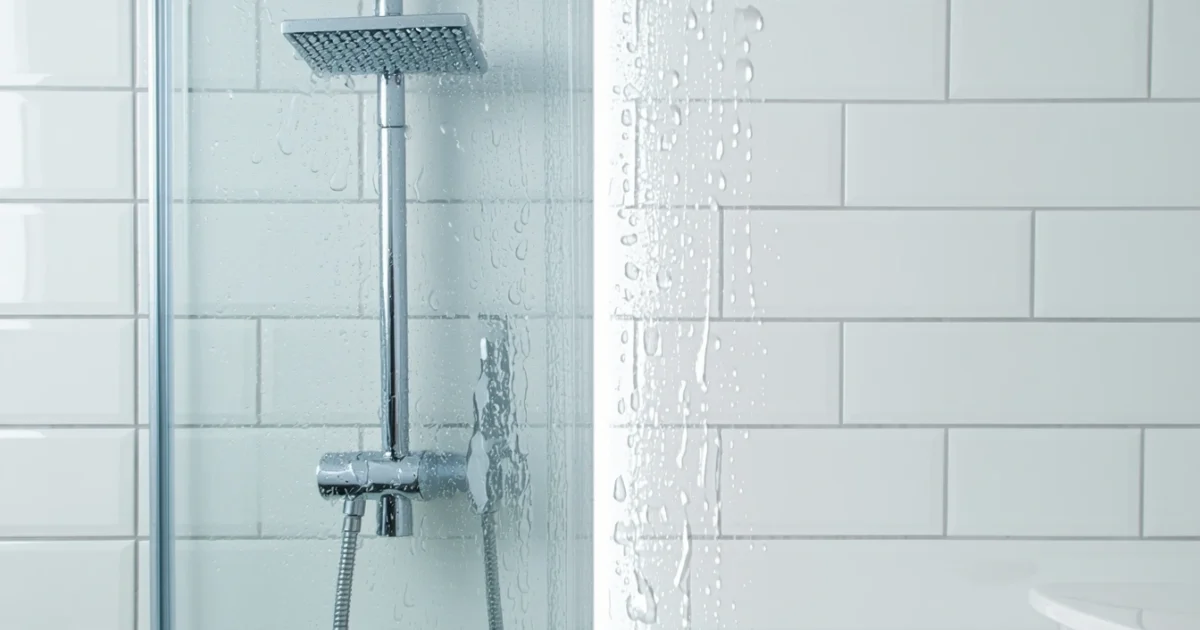
Shower glass goes wrong in a few recognisable ways. It turns white and chalky, or it clouds over, or it streaks every time you wipe it, or it develops grey-black spots in the corners. Each of those has a different cause, and the cause decides which cleaner will work. Spraying the same bottle at all four is how people end up scrubbing for an hour and getting nowhere.
This guide starts with the symptoms and what is behind them, then works through fixes from the gentlest to the most aggressive, then covers the things that can go wrong and when to stop and ask a glazier or the installer. If you are also dealing with windows, our page on cleaning windows without streaks covers the drying technique that applies here too.
Disclosure: Cleaners Guide is a participant in the Amazon Associates programme, so if you buy through links on this page we may earn a small commission at no extra cost to you. It never changes our recommendations, we suggest products because they work and we point out cheaper options where they do the same job. Prices and availability change, so always check the current price before buying.
Work out what you are looking at
| What you see | Most likely cause | Where to start |
|---|---|---|
| White, chalky spots and crusty edges, rough to the touch | Limescale. Hard water dries on the glass and leaves calcium behind | Acid: vinegar, citric acid or a limescale remover |
| A cloudy film that smears when you wipe it, often worst low down | Soap scum. Soap and hard water minerals combine into a sticky residue, with body oils and conditioner mixed in | Washing-up liquid, then bicarbonate paste or a soap scum cleaner |
| Streaks that come back as soon as it dries | Cleaner left on the glass, a greasy cloth, or fabric softener residue on the cloth | Rinse well and dry with a clean microfibre cloth or a squeegee |
| Grey, black or pink spots in corners, seals and the bottom track | Mould and mildew growing in damp silicone and dirt | Mould cleaner on the seal. Check the sealant is still intact |
| A permanent haze that does not change when wet or cleaned | Etched or scratched glass, or a damaged coating | Stop cleaning harder. See the last section |
| Water running down in sheets instead of beading | Coating worn off, or a layer of residue sitting over it | Clean gently with a neutral product, then reassess |
Many shower screens have more than one of these at once, which is why the cloudiness does not shift with a single wipe. Start with the cause that covers most of the glass.
Why hard water makes it worse
Most of the UK has some level of hard water, particularly in the south and east of England, so limescale on shower glass is common. When droplets dry on the glass, the water evaporates and the minerals stay behind. Soap does not rinse away as easily in hard water either, because it reacts with the minerals to form a scummy film that clings to glass and traps skin oils and shampoo. That is why the lower half of the screen, where water runs and splashes, is usually the worst. The roughened surface of dried limescale then gives soap scum something to grip, so the two feed each other.
You can check how hard your water is on your water supplier’s website, usually by entering your postcode. Water hardness is often given in mg per litre or in degrees, and the supplier will describe it as soft, moderately hard, hard or very hard. If you are in a hard or very hard area, assume you will need to squeegee and descale more often, whatever cleaner you choose.
Where the film comes from
Bar soap tends to leave more scum than shower gel, because it is made from fatty acids that react with the minerals in the water. Shampoos and conditioners containing silicones and oils leave an invisible coating too, which is why glass can feel slippery or look greasy even without visible spots. Touching the glass with wet hands adds fingerprints and skin oils. None of this is dangerous, but together it scatters light and makes the glass look dull and cloudy, even when you have just wiped it over.
Fixes, from easiest to hardest
Work down the list and stop as soon as the glass is clear. Every step further down carries more risk to the glass, the seals or the frame. Our wider guide on deep cleaning a bathroom sets out the order in which to do the rest of the room, so the screen is the last thing you rinse.
Safety before you start
- Use rubber gloves and keep the room ventilated, particularly with acid cleaners.
- Keep children and pets out until the floor is rinsed and dry. A wet shower tray with cleaner on it is slippery, so stand carefully or put a non-slip mat down.
- Never mix products. Rinse the glass between different cleaners and use one at a time.
- Keep eyes protected when spraying overhead, because acid splashes sting and a trigger spray can drift.
- Check the care sheet or manufacturer’s website for your screen if you have a warranty, and test any new product on a low, hidden corner first.
- Do not climb on the tray or lean on the glass to reach the top edge. Use a long-handled squeegee or a stable step instead.
Fix 1: a warm rinse and a wipe
Light film responds to warm water and a microfibre cloth. Remove bottles and caddies, rinse the glass with warm water, wipe with a damp microfibre cloth and a drop of washing-up liquid, rinse again and dry. Washing-up liquid is designed to cut grease, so it handles the oily part of the film. If this clears it, you do not need anything stronger.
Fix 2: vinegar and water, the standard home method
White vinegar is a mild acid and dissolves the limescale part of the problem. Mix equal parts white vinegar and water in a spray bottle, spray the glass, leave it for 10 to 30 minutes without letting it dry, then wipe with a cloth, rinse with clean water and dry. A stronger mix, or neat vinegar, can be used on thick deposits, but keep the contact time short on frames and seals.
- Keep it off natural stone, such as a marble or limestone tray or the surround. Acid etches it.
- Do not leave it on rubber seals, aluminium or chrome for long. Wipe it off and rinse.
- Never mix it with bleach or ammonia-based cleaners. The reaction releases harmful gas. Our list of cleaning products you should never mix explains the combinations to avoid.
- Ventilate the room. Open a window or run the fan while you work.
Vinegar cleans limescale well but is not a strong disinfectant. If you were hoping it would also tackle mould, see our explainer on whether vinegar disinfects. Warming the mixture helps it work, but do it with hot tap water in the bottle rather than heating vinegar in a microwave, which fills the room with fumes.
Fix 3: washing-up liquid and bicarbonate of soda for soap scum
When the problem is waxy soap scum rather than chalky limescale, mix bicarbonate of soda with a little water into a spreadable paste, add a squirt of washing-up liquid, and rub it on with a soft sponge or a damp microfibre cloth. Work in small circles, leave it for a few minutes, and rinse well. It is a mild abrasive that lifts grime without scratching normal glass, but rinse thoroughly because it dries to a white film. Avoid using it on coated or frosted glass without checking the manufacturer’s advice. Our look at whether baking soda and vinegar clean explains why you should use them one after the other, not together on the glass, since mixing them cancels most of the effect.
Fix 4: citric acid or lemon on stubborn limescale
Citric acid powder dissolved in warm water works in the same way as vinegar but without the smell. A tablespoon or two in a cup of warm water is a common mixture, though follow the instructions on the packet. Lay kitchen paper soaked in the solution over the worst patches so it stays in contact with the deposit, leave it for 30 minutes or so, then wipe and rinse. Lemon juice does a similar job on small spots but is weaker and can leave a sticky residue, so rinse well. Neither is a disinfectant, whatever you may read.
Fix 5: a shop-bought limescale remover
For crusty, long-neglected limescale, a product sold as a limescale remover is faster and often easier than repeated vinegar. Many of the well-known supermarket sprays are acid based. Read the label before you buy for three things: that it is suitable for glass and for your screen’s coating, that it is safe for the frame and seals, and the contact time. Wear gloves, ventilate, keep it off natural stone and chrome, rinse the glass thoroughly and dry. Do not mix it with other cleaners, and do not use bleach after it without rinsing every trace away. Our page on cleaning products has more on choosing them.
Fix 6: a glass scraper, only if the glass allows it
A razor-style glass scraper can lift hardened deposits from plain, smooth glass, but it can also scratch permanently. Check the manufacturer’s advice first. Many shower screens carry a protective coating, and scrapers can ruin it. Never use one on textured, frosted, etched or coated glass. If you do use one, use a new blade, keep the glass wet with soapy water, hold the blade at a shallow angle, push in one direction with light pressure, and stop if you hear grinding. Wear cut-resistant gloves and store the blade safely afterwards. If you are not sure, leave it. A plastic scraper or an old bank card is the safer option for soap scum.
When soap scum is thick and waxy
If the film has built up for months, a single pass will not shift it. Spray undiluted white vinegar, or a vinegar and washing-up liquid mix, leave it for 15 to 20 minutes without letting it dry, then lift the softened layer with a plastic scraper or an old bank card held at a shallow angle on wet glass. Follow with the bicarbonate paste and a rinse. Repeating a gentle treatment two or three times is far safer than one hard scrub.
When there is more than one problem at once
Mixed deposits, such as limescale with soap scum on top, respond best to a sequence rather than a stronger product. The order matters, because the soap layer often sits on top and protects the scale underneath:
- Warm the glass with a hot-water rinse to soften the film.
- Cut the soap and oil layer first, with washing-up liquid or a bicarbonate paste, and rinse.
- Dissolve the scale underneath with vinegar, citric acid or a limescale remover, and rinse.
- Agitate with a soft sponge or toothbrush and rinse again.
- If marks remain, repeat with the other method, and only then think about anything harsher.
A quick test: film or damage?
Wet a small patch of the cloudy glass and look at it from the side. If the haze goes clear while it is wet and comes back as it dries, it is a mineral or soap film, and cleaning will shift it. If it stays hazy when wet, or you can feel a rough or dull patch with a fingernail that no cleaner changes, the glass or its coating has probably been damaged. Stop scrubbing at that point, because harder rubbing only risks scratches.
How long each approach takes
| Approach | Hands-on time | Wait time | Good for |
|---|---|---|---|
| Squeegee after a shower | 10 to 30 seconds | None | Prevention |
| Weekly vinegar spray, wipe and squeegee | About 5 minutes | 10 to 15 minutes | Light scale and film |
| Bicarbonate paste | 10 minutes | A few minutes | Soap scum |
| Citric acid compress | 10 minutes | 30 minutes or so | Heavy limescale patches |
| Limescale remover | 10 minutes | Per the label | Crusty scale |
| Repeat treatments over several days | A few minutes each | Overnight between rounds | Neglected glass |
These are rough guides, since the time depends on the size of the screen and how long it has been left. Leaving the glass overnight between gentle treatments often works better than going harder in one go.
A cleaning routine that works for most screens
- Take bottles, razors and caddies out of the way and open a window or switch on the fan.
- Rinse the glass with warm water to remove loose film and hair.
- Spray from the top down with your chosen cleaner, in overlapping strips so it does not run through clean patches.
- Leave it for the contact time on the label, or 10 to 15 minutes for vinegar, and never let it dry on the glass.
- Agitate with a soft sponge or microfibre cloth in small circles. Use a soft toothbrush on corners, hinges and textured patterns.
- Rinse thoroughly with clean water from the top, until there are no suds or smell left.
- Squeegee from top to bottom in overlapping strokes, wiping the blade between passes.
- Buff any remaining droplets and the edges with a dry microfibre cloth, then check from the side in good light.
A final rinse with a jug of cold water helps get rid of the last of the cleaner, but you do not need distilled water. The squeegee and a dry cloth do far more to stop spots than the water type does. If you have a handheld shower head, use it to rinse, but do not aim the jet at the seals.
The kit, and how to use it
Microfibre cloths. A tight-weave microfibre cloth picks up film and drinks water without leaving lint. Keep one for washing and a separate dry one for the final polish, so you are not dragging dirty water back over clean glass. Wash them without fabric softener, which coats the fibres and causes smears. Choose cloths sold for glass or described as lint free.
A squeegee. Pick a blade about as wide as a comfortable single pass on your screen, with a firm rubber edge that sits flat against the glass. Start at a top corner, pull down in one smooth stroke, wipe the blade on a cloth, then overlap the next stroke by a couple of centimetres. For a sliding door, work one panel at a time. Rubber blades harden and nick over time, and a nicked blade leaves a line of water on every pass, so replace it when that starts.
Brushes. A soft sponge handles flat glass. A soft toothbrush gets into corners, hinge cut-outs, frame joints and patterned glass. Stiff nylon brushes can scratch, so test one on a hidden corner before using it on the visible face.
Gloves and ventilation. Rubber or nitrile gloves protect your skin from acid cleaners and from prolonged contact with wet cloths. Open the window or run the fan when using any limescale remover or even strong vinegar, since fumes build up quickly in a small bathroom.
Different glass, different rules
Textured and frosted glass
Patterned or frosted surfaces hold dirt in their grooves. Use a soft brush or toothbrush in small circles, rinse more than you would on smooth glass, and avoid abrasives that wear down the finish. Frosted glass also shows water marks more readily, so drying matters more.
Coated, easy-clean or anti-limescale glass
Some screens come with a factory coating that makes water bead and run off. Coatings differ, so follow the manufacturer’s care sheet where you have one. In general, use a neutral cleaner and a soft cloth, avoid scrapers and abrasive pastes, avoid strong acids unless the maker allows them, and rinse well. If water no longer beads after cleaning, the coating may be worn, and a retail glass sealant designed for shower screens can be reapplied. Check that it is suitable for your screen, apply a very thin coat on clean dry glass, and buff off the excess.
Toughened glass and temperature
Shower screens are normally toughened (tempered) safety glass. That makes them strong, but the edges are the weak point, so avoid knocking them with a squeegee handle or scraper, and check the edges for chips from time to time. Do not pour very hot or very cold water on a hot or cold screen. A chipped or cracked edge is a reason to call a glazier rather than carry on.
Framed and frameless screens
| Screen type | What needs attention | Notes |
|---|---|---|
| Framed | Glass, frame joints, bottom track, rubber seals | Mould and scale collect in the track. Use a toothbrush and avoid strong acids on aluminium |
| Frameless | Glass, hinges, magnetic or clear seals, bottom edge | Fewer places for grime, but the glass edges and hinges need gentle handling |
| Sliding doors | Rollers and tracks | Clean the track so the doors run freely, and lift the doors off only if the maker says it is safe |
For the seals, a soft brush and warm soapy water is enough for most grime. Mould in silicone seals is a separate job, and our guides to cleaning shower mould and what actually kills mould cover it. If the silicone is blackened right through, it is usually quicker to renew than to clean.
Frames, tracks and seals
A dirty track makes a clean screen look grubby, and standing water in it feeds mould. Vacuum or brush out loose debris first, then work along the track with a soft toothbrush and warm soapy water. A cotton bud gets into the drainage slots. Wipe the frame with a cloth wrung out in mild soapy water, avoid abrasive pads on aluminium or chrome, and dry it all so water cannot sit in the joints. Rubber seals and magnetic strips need only warm soapy water and a soft brush. Leave any hinge adjustment or re-seating to the installer, and do not lubricate hinges unless the manual says to, since oil attracts dirt and can stain the glass.
Homemade or shop-bought, and what is worth buying
Homemade mixes cost little and work well on everyday scale and scum. Shop-bought sprays are quicker, often include surfactants that cut soap film faster, and come with instructions that tell you about contact time and surfaces. Neither is automatically better, and the right one depends on what you are removing.
| Option | Best for | Watch out for |
|---|---|---|
| White vinegar and water | Regular limescale and light film | Smell, natural stone, seals and metal if left on |
| Washing-up liquid with bicarbonate | Soap scum and body oils | Rinse thoroughly, avoid coated or frosted glass |
| Citric acid solution | Heavier limescale with little odour | Rinse well, keep off natural stone |
| Shop-bought limescale remover | Thick, crusted deposits | Read the label for glass and coating, gloves and ventilation |
| All-purpose bathroom spray | Weekly upkeep once the glass is clear | Less effective on heavy scale |
| Eco or plant-based glass cleaner | Light, regular cleaning | May need longer contact time on stubborn marks |
Prices vary by shop and by pack size, so compare the cost per litre on the shelf rather than trusting a rule of thumb. A bottle of white vinegar is almost always the cheapest option per use, but a purpose-made product can save effort on bad limescale. Ready-to-use products and concentrates work out differently, so check the dilution instructions.
Product types at a glance
The links below go to Amazon UK searches, so you can compare current choices. The table sets out what each type does and who it suits.
| Product type | Best for | What to look for | Caution |
|---|---|---|---|
| Limescale remover spray (search) | Thick, crusty hard-water marks | A label that names glass and bathroom screens, with a contact time and instructions for the frame | Gloves and ventilation, keep off natural stone and chrome |
| Shower squeegee (search) | The daily habit that stops scale forming | A straight, firm, replaceable rubber blade, wide enough for a pass of your screen, with a handle that is easy to grip | Replace worn blades. Do not knock the glass edge |
| Microfibre glass cloths (search) | Final buffing and streak-free drying | A tight, low-pile weave, plus a separate cloth for washing | Wash without fabric softener |
| Shower squeegee, compact (search) | Small cubicles or a second squeegee kept in the shower | A suction hook or holder so it is used every day | Check it does not scratch coated glass |
As an Amazon Associate we earn from qualifying purchases.
Keeping the glass clear once it is clean
Squeegee after every shower
Pulling a squeegee down the glass takes seconds and removes the water before it can dry into spots. Start at the top and pull down, wiping the blade between passes. Replace the blade when it goes hard or nicked, because a worn edge leaves streaks. It is the single most effective habit, and the one that makes every other cleaning job easier.
A five-minute weekly wipe
Once a week, spray with the same vinegar mix, wipe with a microfibre cloth, rinse and squeegee dry. That stops thin film from turning into crust. A monthly deeper clean, using a paste or limescale remover where needed, is enough for most households.
Ventilation and what you wash with
Moisture hanging in the air slows drying and encourages mould, so run the extractor fan during the shower and for a while afterwards, and leave the door open to air the cubicle once you are out. Liquid body wash generally leaves less scum than bar soap, and conditioners with heavy silicones can leave a film, so rinse thoroughly. A water softener or a shower-head filter can reduce limescale at source, but they cost money and need maintenance, and they will not remove the need to wipe the glass. If the limescale reaches the fittings as well, our guide to descaling a shower head shows how to deal with it.
Which shower products leave the most film
| Product | Typical residue | What helps |
|---|---|---|
| Bar soap | Often the most scum, especially in hard water | Switch to a liquid wash, or rinse the screen after use |
| Shower gel or body wash | Usually less than bar soap, depends on formula | Rinse the walls and glass as well as yourself |
| Conditioner and shampoo with silicones | A slippery, invisible coating that dulls the glass | Rinse thoroughly and wipe the lower glass weekly |
| Bath oils and moisturising washes | Can leave a greasy film on glass and trays | Use sparingly, and degrease with washing-up liquid |
This is general guidance rather than a ranking of brands, because formulas differ. If the film is heavy and you have not changed anything else, the products you wash with are worth a look.
Things that undo your hard work
- Gritty scourers, steel wool and pumice. They scratch glass and scratches hold dirt.
- Leaving a cleaner to dry on the glass. It leaves its own film and spots.
- A greasy or fabric-softened cloth. It smears. Wash cloths without fabric softener and use clean ones for polishing.
- Mixing cleaners. Vinegar with bleach releases chlorine gas, and ammonia with bleach releases chloramine. Use one product at a time and rinse between them.
- Acid on seals and frames. Strong limescale removers can damage rubber, chrome and some aluminium finishes if left on.
- Forgetting the corners, track and bottom edge. That is where mould and trapped water start.
Our guide on cleaning inside oven door glass makes the same points about scratch risk, and the double-glazing page on cleaning double glazed windows covers the same drying techniques. Other bathroom jobs are in the others section, and tiles around the screen are covered in our shower tile guide.
After cleaning: protecting the glass
Once the glass is spotless, a thin layer of a water-repellent treatment sold for shower screens makes water bead and run off, which slows the return of limescale. Apply it only to clean, dry, uncoated glass, follow the instructions exactly, buff off the excess and keep it off seals and frames. Over-application causes smearing. If your screen already has a factory coating, check the care sheet first, because stacking products can make it streak.
When to stop and call someone
- The haze is permanent. If the glass stays cloudy even when wet and after proper descaling, it may be etched by long contact with acid or minerals, and cleaning will not reverse that. A glass specialist can advise on polishing or replacement.
- Chips, cracks or a damaged edge. Toughened glass can shatter without warning. Keep the screen shut, avoid using it, and contact the installer or a glazier.
- Leaks. Water escaping at the seals, hinges or base means the seal or the sealant has failed. Re-sealing is a job for the installer or a competent bathroom fitter.
- The screen is under warranty. Cleaning with the wrong product can void the coating guarantee. Check the care sheet first.
- Black mould through the silicone. If it keeps coming back after cleaning, the sealant probably needs renewing.
Shower glass questions, answered briefly
- How often should I clean shower glass? Squeegee after each shower if you can, wipe weekly with a vinegar mix or a bathroom spray, and do a deeper clean monthly, or when you see chalky build-up. Hard water areas need the more frequent end.
- What is the best homemade cleaner for shower glass in a hard water area? White vinegar mixed half and half with water is the standard. Spray it on, leave 10 to 30 minutes, wipe, rinse and dry. For heavier scale, use a citric acid solution on soaked kitchen paper. Keep both off natural stone.
- Can I use bicarbonate of soda on shower glass? Yes, on plain glass. Mix it with water into a paste, rub gently with a soft cloth, and rinse thoroughly. Avoid it on coated or frosted screens unless the manufacturer says it is fine, and do not combine it with vinegar on the glass.
- Why is my shower glass still streaky after cleaning? Usually cleaner or soap left behind, or a cloth that is greasy or has fabric softener on it. Rinse again with clean water, then squeegee and buff with a clean dry microfibre cloth. Paper towels can leave lint.
- Which products should I avoid on shower glass? Steel wool, scouring pads and gritty powders, razor blades on coated glass, and bleach mixed with anything. Check labels before using acids on seals, frames or natural stone.
- How do I stop soap scum coming back? Squeegee after use, rinse the screen with clear water, ventilate the room, and switch from bar soap to liquid soap or body wash if the scum is heavy. A thin coat of shower-screen sealant can help on suitable glass.
- Does a water softener help? It reduces the minerals that cause limescale, so the glass marks less. It will not stop soap film or fingerprints, and it needs installing and maintaining, so it is a long-term choice rather than a quick fix.
- Can I use a razor blade on shower glass? Only on plain, uncoated, smooth glass, with a new blade, wet glass and light pressure. Many screens have coatings that a blade will damage permanently, so check the care sheet first and use a plastic scraper if in doubt.
- Can I use the same cleaner on the glass and the frame? Often yes, if it is mild. Strong acid cleaners can mark aluminium, chrome and rubber seals, so rinse them off quickly, test on a hidden spot, and follow the label.
- Is cloudy glass always dirt? No. If the haze stays after proper descaling and is still there when the glass is wet, it may be etching or coating damage. That cannot be cleaned off, and a glazier can advise.