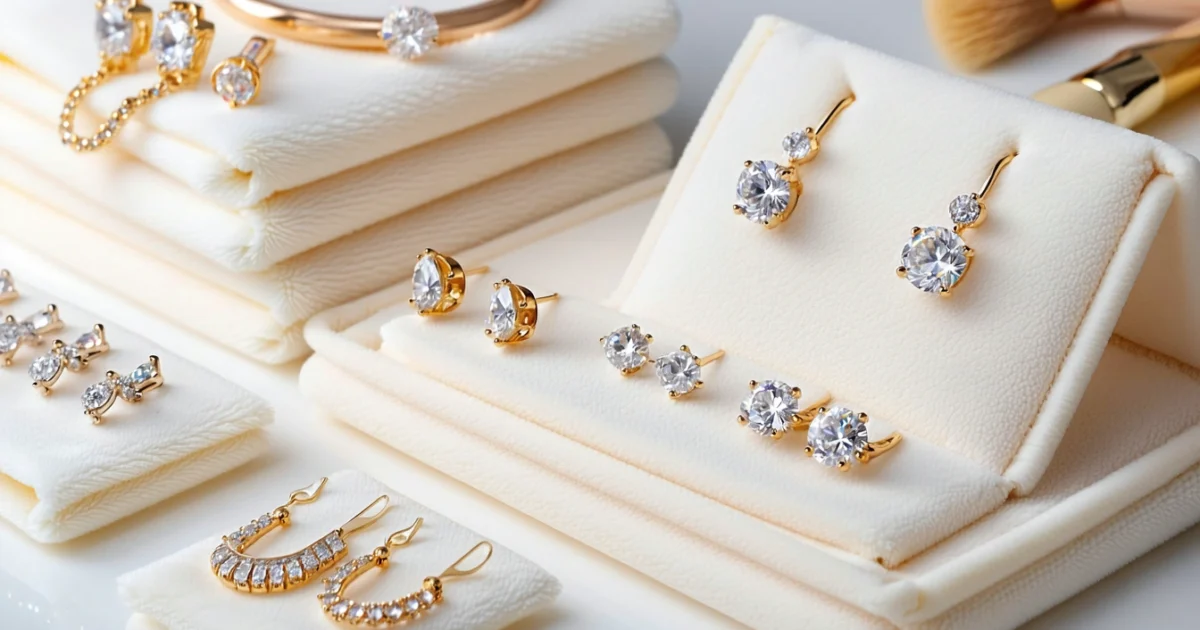
Most earrings can be cleaned with a few minutes in warm water with a drop of mild washing-up liquid, a soft brush and a lint-free cloth. The exceptions matter: pearls, opals, turquoise and other porous or treated stones should never be soaked, glued costume pieces and thinly plated metal should be kept short and damp rather than wet, and anything you wear in a healing piercing needs hygiene advice, not just a polish. Check the material first, and the rest of the job is simple.
Below you will find the all-purpose method, then a metal-by-metal and stone-by-stone guide, how to keep posts and backs hygienic, fixes for green marks, stuck backs and tarnish, and a storage routine. Our guides to cleaning gold jewellery and removing tarnish from silver go deeper on those two metals, and the Cleaners Guide homepage has the rest of the household jobs.
Disclosure: Cleaners Guide is a participant in the Amazon Associates programme, so if you buy through links on this page we may earn a small commission at no extra cost to you. It never changes our recommendations, we suggest products because they work and we point out cheaper options where they do the same job. Prices and availability change, so always check the current price before buying.
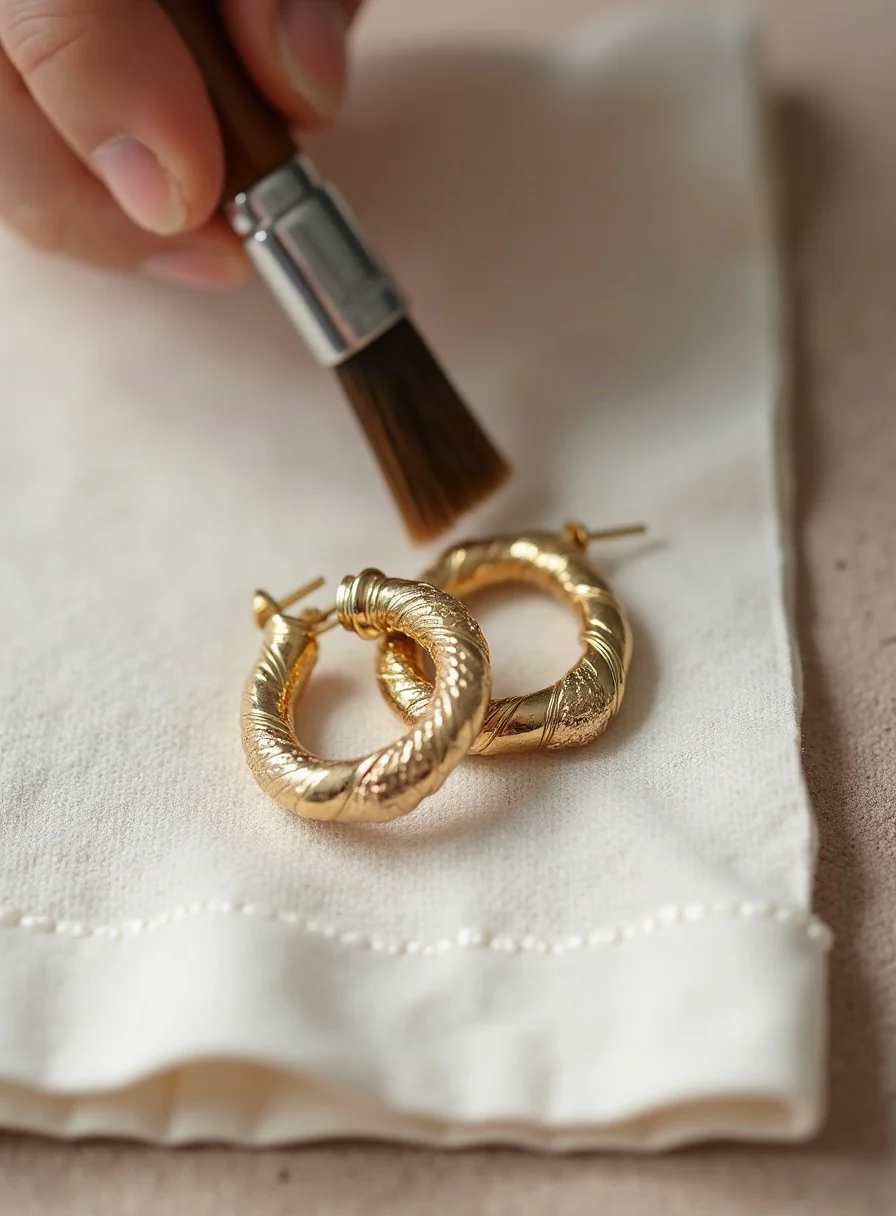
The method that suits nearly every pair
Do this for solid metal earrings and hard, untreated stones such as diamonds, sapphires and rubies. For anything else, read the material sections before you start.
- Look first. Hold each earring under a good light. Check for loose or wobbling stones, bent posts, worn prongs and cracks. If a stone moves, do not soak or scrub it, because water and brushing can finish the job the setting started. Take it to a jeweller.
- Block the sink. Put the plug in or lay a folded towel in the bowl. Small earrings disappear down drains with great efficiency.
- Mix a mild solution. A small bowl of warm water, not hot, with a drop or two of mild washing-up liquid. Hot water can loosen glue and shock some stones.
- Soak briefly. Five to ten minutes is plenty to loosen oils, hairspray, make-up and skin residue. Longer soaks do not clean better and can harm plated pieces.
- Brush gently. Use a soft brush, such as a baby toothbrush or a soft jewellery brush, around settings, in the grooves and on the backs and posts, where most of the grime collects. Light pressure and small circles are enough. A cotton bud reaches tight corners, but fibres can catch on prongs, so check afterwards.
- Rinse well. Run lukewarm water over each piece, holding it firmly, until no soap is left. Soap film dulls metal and gems.
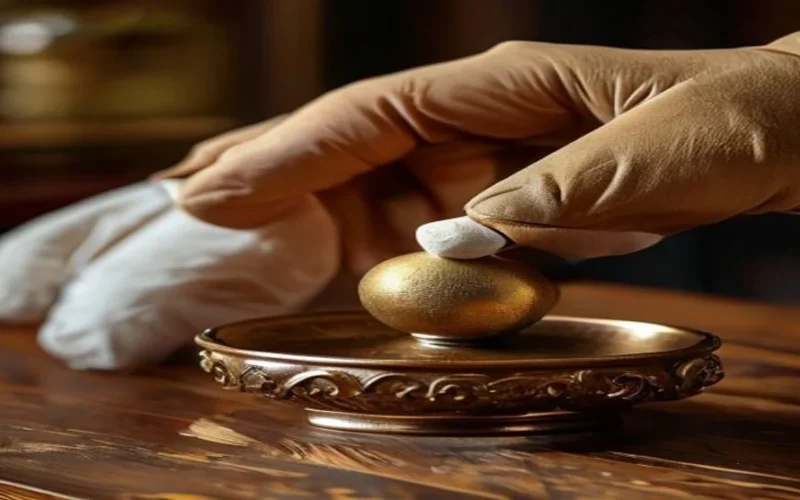
- Dry and polish. Pat dry with a soft, lint-free cloth, then let them sit on a clean cloth until fully dry, especially hoops with hinges and hollow pieces. Polish metal parts with a soft polishing cloth, working in straight lines, which shows fewer swirl marks than circles.
- Look again. Check that stones are still tight and the post and clasp work smoothly before putting them away or back in your ears.
For everyday earrings that go in and out of your ears, a quick wipe with a clean cloth after wearing keeps most of the build-up from forming, and a proper wash every week or two is plenty for pieces worn daily. Use the full method when something looks dull, feels gritty on the post or smells off. A small, soft jewellery brush and a polishing cloth cover most of the work.
Skip these everywhere: bleach, chlorine and ammonia-heavy cleaners, which can pit and discolour metals and are unpleasant near your face. Toothpaste, which is abrasive and scratches soft metals and stones. Rough scourers, steel wool and paper towel, which scratch. Harsh acids such as neat vinegar or lemon juice, which can etch some metals and attack pearls and other stones. And a dishwasher or washing machine, where earrings are lost and battered. If you think you may use a general-purpose jewellery cleaner, read the label for which metals and stones it suits, as some dips are only for gold and diamonds.
Adjusting for the style of earring
Studs are the easiest, because they are small and solid. Pay attention to the post and the back, and to the underside of the head, where skin oil collects. Hoops can have hinges and clasps that trap soap, so rinse them with the clasp open and closed, and dry them with the hinge facing down. Hollow hoops, including many lightweight gold hoops, can hold water inside, so soak only briefly and shake gently and leave them to dry fully, or avoid soaking them at all and wipe instead. Drop and dangle earrings have small links, loops and jump rings. Clean them without tugging at the joins, and lift them out of the water with the whole piece supported, so the weight does not stretch a ring. Chandelier and cluster designs collect dust in tiny gaps, so a soft dry brush and a short wash are better than long soaks. Clip-on earrings have springs and pads: wipe the pads with a damp cloth, keep water off any glue and replace worn pads. Magnetic earrings should be wiped dry and kept away from cards and electronics. Earrings with moving parts, enamel or inlay need the gentlest treatment of all.
Sensitive ears and metal choices
If your ears itch, redden or weep when you wear a pair, the cause is more often the metal than dirt. Nickel is a common culprit and appears in many base metals and in cheap plating. Pieces made of implant-grade titanium, surgical stainless steel, niobium or solid gold are generally better tolerated, though individual reactions vary. Keeping those earrings clean helps, but cleaning will not change the metal. A pharmacist or GP can advise if the reaction is more than mild.
Metals: what each one tolerates
Working out what you are holding
Before you pick a method, try to establish the material. Look for stamps on the post or back: 925 or STG for sterling silver, numbers such as 375, 585 or 750 for 9, 14 and 18 carat gold, and PT or 950 for platinum. Most precious-metal jewellery sold in the UK carries a hallmark from an assay office, though very light pieces can be exempt. Stainless steel is sometimes stamped 316L. Costume pieces often carry no mark, or a brand name. Colour and weight are weak clues, and a magnet is not a reliable test, since some non-precious metals are not magnetic and some clasps are steel. If you have no idea what a pair is made of, or the stones look valuable, clean them as costume jewellery, which is the most cautious method, and have a jeweller identify them before you try anything stronger.
Sterling silver
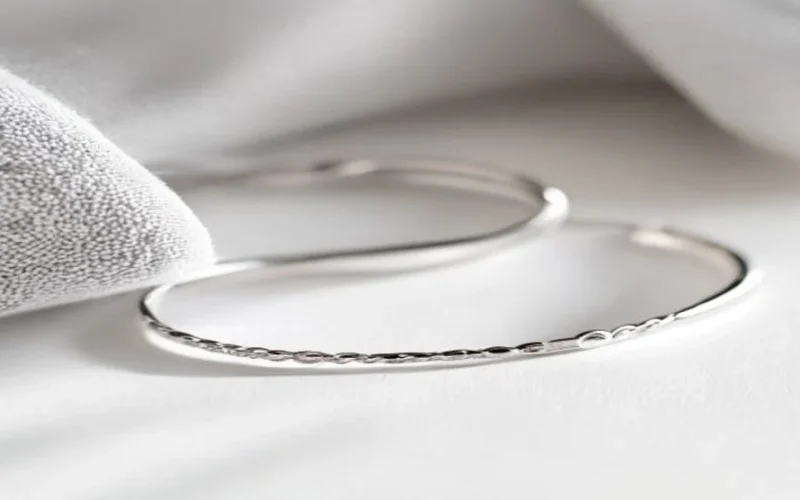
Silver darkens because it reacts with sulphur compounds in the air, as well as with some foods, rubber and cosmetics. Light tarnish usually wipes off with a silver polishing cloth. For more, make a paste of baking soda and a little water and rub it on gently with a soft cloth or brush, rinse, and dry. That works because baking soda is a very mild abrasive, so use light pressure, because you are removing a thin layer of silver along with the tarnish. The aluminium-foil, hot water and baking soda dip is a well-known shortcut that lifts tarnish by chemical reaction, but keep it for plain, solid silver. It is not suitable for pieces with pearls, opals or other porous stones, glued settings, or deliberately darkened (oxidised) detail, which it will strip. Our guide on tarnished silver covers the options in more detail.
Gold, white gold and rose gold
Pure gold is soft, and the higher the carat figure, the softer the metal and the easier it scratches, so 18 carat marks more readily than 9 carat. Warm soapy water and a soft cloth are the right tools for all of them. White gold is often rhodium-plated for its bright white finish, and strong chemicals or hard polishing can wear that thin layer so that the slightly yellower gold shows through, at which point a jeweller can replate it. Rose gold gets its colour from copper, and should be treated like other gold. Gold-plated and gold vermeil earrings have only a thin gold layer, so treat them like costume jewellery. Our gold jewellery guide has more.
Platinum
Platinum is dense and durable, and warm soapy water with a soft brush is all it needs. It tends to develop a soft grey patina over time, which many owners like, and if you would prefer the original bright finish, a jeweller can repolish it. Platinum scratches by displacement, meaning the metal moves instead of wearing away, so keep it from rubbing against harder pieces in storage.
Stainless steel and titanium
Surgical-grade stainless steel and titanium are hard-wearing and corrosion resistant, so they cope with soapy water, a soft brush and an isopropyl alcohol wipe without trouble. They are also common choices for people with sensitive ears. Dry them properly after washing, especially threaded and hinged parts.
Costume jewellery and plated pieces
Fashion earrings often have a thin plating of gold, silver or rhodium over a base metal, and stones that are glued in. Water that gets under the plating or into the glue lifts them and causes flaking and green or black staining. Skip the soak. Wipe with a cloth that is only damp, using a drop of mild soap if needed, clean the post with a damp cotton bud, dry at once and keep your polishing gentle, because rubbing wears the plating. When the plating wears through, cleaning cannot restore it, and replacing the pair is usually the practical option.
Stones, pearls and other materials that hate water
The rule of thumb is that hard, clear, untreated stones can take washing and soft, porous, treated or organic ones cannot. If you do not know what you have, play safe: wipe with a barely damp cloth and ask a jeweller. A gemmologist or jeweller can identify stones and whether they have been oiled, dyed or filled.
| Material | Safe approach | Avoid |
|---|---|---|
| Diamond, sapphire, ruby (untreated) | Warm soapy water and a soft brush, then rinse and dry | Harsh chemicals, and ultrasonic cleaning if the stone has fractures or fillings |
| Emerald | Quick wash in lukewarm soapy water, soft brush, dry gently | Ultrasonic and steam cleaners, since emeralds are commonly oiled and often fractured |
| Pearl (cultured or natural) | Wipe with a soft, damp cloth after wearing. Lay flat to dry | Soaking, soap detergents, alcohol, vinegar, perfume, hairspray and ultrasonic cleaners |
| Opal | Wipe the surface with a soft, damp cloth | Soaking, heat, sudden temperature changes and ultrasonic cleaners |
| Turquoise, lapis, malachite and other porous stones | A soft dry brush and a barely damp cloth, then dry immediately | Soaking, alcohol, oils and chemicals, which can change colour |
| Amber, coral, jet | A soft dry cloth, and a barely damp cloth only if needed | Water, alcohol and solvents |
| Glass and crystal beads, enamel | A quick wipe, with a little mild soap if needed | Soaking, which can loosen glue and enamel |
Why hardness matters
Gemmologists rank minerals on the Mohs scale, from 1 for the softest to 10 for diamond. The practical point is that dust in a home contains tiny particles of quartz, which sits at about 7, so anything softer than that can be scratched by ordinary grit and by the gems around it. The figures below are approximate, since they vary with the variety and the treatment.
| Material | Approximate Mohs hardness | What it means at home |
|---|---|---|
| Diamond | 10 | Scratch-resistant, but oils make it look dull, so wash it regularly |
| Sapphire and ruby | 9 | Very durable, though treated stones need care |
| Topaz | 8 | Hard, but it can cleave if knocked |
| Emerald | About 7.5 to 8 | Hard but brittle and usually treated, so avoid shocks, heat and ultrasonic cleaning |
| Opal | About 5.5 to 6.5 | Soft and sensitive to water content and temperature |
| Turquoise | About 5 to 6 | Porous, so liquids can stain it |
| Coral | About 3 to 4 | Soft and easily eaten by acids |
| Pearl | About 2.5 to 4.5 | Soft, and acid and abrasion damage the surface |
| Amber | About 2 to 2.5 | Very soft, so even a dry cloth can scratch it if it is gritty |
A few practical habits follow from this. Store hard and soft stones apart. Wash and dry your hands before polishing, so you do not rub grit into a soft surface. Wear softer stones for dressy occasions, and use tougher pieces for everyday life. And remember that the metal around a stone is often softer than the stone, so a ring of scratches round a diamond is normal wear and not a sign you have cleaned it wrongly.
Pearls get their own routine
Pearls are mostly calcium carbonate, which acids dissolve, and the shiny nacre layer is thin. Perfume, hairspray and cosmetics dull it over time, so put pearls on last and wipe them with a soft cloth when you take them off. Never use vinegar, lemon, alcohol or abrasive cloths. Strung pearls, and pearls knotted on thread, should not get wet at all, because moisture weakens the cord. For pearl studs, the post can be wiped with a damp cotton bud while keeping the pearl dry.
Ultrasonic cleaners and steam
Ultrasonic machines use high-frequency vibrations to shake dirt out of settings, and they are widely used by jewellers. At home they can be a gamble. They can loosen stones in worn settings, damage treated or fractured gems, and ruin pearls, opals and glued costume jewellery. Steam has similar risks. If you own one, use it only on plain, sturdy metal or hard, untreated stones in good settings, and follow the maker’s guidance. For valuable earrings, a jeweller’s professional clean costs little compared with replacing a stone.
Posts, backs and healing piercings
The parts of an earring that touch your skin are the post and the back, and they pick up sweat, dead skin and sebum. Cleaning them is a matter of hygiene as well as shine. Wash your hands before putting earrings in, and remove them gently, holding the back.
Disinfecting plain metal earrings
For earrings made entirely of plain metal, such as surgical steel, titanium or solid gold, wiping the post and back with a swab of 70 per cent isopropyl alcohol, then letting it dry, is a simple way to disinfect. A short soak in 3 per cent hydrogen peroxide followed by a thorough rinse is another option for plain metal, though it is a poor choice for silver, plated pieces and anything with stones. Our article on whether hydrogen peroxide disinfects explains what it does and does not do. Never use alcohol or peroxide on pearls, opals, turquoise, coral, glued stones or costume jewellery. Rinse off any cleaner, and let everything dry fully before wearing. Cleaning an earring cannot make it sterile, so do not treat a wash as a replacement for good aftercare.
New and healing piercings
Follow the aftercare from the person who pierced your ears, and keep the first jewellery in for as long as they advise, rather than swapping for a nice pair. Wash your hands before touching the area, and avoid cleaning the piercing with harsh antiseptics unless advised. Choose studs made from implant-grade titanium, surgical stainless steel or solid gold in the early stages, and avoid plated or nickel-rich pieces if you have a sensitive ear. If an ear is red, hot, swollen, painful or weeping pus, speak to a pharmacist or GP. Cleaning the earring is not a treatment. The NHS website has up-to-date guidance on infected piercings.
It is also sensible not to share earrings, and to clean pairs that have been stored for a long time before wearing them. For other personal items that need careful hygiene, see our guides to cleaning retainers and cleaning ears safely.
Earring backs deserve a mention. They are small, collect residue in tiny crevices and wear out. If a back is loose, rusty, bent or will not grip, replace it, since you can lose the earring and the cost is small. Replace the backs as well if you have had a skin reaction.
When something looks wrong
Green or black marks on skin
A green or dark mark on your skin or earlobe comes from a reaction between your skin, sweat and a metal, usually copper or brass in a base metal under thin plating. It is a sign of the earring wearing, and not a sign that your skin is dirty. It is usually harmless, but if your ears are itchy, red or sore, that suggests a metal sensitivity, and you should switch to a hypoallergenic metal. Wipe the earring with a damp cloth to remove the residue. Scrubbing it with acids, such as lemon juice or vinegar and salt, damages plating and is not worth the effort, and putting lemon juice on skin around a piercing can irritate it.
A stuck back
A back that will not release usually has dried skin oil or debris holding it to the post, or it is simply bent. Hold the earlobe steady, wet the area with warm water and a little soap, wait a few minutes and try again, twisting slightly as you pull. Do not tug hard, because you can tear the ear. If it will not come off, ask a pharmacist or the person who pierced your ears, or a jeweller.
Heavy tarnish and dull, cloudy metal
Work from gentle to firmer. Soapy water and a brush first, a polishing cloth next, and the baking soda paste on silver only if you need it. If metal still looks cloudy after cleaning, it is often covered in fine scratches or the plating has worn, which no amount of washing will fix. A jeweller can polish solid gold, silver and platinum, and replate where appropriate.
Irritation after cleaning
Rinse the earrings again in plenty of clean water and dry thoroughly, since residue from a cleaner is a common cause. If the irritation continues, stop wearing them and consider whether you have a metal sensitivity. Pharmacists can advise on mild reactions.
Home hacks that are best skipped
Search for earring cleaning and you will find cola, ketchup, toothpaste, neat vinegar, boiling water, bleach and a whole drawer of other kitchen cures. Most do more harm than good. Acidic drinks and condiments can etch soft metals and attack porous stones. Boiling water can loosen glue and crack stones with inclusions. Bleach and chlorine can pit gold alloys and silver. Toothpaste scratches. Rubbing the earring against clothes or a rough towel adds scratches. If an earring is dirty, warm, mildly soapy water and a soft brush are more effective than any of them, and cost nothing. Our general guide to whether baking soda and vinegar really clean explains the limits of the household mixes.
When to hand them to a jeweller
Take earrings to a jeweller if stones are loose, prongs are bent, the piece is antique or an heirloom, you do not know the metal or the stones, the earrings are valuable, or a cleaner has caused damage. Professional cleaning, a check of the settings and, if needed, repairs are often a sensible yearly habit for pieces you wear all the time.
Storing them, and a simple routine
Storage does a lot of the work. Metal-on-metal contact scratches, humidity and sulphur tarnish silver, and tangling bends posts. Keep earrings in a lined box with separate compartments, or in individual soft pouches, away from bathrooms and steamy rooms and out of direct sun. Anti-tarnish pouches or strips help with silver, although they lose their effect over time and need replacing, and a small sachet of silica gel in a drawer reduces moisture. Keep softer pieces, such as pearls and opals, apart from harder gems, which can scratch them. For travel, a hard case with a soft lining protects against crushing. Our laptop screen guide shows the same soft-cloth habits used for other delicate surfaces.
| How often | What to do |
|---|---|
| After each wear | Wipe with a soft cloth, especially the post and back. Put pearls and delicate pieces away separately |
| Every week or two for daily pairs | Wash with mild soap, brush gently, rinse, dry and polish |
| Monthly | Check settings, backs and clasps, and use the metal-appropriate cleaning step |
| Yearly for valued pieces | Have a jeweller inspect and clean them |
Take earrings out for swimming, showering, sleeping in some cases, exercise and when using hairspray or perfume. Chlorine and salt water damage some metals and glue, and cosmetics build up on the post. Put earrings in after you have finished your hair and make-up. A sensible order for the morning is skincare, sun cream, make-up, hairspray and perfume, and only then your earrings, and the reverse in the evening: earrings out first, and then your make-up off. Shampoo and conditioner leave a film that dulls stones, so avoid washing your hair with earrings in. If you are away from home, a cloth and a small bag are all you need: wipe the post and back before you put the pair in, and store them in a pouch of their own, away from the rest of the washbag.
A checklist for a small earring-care kit
Tick off what you already have. You can manage with a bowl, a soft toothbrush and a clean cloth, but these six make the job quicker and gentler. The links go to Amazon UK searches so you can compare for yourself. As an Amazon Associate we earn from qualifying purchases.
- ☐ Soft jewellery brush. Extra-soft bristles that reach behind settings. Avoid stiff nylon, which scratches soft metals. Search soft brushes
- ☐ Polishing cloth. A lint-free cloth for finishing. Some are treated for silver or gold, so buy the one for your metal. Search polishing cloths
- ☐ Jewellery cleaner. Read the label for the metals and stones it covers, and skip it for pearls and porous stones. Search jewellery cleaners
- ☐ All-in-one cleaning kit. A convenient starting set, but check that the cloths and liquids suit what you own. Search cleaning kits
- ☐ Anti-tarnish pouches or strips. Useful for silver and for long-term storage, and they need replacing as they wear out. Search anti-tarnish pouches
- ☐ Earring organiser or travel case. Look for separate slots and a soft lining, so pairs do not tangle or scratch. Search organisers
Three quick answers
Can I clean my earrings with toothpaste?
It is best not to. Toothpaste contains abrasives that scratch gold, silver and many stones, and a scratched surface looks duller afterwards and holds more dirt. Mild washing-up liquid in warm water and a soft brush do the job without the damage. If you need a mild abrasive on plain silver, a baking soda paste with very light pressure is gentler.
How do I clean earrings I wear every day?
Wipe them after each wear, then give them a proper wash every week or two, using the method above for your metal and stones. Daily wear picks up sweat, oils, shampoo and cosmetics, so clean the post and the back as carefully as the front, and give the clasp a look as well, since a worn clasp is how earrings get lost. Take them off for showers, swimming and sleep if the maker advises, and check the backs often.
Why do my silver earrings keep going black?
Silver tarnishes when it reacts with sulphur in the air and with some foods, cosmetics and rubber, and humid rooms speed it up. Wearing them regularly, wiping them after wear and storing them in sealed anti-tarnish pouches slow it down. Keep them out of bathrooms and kitchens, and polish lightly with a silver cloth when they darken.