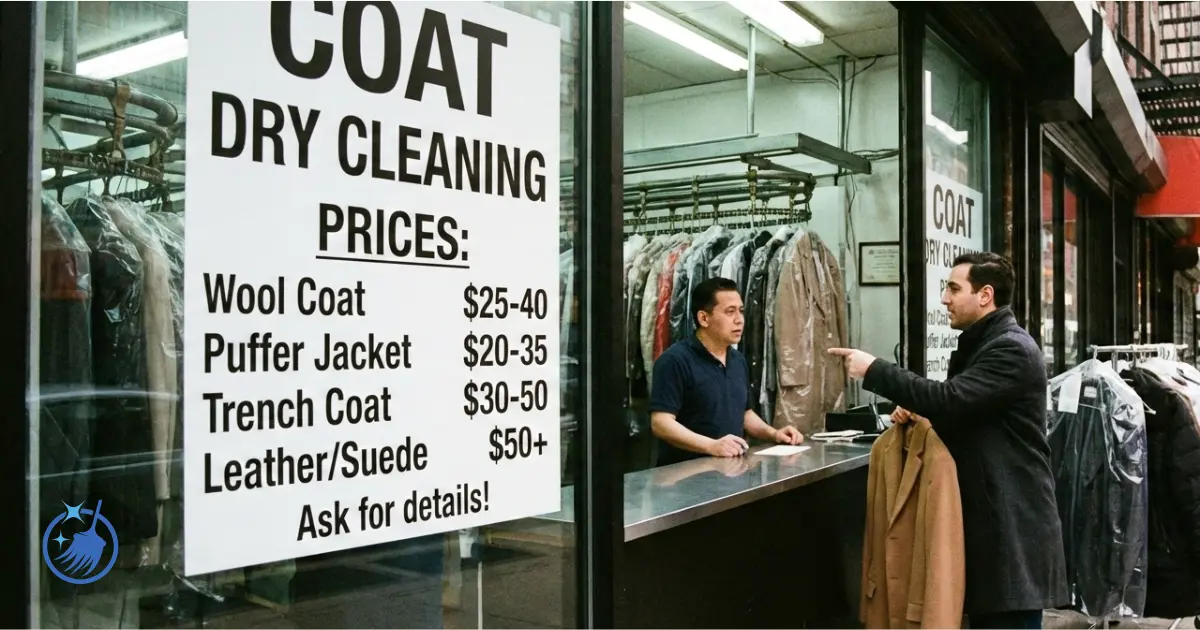
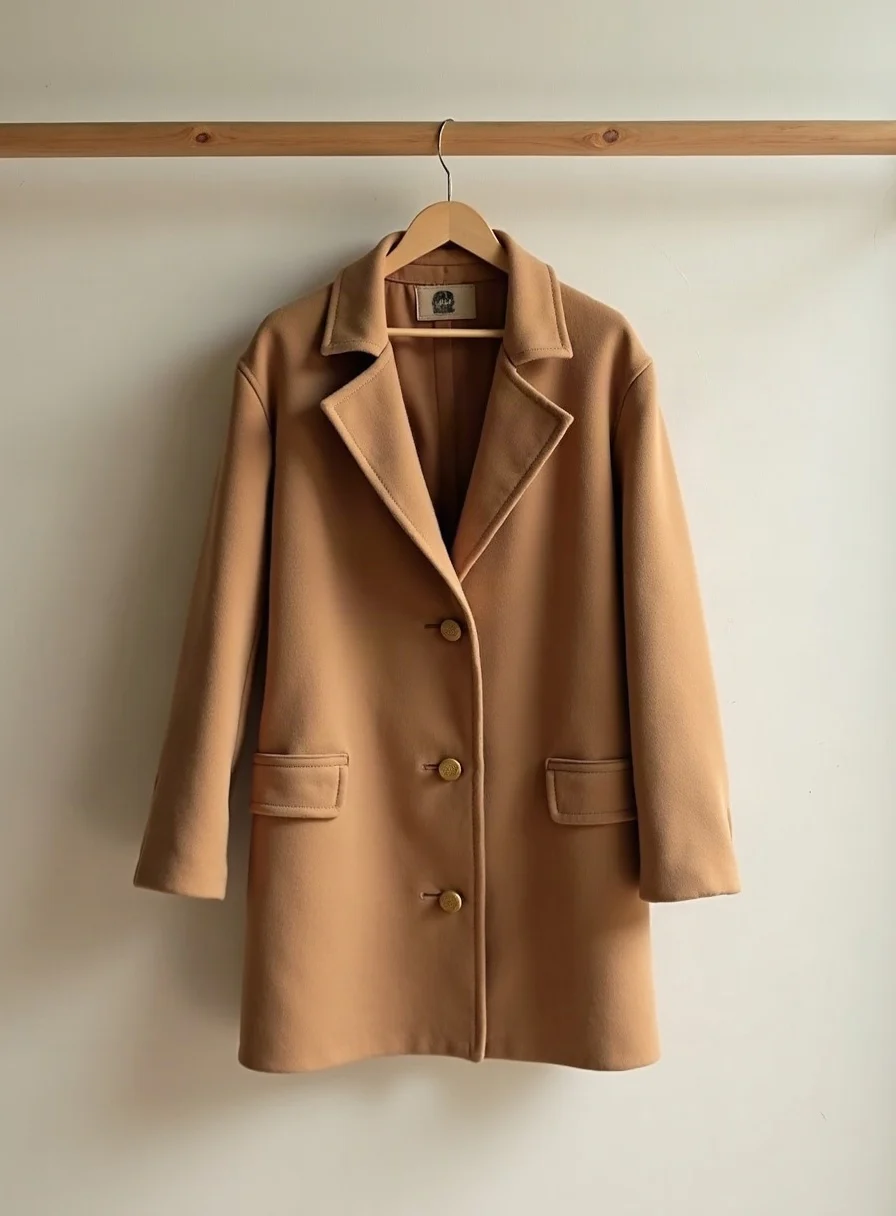
It is the first properly cold week of October. You take the winter coat off its hanger and it smells faintly of last year, the cuffs have gone shiny and there is a pale mark on one sleeve you cannot place. The label says dry clean. You know a bill is coming. What you do not know is whether it will be a small one or a large one, and the shop window has no prices in it.
That uncertainty is the real problem with coat dry cleaning, and it is why this page does not quote a list of numbers. Prices differ by town, by shop and by coat, and they change, so any table of exact figures would be out of date or a guess. What you can do is understand what actually sets the price, ask the right questions, and make sure you only pay for cleaning the coat needs.
The sections below start with the care label, then what pushes a quote up or down, then a numbered way to get a fair written price. After that comes what to do if the price or the result is not what you were promised, and how to stretch the time between cleans.
Read the label before you read any price list
The care label inside the coat, usually at the side seam or the neck, answers the first question: does this coat need dry cleaning at all? In the UK the symbols are a circle for professional dry cleaning, with a letter inside showing the solvent type that the cleaner may use, and a circle with a W for professional wet cleaning. A bar under the circle means the process must be gentler. A crossed-out circle means do not dry clean. Wording matters too:
- “Dry clean only” means the maker believes water would damage it. Respect that for structured, lined or tailored coats.
- “Dry clean” or “dry clean recommended” is more flexible. Some of these coats come through a careful hand wash, but the risk is yours.
- Machine washable coats, including many fleeces, cotton coats and synthetic puffers, may not need a professional at all.
- No label means ask a cleaner what the fabric is, and expect them to be cautious.
If you are weighing up washing a coat at home, our guide to dry cleaning at home explains what the kits can and cannot do. For a leather or suede coat, the answer is almost always a specialist, though cleaning a leather jacket shows what you can do in between.
What actually moves the price
Whether you are in a small town or a big city, the same few things decide where a quote lands. This table runs from coats that are usually cheapest to clean to those that are usually dearest, without putting numbers on something that varies so much.
| Coat | Usually priced | Why |
|---|---|---|
| Plain cotton, polyester or raincoat | Lower end | Simple fabric, quick to clean and press |
| Wool overcoat or trench | Mid range | The standard job for most cleaners |
| Long or heavy winter coat | Mid to upper | More fabric, more solvent, longer pressing |
| Padded or down-filled coat | Upper | Bulk, and the filling must be dried carefully so it does not clump |
| Cashmere, silk-lined or tailored | Upper | Delicate fabric and hand finishing |
| Leather or suede | Much higher | Specialist process and equipment, often sent away |
| Real fur or shearling | Highest | Done by specialists, not standard dry cleaners |
| Waxed jacket | Varies | Cleaning is different from re-waxing, so ask which you need |
Two coats that look alike can be priced differently for good reason, such as a lining that needs hand pressing, a belt, detachable fur trim or a lot of buttons. The most useful thing you can do is show the coat to the person who will quote for it, instead of relying on a phone price.
Where you live
Rent, wages and competition are why the same job costs more in a city centre than in a small town. A cleaner on a high street with high rent will usually charge more than a small independent a few streets away. Collection and delivery services may charge the same across a whole region, which can be good value in one place and poor value in another.
What is on the coat
Light marks are often included in the standard price, but heavy staining from oil, wine or make-up may be charged extra, because it takes time and may need specialist treatment. Brand can also matter. Some cleaners add a surcharge for designer labels because of the greater risk and value. Ask whether they do and why.
Extras
Waterproofing or re-proofing, mothproofing, minor repairs, express turnaround and delivery are commonly optional, so check whether they are in the quote or on top. Pressing and finishing are normally part of the job, but it is worth asking.
The type of cleaner
| Type | Good for | Watch for |
|---|---|---|
| Launderette or budget service | Simple coats where the risk is low | Ask whether the cleaning is done on site and who is insured |
| Chain dry cleaner | Predictable service, branches, published terms | Work may be sent to a central plant, so turnaround can be longer |
| Independent local cleaner | Personal service and advice | Quality varies, so look for recent reviews and ask questions |
| Collection and delivery service | Convenience, especially if you cannot get to a shop | Collection fees, minimum order values and national pricing |
| Specialist for leather, fur or couture | High-value or delicate coats | Higher cost; ask for a written quote and assessment |
What actually happens to your coat
Knowing the process explains why some steps cost more. A good cleaner inspects the coat, tags it and checks pockets. Marks are pre-treated, sometimes by hand, then the coat goes through a machine cycle in a solvent rather than water. It is dried to remove solvent, then pressed and finished, often partly by hand on a coat, because the shape of the shoulders, lapels and collar matters. Finally it is checked and covered. Padded coats need longer drying, and anything leather, fur or heavily embellished takes a different route. If the cleaner does this on site you can ask them about it. If the work is sent out, add transport time and a second place where things can go wrong.
How long to allow
Turnaround ranges from same-day or next-day at some shops to a week or more for coats that are sent away or need specialist care. Autumn and the end of winter tend to be busy, which can stretch the wait. Express service is usually charged as an extra, so ask for the standard time and plan ahead, particularly before a trip, a wedding or a cold snap.
Getting a fair price, step by step
As an Amazon Associate we earn from qualifying purchases. Product links below are Amazon UK searches, so check the current price before buying.
- Check the label and the fabric. Write down the fabric, the lining and any trim, such as fur collars, leather panels or buttons that cannot be cleaned. Cleaners price what they can see, and the more precisely you describe the coat, the closer the quote.
- Empty every pocket and look the coat over. Remove belts, detachable linings and hoods if you can, and check pockets for pens, lipstick and tissues, which are a classic cause of marks. Photograph the coat all over, including any existing damage, so there is a record of its condition.
- Refresh it first if it only needs freshening. A coat that is dusty and slightly stale may not need a full clean. Hang it outdoors on a dry, breezy day, brush it down with a soft wool clothes brush, working with the nap, and spot treat any small marks. If you only need a freshen, a home dry cleaning kit can help, but always follow its instructions and test on a hidden spot, because it is not a substitute for a proper clean on a stained or heavily worn coat.
- Ask two or three cleaners for a written quote. Show the coat, point out stains, and ask what the price includes: cleaning, pressing and finishing, minor stain treatment and packaging. Ask if there is any surcharge for brand, size or filling, and whether there is a minimum charge.
- Ask how they will clean it and where. On-site cleaning generally means shorter turnaround and a person you can talk to. If the coat is sent out, ask where and how long it will take. Ask about their insurance and what they do if something goes wrong.
- Choose on value, not just the cheapest figure. For an everyday wool coat, a sound local cleaner may be perfectly good. For an expensive or sentimental coat, pay more for the one that asks sensible questions and explains the risks.
- Agree turnaround and collection. Busy periods, usually the start of winter and the end of it, can slow things down. Say clearly that you want standard service if you do not need express.
- Collect, inspect and store properly. Check the coat in the shop before paying: stains, smell, pressing, buttons and linings. Take it out of the thin plastic cover when you get home, since plastic can trap moisture, and keep it on a wide hanger in a breathable garment bag in a dry wardrobe.

Which coats are worth the cost, and which are not
Usually worth dry cleaning
Structured wool coats, tailored coats with interfacing or shoulder padding, cashmere, silk linings and designer pieces. The shape of these garments can be ruined by water and home washing, and the cost of a professional clean is small next to the cost of replacing the coat. Down-filled coats are a middle case. Many can be washed at home following the care label, but if the label says dry clean, a cleaner who knows down is safer. For household items with similar filling, see our guide on cleaning a duvet.
Often fine at home
Fleece, cotton or polyester coats, many outdoor technical jackets and synthetic-filled puffers, if the label allows machine or hand washing. Follow the temperature and the spin guidance on the label, use a gentle programme, and dry as instructed. Technical waterproofs often need a particular detergent and a rinse, so check the maker’s guidance.
Specialist territory
Leather, suede, shearling, real fur, wax and anything vintage or valuable. Standard dry cleaners often send these out or refuse them. If you have a wedding or formal coat, the same principle applies as in our guide to dry cleaning a wedding dress, which is to ask for an assessment first. For curtains, which cleaners price per item or by size, see how much it costs to dry clean curtains.
Waxed jackets deserve a special note. Cleaning and re-waxing are separate jobs. A waxed coat that has simply lost its water resistance may need re-waxing, not dry cleaning, and the maker’s care guide will say how to do it. Dry cleaning solvents can strip wax, so do not hand one to a standard cleaner without checking.
| Coat | Dry clean? | Think about |
|---|---|---|
| Wool or cashmere overcoat | Usually yes | Shape, lining, interfacing |
| Trench coat | Check label | Many cotton trenches wash; belt and lining matter |
| Down or padded coat | Check label | Home wash with care, or a cleaner who knows down |
| Fleece or synthetic puffer | Often no | Machine wash on a gentle programme if permitted |
| Leather, suede, shearling | Specialist only | Never home wash |
| Waxed cotton | Not standard | Specialist cleaning and re-waxing, or follow the maker’s care guide |
| Faux fur | Check label | Delicate fibres; some can be hand washed |
If the quote, or the result, is not what you expected
Most visits go smoothly, but the usual sticking points are a price that changes at collection, a mark that is still there, or damage that was not there before. A few habits protect you.
Before it happens
- Get the quote in writing, or at least in an email or on the ticket, and keep the receipt.
- Point out stains and unusual features when you hand the coat over, and make sure they are noted on the ticket.
- Read the terms on the ticket. Notices that say the cleaner takes no responsibility for any damage are common. Under the Consumer Rights Act 2015, services must be carried out with reasonable care and skill, and a term cannot take that right away from you. Citizens Advice explains what you can do.
- Photograph the coat before you leave it.
If the price changes at collection
Ask the cleaner to explain the difference and show you what extra work was done. If it was not agreed in advance, say so politely and refer to the written quote. You are generally not obliged to pay for extra work you did not agree to, but be reasonable, since heavy staining that was not visible earlier can be a fair reason.
If the stain is still there or the coat is damaged
Do not wear or re-clean it yourself. Take it back soon, with the receipt and photos, and ask for it to be re-treated or assessed. If a cleaner has caused damage through a lack of care and skill, you may be entitled to a repair, a re-do or compensation. Ask for their complaints process, and if you cannot resolve it, ask Citizens Advice what to do, or use the trade body the cleaner belongs to if it has a complaints scheme. Keep the care label, the receipt and the photos.
Spacing out the cleans
Dry cleaning is hard on fabrics, because repeated solvent and pressing wear them. Cleaning a coat when it is actually dirty, and not routinely, extends its life as well as saving money.
- Air coats outdoors in dry weather and then hang them in a cool, ventilated room.
- Brush wool along the nap to lift dust and lint before it gets ground in.
- Spot treat small marks quickly, testing on a hidden area first.
- Use a wide, shaped hanger and give the coat room in the wardrobe so it keeps its shape.
- Clean at the end of the season before storing, because stains left to age are harder to shift and can attract moths.
- Bring several items at once if the cleaner has a minimum or multi-item deal.
Storing the coat after cleaning
Hang it on a broad, shaped hanger so the shoulders keep their form, in a clean, dry, ventilated wardrobe, away from damp walls. Avoid cramming it between other garments. Moths are attracted to wool with food or sweat marks on it, which is another reason to clean before storing. Cedar blocks or lavender sachets can help deter them, but they do not replace a clean coat. Put a bag or cover over it only if it breathes.
Some shops advertise bundle offers or seasonal promotions, and many collection services have new-customer discounts. Treat these as a bonus, and check the terms before you commit.
A short checklist for the counter
- What is the price for this coat, in writing, and what does it include?
- Is the cleaning done here, and how long will it take?
- Is there a surcharge for filling, brand, length or staining?
- What happens if the stain does not come out, or the coat is damaged?
- Are you insured, and can I see the terms?
The answers tell you as much about the cleaner as the price does. A cleaner who answers readily and does not mind being asked is usually a good sign. For more help with everything from clothes to kitchens, browse our other guides or start from the home page.
Quick answers
- How much does it cost to dry clean a coat in the UK? It depends on the coat, the shop and the area, so there is no single figure. Plain coats are usually the cheapest, padded and long coats cost more, and leather, fur and designer pieces cost most. Get written quotes from two or three cleaners and compare what is included.
- Why does a down coat cost more than a wool coat? Down needs careful cleaning and thorough drying so the filling does not clump, and it takes more machine and handling time because of the bulk. Some cleaners also add a surcharge for brand names. Check your label first, as some can be washed at home.
- Can I wash my coat at home instead? Sometimes. Fleece, cotton, polyester and many synthetic puffers can be washed if the label allows it. Structured wool, tailored coats and anything marked dry clean only are best left to a cleaner. Leather and fur need specialists.
- Is it worth dry cleaning a cheap coat? Often not, if the coat is machine washable or cheap enough to replace. For a coat you love, a quality piece, or one with a structured shape, it can be worth paying for. Compare the cleaning quote with the coat’s value and the label.