There is no single way to clean a microfibre sofa, and the wrong one is how most of them get ruined. Water leaves rings on some fabrics, solvents are the answer on others, and a few should only ever be vacuumed. What decides it is a small tag. So this page lays the options side by side first, then takes each in turn, with the tag code that allows it, and ends with a verdict on which to pick. It sits within our furniture section, and the same principles apply to other upholstery in our wider cleaning guides and cleaning products pages.
If your cushion covers unzip, they may be washable separately. Care codes, machine settings and the foam bath method are covered in our sofa cushions guide.
Disclosure: Cleaners Guide is a participant in the Amazon Associates programme, so if you buy through links on this page we may earn a small commission at no extra cost to you. It never changes our recommendations, we suggest products because they work and we point out cheaper options where they do the same job. Prices and availability change, so always check the current price before buying.
The methods side by side
| Method | Allowed by tag | Best for | Effort | Main risk |
|---|---|---|---|---|
| Vacuum and dry brush | All codes, including X | Weekly upkeep, crumbs, pet hair, dull nap | Low | Almost none, if suction is low |
| Baking soda, then vacuum | W, S, WS (dry use) | Stale smells and light surface grime | Low | Powder left in the pile |
| Water-based spot clean (mild soap) | W and WS | Food, drink, general marks | Medium | Water rings if over-wetted |
| Solvent spot clean (isopropyl alcohol) | S and WS | Grease, make-up, ink, tide marks | Medium | Fumes, flammability, patchiness |
| Upholstery shampoo or fabric cleaner | W and WS | Overall freshening of a grubby sofa | Medium to high | Residue, slow drying |
| Steam cleaner or upholstery extractor | W, and WS if the maker allows | Deep soil and odours on hard-wearing fabric | High | Soaked foam, mould, heat marks |
| Professional cleaner | All, including X (dry methods) | Large stains, strong smells, valuable sofas | Low for you | Cost, and choosing a good firm |
Notice that every wet method depends on the tag. If you remember one thing, make it that. The sections below follow the table from the gentlest option to the most involved.
Read the tag before choosing
Upholstery care codes are a standard system used by furniture makers, and on most sofas you will find the tag under a seat cushion, along the frame beneath the seat or under the base. It may also be in the paperwork or on the retailer’s website. Look for one of four letters.
| Code | Meaning | Clean with | Notes |
|---|---|---|---|
| W | Water-based cleaners are safe | A little mild washing-up liquid in water, or an upholstery shampoo | Dab, never soak |
| S | Solvent only, no water | A dry-cleaning solvent or, with care, isopropyl alcohol on a cloth | Water can leave permanent rings |
| WS or SW | Either water or solvent | Whichever suits the mark; test both away from sight | The most flexible |
| X | Vacuum or light brushing only | Dry methods only | Liquids, even gentle ones, can stain or distort |
A word on X. Some guides say X fabrics need a professional, and a professional with dry methods may help, but the manufacturer’s instruction is vacuum or brush only, and that is all you should do at home. If you want more than that, ask the retailer or maker.
Why microfibre is so fussy
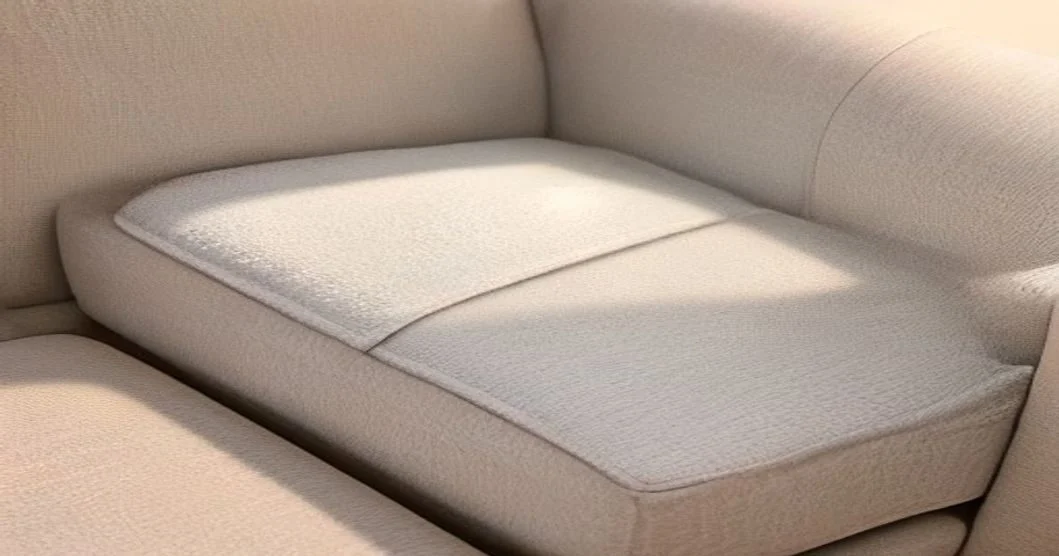
Microfibre is a very fine synthetic fibre, usually polyester or a polyester blend, woven tightly and often brushed to give a soft, suede-like surface. That surface, called the nap, is what makes it feel good, and also what shows up marks. The fibres are so fine that they hold liquid by capillary action, which draws a spill outward and into the filling. Dyes and finishes vary, and some are water-sensitive, which is why the tag matters. Dirt sits in the nap, so a sofa can look flat and grey long before it looks stained. Thankfully, a good deal of that is just compressed nap and dust, and a vacuum and a brush put it right.
No tag, or you cannot read it
Contact the retailer or manufacturer with the model name. If that fails, assume the strictest case, which is to vacuum and brush, and test any cleaner on a hidden patch such as the underside of a cushion. Wait until it is completely dry before judging. A water test with a few drops is a reasonable check for an S code: if a ring appears when it dries, treat the sofa as solvent-only. Keep in mind that microfibre often looks like a different material from its code, so appearance is not a guide.
The tests to do before any wet cleaning
- Pick a hidden spot, such as under a cushion or the back panel.
- Apply a little of your chosen cleaner with a white cloth and blot.
- Leave it until fully dry, which may be several hours.
- Check for a ring, a change in colour, a stiff patch or flattened nap. If you see any, do not use that product on the sofa.
Dry methods: vacuum, brush and baking soda
Dry cleaning is the only thing every code allows, and it takes care of most day-to-day grime. A sofa that is vacuumed weekly rarely needs anything stronger. Use an upholstery nozzle on low suction, or a small handheld vacuum for the seams and the gap at the back of the seat. Look for a soft brush head and a crevice nozzle, and avoid hard plastic edges that can drag on the pile. Remove the cushions and vacuum underneath, along the frame and in the creases.
After vacuuming, brush the pile. A clean, soft upholstery brush or a clean, dry clothes brush lifts flattened areas and loosens dust the vacuum missed. Brush in one direction, then the other, with a light touch. Pick a brush with soft bristles and a comfortable handle, and avoid stiff or wire brushes, which pull and fray microfibre.
Pet hair and lint
Hair weaves into the pile and the vacuum can leave some behind. A rubber glove, dampened slightly and drawn across the fabric, collects hair into clumps. A squeegee-style rubber pet brush, or a lint roller, works too. Pull towards you, remove the clumps, then vacuum. This is a dry method that suits every code, though use light pressure on delicate fabrics. Regular hair removal also stops hair from carrying oils and dirt deep into the weave.
Arms, headrests and the front edge
These areas pick up body oil, hair product and hand grease, which show as dark, shiny or greasy patches. A dry brush and vacuum first, then a cornflour treatment for the greasiness, vacuumed away after half an hour, often lifts a lot. After that, use the method your tag allows. Arm covers and a headrest throw are the easiest prevention, because you can wash them as often as you like.
Baking soda for smells
Baking soda is a gentle deodoriser, not a cleaner, and it suits all codes because it is applied dry. Sprinkle a thin, even layer across the fabric, leave it for 15 to 30 minutes, longer for strong smells, and vacuum it up carefully with the upholstery nozzle. Go over the area twice, because leftover powder dulls dark fabrics and can feel gritty. If the smell is from a spill that went into the foam, the powder will not reach it, and you will need to treat the spill itself.
Water-based cleaning for W and WS sofas
This is the standard approach for the most common code. The aim is to use as little water as you can, because it is the foam that suffers if you soak it, not the fabric.
Spot cleaning step by step
- Vacuum first, so you are not turning crumbs into mud.
- Mix a teaspoon of mild washing-up liquid in a cup of warm water. Whisk it up so it makes foam, and use the foam only on the fabric. Alternatively, use a ready-made upholstery cleaner, following the label.
- Dip a white cloth in the foam, wring it out well, and blot the mark from the outside inwards. Never rub, which frays the pile and spreads the stain.
- Switch to a clean section of cloth as it picks up dirt. Keep going until nothing more transfers.
- Blot with a second cloth dampened with plain water to take out the soap, then press a dry cloth on top to absorb moisture.
- While the fabric is still slightly damp, brush it gently to lift the nap, then let it dry.
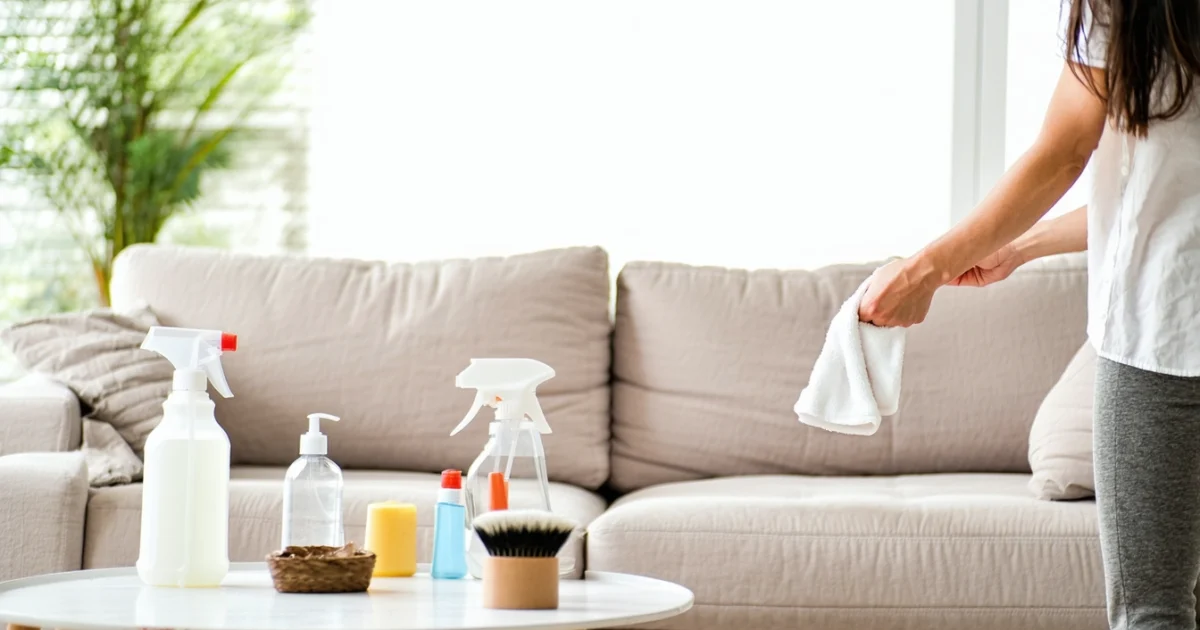
White cloths matter because they show what is coming out and cannot transfer dye. A small spray bottle helps with control, and you should hold it a good distance away and mist lightly. If you find yourself spraying more than a light mist, you are using too much.
What to look for in an upholstery cleaner
- A label that names upholstery or fabric, and says it is suitable for synthetic fibres or microfibre.
- Clear wording about which care codes it suits, since a few are for W only.
- No bleach or optical brighteners, which can alter colours.
- A low-foam or no-rinse formula if you want less residue, or a rinse step you are willing to do.
- A trigger bottle that produces a fine mist, not a jet.
- Directions that mention testing a hidden area first.
Ready-made products are not magic. A foam of mild washing-up liquid does the same job for most spills, and costs very little. A purpose-made cleaner is most useful for a whole-sofa clean, where the evenness of the product matters.
How wet is too wet
The best rule is to use less than you think. After you blot, press a dry cloth hard on the spot. If you can feel dampness a few seconds later, you have gone beyond the fabric and into the foam. If so, press more dry cloths on it, lay a folded towel on top with a weight, and leave it for an hour to draw out water. Then ventilate. Water that sits in foam for days is where musty smells and mould come from.
Whole-sofa freshen up
When the entire sofa looks tired, a W-code sofa can be cleaned section by section with a purpose-made upholstery or fabric cleaner. Choose one that states it is suitable for microfibre or synthetic upholstery, and check the label for any warning against use on your code. Test it, then work one cushion or panel at a time. Spray lightly, agitate gently with a soft brush or a damp cloth, blot, and take out the residue with a cloth damp with clean water. Leave the sofa to dry completely before you start the next section or replace the cushions. Many people find it takes an afternoon.
Removable covers in the washing machine
Many microfibre sofas have zip-off cushion covers. If the tag on the cover says W, or W and S, and it says machine washable, you can wash them. Close the zips, turn covers inside out, use a cold or low-temperature gentle cycle, a mild detergent and no fabric softener, and a low spin. Wash them one at a time so they are not cramped. Air dry flat or hung, out of direct sun, and put them back on completely dry. A dryer on low heat is only fine if the care label says so. Do not wash S-code covers, which can shrink and distort. If the cover is fine but the foam inside smells, remove the foam and air it outdoors on a dry day. Foam should not be machine washed. Our sofa cushions guide covers the foam in detail. A clean machine also helps, and the filter and seal are worth checking.
Steam cleaners and upholstery machines
Steam and extractor machines are more thorough, but they put a lot of moisture into the sofa. They suit hard-wearing W-code fabric that has not been cleaned for years, and only if the maker allows steam. Check the manual, since some manufacturers warn against steam on microfibre because the heat can flatten or mark the pile. Use the upholstery attachment, keep the head moving, never hold it still on one spot, and use lower heat and fewer passes than you think. Avoid soaking the cushions, and give the sofa plenty of time to dry with windows open or a fan running. Moisture trapped in foam can cause mould and a musty smell that is hard to remove. Our broader guide to whether steam cleaning kills germs explains what steam can and cannot do.
For an S, X or unknown-code sofa, do not steam at all. Heat and moisture together are the likeliest way to ruin it.
Solvent cleaning for S and WS sofas
S-code fabric is cleaned without water. The usual home option is isopropyl alcohol (rubbing alcohol), which evaporates quickly, leaves no ring, and dissolves greasy, waxy and ink-based marks. Some makers prefer a branded dry-cleaning solvent for upholstery, so check the label or ask. Whichever you use, read the product’s own safety advice.
Safety first
- Isopropyl alcohol is flammable. Keep it away from candles, hobs, heaters and cigarettes, and do not use it near any naked flame or spark.
- Open windows and keep the room ventilated. Fumes are irritating, particularly in a small room.
- Keep it away from children and pets, and store it in its original bottle.
- Wear gloves if your skin is sensitive, and avoid getting it in your eyes.
- Do not mix it with other cleaning products.
How to use it
- Test in a hidden spot first. Some dyes and some finishes react.
- Dampen, do not soak, a white cloth with alcohol. For stronger bottle concentrations, you may prefer a diluted version, per the label.
- Blot the mark from the outside inwards. Rubbing can leave a pale ring where the solvent has lifted the colour.
- Switch to clean sections of cloth until no more soil transfers.
- Let the alcohol evaporate, which usually takes a few minutes, then brush the area gently to restore the nap.
- If a faint ring remains, feather the edges by blotting a slightly larger area, working outward, so there is no hard line.
Solvent cleaning leaves little behind, so there is no need for a rinse. If the mark was only partly removed, repeat once or twice, allowing the fabric to dry fully between goes, rather than flooding it.
If you have a WS sofa, treat solvent as your first choice for grease, make-up and pen, and water for sugary or watery marks. Go to the other method if the first one does not move the mark, but let the fabric dry first.
A whole-sofa clean, in order
- Check the tag and decide your method. Run a hidden-spot test and wait for it to dry.
- Take off cushions and vacuum everything, including underneath, with the crevice tool.
- Brush the pile to lift dust, then vacuum again.
- Spot-treat the obvious marks first, using the method your tag allows.
- Clean the sofa in sections, starting at the back and the top, finishing with the seats. Use a barely damp cloth or a fine mist, blot, and move on.
- Wipe over each section with a cloth dampened in clean water, or for S codes a second pass of solvent on a clean cloth, to remove residue.
- Open windows, turn on a fan, and stand cushions on edge.
- When it is nearly dry, brush the nap in both directions, and repeat once it is fully dry.
Allow a whole afternoon and a dry evening. Tackling it in the morning on a breezy day is ideal. Do not use the sofa until the seats are dry throughout, not just on top.
Stains, one by one
Act fast and blot. Anything that has been rubbed in or left to dry is harder. For each stain below, use the method your tag allows. Water-based steps are for W and WS, solvent steps for S and WS, and X sofas should be vacuumed and left to a professional.
| Stain | W or WS | S or WS | Notes |
|---|---|---|---|
| Tea, coffee, juice | Blot, then foam of mild detergent, then plain water | Blot, then alcohol on a cloth | Sugary drinks leave a sticky residue; rinse well |
| Red wine | Blot at once, then mild detergent; dab with a cloth dampened with plain water | Blot, then alcohol | Do not rub; old wine stains may need a specialist |
| Grease, butter, sauce | Cover with cornflour for 30 minutes, vacuum, then foam of detergent | Cover with cornflour, vacuum, then alcohol | Scrape off excess with a spoon first |
| Pen and ink | Treat with alcohol if the code allows; otherwise professional | Alcohol on a cotton bud, blotting often | Test first; ink can spread |
| Make-up | Foam of detergent | Alcohol | Blot, do not smear |
| Pet urine | Blot, then a pet-safe enzyme cleaner, if the label suits the code | Blot, then solvent for the surface; consult a professional for the foam | Urine reaches the foam; speed matters |
| Blood | Cold water and mild detergent | Cold-water spot test first; otherwise a professional | Avoid hot water, which sets protein |
| Mud | Let it dry, brush and vacuum, then treat any mark | Same | Wet mud spreads |
| Water ring | Dampen the whole panel evenly with distilled water and dry with a fan on low | Do not add water | Distilled water leaves no minerals |
For old, set-in or very large marks, particularly on pale fabric, a professional upholstery cleaner has stronger tools and often better results than another round of home attempts. A single ring-shaped mark is a classic result of over-wetting, and is also where many DIY clean-ups begin.
Cornflour for grease
Cornflour (cornstarch) is the standard tip for fresh grease. Cover the mark generously, leave it for half an hour to an hour while it absorbs the oil, then brush it away and vacuum. It suits every code because it is dry, so it is a good first move on X sofas too, followed by a vacuum. If a shadow remains, use whichever liquid method your tag allows. Older grease marks, such as those on kitchen surfaces, are covered in our guide to removing grease from cabinets, and the same principles of absorbing first apply.
Odours
Dry baking soda handles stale smells. For pet odours, find the source: urine often goes into the foam, and powder will not reach it. An enzyme cleaner made for fabrics can break down urine, but check that it suits your tag and test it first. A smell that returns after cleaning usually means the filling is affected, in which case consult a professional about options. Smoke smell is surface-level at first but can soak in over time, and airing, vacuuming and dry deodorising help the most. Vinegar is sometimes suggested for smells on W-code fabric, but it adds its own smell and does not suit every dye, so test it, dilute it, and rinse.
Drying, restoring the nap and keeping it clean
Drying properly
Water in foam is the main hazard. Leave the sofa to dry naturally, in a ventilated room, and out of direct sun, which can fade the fabric. Open windows, or run a fan at a distance, so air moves across the surface without blasting one spot. A dehumidifier in the room helps in damp weather. Stand cushions on their edges so air reaches the foam. Do not sit on or cover a damp sofa. Times vary widely with the fabric, the amount of liquid and the room, from a few hours for a spot to a day or more for a whole-sofa clean. Press a dry cloth hard onto a seat: if it picks up any moisture, it is not ready. For a sense of how moisture and mould relate, see our guide to what kills mould.
Why microfibre looks flat, and how to fix it
Microfibre has a fine pile. When it is wet, the fibres clump and dry in the direction they were pressed. That is why a cleaned sofa can look patchy, stiff or flat. Brush the fabric with a soft brush when it is slightly damp, and again when fully dry, in one direction then the other. A dry microfibre cloth drawn across in light strokes also helps. A patch that stays stiff may have residue left in it, which needs a rinse with a cloth dampened in clean water, not more cleaner.
Shiny, slick or flattened patches
Patches that look shiny usually mean body oils, skin and hair product have built up, or the pile has been crushed by constant use. Oil responds to a dry-powder treatment and then the cleaning method your code allows. Crushed pile responds to brushing, and a light pass with a barely damp cloth on a W code, followed by a brush, helps lift it. If the fabric has worn smooth, cleaning will not bring it back. Swapping cushions and covering the favourite spot slows the wear.
Stain protector sprays
Fabric protector sprays make liquids bead up for a while, giving you time to blot. They are optional. If you use one, pick a product that says it is suitable for your fabric and code, test it first on a hidden spot, spray in a well-ventilated room, and give it the full drying time on the label before anyone sits down. They wear off with use and cleaning, so reapply as the label suggests. They do not make a sofa stain-proof, and you still need to blot spills straight away. Some sofas come with a protection plan, so check the terms before applying anything, in case it affects the cover.
Second-hand and inherited sofas
A sofa from a charity shop, a marketplace or a relative can smell of damp, smoke or pets. Start with a thorough vacuum, a brush, and a baking soda treatment left for several hours in a ventilated room. Check underneath for mould spots, damp patches and staining. If the smell is strong after a couple of dry treatments, the filling is probably affected, and deodorising from the surface will not shift it. Be realistic about what a second-hand sofa is worth before paying for a professional clean. Check for any trace of mould, and discard the sofa if it is widespread, since it is hard to remove from foam and can irritate the airways of people with asthma or allergies.
Living with pets
Pets mean hair, claw snags, oil from fur and the occasional accident. Vacuum more often, ideally every few days, and use a rubber brush or damp rubber glove to lift hair first. A washable throw over the pet’s favourite spot catches most of the mess and takes seconds to wash. Trim claws to reduce snags in the pile. If your pet has an accident, blot at once, use a fabric-safe enzyme cleaner if the tag allows it, and do not use ammonia-based cleaners, since the smell of ammonia can attract some animals back to the same spot. If a smell lingers after two attempts, it is likely to be in the filling.
Living with small children
The most useful thing is speed. Keep a pack of white cloths and a small spray bottle of clean water, and a note of the tag code, where you can reach them. Blot milk and juice straight away, scrape off food, and remove crayon or felt-tip with the method your code allows after testing. Washable covers or a large throw reduce the problem, and a rule of no paint or markers near the sofa helps more than any product. Check labelled washable markers, which usually blot out of microfibre more easily than permanent ones.
A routine that keeps it easy
| How often | What to do |
|---|---|
| Weekly | Vacuum with the upholstery nozzle, including seams and under the cushions |
| Every couple of weeks | Turn and swap cushions where possible so wear is even; fluff and brush the pile |
| As it happens | Blot spills at once; keep a white cloth and a small bottle of clean water close to the sofa |
| Every few months | Deodorise with baking soda if needed, and spot-clean marks using the method your code allows |
| Once a year, or as needed | Consider a deeper clean, or a professional for a large or valuable sofa |
Position the sofa away from strong sun and radiators, which fade and dry fabric. Throws and arm covers take the wear from heads and hands. If you have pets, brush the fabric with a rubber brush to lift hair before vacuuming.
Things that make it worse
- Rubbing a spill. It frays the nap, spreads the mark and drives liquid into the foam. Blot.
- Using too much liquid. It leaves rings, causes a stiff finish, and can lead to mould inside the cushions.
- Skipping the test. Dyes can run or fade on some fabrics, and by the time you see it, it is permanent.
- Bleach, ammonia and strong chemical cleaners. These can discolour or weaken synthetic fibres. See our guide to cleaning products you should never mix before combining products.
- Hot hairdryers, heaters or direct sun to dry. Heat can shrink or mark the fabric and leave rings.
- Putting cushions back damp. Moisture trapped in foam or covers is where mould starts.
- Skipping the brush. Cleaning without brushing the nap leaves it stiff and dull.
Which method should you choose?
Match the method to the tag, then to the problem:
- Code X: vacuum and brush, nothing else. If you need more, ask the maker or a professional about options.
- Code S: vacuum, then dry methods, then a solvent spot clean. No water, no steam.
- Code W: vacuum, then a small amount of foam from mild detergent. Reserve shampoo and steam for the whole sofa, and keep everything as dry as you can.
- Code WS: use solvent for greasy marks and water for watery ones, one at a time, always testing.
- No tag: treat it as S or X until you know otherwise.
The pattern is the same whichever code you have. Remove dry dirt first, treat marks early, test everything, use as little liquid as possible, and finish by brushing. Our guide on the best washing machine cleaners is worth a look if you are washing removable covers, because a clean machine gives cleaner results. And for wider home care, our kitchen deep clean guide shows the same room-by-room approach.
When to call a professional
- The tag is X, and the sofa needs more than a vacuum
- A large, old or set-in stain, particularly red wine, ink or pet urine
- A smell that returns after cleaning, which usually means the filling is affected
- A valuable or new sofa, or one covered by a warranty or protection plan that sets conditions on cleaning
- Water rings or marks that appeared after a home attempt and have not improved
- Signs of mould in the cushions or underneath
Professional upholstery cleaners typically choose between a low-moisture or dry-compound method, which uses a little cleaning product and a lot of agitation and extraction, and hot-water extraction, which flushes the fabric and pulls the water back out with strong suction. Which one suits your sofa depends on the tag and the fabric. A good firm will ask for the code, test a hidden patch, and say plainly if they would rather not wet a particular sofa. If a firm proposes to soak an S or X sofa, find another.
If you suspect mould
Look for black, green or white specks or fuzz, a damp or earthy smell, or discolouration on the underside of the fabric or the base of the cushions. Mould in foam is hard to remove and can aggravate asthma and allergies. Wear a mask and gloves, take the sofa outdoors to dry if you can, and vacuum with a filter if you have one. Do not scrub it or spread it around indoors. If the area is small and surface-level, a professional may treat it. If it is widespread or in the foam, replacing the cushions or the sofa is usually safer. Fix the cause too, whether it is a damp wall, a spill that was never dried, or a very humid room.
Look for a firm that cleans upholstery and mentions microfibre, ask about their method for your code, and ask for a quote that covers the whole sofa before booking. If the sofa is under warranty, ring the retailer first, since some require approved cleaners.
Common questions about microfibre sofas
Can I use a steamer on a microfibre sofa?
Only if the tag is W or WS and the maker allows steam. Even then, use the upholstery attachment, keep it moving, and avoid soaking the foam. Never steam an S or X sofa. Heat and moisture can leave rings, flatten the pile or fade the colour, and the damage is permanent.
What happens if an S-code microfibre sofa gets wet?
Blot at once with a dry white cloth, pressing rather than rubbing, then leave it to dry. A ring may form as it dries. If it does, a solvent cleaner applied to the whole panel to even it out can help, or a professional. Do not add more water. Do not use heat to speed it up.
Can I wash microfibre cushion covers in the machine?
Only if the tag says W or WS and the covers are removable. Use a cold, gentle cycle with mild detergent and no fabric softener, then air dry. Putting covers on the foam while damp can cause mould. If the covers are S code, they cannot be washed. Our sofa cushions guide has more detail.
Why does my microfibre sofa look flat or patchy after cleaning?
The pile clumps when wet and dries in whichever direction it was pressed. Brush it gently with a soft brush when it is slightly damp, then again when dry, in both directions. A stiff patch may have soap residue, which needs a rinse with a cloth dampened in clean water.
Is vinegar safe on a microfibre couch?
On a W or WS sofa, diluted white vinegar is sometimes used for odours and marks, but it is not risk-free. It can affect some dyes and leave its own smell. Test a hidden area, dilute it, blot and rinse. Skip it altogether on an S or X sofa, since it is water-based.
How often should I clean a microfibre sofa?
Vacuum weekly and treat spills as they happen. A deeper clean every few months suits a heavily used sofa, and once a year or less suits one in a quiet room. Households with pets or small children may need to vacuum and brush more often. Let the look and smell guide you, and follow the maker’s advice.