A De’Longhi will usually tell you when it needs descaling. An indicator light tracks the water hardness setting you chose at set-up and how many coffees you have brewed since the last clean. The job itself takes under 30 minutes including the rinse, but the buttons you press depend on whether you own a manual pump machine such as the Dedica, or an automatic bean-to-cup such as the Magnifica.
Before the steps, the choice that matters most is what goes into the tank. Here is how the usual options compare.
| Option | Best for | Effort | Risk |
|---|---|---|---|
| De’Longhi’s own descaler (EcoDecalk) | Anyone who wants to follow the manual to the letter and protect the guarantee | Low: dilute and run | Low, if used at the stated ratio |
| Another descaler made for coffee machines | Keeping costs down, when the pack lists compatibility with espresso or bean-to-cup machines | Low | Low to moderate: check the pack and the manual before you buy |
| White vinegar | Nothing on this machine. De’Longhi does not recommend it | Low | High: acidity can be too aggressive for seals and internal parts, and faults may fall outside the guarantee |
| Generic limescale remover or other household acids | Kettles and shower heads, not coffee machines | Low | High: not formulated for the seals and pipework in these machines |
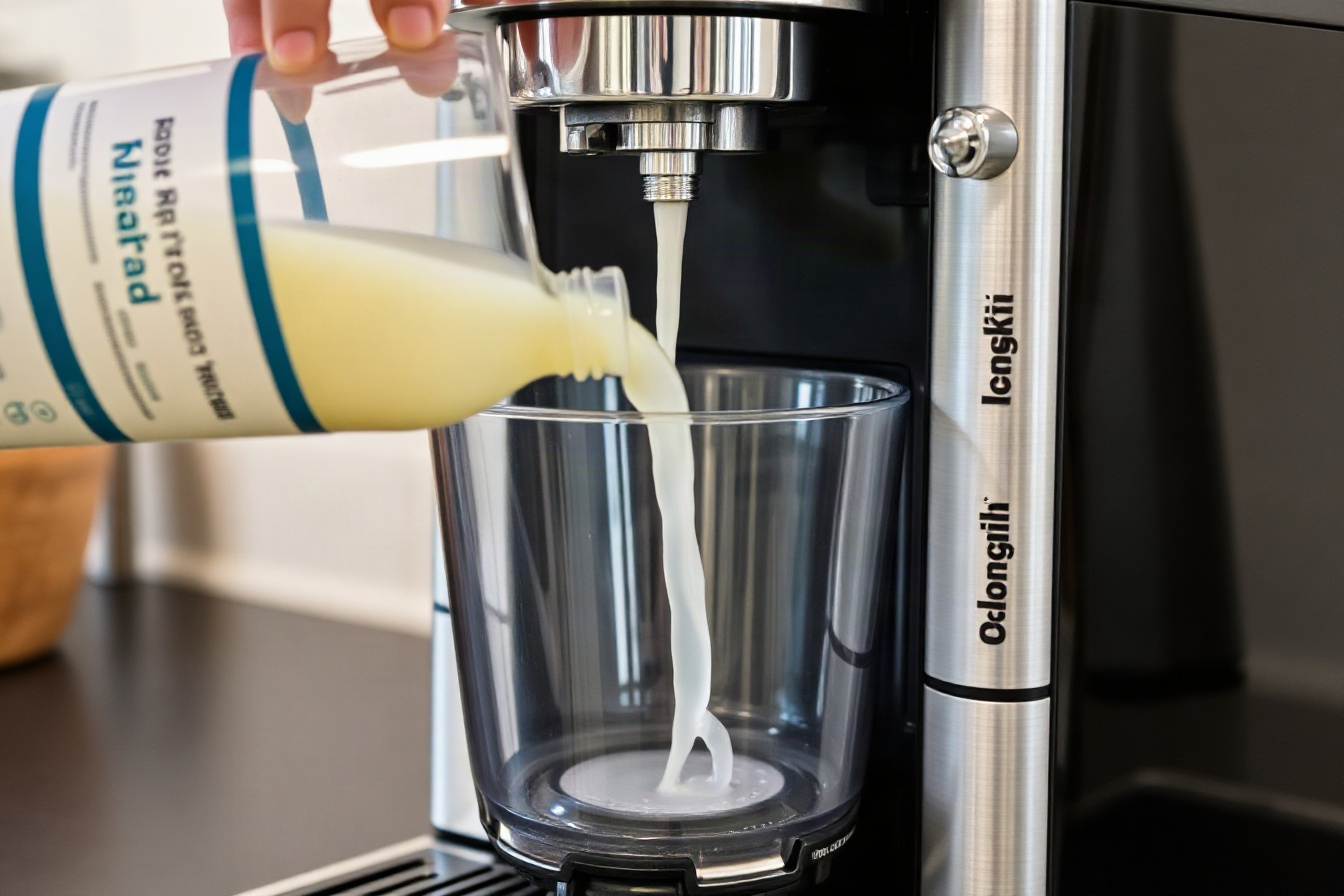
Why the descaler choice matters
Use one made for coffee machines
It is tempting to reach for white vinegar because it is already in the kitchen. De’Longhi does not recommend it for their machines. Vinegar’s acidity can be too aggressive for the seals and internal components, and using it, or any descaler not designed for coffee machines, can cause faults that are not covered under the manufacturer’s guarantee.
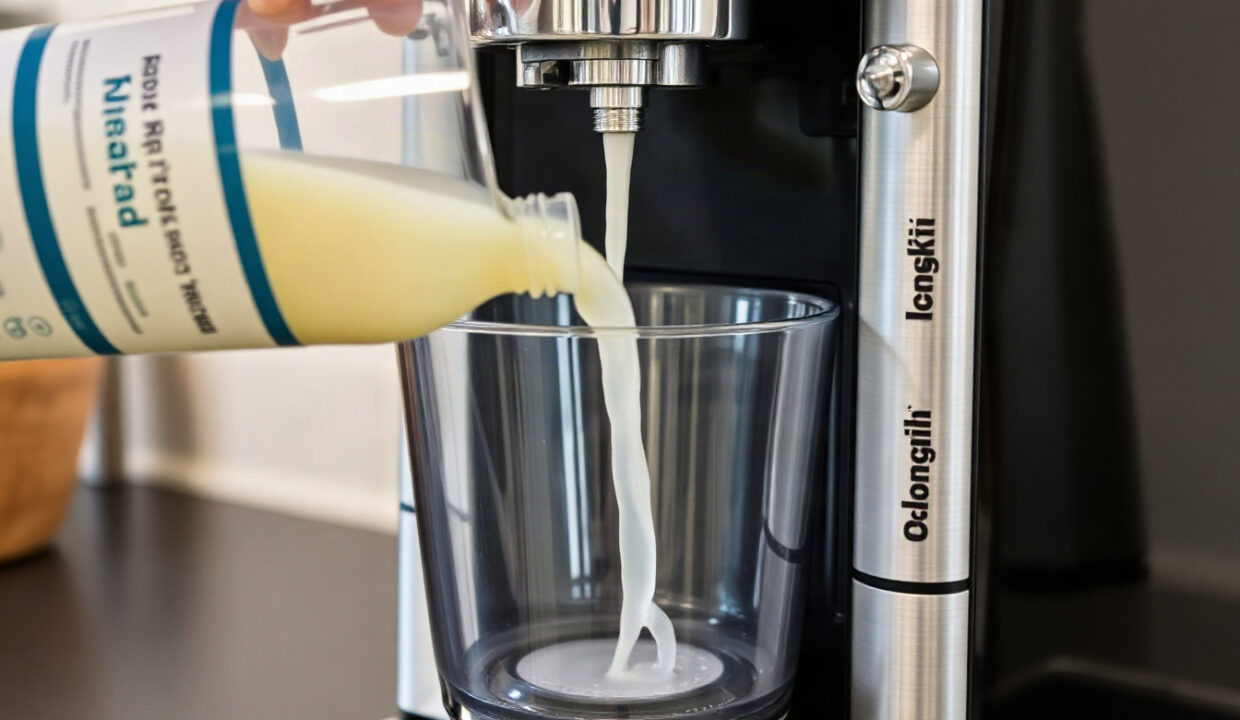
A descaler made for coffee machines, such as De’Longhi’s own EcoDecalk, is formulated to dissolve limescale without attacking the seals and pipework. Check the ratio printed on the pack. It is commonly around 100ml of descaler per 1 litre of water, but this varies slightly by product, so the pack wins over any general guide.
Using vinegar or an unsuitable descaler can cause faults that fall outside the manufacturer’s guarantee, stick to a descaler made for coffee machines.
Handling it safely
Descalers are acidic. Wear gloves, keep splashes off skin and eyes, keep the bottle and the used solution away from children and pets, and never drink the solution. Do not mix a descaler with bleach or any other cleaner, and read our list of cleaning products you should never mix if you are unsure. Wipe spills straight away, particularly on natural stone worktops, which acids can etch. Our kitchen worktops guide covers caring for different worktop materials. Unused descaler also does not last forever, so see whether cleaning products expire before using an old bottle.
How to tell it is time
Most De’Longhi machines work this out from the water hardness setting plus the number of coffees since the last clean. When the count is reached, a descale light comes on, either solid or flashing depending on the model. If you do not know your local water hardness, your water company publishes it by postcode, and setting it correctly in the machine’s menu makes the prompt accurate.
A few exceptions are worth knowing. The Stilosa has no built-in indicator at all, and De’Longhi recommends descaling it roughly every 200 coffees as a rule of thumb. The Dinamica range can sometimes prompt for descaling at what feels like a very short interval, which De’Longhi confirms is normal behaviour on that model rather than a fault. If the light keeps coming back unusually often, double-check the water hardness setting in the menu.
Dedica and other pump machines, step by step
Pump espresso machines like the Dedica and Dedica Arte use a process built around a dedicated descale button.
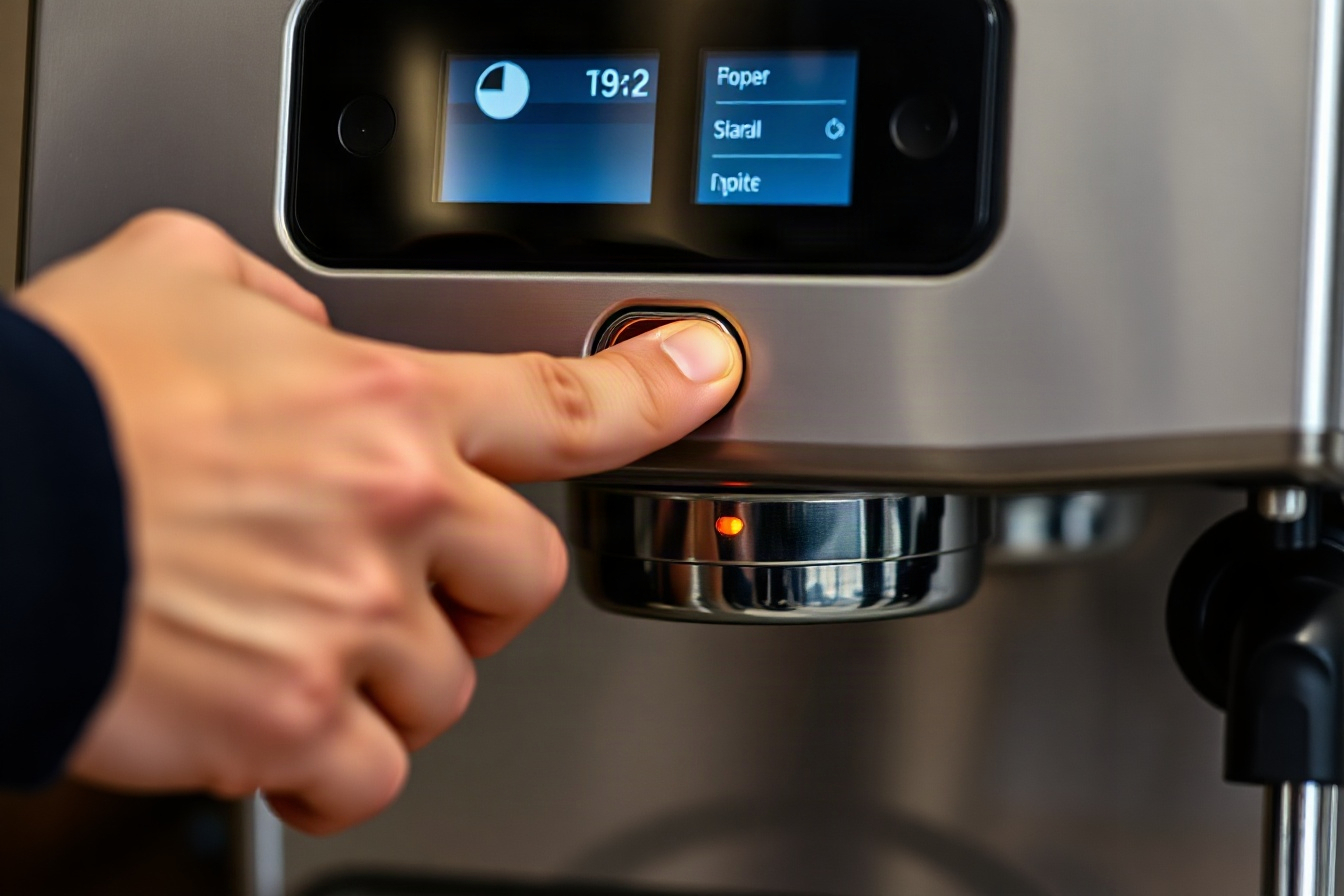
- Dilute the descaler in the water tank using the ratio printed on the pack.
- Remove the water filter from the tank if your machine has one fitted.
- Power the machine on and let it reach standby.
- Hold the descale button for around 10 seconds until the machine enters descaling mode, indicated by a flashing light.
- Set the steam dial to the open position as prompted. This lets the solution flow through.
- Let the cycle run. It takes roughly 25-30 minutes in total, with the solution periodically pausing and resuming as it works through the internal lines.
- Once the descaling stage finishes, the machine will prompt a rinse stage. Run this through twice with fresh water in the tank to clear any remaining descaler.
- Refit the water filter once the full cycle, including both rinses, is complete.
Magnifica and other bean-to-cup machines
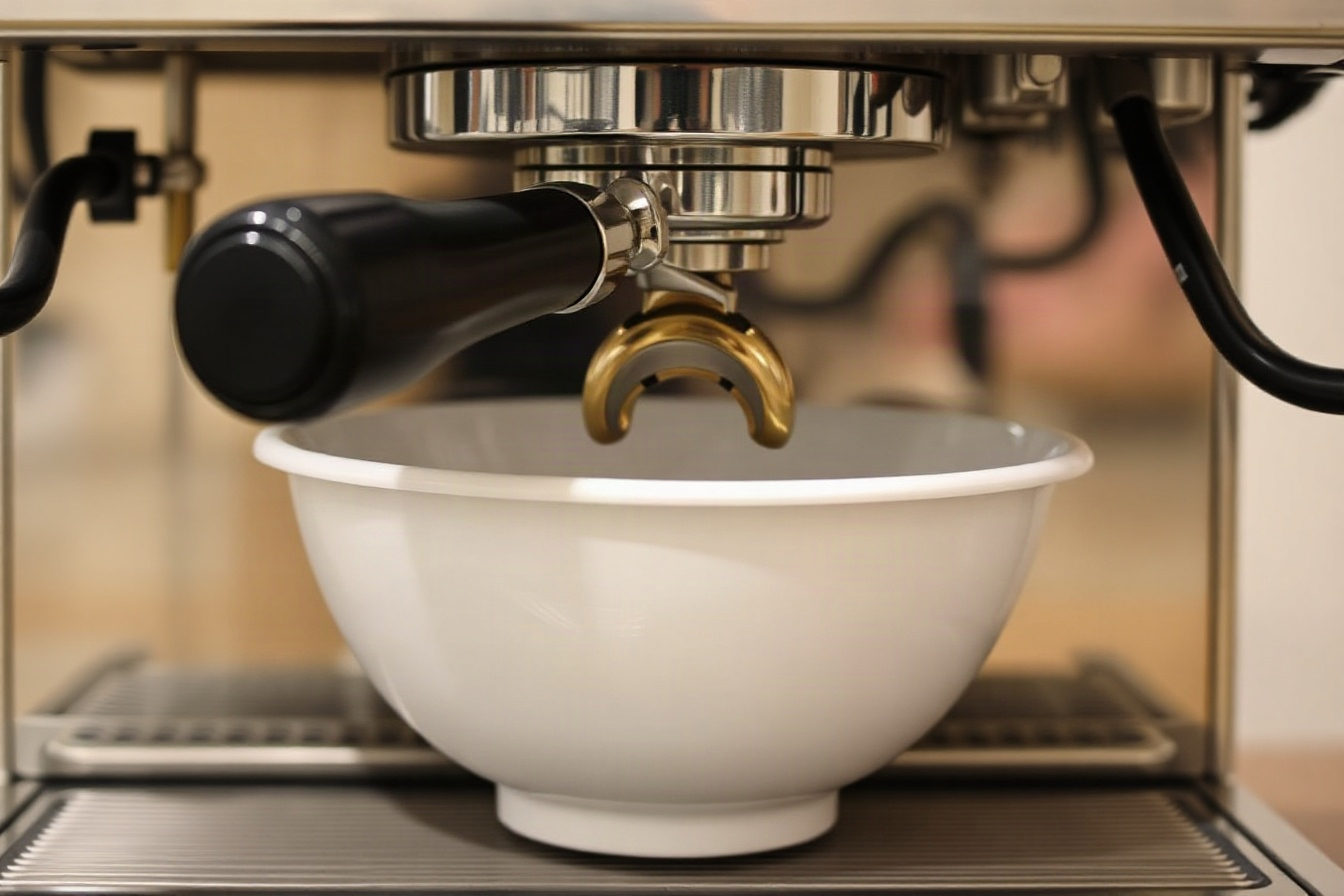
Automatic bean-to-cup machines such as the Magnifica range use a shorter sequence, though the idea is the same. Because the machine does most of the work, the bowl under the spouts is the part people forget.
- Mix the descaler with water in the tank at roughly 100ml descaler to 1 litre of water, checking your pack’s exact instructions.
- Place a large bowl or container under the steam nozzle and coffee spouts to catch the solution.
- Hold the descale button for about 3 seconds to start the cycle. The machine runs the solution through automatically.
- Once the ready light shows, switch the machine off, then empty, rinse and refill the tank with clean water before running a rinse cycle through.
Pump or bean-to-cup: the two routines side by side
| Machine type | How to start | Approx. cycle time |
|---|---|---|
| Manual pump (Dedica, Dedica Arte) | Hold descale button ~10 seconds, open steam dial | 25-30 minutes, plus two rinse cycles |
| Bean-to-cup (Magnifica and similar) | Hold descale button ~3 seconds | Varies by model, typically 15-20 minutes plus a rinse |
Whatever the model, your own manual has the final say on button timings, so use these steps as the overview and the manual as the reference.
The verdict, and what to keep in the cupboard
Use a descaler made for coffee machines, follow the ratio on its pack, and never skip the rinse. Leftover descaler can affect the taste of your next few coffees, and a pump machine that asks for two rinses needs both. Do not leave the light glowing for months either, because letting limescale build up makes it harder to clear and can affect the pump and heating element over time. If you refit a filter, do it only after the full cycle is complete.
None of this requires much equipment. The links below go to Amazon UK searches so you can compare sizes and makes. As an Amazon Associate we earn from qualifying purchases.
| Product type | What to look for | Best for |
|---|---|---|
| Coffee machine descaler | A formula made for espresso or bean-to-cup machines, with the dilution ratio clearly printed | Every descale. Check it lists your type of machine |
| Water filter cartridges | The exact cartridge type your model takes, as listed in the manual | Slowing limescale build-up between descales in hard-water areas |
| Water hardness test strips | Clear colour chart and a way to match it to the machine’s hardness setting | Setting the machine’s hardness level correctly the first time |
| Large measuring jug | A litre or more capacity with clear markings, heat-safe and easy to rinse | Mixing the right ratio and catching the solution in the bowl stage |
If limescale is a problem elsewhere in the house, our guides on cleaning a kettle and removing limescale from a shower head cover descaling principles in the kitchen and bathroom. If you own a pod machine instead, see our guide on cleaning a Nespresso machine.
Descaling questions that come up
What are the ingredients in De’Longhi EcoDecalk?
The full ingredients are on the pack and in the manufacturer’s safety data sheet, so check there rather than relying on a summary. Many coffee machine descalers are built around organic acids such as citric or lactic acid, which dissolve limescale without the harshness of stronger acids. Wear gloves and keep it away from children.
Can I descale a Nespresso or Dolce Gusto machine made by De’Longhi the same way?
Not necessarily. Pod and capsule machines have their own descaling routine, with different button sequences and volumes. Follow the manual for your exact model. For general guidance on a Nespresso machine, see our Nespresso cleaning guide, but treat the manual as the authority.
How do I run the clean cycle on my De’Longhi?
Most De’Longhi bean-to-cup machines have a rinse or clean function reached through the menu or a cleaning button, separate from full descaling. The exact button combination varies between the Magnifica, Dinamica and Eletta ranges, so check your model’s manual.
Why does my De’Longhi ask to be descaled soon after I did it?
On some Dinamica models this is expected, tied to how the machine calculates water hardness and usage, and does not mean the last descale failed. If it keeps happening on another model, confirm the hardness setting and that you completed the rinse stage fully.
How long does a full descale take?
Allow roughly 25-30 minutes of cycle time on a pump machine like the Dedica, plus two rinses. Bean-to-cup machines typically take around 15-20 minutes plus a rinse, depending on the model. Allow a little longer for mixing the solution, emptying the tank and refilling it.
If I use a water filter, do I still need to descale?
Yes. A filter slows limescale build-up but does not remove the need to descale, and the machine still counts brews and prompts you. Replace the cartridge as the manual advises, and remove it for the descaling cycle if your machine has one fitted.