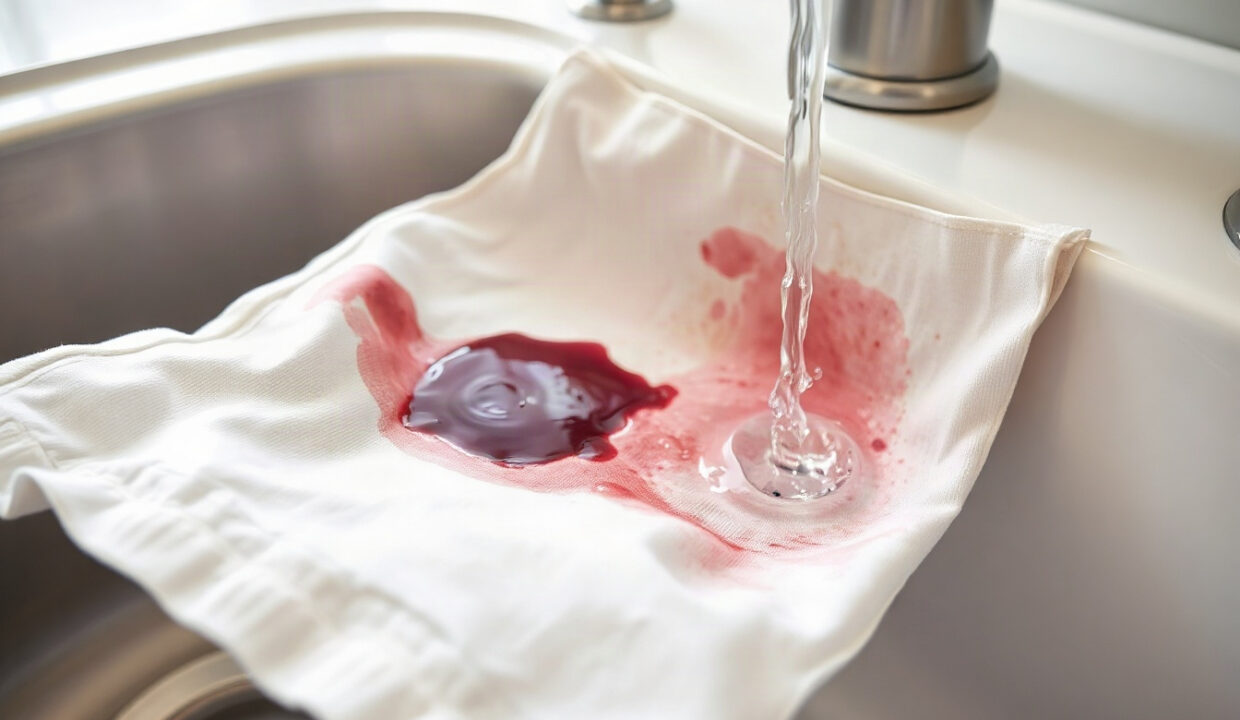
The shirt comes out of the drawer with a rusty brown fleck on the cuff, or you notice a dark patch on your jeans after a grazed knee. Your first instinct is to run the tap, and then to reach for the kettle because hot water feels like the stronger option. That second instinct is the one to ignore. Blood is mostly protein, and heat cooks protein into the weave rather than lifting it out, which is the most common reason a blood stain ends up permanent.
Cold water, used while the stain is still damp, clears most fresh blood on its own. Older marks take longer and a bit more chemistry, but they are rarely hopeless. The sections below follow the order you would actually meet the problem: fresh, then dried, then white fabric that can take something stronger, and what to try if it still shows.
If the blood is not your own, put on disposable gloves before you start and wash your hands afterwards. Keep the stained item away from open cuts until it has been through a wash.
The first five minutes: fresh blood
Wet blood comes out far more easily than blood that has dried, so deal with it before anything else on your to-do list. Check the care label as you go. Cold or cool water is safe for nearly every fabric.
- Turn the garment inside out so you can flush the stain from the back. This pushes blood back out through the fibres instead of driving it deeper.
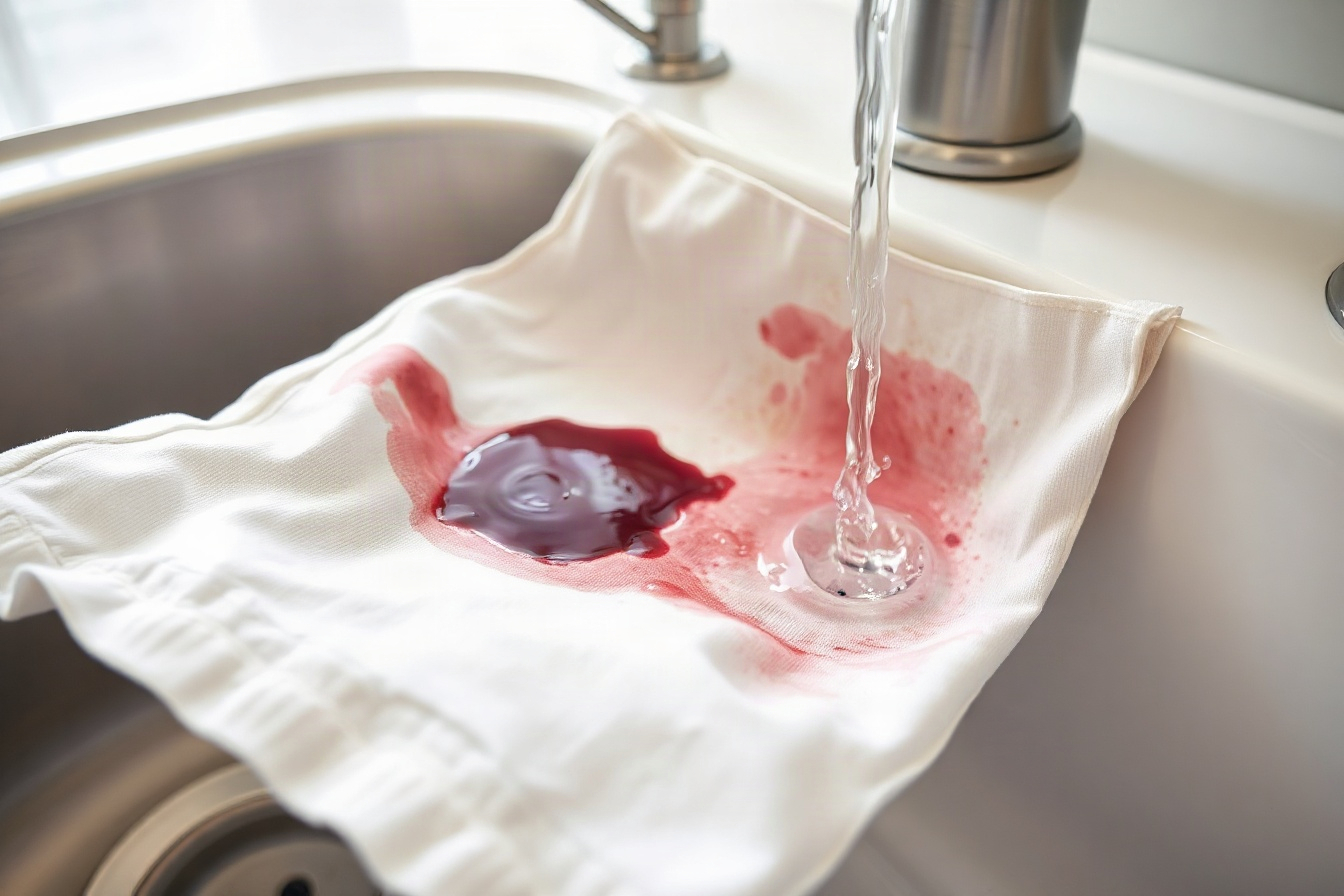
- Run cold water through the stained area for a minute or two. Do not use warm water, even if it is only a little warm.
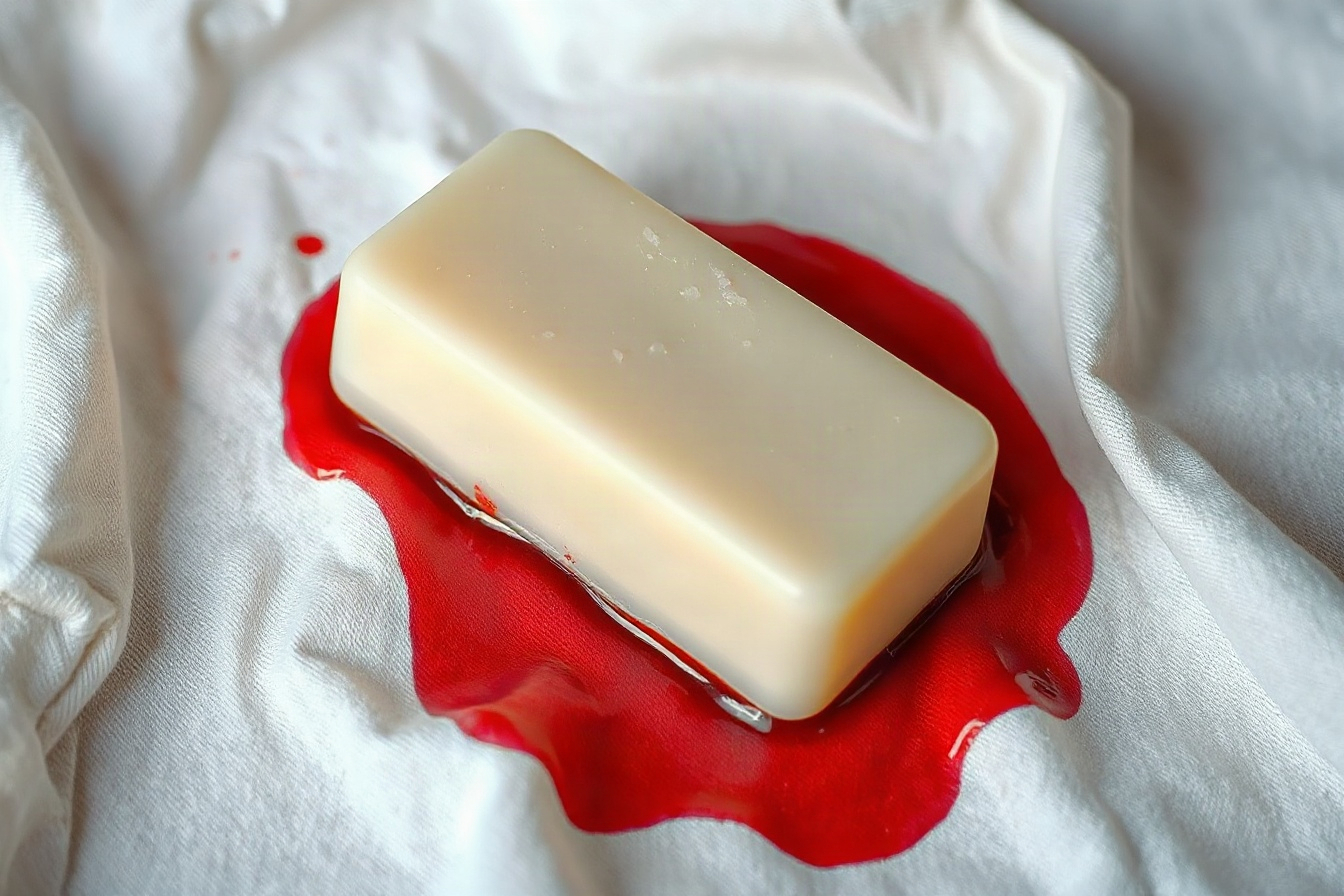
- Rub a bar of hand soap or a little liquid washing-up soap into the mark. Go gently on cotton and other natural fibres so you do not spread it further.
- Flush again with cold water and repeat the soap step if the mark is still visible.
- Soak the garment in a bucket of cold water with a biological detergent. The enzymes in a biological formula are designed to break down proteins, which is exactly what blood is. Check the pack for the right amount and soak time.
- Wash on a cool cycle as normal, and check the stain in daylight before it goes anywhere near heat.
Silk, wool and other delicate fabrics are the exception. Enzymes in biological detergent can damage protein fibres such as silk and wool, so use a non-biological detergent for these, and hand wash or choose a delicate machine cycle. If the care label says dry clean only, our guide to dry cleaning at home covers what is realistic to attempt yourself.
Heat causes blood’s proteins to coagulate and bind to fabric, the same reaction that cooks an egg, which is exactly why hot water makes a blood stain so much harder to shift.
Why heat is the enemy
Heat makes proteins coagulate and bind tightly to fibres, the same change you see when an egg white turns solid in a pan. A warm wash, a hot rinse or a tumble dryer can all do it. That is why the same drop of blood can be easy to shift on Monday and stubborn on Tuesday after a hot cycle. If you are unsure how hot is too hot, our piece on laundry temperature explains what different wash settings actually do. For blood, treat the stain first and choose a cool setting, and keep the item out of the dryer until you have checked it is completely gone. Even a faint ghost mark will set permanently if it is dried.
When the stain has already dried in
A normal wash cycle on its own often is not enough for a stain that has dried, so putting the item straight into the machine rarely works. Dried blood needs to be loosened first. Start with a long soak, then work on whatever remains.
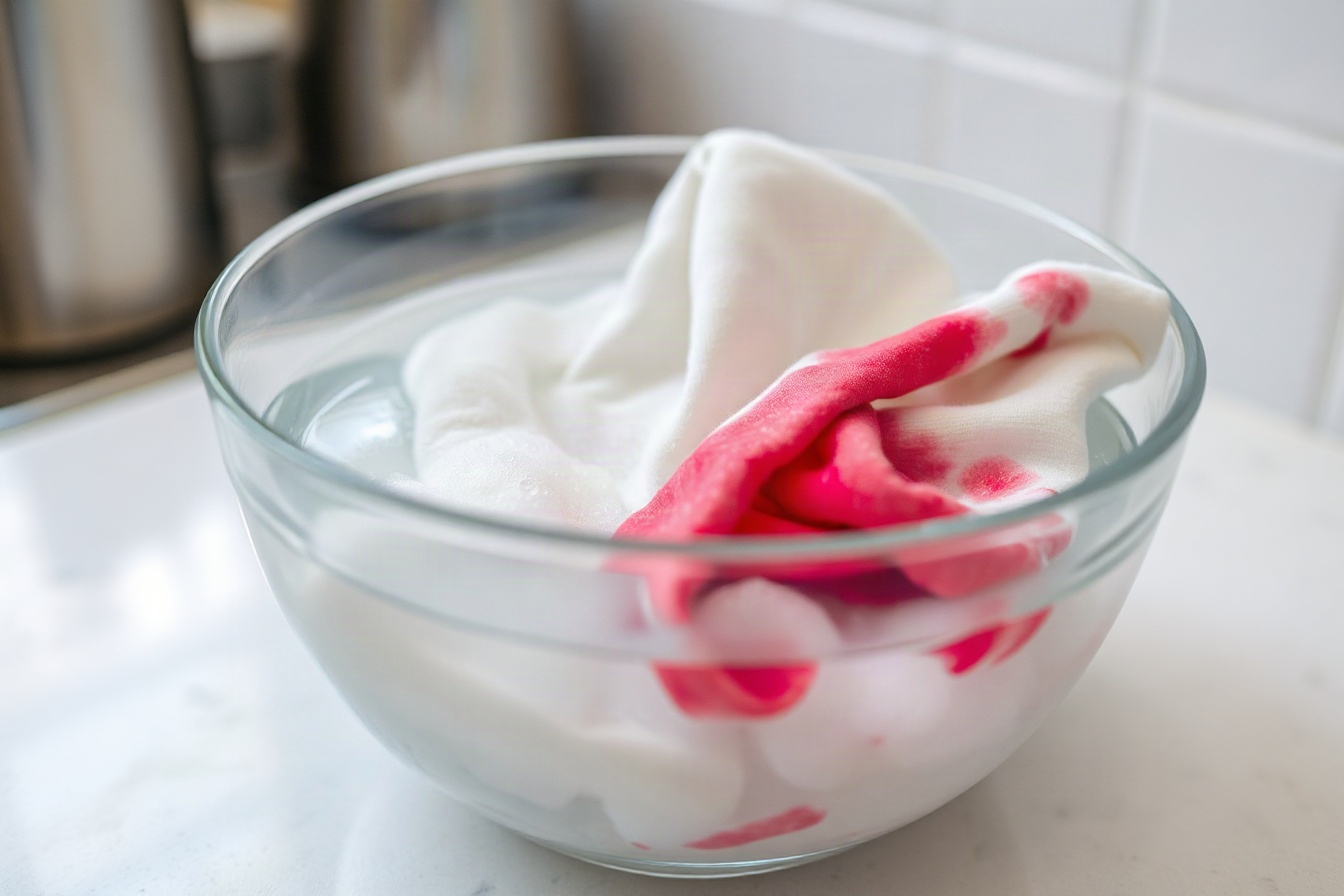
- Soak the garment in cold water, for several hours if needed, to begin breaking down the dried stain.
- Add a tablespoon or two of salt to the soak. A cold salt water soak is a widely used household method for loosening set-in blood before washing. The evidence for it is anecdotal, and most of the work is probably done by the long cold soak itself, but it is cheap and harmless on most fabrics.
- Scrub the area gently with a mix of water and soap once it has softened.
- For a stubborn mark on colourfast fabric, follow the pack instructions for an oxygen-based laundry stain remover as a pre-wash soak. Oxygen-based products such as Vanish can help on dried blood, but they work alongside the cold rinse and soap, not instead of them. Choose a colour-safe oxygen stain remover rather than a chlorine bleach, and avoid it on silk and wool.
- Wash on a cold cycle.
- Repeat the whole process if any trace remains, and avoid putting the item in a dryer between attempts. Drying sets whatever is left and makes it harder to shift next time.
Coloured clothes follow exactly the same route, minus the peroxide. Soak in cold water with a little salt for a few hours, then wash with a biological detergent on a cold cycle. Hydrogen peroxide and ordinary bleach can fade coloured fabric.
White cotton: hydrogen peroxide for the stubborn marks
White cotton and other bleach-safe white fabrics can take a stronger approach that coloured or delicate fabrics cannot. A bottle of 3% hydrogen peroxide solution is the usual pharmacy-strength choice. Keep it in its original dark bottle, because light breaks it down, and do not use stronger concentrations at home.
- Test a hidden area of the fabric first. Hydrogen peroxide can affect some fabric finishes.
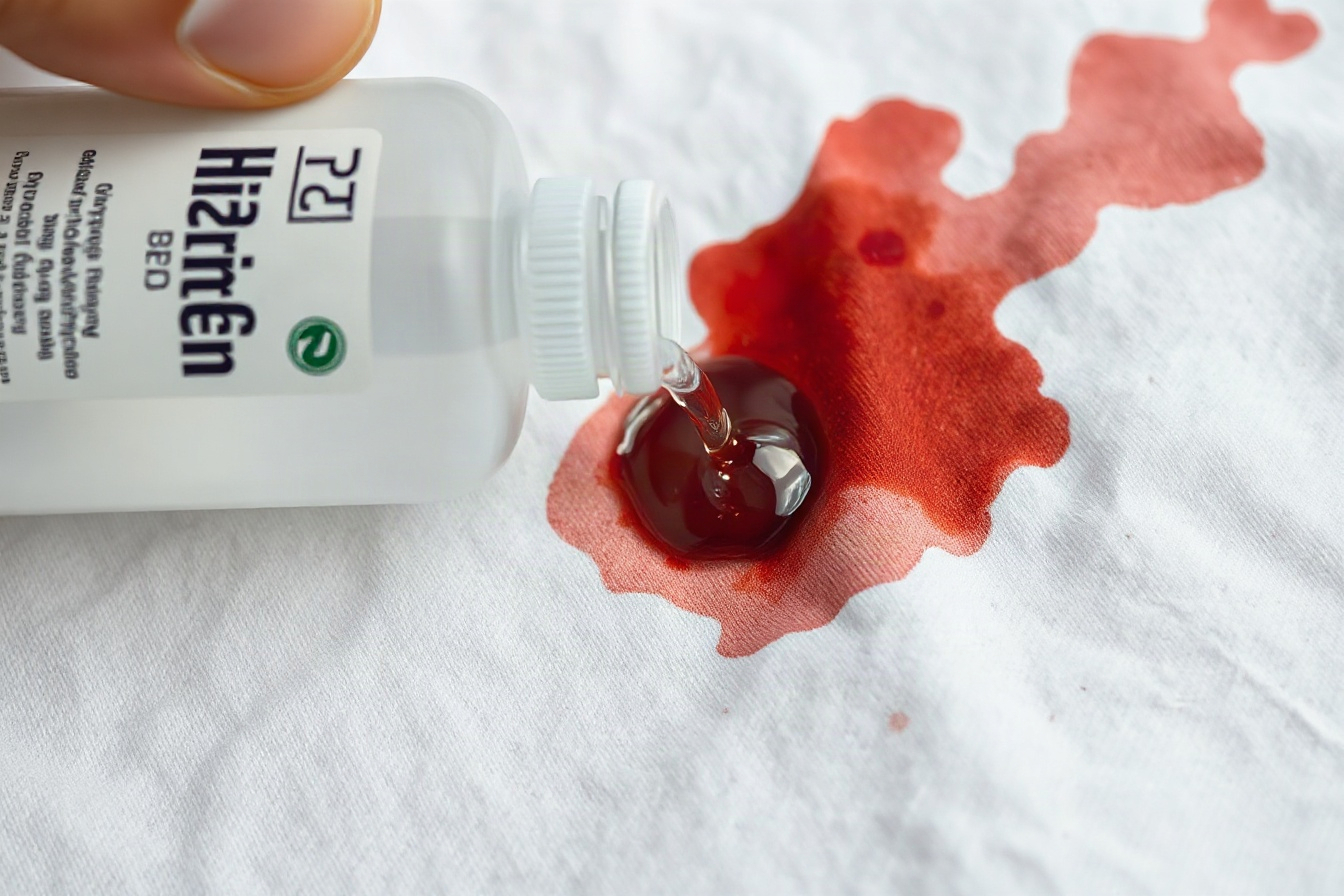
- Pour a small amount of 3% hydrogen peroxide directly onto the dried stain. You should see it fizz slightly, which is the peroxide reacting with the blood.
- Leave it to work for a few minutes, then blot with a clean cloth.
- Rinse with cold water and repeat if a trace remains.
- Wash on a cold cycle once the stain is gone.
Peroxide can lighten dyes and affect some finishes, so keep it to white, colourfast fabric and never use it on silk or wool. If you are curious about what peroxide does and does not do around the house, see our article on whether hydrogen peroxide disinfects.
Matching the method to the fabric
| Fabric type | Best approach |
|---|---|
| White cotton | Cold water rinse, then hydrogen peroxide for anything that has dried in |
| Coloured cotton | Cold water rinse, soap, and a biological detergent soak. Avoid peroxide and ordinary bleach |
| Silk, wool, delicates | Cold water rinse and a non-biological detergent soak. Hand wash rather than machine wash |
| Denim, workwear | Cold water rinse, soap, and a longer cold salt water soak for set-in stains |
If it didn’t work
A faint brown shadow after the first attempt is normal, not a failure. Blood stains often need two or three rounds, and the trick is to keep every round cold and keep the garment away from the dryer in between. Let the item air dry, look at it in daylight, and go again if you can still see the mark.
If you have repeated the soak and the stain is still there, three things are worth checking. Was the garment ever washed warm or dried with heat since the stain happened? If so, the protein may have set, and you are now trying to lighten the mark rather than remove it. Is the fabric white and bleach-safe? Then another peroxide round is reasonable. Is it silk, wool or a structured item such as a suit? Then stop experimenting and take it to a dry cleaner, mentioning that it is blood and what you have already tried.
A stain is not usually permanent if you treated it with cold water before it dried and kept it away from heat. The ones that become permanent are almost always those that went through a hot wash or a hot dryer while the mark was still there. If the stain is on a mattress rather than clothing, the same cold-water-first approach applies, and our mattress cleaning guide has the wider method.
For other food and body marks, our guides on getting grease stains out of clothes and getting curry stains out of clothes cover different kinds of marks. As an Amazon Associate we earn from qualifying purchases.
Four things people ask next
- Can dried blood be removed? Usually, yes. Soak the item in cold water for several hours, scrub gently with soap, then wash on a cold cycle with a biological detergent. On white fabric, 3% hydrogen peroxide can finish the job. It gets harder if the stain has been through heat, so avoid the dryer between attempts.
- Can a stain pen or Vanish remove blood? They can help, but follow the label. Stain pens suit small fresh marks when you are out, and oxygen-based boosters like Vanish are best as a pre-wash soak. Neither replaces the cold rinse. Check the product says it is safe for your fabric colour before using it.
- What about period blood stains? The method is the same as for any blood. Rinse with cold water as soon as you can, soak in cold water with a biological detergent, and wash cool. Avoid hot water at every stage, because protein sets in heat whatever its source. Dried marks respond to a longer soak.
- Does a cold wash really clean properly? For blood, yes. A cool or cold cycle with a biological detergent is exactly what you want, because enzymes work well at low temperatures and heat sets the stain. Check the care label as well, as some fabrics specify a minimum temperature for general laundry.