The short version: never mix bleach with anything, and above all not with acids (vinegar, limescale removers, many toilet cleaners), ammonia (some glass and multi-surface sprays) or rubbing alcohol. These combinations don’t make a “stronger” cleaner; they trigger chemical reactions that release toxic gases, chlorine, chloramine, even chloroform, that irritate the lungs and, at high enough levels, can kill. One more to avoid is hydrogen peroxide plus vinegar, which forms corrosive peracetic acid. The famous baking-soda-and-vinegar combo, by contrast, is harmless, it just fizzes into salty water, but that also means it’s a weak cleaner, not a powerhouse.
This isn’t scaremongering. Poison centres field thousands of calls a year from people who’ve mixed household chemicals, and there have been real deaths, including a restaurant manager killed when bleach met an acidic cleaner on the floor. The good news is that the rules are simple once you understand the chemistry. This guide shows exactly what forms when you mix the common culprits, where those chemicals hide in ordinary products, and what to do if it happens by accident. Sources are linked at the end.
How we researched this: the chemistry and safety guidance below draw on the Toxics Use Reduction Institute (TURI) at UMass Lowell, the Washington State Department of Health, and poison-control guidance. Full references are at the bottom.
The dangerous reactions at a glance
Most kitchen and bathroom cleaners fall into a few chemical families, bleaches, acids, alkalis like ammonia, and oxidisers like hydrogen peroxide. Trouble starts when two reactive families meet. The chart below summarises the combinations worth memorising: what you’re mixing, what it produces, and how dangerous that product is [1][2].
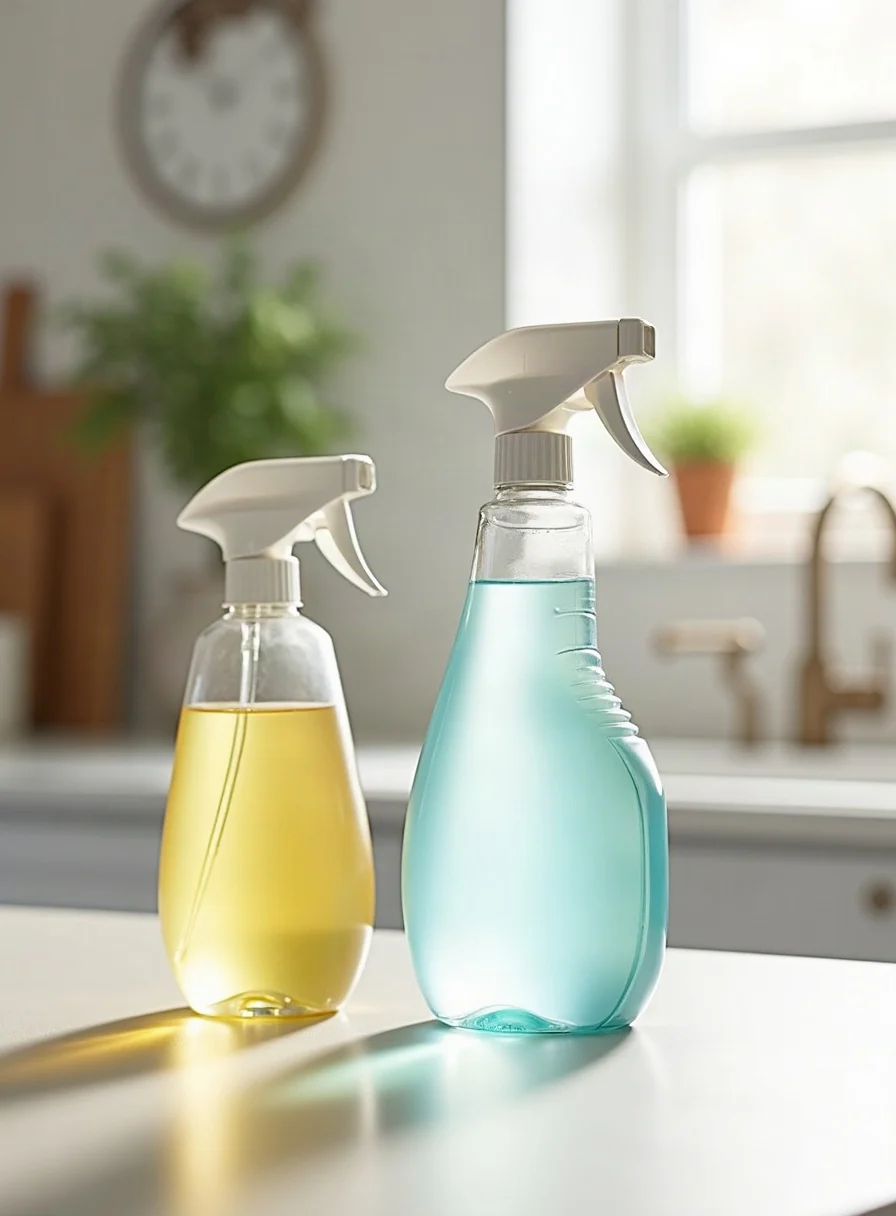
Notice the pattern: bleach is involved in every genuinely dangerous reaction here. That single fact, “don’t mix bleach with other cleaners”, prevents almost every serious household chemical accident. Let’s look at each one.
Bleach + acid = chlorine gas (the most common accident)
This is the one that catches people out, because so many everyday products are quietly acidic: white vinegar, limescale and descaling removers, rust removers, and a great many toilet-bowl cleaners. Tip bleach into a toilet that’s just been treated with an acidic cleaner, or mix bleach with vinegar hoping for a “super cleaner”, and the reaction releases chlorine gas. Even at low levels it stings the eyes, nose and throat and triggers coughing and breathing problems; at high levels, in an enclosed room, it can be fatal [1][2].
This is not a theoretical risk. The Toxics Use Reduction Institute at UMass Lowell documented a case in which a restaurant’s general manager was killed after a bleach-based product and an acidic cleaner were used together on the floor, and another where fumes sent restaurant staff to hospital [1]. Because bathrooms are small and poorly ventilated, they’re a particularly risky place for it to happen. It’s exactly why we warn against the “hacks” in our guides to mixing baking soda and vinegar and cleaning with vinegar, keep acids and bleach in separate corners of the cupboard.
Bleach + ammonia = chloramine vapours
Ammonia hides in some glass and window cleaners and multi-surface sprays. Combine it with bleach and you get chloramine vapours, which cause coughing, shortness of breath, chest pain, watery eyes and, with heavier exposure, fluid on the lungs [1]. A classic accident is spraying an ammonia-based glass cleaner over a surface still wet with bleach, or mixing cleaners in a bucket to “cover all bases.” Don’t: pick one product for the job and rinse before switching.
Bleach + rubbing alcohol = chloroform
Less well known, but nasty: mixing bleach with rubbing alcohol (isopropanol), or other alcohols, can generate chloroform and related chlorinated compounds, which are toxic to breathe and can affect the nervous system [3]. With so many alcohol-based sanitisers and surface sprays around, it’s worth knowing that these should never be combined with bleach either.
Hydrogen peroxide + vinegar = corrosive peracetic acid
This one doesn’t involve bleach, which is why it surprises people. On their own, hydrogen peroxide and vinegar are both reasonable cleaners, but combined in the same container they form peracetic (peroxyacetic) acid, which is corrosive and can irritate the skin, eyes and airways [3]. It’s fine to use one and then the other on a surface with a rinse in between (some food-safety sanitising even relies on that sequence), but you should never pre-mix and bottle them together.
The “safe but pointless” one: baking soda + vinegar
For balance, not every famous mix is dangerous. Baking soda (an alkali) and vinegar (an acid) simply neutralise each other, fizzing into water, carbon dioxide and a little salt (sodium acetate). It’s completely safe, the only thing it can hurt is a sealed container, where the gas builds pressure. The catch is that once they’ve cancelled out, there’s very little cleaning power left, which is why we call it safe but overrated in our full breakdown of whether baking soda and vinegar actually clean. Safe to mix; just don’t expect miracles.
Where these chemicals hide
The reason accidents happen is that the dangerous ingredients aren’t always obvious from the front of the bottle. Learn to recognise them:
| Chemical family | Common products it’s found in |
|---|---|
| Bleach (sodium hypochlorite) | Thin bleach, “thick” bleach, many mould sprays, some multi-surface and toilet cleaners, whitening laundry products |
| Acids | White vinegar, limescale/descaler, rust remover, many toilet-bowl cleaners, some “lime & rust” bathroom sprays |
| Ammonia | Some glass/window cleaners, some multi-surface sprays, certain floor and oven cleaners |
| Alcohol | Rubbing alcohol, hand sanitiser, many “fast-drying” glass and electronics sprays |
| Hydrogen peroxide | Oxygen bleach, some “colour-safe” stain removers and eco disinfectants |
When in doubt, treat any two cleaners as potentially reactive and simply don’t combine them. Reading the ingredients, and being wary of products that only list “acid” or “other”, is worth the ten seconds it takes.
How to use these cleaners safely
You don’t have to give up bleach or vinegar, you just have to keep them apart and use each properly:
- One product at a time. Never combine cleaners to make them “stronger.” If you switch products on the same surface, rinse thoroughly with water in between.
- Clean first, then disinfect. Bleach is a disinfectant, not a cleaner, it works best on an already-clean surface [1]. Wash with detergent, rinse, then apply diluted bleach if you need to disinfect.
- Ventilate. Open windows and run an extractor, especially in the bathroom, and wear rubber gloves and eye protection when using bleach [1].
- Never decant or store mixtures. Don’t make up “recipes” that combine cleaners in a bottle, and keep bleach in date, old bleach tempts people to “boost” it (see does bleach expire?).
- Store bleach away from acids and ammonia so a spill or leak can’t combine them.
What to do if you mix them by accident
If you realise you’ve combined the wrong things and notice fumes, act quickly and calmly:
- Leave the area immediately and get into fresh air, don’t stay to “clean it up” or lean in to check the smell.
- Open doors and windows from a safe position if you can do so without breathing the fumes, to ventilate the space.
- Don’t try to neutralise it with yet another chemical.
- Get medical help if you have symptoms, coughing, breathlessness, chest tightness, a burning throat or watering eyes. In the UK call NHS 111 (or 999 if severe); in the US call Poison Control on 1-800-222-1222 or 911 [3].
Most mild exposures ease with fresh air, but breathing difficulties always warrant medical advice, chlorine and chloramine can cause delayed lung effects.
The bottom line
The golden rule of home cleaning chemistry is short: use one product at a time, and never mix bleach with anything. Bleach with acids makes chlorine gas, with ammonia makes chloramine, and with alcohol makes chloroform; hydrogen peroxide with vinegar makes corrosive peracetic acid. None of these makes a better cleaner, they make hospital visits. Keep your acids, ammonia and bleach apart, ventilate, clean before you disinfect, and if something does get mixed, get to fresh air and seek help. Handled with that basic respect, the same everyday products are perfectly safe and effective.
Myths vs facts
| Myth | What the chemistry says |
|---|---|
| “Mixing cleaners makes them stronger.” | It usually makes toxic gas or a corrosive acid, not a better cleaner [1]. |
| “Bleach and vinegar is a great disinfectant combo.” | It releases chlorine gas, dangerous, sometimes fatal [1][2]. |
| “Only bleach and ammonia are a problem.” | Bleach + acids, + alcohol, and peroxide + vinegar are all hazardous too [3]. |
| “A little whiff won’t hurt.” | Even low levels irritate airways; chlorine can cause delayed lung effects. |
| “Natural cleaners can’t be dangerous mixed.” | Vinegar is an acid and peroxide an oxidiser, “natural” still reacts [3]. |
Frequently asked questions
What cleaning products should you never mix?
Never mix bleach with acids (vinegar, limescale removers, many toilet cleaners), with ammonia (some glass cleaners), or with rubbing alcohol. Also don’t combine hydrogen peroxide with vinegar in one container. As a blanket rule, don’t mix any two cleaning products, use one at a time and rinse between them.
What happens if you mix bleach and vinegar?
The acid in vinegar reacts with bleach to release chlorine gas. Even small amounts irritate the eyes, nose, throat and lungs and cause coughing; in a confined space, higher concentrations can be dangerous or fatal. It’s one of the most common household chemical accidents, and there’s no cleaning benefit to justify the risk.
Is it dangerous to mix bleach and ammonia?
Yes, very. Bleach and ammonia react to form chloramine vapours, which cause coughing, shortness of breath, chest pain, watery eyes and, with heavy exposure, fluid on the lungs. Ammonia is in some glass and multi-surface cleaners, so check labels and never use them alongside bleach.
Can you mix bleach and rubbing alcohol?
No. Bleach and rubbing alcohol can form chloroform and other chlorinated compounds that are toxic to breathe and can affect the nervous system. With alcohol-based sanitisers and sprays so common now, keep them well away from bleach and never combine the two.
Is mixing hydrogen peroxide and vinegar safe?
Not in the same container. Combined, they form peracetic acid, which is corrosive and can irritate skin, eyes and airways. Using one and then the other on a surface, with a rinse in between, is generally fine, but never pre-mix or store them together in a bottle.
Is baking soda and vinegar dangerous to mix?
No, that mix is harmless. The acid and alkali neutralise each other, fizzing into water, carbon dioxide and a little salt. The only caution is not to seal it in a closed container, because the gas builds pressure. It’s safe, but because the two cancel out, it’s also a fairly weak cleaner.
What should I do if I accidentally mix cleaning chemicals?
Leave the area and get into fresh air straight away; don’t stay to clean up or smell it. Ventilate the room if you can do so safely, and don’t add more chemicals. If you develop coughing, breathlessness or a burning throat, seek medical help, NHS 111 in the UK, or Poison Control (1-800-222-1222) in the US.
How do I know if a cleaner contains acid or ammonia?
Read the ingredients and warnings. Toilet, limescale and rust removers are usually acidic; glass and some multi-surface sprays may contain ammonia. Labels often warn “do not mix with bleach.” If a product only lists vague terms like “acid” or “other,” treat it as reactive and keep it away from bleach.
Can I use bleach and then vinegar on the same surface?
Only if you rinse thoroughly with water in between and let the surface clear, ideally with good ventilation. Any bleach residue meeting the acid can still release chlorine gas. The safest approach is to choose one product for the task and avoid switching between reactive cleaners at all.
Why is bleach in so many “do not mix” warnings?
Because sodium hypochlorite is highly reactive: it releases chlorine-based gases when it meets acids, ammonia or alcohols. That reactivity makes it an effective disinfectant, but also means it’s the common thread in nearly every dangerous household combination. Remember “bleach on its own,” and you avoid almost all the risk.
Related reading: does bleach expire? and does mixing baking soda and vinegar actually clean?
References
- Toxics Use Reduction Institute (TURI), UMass Lowell. “Dangers of Mixing Common Chemical Products” (bleach + ammonia → chloramines; bleach + acid → chlorine gas; documented fatalities; clean before disinfecting). turi.org
- Washington State Department of Health. “Dangers of Mixing Bleach with Cleaners” (bleach with acids releases chlorine gas; with ammonia releases chloramine). doh.wa.gov
- Alabama Department of Public Health. “Don’t Mix Household Chemicals” (bleach + alcohol → chloroform; hydrogen peroxide + vinegar → peracetic acid; poison-control guidance). alabamapublichealth.gov
This article is general safety information, not emergency medical advice. If you have been exposed to fumes and feel unwell, seek medical help immediately (NHS 111 in the UK; Poison Control 1-800-222-1222 in the US).