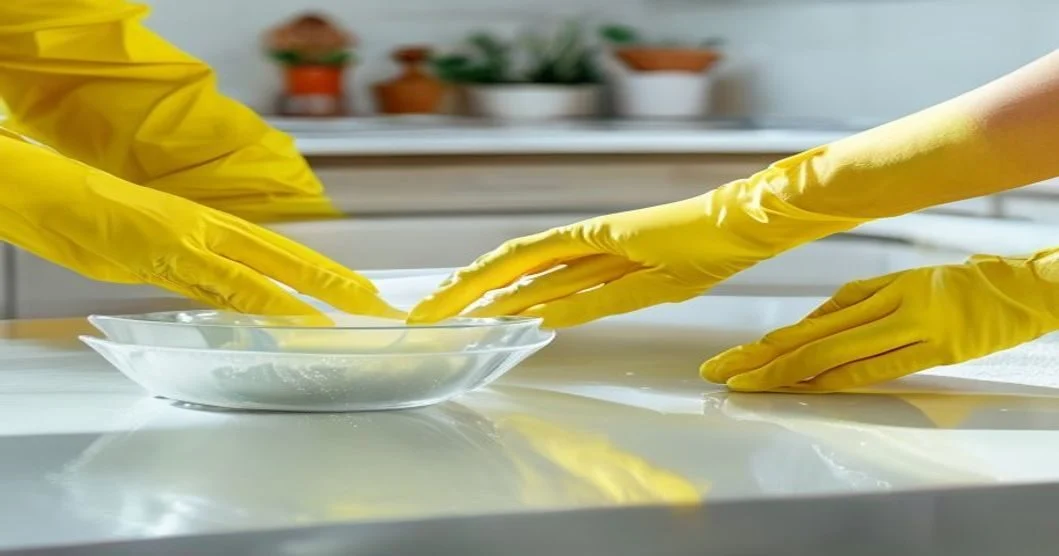
Clean worktops before preparing food, straight after any contact with raw meat, poultry, fish or eggs, between different prep tasks, and after spills. That is the Food Standards Agency position and the answer food hygiene courses are looking for. The method is two steps: hot soapy water first to remove grime and grease, then a disinfectant left wet for the full contact time on its label, applied with a clean cloth. Match everything else to your worktop material, because what makes laminate shine can permanently etch granite or marble.
The rest of this guide covers the food-safety rules, a daily method that suits every surface, material-by-material care for laminate, wood, granite, quartz, marble, stainless steel, solid surface and tiles, and fixes for the problems worktops actually get.
When you should always clean worktops
If you landed here from a food hygiene question, here is the full answer. Clean worktops before preparing food, because yesterday’s surface is not today’s clean surface. Clean immediately after they have touched raw meat, poultry, fish or raw eggs, between different prep tasks, especially between raw and ready-to-eat foods, after spills, and at the end of each session so nothing sits overnight. This comes from UK food-safety guidance. The Food Standards Agency says effective cleaning to remove bacteria on hands, equipment and surfaces is how you stop harmful bacteria spreading onto food.
Raw chicken and meat juices can carry bacteria such as campylobacter and salmonella, and a worktop is the junction every ingredient passes across. Wiping visible mess off is cleaning, removing germs you cannot see is disinfecting, and food safety needs both, in that order. For the same reason, do not wash raw chicken at the sink, as the splashes spread bacteria over nearby surfaces. Our piece on whether you should wash raw chicken explains why.
Clean first, then disinfect, then wait
Disinfectant sprayed onto grease and crumbs mostly disinfects the grease and crumbs. The better order takes about thirty seconds longer at home: wash the surface with hot soapy water and a clean cloth to remove food residue and grease, then apply your antibacterial spray or dilute disinfectant, and leave it wet for the contact time printed on the label, which varies by product, before wiping. The near-universal habit of spray-and-immediately-wipe gives the product no time to work.
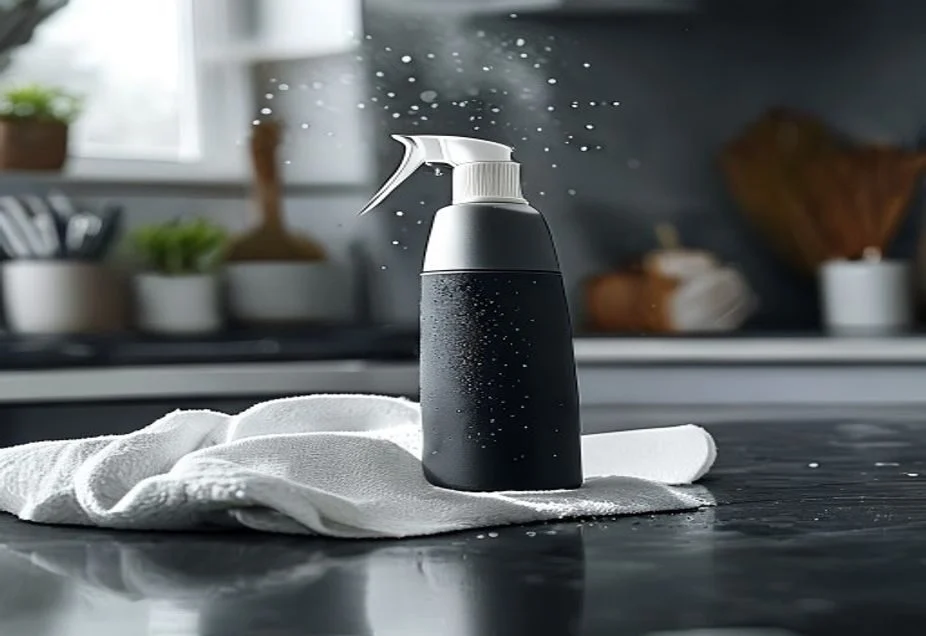
The cloth matters as much as the spray. A damp cloth that has lived by the sink for a week spreads bacteria. Use fresh or freshly laundered cloths, wash them hot, and keep a separate cloth, or disposable kitchen roll, for anything involving raw meat. Vinegar is good at limescale but is not a reliable disinfectant, so do not count it as the second step. See our look at whether vinegar disinfects for the detail, and whether antibacterial products beat plain soap before you reach for the spray. Wipes can help for a quick once-over, but our piece on whether disinfectant wipes work shows why contact time still matters.
The everyday method, with what to use at each step
Whatever your worktop is made of, the daily clean is the same and needs nothing special: washing-up liquid, hot water, two cloths. The material rules further down are about what you add, or must never add, not a replacement for it. Disclosure: Cleaners Guide is a participant in the Amazon Associates programme, so if you buy through links on this page we may earn a small commission at no extra cost to you. The links open Amazon UK searches, so check the current price and the product label before buying.
- Clear and sweep first. Move the chopping board, the crumbs and the toaster, and brush debris into your hand or the sink. Wiping around objects is how the same crescent of crumbs survives for a month.
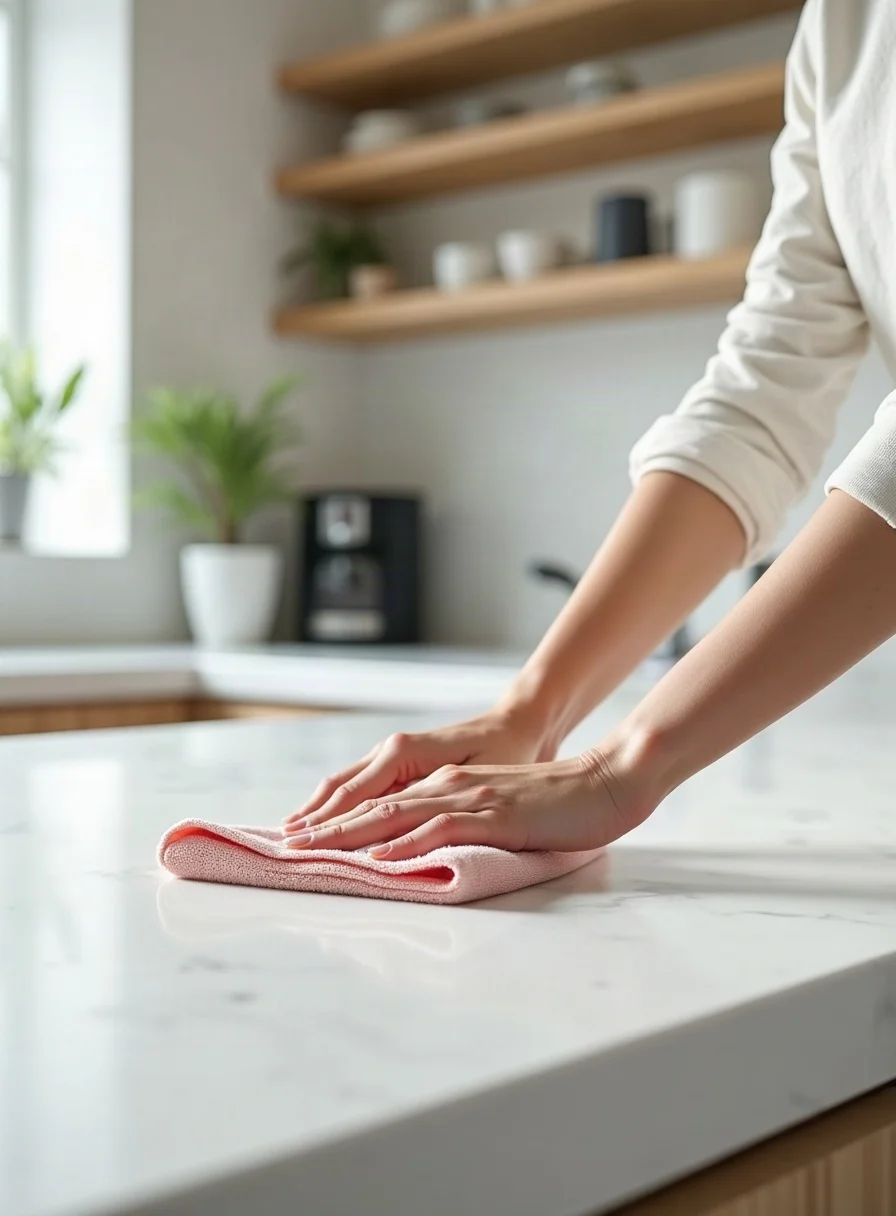
- Wash with hot soapy water. A few drops of washing-up liquid in hot water, on a wrung-out cloth that is wet but not dripping. Wipe the full surface, including the upstand and front edge, which catch more splatter than the top. Soft, lint-free microfibre cloths suit most surfaces, and you can launder them hot between uses.
- Rinse-wipe. Go over again with a clean, plain-water cloth to lift the soap film. Skipped rinsing is why some worktops look smeary and feel tacky by midweek.
- Dry with a tea towel or microfibre cloth. Thirty seconds of drying prevents watermarks on stone and wood, limescale rings around the kettle zone and streaks on gloss and matt finishes.
- Disinfect when the day involved raw meat, fish or egg. Use an antibacterial kitchen spray and honour the contact time. Check the label says it is safe for food-contact surfaces and for your worktop, and for natural stone choose a product that says so. Rinse or wipe with clean water afterwards if the label tells you to.
That is a two-minute job done properly, and it covers most worktop care. The rest is the material rules, where worktops get quietly ruined.
What to check on a disinfectant label
- That it says it kills bacteria, and for which standard or organisms it is tested.
- The contact time, and whether the surface must stay wet for that long.
- Whether it is safe for food-contact surfaces, or needs rinsing off afterwards.
- Whether it is safe for your worktop material, especially natural stone, wood and laminate edges.
- Whether it needs diluting, and any warnings about mixing it with other products.
If a spray will not tell you its contact time, treat it as a cleaner, not a disinfectant. Never mix disinfectants, bleach and acid products, which can release harmful gases.
Worktop care by material
| Worktop | Daily clean | Never use |
|---|---|---|
| Laminate | Hot soapy water; bicarb paste on stains | Scourers, undiluted bleach, excess water at the joints |
| Solid wood or oak | Barely damp soapy cloth, dried immediately; oil regularly | Soaking, harsh sprays, leaving water to sit |
| Granite | Soapy water or stone cleaner; dry to a shine | Vinegar, lemon, limescale removers, abrasive creams |
| Quartz | Soapy water; glass cleaner for smears if the maker allows it | Strong bleach, solvents, heat (use trivets) |
| Marble | pH-neutral stone soap only; blot spills instantly | Anything acidic, which etches on contact |
| Stainless steel | Soapy water, dry with the grain | Wire wool, chloride-heavy cleaners |
| Solid surface (Corian-type) | Soapy water or cream cleaner | Strong solvents, hot pans directly on the surface |
| Tiled | Soapy water; grout needs its own routine | Letting grout stay damp and stained |
If you are unsure what you have, check the paperwork from the fitter or manufacturer, then test any new product on a hidden spot such as the edge near the wall.
| Worktop | Heat | Scratches | Stains and water |
|---|---|---|---|
| Laminate | Low, scorches | Marks easily | Good, but joints and edges are vulnerable |
| Solid wood | Moderate, can scorch | Sands out | Needs oil; water causes black marks |
| Granite | High, but use trivets as a habit | Hard-wearing | Porous if the seal fails |
| Quartz | Can scorch or discolour | Hard-wearing | Non-porous and resists stains |
| Marble | Moderate | Scratches and etches | Stains and etches easily |
| Stainless steel | High | Shows fine scratches | Resists stains; shows fingerprints |
Laminate
The UK’s most common worktop and the most forgiving. Hot soapy water handles everything routine, and a paste of bicarbonate of soda and water, left ten minutes, lifts tea, coffee and turmeric shadows. A general kitchen surface cleaner spray is fine if the label says it suits laminate. Two real dangers: abrasive scourers, which permanently dull the surface in cloudy patches, and standing water at the joints and cut edges, where it swells the chipboard core underneath. Dry the seams properly, especially around the sink.
Wooden and oak worktops
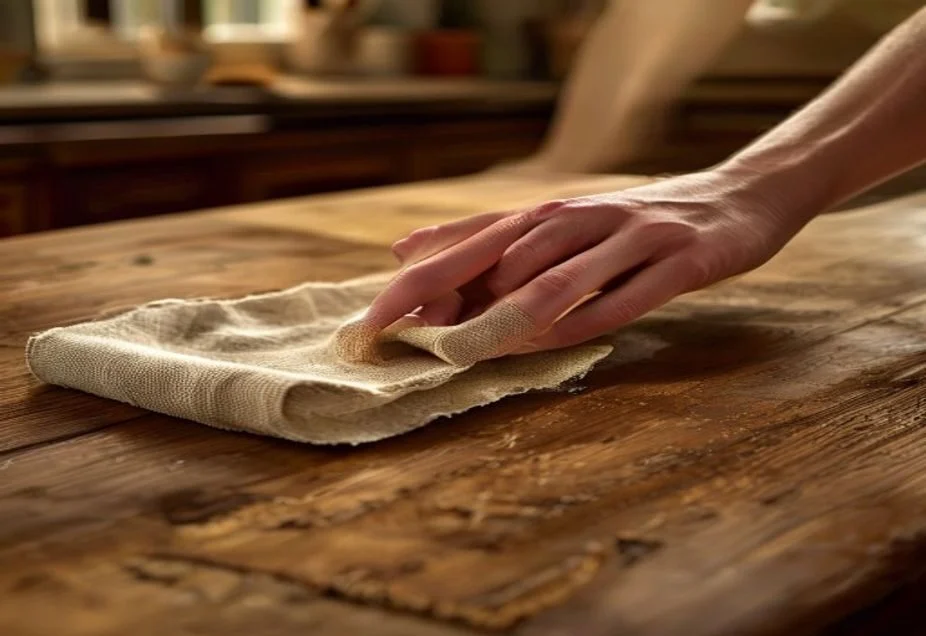
Wood wants little and often: a wrung-out soapy cloth, an immediate rinse-wipe, and drying straight away. Water is the enemy, and the black spotting around badly kept sinks is water damage, not dirt. What keeps wood in good condition is oiling. When water stops beading on the surface, clean it, let it dry fully, and work in a food-safe worktop oil such as Danish oil or other food-safe worktop oil with a lint-free cloth. Check the tin says it is safe for food-prep surfaces and follow the cure time before using the worktop. Light scratches and marks sand out with fine paper before oiling, and wood is the one worktop that genuinely renews. If you chop on wood, our wooden chopping board guide has the hygiene detail.
Granite
Granite is tough but its factory seal is not. Use soapy water or a stone-specific cleaner, then buff dry for the shine. The killers are acids: vinegar, lemon and, the one that catches people out, limescale removers, which are acid by definition. They dull and etch the seal, usually discovered as a matt ring where the kettle lives. If water stops beading on granite, it may be due a re-seal with a stone sealer, following the product instructions. A pH-neutral stone cleaner is the safest everyday choice for granite, quartz and marble.
Quartz
Engineered quartz is non-porous, so it shrugs off stains that would sink into granite. Use soapy water daily. Its weaknesses are chemical and thermal: strong bleach and solvents can mark the resin, and a hot pan straight off the hob can leave a permanent scorch. Use trivets, always. Matt and leather-finish quartz shows fingermarks more, and well-rinsed soapy water or a matt-surface cleaner avoids the patchy sheen cheap sprays leave.
Marble
Marble is calcium carbonate, so it reacts with acid on contact, which is why a slice of lemon left face-down overnight leaves a dull ghost by morning. Use pH-neutral stone soap only, blot spills (especially wine, citrus and tomato) the moment they happen, and put chopping boards under everything. Etch marks are not stains but dissolved surface, so they need polishing out, lightly with marble polishing powder for small spots and by a professional for large areas.
Stainless steel, solid surface and tiled worktops
Stainless steel wants soapy water and drying with the grain, and the full anti-smear routine is in our stainless steel cleaning guide. Solid surface (Corian and similar) takes soapy water or a gentle cream cleaner, and light scratches can often be buffed out with fine abrasive pads because the colour runs all the way through, but follow the maker’s advice. Tiled worktops clean easily on the tile face, and it is the grout lines that hold the grime, which need the proper treatment in our grout cleaning guide.
Fixing the common worktop problems
Sticky worktops that never feel clean
A worktop that is tacky an hour after cleaning is wearing a film of airborne cooking grease, usually worst near the hob. Washing-up liquid is the right tool because it is a degreaser, but it needs to be used hot, twice, with a proper rinse-wipe between, because one soapy pass just loosens the film and redistributes it. If the stickiness is on the cupboard doors as much as the worktop, our kitchen cabinets grease guide covers the whole zone in one session. If spray polish has been used on gloss laminate, the build-up itself goes tacky, so strip it with hot soapy water and stop polishing.
Tea, coffee and turmeric stains
On laminate and quartz, mix bicarbonate of soda to a paste with a little water, spread it over the stain, leave it 10 to 15 minutes, then wipe away gently and repeat rather than scrub. Turmeric is the worst offender and may need two or three rounds plus a spell of daylight, which fades it further. On granite and marble, skip home remedies for anything that has soaked in and use a stone poultice product, because the stain is inside the seal, not on it.
Limescale around the kettle and taps
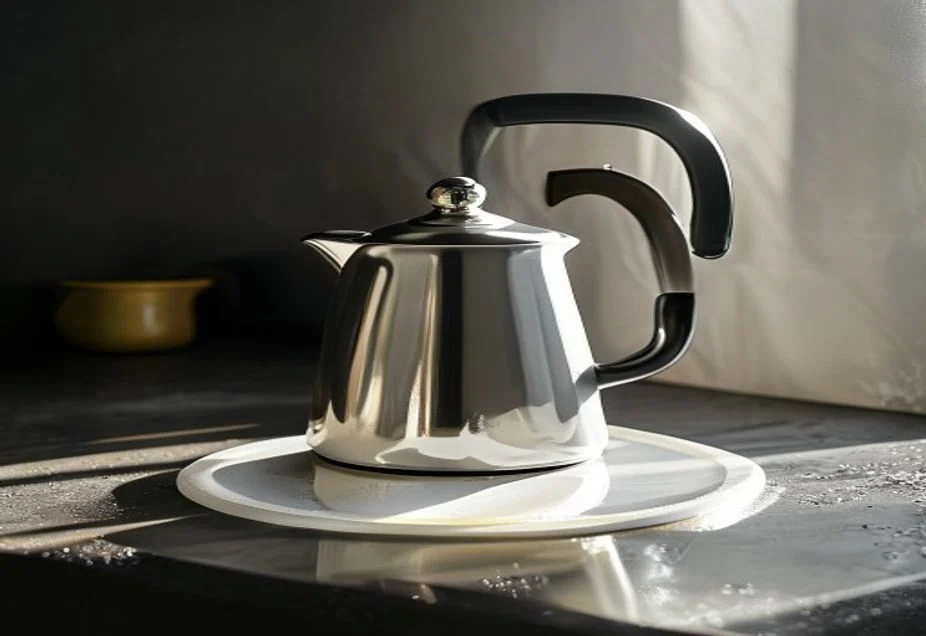
On laminate and stainless steel, a cloth soaked in diluted white vinegar laid over the crust for ten minutes dissolves it. On granite, quartz and marble, never, because acid takes the finish off with the limescale. For stone, scrape the worst gently with a plastic scraper, wash with stone cleaner, dry thoroughly, and stop the cycle at the source by drying the kettle zone daily, because limescale is just evaporated splash.
Watermarks, burns and dull patches
Black water spotting on wood sands out and disappears under fresh oil. Scorch rings on laminate and quartz are, honestly, permanent, so keep a trivet by the hob. Dull patches on granite are usually etch or seal damage, while an all-over dullness on gloss laminate is typically product build-up from spray polishes.
When to call someone
Call a fitter or stone specialist if laminate edges are lifting and swelling, if a stone worktop has a crack or a large area of etching, or if a wooden top has deep black staining that sanding does not shift. Those are repair problems, not cleaning ones.
A routine that keeps you ahead
- Every use: crumbs off, soapy wipe, dry, and the disinfect step whenever raw meat, fish or eggs were involved.
- Weekly: everything off the worktop, full wash including edges, upstands and behind the taps, and cloths into a hot wash.
- Monthly: check wood for water beading (oil if not), check stone the same way (re-seal if not), and treat any developing stains with bicarb.
- Deep-clean day: worktops are step one of a full kitchen session, and the rest of the order is in our kitchen deep-clean guide. Curious how germy kitchens really are? See whether the kitchen is dirtier than the bathroom.
Habits that undo good cleaning
Most worktop damage comes from the same few habits. Spraying disinfectant onto a dirty surface makes the clean cosmetic, so clean first, disinfect, then wait the contact time. Vinegar on stone etches granite and marble and strips the sealant, because acids and stone do not mix. A week-old cloth that smells is spreading bacteria, so rotate in fresh ones and wash them hot. Chopping directly on the worktop scores every surface, laminate always loses, and scored surfaces trap grime in the cuts, so use boards, with separate ones for raw meat. Hot pans straight from the hob leave permanent scorch on laminate, quartz and solid surface alike. And soaking wood and joints is how wooden tops blacken and laminate cores swell at the seams, so aim for a damp cloth and a dry finish every time.
Three more questions
Can I use bleach on kitchen worktops?
Only if the worktop maker and the bleach label allow it, and never undiluted. Bleach can mark laminate, resin in quartz, wood and the seal on stone. Clean first, follow the dilution and contact time on the label, rinse well afterwards, ventilate, and never mix it with other cleaners, especially acids or limescale removers.
Is it safe to use a steam cleaner on worktops?
On some sealed surfaces it can be fine, but heat and moisture can damage the seams of laminate, lift edging, and harm wood and some resins. Check the worktop maker’s guidance first. Do not use it near hob or electrical sockets, and wipe the surface dry afterwards.
Do I need to disinfect worktops every day?
Not necessarily. Disinfect whenever raw meat, poultry, fish or eggs have touched the surface, and as a sensible habit at the end of a heavy cooking session. Other cleans can be hot soapy water. If someone in the home is ill or vulnerable, ask a pharmacist or GP what extra care they recommend.