You kick your trainers off by the front door after a long day and, a few hours later, someone in the house goes quiet and then says something. The shoes look fine. They were not especially muddy or wet. They just smell, and no amount of airing them by the door has helped.
It is almost never the shoe material itself. Sweat barely smells on its own. What you can smell is the waste from bacteria feeding on sweat in a dark, warm, enclosed space, which is why trainers and shoes worn for long stretches, especially in exercise or heat, are the usual offenders. Feet have a lot of sweat glands, and a shoe that stays damp overnight is exactly the environment those bacteria like. Breathable materials such as leather and cotton canvas let moisture escape more easily than synthetic ones that trap it, which is why identical feet can produce very different smells in different pairs.
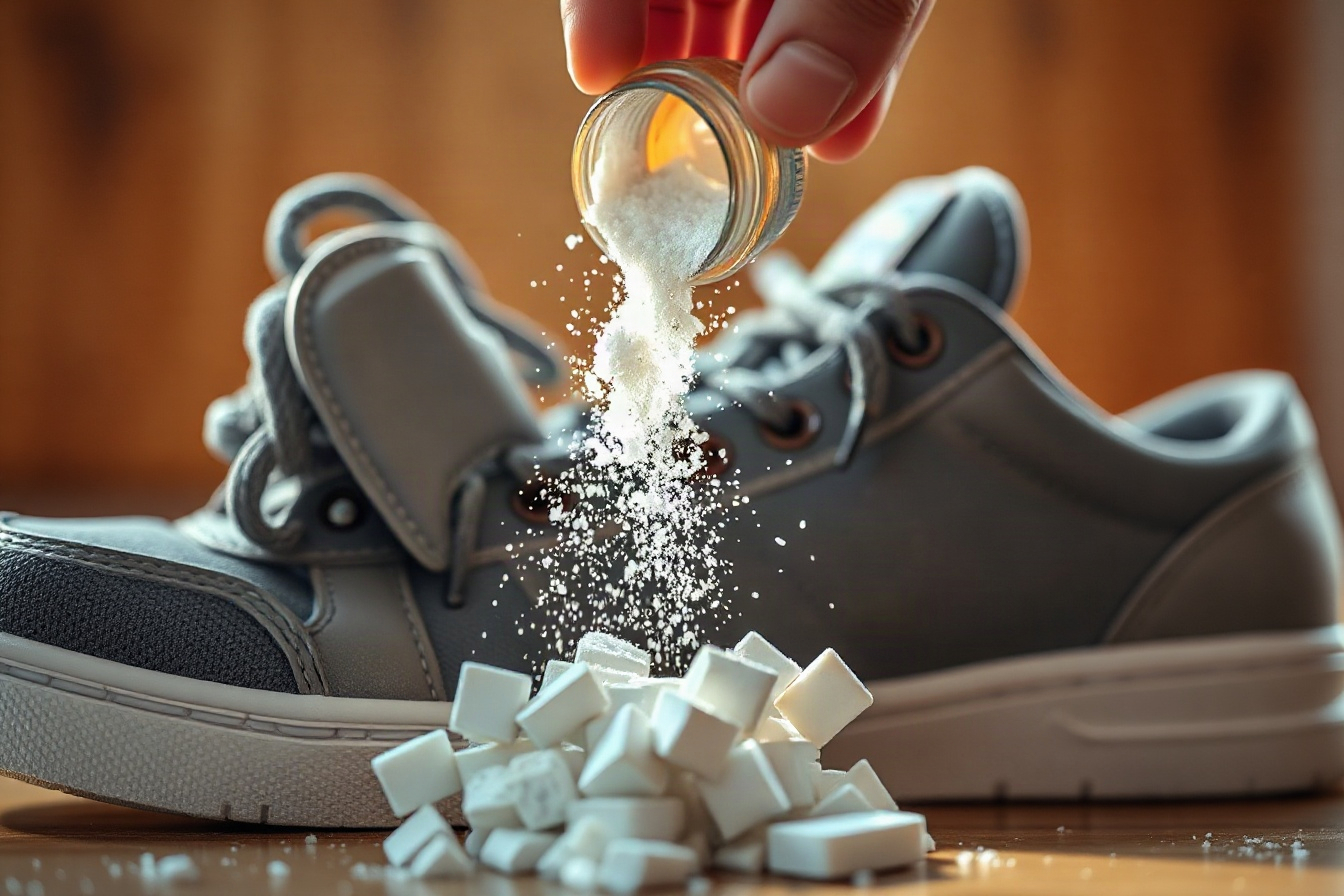
Start tonight: baking soda in the toes
This is the simplest method and suits everyday odour that has not gone too far.
- Take out the insoles if they lift out, and stand them upright to dry.
- Sprinkle a generous layer of baking soda into each shoe, making sure it reaches the toe area.
- Leave it overnight. Baking soda absorbs moisture and odour compounds, and neutralises acidic smells.
- Tip or shake the baking soda out thoroughly before wearing the shoes again, and tap the shoes upside down over a bin.
- For shoes you wear often, repeat once or twice a week rather than waiting until the smell is noticeable.
Baking soda can leave a pale dust on dark fabric or suede, so give those a gentle brush afterwards. If you would rather not tip loose powder into good shoes, put a couple of spoonfuls in a clean sock or a small fabric pouch and tie the end.
If that was not enough: the freezer
Cold slows bacterial growth, and a night in the freezer can take the edge off persistent odour, but it does not reliably sterilise a shoe, so see it as a boost and not a cure. It works best on canvas and synthetic trainers.
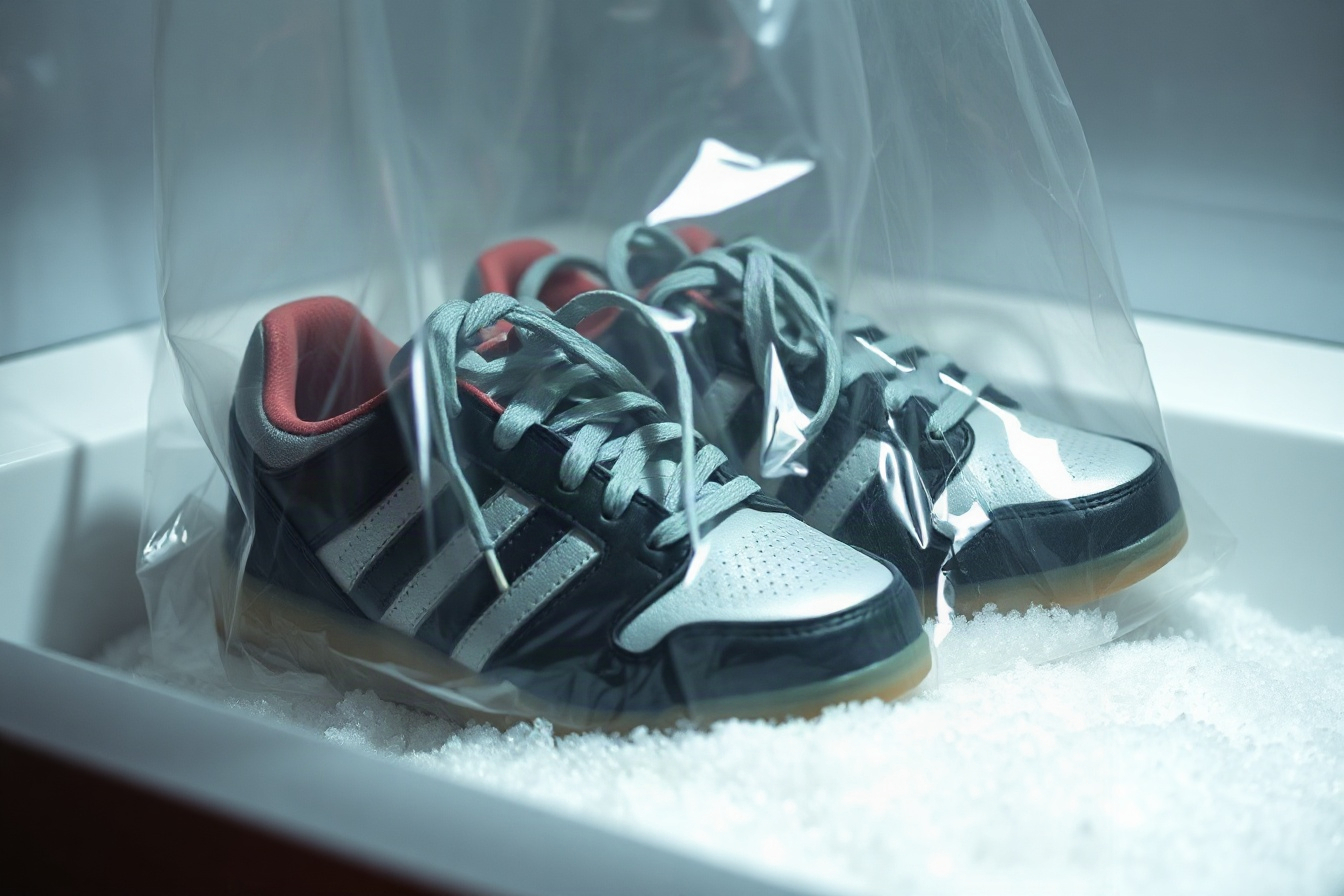
- Seal each shoe inside its own plastic bag, so no moisture or food smells get in.
- Place the bagged shoes in the freezer overnight.
- Remove them in the morning and let them come back to room temperature and dry out fully before wearing. Condensation forms as they warm, so leave the bag open to avoid trapping it.
Freezing is not a good idea for shoes with delicate leather, glued soles that are already coming apart, or built-in gel or air units, as cold can stiffen materials. Our piece on whether freezing kills germs explains why a freezer slows germs rather than wiping them out.
Washing the smell out
If the care label allows it, a proper wash deals with ingrained odour that surface treatments cannot reach. It is worth knowing that a machine wash is not suitable for every pair, and many leather, suede and glued shoes are better hand cleaned. Our general guide to cleaning trainers covers the hand method in more depth.
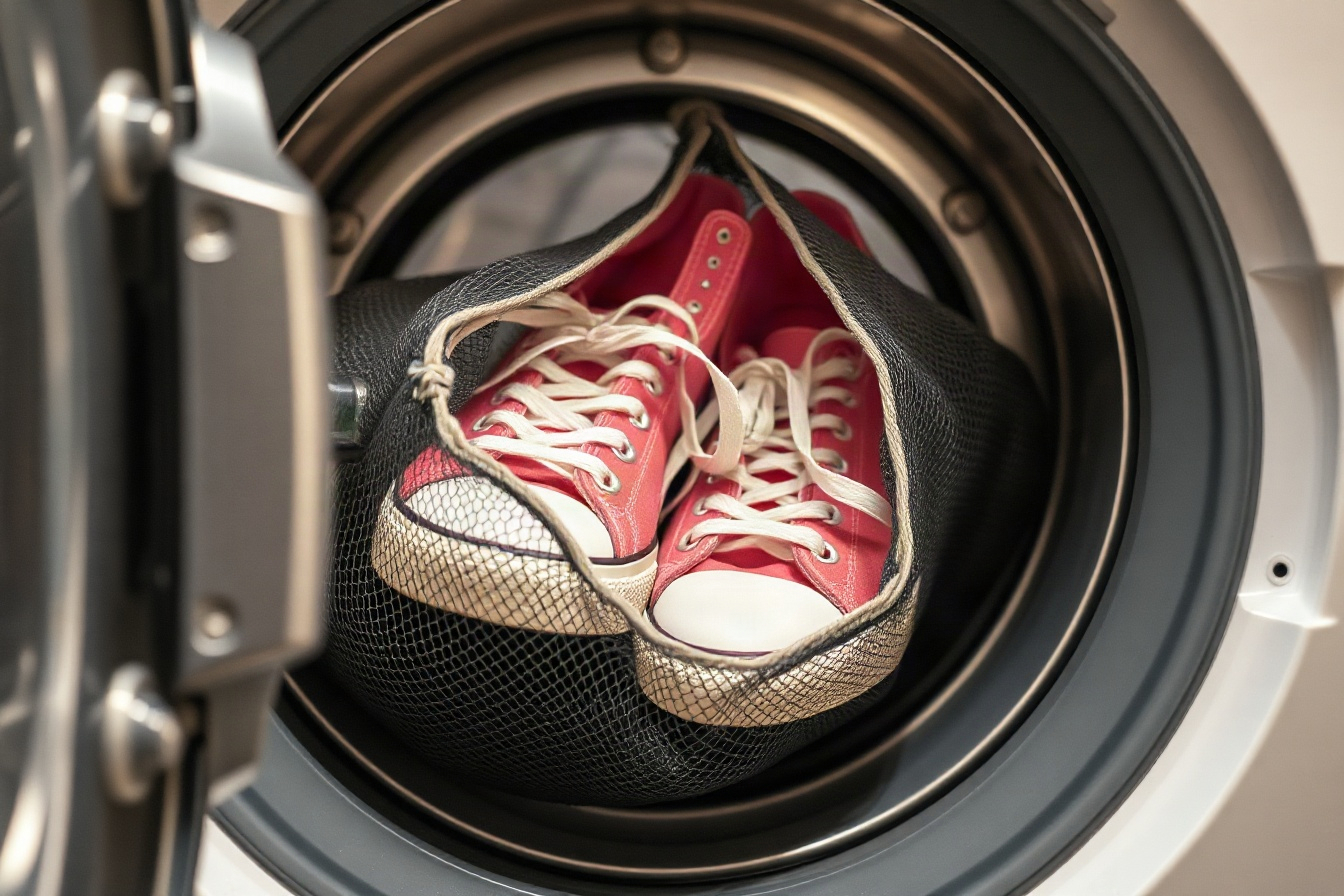
- Check the care label first. Not all shoes are machine washable, and washing ones that are not can damage the glue or structure.
- Remove any removable insoles and laces, and wash these separately. Our guide on cleaning shoe insoles explains how.
- Place the shoes in a mesh laundry bag or an old pillowcase to protect both the shoes and the machine.
- Wash with a quality detergent on a gentle, cool cycle.
- Air dry completely before wearing again, away from direct heat. Do not use a tumble dryer, as the heat can warp the shape or damage adhesives. Stuffing the toes with paper or cloth speeds drying, and the paper should be replaced when damp.
If the smell is still there afterwards
Sometimes the smell survives all of the above. Work through the likely reasons before you throw the shoes away.
- They were not fully dry. A damp shoe starts smelling again within a day. Give them a full 24 to 48 hours somewhere airy, or use a shoe dryer on a low setting.
- The insole is the source. Many insoles absorb sweat and cannot be fully cleaned. Replace them, or wash removable ones separately.
- It is the socks or your feet. If new shoes smell quickly, look at socks and foot hygiene. Wash your feet daily, dry between the toes, and choose socks that wick moisture.
- It is a foot problem. Persistent, strong foot odour with peeling, itching or sore skin can be athlete’s foot or another condition, and a pharmacist or GP can advise.
Keeping the smell from coming back
- Dry shoes thoroughly after each wear rather than putting them straight back in a closed cupboard while damp.
- Rotate between two or more pairs rather than wearing the same shoes every day, giving each pair time to dry out.
- Choose breathable materials like cotton or leather where practical, especially for shoes worn in hot weather or for exercise.
- Wear moisture-wicking socks and change them if your feet sweat heavily during the day.
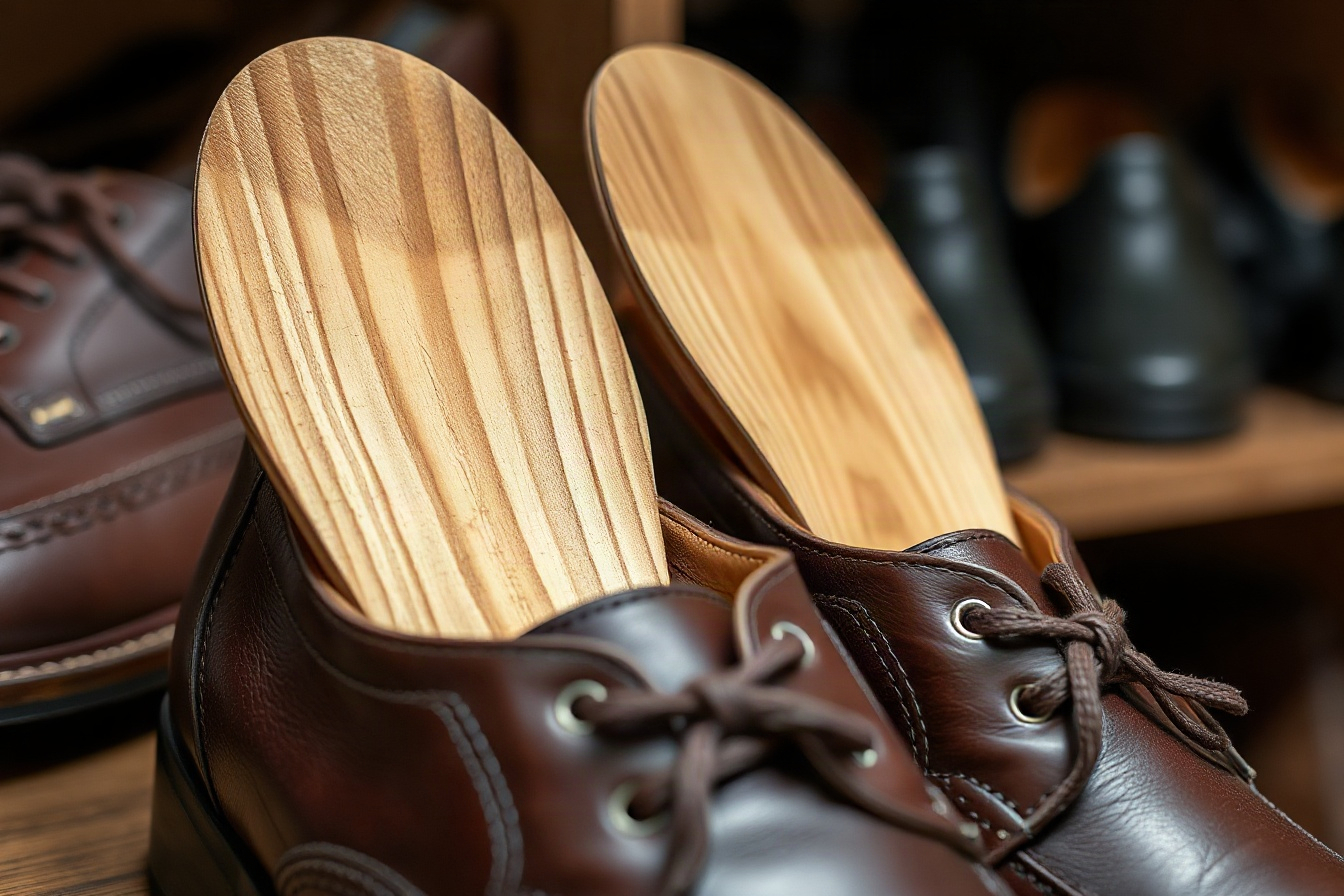
- Try cedar insoles or blocks. Cedar absorbs some moisture and has a natural scent, so many people find shoes stay fresher between wears, though it is a helper, not a substitute for drying them.
Other quick fixes, and what each is good for
| Method | How to use it | Worth knowing |
|---|---|---|
| Citrus peel | Leave lemon or lime peel inside each shoe overnight | Gives a fresher scent but does not tackle the cause, and the peel can go mouldy if left |
| Essential oil | Add a few drops of an oil like lavender to the insoles | Only masks the smell, and can mark pale fabric or leather |
| Plain cat litter in a bag | Put a small bag of unused, unscented litter in each shoe overnight, then discard | Absorbs moisture, good for damp shoes |
| Odour remover spray | Use an enzyme-based spray according to the label | Works on odour-causing residue, handy for a quick refresh |
Do not rely on masking sprays alone, and avoid wearing the same pair day after day without drying it, which is the biggest reason odour keeps coming back.
Products that help
As an Amazon Associate we earn from qualifying purchases.
- Cedar shoe inserts: look for untreated cedar that fits your shoe length, and sand them lightly every so often to refresh the scent. They are not a replacement for drying shoes.
- Enzyme-based shoe odour spray: choose one that says it breaks down odour residue rather than only adding fragrance, and test on a hidden spot of suede or dyed fabric.
- Low-heat shoe dryer: gentle warm air dries damp shoes overnight, which tackles the cause. Choose a low-temperature one, since high heat can warp soles.
- Moisture-wicking socks: look for blends designed to draw sweat away from the skin, in your usual size, and avoid pure cotton for exercise.
If the same trapped-moisture-and-bacteria problem is behind pet odour on carpet, that guide covers treating the source rather than masking it. A musty-smelling washing machine can also pass odour onto trainers you wash in it, which our guide on cleaning a washing machine filter covers.
Shoe smell questions
How do I remove smell from shoes in 5 minutes?
An enzyme odour spray gives the fastest refresh, though it treats the symptom more than the cause. Take the insoles out first so air reaches the inside. For something that lasts, baking soda overnight or a full dry-out works better, even though it takes longer.
What is the best odour eliminator for shoes?
Baking soda is the most reliable low-cost option for regular use, while enzyme-based sprays work well for a faster result. Cedar inserts are useful for ongoing freshness. None replaces drying, because damp is what the bacteria need.
Does baking soda really get rid of smell in shoes?
Yes, it absorbs moisture and neutralises many of the acidic odour compounds, which is why leaving it in overnight and shaking it out works as a regular, repeatable method. Very strong, ingrained smells may need a wash as well.
Does putting shoes in the freezer kill the smell?
It can reduce it, but it is not a cure. Freezing slows bacteria rather than killing them all, so the smell can return once the shoes warm up and get sweaty again. Use it as a boost after cleaning and drying.
Can you put smelly shoes in the washing machine?
Only if the care label allows it. Remove insoles and laces, put the shoes in a mesh bag, use a cool, gentle cycle and air dry. Leather, suede and glued shoes are usually best cleaned by hand.
Why do my shoes still smell after washing?
Most often they are still damp inside, or the insole has retained sweat. Dry them fully for a day or two, replace the insole, and check your socks. If the foot smell is persistent or the skin is itchy or peeling, speak to a pharmacist.