You slip your shoes off at the door and the smell reaches the hallway before you do. You have washed your socks, you have aired the shoes, and still nothing helps. Nine times out of ten the shoe is not the problem. The insole is, because it sits under your foot all day soaking up sweat and dead skin, and almost nobody cleans it until it is past polite.
The fix takes minutes, and what you do depends on what the insole is made of. Foam, gel and fabric can be hand-washed. Leather and cork should only be wiped. Custom orthotics need the gentlest treatment of all. In every case there is one rule that matters more than the rest: dry them without heat.
Disclosure: Cleaners Guide is a participant in the Amazon Associates programme, so if you buy through links on this page we may earn a small commission at no extra cost to you. It never changes our recommendations, we suggest products because they work and we point out cheaper options where they do the same job. Prices and availability change, so always check the current price before buying.
Sort your insoles by material before you wash anything
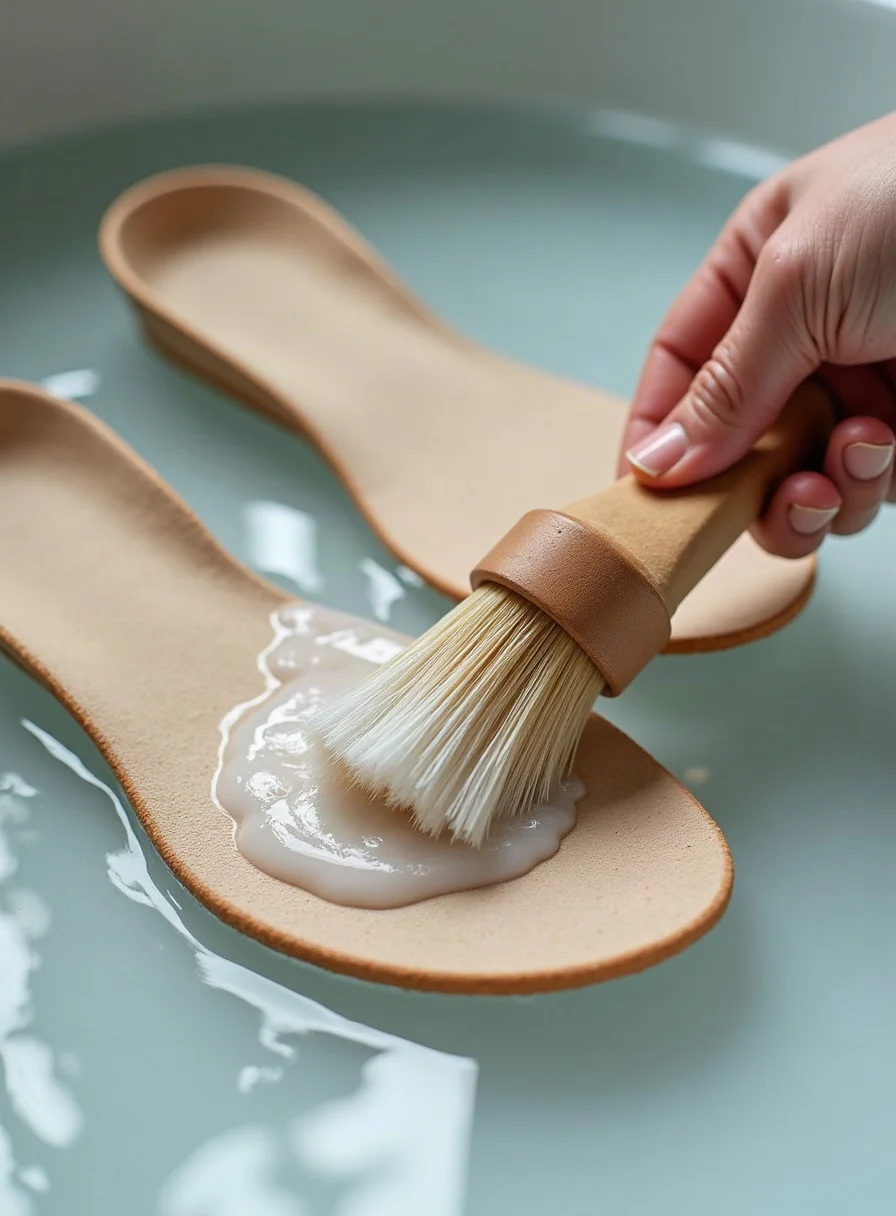
Nearly all insoles can be washed the same gentle way, but leather and cork are the exceptions that water ruins. Look at yours and find the row below.
| Insole type | How to clean | Water? |
|---|---|---|
| Foam or memory foam | Hand-wash with mild soapy water and a soft brush, squeeze out, air-dry | Yes, sparingly |
| Gel | Wipe or hand-wash with soapy water, rinse, air-dry | Yes |
| Fabric-topped or trainer insoles | Hand-wash with soapy water and a brush, air-dry | Yes, sparingly |
| Leather | Wipe with a barely damp cloth only, never soak or rinse | Minimal |
| Cork footbeds (Birkenstock-style) | Wipe the footbed with a slightly damp cloth, keep water off the cork | Minimal |
| Orthotic or custom | Wipe with a damp soapy cloth, follow your podiatrist’s advice, never machine-wash | Minimal |
The wash itself, in six steps
See replacement insoles on Amazon →
This is the method for the vast majority of insoles: the foam, gel and fabric ones in trainers, work boots and everyday shoes.
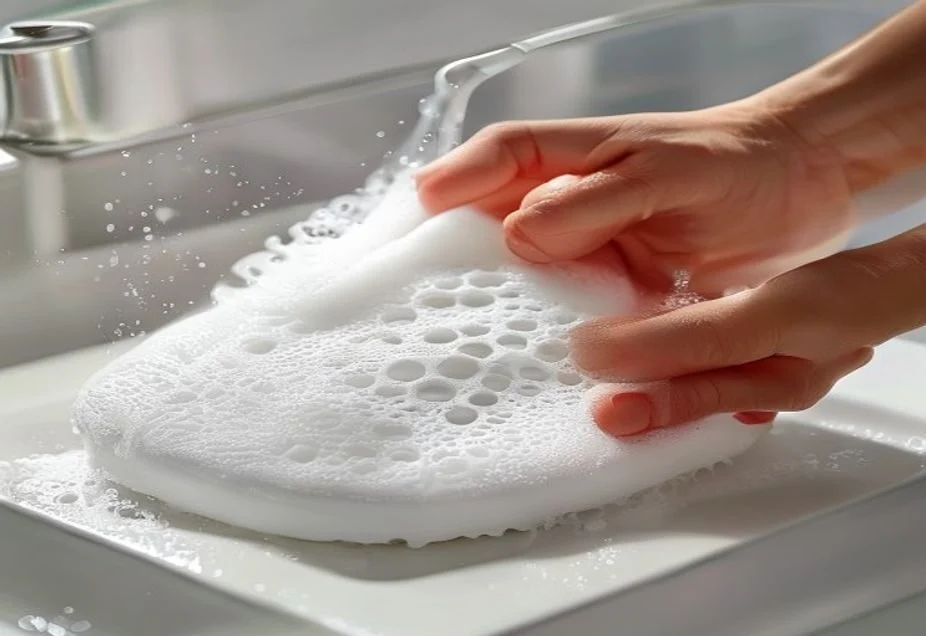
- Take the insoles out of your shoes. Always clean them separately, never leave them in.
- Knock off loose dirt and, if they are dusty, vacuum or tap them out.
- Mix warm water with a little mild soap or washing-up liquid. Dip a soft brush, old toothbrush or cloth and gently scrub both sides to a light lather. For grimy trainer insoles, a paste of bicarbonate of soda and water helps lift dirt and odour.
- Wipe or lightly rinse off the suds with a clean damp cloth. Do not soak them, because waterlogged foam takes forever to dry and can break down.
- Press out excess water in a towel. Do not wring memory foam hard, as that can damage its structure.
- Air-dry completely, ideally overnight or for up to 24 hours, before putting them back.
For very smelly gym or work insoles you can let them sit in the soapy water for a few minutes, but foam should never be left to soak for long. If the whole shoe smells, clean the shoes too. Our guide to cleaning football boots uses the same take-it-apart, air-dry approach, and the trainer cleaning guide covers the shoe itself.
A simple wash-day timeline
| When | What to do |
|---|---|
| Evening, shoes off | Take the insoles out, brush off dirt and wash by hand. Stuff the shoes with newspaper |
| Overnight | Insoles stand upright by a fan or in a ventilated room. Do not put them on a radiator |
| Next morning | Check they are completely dry, pressing the thickest part. If they feel cool or damp, give them longer |
| Once dry | Dust with bicarbonate of soda for a few hours or overnight, brush off, then refit |
That is why a wash works best on a day when you have another pair to wear. Rushing the drying is the usual reason a clean insole smells again within a week.
Why insoles smell in the first place
Feet sweat, and the insole is the first thing to absorb it. Skin cells and moisture sit in the foam or fabric, and bacteria feed on them. Closed shoes, synthetic socks and wearing the same pair day after day all make it worse, because the insole never fully dries. If odour comes back quickly even with good care, or your feet are itchy, sore or have peeling skin, speak to a pharmacist or GP, because it may be a foot condition such as athlete’s foot, which cleaning the shoe alone will not solve.
Which shoes need the most attention
Trainers and gym shoes are the obvious ones, because they trap heat and sweat. Work boots, school shoes and wellies come next, since they are often worn all day and in the same pair for weeks. Football and rugby boots add mud and damp to the mix. Whatever the shoe, take the insoles out every evening if you can, even when you are not washing them. Leaving them out overnight lets moisture escape and often makes the biggest difference of all. If the insoles are glued in, treat the shoe as the thing to dry, stuff it with newspaper and use the surface-wipe method in the first question below.
Leather, cork and orthotics: the wipe-only group
Leather insoles, common in smart shoes, brogues and quality boots, are the opposite of foam. Water is the enemy. Soaking or rinsing leather makes it stiffen, crack and curl, and it may never dry properly.
- Wipe with a barely damp cloth, moistened with water and, if needed, a tiny drop of mild soap. Use as little liquid as possible.
- Wipe off the soap with a second cloth dampened with plain water, then pat dry at once.
- Air-dry away from heat. Once fully dry, a little leather conditioner keeps it supple.
- For smell, let them dry fully, then sprinkle bicarbonate of soda on top overnight and dust it off. Do not try to wash odour out of leather with water.
Cork footbeds follow the same low-moisture logic. Wipe the top with a slightly damp cloth or a suede brush, but keep water off the cork itself, because soaking can make it crumble. Our Birkenstock cleaning guide goes into more detail.
Custom and orthotic insoles
Custom orthotics made for you are precisely shaped, so treat them gently and keep them away from the washing machine.
- Wipe with a damp cloth and a little mild soap. The shell and the top cover both just need wiping, not soaking.
- Rinse the cloth, not the orthotic, wipe off the soap, then pat dry and air-dry fully.
- No machine washing, soaking, solvents or harsh chemicals. They can warp the shell, dissolve adhesives and change the shape made for your foot.
- For odour, use bicarbonate of soda overnight once dry, and always follow the care advice that came with your orthotics or from your podiatrist.
Because orthotics sit against your skin all day, a quick wipe a couple of times a week keeps them fresher than an occasional deep clean.
Drying: moving air, never heat
This is the step that quietly wrecks more insoles than any other. Hairdryers, tumble dryers, radiators and hot airing cupboards soften the glue that holds insoles together, so the layers separate and foam can harden or crumble.
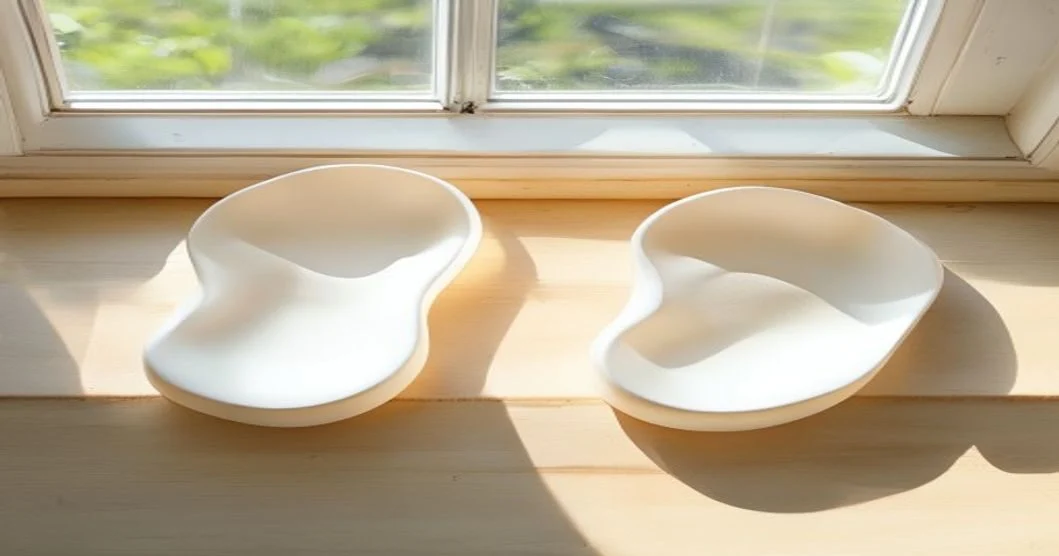
- Air-dry at room temperature on a towel, turning once, for up to 24 hours until completely dry.
- Speed it up safely by standing them upright in front of a fan or in a well-ventilated spot. Moving air, not heat.
- Stuff the shoes with newspaper to dry them in parallel, so damp insoles do not go back into damp shoes.
- Never put damp insoles back in shoes. That is how the smell and bacteria come straight back.
Can you put insoles in the washing machine? It is not recommended for any insole. The agitation, heat and spin break down foam, dissolve adhesives and can deform orthotics and memory foam. Hand-washing takes a couple of minutes and is far gentler. Only consider a machine for plain flat fabric insoles, in a mesh bag on a cold delicate cycle, and accept they may not last as long.
Smell that does not shift
See shoe deodorisers on Amazon →
Insole smell comes from bacteria feeding on trapped sweat. Cleaning removes most of it, and these steps deal with the rest.
- Bicarbonate of soda: once the insole is clean and fully dry, sprinkle a layer over it and leave overnight, then dust it off. It absorbs moisture and odour. A spoonful in the shoe overnight between wears helps the shoe too.
- Diluted white vinegar: on synthetic insoles, wipe with a cloth dampened in half water and half vinegar, then wipe with plain water and dry. Skip it on leather and cork.
- Dry properly: most smell is trapped moisture. Let insoles and shoes dry fully between wears and rotate pairs so each gets a day off.
- Surgical spirit on a cloth can be dabbed on synthetic insoles to help with bacteria, then left to air-dry. Test a small patch first, keep it away from flames and ventilate the room.
Our guide to cleaning rugby boots has a longer kit bag odour routine if the smell is from sport.
If it still did not work
Sometimes the clean has not failed, the insole has. Cleaning cannot revive one that has worn out. Replace them when the cushioning is flattened and no longer springs back, the top layer is peeling or crumbling, they smell even after cleaning and fully drying, or your feet ache more than they used to. Everyday foam insoles wear out with use and do not last forever, while custom orthotics generally last longer but should be reviewed by your podiatrist, who can advise on repairs or replacement covers.
White insoles that have yellowed are a slightly different problem. Scrub a bicarbonate of soda paste gently into the area with a soft brush, leave a few minutes, wipe off and air-dry. Avoid bleach, which can damage foam. Yellowing is often permanent staining from sweat, so cleaning fades it rather than erasing it.
As a routine, give insoles a quick wipe or bicarb refresh every week or two if you wear them daily, and a proper wash about monthly, more often for gym, work or sweaty-feet use. Avoid these mistakes: drying with heat, soaking foam or leather, rinsing leather, machine-washing orthotics, using bleach or solvents, and putting insoles back damp.
What is worth having by the shoe rack
You do not need much. Here are four things that make the job easier, with what to look for in each. The links are Amazon UK searches.
- Soft scrubbing brush. Look for soft, short bristles that will not tear fabric tops or foam. An old toothbrush does the same job.
- Shoe deodoriser spray. Choose one labelled for footwear and use it on dry shoes. It reduces odour but does not replace drying.
- Replacement insoles. Match the type and size to your shoe, and trim only along the printed size lines. If you need support for a foot condition, ask a podiatrist.
- Unheated shoe dryer or ventilation stand. Moving air without heat. Avoid heated models for foam and glued insoles.
As an Amazon Associate we earn from qualifying purchases.
Three questions people ask
How do you clean insoles without removing them?
It is much better to remove them, but if they are glued in, wipe the top with a cloth dampened in mild soapy water, then a clean damp cloth, and blot dry. Sprinkle bicarbonate of soda over the dry insole overnight to tackle odour. Stuff the shoe with newspaper to help it dry, and never soak a shoe with fixed insoles.
How do you dry insoles quickly?
Press out water in a towel, then stand them upright in front of a fan or in a ventilated room. Avoid radiators and hairdryers. Most insoles need up to 24 hours to dry fully, so wash them when you will not need the shoes the same day.
How often should you replace insoles?
There is no single answer, because it depends on wear and weight. Replace them when cushioning is flat, the surface is peeling, odour stays after cleaning, or your feet start to ache. Custom orthotics should be reviewed by your podiatrist.
For more footwear care, see our guides on how to clean football boots and how to clean ear plugs, another sweat-and-bacteria item worth keeping fresh.