Key takeaways. There is no single rule, because the makers disagree. As of October 2026, Bosch’s support pages tell owners not to use vinegar or citric acid in a washing machine, because of damage to rubber parts, while Samsung’s support pages tell owners to use white vinegar in its washers and dishwashers. For coffee machines the pattern is the opposite of what many guides suggest: the pages we could read from Philips, KitchenAid and Nespresso warn against vinegar. Check your own manual first, then use this table to see where your brand stands.
Most “vinegar for everything” advice online is written by people with no stake in your warranty. This article does something different. It reads what the manufacturers themselves publish on their official support pages and lays the findings side by side. We have not tested any appliance. Everything below is a summary of pages we fetched and read in October 2026, each linked so you can check the wording yourself, and anything we could not read is listed as unverified at the end rather than guessed at.
How we built the comparison
We searched for the official support or help pages of well known brands that answer a vinegar, citric acid or descaler question, then opened each page and recorded what it said. A brand only appears in a table if we read a page from its own site. Where a page says nothing about vinegar, we say so, because silence is information too: it usually means the maker points you to its own branded product instead.
Two cautions apply throughout. First, support pages are written for particular regions and models, and some of the pages we found are from other countries’ sites (Bosch Ireland and Australia, Samsung Canada and New Zealand, for example). Policies are often shared across regions but not always, so treat the UK manual for your exact model as the final word. Second, manufacturer guidance changes, so every statement below is dated as of October 2026.
The pattern at a glance
| Appliance | What the makers we read say about vinegar | Typical alternative they name |
|---|---|---|
| Washing machine | Split. Bosch and Whirlpool advise against vinegar in the drum. Samsung and LG describe it as part of their own cleaning steps. | Branded washer cleaner or descaler (Bosch, Siemens, Beko, Whirlpool, LG tub cleaner) |
| Dishwasher | Samsung’s pages recommend a cup of white vinegar. Beko points to its own limescale remover. | Branded dishwasher descaler or the machine’s self clean cycle |
| Kettle | Kenwood gives a vinegar recipe. Morphy Richards does not name vinegar and says to use a suitable descaler. | Proprietary descaler, or vinegar or citric acid depending on the brand |
| Coffee machine | Philips, KitchenAid and Nespresso’s pages we read warn against vinegar. Miele warns against acids other than its own recommended descaler. | Citric acid based descaler or the maker’s own kit |
| Humidifier (Dyson) | Dyson’s pages we read name citric acid and say nothing about vinegar. | Citric acid, with Dyson’s cleaning kit |
Washing machines: Bosch says no, Samsung says yes
Washing machines are where the disagreement is sharpest, and it matters, because they are also where most people use vinegar. For a general method that does not depend on brand, see our guides on how to clean a washing machine and cleaning a washing machine with vinegar and baking soda.
| Maker | What the page says (as of Oct 2026) | Source |
|---|---|---|
| Bosch | Advises against descaling or cleaning with vinegar. The Irish page says it is “too aggressive” and can damage rubber parts. The Australian page says vinegar causes too much damage to the rubber parts. The US page says it may degrade the rubber parts over time. Bosch recommends its own washing machine cleaner or descaler instead. | Bosch IE descaling; Bosch AU cleaning; Bosch US |
| Bosch (citric acid) | States that citric acid is not recommended for cleaning a washing machine because it can damage rubber parts and cause faster wear. The US descaling page says the same about citric acid or vinegar. | Bosch IE citric acid; Bosch US descaling |
| Bosch (smells) | Says that if the machine smells, do not use vinegar. It recommends keeping the drum aired and using the recommended washer cleaner. | Bosch IE smells |
| Siemens | Recommends descaling with Siemens tested and approved washing machine descaler. The page we read does not mention vinegar or citric acid. | Siemens ZA descaling |
| Samsung | For hard water build up, its Canadian page tells users to add four cups of white vinegar to the tub and run a hot cycle without detergent, then a hot rinse cycle to remove remaining vinegar. Its New Zealand odour page suggests an empty hot wash with half a cup of vinegar and also points to the machine’s own drum clean programme. | Samsung CA hard water; Samsung NZ odour |
| LG | The US page says vinegar can be used in place of diluted bleach to clean the door gasket (never mixed with bleach), and that inlet filters can be soaked in white vinegar or a limescale remover. For the drum it recommends a washing machine tub cleaner. | LG US |
| Whirlpool | Warns that putting vinegar directly in the drum can lead to costly repairs or permanent damage, because acidity wears rubber seals and hoses over time. It suggests a washer cleaner tablet instead, and says vinegar is acceptable for removable dispenser drawers and the exterior. | Whirlpool blog |
| Beko | Its UK descaling guide recommends its own limescale remover sachet monthly and does not mention vinegar or citric acid. | Beko UK descaling |
Read closely, the Bosch and Whirlpool pages give the same reason: rubber seals and hoses. Neither claims vinegar fails to dissolve limescale. Their objection is about long term wear on parts, which is also why Whirlpool carves out the dispenser drawer and exterior, where there is no seal to harm. Bosch’s Australian page also lists a household products question, and its answer is blunt: it advises against descaling with household products that contain acid or vinegar. That page does not name citric acid, but Bosch’s Irish citric acid page does.
Samsung and LG take a different line, at least in the regional pages we found. Samsung’s Canadian page puts white vinegar at the centre of its hard water routine, and LG treats vinegar as an acceptable gasket and filter cleaner while steering the drum itself towards a purpose made tub cleaner. The Samsung page also suggests checking your model’s care instructions, which is sensible advice for everyone.
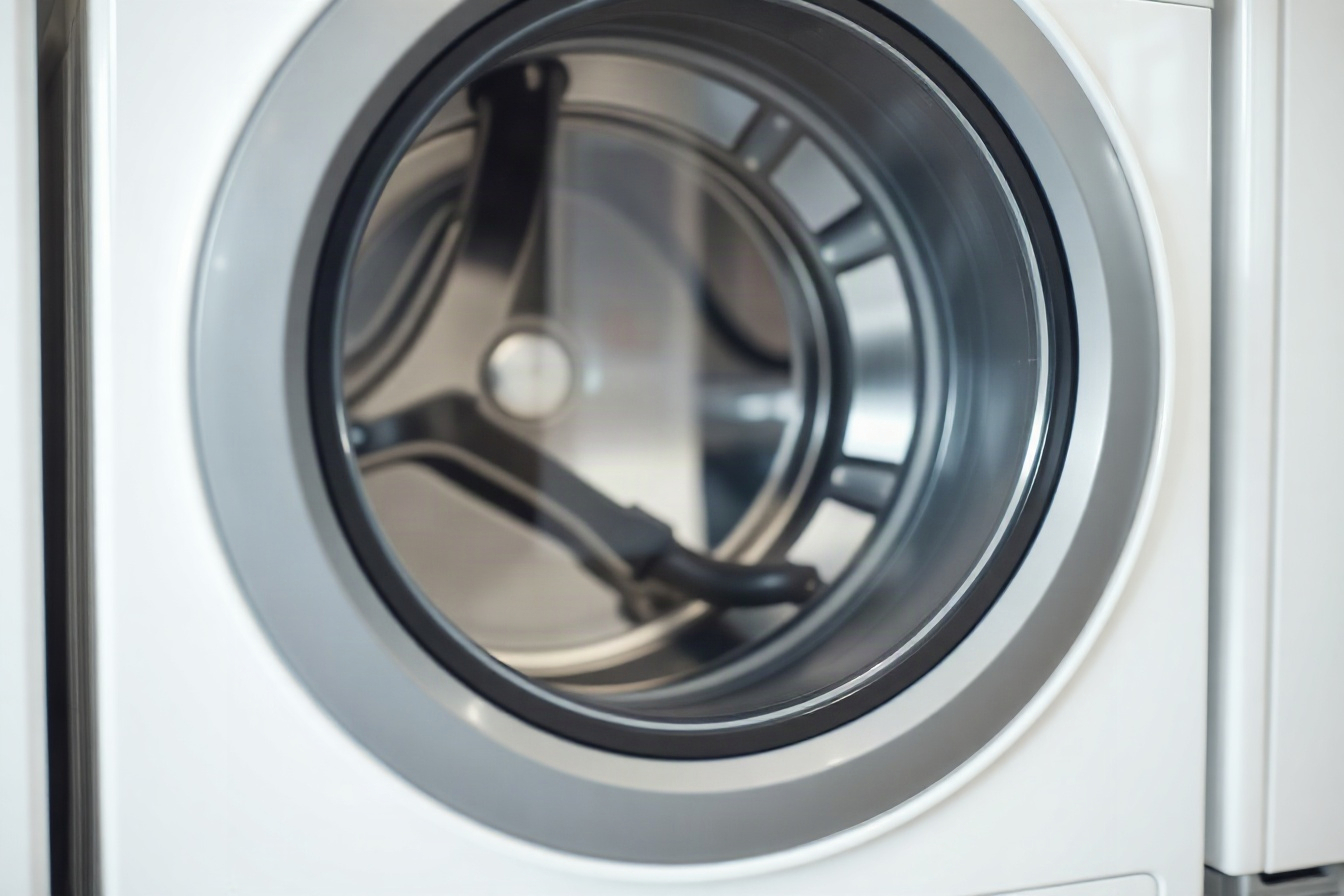
What does this mean in practice? If your machine is a Bosch, Siemens (same BSH group, although the Siemens page we read is silent on vinegar) or Whirlpool, the maker’s own stated position is to avoid vinegar in the drum, and following it removes any argument later. If it is a Samsung or LG, the maker itself publishes vinegar steps, so using them as written is within their guidance. For all other brands, open the manual. For a plain explanation of what vinegar can and cannot kill in the first place, see does vinegar disinfect.
Dishwashers: Samsung is the clearest voice
| Maker | What the page says (as of Oct 2026) | Source |
|---|---|---|
| Samsung | The UK, US and Canadian dishwasher cleaning pages we read all say to stand a cup of distilled white vinegar upright in the lower basket and run a cycle (the US and Canadian pages specify an 8 ounce cup and a Sanitize cycle). The US and Canadian pages also say to soak the nozzles and filter in white vinegar for a deep clean. The US page says distilled white vinegar will remove mineral deposits and grime. | Samsung UK; Samsung US; Samsung CA |
| Beko | Its descaling guide says the washing machine limescale remover can also be used as a dishwasher limescale remover on Beko dishwashers. It does not mention vinegar. | Beko UK descaling |
We could not find an official Bosch, Miele or LG dishwasher page that answers the vinegar question, so those brands are not in this table. Since Bosch’s laundry pages warn about rubber parts, it would be a guess to extend that to its dishwashers, and we are not going to guess. If you want a method that works whatever your brand, our guides to cleaning a dishwasher and cleaning the dishwasher filter cover it.
Kettles: the makers are far more relaxed
| Maker | What the page says (as of Oct 2026) | Source |
|---|---|---|
| Kenwood | For descaling without a commercial product, suggests a solution of one part white vinegar to two parts water, left in the kettle for a time that depends on the scale, then emptied and rinsed by boiling fresh water twice. Citric acid is not mentioned. | Kenwood FAQ |
| Morphy Richards | The page for its Halo kettle tells owners to use a proprietary descaling product suitable for stainless steel, glass or plastic, to check the descaler suits the kettle, and not to change the quantity or method unless the descaler’s maker says so. It does not mention vinegar or citric acid. | Morphy Richards Halo |
| Beko | Its coffee machine FAQ recommends a cleaning product suitable for kettles and coffee machines and points to the manual. Vinegar is not named. | Beko coffee FAQ |
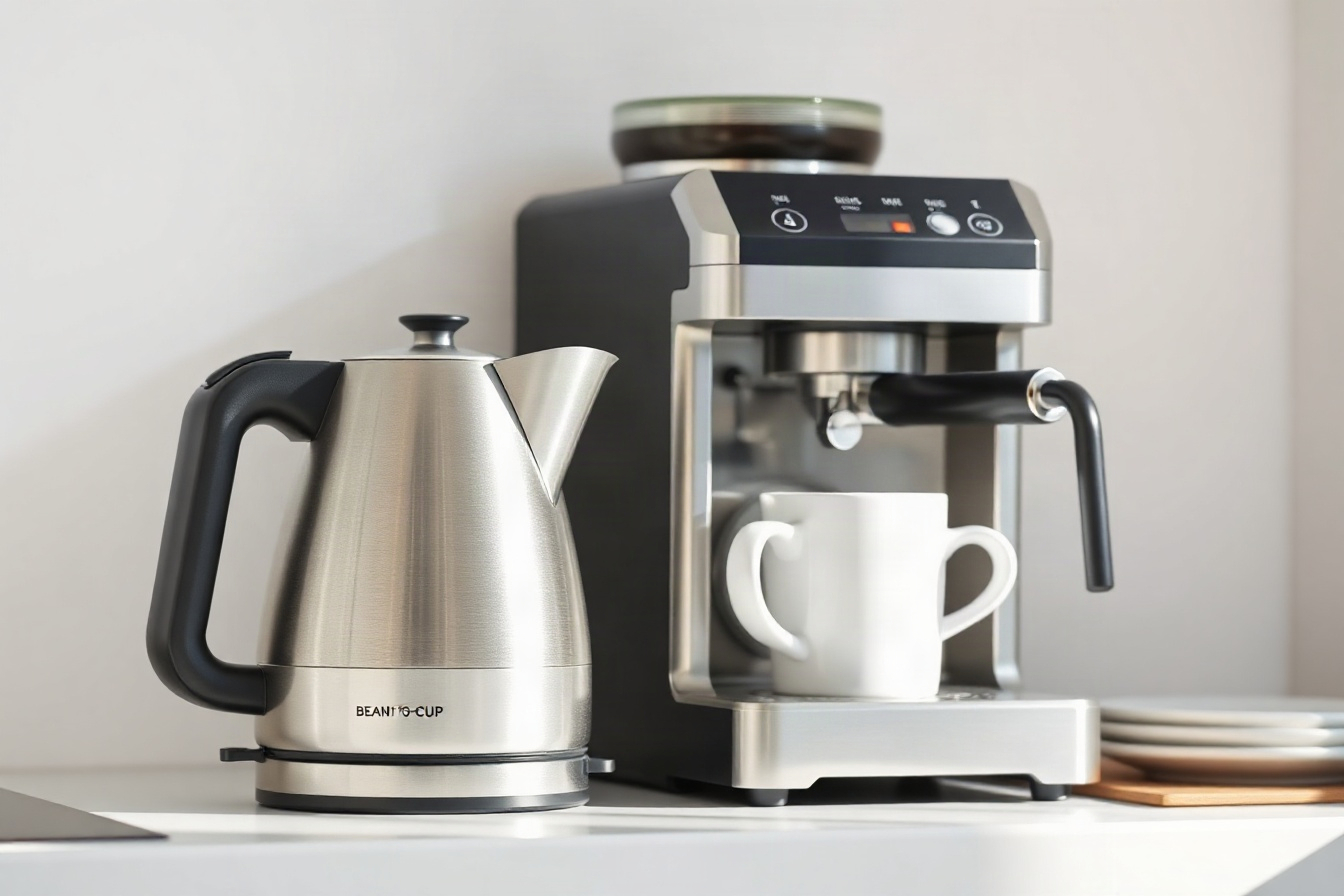
Kettles have no rubber seals to speak of, and the makers we read are more comfortable with acids. Even so, only Kenwood gave an explicit vinegar recipe. Morphy Richards leaves the choice to you but wants a descaler suited to the kettle’s materials. Our full kettle cleaning guide covers both vinegar and citric acid, and whether baking soda and vinegar actually clean explains why mixing them is rarely worth it.
Coffee machines: the warnings get serious
| Maker | What the page says (as of Oct 2026) | Source |
|---|---|---|
| Philips (SENSEO) | Says to use only citric acid based descalers and not to use white vinegar. It states that using these products will damage the machine. | Philips SENSEO |
| KitchenAid (UK) | On its Full Auto Espresso Machine FAQ: “We don’t recommend using vinegar to descale the espresso machine.” It adds that vinegar has less descaling effect than proper descaling solutions, which affects the unit’s lifecycle. | KitchenAid UK |
| Nespresso (India site) | The descaling kit page says “Never use vinegar as it can damage your machine” and lists lactic acid as the kit’s hazardous ingredient. We could not read Nespresso’s UK page, which is blocked to automated tools, so this is the Indian page. | Nespresso IN descaling kit |
| Miele (Canada) | Recommends Miele descaling tablets and warns that other descaling agents may contain acids besides citric acid or undesirable ingredients such as chlorides, which can damage the machine. Vinegar is not named. | Miele CA descaling |
| Beko | Recommends a specific cleaning product suitable for kettles and coffee machines and says to check the manual. Vinegar is not named. | Beko coffee FAQ |
This is the part of the table that contradicts a lot of popular advice. Philips is the only one that spells out the chemistry of its own recommendation: citric acid based descalers, not vinegar. Our reading is that for coffee machines with internal pumps, thermoblocks and seals, the makers would rather you used a product formulated for the job. We are not claiming to know why beyond what the pages say. For a worked example on a specific brand, see our De’Longhi descaling guide.
Dyson and other appliances
| Maker | What the page says (as of Oct 2026) | Source |
|---|---|---|
| Dyson (humidifier) | The Pure Humidify+Cool support page says you will need 150 g of citric acid for the deep clean, then to follow the video guide or user manual. It describes the monthly Deep clean cycle as removing limescale from the water system. It does not mention vinegar. | Dyson Pure Humidify+Cool |
| Dyson (cleaning kit) | The cleaning kit page says the kit removes mineral build up using citric acid and is used with the machine’s Deep clean cycle. No vinegar mention. | Dyson cleaning kit |
We did not find an official Dyson page that says anything about vinegar, so we cannot say Dyson forbids it, only that its own routine is built around citric acid. For steam irons, we could not read a manufacturer page that answered the question, so we have left them out. Our iron plate guide covers the soleplate itself.
How to use this when your own appliance is not listed
- Start with the manual. Samsung’s own page tells users to check the model’s care instructions to protect the warranty and performance, and Morphy Richards says to confirm any descaler is suitable for your kettle.
- Look for what the maker sells. Bosch, Siemens, Beko, Whirlpool and Miele all point to a branded cleaner or descaler. If a maker names its own product and warns against alternatives, follow it for rubber heavy or pump driven machines.
- Separate the parts. Even Whirlpool, which warns against vinegar in the drum, accepts it for dispenser drawers and the exterior. LG accepts it for gaskets and inlet filters.
- Rinse thoroughly. Samsung’s hard water routine ends with a hot rinse cycle to flush remaining vinegar, and Kenwood boils fresh water twice after its vinegar mix.
- Never combine products. LG’s page states that vinegar and bleach should never be used together.
If you decide a branded product is the safer route, the notes below describe what to look for. As an Amazon Associate we earn from qualifying purchases.
Citric acid descaler (powder). Look for a pure food grade citric acid or a citric acid based descaler marked as suitable for kettles and coffee machines, with clear dosing on the pack. Dosing matters: Miele’s page notes results cannot be guaranteed if the solution is not the right concentration.
Browse citric acid descalers →
Washing machine cleaner. Look for a tablet or sachet that states it is for washing machines and is used on a hot cycle with an empty drum. Bosch, Whirlpool and LG each point owners to a cleaner of this type.
Browse washing machine cleaners →
Dishwasher cleaner or descaler. Look for one that states it suits dishwashers and ideally your brand. Beko’s page confirms its sachet works in its dishwashers.
Coffee machine descaler. Check the pack says it is compatible with your machine or brand. Philips specifies citric acid based descalers for SENSEO machines.
Browse coffee machine descalers →
What we could not verify
We did not include Miele washing machines, De’Longhi, Hotpoint, Whirlpool dishwashers, AEG, Electrolux, Russell Hobbs, Smeg, Tefal (whose only page we read concerned a teapot and did not load reliably) or Dyson vacuum or steam products. Either we could not find an official page that addresses vinegar or citric acid, or the page we found did not contain the relevant text when fetched. De’Longhi’s support pages we reached refer to its own descaler and the manual without naming vinegar, so we cannot report a position. Nespresso’s UK pages block automated reading, which is why the Indian page is used. If your brand is missing, that is the reason, and it is not a sign that vinegar is safe or unsafe.
Frequently asked questions
Can you use vinegar to clean a washing machine?
It depends on the maker. As of October 2026, Bosch’s support pages advise against vinegar because it can damage rubber parts, and Whirlpool warns against it in the drum. Samsung’s Canadian page describes a white vinegar cycle for hard water, and LG allows it for gaskets and filters. Check your manual first.
Does vinegar damage washing machine seals?
Bosch’s pages say vinegar can attack or degrade rubber parts over time, and Whirlpool says acidity can damage rubber seals and hoses. Neither page gives a number of washes before damage appears. Samsung and LG describe vinegar steps in their own guidance, so the risk depends on the brand and your manual.
Is citric acid safer than vinegar in appliances?
Not always. Bosch’s Irish page says citric acid is not recommended for washing machines because it can damage rubber parts. For SENSEO coffee machines, Philips says to use only citric acid based descalers and not white vinegar. The right choice depends on the appliance and the maker.
Can I put vinegar in a dishwasher?
Samsung’s UK, US and Canadian dishwasher pages say to stand a cup of distilled white vinegar upright in the lower basket and run a cycle. We found no official Bosch, Miele or LG dishwasher page on this, so check your own manual before copying the method.
Can I descale a kettle with vinegar?
Kenwood’s FAQ suggests one part white vinegar to two parts water, left for a time depending on the scale, then rinsed by boiling fresh water twice. Morphy Richards instead says to use a proprietary descaler suitable for the kettle’s materials. Check your kettle’s manual.
Can I descale a coffee machine with vinegar?
Several makers say no. KitchenAid’s UK page does not recommend vinegar for its espresso machine, Philips says not to use white vinegar in SENSEO machines, and Nespresso’s Indian page says never to use vinegar. Use the descaler your maker names.
What if my manual does not mention vinegar?
Treat that as a signal to use the maker’s own cleaner or descaler, which most brands name. Samsung’s page advises checking the model’s care instructions to protect the warranty and performance. If unsure, contact the manufacturer’s support team and ask in writing.
Sources
- Bosch Ireland: descaling the washing machine with vinegar (vinegar advised against, rubber parts) (bosch-home.ie)
- Bosch Australia: cleaning the washing machine with vinegar (bosch-home.com.au)
- Bosch Australia: descaling with household products (bosch-home.com.au)
- Bosch Ireland: washing machine smells and vinegar (bosch-home.ie)
- Bosch US: cleaning the washing machine with vinegar (bosch-home.com)
- Bosch US: descaling the washing machine (bosch-home.com)
- Bosch Ireland: citric acid to clean a washing machine (bosch-home.ie)
- Siemens South Africa: washing machine descaling (siemens-home.bsh-group.com)
- Samsung Canada: removing hard water build up from a washer (samsung.com)
- Samsung New Zealand: washing machine odour (samsung.com)
- Samsung UK: how to clean a Samsung dishwasher (samsung.com)
- Samsung US: routine and deep clean of a dishwasher (samsung.com)
- Samsung Canada: cleaning a dishwasher (samsung.com)
- LG US: washing machine cleaning help library (lg.com)
- Whirlpool: should you clean your washing machine with vinegar (whirlpool.com)
- Beko UK: how to descale your washing machine (beko.co.uk)
- Beko UK: can I use vinegar to clean my coffee machine (beko.co.uk)
- Kenwood: kettle descaling FAQ (kenwoodworld.com)
- Morphy Richards UK: Halo kettle descaling (support.morphyrichards.co.uk)
- KitchenAid UK: descaling machine with vinegar (kitchenaid.co.uk)
- Nespresso India: descaling kit (nespresso.com)
- Philips UK: descaling agents for SENSEO (philips.co.uk)
- Miele Canada: descaling coffee machines (miele.ca)
- Dyson UK: Pure Humidify+Cool support (dyson.co.uk)
- Dyson: cleaning kit (dyson.com)
Last checked: 25 October 2026. Manufacturer guidance changes and varies by country and model, so always confirm against the manual for your own appliance.