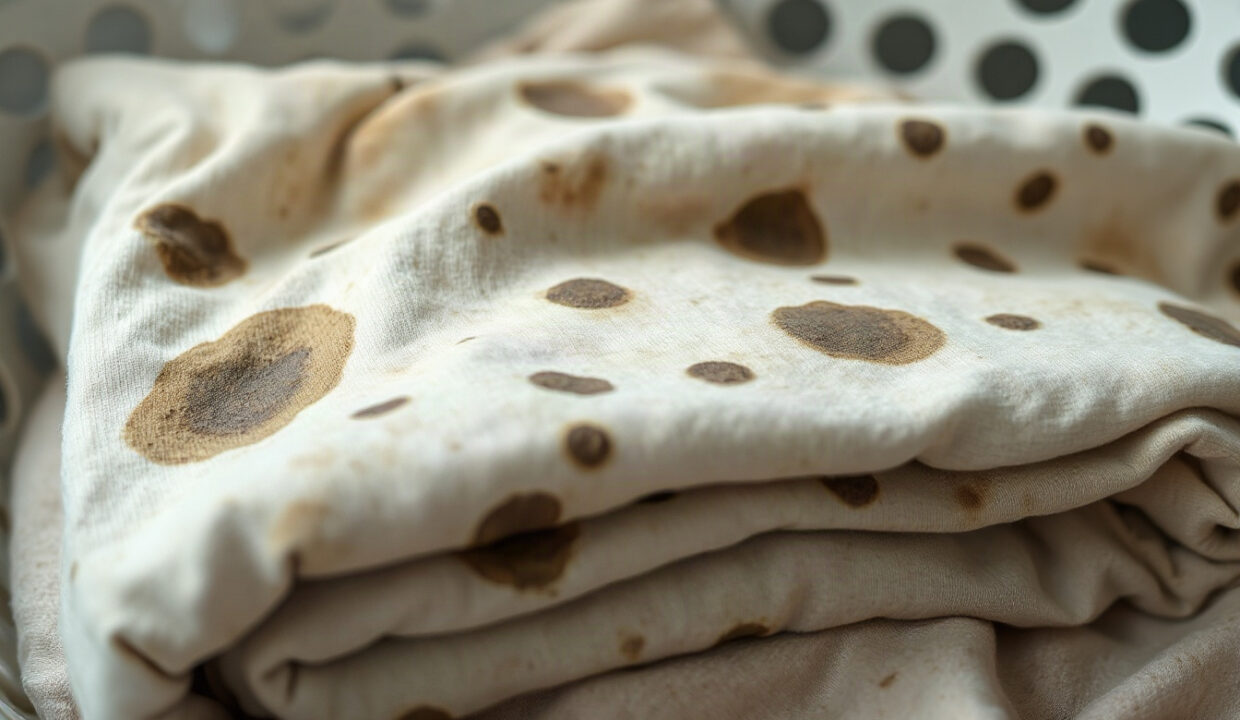
Mould on clothes is usually a storage problem rather than a washing one. It grows wherever fabric stays damp for too long: a gym bag, a laundry basket, a drawer in a poorly ventilated room. Treat the garment quickly, for the sake of the stain and for your lungs, because mould spores can trigger sneezing, coughing and irritation in people with allergies or respiratory conditions.
There are four realistic ways to deal with a mouldy garment at home, and the right one depends on the fabric and the colour. This table puts them side by side, and the sections below cover each in turn, followed by washing, drying and fixing the damp that caused it.
| Method | Best for | Effort | Risk to fabric |
|---|---|---|---|
| White vinegar soak | Coloured, delicate and mixed fabrics, light to moderate mould | Low, an hour or more of soaking | Low, but patch-test strong dyes |
| Oxygen bleach (colour-safe laundry booster) | Coloured cottons and polyester that are not pure white | Low, follow the tub for dose and soak time | Low to moderate, avoid wool and silk |
| Chlorine bleach, diluted | White or confirmed colourfast cotton and linen with stubborn staining | Medium, needs gloves and ventilation | High, weakens fibres and strips colour |
| Borax or borax substitute in the wash | Fabrics where vinegar has not fully cleared the mark and you want to avoid chlorine | Low, added to the drum | Low to moderate, check the packaging |
Why clothes go mouldy in the first place
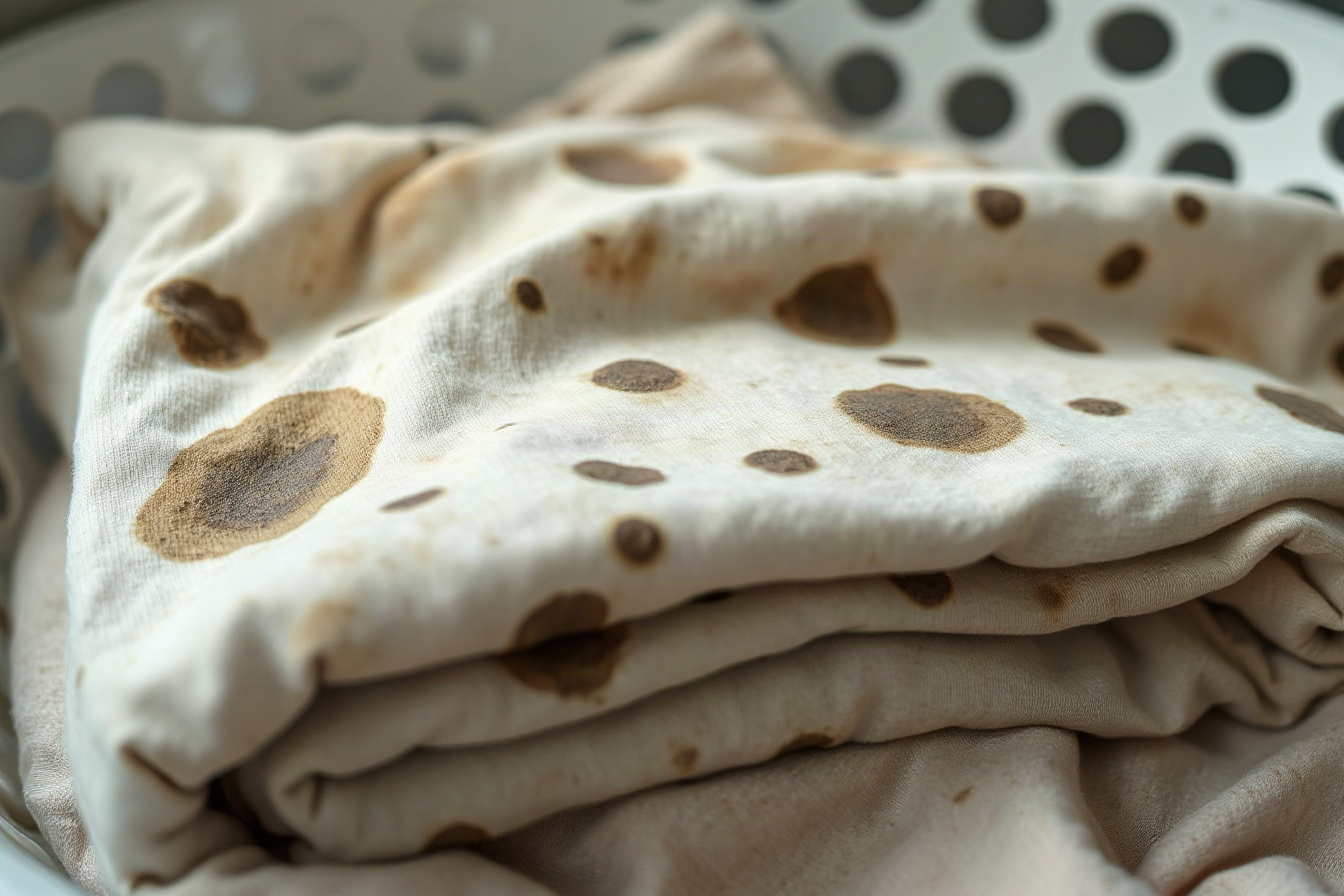
Mould needs moisture, warmth and time, which is exactly what you get when damp clothes sit in a closed bag, a laundry basket or an unventilated room for more than a day or two. It is not a sign of dirty laundry. It is a sign that the fabric stayed wet for too long, and the usual culprits are a sports kit zipped into a bag, towels left in a heap, or a wash left sitting in the drum after the cycle ends.
Natural fibres such as cotton and linen hold moisture longer than synthetics, so they tend to show it first, usually as grey, green or black speckles and a musty smell. Dealing with the dampness or poor ventilation where clothes are stored is the only way to stop it coming back once this batch is clean.
Before you treat it: handle the garment safely
- Take the item outside or into a well-ventilated space before you shake off any loose mould. Doing it indoors spreads spores through the house.
- Keep your distance if you have asthma, allergies or a weakened immune system. If that is you, ask someone else to do the first handling, or wear gloves and a disposable dust mask.
- Read the care label for the maximum washing temperature before you choose a method. Dry-clean-only garments, wool, silk and leather trim should go to a specialist rather than into a home soak.
- Do not leave the item in the laundry pile. The longer mould sits, the deeper it works into the fibres and the harder the stain is to shift.
The four methods in detail
White vinegar soak
White vinegar is mildly acidic, and it is the gentlest place to start on coloured and delicate fabrics. It can help loosen and inhibit many household moulds, though it is not a guaranteed killer, which is why the wash that follows matters just as much as the soak.
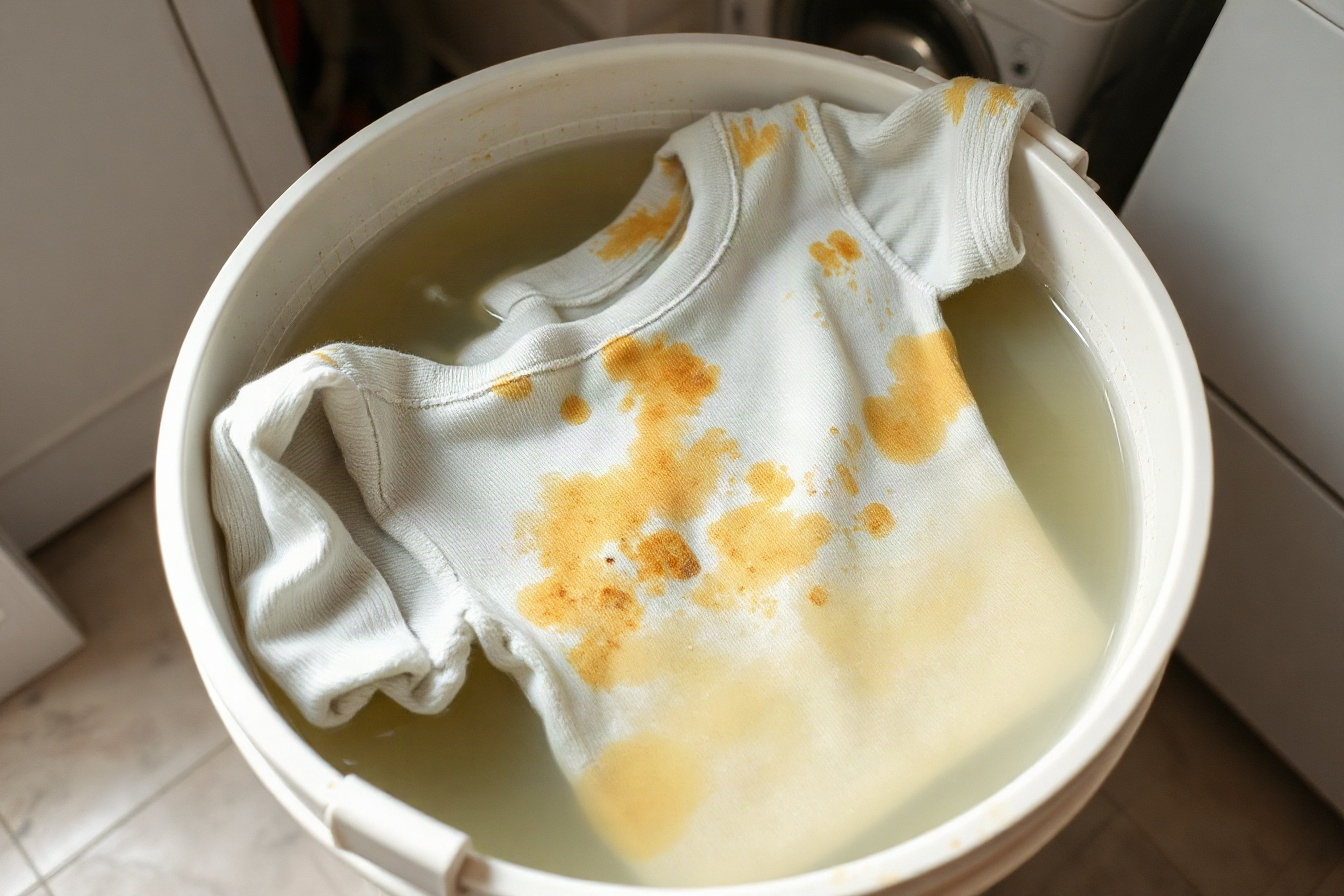
- Mix one cup of white vinegar into a bucket of water.
- Soak the garment for at least an hour, and longer for heavier mould.
- Scrub any remaining mark gently with a clean toothbrush.
- Wash at the hottest temperature the care label allows, as the wash does the main cleaning, not the soak alone.
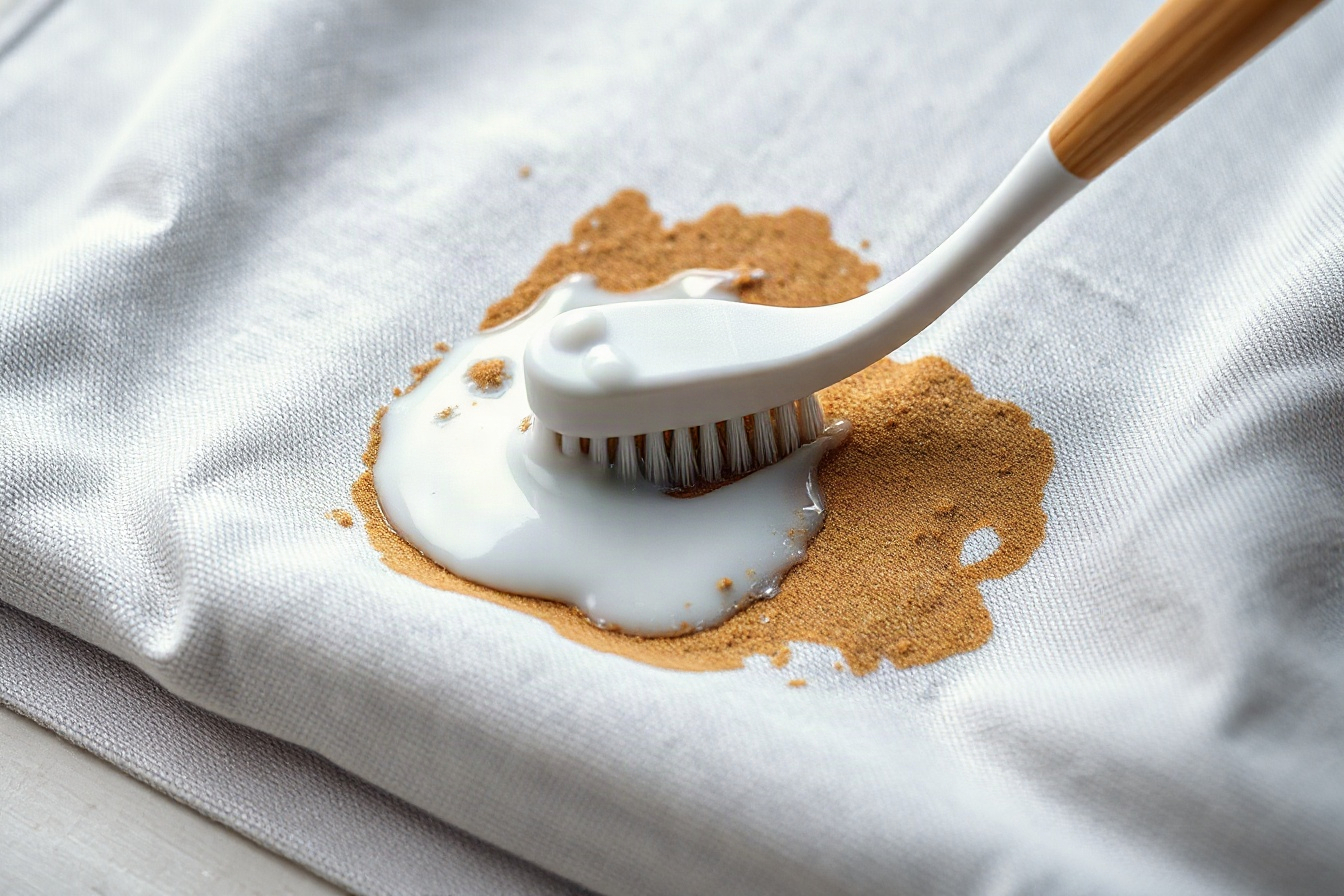
If you would rather skip the soak, add around 250ml of white vinegar to the detergent drawer and wash as normal. It is a reasonable option for lightly affected items and musty-smelling laundry, though a proper soak works better on visible staining. Our piece on whether vinegar really disinfects explains what it can and cannot do.
Never mix vinegar with any product that contains bleach, combining the two produces toxic chlorine gas.
Oxygen bleach for coloured items
Oxygen-based laundry boosters (usually sodium percarbonate powder) lift stains without the harshness of chlorine, so they suit coloured cotton and polyester. Dissolve the powder in warm water as the tub directs, soak for the time stated, then wash. They work best in warm water, and they are not suitable for wool or silk. Do a hidden-seam test first if the dye looks strong.
Chlorine bleach for white or colourfast items
Chlorine bleach works faster than vinegar and is the stronger option for genuinely stubborn mould, but it is only for white fabric or items you have confirmed are colourfast. It also weakens fibres over time, so it is not a regular fix.
- Test a hidden area first, such as the inside hem, to check the fabric will not discolour.
- Either soak in a diluted bleach solution or add bleach to the machine following the product’s dosing instructions, then wash as normal. Use the soak time on the label rather than leaving it for hours.
- Wear rubber gloves and work in a well-ventilated room, away from children. The fumes can be strong.
- If you are diluting neat bleach yourself, follow the ratio printed on the label exactly.
- Never use it on wool, silk, elastane or anything with a metal fastening you care about.
Borax or borax substitute
Borax is the milder alternative for fabrics where you want to avoid bleach but vinegar alone has not cleared the mark. Many UK shops sell a borax substitute instead of true borax, and the packaging will say how much to use. Mix it as directed, add it to the drum and launder at the hottest temperature the fabric allows. Keep it away from children and pets, and do not use it on wool or silk.
Washing and drying so the mould does not return
The wash is what removes the spores and mould residue, so use the hottest temperature the care label allows. A cool cycle may fade the visible mark while leaving a musty smell behind, and no home method is guaranteed to remove every spore, so if the smell is still there after washing, repeat the treatment before drying. For more on how temperature affects germs generally, see our guide to which laundry temperature kills germs.
Dry the garment fully and quickly. Direct sunlight has a mild bleaching and drying effect that helps fade any trace of the stain, though extended sun can fade dark or bright colours, so turn those inside out and bring them in once dry. Avoid tumble drying or ironing a stained item until it has been treated, because heat can set a mark.

What makes it worse
- Mixing vinegar with bleach. Even accidentally, by using both in the same wash, this produces toxic chlorine gas. Our list of cleaning products you should never mix covers the other combinations to avoid.
- Leaving the item in the basket. Mould embeds further into fabric the longer it is left.
- Skipping the patch test. Bleach on a coloured or non-colourfast fabric will leave a pale patch that no treatment will fix.
- Relying on a cool wash. Cooler cycles do not reliably clear mould even when the stain fades.
- Ignoring the damp. If the cupboard, bag or room stays damp, the mould will simply return on other items.
Some items are better replaced than rescued. If a cheap garment is covered in mould, still smells after two treatments, or the fabric has gone weak and patchy, binning it is a sensible choice, particularly if someone in the house has a breathing condition.
Two types of staining people confuse
Not every brown or black mark on fabric is fungal mould. Iron mould, despite the name, is a rust-like brown stain caused by tiny iron or metal particles reacting with moisture in the fabric, often from a rusty pin, staple or washing machine part. It needs a dedicated rust or iron mould remover rather than vinegar or bleach, and acting on it as if it were mildew simply wastes time.
For mould that has come from the machine itself, a musty drum can reintroduce spores to every load, so it is worth reading our guide on cleaning a washing machine with vinegar and baking soda. If the damp is on the walls too, see how to clean mould off walls, and for the science of what actually destroys it, what kills mould. Similar vinegar-first approaches are used for curry stains and grease stains.
Kit checklist for mould on laundry
None of this is essential, and a vinegar soak and a hot wash cover most cases. If you want to be set up for next time, tick these off. The links are Amazon UK searches so you can compare sizes and current prices. As an Amazon Associate we earn from qualifying purchases.
- White vinegar: plain distilled or spirit vinegar is fine for soaks. Skip malt vinegar, which is coloured and can mark pale fabric.
- Oxygen bleach laundry powder: a colour-safe alternative to chlorine for stubborn mould on items that are not pure white. Check the label for fabric exclusions.
- Soft toothbrush: a dedicated one for scrubbing a stain without roughing up the weave.
- Rubber gloves: especially if you use bleach or borax. Keep a pair just for cleaning.
- Small room dehumidifier: keeps a wardrobe or laundry room dry enough that mould does not get the chance to start. Look for a tank size that suits the room.
- Clothes airer: lets laundry dry with air around it rather than in a heap. A heated or foldable model suits small flats.
Three quick questions
Is it possible to wash mould out of clothes?
Yes, in most cases. A vinegar or oxygen bleach soak followed by a hot wash, or a diluted bleach soak for white and colourfast items, usually lifts the stain and the smell. Very old, deeply embedded mould on delicate fabric may need a professional dry cleaner, and some items are not worth saving.
How do you get black mould off fabric?
Treat it the same way as other mould: a soak, a gentle toothbrush scrub and a hot wash, using bleach only on white or colourfast fabric. Black staining can be more stubborn, so a second treatment before drying is often needed. If it has not shifted after two rounds, accept some shadowing or retire the item.
Can mould on clothes make you ill?
Exposure to mould spores can cause sneezing, coughing, itchy eyes or breathing irritation, particularly in people with asthma, allergies or weakened immune systems. Treating items promptly, and fixing the damp where they were stored, reduces the risk. If symptoms persist, speak to a doctor or pharmacist.