Rusty screws look harmless, but two things can go wrong before you have even found the vinegar. The first is a safety one: the stronger methods involve acids, an electric current, or both, and the electrolysis method gives off flammable gas. The second is that the part may not be worth saving. A screw that holds up a shelf, a bracket or anything load-bearing should be replaced, not restored.
This guide starts with what to check before you treat anything, then moves from the safest method, a scrub and a paste, through an overnight soak, to electrolysis, which needs proper care. It finishes with how to stop the rust returning.
Check these first
- Decide whether the part is safety-critical. Fixings in load-bearing roles, such as brackets, bike parts, ladders, car components and shelving that carries weight, are better replaced when they are corroded. Soaking in acid can also weaken hardened, high-strength steel through hydrogen embrittlement, which is invisible.
- Look at the finish. Zinc-plated, galvanised, brass and coated screws will lose their plating in vinegar and other acids. If it is only the coating that has gone orange, the base metal may be fine, but the protection will not come back.
- Never use a bleach and acid combination. Do not mix vinegar or any acid with bleach or other cleaners, as it can release harmful gas. Our guide to cleaning products you should never mix explains which combinations are the worst.
- Protect your eyes and hands. Wear safety glasses and gloves for soaking, scrubbing and especially wire brushing, since rust and metal fragments fly.
- Work somewhere ventilated. Acid soaks give off fumes and electrolysis produces hydrogen. Do not do either in a closed room.
The safest start: scrub and paste for one screw
For a single screw, or a few, the lowest-risk approach is mechanical. Wear glasses and gloves, and keep going until the metal shows.
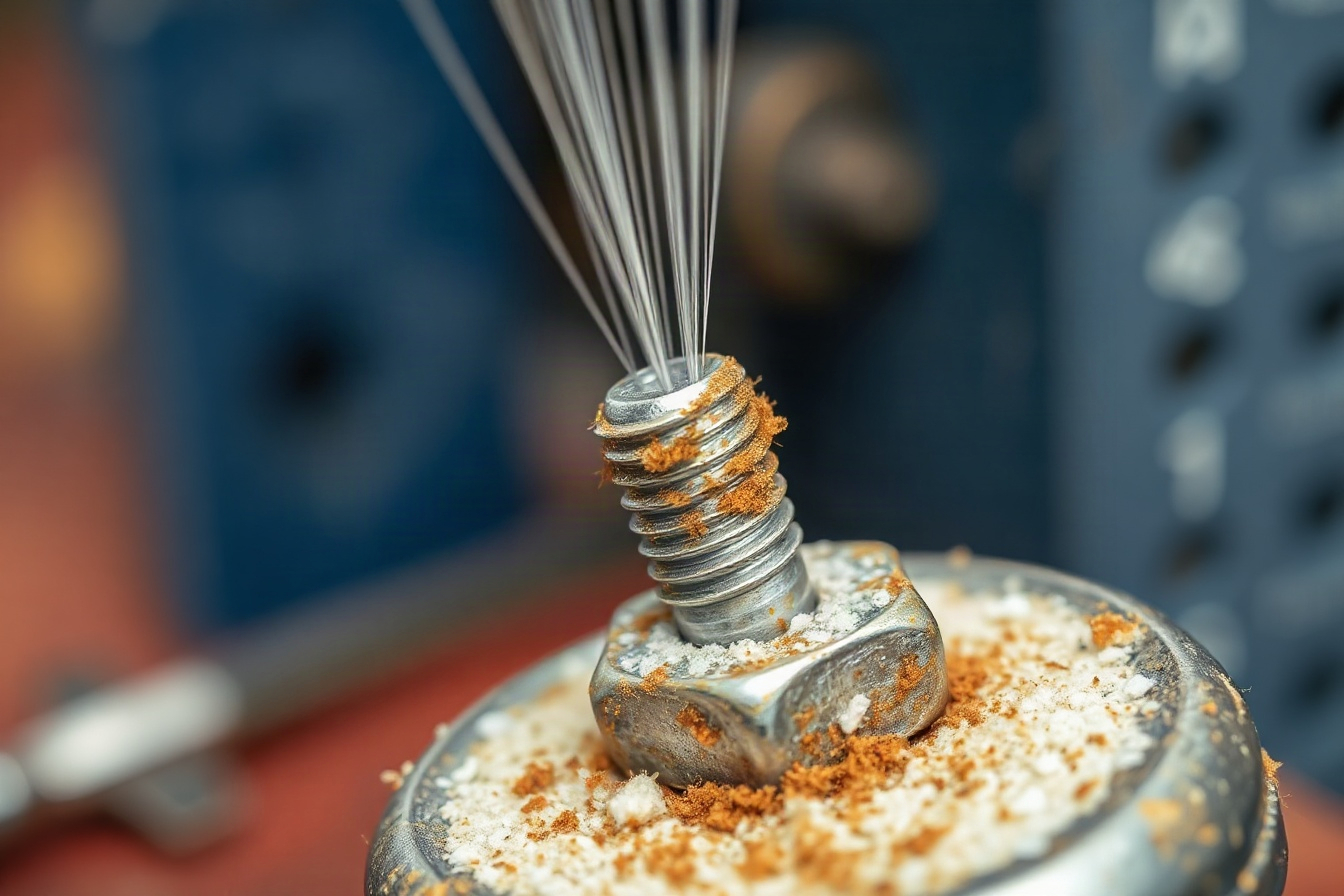
- Try scrubbing with steel wool first. With enough effort this alone is sometimes all a lightly rusted screw needs.
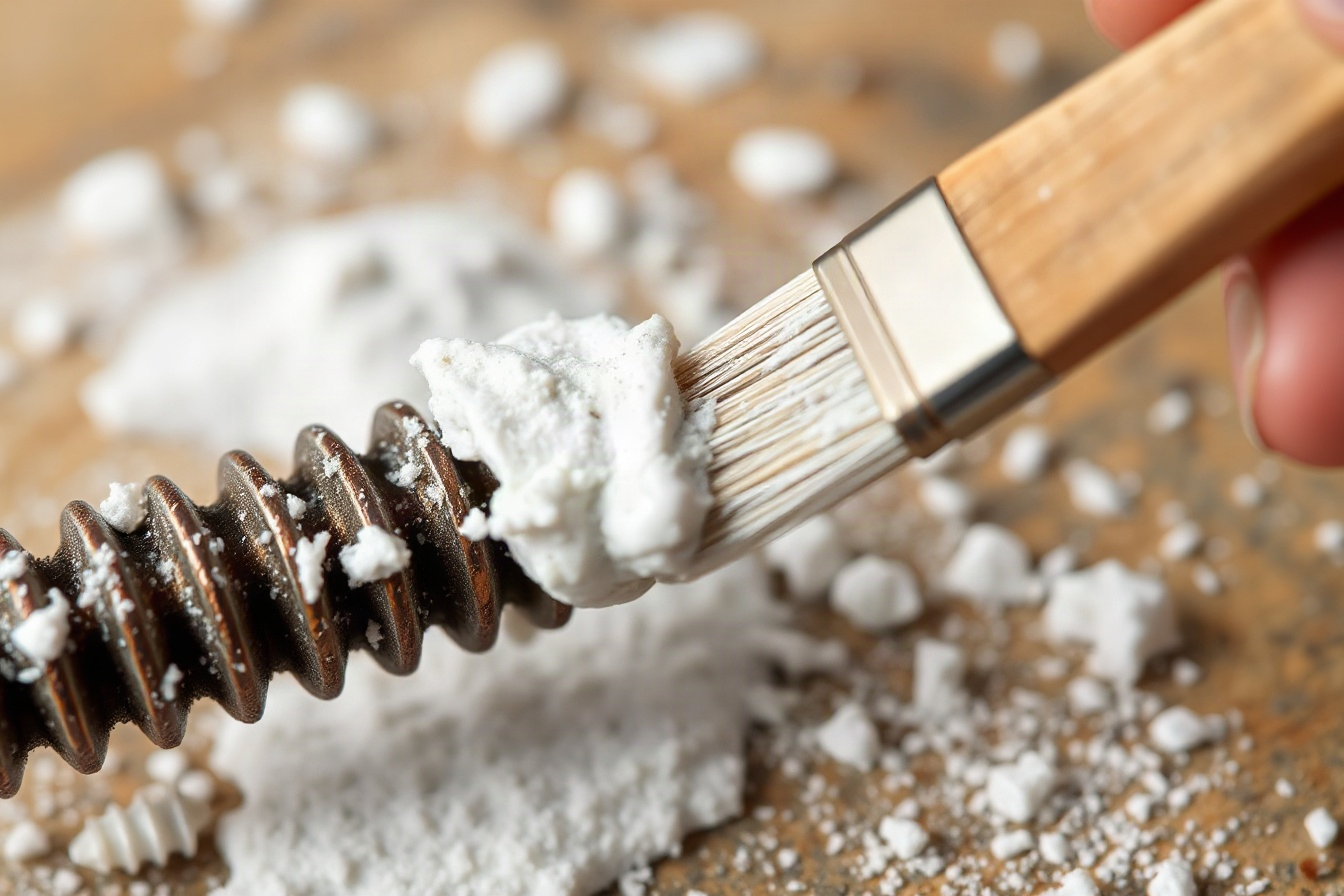
- If that does not fully clear it, mix a thick paste of baking soda and water.
- Coat the screw in the paste and let it sit for about an hour.
- Scrub the paste off with an old toothbrush or steel wool. The rust should lift away with it.
- Rinse, then dry completely, because leftover moisture invites the rust straight back.
A potato with a little salt is a well-known kitchen trick, in which the screw is pushed into the potato and left for a few hours. Potatoes contain a small amount of oxalic acid, which is a rust-dissolving acid, so there is some basis to it, but the effect is slow and modest, and it works best on light surface rust. Treat it as a curiosity rather than a method you depend on.
Stronger: an overnight soak for a jar of screws
When you have a whole collection, a soak is far less effort than treating each one. It is also where mistakes start, because acid left on metal keeps working.
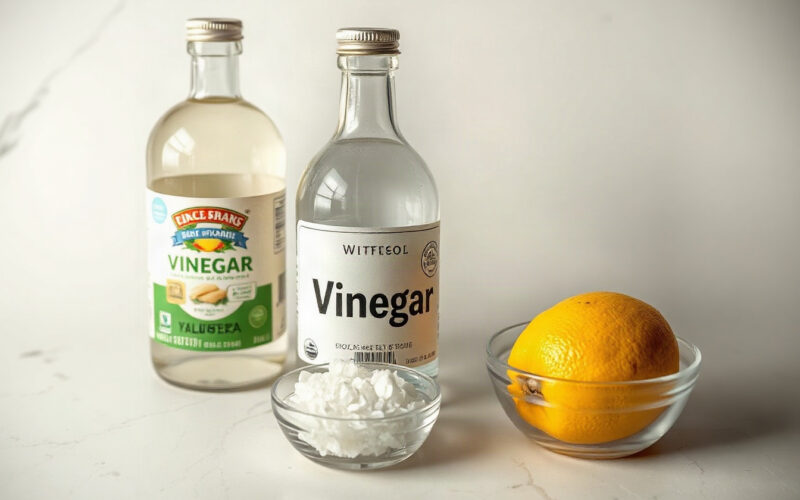
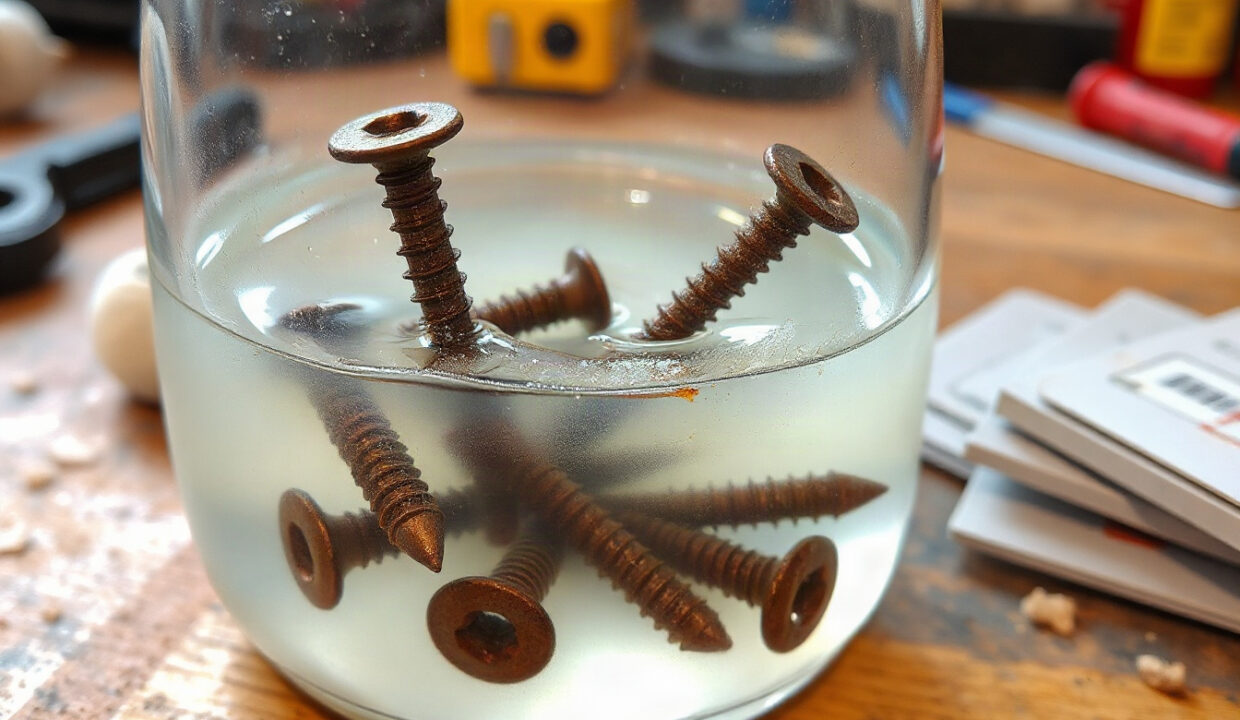
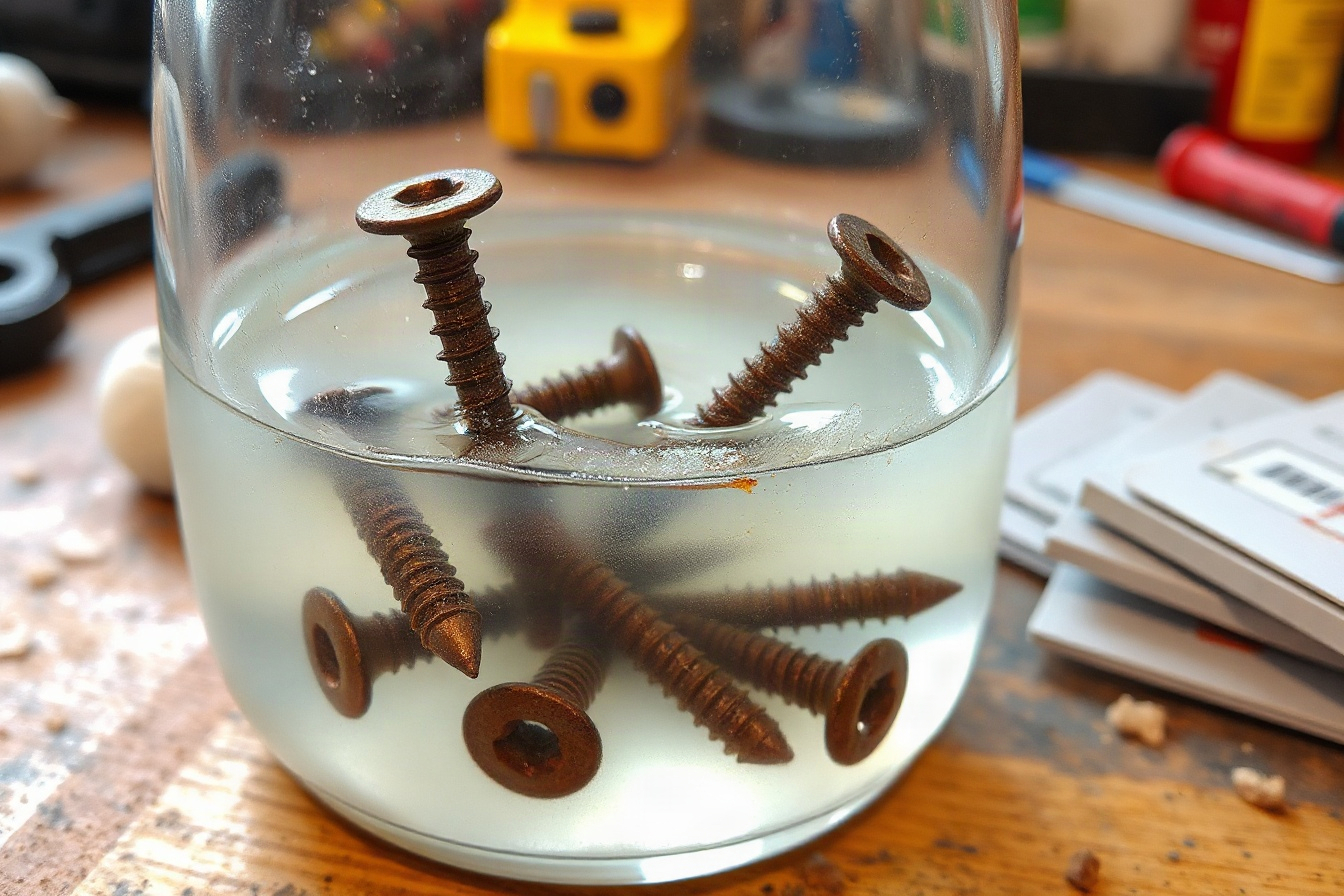
- Cover the screws completely with distilled white vinegar in a glass or plastic container. Do not use a metal pot, and do not seal the lid tightly, since gas can build up.
- Leave them to soak overnight, checking after a few hours if the rust is light.
- Drain and rinse thoroughly with plain water. Do not leave vinegar sitting on the metal any longer than needed, as it can start to affect the metal itself.
- Dry the screws completely before storing or using them. Any leftover moisture invites the rust straight back.
Lemon juice works the same way as a vinegar alternative, with the same soak-and-rinse steps. A cola containing phosphoric acid is another option, though it takes longer than vinegar or lemon juice and leaves the screws sticky, so a thorough rinse afterwards is essential. Our piece on whether baking soda and vinegar really clean is worth reading before you try combining the two on metal, since they cancel each other out.
| Soak option | Typical time | Notes |
|---|---|---|
| White vinegar | Overnight | Fastest common option. Rinse promptly once the rust has loosened |
| Lemon juice | Overnight | Similar results to vinegar, same rinse routine |
| Cola (phosphoric acid) | Longer than vinegar, often 24 hours or more | Leaves a sticky residue and needs a thorough rinse |
Leaving screws in an acid soak for days, rather than overnight, can pit or weaken the metal.
Electrolysis: only if you can set it up safely
Electrolysis handles heavier rust and a larger batch, but it combines electricity, water and a gas that burns. If you are not confident with the equipment, skip it and use the soak or buy a rust remover instead. Use only a purpose-made battery charger with undamaged, insulated leads, never bare mains wiring, and never put your hands in the tank while the charger is switched on.
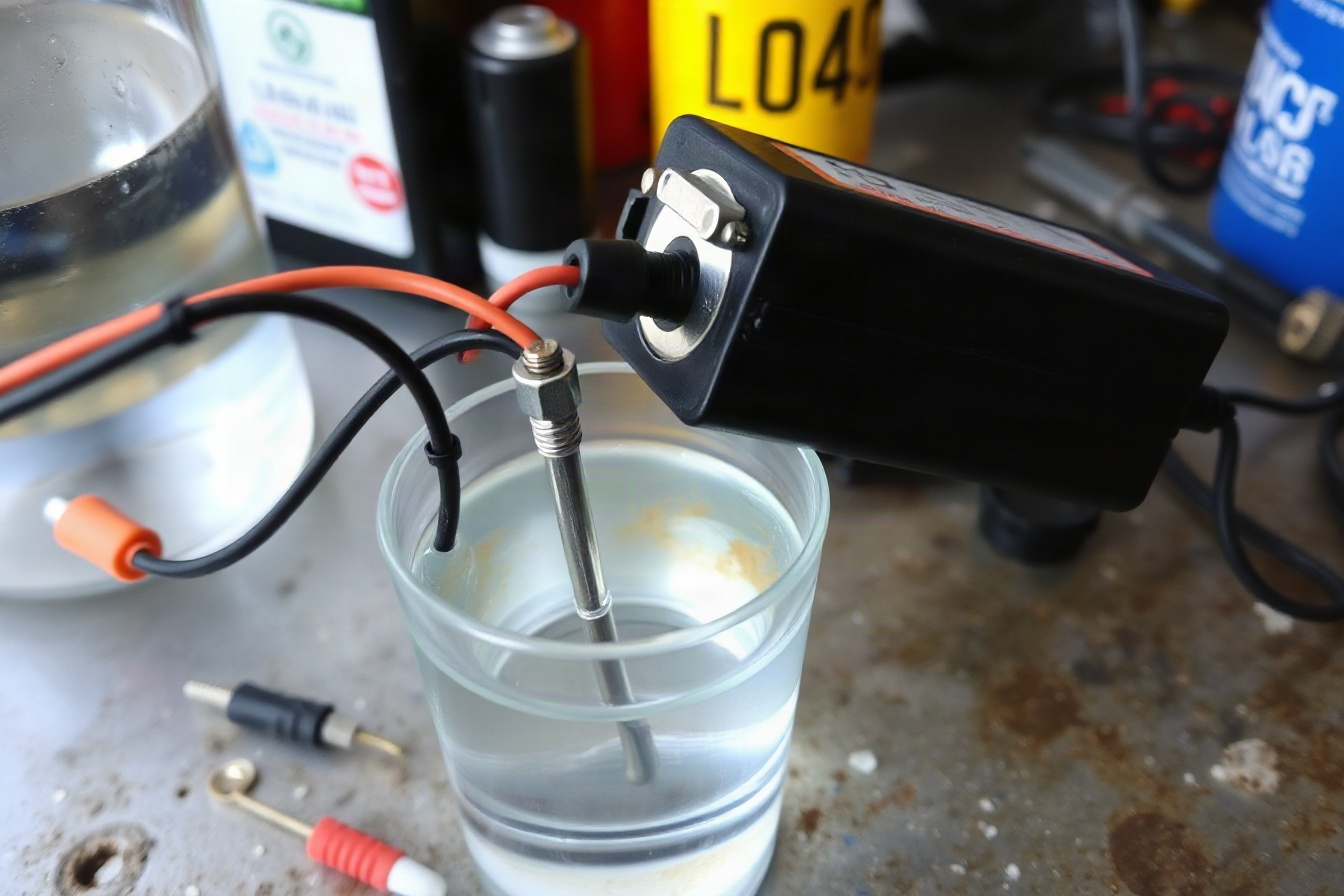
- Work outdoors or in a very well-ventilated space, well away from naked flames, sparks and anything that could ignite hydrogen. The process gives off hydrogen gas.
- Dissolve a couple of teaspoons of washing soda (sodium carbonate), not baking soda, per litre of water in a plastic container. Wear gloves and glasses, as the solution is mildly alkaline.
- Use a battery charger set to a low current. Attach the negative lead to the rusty screw and the positive lead to a sacrificial piece of plain steel, such as a spare, non-galvanised nail or scrap steel. Avoid galvanised metal and stainless steel for the positive electrode, since they can release harmful fumes and compounds.
- Submerge both in the solution so they do not touch each other, and check that the leads’ clips are out of the liquid.
- Switch on only after everything is set up, and leave the current running. Rust usually starts flaking within an hour or so, but heavier rust can take longer.
- Switch off and unplug the charger before you touch anything in the tank. Rinse and dry the screw thoroughly, and dispose of the solution sensibly.
This method involves a live electrical current in water, so treat it with the same care you would any electrical project. Keep it away from children and pets, and do not touch the submerged metal while the charger is connected. If you are unsure about the wiring, ask a qualified electrician or buy a ready-made rust remover.
Afterwards: stop the rust coming straight back
- Dry the metal completely, ideally with a warm hairdryer, because bare steel starts to rust again very quickly in damp air.
- Wipe a thin film of light oil over the clean screws, then store them in a dry, lidded tin or box. A sachet of silica gel in the container helps.
- Do not reach for a wire wheel or heavy sanding on a small screw before trying a soak. It can remove more metal than necessary and change the thread fit.
- For larger rusty objects than fixings, see our complete guide to cleaning rust off metal.
If rust has transferred onto clothing from a rusty pin or staple, see our guide on removing mould and iron mould from fabric, which needs a different approach from bare metal. For rust on a bigger item such as a barbecue, see cleaning rusty charcoal grill grates.
What to buy, and what to look for
As an Amazon Associate we earn from qualifying purchases. These are product types, not endorsements of one brand, so compare the labels.
- Rust remover gel or spray: read the label for the active ingredient and the contact time, wear gloves, and check it is safe for the metal and any plating. A gel stays put on a vertical or awkward part, which is handy when submerging it is not practical.
- Light penetrating oil: useful for freeing a seized screw and for leaving a thin protective film after cleaning. Keep it away from heat and flames, and wipe off the excess so it does not attract dust.
- Safety glasses and gloves: choose glasses that wrap around the eyes and nitrile or rubber gloves that resist acids. These are the cheapest safety upgrade for any rust job.
- Hand wire brushes and steel wool: a small hand brush with firm bristles takes surface rust off without the flying fragments of a power wire wheel. Use brass bristles on softer metals and steel on tough parts.
Six rust-on-screws questions
How do I remove small rust spots from metal?
For a small area, a baking soda paste left for about an hour and scrubbed off with steel wool or an old toothbrush usually clears light surface rust without anything more involved. Rinse, dry thoroughly and oil it lightly if it is bare steel.
Can I paint over rust without sanding it?
It is not recommended for a lasting finish. Paint applied over rust tends to bubble and flake as the rust continues to spread underneath. Removing the loose rust first, and using a primer designed for rusty or bare metal, gives a far more durable result.
What is the best rust remover for screws?
For most household jobs, a white vinegar soak overnight is the most convenient option, and it deals with a jar of screws at once. A ready-made gel suits a few awkward parts. Electrolysis is worth the setup only for heavier rust, and only when you can do it safely.
Is it safe to reuse rusty screws?
For light, decorative or low-stress jobs, a cleaned screw is usually fine if the head and thread are intact. For anything load-bearing, or where the screw is pitted, thinner than it should be or has a damaged head, replace it. New screws are cheap compared with the cost of a failure.
Does Coke remove rust from screws?
Yes, cola contains phosphoric acid, which does work on rust, though it is slower than vinegar or lemon juice and leaves a sticky residue that needs a thorough rinse afterwards. It is a fallback when you have nothing else.
Does WD-40 remove rust from screws?
WD-40 is better known as a penetrating oil for loosening a stuck or rusted screw than as a rust remover. It can help free a screw mechanically, but a vinegar soak or baking soda paste does more to actually dissolve the rust.