Verdict: blot the urine up, treat the spot with an enzyme-based pet stain and odour remover rather than vinegar or baking soda alone, and leave it to work for as long as the label says before blotting dry. For old or hidden patches, a UV torch in a dark room shows you where to treat. Skip ammonia-based cleaners, and never mix bleach with urine or other cleaners.
Cat and dog urine smell is so stubborn because the odour is not just on the surface. It is bound into fibres as uric acid crystals. Standard cleaners, vinegar and baking soda included, mostly neutralise the sharp ammonia smell and mask it for a while, but the uric acid underneath can keep releasing odour, especially when humidity rises. That is why the smell so often comes back a few days after you thought you had dealt with it.
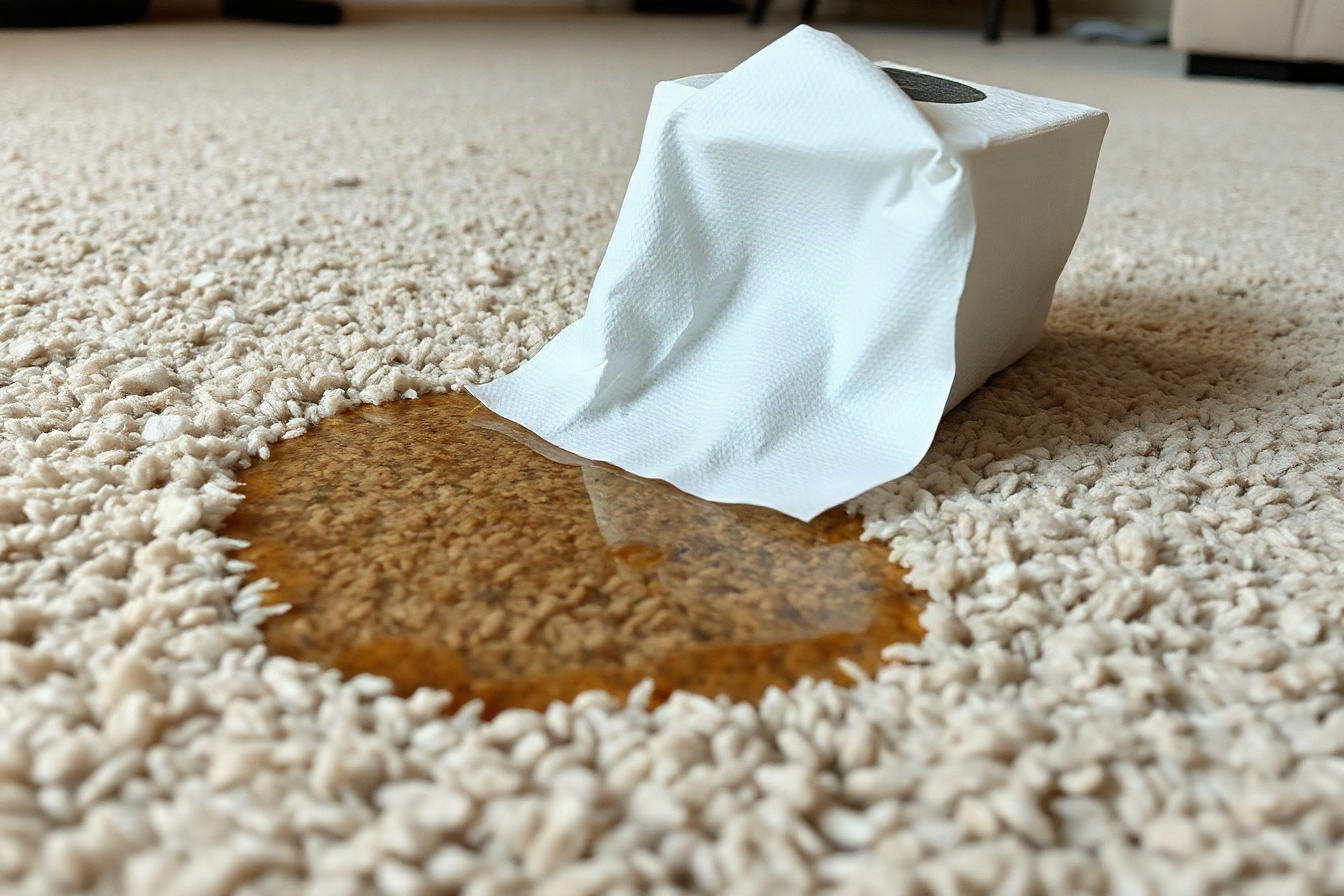
Why the smell keeps coming back
Urine contains urea, which breaks down into ammonia, the sharp smell you notice right after an accident. Over time it also leaves behind uric acid crystals that bind tightly to carpet fibres, upholstery and porous flooring. These crystals do not dissolve well in water and are not broken down by most household cleaners, so they sit there, re-releasing odour whenever moisture or humidity reactivates them. This is the biggest reason a smell you thought you had cleaned returns weeks later.
A fresh accident: the first ten minutes
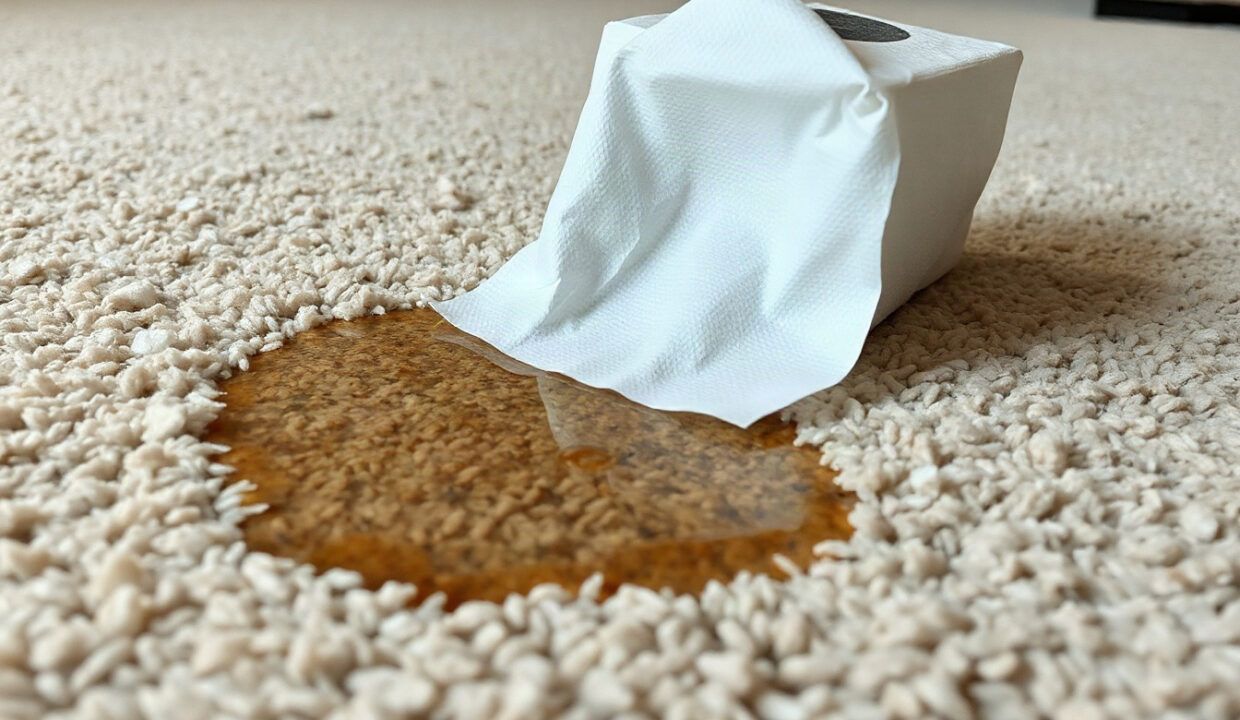
- Blot up as much liquid as possible with clean paper towels or a cloth, pressing down rather than rubbing, to avoid pushing it deeper into the fibres.
- Use a fresh section of towel each time so you are not just moving the urine around. Stand on a folded towel on carpet to press out more.
- Keep pets away from the area while you work, and wear gloves.
- Act fast. The less time the uric acid has to bind into the material, the easier a fresh accident is to clear than one left overnight.
Using an enzyme cleaner properly
This is the step that solves the problem rather than papering over it.
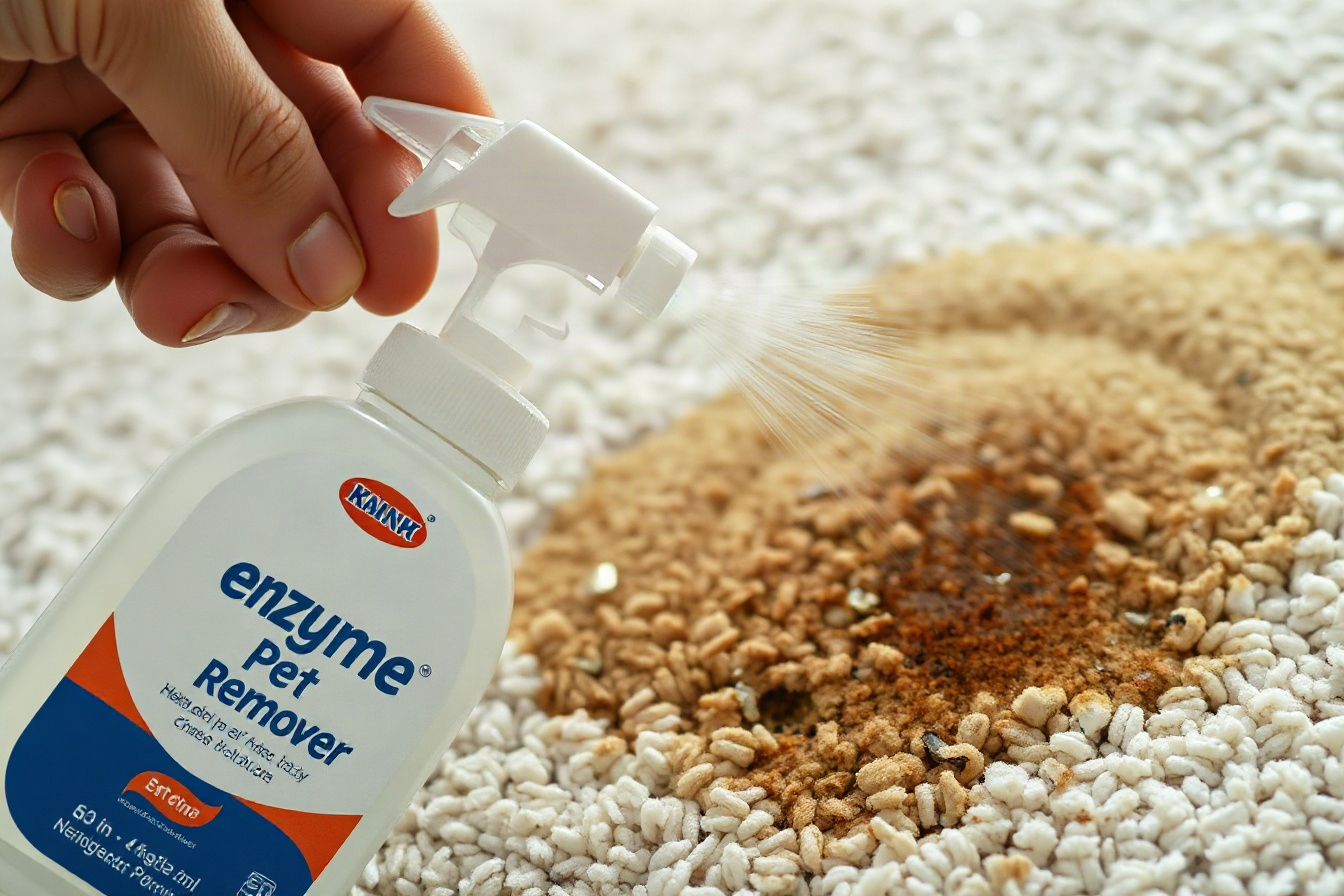
- Choose a cleaner labelled specifically as an enzymatic or enzyme-based pet stain and odour remover, and read the label for the surfaces it is safe on.
- Apply generously, enough to soak to the same depth the urine reached, not just the surface. On carpet that means the underlay too.
- Leave it undisturbed for the time the label gives. Enzyme products work gradually, and some take many hours. Keep the area damp if the label says so.
- Blot dry with clean towels once the time has passed. Avoid rinsing with plain water first, because it can dilute the product before it has finished working.
Vinegar and baking soda neutralise the surface ammonia smell, but the uric acid underneath is what an enzyme cleaner is built to break down. That is the difference between masking a smell and removing it. Our article on whether baking soda and vinegar really clean explains where they do help.
Test the product on a hidden patch first, especially on wool, silk, dyed rugs and untreated wood.
Finding old or hidden stains with a UV torch
If the smell is obvious but you cannot pinpoint where it comes from, a UV torch is the fastest way to find every spot that needs treating, including ones from weeks or months ago.
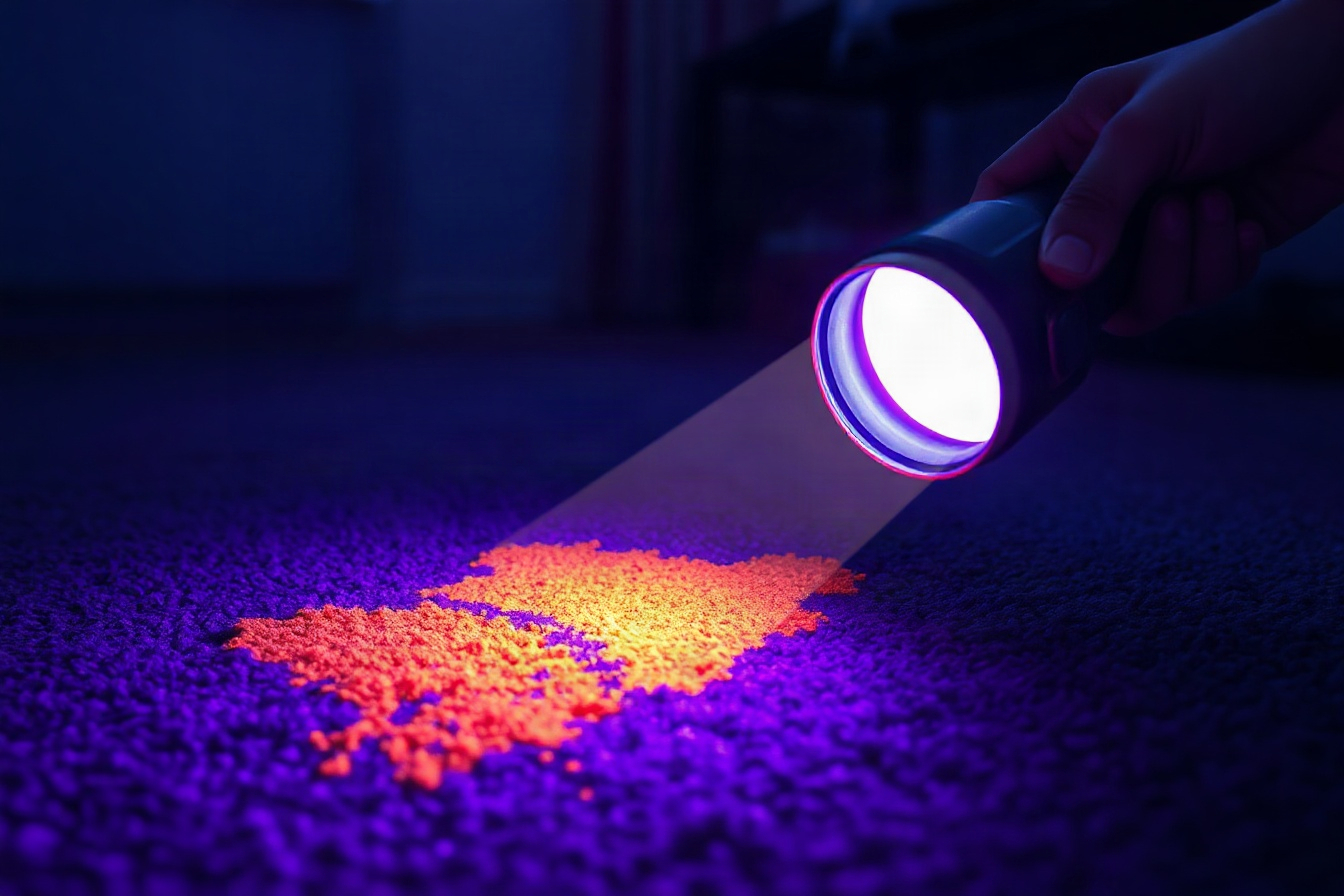
- Darken the room as much as possible.
- Shine a UV blacklight torch across the carpet, upholstery or flooring at a low angle.
- Urine residue often glows a yellowish-green. Mark each spot you find with tape or a sticky note, and be aware that some detergents, glues and other residues can glow too, so use your nose as a check.
- Treat every marked spot with the enzyme method above, not just the one you already knew about.
Smell too faint to find? Sniff low and close, particularly along skirting boards, sofa feet and the corners where your pet likes to stand.
Mopping up what is left
Once the enzyme treatment has fully worked and the area is dry, a baking soda step helps absorb anything faint that remains.
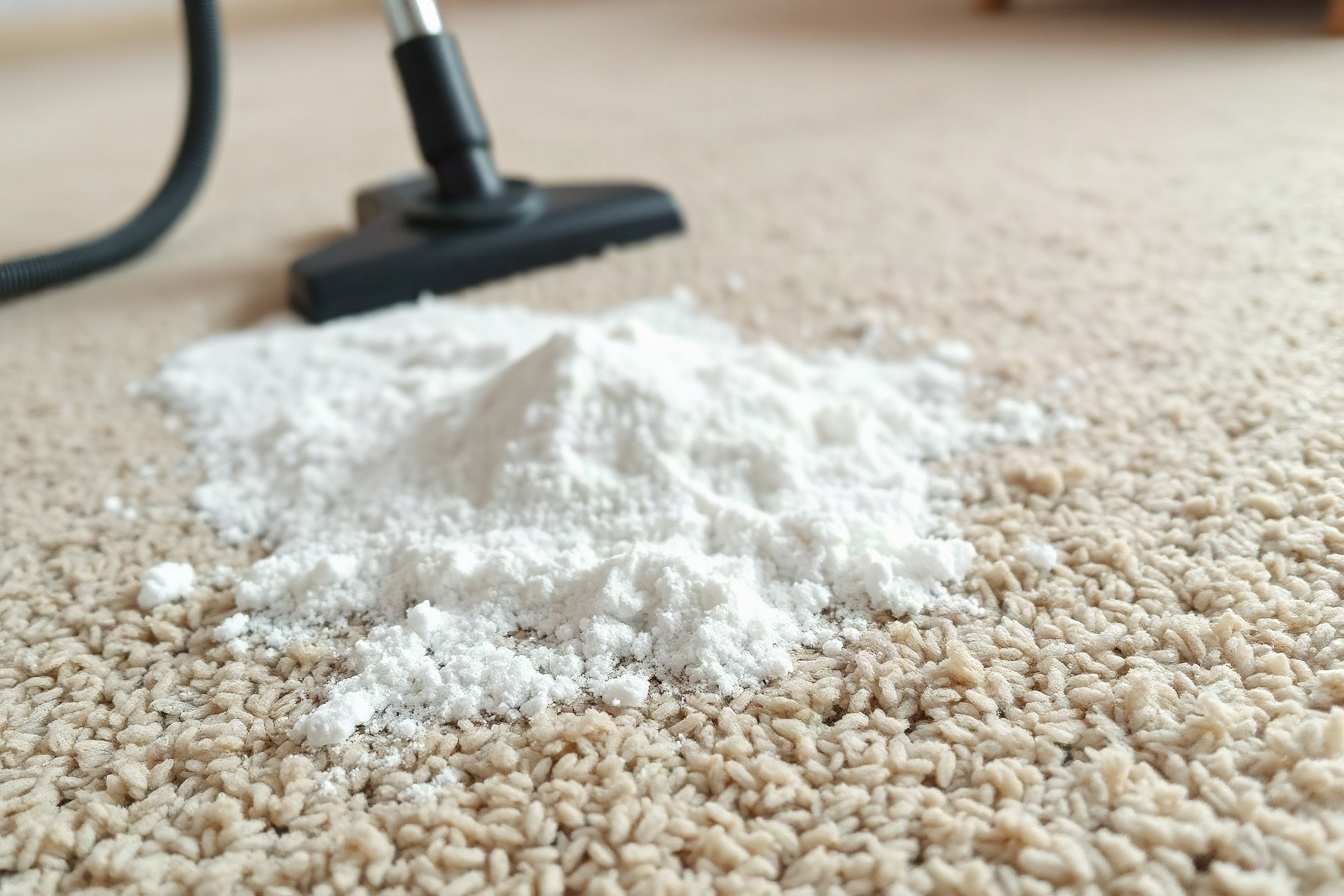
- Sprinkle a generous layer of baking soda over the dry, treated area.
- Leave it for at least 15 minutes, longer for a stronger lingering smell.
- Vacuum thoroughly.
- Repeat the enzyme treatment if any trace of smell is still noticeable. A single application does not always clear deeply set-in stains.
If the underlay or a mattress is soaked right through, or the smell survives repeated treatments, the urine may have reached the underlay, floorboards or filling. In that case the underlay or cushion may need replacing, and on hard flooring, check for moisture in the joins. A professional carpet cleaner with extraction equipment can reach deeper than a spot treatment.
Why not ammonia, and why not bleach
Urine itself contains ammonia, so cleaning with an ammonia-based product can smell similar enough to urine that it may encourage a pet to mark the same spot. Avoid it. Bleach is the more serious problem: it can react with ammonia and other compounds in urine to form harmful fumes, and it does nothing about the uric acid. Never mix bleach with urine, ammonia or any other cleaner. Our list of cleaning products you should never mix explains the combinations to avoid. Stick to an enzyme cleaner or, for a light job, a diluted vinegar solution.
If your pet keeps going in the same place
Any lingering trace of their own scent is what draws pets back, which is why complete removal matters more than adding a deterrent scent. Some dogs dislike certain citrus smells, but that is not a substitute for cleaning. If a toilet-trained pet suddenly starts having accidents, or the urine smells unusually strong, produces blood or comes with straining, thirst or lethargy, speak to a vet, since urinary infections, diet changes and dehydration can all affect it. Cats that go outside the litter tray can be stressed or unwell as well.
What to buy
As an Amazon Associate we earn from qualifying purchases. You really only need three things. An enzyme pet stain and odour remover is the core purchase, so pick one that names the surface you are treating and says whether it is safe for pets and children once dry. A UV blacklight torch finds the hidden spots; a handheld one with a wavelength around 365 to 395 nm is typical, and a dim room is essential. And a stack of absorbent microfibre cloths makes the blotting stage far more effective than kitchen roll alone, and they can be washed afterwards.
If the accident left a visible mark as well as a smell, our complete guide to cleaning a carpet and the Vax carpet cleaner instructions cover the machine-based side of a deeper clean. For a DIY mix on carpets generally, see homemade carpet cleaner solutions, and for sofas and cushions, how to clean sofa cushions.
Quick answers
- What kills the smell of dog pee? An enzyme-based cleaner is the most reliable option, since it works on the uric acid that causes the lingering smell rather than masking the surface ammonia. Blot up fresh urine, apply the cleaner generously, and give it the time the label states.
- Will the smell go away on its own? Not reliably. Untreated uric acid can keep releasing odour for a long time, particularly in humid weather, which is why the smell seems to come and go instead of fading for good.
- Does vinegar get rid of cat or dog urine smell? It helps neutralise the surface ammonia smell, but it does not break down uric acid, so vinegar alone often is not enough for a stain that has had time to set in. An enzyme cleaner does the job more completely.
- How do I stop my dog or cat going back to the same spot? Remove the old scent completely with an enzyme cleaner, treat every spot a UV torch finds, and block access for a few days if you can. If it keeps happening, talk to a vet in case there is a health or stress cause.