The short answer: as a combined cleaner, mostly no. When you mix bicarbonate of soda (an alkali) and vinegar (an acid), they react and largely cancel each other out, the satisfying fizz is carbon dioxide gas, and what you’re left with is mostly water, a little dissolved salt (sodium acetate) and whichever ingredient was in excess. Sodium acetate is an even weaker cleaner than the baking soda you started with, so the mixture that foams so dramatically in your sink has spent most of its cleaning power on the fizz itself. The takeaway isn’t that these are bad cleaners, each is genuinely useful on its own. It’s that combining them is usually the least effective way to use either.
On its own, bicarb has limits too: see whether bicarbonate of soda actually disinfects (spoiler: it cleans and deodorises, but does not kill germs).
The baking-soda-and-vinegar “power couple” is one of the most repeated hacks on the internet, and it looks so convincing that it’s easy to believe. But the chemistry is well understood, and it tells a clear story. This guide explains exactly what happens when the two meet, why the fizz is closer to a “visual placebo” than a cleaning boost, the two genuine exceptions where mixing does help, and, most usefully, what each ingredient is brilliant at when you don’t pour them together. Sources are linked at the end.
How we researched this: the explanation below draws on the acid–base chemistry set out by chemists writing in The Conversation, plus plumbing and cleaning-industry guidance on drains and surfaces. Full references are at the bottom.
Disclosure: Cleaners Guide is a participant in the Amazon Associates programme, so if you buy through links on this page we may earn a small commission at no extra cost to you. It never changes our recommendations, we suggest products because they work and we point out cheaper options where they do the same job. Prices and availability change, so always check the current price before buying.
What actually happens when you mix them
To see why the hack disappoints, it helps to know what each ingredient is. Vinegar is a dilute acid, most household vinegars are around 4–10% acetic acid, with the rest being water. Acids work by releasing hydrogen ions, and that’s what lets vinegar dissolve mineral deposits like limescale on a showerhead or the chalky scale inside a kettle. Bicarbonate of soda (baking soda) is the opposite: a mild alkali, or base. Bases bind hydrogen ions and can help lift greasy, insoluble grime into water, which is why baking soda works as a gentle scouring powder and deodoriser.
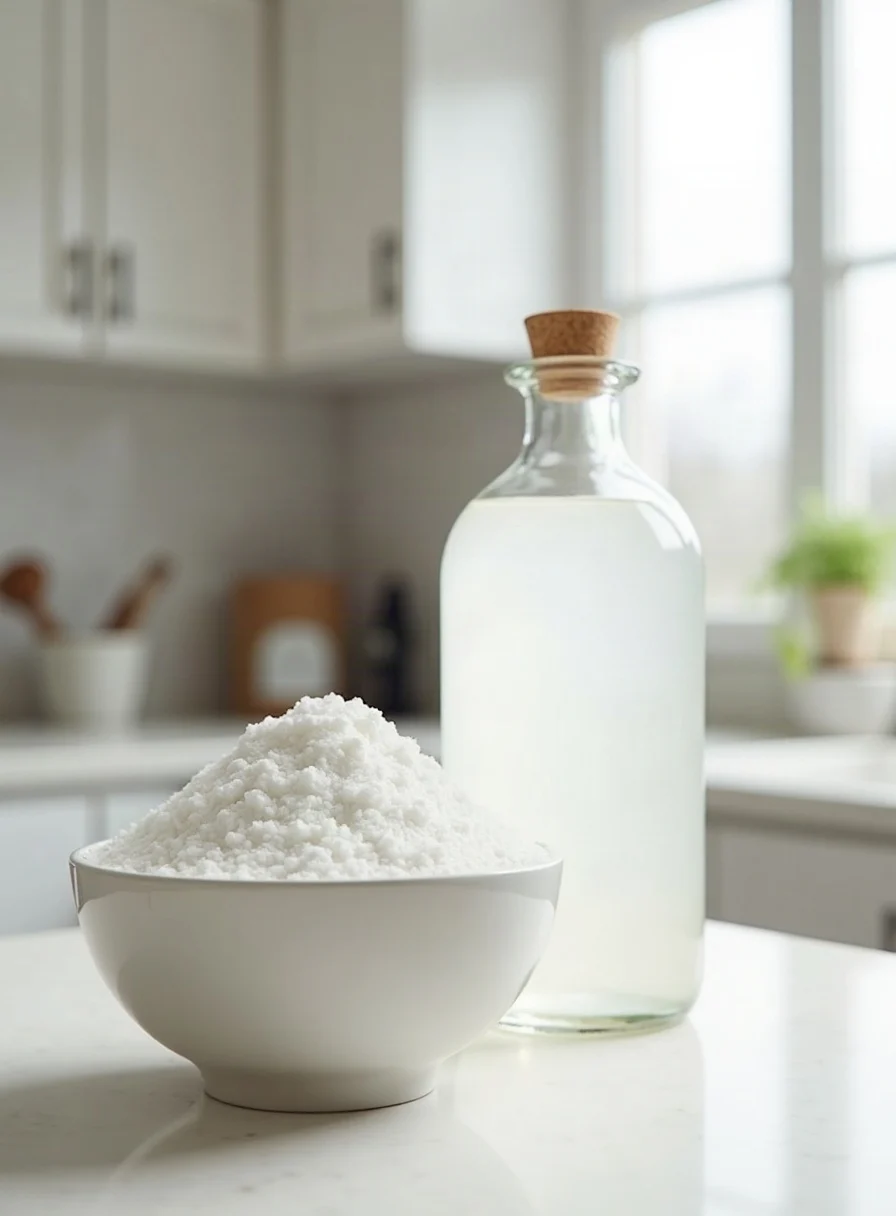
Put an acid and a base together and they react, instantly. Vinegar and baking soda combine to form three things: water, sodium acetate (a type of salt), and carbon dioxide, which is the gas responsible for all that dramatic fizzing [1]. The reaction is genuinely energetic: a single tablespoon of baking soda (about 18 grams) can release over five litres of carbon dioxide if it meets enough acid [1]. It’s a fantastic school science demonstration. It’s just not doing what most people think it’s doing on their worktop.
Why they “cancel each other out”
Here’s the crux. The whole point of an acid and a base is that they neutralise one another. When they react, the acid stops being acidic and the base stops being basic, you convert two active cleaning ingredients into salty water and gas. As chemists explain in The Conversation, the fizz is essentially a “visual placebo”: it looks powerful, but it’s the sound and sight of your two cleaners consuming each other [1].
There are two ways this plays out, and neither favours the mix:
- If you balance them perfectly, you’re left with just water, carbon dioxide and sodium acetate. And sodium acetate is an even weaker base than baking soda, it’s used in reusable heat packs and as a concrete sealant, but not as a cleaner [1]. You’ve turned a useful mild alkali into a near-useless salt.
- If you use a big excess of one, as almost every viral recipe does (think a cup and a half of baking soda to a quarter cup of vinegar), then after the fizz dies down, over 99% of the baking soda is still there, unreacted [1]. In other words, the “magic mixture” is really just baking soda doing baking soda’s job, with a splash of wasted vinegar. You’d get the same result, more cheaply, from baking soda and water.
Either way, the combination is no better than the better of its two parts used alone, and usually worse. That’s the honest heart of the myth: you can have the fizz, or you can have the cleaning, but the fizz largely is the cleaning being used up.
So why does it seem to work?
If it’s chemically underwhelming, why do so many people swear by it? A few reasons, all understandable:
- Baking soda alone is a good mild abrasive. When you scrub a sink or a pan with bicarb paste, it genuinely works, and if you happened to splash vinegar on too, the bicarb gets the credit shared with the fizz.
- The mechanical action helps. Bubbles can physically loosen light debris and lift it off a surface, a bit like the agitation in a washing machine. That’s real, but modest, and short-lived.
- Anything plus scrubbing looks effective. Most of the cleaning in these hacks is the “elbow grease”, the wiping and scrubbing you’d have done with any product [1].
- The theatre is persuasive. A foaming, hissing reaction feels like potent chemistry at work, so we assume it must be cleaning hard. Psychology, not chemistry.
None of this makes baking soda or vinegar bad, quite the opposite. It just means their powers are wasted when you throw them together and let them fizz out before they touch the dirt.
Use them separately: what each is genuinely good at
See bicarbonate of soda on Amazon →
This is the practical payoff of understanding the chemistry. Vinegar and baking soda solve different cleaning problems because one is an acid and the other is a base. Reach for whichever matches the job, and use it undiluted by the other:
| Vinegar (an acid) is good for… | Baking soda (a base / mild abrasive) is good for… |
|---|---|
| Dissolving limescale in kettles, showerheads and taps | Scrubbing sinks, baths and burnt-on pans (gentle abrasive) |
| Cutting soap scum and hard-water film on glass and tiles | Deodorising fridges, bins, carpets and drains (absorbs odours) |
| Descaling a washing machine or dishwasher drum | Lifting greasy residue from hobs and oven surfaces |
| Removing mineral and hard-water spots | Freshening mattresses and upholstery (sprinkle, leave, vacuum) |
| Avoid on: natural stone (marble, granite, limestone), waxed wood, cast iron, some grout | Avoid on: aluminium, and don’t rely on it to dissolve limescale |
A quick rule of thumb: mineral and scale problems are acid jobs (vinegar), while grease, scuffs and smells are base or abrasive jobs (baking soda). For the acidic side of things, our guide to what vinegar can and can’t do goes deeper, including the important point that vinegar cleans and descales well but is not a reliable disinfectant.
The drain myth: does the fizz unclog blockages?
The single most popular use of the hack is pouring baking soda then vinegar down a slow drain and hoping the volcano blasts the clog away. Unfortunately, this is where the “visual placebo” problem bites hardest. The reaction happens the instant the two meet at the drain opening, so most of the gas simply escapes up and out of the plughole, not down into the blockage. The fizz that reaches a clog is far too weak to shift the usual culprits.
Plumbers are fairly blunt about this: the method may nudge a very minor build-up of grease or soap and it can help with smells, but it rarely clears a real blockage, hair clogs in particular just let the gas bubble past and stay put [2]. What actually dissolves a fatty or hair clog is a strong base like sodium hydroxide (the active ingredient in proper drain cleaners) [1], or mechanical removal. Worse, regularly flooding pipes with acid can, over time, degrade rubber seals. For a genuinely blocked or smelly drain, you’ll get further with the methods in our guides to cleaning a sink drain and fixing a smelly drain:
- Boiling or very hot water flushed down the drain to melt and move grease (see our note on why hot water matters for grease).
- A plunger to build real pressure behind the clog.
- A drain snake or hook to physically pull out hair, the only thing that reliably works on hair.
- A dedicated enzyme or caustic drain product for stubborn organic blockages, used per the label.
The one time mixing does make sense
There is a legitimate role for the reaction, but it’s about mechanical action and deodorising, not chemistry, and the technique matters. The trick is to use them in sequence, never pre-mixed:
- Apply the baking soda first, as a paste (with water) on a surface, or sprinkled down a drain. Let it do its own work: absorbing odours and providing gentle abrasion.
- Then add the vinegar to trigger a burst of fizz right where you want the mechanical lift, loosening light residue or freshening a drain.
- Rinse with hot water.
This works because the baking soda gets to clean before it’s neutralised, and the fizz adds a little agitation at the end. What you must never do is combine them in a spray bottle and store it: the reaction finishes in seconds, so you’d be spraying flat salt water. It also builds pressure in a sealed container. If a recipe tells you to pre-mix and bottle a baking-soda-and-vinegar cleaner, that’s a reliable sign it hasn’t been thought through.
Myths vs facts
| Myth | What the chemistry says |
|---|---|
| “Mixing them makes a super-cleaner.” | They neutralise each other into water, CO₂ and a weak salt, no stronger than the parts [1]. |
| “The fizz powers through dirt.” | The fizz is escaping gas, a “visual placebo”; most cleaning is the scrubbing [1]. |
| “The leftover residue keeps cleaning.” | The residue is sodium acetate, a weaker base than baking soda, it barely cleans [1]. |
| “It’s the best way to unclog a drain.” | Too weak for real clogs; strong bases (sodium hydroxide) or mechanical removal work [1]. |
| “You can bottle a vinegar-and-bicarb spray.” | The reaction is over in seconds, you’d store flat salt water, and pressure can build. |
A safety word: what you must never mix
Baking soda and vinegar are themselves harmless together, the worst you’ll do is waste them. The real danger is a different mixing mistake that the “DIY cleaner” habit can encourage. Never mix vinegar (or any acid) with bleach. Combining bleach with an acid releases chlorine gas, which irritates the eyes, nose, throat and lungs and can be dangerous at higher concentrations. Health authorities list mixing bleach with acidic household products as a common cause of chlorine-gas exposure [3]. Two rules keep you safe:
- One cleaner at a time. Don’t combine cleaning products hoping for a stronger result, rinse between them and use them separately.
- Never seal a fizzing mixture. Baking soda and vinegar release gas, so combining them in a closed bottle builds pressure. Mix only in the open.
Also mind your surfaces: vinegar’s acidity will etch natural stone such as marble, granite and limestone, and can dull waxed or oiled wood, so keep it off those entirely and use a pH-neutral cleaner instead.
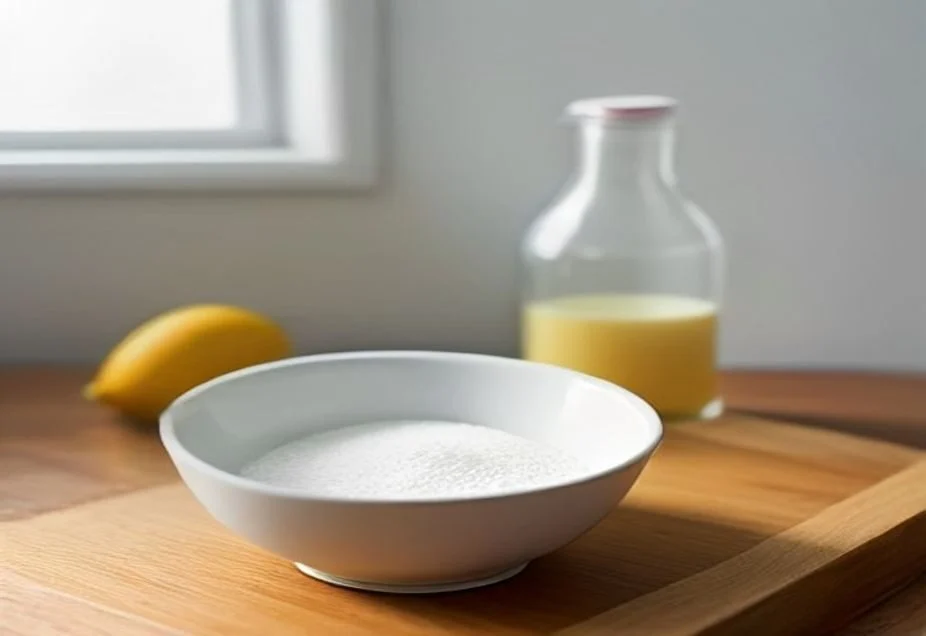
Bicarb and vinegar earn their keep alone, not fizzing in a bowl.
The bottom line
Baking soda and vinegar are both excellent, cheap, low-tox cleaners, just not together. Mixed, they neutralise into water, carbon dioxide and a weak salt, so the famous fizz is mostly the sight and sound of two good cleaners cancelling each other out. Use vinegar for acid jobs (limescale, hard-water film, descaling) and baking soda for base and abrasive jobs (scrubbing, deodorising, lifting grease), each on its own. Keep the mixing trick for the rare case where you want a burst of mechanical fizz, applied in sequence, never bottled, and skip it entirely for serious drain clogs. Understand which tool does which job and you’ll clean better, spend less, and never fall for the volcano again.
Frequently asked questions
Does mixing baking soda and vinegar actually clean?
Not as a combination. The acid (vinegar) and base (baking soda) neutralise each other, leaving mostly water, carbon dioxide and sodium acetate, a salt that’s an even weaker cleaner than the baking soda you started with. The dramatic fizz is escaping gas, not extra cleaning power. Each ingredient cleans well on its own, but mixing them wastes both.
Why do so many people say to mix them, then?
Because it looks impressive and it does sometimes appear to work, but that’s usually the baking soda acting as a mild abrasive, plus your own scrubbing. In most viral recipes one ingredient is in big excess, so over 99% of the baking soda is left unreacted and doing the actual cleaning. The fizz is persuasive theatre rather than chemistry.
Is baking soda and vinegar good for unclogging drains?
Rarely for a real clog. The reaction happens at the drain mouth and most of the gas escapes upwards, so little energy reaches the blockage, and it’s too weak to shift hair anyway. It can help freshen a smelly drain and nudge very minor grease. For actual blockages, use hot water, a plunger, a drain snake, or a proper caustic drain cleaner.
What exactly does the reaction produce?
Water, sodium acetate (a salt) and carbon dioxide gas. The carbon dioxide is the fizz, a tablespoon of baking soda can release over five litres of it given enough acid. Once the bubbling stops, you’re left with a weak salt solution that has little cleaning ability, which is why the mixture underperforms either ingredient used alone.
Can I make a baking soda and vinegar spray to keep?
No. The reaction finishes within seconds of mixing, so a pre-made bottle would just contain flat salty water with no fizz and no real cleaning power. Sealing a fresh mixture is also unwise because the gas builds pressure. If you want the fizz, apply baking soda first and add vinegar at the point of use.
Which is better for cleaning, baking soda or vinegar?
It depends on the mess. Vinegar (an acid) is best for limescale, hard-water spots, soap scum and descaling. Baking soda (a base and mild abrasive) is best for scrubbing sinks and pans, lifting grease and absorbing odours. Match the ingredient to the job rather than combining them, and you’ll get a better result from either.
Does baking soda and vinegar disinfect or kill germs?
No, neither is a reliable disinfectant, and mixing them certainly isn’t. Vinegar has mild antibacterial activity but doesn’t meet disinfectant standards, and baking soda is essentially a cleaning and deodorising agent, not a germ-killer. For true disinfection use a registered disinfectant or an appropriate diluted bleach solution (never mixed with vinegar).
Can you clean a washing machine with vinegar and baking soda?
Yes, but use them in separate steps, not fizzed together. Run vinegar through a hot cycle to tackle limescale and residue, then, if you like, run a little baking soda to help with odours, or better, use a dedicated machine cleaner or descaler. Fizzing them together in the drum achieves nothing extra.
Is it dangerous to mix baking soda and vinegar?
No, that particular mix is safe; it just fizzes and neutralises. The only caution is not to seal it in a closed container, because the gas builds pressure. The genuinely dangerous mistake is mixing vinegar (or any acid) with bleach, which releases toxic chlorine gas, so keep acids and bleach well apart.
What should you never mix when cleaning?
Never mix bleach with vinegar or any acid (chlorine gas), and never mix bleach with ammonia (toxic chloramine vapours). As a general rule, don’t combine cleaning products to “boost” them, use one at a time, rinse between products, and ventilate the room. When in doubt, read the product label and safety information.
Related reading: does vinegar actually disinfect? and hot vs cold water: which cleans better?
Related reading: if you reach for bleach as the disinfectant instead, make sure it still works, does bleach expire? (yes, and faster than you think)
References
- The Conversation. “Vinegar and baking soda: a cleaning hack or just a bunch of fizz?” (acid–base reaction produces water, sodium acetate and CO₂; the fizz is a “visual placebo”; >99% of baking soda remains in typical recipes; sodium acetate is a weaker base). theconversation.com
- Homes & Gardens. “Why you shouldn’t use vinegar and baking soda to unclog a drain” (plumbers on why the fizz rarely clears real clogs). homesandgardens.com
- Washington State Department of Health. “Dangers of Mixing Bleach with Cleaners” (mixing bleach with acids such as vinegar releases chlorine gas). doh.wa.gov
This article explains general cleaning chemistry for information only. Always read product labels and safety data before mixing or using any cleaning product, and never combine bleach with other cleaners.