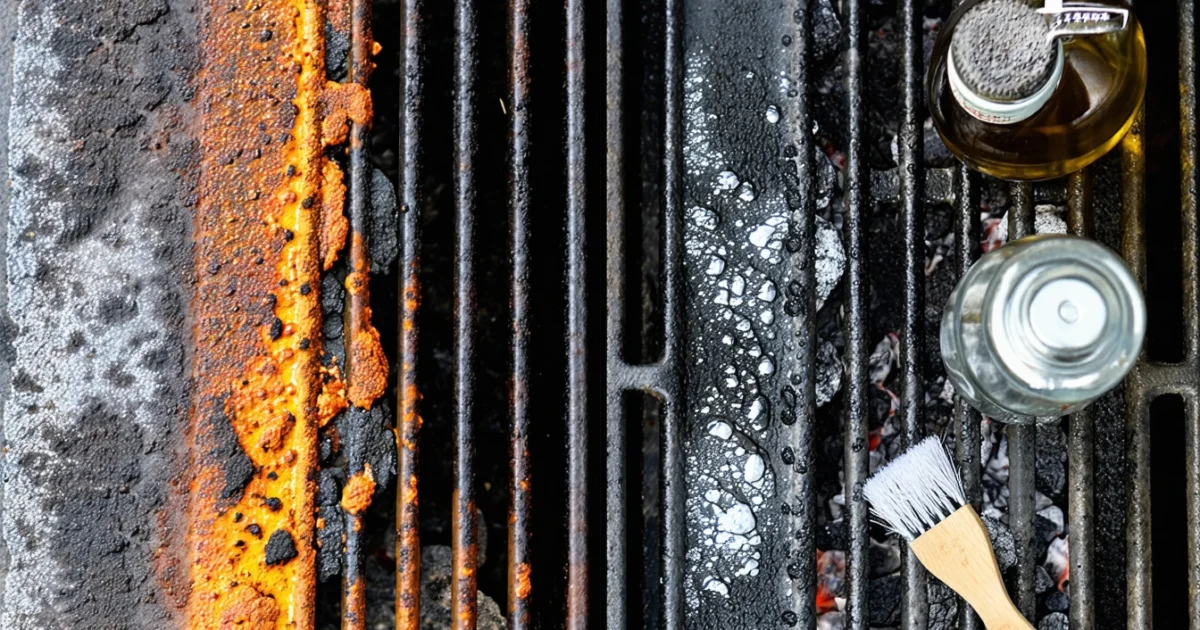
Rust on a grill grate is rarely dangerous in itself, but how you remove it can be. Wire brush bristles shed into food, strong acids can leave residue on a surface that touches your dinner, and a grate that has rusted through can snap under a heavy joint. So this guide starts with what can go wrong, then covers the checks to make before you start, the safest method, and only then the stronger options and the cautions that come with them.
The short version: most rusty charcoal grill grates can be rescued with a soak, a scrub and a coat of oil. If the metal is flaking, deeply pitted or cracked, it is time for a new one. Similar principles for cleaning other metal, including the homemade aluminium cleaners we have covered, apply here, though cast iron and steel behave differently.
Disclosure: Cleaners Guide is a participant in the Amazon Associates programme, so if you buy through links on this page we may earn a small commission at no extra cost to you. It never changes our recommendations, we suggest products because they work and we point out cheaper options where they do the same job. Prices and availability change, so always check the current price before buying.
What can go wrong before you start
Loose wire bristles
Wire grill brushes wear out and shed fine, sharp bristles. Those can end up stuck to the grate and then in food, and there are documented cases of people swallowing them and needing medical treatment. If you use a wire brush, run a cloth or a ball of foil over the grate afterwards and inspect it in good light, and replace the brush when bristles look loose or bent. Brushes with a scraper or woven stainless coil, and nylon-bristle brushes for cool grates, avoid the problem. A pad or scraper made for grills is the safer routine tool.
Chemical residue on a cooking surface
Anything you apply to a grate, from vinegar to a shop-bought rust remover, has to be rinsed off fully before you cook. Strong rust removers are typically acids, such as phosphoric or oxalic acid, and are not meant to be eaten. Unless the label says a product is safe for food-contact surfaces, assume it is not, and keep the strongest options for heavily rusted parts you are happy to rinse repeatedly, or leave them out.
Cuts, splashes and fumes
Rust edges are sharp, and grates are heavy and awkward to lift when wet. Wear sturdy gloves (nitrile or rubber for acids), eye protection when brushing or using any acid, and old clothes. Work outdoors or in an open garage, and never mix cleaning products. Our guide to cleaning products you should never mix lists the combinations that release harmful gas.
Is it safe to cook on a slightly rusty grate?
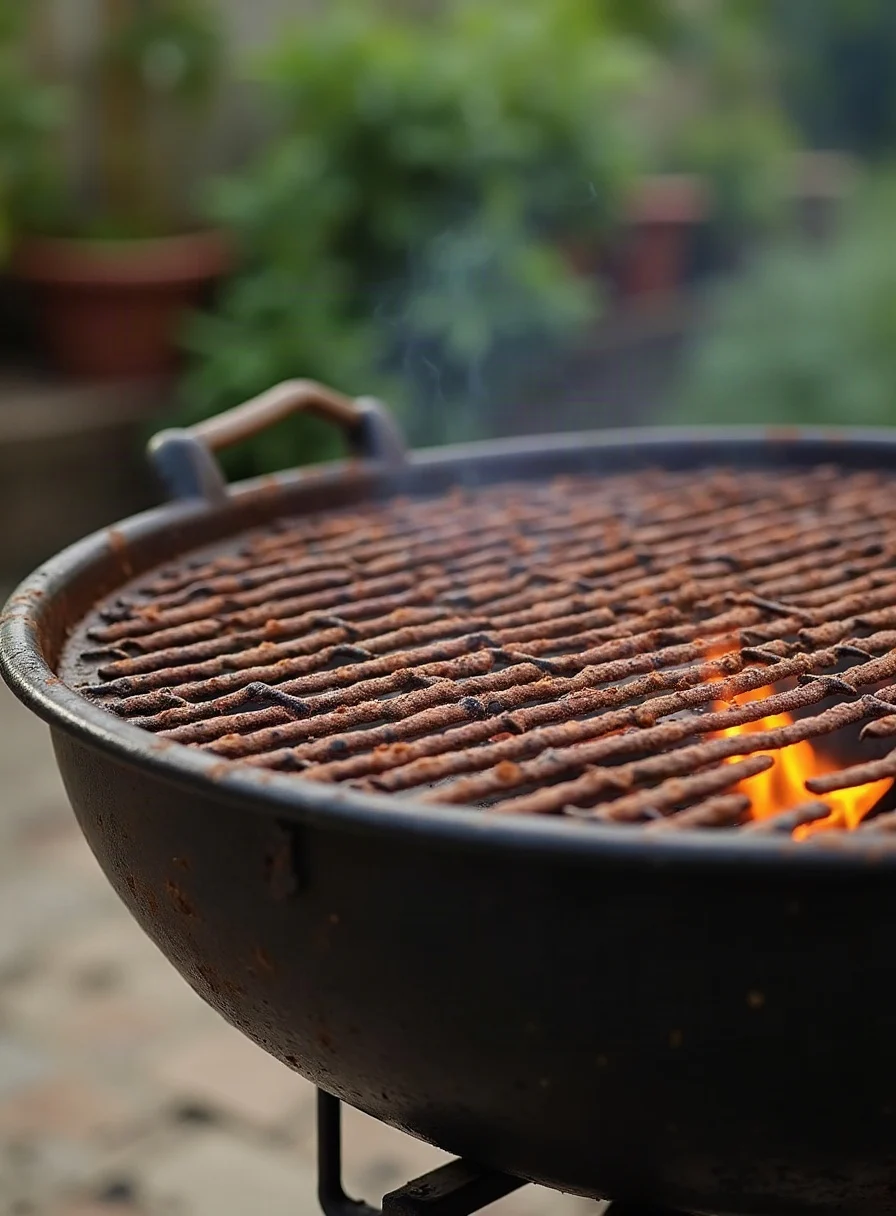
A thin film of surface rust on a grate is mostly a quality problem. It tastes metallic, it can stain food and it makes the grate harder to keep clean. The real concerns are flaking rust, which ends up on the food, and a pitted surface where food and bacteria cling. Clean the rust off, season the grate, and do not cook on a grate that is still flaking or visibly eaten away. If it is structurally weak, bend or cracked, replace it.
Check the grate and the label first
The right method depends on what your grate is made of, so identify it before anything else. The manual or maker’s website will say, and a magnet helps tell cast iron and carbon steel (magnetic, rust) from some stainless steels.
| Grate type | How it rusts | What to be careful about |
|---|---|---|
| Bare cast iron | Rusts quickly if left damp or unseasoned | Do not soak too long in acid. Re-season after every deep clean |
| Plated or carbon steel | Rusts where plating wears away | Fine steel wool is usually fine, but scratches speed up rust. Oil it |
| Stainless steel | Resists rust, but can spot, especially at welds or after salty marinades | Use stainless-safe tools, avoid chlorine bleach, and rinse well |
| Porcelain-enamel coated | Rusts only where the coating has chipped | Never use wire brushes or steel wool. Chips expose metal that will keep rusting |
| Chrome-plated | Peels and rusts underneath once the plating is worn | If the plating is flaking, replacement is usually the answer |
Clean it or replace it?
- Clean it if the rust is orange or brown, rubs off on a cloth, and the metal under it feels solid and smooth once cleaned.
- Clean it, but cautiously if there are scattered pits that clean up and do not weaken the bars.
- Replace it if the bars are thin, bent or cracked, if rust keeps flaking after two proper cleans, if the coating has peeled over a wide area, or if you can press a screwdriver tip into the metal.
- Check your warranty if the grate is fairly new. Premature rust can be a manufacturing fault.
There is no magic percentage that decides this. If the grate is sound and you can restore a smooth surface, it is worth the effort. If you are unsure, a replacement grate for your model is usually inexpensive compared with a new grill.
The safest method first: soak, scrub, rinse
This approach uses a gentle acid and time, not force, which protects the grate and you. It works on light to moderate rust and is also the first step for heavy rust.
Prepare the grate
- Let the grill cool fully. Hot iron can burn for far longer than you expect, and cold water on a hot cast iron grate can crack it.
- Lift the grate out, straight up, and take it to a place where you can work on it outdoors or on a washable surface.
- Brush off ash, charcoal and loose food with a brush or scraper. Rinse in warm soapy water to take off grease, as rust treatments do not work well through fat.
- Check the bars for cracks or deep pits before you invest any time.
Soak in white vinegar
Fill a tub, bucket or large tray with equal parts white vinegar and water, or use neat vinegar for very rusty parts, and lower the grate in so it is covered. Acetic acid dissolves iron oxide. Start with 30 minutes to an hour and check, as light rust often lifts quickly. Heavy rust can need several hours or overnight, but do not leave bare iron in vinegar for days, because once the rust is gone the acid starts to attack the metal underneath. Swish it now and then, and check progress at intervals instead of leaving it unattended for a long period.
How long does vinegar take? Light rust may lift in 30 to 60 minutes, moderate rust in a few hours, and heavy rust may need overnight and a second round. Warm vinegar acts a little faster, though it is not essential.
Scrub and rinse
Lift the grate out and scrub with a nylon brush, a stiff non-wire brush or a scourer. Rust that has loosened will wipe off as a brown sludge. Rinse well under clean water, scrub again where needed and rinse again. A paste of bicarbonate of soda and water on a damp cloth can finish the job and neutralise leftover vinegar, though the fizzing mixture of vinegar and baking soda is less useful than people think (see whether baking soda and vinegar really clean). It is better to use them in sequence than together.
Salt and lemon for small patches
For a light patch, coarse salt with lemon juice works as a poultice. Sprinkle salt on the rust, squeeze lemon over it, leave for 30 to 45 minutes and rub with the spent lemon halves, then rinse. It is slow and only suited to surface rust, but it is gentle on food contact surfaces. More lemon-based ideas are in our guide to cleaning with lemon.
Use a rust level guide
| How rusty is it? | Start with | Then |
|---|---|---|
| Light orange film | Dry brush or scraper, then a wash | Dry and oil it before the next cook |
| Moderate, rough and dusty | Vinegar soak for a few hours, then scrub | Rinse, dry and re-season |
| Heavy, thick and layered | Overnight vinegar soak, scrub, repeat once | Fine steel wool on cast iron if needed, then season |
| Pitted, flaking or cracked | Do not rely on cleaning | Replace the grate |
Once the grate is clean, there may still be greasy char on it. A degreasing wash is helpful before soaking, and our piece on removing grease covers the principles of lifting fat without damaging the surface.
Stronger options, and the cautions that come with them
Steel wool and wire brushes
Fine steel wool (grades 0000 to 00) does a good job on cast iron or bare steel that has already been soaked, and it is the quickest way to finish a patchy surface. Work along the bars and wipe the grate afterwards, because steel wool leaves fibres behind. Do not use it on porcelain-enamel, chrome or stainless, where it scratches and can create new rust spots. Wire brushes are for the cleaning stage with the grate off the grill, followed by a wipe-down and inspection. A grill wire brush suits heavy rust on bare iron if you take the precautions above, but the bristle risk means that a scraper and a woven or coil brush are better choices for regular use.
Commercial rust removers
A gel or liquid rust remover can strip heavy rust on a bare grate in minutes. Most work by chelation or with phosphoric or oxalic acid, and some leave a dark phosphate coating that is not meant for food-contact surfaces. Only use one that says it is suitable for cookware or barbecues, follow the contact time on the label, wear gloves and eye protection, and rinse with plenty of clean water. Wash the grate in hot soapy water afterwards, rinse again, and season it. If the label says nothing about food use, do not use it on a cooking grate.
Heat as a helper, not a fix
Some people burn off the loose debris by heating the grate in a hot fire. That helps with food residue and scale but it does not remove rust, and quenching a hot cast iron grate in water risks cracking it. Let it cool, then clean as above. Can you burn the rust off? Not really: it will crumble, but you will still need to brush and oil the metal.
Can household items really do the job?
Yes, for most rust. Vinegar, salt, lemon, bicarbonate of soda, a nylon brush and some patience are all you need for light and moderate rust, and they have the advantage of being food-safe once rinsed. Shop-bought removers earn their place only on severe rust, and even then a longer soak in vinegar usually gets the same result with more time and less risk.
Putting things right when it goes wrong
| Problem after cleaning | Likely cause | What to do |
|---|---|---|
| Orange dust returns within days | The grate was damp when stored, or was not oiled | Wipe off, dry thoroughly and apply a fresh thin coat of oil |
| Seasoning is sticky or tacky | Too much oil, or not heated long enough | Heat the grate again until it stops smoking, or wipe it back with a cloth and start with less oil |
| Seasoning flakes off in black flecks | Oil layers applied too thick, or applied to a damp surface | Scrub back the flaking patches with a nylon brush, dry and re-season in thin coats |
| Food tastes metallic | Rust or acid residue remains | Wash with hot soapy water, rinse well, then burn off on the grill for a few minutes before cooking |
| Rust returns in the same pits | Pitting holds moisture | Keep those spots oiled. If pits keep widening, plan to replace the grate |
| Brown stains on the grill bowl | Rust running off the grates or wet ash | Clean the bowl, empty ash promptly and treat bare patches with high-heat paint made for barbecues |
When the grate cannot come out
Some grills have fixed or welded grates. You can still treat them in place: scrub off loose rust with a nylon brush or scraper, wipe the surface with a cloth dampened with vinegar and water, leave it for a short time, then wipe it down repeatedly with clean damp cloths until no brown comes off. Dry it, oil it and heat it as above. Keep vinegar away from painted or enamelled bowls and lids, and rinse any drips straight away.
A safe set-up for the job
- Work outside on a bench or old table, away from children and pets.
- Wear gloves, safety glasses and clothes you do not mind marking. Rust stains do not wash out.
- Keep acids and cloths away from drains that lead to a pond or soakaway if you are using a commercial remover, and follow the label’s disposal advice.
- Dispose of used brushes, steel wool and wipes in the household bin, and sweep up any wire or rust fragments from the ground.
- Wash your hands and any tools before preparing food.
Rinse, dry and season so rust does not return
A clean grate is bare metal, and bare metal rusts quickly. Do not skip this step.
- Dry completely with a towel, then warm the grate on the grill over low heat for a few minutes to drive moisture out of the joints and corners.
- While it is warm, wipe on a thin film of cooking oil such as vegetable, rapeseed or sunflower, using a folded paper towel. Cover the sides, undersides and edges.
- Wipe off any excess, because thick oil goes sticky and can smoke heavily.
- Heat the grate on the grill for 15 to 30 minutes with the lid on, until the oil stops smoking and the metal darkens slightly.
- Let it cool in the grill, and repeat the oiling once or twice if the grate was bare.
How do you season grill grates after rust removal? That sequence is the answer. Oil, heat, cool, repeat. The oil polymerises into a thin hard layer that keeps water off the iron and makes the grate less sticky. Avoid acidic marinades for the first few cooks and cook something fatty first, such as sausages, so the seasoning builds. Do not use aerosol sprays on a hot grate, as they can flare.
Keeping rust away between cooks
- Brush while the grate is still warm. Food residue and moisture are what start the rust. A scraper or brush with a gentle action is enough.
- Oil it lightly after each cook. A thin film is the cheapest rust protection there is.
- Empty the ash. Wet ash is corrosive and holds moisture against the metal, so clear the bowl and grate bottom after the grill has cooled.
- Cover the grill with a vented cover. A cover that traps condensation can do more harm than none. Pick one that lets air through, and make sure the grill is dry when you put it on.
- Bring grates inside over winter if you can. Store them dry, off the floor, with a light coat of oil, and check on them occasionally.
- Look early. A spot of rust caught in March is a two-minute fix. Left until June, it is an afternoon of work.
A routine takes about five minutes: scrape the warm grate, wipe it with a damp cloth to lift the last of the ash and grease, dry it, and rub on a thin film of oil. Do the same quick check at the end of the season, when you put the grill away. Over a year, that small habit prevents most of the rust you would otherwise be soaking out in spring, and it keeps the seasoning layer in good condition so food releases more easily.
More general advice is in our complete guide to cleaning a grill, and rust on other metal around the garden is covered by removing rust from metal. If you want to browse more, the Cleaners Guide home page lists the rest.
What each tool is for
You do not need all of this, and vinegar plus a nylon brush covers most rescues. If you are buying, here is what each item does and what to avoid. The links go to Amazon UK searches, so you can compare current options.
| Product | Best for | What to look for | Caution |
|---|---|---|---|
| Grill brush with scraper | Routine cleaning of warm grates | A sturdy scraper edge and a woven or coil head, not loose wire bristles | Replace it when it wears. Inspect the grate after use |
| White vinegar | Soaking light to heavy rust | Plain white vinegar in a large bottle, so you have enough for a tub | Do not leave bare iron in it for days. Rinse well |
| Grill seasoning oil or spray | Protecting the cleaned grate | A food-safe oil rated for high heat, or a plain cooking oil | Apply thinly. Do not spray onto a hot grate |
| Rust remover | Heavy rust on a bare, removable grate | A label that says it is safe for cookware or food-contact surfaces | Gloves and eye protection, full rinse, and never on porcelain or chrome |
Rust questions people ask
How often should I clean the grates to stop rust?
Brush them after every cook while they are warm, and wipe on a little oil. Give them a deeper clean at the start and end of the season, or whenever you see a rust spot. Frequent light cleaning beats an occasional heavy one.
Which grate materials rust least?
Good stainless steel resists rust best, though cheap grades can still spot. Porcelain-enamel coated grates resist rust until the coating chips. Bare cast iron and plain steel rust most readily, but a well-seasoned cast iron grate can last for many years with regular care.
How should I store grates over winter?
Clean and dry them, rub on a thin film of oil, and keep them somewhere dry and ventilated, off a damp concrete floor. If they stay in the grill, use a breathable cover and make sure the bowl is free of ash. Check them now and then.
Can I stop rust from forming at all?
Not completely, but you can make it rare. Keep the grate dry, keep a seasoning layer on it, empty the ash, and do not leave it wet under a sealed cover. Where the coating or plating is damaged, expect rust to start there.
Can a pressure washer or dishwasher clean the grates?
A pressure washer will blast off loose debris, but dry and oil the grate straight away, because bare metal flash-rusts. A dishwasher is not a good idea: the detergent and long wet cycle are hard on cast iron and plating, and you will probably need to re-season afterwards.
Can you use oven cleaner on a barbecue grill?
Only if the label says it is suitable for barbecues and grill grates. Many oven cleaners are caustic and can damage cast iron, coatings and plating, and residue must not reach food. If you use one, follow the label, wear gloves, rinse repeatedly, then dry, oil and re-season. Soaking in vinegar or scrubbing is safer.
Can I use washing-up liquid on grill grates?
Yes. Warm water with washing-up liquid, such as Fairy or Dawn, is a good way to clear grease from grates after rust removal. Scrub with a nylon brush, rinse well, dry straight away and apply a thin coat of cooking oil. On bare cast iron, avoid long soaks because it can rust again.
What is the best way to get rust off cast iron grill grates?
For light to moderate rust, soak in white vinegar and water for a short time, scrub with a stiff nylon or brass brush, and rinse. Dry immediately, then oil and season the grate to prevent flash rust. If the metal is flaking or deeply pitted, replace the grate.