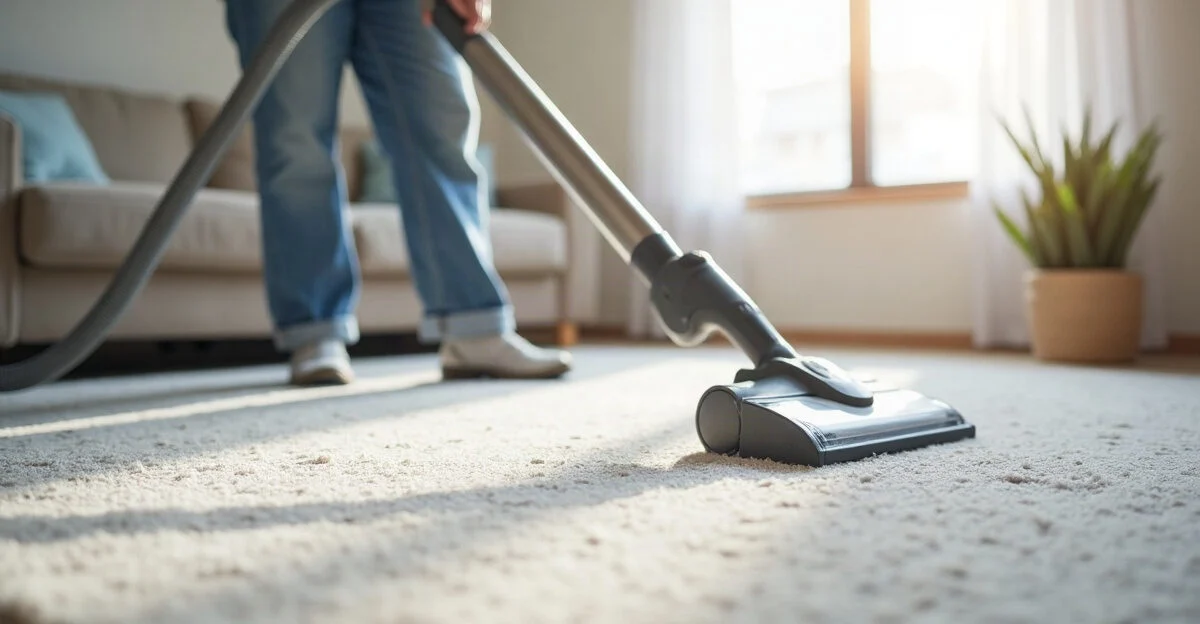
A homemade carpet cleaner solution can work well, but it is the one cleaning job where the recipe matters less than what you check before you start. A mix that is fine on a polypropylene hall carpet can leave a wool lounge carpet brown and tide-marked, and the same mix poured into a machine can foam into the motor or affect your warranty. This guide puts the safety checks first, then gives the gentlest method, then the stronger mixes with the cautions that go with them.
The short version: use very little soap, warm rather than boiling water, as little liquid as you can get away with, a patch test on a hidden corner, and fast drying.
Some links in this guide are Amazon affiliate links. As an Amazon Associate we earn from qualifying purchases, at no extra cost to you.
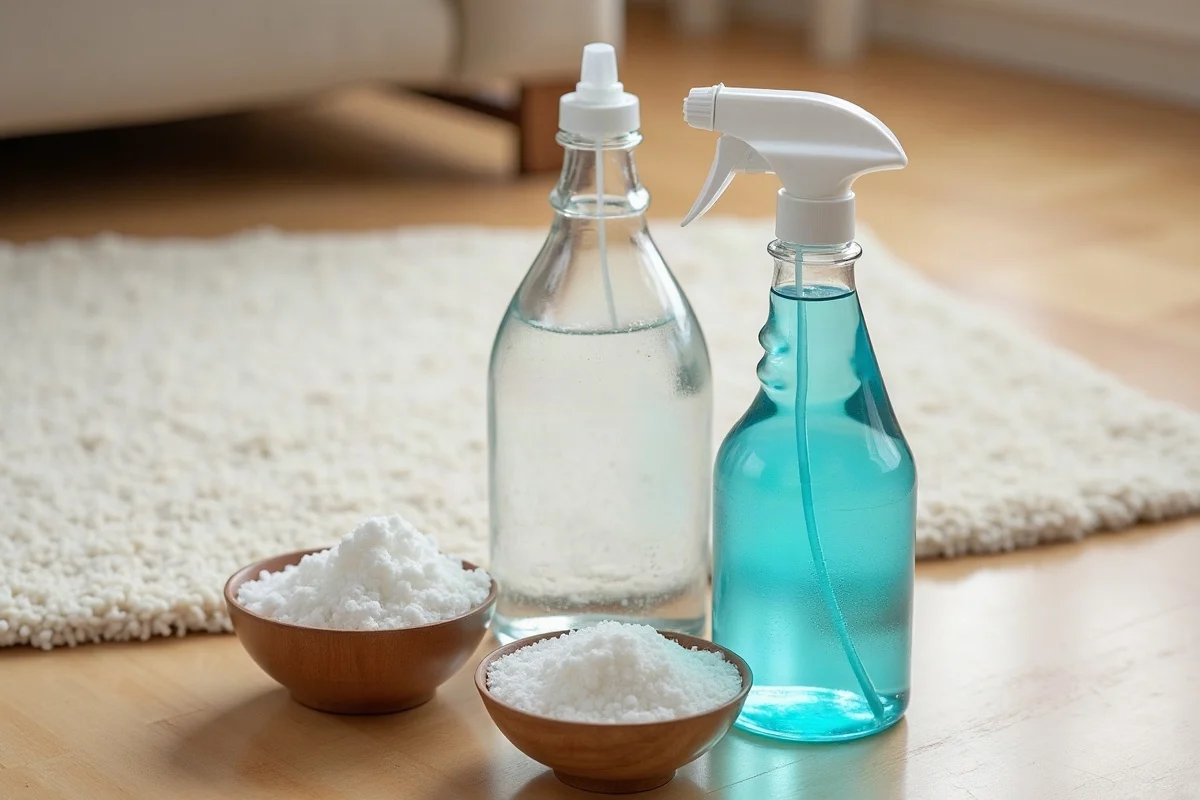
What can go wrong with a DIY carpet clean
Carpet looks tough, but it is a layered product: fibres, a backing, sometimes a jute base, and underlay beneath. Most of the damage from homemade cleaning comes from a short list of causes, and nearly all of them are avoidable.
| Risk | What causes it | How to avoid it |
|---|---|---|
| Sticky residue and fast re-soiling | Too much washing-up liquid left in the pile attracts dirt | About one tablespoon per 4 litres, and a plain-water rinse pass |
| Foam in the machine | Soap added before the water, or too much of it | Fill the tank with warm water first, then add a little soap |
| Pump and seal damage, warranty problems | Solutions the maker does not approve, vinegar included | Read the manual before you put anything homemade in the tank |
| Colour run or bleaching | Dyes that are not colourfast, or peroxide on the wrong carpet | Patch test on a hidden spot and let it dry |
| Browning and mildew | Over-wetting, especially wool on a jute backing | Mist rather than soak, extract well, dry quickly |
| Irritant fumes | Mixing hydrogen peroxide and vinegar, or bleach with ammonia or acids | One product at a time, never combined |
Three checks before you mix anything
- Read the machine manual. Makers such as Bissell and Vax recommend their own formulas, and some manuals warn against vinegar or other additives and say that using them can affect the warranty. If the manual is silent, treat that as a reason to be cautious rather than a green light.
- Identify the fibre. Check any leftover carpet label, the paperwork from when it was fitted, or ask the retailer. Synthetics (nylon, polyester, polypropylene) are the most forgiving. Wool and wool blends need gentler handling, covered below.
- Patch test. Pick a hidden corner, such as under the sofa or inside a wardrobe. Apply the mix, blot with a white cloth to see whether any colour lifts, and wait until it is fully dry before you judge the result.
Our piece on cleaning products you should never mix is worth a read before you start combining anything, because several common DIY pairings give off irritant fumes.
The safest method: spray, blot and rinse by hand
If you are unsure about your carpet, your machine or your warranty, start here. This hand method uses almost no water, so it is kinder to wool and to the backing, and it is the right way to deal with spots and small areas. The same approach works on a rug and on sofa cushions.
- Vacuum thoroughly first to lift loose dirt and grit.
- Mix 500 ml warm water, 1 teaspoon washing-up liquid and 1 tablespoon white vinegar in a spray bottle. Leave the vinegar out on wool or if you would rather avoid it, the soap and water alone still lifts everyday dirt.
- Mist the area lightly. The carpet should be damp, not wet.
- Blot with a clean microfibre cloth, working from the outside of the mark inwards so you do not spread it.
- For ground-in dirt, agitate gently with a soft carpet brush, then blot again.
- Rinse by misting with plain water and blotting, then dry with a window open or a fan running.
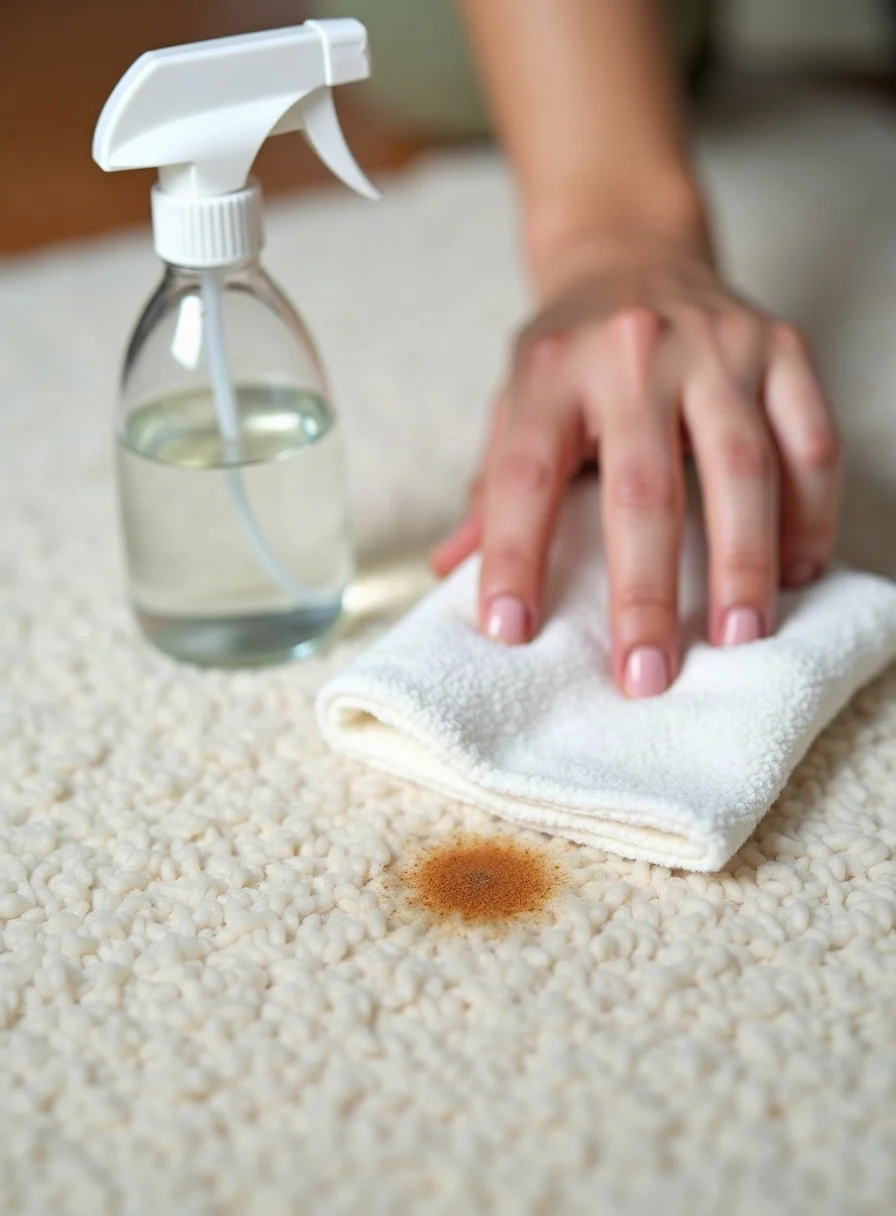
Blotting matters. Rubbing frays the pile and pushes the stain deeper, whereas pressing a clean cloth down lets it draw the liquid up.
To freshen a whole room without wetting it at all, sprinkle bicarbonate of soda over the dry carpet, leave it for 15 minutes (or overnight for stubborn odours), then vacuum it up. It absorbs smells rather than cleaning, so treat it as a deodoriser. For the full room-by-room method, including drying and tackling set-in marks, see our complete guide to cleaning carpet.
Machine mixes, if your manual allows them
Carpet cleaning machines are designed around low-foam solutions. If your machine is under warranty, the safest choice is a branded low-foam carpet solution and keeping the homemade mixes for hand cleaning. If it is out of warranty and the manual does not forbid it, the diluted recipe below is widely used on synthetic carpet.
The everyday machine recipe (synthetic carpets only)
- Fill the tank most of the way with warm, not boiling, water first. Adding water first stops the mix foaming.
- Add 1 tablespoon of washing-up liquid per 4 litres of water. That is roughly one big squeeze, no more.
- Optional: add around 250 ml of white vinegar to cut odours and residue, but only if the manual does not warn against it.
- Swirl gently to combine without whipping up foam, then make slow passes with the machine and extract thoroughly.
Recipes matched to the job
| Job | Homemade recipe | Notes |
|---|---|---|
| Everyday machine clean (synthetic) | 4 L warm water + 1 tbsp washing-up liquid | Low foam, all-round refresh |
| Odour and light residue | Add 250 ml white vinegar to the above | Synthetic only, and only if the machine maker allows it |
| High-traffic or musty carpet | Sprinkle bicarbonate of soda first, leave, vacuum, then machine clean | Bicarb absorbs odour before you wet the carpet |
| Spray-and-blot (no machine) | 500 ml warm water + 1 tsp washing-up liquid + 1 tbsp white vinegar | For spots and small areas |
| Pet urine | Use an enzyme cleaner, not a DIY mix | Enzymes break down the urine residue, DIY mostly masks it |
Pet urine is the one job where a homemade solution is the wrong tool. Washing-up liquid and vinegar can hide the smell for a day or two, but an enzyme-based cleaner is designed to break down the compounds in urine that make the odour return, especially in warm or damp weather.
If the machine starts foaming
Excess foam reduces suction, can reach the motor and leaves residue behind. If you see a lot of suds, you have used too much soap. Empty the tank, refill with clean warm water and a smaller amount of soap, and if the machine maker sells one, a carpet cleaner defoamer can knock the foam down. Finish with a rinse pass of plain water to clear leftover soap.
Look after the machine afterwards
A homemade mix leaves more behind than a branded one, so give the machine a little care once the carpet is done. Empty the dirty-water tank straight away and rinse it, because the grey water smells quickly. Run a tank of plain clean water through the hoses and nozzle to flush out soap, wipe the nozzle and brush with a damp cloth, and leave the tanks open to dry so they do not turn musty. If the machine has a filter or float screen, check the manual for how often to clean it.
Do not store leftover solution in the tank. Soap and vinegar mixes can leave films on seals over time, which is one reason makers prefer you to fill with fresh solution each time.
Wool and natural fibres need a gentler route
Wool, silk and oriental rugs are the carpets where a homemade recipe is most likely to do harm. Wool is sensitive to alkaline products and to bleaching agents, and it holds moisture for a long time.
- Never use bleach, ammonia or hydrogen peroxide on wool. They can damage the fibres and strip the colour.
- Use a pH-neutral, wool-safe carpet cleaner where possible. If you must use a homemade mix, keep it weak and patch test first.
- Be sparing with bicarbonate of soda, which is alkaline. A light dry sprinkle that is vacuumed up is the most that should touch wool, and a patch test is still sensible.
- Use as little liquid as possible. Wool on a jute backing that stays damp can develop browning, a yellow-brown tide mark, plus mildew, and wool can take 24 hours or more to dry fully.
For valuable, antique or hand-knotted pieces, a specialist cleaner is a safer bet than any kitchen-cupboard recipe. The same goes for a carpet that is heavily soiled all over, has been flooded, or smells musty after drying, since those usually mean moisture has reached the underlay and a surface clean will not reach it.
Synthetic carpets are more forgiving
Nylon, polyester and polypropylene tolerate the soap and vinegar mixes above. Diluted hydrogen peroxide (the 3 per cent kind) can spot-treat stubborn organic stains such as red wine on synthetic carpet, but it can lighten some dyes, so patch test first. Never mix it with vinegar in the same bottle, because the two react to form peracetic acid, an irritant. Our guide on whether vinegar disinfects explains what vinegar can and cannot do around the house.
Treating common carpet stains at home
Match the stain to the method. In every case, blot rather than rub, work inwards, and test on a hidden patch first.
| Stain | Homemade fix | Key rule |
|---|---|---|
| Coffee or tea | Washing-up liquid and white vinegar solution, blot repeatedly | Act fast, older tannin stains set |
| Grease or oil | Sprinkle bicarb to absorb, leave, vacuum, then washing-up liquid solution | Lift the grease before you wet it |
| Blood | Cold water and a tiny bit of washing-up liquid, blot | Never use hot water, it sets protein stains |
| Red wine | Blot, sprinkle bicarb or use soda water, then the washing-up liquid mix | Do not let it dry first |
| Pet urine | Enzyme cleaner, following the label | DIY masks it, enzymes remove it |
| Ink | Dab with surgical spirit on a cloth, blot, then rinse | Test first, work in tiny amounts, keep away from heat and flames |
Cold water suits blood and other protein stains because heat can set them in the fibres. For a general comparison of when temperature helps, see hot versus cold water for cleaning.
Drying carpet quickly to avoid mould and browning
Damp carpet is where most of the lasting problems start, so get air moving the moment you finish. Open windows, aim a fan across the surface, and run a dehumidifier if you have one. Keep off it and leave the furniture out until it is fully dry.
Synthetic carpets usually dry in a few hours with good airflow, while wool can take a day or more. If a room is still damp after 24 hours, you have probably used too much solution, so use less next time and extract more thoroughly. A musty smell that appears after cleaning is a sign it stayed wet too long.
Five buys that protect the carpet and the machine
You can do most of this with what is already in the kitchen. These are the few purchases that reduce the risk, and each one links to an Amazon UK search so you can compare current options.
Questions about what else you can put in a carpet cleaner
- Can I use OxiClean in a carpet cleaning machine? Only if the machine maker says so. Oxygen-based stain removers are not designed as low-foam machine solutions, can leave residue and may lighten dyes. Never use them on wool. If you want a stain booster, check the manual for an approved additive first.
- Can Fabuloso or another multi-purpose cleaner go on carpet? It is better not to. All-purpose and floor cleaners are made for hard surfaces, are often perfumed or high-foaming, and can leave a residue in carpet pile. A little washing-up liquid in water, or a carpet-specific cleaner, is a safer choice.
- Can I use laundry detergent in a Bissell carpet cleaner? Manufacturers generally say no. Laundry detergents foam heavily and are not designed for carpet machines, so they can clog the system and leave residue. Use the maker’s own solution, or a low-foam alternative that the manual allows.
- What is a good homemade carpet cleaner solution without vinegar? Warm water with a little washing-up liquid, as in the recipes above, does most of the work. Add a dry bicarbonate of soda sprinkle beforehand for odours, then vacuum. Always finish with a plain-water rinse so no soap is left in the pile.