Key takeaways
Hard water in the UK follows geology: water is mostly soft in Wales, the South West tip, the North West and Scotland, and mostly hard to very hard across eastern and southern England. The Drinking Water Inspectorate map uses six bands, from soft (0 to 50 mg/l calcium carbonate) to very hard (over 300). Manufacturers say harder water means descaling more often, but only a few publish numbers, so the calculator below shows those and says “follow your manual” for the rest.
If you have ever wondered why the inside of your kettle looks like a chalk cliff while a friend two counties away never descales theirs, the answer is under your feet. Rain picks up calcium and magnesium as it moves through rock, and the more chalk and limestone there is, the harder the tap water. This guide pulls together the official hardness bands, a regional overview built from the Drinking Water Inspectorate (DWI) map and water company statements, and descaling guidance from appliance makers. It is research and synthesis from published sources, not a lab test, and every figure is linked in the Sources section.

What the official hardness bands actually mean
Hardness is usually reported as the amount of calcium carbonate (CaCO3) the dissolved minerals are equivalent to, in milligrams per litre. According to the DWI, hardness comes from dissolved calcium and magnesium and depends on local geology. The DWI map for England and Wales uses six bands, and United Utilities publishes the same six alongside the older clark and German degree scales that some appliance manuals still use.
| Band | mg/l CaCO3 (same as ppm) | Clark degrees | German degrees (°dH) |
|---|---|---|---|
| Soft | 0 to 50 | 0 to 3.5 | 0 to 2.8 |
| Moderately soft | 51 to 100 | 3.6 to 7.0 | 2.9 to 5.6 |
| Slightly hard | 101 to 150 | 7.1 to 10.5 | 5.7 to 8.4 |
| Moderately hard | 151 to 200 | 10.6 to 14 | 8.5 to 11.2 |
| Hard | 201 to 300 | 14.1 to 21 | 11.3 to 16.8 |
| Very hard | Over 300 | Over 21 | Over 16.8 |
Two details trip people up. First, the DWI web page itself groups the bottom two bands together as “soft, up to 100”, giving five bands rather than six, which is why you will see both versions online. Second, the Scottish Water factsheet gives conversion factors if your appliance uses a different unit: multiply mg/l by 0.07 for clark degrees, 0.1 for French degrees or 0.056 for German degrees.
There is no legal limit either way. The DWI says UK drinking water regulations set no standards for hardness, calcium or magnesium, and Scottish Water notes that supplies anywhere from 10 to 500 mg/l are typical. The DWI also quotes the 2017 World Health Organization guidelines: water at 200 mg/l or more tends to produce scale, while water at 100 mg/l or less can be more corrosive to pipework.
Temporary and permanent hardness
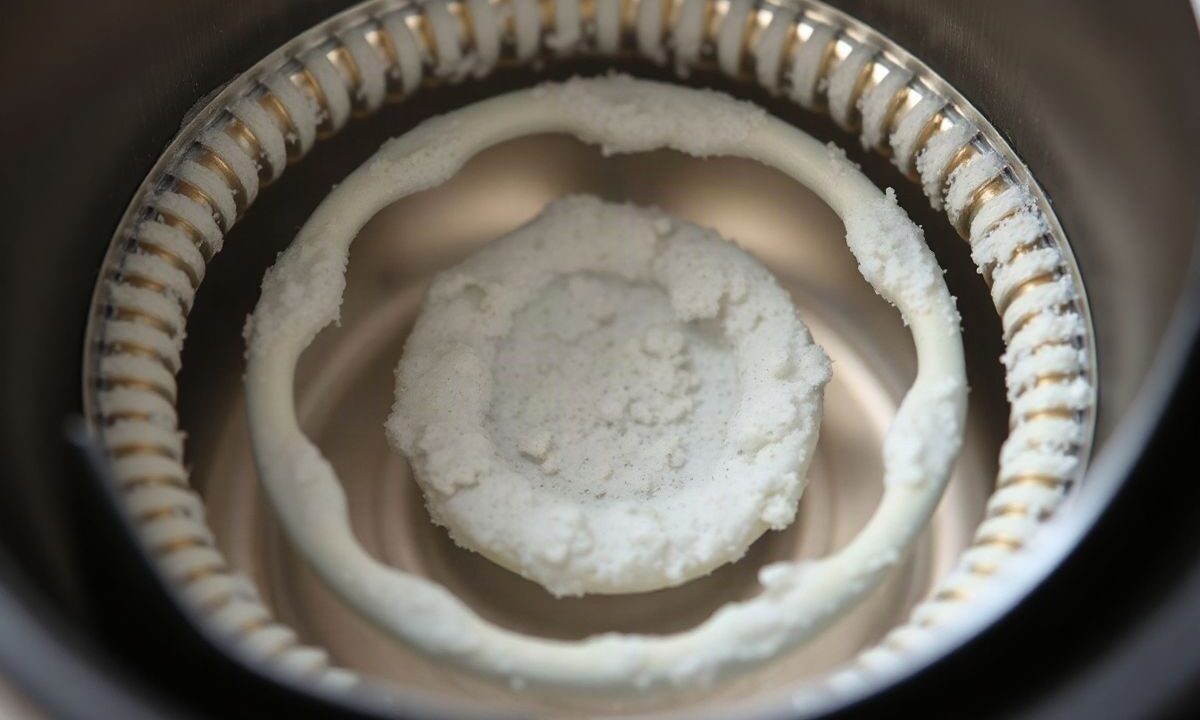
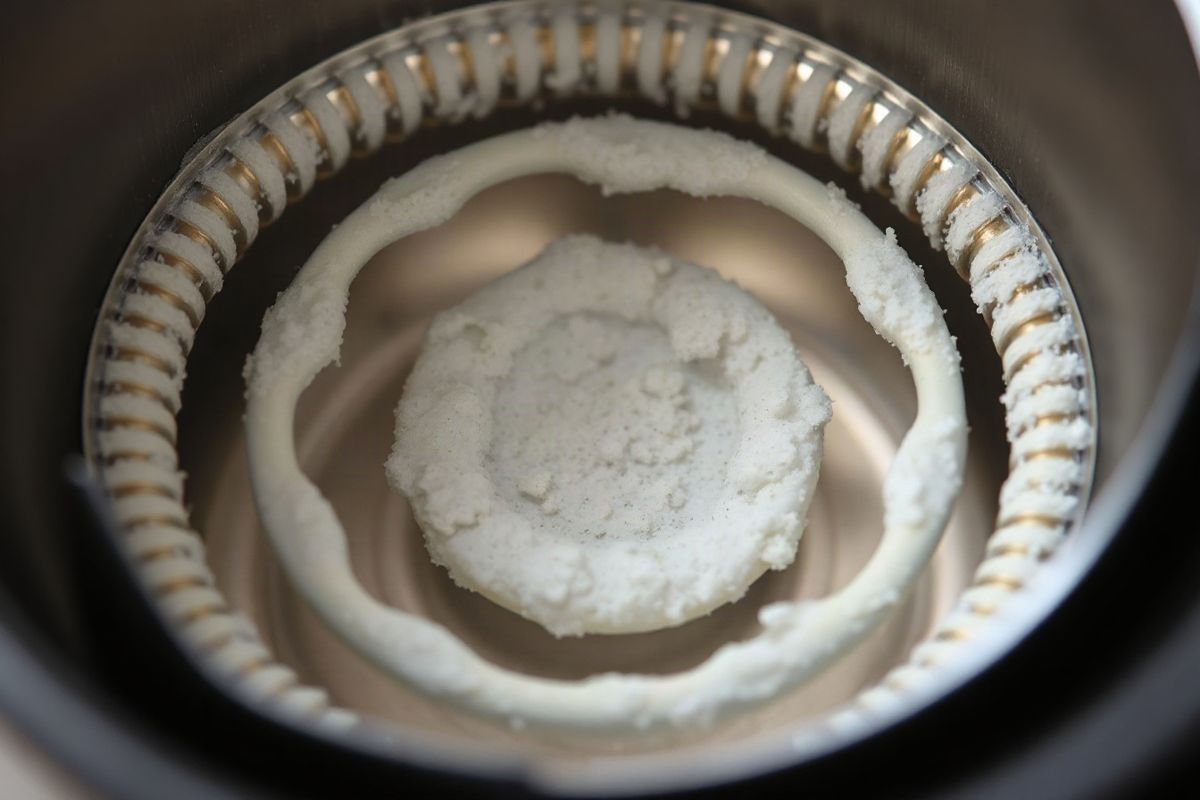
Scottish Water explains that temporary hardness can be reduced by boiling, while permanent hardness needs a water softener. In practice that is why a kettle collects a crust: heating drives calcium carbonate out of the water and onto the element and walls. United Utilities adds that kettles with a polypropylene lining resist scale sticking, although the scale still floats on the surface.
Hard water by UK region
The DWI describes its hardness map as showing typical hardness of water supplies in England and Wales, and warns it does not capture every local variation. The table below combines my reading of the colours on that map (it carries a 2009 Crown copyright date, so treat it as a broad pattern) with what each water company says on its own site. Your supply zone can differ from the regional picture, particularly where a company blends water from several sources.
| Region | Typical band on the DWI map (broad pattern) | What the water company says |
|---|---|---|
| Wales | Mostly soft (0 to 50) with moderately soft areas, and a few harder pockets towards the English border and the south | Welsh Water points customers to area-specific hardness information and notes there is no regulatory limit |
| South West England (Cornwall, Devon) | Mostly soft, with slightly hard to hard water in the east of the region | South West Water offers a postcode search for supply-zone information |
| Wessex area (Somerset, Dorset, Wiltshire, Bristol) | Mostly hard, with moderately hard pockets around Bristol | Wessex Water directs customers to its postcode checker |
| North West England and Cumbria | Mostly soft to moderately soft, with harder water in parts of Cheshire | United Utilities says no water supply in the North West is artificially softened |
| North East England | A mix from moderately soft to moderately hard, with harder pockets, mainly on the coast | Northumbrian Water says water is probably hard if it comes from near limestone or chalk or from groundwater, and blended supplies can vary |
| Yorkshire | Soft to moderately soft in the Pennine west; hard to very hard in the east | Yorkshire Water says hard water is mainly found in the east of the region and softer water in the west |
| East Midlands and Lincolnshire | Mostly hard to very hard | No regional statement verified; use a company checker |
| West Midlands | A patchwork: moderately soft to hard, with moderately hard common | No regional statement verified; use a company checker |
| East of England (Norfolk, Suffolk, Essex, Cambridgeshire) | Very hard over large areas | Anglian Water calls its region one of the hardest water regions in the UK and says that if you live in the East of England you will likely have hard water |
| London and the Thames Valley | Mostly hard, with some very hard areas | Thames Water says all the water in its region is hard, from rivers (65%) and underground sources (35%) passing through chalky limestone |
| South East (Kent, Sussex, Surrey, Hampshire) | Mostly hard, with slightly to moderately hard patches in the Weald area and some very hard pockets | Southern Water says hardness depends on local geology |
| Scotland | Not on the DWI map. Scottish Water says most supplies are soft to slightly hard | Scottish Water says borehole supplies are usually harder than surface water; its helpline (0800 077 8778) can give your supply zone figure |
| Northern Ireland | Not on the DWI map; no figures verified | NI Water has a postcode lookup that covers hardness and dishwasher settings |
Heads up: a region heading is not your tap. Two postcodes in the same county can sit in different bands, so use your water company’s own checker before you decide how often to descale.
Postcode checkers and hardness pages from water companies
- United Utilities (North West): water quality postcode checker
- Anglian Water: hard water page with postcode checker
- Yorkshire Water: check your water hardness
- Wessex Water: check if your water is hard or soft
- Northumbrian Water: hard water in your area
- Welsh Water: water hardness
- South West Water: water quality postcode search
- Southern Water: how hard is my water?
- Thames Water: water hardness
- Northern Ireland Water: water quality results lookup
- Scottish Water: hardness factsheet (helpline 0800 077 8778)
Not sure who supplies you? The company name is on your water bill. If you cannot find a figure online, Yorkshire Water says it can provide detailed hardness information on request, and Scottish Water offers a helpline for supply-zone levels.
Free descaling schedule calculator
Pick your band (or type your mg/l figure) and an appliance. The answer is a general rule of thumb built only from the guidance in the Sources section. Where no manufacturer or authority published an interval for that appliance, it tells you to follow your manual rather than inventing one.
Descaling schedule calculator
General rule of thumb only. Intervals come only from the manufacturer or water company guidance listed in the Sources section. Where a source gives no interval, the tool says to follow your manual. Your own appliance manual always wins.
What manufacturers say, band by band
This is the same information as the calculator in one place, and it works without JavaScript. Several makers describe their hardness thresholds loosely (De'Longhi says "hard" and "very soft" without giving mg/l), so I have matched their wording to the nearest official band. Treat the table as a starting point.
| Appliance | Soft | Moderately soft | Slightly hard | Moderately hard | Hard | Very hard |
|---|---|---|---|---|---|---|
| Kettle | About 3 months | No figure, follow manual | No figure, follow manual | No figure, follow manual | About monthly | About monthly |
| Washing machine, fewer than 2 cycles a day | No descaling listed | No descaling listed | No descaling listed to Every 6 months | Every 6 months | Every 6 months | Every 6 months to Every 3 months |
| Washing machine, 2 to 4 cycles a day | No descaling listed | No descaling listed | No descaling listed to Every 6 months | Every 6 months | Every 6 months | Every 6 months to Every 2 months |
| Washing machine, more than 4 cycles a day | No descaling listed | No descaling listed to About once a year | About once a year to Every 6 months | Every 6 months | Every 6 months to Every 3 months | Every 3 months to Monthly |
| Dishwasher | Set hardness, follow manual | Set hardness, follow manual | Set hardness, follow manual | Set hardness, follow manual | Set hardness, follow manual | Set hardness, follow manual |
| Shower head | Follow manual | Follow manual | Follow manual | Follow manual | Follow manual | Follow manual |
| Steam iron | Follow manual (Philips: ~2 weeks) | Follow manual (Philips: ~2 weeks) | Follow manual (Philips: ~2 weeks) | Follow manual (Philips: ~2 weeks) | Follow manual (Philips: ~2 weeks) | More often than 2 weeks |
| Coffee machine | Follow machine prompt | Follow machine prompt | Follow machine prompt | Follow machine prompt | Follow machine prompt | Follow machine prompt |
Why the gaps? Because descaling intervals depend on the model, the materials, how often you use it and the exact hardness. Hansgrohe says how often a shower head needs descaling heavily depends on regional hardness and tells you to act when the jets stop spraying cleanly. Bosch UK frames the dishwasher question as setting the hardness level so the machine uses the right amount of salt. Honest guidance sometimes means "check your manual".
What hard water does, and what it does not
The DWI lists the practical effects: scaling in hot water systems, kettles and irons, less soap lather, tide marks on sanitary ware, and a scum on hot drinks, especially tea brewed with a teabag. It adds that scale on heating elements shortens their life and reduces efficiency. Scottish Water also lists white mineral marks on dishes and glassware and slower flow in hot pipes.
It is not a drinking water safety problem. Yorkshire Water says neither soft nor hard water is considered harmful to health, and the DWI notes limited evidence linking hardness to cardiovascular health, which is why it recommends a minimum total hardness of 150 mg/l where companies soften water.
Softeners, filters and magnets: what the authorities say
- Ion-exchange softeners swap calcium and magnesium for sodium. The DWI, Northumbrian Water and Essex & Suffolk Water all advise keeping an unsoftened tap for drinking and cooking, particularly for babies and people on low-sodium diets. The DWI also warns softened water may leach copper and lead from plumbing, and suggests a qualified plumber and a maintenance contract.
- Jug filters with resin beads only change temporary hardness, according to the DWI, so they may reduce tea scum and some kettle scale but do not change permanent hardness.
- Magnetic devices do not soften water, says the DWI, as they were designed for continuous industrial flow. It suggests buying only on a sale-or-return basis and asking for performance data from homes.
- Fitting position matters. The DWI says softening just before the hot water tank or boiler is a more economical way to prevent limescale than softening the whole supply.
Putting it into practice, appliance by appliance
Kettle
De'Longhi UK suggests about monthly in hard water and about every three months in very soft water, while Morphy Richards says there is no single schedule and to descale more often if you boil frequently or live in a hard water area. Northumbrian Water adds a simple prevention tip: boil only the amount of water you need. For methods and product choices see our complete kettle cleaning guide.
Washing machine and dishwasher
Electrolux UK ties the washing machine interval to hardness and workload: from nothing listed below about 4 °dH, to every six months in medium-hard water, down to monthly above 18 °dH with more than four cycles a day. Bosch UK recommends every three to six months. For the how-to, see how to clean a washing machine and how to clean a dishwasher. In hard water areas, Essex & Suffolk Water tells customers to follow the manufacturer's instructions for dishwashers and washing machines, and notes some machines come with test strips.
Shower head and bathroom
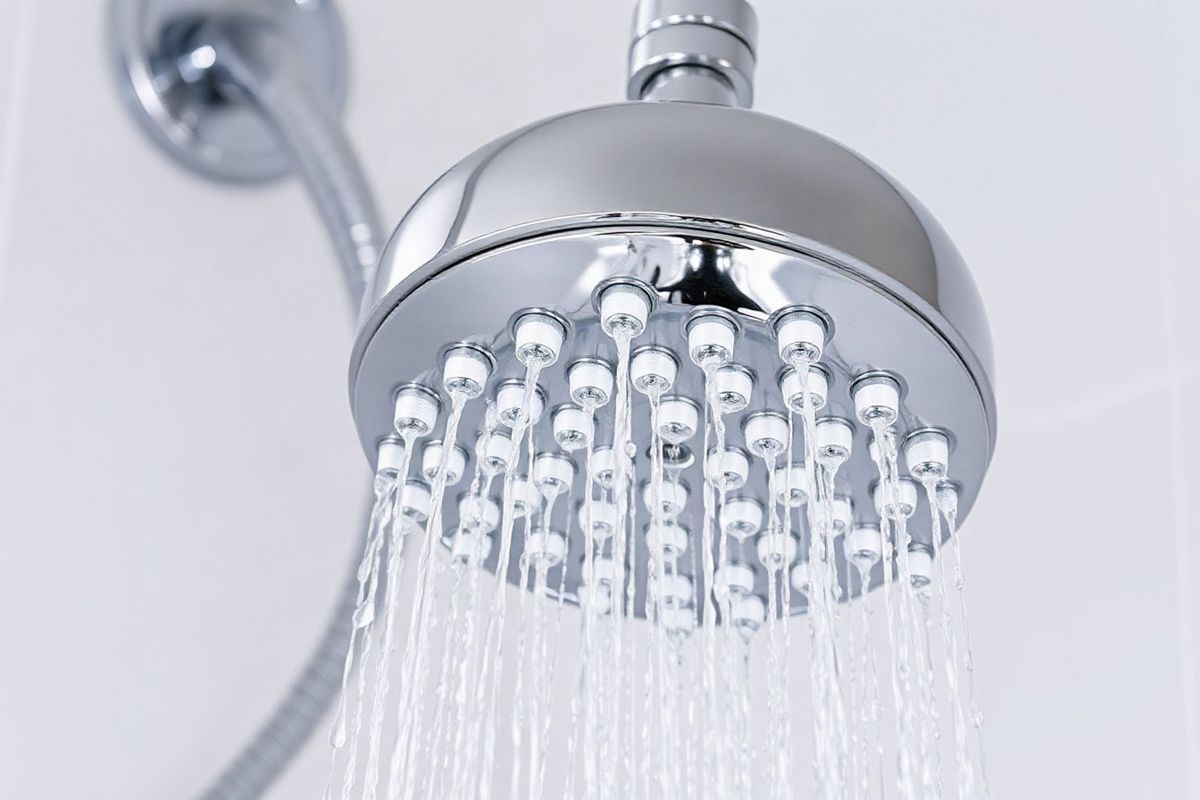
Hansgrohe UK says to soak a removable shower head in a mild citric-acid-based cleaner, rinse thoroughly and avoid abrasives, steam cleaners, chlorine bleach and cleaners containing hydrochloric, formic or acetic acid. That last point matters if you were planning to use vinegar, so check your brand's care page first. Our shower head limescale guide covers the practical steps, and our guide to removing limescale from a toilet bowl handles the other classic hard water hotspot.
Steam iron and coffee machine
The Philips GC1430 manual says to run Calc-Clean about every two weeks, more often in very hard water, and not to pour vinegar into the tank. Our iron plate cleaning guide covers the soleplate. For coffee machines, Philips and De'Longhi both tie descaling to a hardness setting on the machine, so set that first. We have a full walk-through for descaling a De'Longhi coffee machine.
Tools that help (optional)
As an Amazon Associate we earn from qualifying purchases.
- Water hardness test strips: useful if you cannot find a postcode result or want to check what comes out of your own tap. Look for strips that report in mg/l or ppm (or German degrees) and that clearly show the colour bands.
- Citric acid kettle descaler: look for a product that states it is safe for your kettle's material (stainless steel, glass or plastic) and follow its instructions.
- Washing machine and dishwasher descaler: look for one that says it is made for your appliance type and compare the instructions with your manual.
- Scale-reducing jug filter cartridges: the DWI says resin-bead jug filters only affect temporary hardness, so expect less kettle scale and tea scum, not truly soft water.
Frequently asked questions
Which parts of the UK have the hardest water?
According to the DWI map, very hard water is concentrated across eastern England, especially East Anglia and Lincolnshire, with hard water across much of the south and Thames region. Wales, Cornwall, Devon, the North West and most of Scotland are mostly soft. Local supply zones vary, so check your water company's postcode checker.
How do I find out how hard my water is?
Enter your postcode on your water company's checker, which many offer, or ask them directly. Yorkshire Water says it can provide detailed hardness information on request, and Scottish Water has a helpline. Bosch UK also mentions test strips. Check the unit used, as figures may be in mg/l, ppm, clark or German degrees.
Is hard water safe to drink?
Yes. The DWI says UK regulations set no standards for hardness, and Yorkshire Water says neither soft nor hard water is considered harmful to health. The DWI adds that there is limited evidence linking hardness to cardiovascular health. Softened water contains more sodium, so keep an unsoftened tap for drinking, especially for babies and low-sodium diets.
Does hard water damage appliances?
The DWI says scale on heating elements shortens their life and reduces efficiency, and hard water scales kettles, irons and hot water systems. Manufacturers such as Electrolux, Bosch and Philips advise descaling more often in hard water areas. Following your manual's descaling and hardness settings is the main protection.
How often should I descale my kettle?
De'Longhi UK recommends about every month in hard water and about every three months in very soft water. Morphy Richards says no single schedule suits every household and to descale more often if you boil frequently or have hard water. Whichever you follow, descale sooner if you can see scale building up.
Does boiling water remove hardness?
Only part of it. Scottish Water says boiling reduces temporary hardness, which is why scale forms in kettles, while permanent hardness needs a water softener. Boiling therefore does not make hard water soft, and the minerals left behind are what build up as limescale on your element.
Do magnetic descalers and jug filters work?
The DWI says magnetic devices do not soften water, and were designed for continuous industrial flow rather than household use. Jug filters with resin beads only change temporary hardness, so they may cut tea scum and kettle scale but not permanent hardness. For a real change, ion-exchange softening is the established method.
Sources
Every figure and instruction above comes from a page I fetched and read while writing this guide. Manufacturer guidance can change, and the wording here reflects each page as of October 2026. Some company sites block automated link checkers, and a few document addresses (the United Utilities factsheet) returned an error to a command-line check although they loaded when fetched, so if a link fails, search for the title.
- Drinking Water Inspectorate, Water hardness / hard water: five-band summary, no legal hardness limit, WHO 200 mg/l scale remark, effects on appliances, softener and jug filter cautions
- DWI, Map showing the rate of hardness in mg/l as calcium carbonate in England and Wales (PDF, Crown copyright Defra 2009): six official band labels and mg/l ranges; the regional pattern in the table (my reading of the map colours)
- United Utilities, Water hardness factsheet 2024 (PDF): mg/l, clark and German degree for each band; North West not artificially softened; polypropylene-lined kettles
- United Utilities, water quality postcode checker: postcode checker
- Scottish Water, Fact sheet 12: water hardness (PDF): Scottish pattern, helpline, temporary versus permanent hardness, unit conversion
- Thames Water, Water hardness: statement that all water in the Thames region is hard
- Anglian Water, Hard water: postcode checker; East of England likely hard
- Anglian Water, Hard water in our region: your questions answered: "one of the hardest water regions in the UK"
- Yorkshire Water, Let's learn about water hardness: hard water mainly in the east, softer in the west
- Yorkshire Water, Check your water hardness: postcode checker
- Northumbrian Water, Hard water in your area: blended supplies vary; boil only what you need; softener cautions
- Essex & Suffolk Water, Hard water advice booklet (PDF): appliance manufacturers' hard water instructions; unsoftened drinking tap
- Wessex Water, How can I check if my water is hard or soft?: postcode checker
- Dwr Cymru Welsh Water, Water hardness: no regulatory limit; link to area-specific hardness information
- Southern Water, How hard is my water?: hardness depends on local geology
- South West Water, Water quality: postcode search for supply-zone information
- Northern Ireland Water, Water quality results: postcode lookup that includes hardness and dishwasher settings
- Electrolux UK, How to prevent build-up of limescale in the washing machine: washing machine descaling frequency by °dH and cycles per day
- Bosch Home UK, Washing machine care spotlight: descale every three to six months, especially in hard water areas
- De'Longhi UK, How do I descale my kettle?: kettle: monthly in hard water, about every three months in very soft water
- De'Longhi UK, Dedica descaling and cleaning FAQ: coffee machine frequency depends on local hardness; set the descaling rate
- Morphy Richards support, kettle descaling article: no single schedule suits every household; descale more often in hard water
- Philips, Comfort GC1430 series iron user manual (PDF) (no link: the Philips document address returned an error when I re-checked it, so look up your own model's manual): Calc-Clean about every two weeks, more often for very hard water; no vinegar in the tank
- Philips, 3100 series espresso machine manual EP3510/EP3519 (PDF) (no link: the Philips document address returned an error when I re-checked it, so look up your own model's manual): descale when the display prompts; set hardness with the test strip
- Nespresso UK, How to descale a Nespresso machine: every three to four months or 300 capsules
- Bosch Home UK, Dishwasher water hardness setting: hardness setting in ppm, test strips, where to find your figure
- Hansgrohe UK, Descaling your shower head: frequency depends on regional hardness; method and cautions
Last checked: 25 October 2026. The DWI regional pattern in the table is the author's reading of a map dated 2009, and the manufacturer-to-band matching is the author's. Neither is official advice.