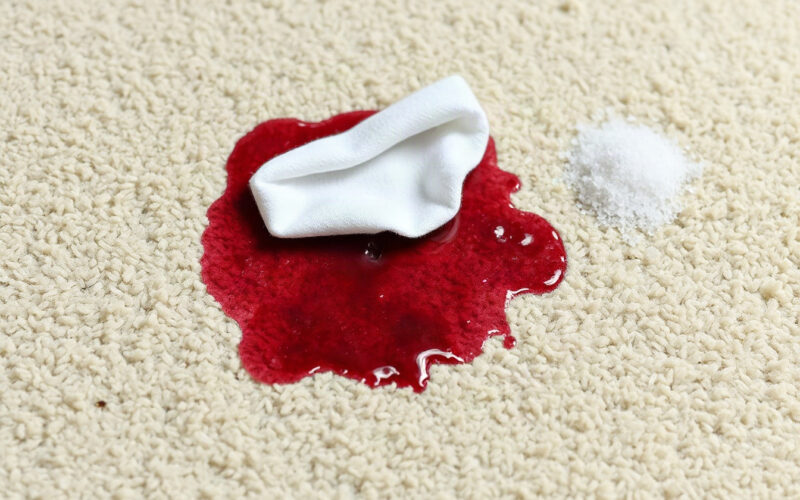
That brown ring inside your favourite mug is back, again, a few days after you scrubbed it. Tea contains tannins, the same compounds that give it its colour, and they cling to ceramic, fabric and carpet fibres. A quick rinse rarely removes them, which is why the ring keeps returning however often you wash up.
Tea stains look alike but behave differently depending on what they are on and how old they are, so start by matching what you see to the likely cause and the right fix.

Match the stain to the fix
| What you see | Likely cause | Start with |
|---|---|---|
| Brown ring at the tea line inside a mug | Tannin film built up from repeated rinsing | Bicarbonate paste, then a soak |
| Brown lines in fine cracks of the glaze | Tea has seeped into crazed glaze | A longer soak, and accept a faint trace may stay |
| Dark film in a teapot or travel flask | Tannin layer in a hard-to-reach space | A soak with a denture tablet or bicarbonate and hot water |
| Fresh splash on clothes | Wet tannin not yet set | Cold water through the back of the fabric |
| Old brown patch on a shirt or tablecloth | Dried tannin, possibly heat-set in a hot wash | Diluted vinegar soak, repeated |
| Pale brown shadow on carpet | Tea carried into the pile and backing | Blot, washing-up liquid solution, then vinegar dab |
Mugs, cups and teapots, easiest fix first
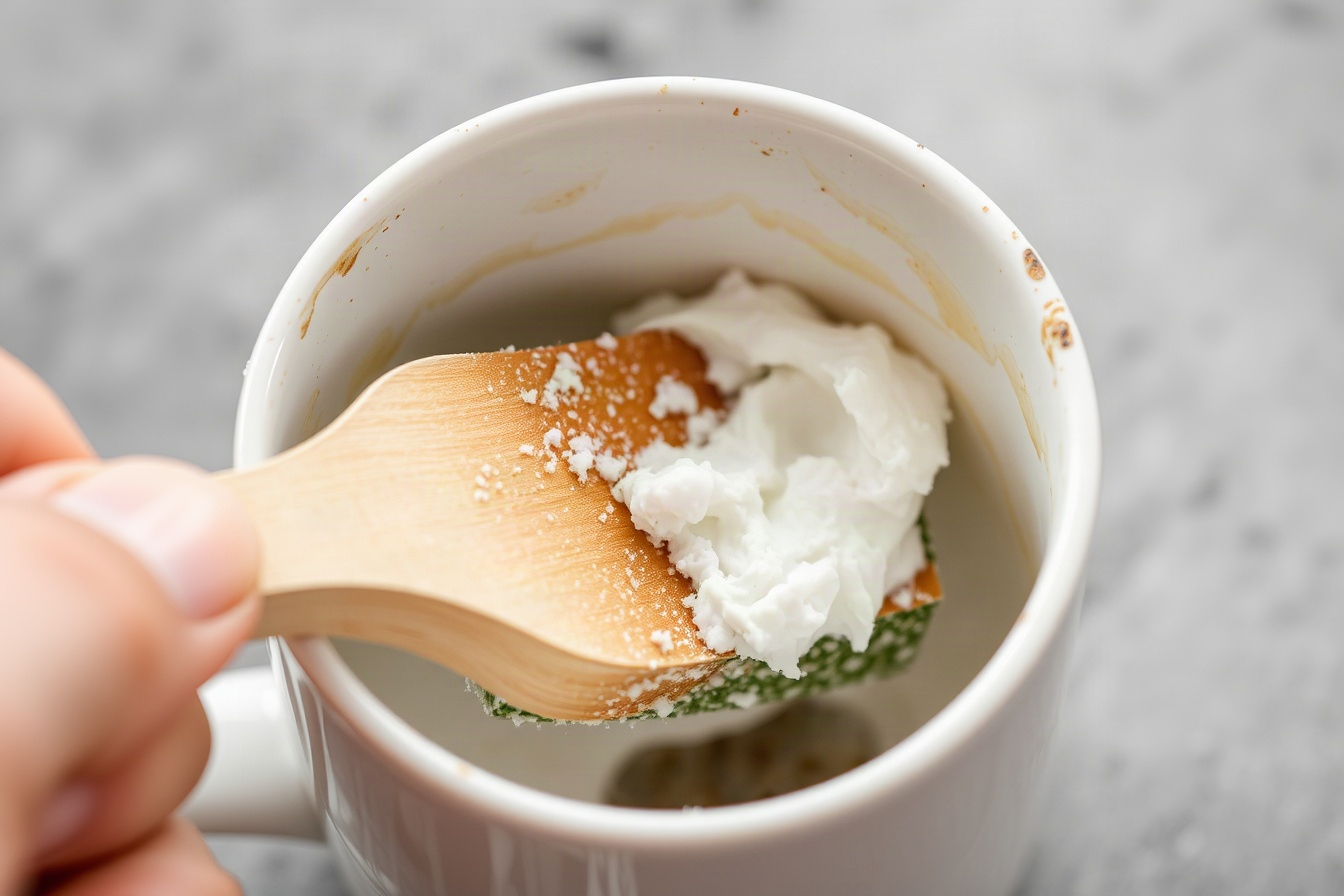
Rung one: bicarbonate of soda paste
- Make a thick paste from bicarbonate of soda and a little water.
- Spread it over the stained area with a damp sponge or cloth.
- Scrub gently in circles. Bicarbonate is only mildly abrasive, so it should lift the tannin film without scratching normal glazed ceramic.
- Rinse thoroughly and repeat if any trace remains.
Rung two: a vinegar or denture tablet soak
For a heavily stained mug, or a whole set at once, soak them in equal parts white vinegar and hot water for 15 to 20 minutes, then wash as normal. Vinegar is acidic and helps loosen tannin, so you rely less on scrubbing. Another option is a denture cleaning tablet dissolved in warm water, which many people use on tea-stained mugs and teapots. Follow the tablet’s packet directions, rinse well and wash afterwards. Do not leave either soak on gold rims or hand-painted decoration for long.
Rung three: a dedicated mug stain remover
If you have a cupboard full of stained cups, a product made for tea and coffee stains saves time. Follow the packet, rinse mugs thoroughly, and keep it away from anything with metallic decoration unless the label says it is safe.
Never combine bleach with vinegar or any other cleaner in the same container or sink. The mix releases toxic chlorine gas, as set out in our list of cleaning products you should never mix. If you want to know how far bicarbonate and vinegar really go together, see whether baking soda and vinegar clean.
The ring builds when mugs are only ever rinsed. Washing with soap each time does more than any amount of occasional scrubbing.
Dishwashers do not always shift tannin build-up on mugs that are rinsed between uses, so a quick paste scrub beforehand helps. Our comparison of dishwasher versus hand washing explains where each wins. If the stain is inside a kettle rather than a mug, that is usually limescale, covered in the kettle cleaning guide.
Tea on clothes and fabric
Speed matters most, because a fresh spill comes out far more easily than one that has dried in.
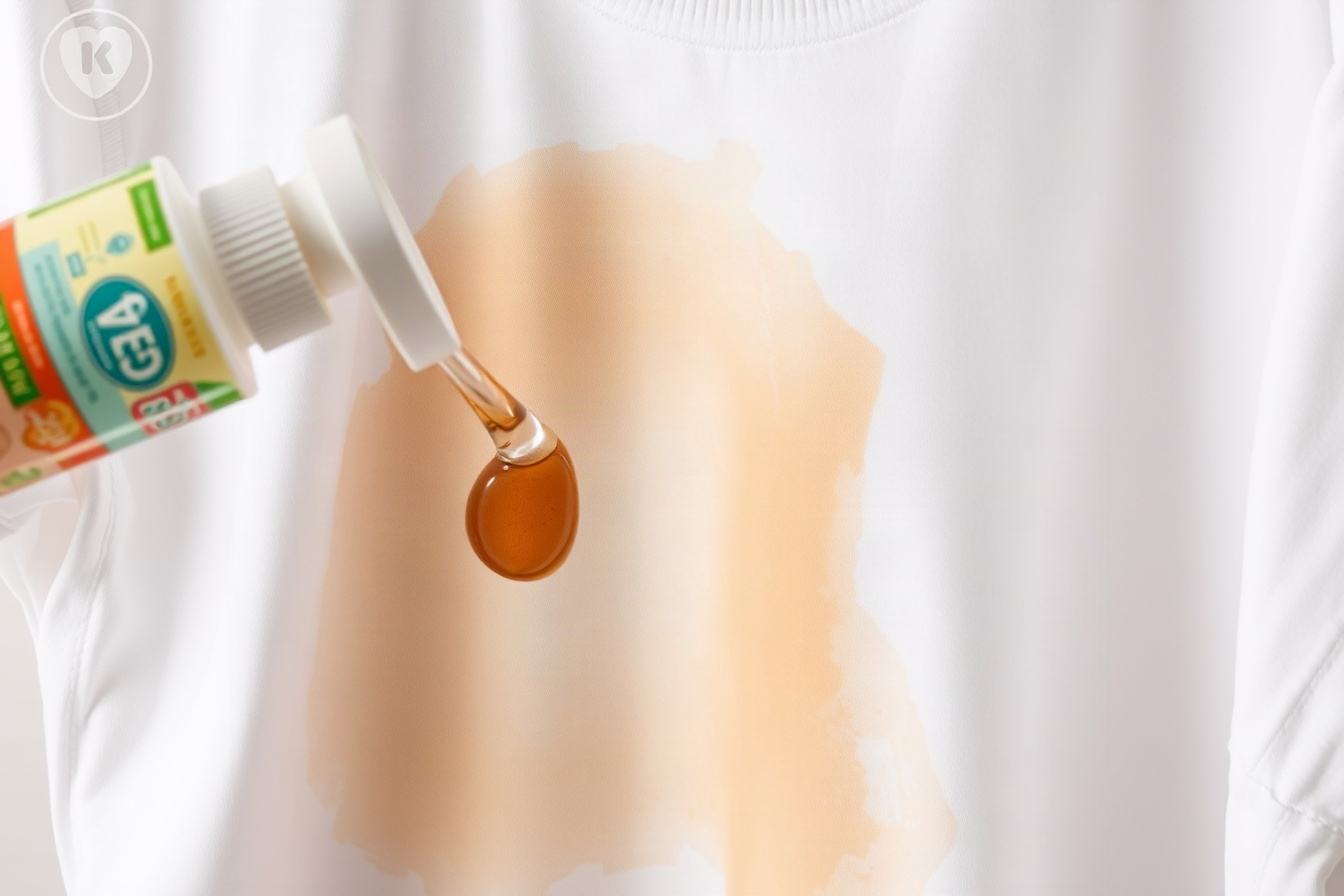
- Rinse the stain under cold running water as soon as possible, working from the back of the fabric so the tea is pushed out, not through.
- Work a small amount of washing-up liquid into the stain and rinse again.
- If the stain has dried in, soak the item in one part white vinegar to two parts water for 30 minutes before washing. Skip this on silk, wool and anything marked dry clean only.
- Check the stain is gone before the item goes through a hot wash, the dryer or an iron. Heat can set any remaining trace.
Tea on carpet
Carpet needs blotting, not rubbing, the same rule that applies to most liquid stains.
- Blot up as much tea as possible with a clean cloth or paper towel, pressing down rather than rubbing, and swap to a clean patch of cloth as it takes up tea.
- Mix a few drops of washing-up liquid with warm water and dab it onto the stain, working from the outside in so it does not spread.
- Blot with a clean, dry cloth to lift moisture and loosened stain.
- If discolouration remains, dab with one part white vinegar to two parts water, then blot dry. Test on a hidden corner first.
Take care not to soak the carpet, because water that reaches the backing can leave a ring when it dries. For a wider clean once the spot is treated, see the carpet cleaning guide or using a Vax carpet cleaner. Tea in plastic containers is a related problem, covered in cleaning Tupperware stains.
When to stop and get help
- Antique, hand-painted or gold-rimmed china. Soaks and abrasives can dull the decoration. Use only a gentle wash with mild soap, and speak to a specialist if it is valuable.
- Large or repeated spills on wool carpet or a rug. Water and acid-based solutions can damage natural fibres. A professional carpet cleaner is a safer call.
- Dry clean only fabrics. Silk and similar fabrics should go to a dry cleaner, with the stain pointed out and not rubbed.
- A stain that is fading the fabric or roughing the pile. More scrubbing causes more harm than the tea did.
Choosing what to buy
Featured pick: a mug and cup stain remover. A powder or tablet made for tea and coffee tannin on crockery. Look for one that says it is suitable for ceramic and glass, and check the label for metal trim or hand-painted designs. It suits a whole set of stained cups. Rinse mugs thoroughly afterwards. As an Amazon Associate we earn from qualifying purchases.
Alternative: bicarbonate of soda in a bulk pack. The cheapest option, useful for the paste method and for general kitchen cleaning. Keep it dry and use a soft sponge, not a scourer, on glaze.
Alternative: denture cleaning tablets. A small pack lasts a long time and suits teapots and flasks where you cannot scrub. Follow the packet, use only on non-metallic surfaces, and rinse well before use.
Tea stain troubleshooting questions
Does bleach remove tea stains from mugs?
It can, but it is rarely necessary. Bicarbonate or a soak does the job without the fumes, and repeated bleach can dull some glazes and harm metallic trim. If you do use it, follow the label, rinse thoroughly and never mix it with vinegar or other cleaners.
Does washing-up liquid remove tea and coffee stains?
It helps with fresh tea or coffee on fabric and mugs, because it lifts the oils and sugars around the stain. For tougher or older marks, bicarbonate or a vinegar soak will do more of the actual lifting.
Is vinegar safe on all mugs?
On most glazed ceramic, glass and stainless steel, yes. Do not leave it on gold or metallic rims, hand-painted decoration or old, crazed china, and rinse well so there is no taste left behind.
Why is my dishwasher not removing tea stains from my mugs?
A standard cycle does not always shift a tannin film, especially on mugs that are only rinsed between uses. A paste scrub or soak beforehand usually clears what the dishwasher leaves.
Can you use baking soda on all mug types?
It is safe on most ceramic, glass and stainless steel because it is only mildly abrasive. Take extra care with delicate hand-painted or gold-rimmed pieces, where a gentle soak is kinder than scrubbing.
How do you stop tea stains building up on mugs?
Wash mugs with soap each time rather than just rinsing, and give them an occasional paste scrub before a ring forms.
How do I clean a stained teapot or travel flask?
Fill it with hot water and a denture tablet, or a spoonful of bicarbonate, leave it for the time on the packet or an hour, then rinse. Use a bottle brush for narrow necks, and check the maker’s advice for insulated flasks.
Can old tea stains come out of clothes after washing and drying?
Often, but it takes more effort. Soak in diluted vinegar for 30 minutes, wash, check, and repeat before the dryer. A stain that has been set by many hot washes may leave a faint shadow.