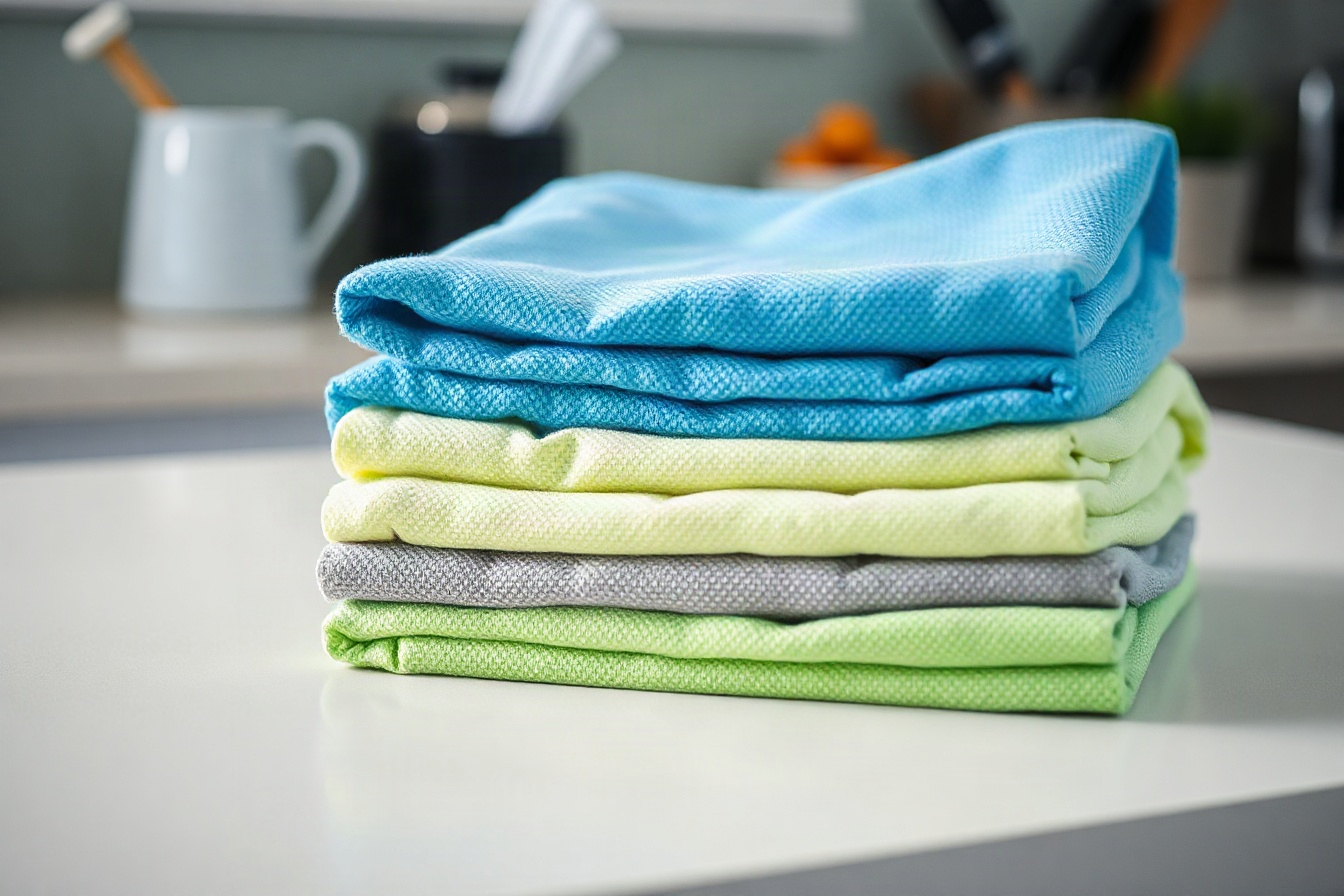
Most “best microfibre cloths” lists rank cloths by star ratings and skip the two things that decide whether a cloth works: what job it is built for, and how you wash it. This guide is organised by job (general cleaning, glass and polishing, car, dusting), explains GSM and weave from maker and detailing sources, then covers laundering and hygiene.
Our short answer
Default pick for most homes: the e-cloth General Purpose Cloth. It is a general-purpose cloth that the maker says works with water alone, it is machine washable, and it has been reviewed by UK outlets, including a lukewarm verdict from Auto Express when used on car paint.
If your main job is windows and mirrors: the Minky M Cloth Glass & Window, a tightly woven cloth the maker says works wet or dry.
If your main job is the car: the Gtechniq MF1 ZeroR Microfibre Buff Cloth, a 300 GSM short-pile cloth the maker designed for removing residue from paintwork, with the Auto Finesse Superior Waffle Microfibre Cloth for windscreens and car glass.
As an Amazon Associate we earn from qualifying purchases. The links go to Amazon UK search results for the exact product name, so check that the listing matches before you buy. We do not quote prices because they change.
How we chose these cloths
This is a research round-up, not a lab test. We did not wash, scratch or time any of these cloths ourselves. We read the maker pages for each product, UK reviews where they exist, specialist detailing guides for the GSM and weave explanations, and the published studies on hygiene and fibre shedding. Where a number or claim is the maker’s own, we say so. Everything we used is listed under Sources at the end, with the date we last checked it.
We only included products we could confirm exist and are sold in the UK from at least two sources. One round-up we read, Best Products Reviews, ranks generic 10 to 100 packs from brands such as MR.SIGA, AIDEA and HOMEXCEL, but says its scores are algorithmic and based on customer reviews, so we treat it as a map of what is popular, not evidence of quality. Cheap bulk packs are fine for rough jobs, and the GSM and washing sections below should help you judge them.
The five picks at a glance
| Product | Best for | Key detail from the maker | Caution |
|---|---|---|---|
| e-cloth General Purpose Cloth (default pick) | Worktops, tiles, appliances, everyday wipe-downs | 80% polyester, 20% polyamide, 32 x 32 cm; machine wash up to 90C; 1-year or 100-wash promise | Auto Express found it left fine scratches on car paint and struggled with heavy dirt |
| Minky M Cloth Glass & Window | Windows, mirrors, glass | 80% polyester, 20% polyamide, about 40 x 50 cm; use wet or dry; wash at 40C | No conditioner or bleach; wash separately; test first |
| Gtechniq MF1 ZeroR Microfibre Buff Cloth | Car paint: removing polish, wax and quick detailer residue | 300 GSM, 70/30 polyester and polyamide; wash at 30C | Short pile is for removal, not soaking up water |
| Auto Finesse Superior Waffle Microfibre Cloth | Car glass, inside and out | Waffle weave, 600 x 400 mm; wash below 30C; never tumble dry | Maker does not state a GSM; designed for spray-on cleaners |
| Minky M Cloth Premium Microfibre Dusting Glove | Dry dusting blinds, frames, shelves, screens | High-density microfibre, used dry; wash at 40C | Fine for dust only; not a wet-cleaning cloth |
GSM and weave, explained without the jargon
Two numbers and one word on a pack tell you most of what you need: the GSM, the polyester to polyamide ratio, and the weave. Most published guidance comes from car detailing, so we lean on that and say so. The e-cloth and Minky pages we read give the material split but no GSM.
What GSM actually tells you
GSM means grams per square metre: the dry weight of the fabric. Auto Finesse says a higher GSM generally means a softer, more absorbent towel that suits drying and finishing, while lower GSM cloths are less absorbent and better for heavier cleaning, and it suggests staying at or above roughly 250 GSM for automotive work. Detailing Shed puts approximate bands on it. Treat them as a rough guide, not a standard.
| GSM band (Detailing Shed) | Described as | Suits |
|---|---|---|
| 245 to 300 | Thin, fast drying | Wheels, arches, door shuts, glass |
| 330 to 380 | Mid-weight all-rounder | Quick detailer, sealant removal, general work |
| 420 to 500 | Plush and soft | Polish and wax removal, dark paint |
| 800 to 1200+ | Ultra-plush | Drying towels, which it says typically start around 600 GSM |
The same article adds a useful warning: a well-made 350 GSM towel can outperform a poorly made 500 GSM one. So GSM is a clue, not a quality score. The Garage Toolbox, a UK car-care round-up, says cloths under 280 GSM tend to smear rather than absorb, but shows no test, so read it as a rule of thumb.
Blend, weave and edges
- Blend. Automotive microfibre is typically polyester with polyamide (nylon). Auto Finesse gives 70:30 or 80:20 as common ratios. Detailing Shed says polyester adds structure and cleaning bite, polyamide adds softness and absorbency and costs more, which is why premium plush towels are usually 70/30. For comparison, the e-cloth and Minky glass cloths are listed as 80/20.
- Waffle weave. A grid of recessed pockets. Auto Finesse says the pockets trap larger debris away from the surface, and Detailing Shed recommends waffle weave for glass and mirrors because it grips cleaner residue without shedding lint.
- Short, closed-loop pile. The fibres act like tiny hooks. Auto Finesse recommends this construction for deep cleaning and for removing polish, wax or coating residue.
- Deep or plush pile. Softer and more absorbent. Suited to dry dusting delicate surfaces, final buffing and soaking up water. Detailing Shed notes that long fibres carry grit away from paint but are less precise at removing residue.
- Edges. Detailing Shed recommends edgeless cloths (laser-cut or sealed) for anything touching paint, because a stitched border can be harder than the microfibre and mark it. It says bordered cloths are fine for wheels and arches.
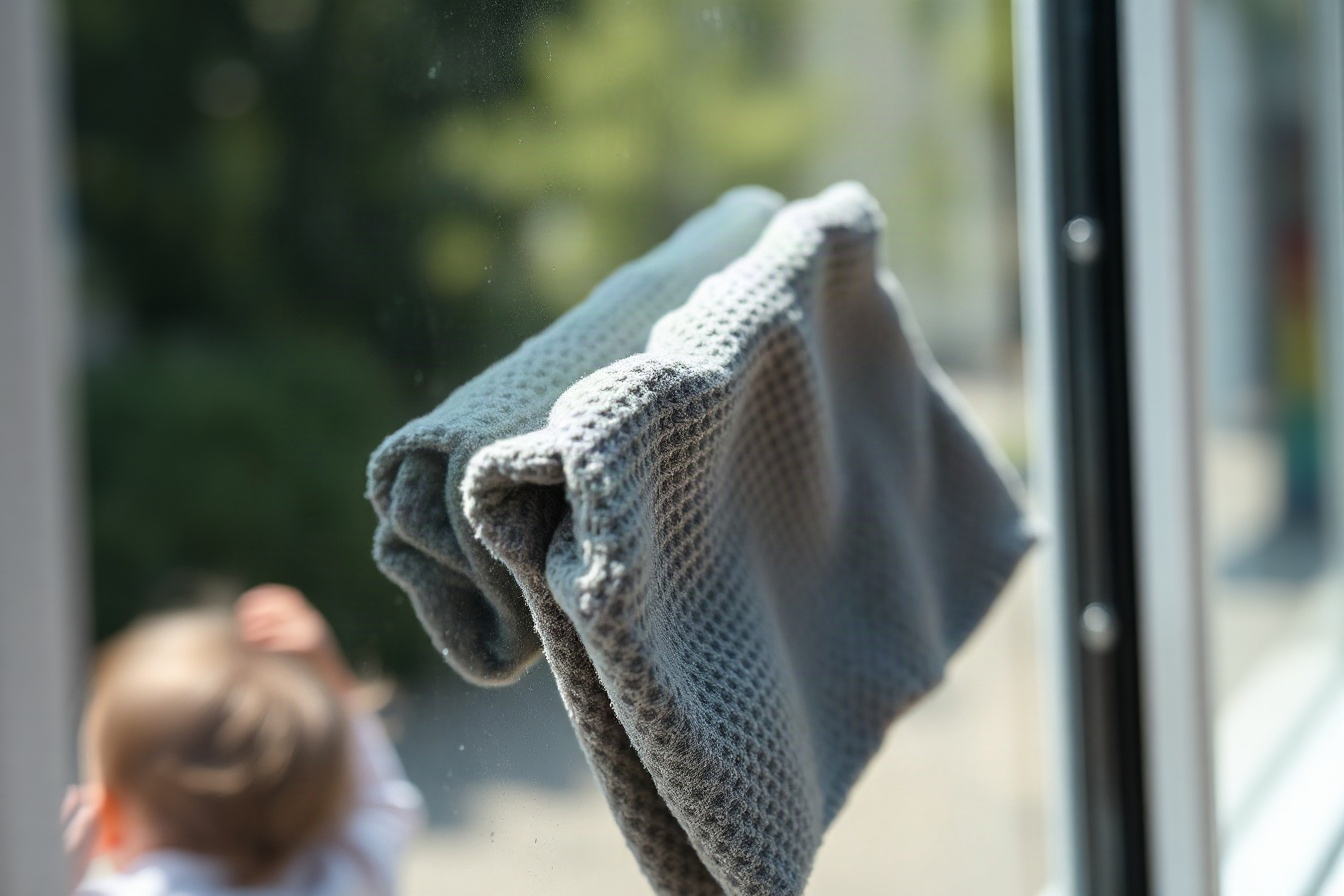
For home cleaning you do not need to chase a number. Match the cloth to the job, keep it clean, and replace it when it stops absorbing. Our microfibre versus cotton comparison covers when a plain cotton cloth is still the better tool, such as greasy jobs and very hot washes.
General cleaning: the default pick
e-cloth General Purpose Cloth
Who it suits: anyone who wants one cloth for worktops, tiles, appliances and the occasional glass job. What it is: according to the maker’s UK page, an 80% polyester, 20% polyamide cloth measuring 32 x 32 cm. The maker says it traps grease, grime and fingerprints using water alone, to be used damp and rinsed between tasks. It is backed by a “1-year or 100-wash promise”, and a parenting blogger’s review reports using it on windowsills and door frames and praises its absorbency. That is why the e-cloth General Purpose Cloth is our default.
Honest limitation: do not expect it to do everything. Auto Express reviewed the e-cloth Auto range, found the wetted general purpose cloth mostly lifted dust but left tiny scratches on paint where it dragged dirt, and gave it two out of five. That is a car-paint verdict, not a kitchen one, but it is a reminder to keep it off paintwork and rinse it well.
Glass and polishing
Minky M Cloth Glass & Window
Who it suits: people cleaning windows, mirrors and shower screens by hand. What it is: a UK supermarket listing describes it as 80% polyester, 20% polyamide, about 40 x 50 cm, with an anti-bacterial finish, and usable “wet or dry”. Minky’s own page claims 700,000 fibres per square centimetre, about seven times a standard microfibre cloth, and calls it smear-free and lint-free. Those are the maker’s claims, which we could not check, and the page gives no GSM.
How to use it: our streak-free window guide suggests a damp cloth first, then a second dry cloth to buff, and a separate set kept only for glass. The Minky M Cloth Glass & Window suits that two-cloth method well, since it is large enough to fold into a clean dry face for the buff. Caution: Minky says to wash it separately at 40C, with no conditioner or bleach, and to test it on a hidden patch first. If you would rather use a squeegee for big windows, read the best way to clean windows and what window cleaners use.
e-cloth also sells a Glass and Polishing Cloth, which its page says is for clean, damp surfaces. We found no independent review, so it is not a pick.
Car cleaning and polishing
Gtechniq MF1 ZeroR Microfibre Buff Cloth
Who it suits: anyone applying and removing polish, wax, ceramic coating or quick detailer. What it is: Gtechniq’s product page lists 300 GSM, 70% polyester and 30% polyamide, with ultra-fine microfibre at 0.13 denier, for buffing residue off delicate surfaces. The Garage Toolbox lists the 3-pack as edgeless and notes its short, tight pile is built for removal rather than absorbency. That is exactly the “short closed-loop pile” described above.
Honest limitation: it is not a drying towel, and a 300 GSM cloth will not soak up a wet car. Use a plush, high-GSM towel for that (Auto Finesse lists 1200 GSM for its Aqua Deluxe XL and 800 for its Ultra Plush, for example). The Gtechniq MF1 ZeroR Microfibre Buff Cloth is a sensible, specific choice if you already own detailing products.
Auto Finesse Superior Waffle Microfibre Cloth
Who it suits: car owners who want clear windscreens and side windows. What it is: the maker’s page describes a waffle-weave cloth for glass, 600 x 400 mm, designed for spray-on cleaners, whose textured weave traps grime in its pockets for a streak-free finish. It does not state a GSM. It is the sort of weave Detailing Shed recommends for glass.
Honest limitation: the maker says to wash it below 30C with a fast spin, apart from short-pile cloths and drying towels, and to hang it to dry: “Never tumble dry or hot wash”. That is stricter than the household brands. It also needs a spray glass cleaner. For the cabin, our deep clean guide for a car interior covers what to use on each surface.
Dusting
Minky M Cloth Premium Microfibre Dusting Glove
Who it suits: anyone dusting blinds, picture frames, shelves, door frames and screens, where a flat cloth is awkward. What it is: according to Minky’s page, a glove made from high-density microfibre with long, soft fibres, to be used dry. The Sainsbury’s listing gives the glove as 88% polyester and 12% polyamide. Both say wash at 40C, separately, with no conditioner or bleach, and test on an inconspicuous area first.
Honest limitation: it is a dry tool, and the polyamide share is lower than the glass cloths above, so it is not the one for wet jobs. For TVs and laptops, check the device maker’s advice first, which we summarise in our guides to cleaning a TV screen and cleaning a laptop screen.
What to avoid when buying
- Rough or stitched edges on cloths for paint or glass. The Garage Toolbox and Detailing Shed both warn that coarse edges and thick sewn labels can scratch soft paint.
- Packs with no material split or washing instructions. Treat them as cloths for rough jobs.
- Mixing one cloth for everything. Both Minky and Detailing Shed advise separate cloths for separate zones, such as bathrooms versus other rooms, or glass versus paint.
- Leaning on anti-bacterial claims. Minky and e-cloth make them, but they are maker claims, and washing is what keeps a cloth hygienic.
Washing microfibre cloths without ruining them
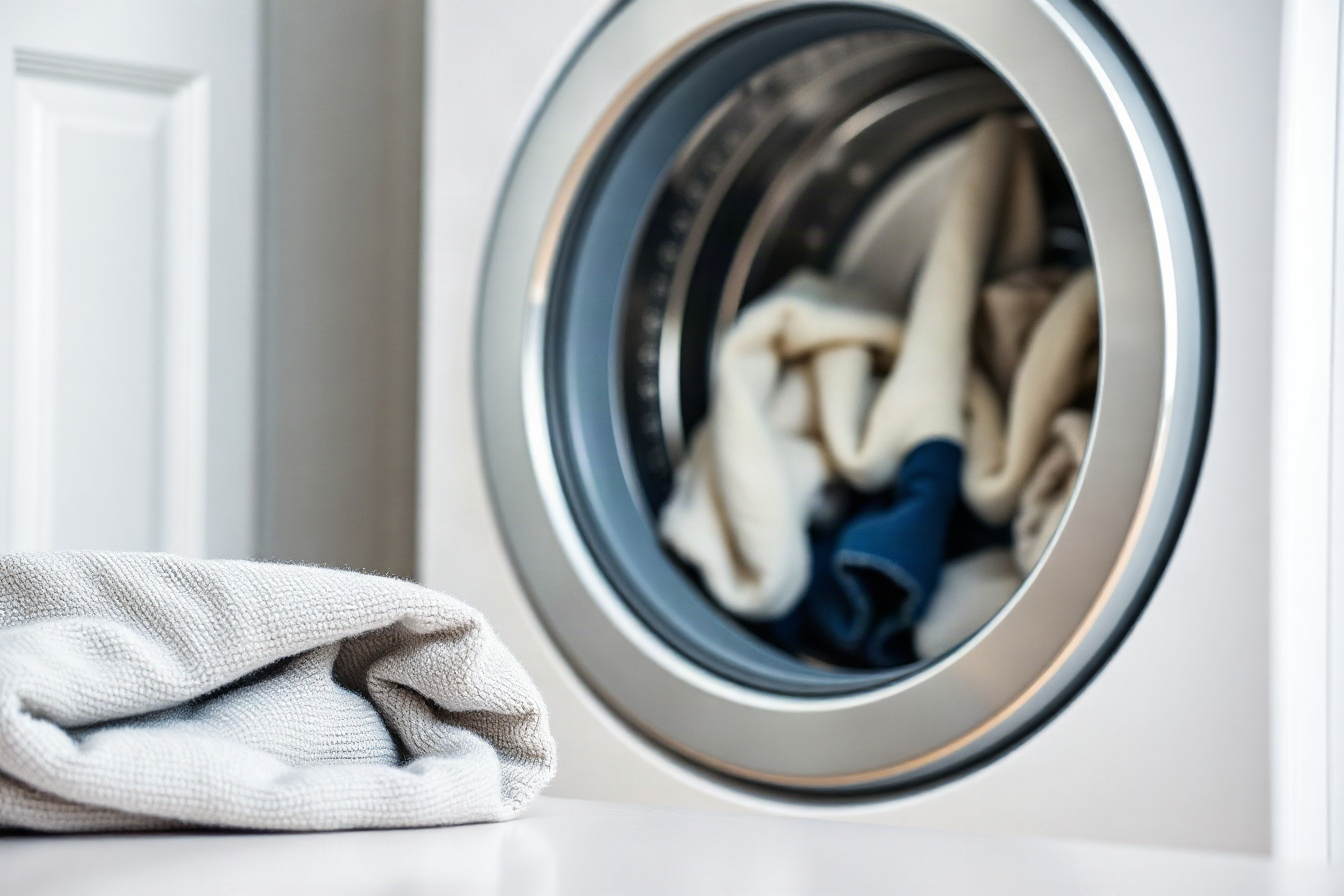
Washing is where most microfibre cloths die. The advice is consistent on the big points and differs on temperature, which is worth understanding before you load the machine.
The rules every source agrees on
- No fabric softener or dryer sheets. Gtechniq says softener leaves a waxy residue that clogs the fibres, Auto Finesse says it coats them, and HGTV says it makes fibres repel water. If it happens by accident, e-cloth says to rewash with a little detergent on the hottest setting. Our guide to where fabric softener goes is useful if your machine dispenses it automatically.
- No bleach. Minky, e-cloth and HGTV all say to avoid it, and HGTV says it weakens the fibres.
- Wash apart from cotton and other lint-makers. Detailing Shed says cotton lint embeds permanently, and HGTV says lint sticks to the fibres.
- Use a small amount of mild liquid detergent. Auto Finesse and Gtechniq both say to avoid powders, which can leave particles, and Gtechniq suggests about half the usual dose.
- Dry on low heat or air dry. Gtechniq, Auto Finesse and HGTV all warn that high heat can melt or damage the fibres.
Where the makers disagree: temperature
| Source | Washing temperature | Drying |
|---|---|---|
| e-cloth (General Purpose, Glass & Polishing) | Up to 90C weekly; boiling in plain water also suggested for sanitising | Tumble or hang dry (General Purpose); hang dry (Glass & Polishing) |
| Minky (Glass & Window, Dusting Glove) | 40C, wash separately | Not stated on the pages we read |
| Gtechniq (MF1 product page) | 30C, separate wash | Air dry or low heat |
| Auto Finesse | Below 30C, liquid detergent | Air dry; avoid tumble drying |
Follow the label of the cloth you own. If it has none, a lukewarm or 30 to 40C wash with a little liquid detergent is the safer middle ground, and it matches the advice in our hot versus cold water guide that hotter is not always better. When a cloth beads water instead of absorbing it, Gtechniq suggests a vinegar-only restoration wash, and says to replace it if it still beads afterwards. Gtechniq also claims cloths can last over 400 washes with proper care, while e-cloth backs its own with a 100-wash promise. These are makers’ claims.
A simple routine
- Rinse and wring after every use, as e-cloth advises, so grit and food do not dry into the fibres.
- Keep a dirty-cloth pile separate from the clean one, and group by job (glass, bathroom, kitchen, car).
- Wash when you have a small load, with liquid detergent and no softener.
- Bin any cloth that has been dropped on grit, used on heavy chemicals, or used for ceramic coatings or solvent-based tar and glue removers. Auto Finesse says residues and grit are hard to remove fully.
Hygiene: what the research says about germs and microfibre
Microfibre is often sold as germ-killing. The research is more careful than that.
- In a hospital study by Diab-Elschahawi and colleagues (2010, abstract on PubMed), microfibre cloths gave the best results when new. After repeated reprocessing at 90C for 5 minutes, cotton showed the best overall efficacy. The authors recommend strict, well-defined cleaning protocols.
- A 2015 study in the American Journal of Infection Control by Trajtman and colleagues (abstract on ScienceDirect) found microfibre removed more Clostridium difficile spores from a ceramic surface than cotton, and transferred fewer to following surfaces. It was a laboratory test on one organism, not a guarantee about your kitchen.
The practical message is that microfibre is good at picking germs up, but it does not kill them, so a dirty cloth just moves them around. Keep separate cloths for bathrooms and food areas. The Homes & Gardens piece on Minky cloths also advises keeping bathroom cloths apart from other cloths. For kitchens, our post on whether kitchen sponges are dirty explains why cloths and sponges both need regular washing or replacing.
The microplastic trade-off
Microfibre is plastic, and washing releases fibres. A 2021 PLOS ONE study of 37 apparel textiles found shedding varied hugely, from 9.6 to 1,240 mg per kg per wash, and that lint traps in washing machines retained up to 90% of polyester fibres. A separate study in Environmental Science and Pollution Research found fleece fabrics shed the most and that detergent increased shedding for most fabrics tested. Both tested clothing fabrics, not cleaning cloths, so they show the principle, not the rate. Fuller loads, a fibre-catching filter or bag, and keeping cloths for as long as they perform all help.
Questions people ask about microfibre cloths
What GSM is best for a microfibre cleaning cloth?
There is no single best figure. Auto Finesse suggests at least about 250 GSM for car work, and Detailing Shed puts 245 to 300 at thin cloths for glass and wheels, 330 to 380 as an all-rounder, and 420 to 500 as plush for polish removal. A well-made lower-GSM cloth can beat a poor heavier one.
Can you use microfibre cloths on glass without streaks?
Yes, if the cloth is clean and free of softener residue. Use a damp cloth to wipe, then a second dry cloth to buff, and keep a set only for glass. Our window guide recommends this two-cloth method. Waffle weave cloths are often recommended for glass because the pockets hold cleaner residue.
Can I wash microfibre cloths with towels?
No. Detailing Shed says cotton lint embeds permanently in microfibre, and HGTV advises washing microfibre alone. Wash them with other microfibre, in a small load, with liquid detergent and no softener. Separate glass cloths from heavily soiled kitchen or car cloths.
How hot can I wash microfibre cloths?
It depends on the cloth. e-cloth says up to 90C, Minky says 40C, and Gtechniq and Auto Finesse say about 30C or below. Follow the label on your own cloth. If there is none, use a lukewarm wash and air dry or tumble on low.
Do microfibre cloths kill bacteria?
No. They capture and remove dirt and germs from the surface rather than killing them. Studies suggest microfibre can remove more than cotton when new, but a dirty cloth can spread germs. Anti-bacterial claims on packs are maker claims. Wash cloths regularly and use separate ones for bathrooms.
Why are my microfibre cloths smearing or not absorbing?
The usual cause is residue from fabric softener, or detergent that was not rinsed out. e-cloth says to rewash with a little detergent on the hottest setting its cloth allows if softener was used, and Gtechniq suggests a vinegar-only wash. If the cloth still beads water, replace it.
Sources
Last checked: 14 November 2026. Manufacturer guidance can change, so check the current page before relying on it.
- https://uk.e-cloth.com/products/gpi-general-purpose-cloth: e-cloth General Purpose Cloth page: material, size, care, promise.
- https://uk.e-cloth.com/products/glpc-glass-polishing-cloth: e-cloth Glass and Polishing Cloth page: use and care.
- https://uk.e-cloth.com/products/4cp-general-purpose-cloths-5: e-cloth General Purpose 4-pack page: care and surface claims.
- https://www.autoexpress.co.uk/accessories-tyres/41035/e-cloth-auto-range-review: Auto Express review of the e-cloth Auto range.
- https://mummyslittlestars.com/e-cloth-general-purpose-kitchen-cloths-review/: Parenting blog review of e-cloth cloths.
- https://www.sainsburys.co.uk/groceries/product/minky-m-cloth-glass-window: Retailer listing for Minky M Cloth Glass & Window.
- https://www.minky.com/m-cloth-glass-and-window.html: Minky page for Glass & Window cloth.
- https://minky.com/products/mcloth-dusting-glove: Minky page for the Dusting Glove.
- https://www.sainsburys.co.uk/groceries/product/minky-m-cloth-premium-microfibre-dusting-glove: Retailer listing for the Dusting Glove: composition and care.
- https://www.homesandgardens.com/solved/ive-swapped-disposable-cleaning-cloths-for-gamechanging-minky-cloth: Homes & Gardens on Minky cloths: use and care.
- https://gtechniq.com/shop/auto/accessories/mf1-zeror-buff-cloth/: Gtechniq MF1 ZeroR page: GSM, blend, use.
- https://gtechniq.com/how-to-clean-microfiber-cloths/: Gtechniq washing guidance.
- https://thegaragetoolbox.co.uk/best-microfibre-cloths-for-cars-uk/: UK car-cloth round-up: edges, GSM rule of thumb.
- https://www.autofinesse.com/products/superior-waffle: Auto Finesse Superior Waffle page.
- https://www.autofinesse.com/blogs/car-detailing-guides/what-microfibre-towel-do-i-need: Auto Finesse guide: GSM, weave, blends, washing.
- https://detailingshed.com.au/blogs/articles/complete-guide-microfibre-towels: Detailing Shed guide: GSM bands, weave, edges, washing.
- https://www.hgtv.com/lifestyle/clean-and-organize/how-to-wash-microfiber-cloths: HGTV washing guidance.
- https://www.bestproductsreviews.co.uk/best-microfibre-cloths: Popular multipack round-up (algorithmic scores).
- https://pubmed.ncbi.nlm.nih.gov/20123151/: Diab-Elschahawi et al. 2010 abstract: cloth decontamination and reprocessing.
- https://www.sciencedirect.com/science/article/abs/pii/S0196655315001479: Trajtman et al. 2015: C. difficile spores, microfibre vs cotton.
- https://journals.plos.org/plosone/article?id=10.1371/journal.pone.0250346: Vassilenko et al. 2021 PLOS ONE: laundry fibre shedding.
- https://link.springer.com/article/10.1007/s11356-017-0528-7: Environmental Science and Pollution Research: fibre shedding from textiles.