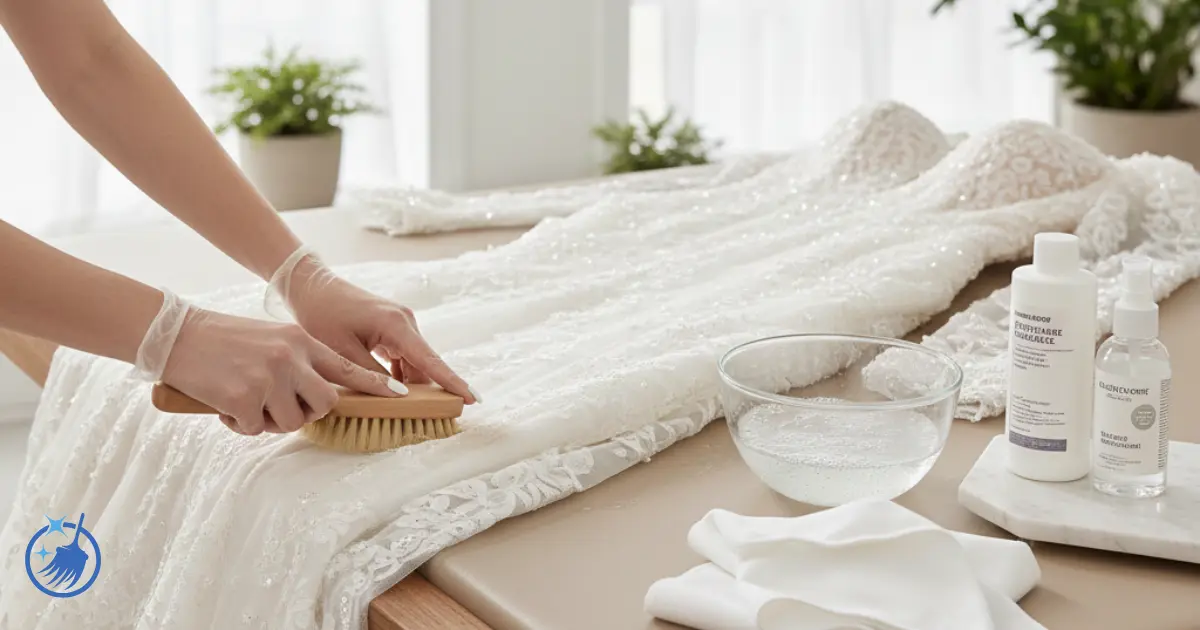
Most duvets should be washed, not dry cleaned. Check the care label first. If it shows a wash symbol (usually 30 to 40°C), machine-wash it at home or at a launderette with a large enough drum, a little non-bio detergent and no fabric softener, then dry it completely with a few tennis balls to keep it fluffy. For feather and down in particular, dry cleaning is often the worse choice, because traditional solvents can strip the natural oils from the down and leave residue in a filling you then sleep against.
That is the short answer. Below, the five realistic ways to clean a duvet are compared side by side, followed by the detail for each, how to dry one without ruining it, and a verdict on which route suits which duvet.
Disclosure: Cleaners Guide is a participant in the Amazon Associates programme, so if you buy through links on this page we may earn a small commission at no extra cost to you. It never changes our recommendations, we suggest products because they work and we point out cheaper options where they do the same job. Prices and availability change, so always check the current price before buying.
Five ways to clean a duvet, compared
| Method | Best for | Effort | Risk |
|---|---|---|---|
| Home washing machine | Singles and doubles that fit a big drum, label allows washing | Medium. Washing is easy but drying takes hours | Clumping and mould if not dried fully |
| Launderette front-loader | Kings, super-kings and any duvet too big for your machine | Medium. Travel plus a couple of cycles | Under-drying. Use the dryer until completely dry |
| Hand-wash in the bath | Small or delicate duvets, or if no large machine is nearby | High. Heavy and slow to rinse and dry | Water-logged filling that takes ages to dry |
| Dry cleaning or wet cleaning | Wool, silk and “dry clean only” labels | Low for you. Higher cost | Solvent residue on down, and cost |
| Airing and spot cleaning | Between washes, and for non-washable wool or silk | Low | Does not remove deep-down sweat and skin cells |
The label is the boss. A wash-tub symbol means you can machine-wash, a circle means dry clean only, and a crossed-out tub means do not wash. When the label genuinely says dry clean only (some silk-filled and certain wool duvets), respect it. Otherwise, washing is almost always the right call. Prices for dry cleaning vary by cleaner, size and filling, and it costs more than washing at home, so ask for a quote (the same by-the-item logic applies as in our guides to dry cleaning a coat or curtains).
Washing at home or at the launderette
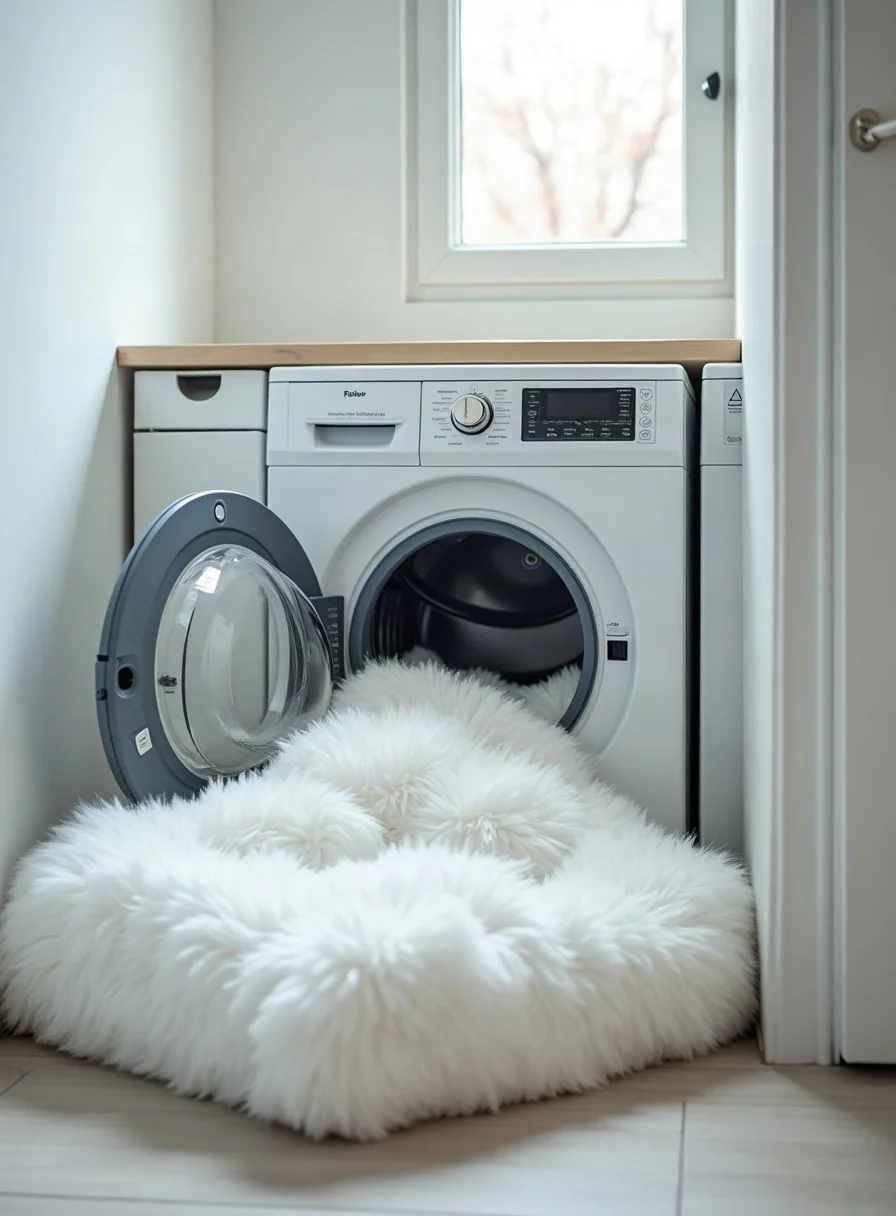
Washing wins for most duvets because it is cheaper, and for feather and down it is kinder to the filling when the label allows it. The main constraint is drum size. A duvet needs room to move, and a cramped drum means a badly cleaned, clumped duvet.
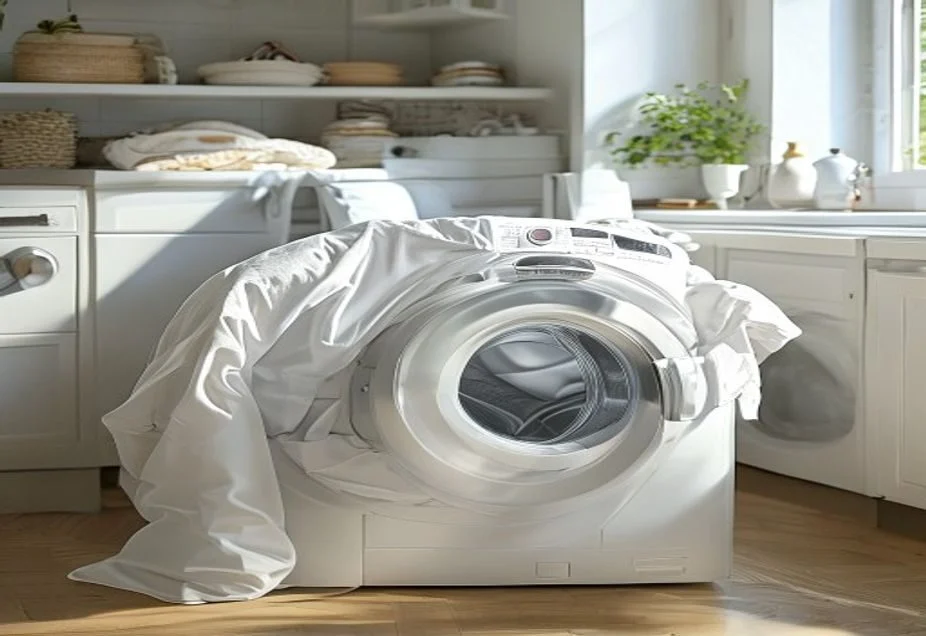
- Check the label and the drum size. A single fits many home machines, but doubles, kings and super-kings usually need a drum of roughly 9kg or more, or a large launderette washer. Check your machine’s manual for its bedding allowance.
- Patch-treat any stains first with a little detergent dabbed on, and check for holes or loose seams. Wash a leaking feather duvet and you will have feathers everywhere.
- Use a small amount of non-bio liquid detergent. No powder (it can leave residue in the filling), no fabric softener (it coats and clumps feathers and reduces absorbency), no bleach.
- Wash warm and gentle: 30 to 40°C on a gentle or bedding cycle. An extra rinse helps flush all the detergent out of the filling.
- Add a second spin to remove as much water as possible. A sodden duvet takes far longer to dry, and long damp time is what breeds mould.
If your machine is too small, do not force it. A jammed drum will not clean and can damage both duvet and machine. Never wash a duvet in a top-loader with a central agitator, which tangles and tears it. It is also worth giving the machine itself a clean first if it has been smelly, and our guides on the washing machine drum and drum clean cycles explain how.
At the launderette
A launderette’s large front-loader is the sensible answer for kings and super-kings, and often for doubles with a thick filling. Bring your own non-bio detergent and a few tennis balls for the dryer, check the machine’s capacity label, and use the dryer until the duvet is completely dry through the core, which can take more than one cycle. Do not take it home damp.
Hand-washing in the bath
This is the fallback for a small duvet or when no big machine is near. Half-fill a clean bath with lukewarm water and a small amount of mild detergent, press the duvet under and knead it gently, then drain and rinse repeatedly until no suds appear. Press out as much water as you can by walking on it gently or squeezing in sections, rather than wringing, which breaks up the filling. Then it needs a launderette dryer, or a very long air dry with regular shaking.
Spot cleaning and airing between washes
For a small mark, dab with a cloth dampened with a little diluted detergent, blot with a clean damp cloth and let it dry fully. On wool and silk, test on a hidden corner first. Airing outdoors on a dry, breezy day, out of strong direct sun that can fade the cover, freshens a duvet and lets moisture escape, which is the cheapest thing you can do to extend the time between full washes.
By filling: feather, synthetic, wool and silk
| Duvet type | How to clean it |
|---|---|
| Feather and down | Machine-wash if the label allows (most do), non-bio, extra rinse, low tumble-dry with tennis balls until completely dry. Avoid dry cleaning where possible |
| Synthetic, hollowfibre and microfibre | The easiest. Machine-wash at the label temperature (often up to 40°C), tumble-dry low. Dries faster than feather and is usually the most washing-machine-friendly |
| Wool | Often dry clean only, or spot-clean and air only. Check the label carefully, as washing can felt the wool. Air it regularly instead of frequent cleaning |
| Silk | Usually dry clean only or spot-clean, as silk fillings do not tolerate machine washing. Follow the label and air it often |
When in doubt, the label overrides everything here. Wool and silk are the two types where dry cleaning, or specialist cleaning, genuinely is the right answer, because water would destroy the filling.
Drying: where duvets are won or lost
More duvets are ruined at the drying stage than the washing stage. A duvet that goes back on the bed even slightly damp will clump, smell musty, and can grow mould inside the filling within hours. Once mould is in the down, the duvet is usually finished. So dry it thoroughly, however long it takes. Check the label says it is tumble-dryer safe, because some do not allow it.

- Tumble dry on low heat (never high, as high heat scorches down and can melt synthetic fillings). Add 2 to 3 clean tennis balls or dryer balls to beat the filling apart and stop it clumping. Natural wool dryer balls are a reusable alternative that do the same job.
- Stop and redistribute every 30 minutes or so. Take the duvet out, shake it, break up any clumps of damp filling by hand, and put it back. This is the single biggest factor in a fluffy result.
- Dry it completely, then dry it a bit more. Feather duvets especially feel dry on the outside while still damp in the core. When you think it is done, give it another cycle. Damp down is mould waiting to happen.
- No tumble dryer? Air-dry flat or over two parallel lines on a warm, breezy day, shaking and turning it regularly. It can take a full day or more, and synthetic duvets air-dry faster than feather.
If you cannot commit to drying a duvet fully in one go, do not start. A half-dried duvet stored or slept under is how people end up throwing one away. When fully dry, give it a vigorous shake to redistribute the filling evenly before it goes back on the bed.
Dry cleaning a duvet: when it is right, and when it is not
Dry cleaning is right for wool, silk and anything the label says is dry clean only. For feather and down it deserves a second thought, and this is a genuine health point rather than scaremongering. Traditional dry cleaning uses a solvent called perchloroethylene (PERC), which the International Agency for Research on Cancer classifies as probably carcinogenic to humans, and which is also a recognised neurotoxicant at high exposures. Feather and down are absorbent and can retain solvent residue after cleaning, and a duvet sits directly under your nose and mouth for hours every night. Dry cleaning can also strip the natural oils from down and weaken the filaments, reducing the loft and warmth.
None of this means one dry clean will harm you, because the risk is about repeated exposure and residue. But since water-washing cleans feather and down thoroughly and does not introduce solvents at all, it is simply the better choice when the label allows. If a duvet is genuinely dry-clean-only, ask the cleaner about solvent-free wet cleaning or modern low-residue methods, and air it thoroughly before use. For gentler at-home options, see our dry cleaning at home guide.
Which route to pick, and how often
Verdict: machine-wash anything whose label allows it, using a launderette if your drum is too small, and keep dry cleaning for wool, silk and dry-clean-only labels. Hand-washing is a last resort for small duvets. Whatever you choose, the drying is what decides the result.
Wash or deep-clean a duvet every 3 to 6 months as a rough guide, and air it far more often than that. A duvet absorbs sweat, skin cells and moisture every night, which is food for dust mites, and that matters most for people with allergies or asthma. A duvet cover takes the brunt and should be washed weekly with your bedding, which dramatically reduces how often the duvet itself needs doing. See our guide to how often to wash bedding and towels for the wider schedule.
- Weekly: wash the duvet cover and pillowcases with your sheets.
- Daily habit: throw the duvet back rather than making the bed immediately, so overnight moisture can escape instead of feeding mites.
- Monthly: air the duvet outdoors on a dry, breezy day, or over a bannister by an open window.
- Every 3 to 6 months: a full wash (or clean per type).
- When it ages: replace it once the loft has flattened beyond reviving, or if it has stains or smells that survive washing.
The mattress underneath deserves the same attention. Our mattress cleaning guide covers the other half of a hygienic bed. The mistakes that most often ruin a duvet are putting it back damp, cramming it into a small machine, using fabric softener, drying on high heat, using too much detergent and ignoring the care label.
What to look for when buying supplies
You can do all of this with ordinary kit, but these four are the ones worth thinking about. The links are Amazon UK searches, so you can compare brands and current prices.
- Non-bio liquid detergent: look for a liquid (not powder) that rinses clean, and one that is marked as gentle on sensitive skin if you sleep against the duvet. Avoid anything with added softener. Non-bio laundry detergent.
- Down and wool wash: a specialist detergent made for feather, down and wool bedding, helpful if the label recommends a mild, low-alkaline wash. Follow the dose carefully, since too much is hard to rinse out. Down wash detergent.
- Dryer balls: wool balls are reusable and quieter than tennis balls, and a set of three to six suits a duvet load. Keep them clean and dry. Wool dryer balls.
- A zipped duvet protector: a thin, breathable cover under your normal duvet cover that you can wash more often. Check it is breathable, not plastic-backed, so it does not trap sweat. Duvet protectors.
Duvet questions you might still have
Can you wash two duvets together?
No. Even in a large machine, two duvets leave no room to move, so neither is cleaned or rinsed properly, and the load is far too heavy to spin evenly. It can strain the drum and bearings. Wash one duvet at a time, and use a launderette front-loader if your machine struggles with one.
How can you tell a duvet is completely dry inside?
Feel into the thickest part, the corners and the centre, which dry last. It should feel light, warm and bouncy with no cool or damp patches, and no musty smell. If you are unsure, tumble it for another cycle. Damp filling left in a duvet is what causes clumping and mould.
Why does my duvet smell after washing?
A musty smell usually means it is still damp inside, or that detergent was not fully rinsed out. Run another rinse and a full dry cycle with tennis balls, then air it outdoors on a dry day. If the smell stays, the filling may have started to go mouldy, and replacing it is safer.