You lift an old bronze ornament off the shelf and it looks tired. The surface has gone dark and blotchy, there are a few green flecks in the crevices, and your first thought is a tin of polish and a good scrub. Hold off for a minute. Whether that scrub improves the piece or quietly ruins it depends on what the colour actually is.
Some of the darkening is dirt, and dirt comes off easily. Some of it is patina, the stable layer that forms on bronze over years and is often the most valuable thing about the piece. And a small amount, the bright powdery green kind, is active corrosion that needs treating rather than polishing. The sections below help you tell them apart, then take you through a gentle clean, what to try if that is not enough, and how coins, statues and jewellery differ.
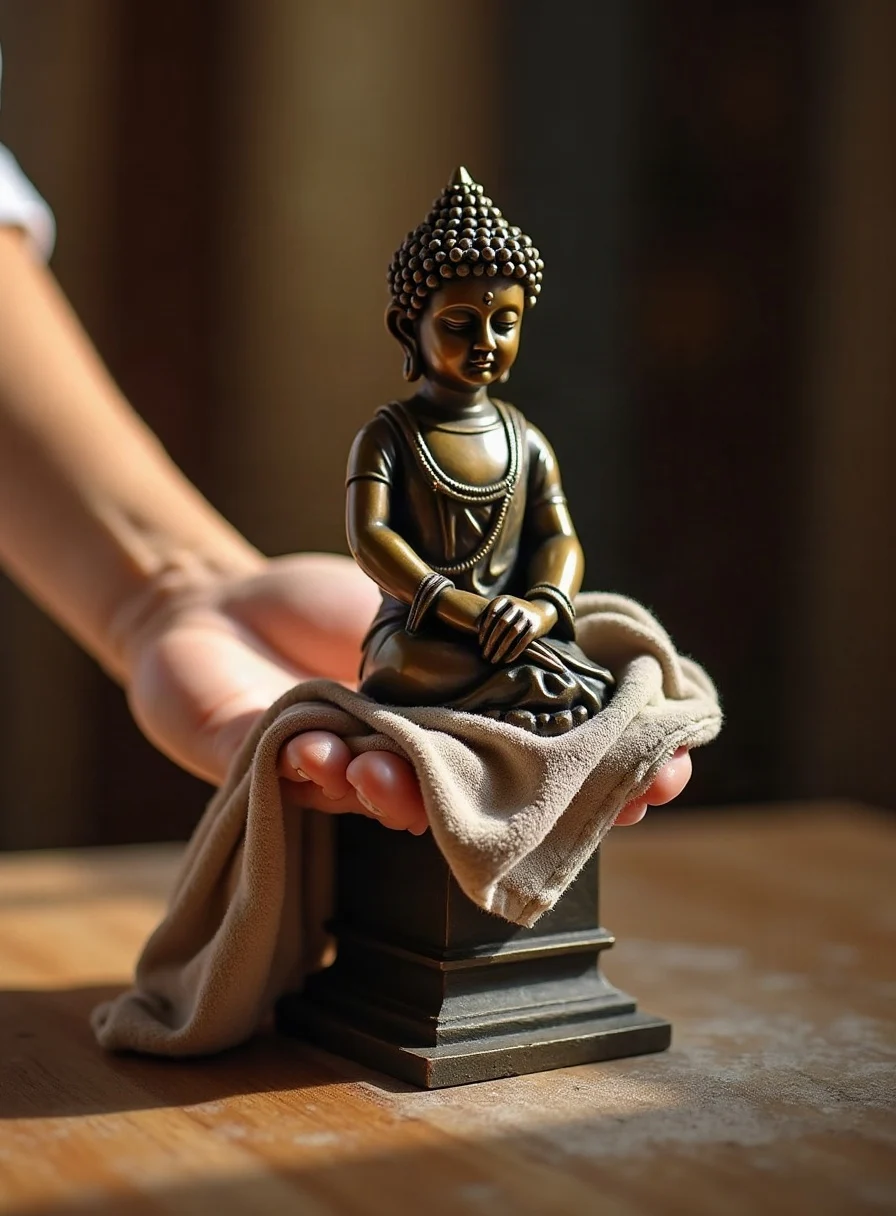
First, work out what you are looking at
Bronze changes colour as it ages, and not all of that change is dirt. Getting this right before you clean is what separates preserving a piece from spoiling it.
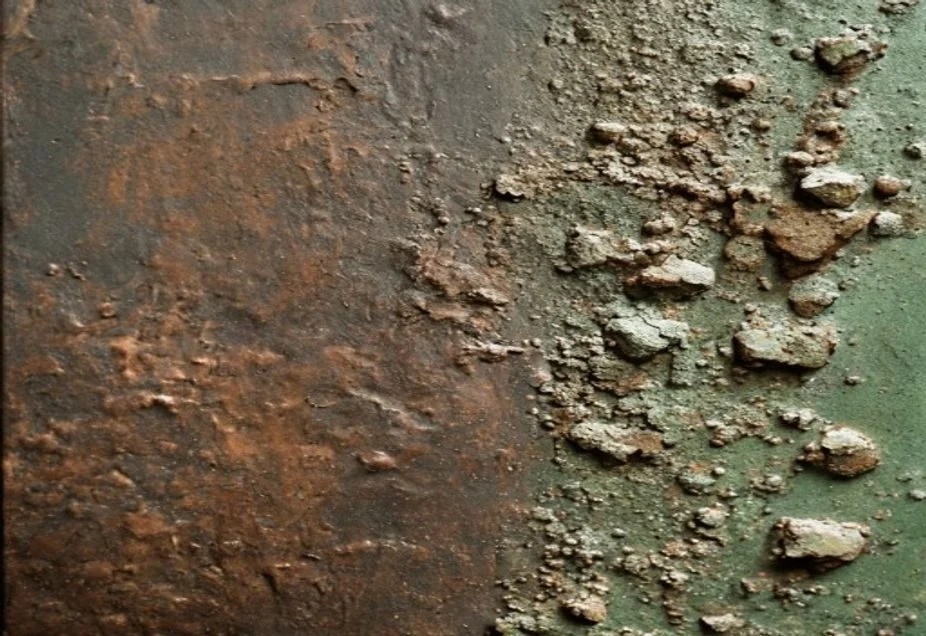
| Patina (usually keep) | Bronze disease (must treat) | |
|---|---|---|
| Looks like | Even, stable dark brown, chocolate, or smooth blue-green covering the surface | Light, powdery, bright or dusty green spots and growths, often waxy |
| Feel | Hard, smooth, bonded to the metal | Powdery, flaky, peels or rubs off easily |
| What it is | A protective oxide layer that forms over years, often desirable and valuable | Active chloride corrosion that keeps attacking the metal underneath |
| What to do | Leave it. Clean only surface dust and grime, never the patina itself | Treat it (see below) or, if valuable, take it to a conservator, because it will spread |
On antiques, sculptures and coins the patina is a large part of the value and character, and collectors and museums prize it. Stripping it back to shiny metal can cut what a piece is worth and is almost never reversible. So the default with any older or valuable bronze is to identify the problem, clean as little as you can, and when in doubt, leave it. If you see the bright powdery green of bronze disease on something precious, that is a conservator’s job, not a kitchen-sink one.
A simple rule of thumb: if you can rub the colour off with a fingertip and it comes away as dust, be suspicious. If it is smooth and firmly part of the surface, it is almost certainly patina.
The gentle clean, step by step
This routine lifts dust, fingerprints and light tarnish without stripping patina or leaving chloride behind. Start with the mildest step and stop as soon as the piece looks right.
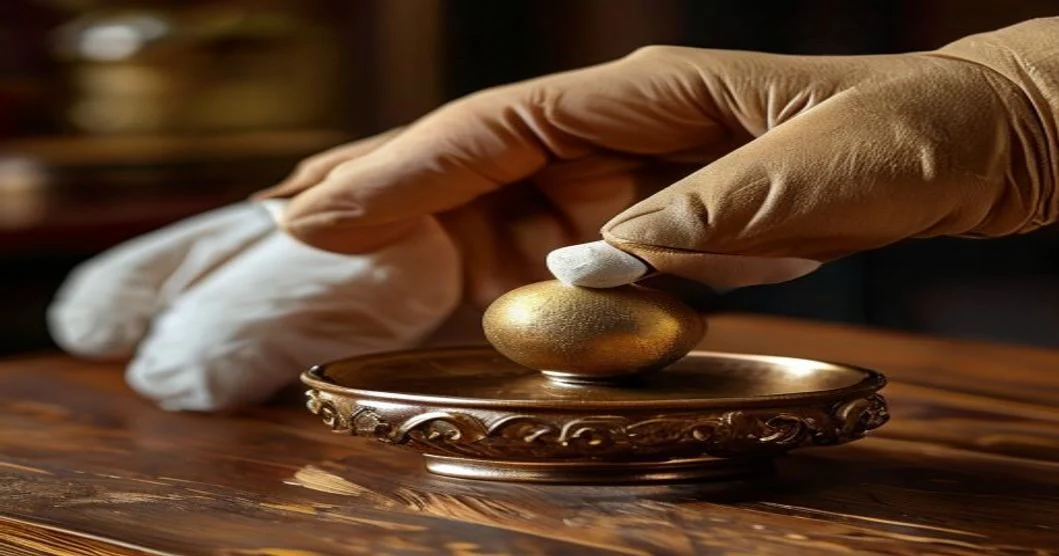
- Dust first. Wipe with a dry, soft microfibre cloth or a soft brush to remove loose dust and grit. Grit dragged across bronze scratches it, so do not skip this.
- Wash gently. Use warm water with a few drops of washing-up liquid on a soft cloth. This alone handles most everyday grime and fingerprints. Work into detail with a soft brush or a cotton bud, and wring the cloth out well so the piece is damp, not dripping.
- Rinse and dry thoroughly. Wipe with a cloth dampened in clean water, then dry completely with a second soft cloth. Bronze does not like being left wet, and trapped moisture in crevices is where trouble starts.
- Stop and look. Check the result in good light. If the surface is clean and the colour is even, you are done. Leave a little muted colour rather than chasing a bright finish.
- Protect it. Once the piece is completely dry, a thin wipe of microcrystalline wax slows future tarnishing. Conservators use microcrystalline wax for this purpose, and a little goes a long way.
Never use abrasive scourers, wire wool or harsh metal polishes on bronze you value. Bronze is softer than it looks, and these strip patina and leave scratches that cannot be undone. The same gentle-first logic applies to its cousin brass, and our brass cleaning guide covers that metal in detail.
If that did not work
A plain wash will not shift true tarnish, the dull, slightly brownish film that makes bronze look flat. Before you escalate, ask whether the dullness is really a problem. On anything old, a soft glow is part of the look. If you do want to go further, take one step at a time and test somewhere hidden first, such as the underside of a base.
A mild paste for tarnished spots
Mix bicarbonate of soda with a little lemon juice into a loose paste. Rub it gently over the tarnished area in small circles with a soft cloth, leave it for a couple of minutes, then rinse thoroughly and dry completely. Do this on tarnish only, never across an area of patina you want to keep. Our piece on whether baking soda and vinegar really clean explains why these household acids and powders are mild rather than magic, which is exactly why they suit bronze better than a harsh polish.
A commercial polish, only on the right pieces
A metal polish is mildly abrasive, so it removes patina along with tarnish. That makes it suitable only for lacquer-free, modern bronze you want bright, and even then you should use a small amount on a soft cloth and buff gently. Never use it on antiques, statues or coins where the surface is part of the value. If the piece has a clear lacquer coating, polish will not work on the metal underneath and can smear the coating.
When to stop
Stop and get advice if you see spreading powdery green, if the piece is an antique or has any sentimental or financial value, or if the surface starts to look patchy after your first attempt. A conservator can stabilise corrosion and protect the patina without the irreversible damage a home clean risks, and the fee is almost always smaller than the value lost by cleaning a valuable piece wrongly.
Statues, coins and jewellery need different handling
Bronze statues and sculptures
Statues and sculptures are where less is more matters most, because the patina is usually intentional and valuable. For indoor pieces, dust regularly with a soft brush or microfibre cloth. For grime, wipe with a barely damp cloth (distilled water is kindest) and dry immediately. That is genuinely all most indoor pieces need.

Outdoor bronze statues weather and develop a natural green patina that is part of their character, so do not try to return them to shiny metal. Rinse off loose dirt and bird mess with clean water and a soft brush, dry what you can, and if the piece is valuable, have a conservator wax it periodically. If you spot the bright, powdery green of bronze disease on any statue, stop and get professional advice. It spreads and needs proper stabilisation, not a home scrub.
Bronze coins
The most important coin advice is simple: for anything potentially collectible, do not clean it at all. Cleaning a coin, even gently, removes the patina and fine detail that collectors value, and a cleaned coin is often worth a fraction of an uncleaned one. Dealers can usually spot a cleaned coin quickly.
- Possibly valuable or old coins: leave them exactly as they are and get them assessed first.
- Common, low-value coins you just want cleaner: a soak in distilled water and gentle rolling between your fingers lifts loose dirt without abrasion. Avoid acids, salt and any scrubbing.
- Bronze disease on a coin (powdery green spots): this is active corrosion. For a valued coin, see a conservator. For a common one, expect the coin to be marked whatever you do, and store it somewhere dry.
When in doubt with coins, the safest and most valuable action is almost always to do nothing and store them dry.
Bronze jewellery
Bronze jewellery is different. Here you usually do want it bright, and the pieces are rarely antiques. Wash gently in warm soapy water, and for tarnish use the bicarbonate-of-soda-and-lemon paste rubbed on softly with a cloth or an old, soft toothbrush, then rinse and dry thoroughly. Drying matters because bronze reacts with skin oils and moisture, which is also why a bronze ring sometimes leaves a harmless green mark on your finger.
To prevent tarnish, store bronze jewellery dry, ideally in a sealed bag with an anti-tarnish strip. Take it off before showering, swimming or exercise, and put it on after perfume and lotion rather than before. A very thin coat of clear jeweller’s lacquer keeps costume bronze bright for longer. For gold and silver pieces, our guides to cleaning gold jewellery and tarnished silver cover those metals, and if you are cleaning small pieces like studs, how to clean earrings has useful handling tips. For delicate plated pieces, see our guide on how to clean Joma Jewellery bracelets.
Why vinegar and salt is a poor bet
Search for how to clean bronze and you will often be told to scrub it with vinegar and salt, or with ketchup, which is essentially the same thing. It does make bronze shiny, but there is a catch. Salt provides chloride ions, and chloride is exactly what drives bronze disease. Conservation guidance warns against leaving chlorides on copper alloys, because they can keep corroding the metal after you have finished cleaning.
For a cheap modern bronze-effect ornament you simply want shiny, it is your call, but rinse it exhaustively afterwards. For coins, statues, antiques or jewellery you care about, skip vinegar and salt entirely and use the gentle methods above. The whole point of cleaning bronze is to preserve it, and a method that risks accelerating corrosion fails that test.
Bronze, brass or copper: which do you have?
People often mix these up, and they clean slightly differently. A quick guide:
| Metal | Colour | Common items |
|---|---|---|
| Bronze | Dull gold-brown, often with dark or green patina | Statues, sculptures, coins, medals, older ornaments |
| Brass | Brighter yellow-gold | Door handles, taps, instruments, candlesticks |
| Copper | Distinct reddish-pink | Pans, pipes, some cookware and decor |
A magnet will not help, since none of them are magnetic, but the colour usually gives it away. If yours is bright yellow it is likely brass, so see our brass guide and, for green corroded brass, the heavily corroded brass guide. Reddish is copper. The gentle, no-salt principles on this page apply to all three, but bronze is the one where preserving patina matters most.
Keeping bronze from tarnishing again
Most tarnish is moisture and skin oils at work, so prevention is mostly about keeping the piece dry and handling it less. Keep bronze away from steamy bathrooms and kitchens, and do not display it on a damp windowsill. Handle it with clean, dry hands, since fingerprints speed up tarnish. For decor and statues, a thin coat of microcrystalline wax applied to a clean, dry surface slows tarnishing considerably, and clear lacquer does the same job on jewellery. The usual errors are worth knowing: leaving a piece damp, using abrasives, cleaning a coin you should have left alone, and ignoring a patch of powdery green because it looks small.
A small bronze-care kit
You need very little. Tick off what you already own before buying anything. Disclosure: Cleaners Guide is a participant in the Amazon Associates programme, so if you buy through links on this page we may earn a small commission at no extra cost to you. The links open Amazon UK searches, so compare options and check the current price before buying.
- ☐ Microfibre cloths. Soft, lint-free and clean, kept for dusting and drying only. Avoid anything with a rough or scratchy weave. Search cloths → Polishing cloths →
- ☐ Soft brush. A soft-bristled brush or make-up style brush for dust in crevices. Natural or very soft synthetic bristles only. Search brushes →
- ☐ Distilled water. Leaves no mineral marks and no chloride, so it suits statues and low-value coins. Handy for the final wipe. Search distilled water →
- ☐ Microcrystalline wax. A conservator-style protective wax for cleaned, dry bronze. Apply thinly and buff. Renaissance wax is one well-known example. Search wax →
- ☐ Anti-tarnish strips. For storing jewellery in a sealed bag or box. They slow tarnish rather than reverse it. Search strips →
- ☐ Brass and bronze polish. Only for lacquer-free, modern bronze you want bright, never antiques or coins. Use sparingly and buff off fully. Search polish → Search metal polish →
Four quick answers
- Should you clean the patina off bronze? Usually not. Stable patina is a protective layer that is often valuable on antiques, statues and coins, and removing it cannot be reversed. Only treat active corrosion, the bright powdery kind, and clean surface dirt without touching sound patina.
- What is bronze disease? It is active chloride corrosion that appears as bright, light-green, powdery spots that flake off easily, unlike stable patina, which is hard and bonded. It keeps attacking the metal and spreads if untreated. On valuable pieces it needs a conservator.
- Can you use Brasso or metal polish on bronze? Only on lacquer-free modern bronze you want shiny, and cautiously. Polish is mildly abrasive and removes patina with the tarnish, so keep it away from antiques, statues and coins.
- Why does a bronze ring turn my finger green? It is a harmless reaction between the copper in the bronze and the acids and moisture in your skin. It does not mean the ring is unsafe. Keeping it dry, removing it before washing and lacquering the inside all reduce the marking.