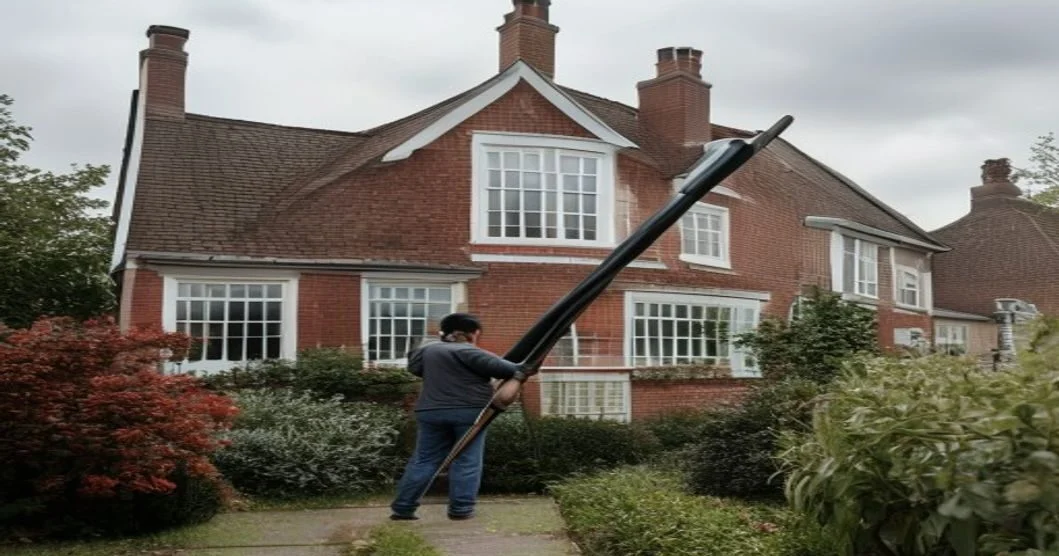
Pick the wrong tool for ground-level gutter cleaning and you either leave the blockage where it was or wash it into the downpipe. Pick the right one and the job is a Sunday-morning chore with both feet on the patio. Four kinds of tool do the work: a telescopic scoop or tongs, a gutter vacuum kit, a hose wand and a pressure-washer attachment. They are not interchangeable, so this guide starts by setting them side by side.
Falls from ladders are a well-known cause of serious injury in DIY and work at height, and the Health and Safety Executive treats working at height as a risk to plan around, not shrug off. That is reason enough to try the ground-first approach. It is also honest to say what it cannot do: you cannot see into the run while you work, and some gutters are simply better handled by a professional.
Disclosure: Cleaners Guide is a participant in the Amazon Associates programme, so if you buy through links on this page we may earn a small commission at no extra cost to you. It does not change what we say about the tools. Prices and availability change, so check the current listing before buying.
Four ground-level methods side by side
| Method | Best for | Effort | Risk |
|---|---|---|---|
| Telescopic scoop or tongs | Leaves, moss and a routine autumn clear-out on bungalows and low roofs | Moderate, and tiring above shoulder height | Debris falls at face height, and a half-locked pole section can collapse |
| Gutter vacuum kit on a wet/dry vacuum | Two-storey houses, heavy leaf fall, the tidiest result | Moderate, but the long pole gets heavy in wind | Wet sludge fills the drum quickly, and the extension lead and vacuum need care outdoors |
| Hose gutter wand | Flushing out fine silt once the bulk is gone, and testing the flow | Low | Overflow and splashing if the gutter is still full, and it can dam water behind debris |
| Pressure-washer gutter attachment | Compacted grime that a hose will not shift | Low to moderate | Spray over the fascia, wall and windows, and damage to old or loose joints |
Add safety glasses (debris arrives at head height when you use poles), waterproof gloves, and a groundsheet or opened-out compost bags below the work area. A leaf-blower gutter attachment is a fifth option if you already own a compatible blower, but it only suits dry leaves and sends them across the garden, so it ranks last for most British weather.
One safety point that is easy to forget with long poles: look up before you extend one. Keep well clear of overhead cables, and do not use a metal or carbon-fibre pole anywhere near them. If a cable runs to the house near the gutter, leave that stretch to a professional.
Signs it is time to clean
You do not need to wait for water pouring down the wall. Plants or grass sprouting from the channel, water spilling over the front edge in ordinary rain, a downpipe that never seems to run, and dark algae streaks beneath a joint all say the same thing. Look from the ground with binoculars or your phone zoomed in, and note which stretches look worst before you pick a tool, because that decides how much of the job is scooping and how much is flushing.
Think about the weather as well. A dry, still week gives you the safest footing and the lightest debris, while wet and windy days make long poles awkward and sludge heavy. Check the forecast, move wheelie bins and garden furniture out from under the run, and let anyone at home know what you are doing so nobody walks under the work area.
Can you reach your gutters from the ground?
With the right reach and realistic expectations, yes. Bungalows, single-storey extensions and garages are easy ground-level jobs. A standard two-storey house has gutters at roughly 5 to 6 metres, which is workable with longer poles and a vacuum or camera, though slower and harder on the arms than the adverts suggest. What you give up without a ladder is sight and feel, which is why the checking step later matters as much as the cleaning.
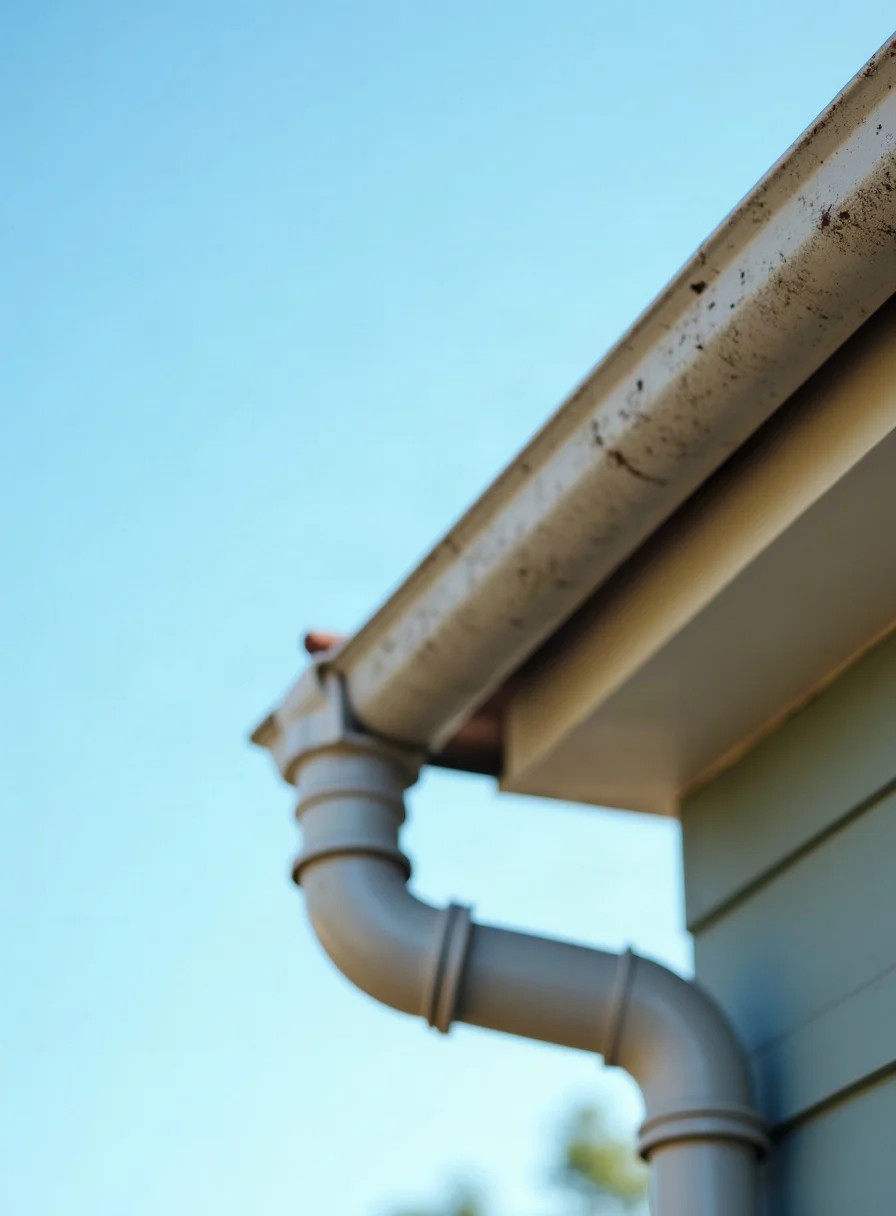
Ground level struggles with gutters behind a conservatory or porch (the roof blocks your pole angle), anything above two storeys, cast-iron gutters full of compacted moss, and any run that sags, leaks at the joints or is pulling away from the fascia. Those need eyes-on repair, not only clearing.
Older gutters and downpipes made of asbestos cement exist on some pre-2000 buildings. If yours are grey, fibrous-looking and brittle and you cannot tell what they are, do not scrub, break or pressure-wash them. Have the material identified first, because disturbing it can release fibres.
Telescopic pole: the budget route
The scoop-or-tongs pole is the cheapest option and the one most people should start with. Choose a dry-ish day a couple of days after rain. Bone-dry debris flies about, freshly soaked debris is heavy on the end of a long pole, and slightly damp debris holds together and lifts cleanly.

- Lay a groundsheet along the wall below the run you are clearing, and put on the safety glasses. Everything you dislodge lands at ground level, occasionally via your head.
- Extend the pole to working height and lock every section. A half-locked section collapsing mid-scoop is the classic first-timer moment.
- Start at the end furthest from the downpipe and work towards it in half-metre bites, dragging debris along and over the front edge instead of trying to lift each scoopful clear.
- Read the resistance through the pole. Moss feels gritty, leaf mulch drags, and a sudden solid stop is often a ball, a roof tile fragment or old jointing compound. Slow down there rather than forcing it.
- Stop short of the downpipe outlet and pull the last debris away from it, not over it. Sweeping everything towards the hole is how a half-blocked downpipe becomes a fully blocked one.
- Rake the fallen debris off the sheet and into the garden waste bin. Gutter sludge is mostly leaf mould and moss, which composts well.
- Finish with the flush-and-check step further down.
Gutter vacuum: the tidier route for taller houses
Gutter vacuum kits are curved poles that fit a wet/dry vacuum. They suit two-storey houses well because the debris travels down a tube instead of over the edge. If you already own a workshop-style wet/dry vac, a pole kit turns it into a gutter machine. Otherwise, hiring a dedicated gutter vacuum for a day may cover a typical house without buying anything.
- Fit the curved end-piece so the nozzle hooks down into the gutter, and use the fewest pole sections that reach. Every extra section costs control.
- Work slowly along the run in both directions. The nozzle clears a wider path than you would expect, but compacted moss needs two or three passes.
- Wet sludge fills the drum fast and vacuums slowly. If the gutters are waterlogged, take a first pass for the loose top layer, empty the drum, then go again for the heavy base layer.
- Listen to the motor. Its tone rises when the nozzle is clear and drops when you hit a rich seam. When it stays high along the whole run, that stretch is done.
- As with the scoop, approach the downpipe outlet last and from the side so nothing is pushed down it.
On a breezy day a long pole above your head is tiring. Do the job in two or three sittings, because the sloppy final metres are where blockages survive. Keep the vacuum, its lead and any extension cable dry and away from wet ground, and use a residual current device (RCD) on outdoor power if your socket does not have one.
Hose wand and pressure washer: finishing, not starting
Water tools finish the job rather than start it. Flush a gutter that is still full of leaves and you will either dam the water behind the debris or wash the lot into the downpipe, which is exactly what you are trying to avoid. Once the bulk is out, a curved hose wand works well: start at the far end and walk the jet towards the downpipe, pushing the last silt along the run. The note changes as water starts running freely, and the downpipe gurgling into the drain below tells you it is moving.
A pressure-washer gutter attachment (the U-shaped lance) shifts compacted grime a hose cannot, but it comes with a price. The blast sends dirty spray over the gutter edge, across the fascia, and onto the wall and windows below. On old brittle plastic or loose joints it can cause damage, so keep the pressure moderate and skip it entirely on tired cast iron. Plan a rinse of the windows and the patio afterwards, because both will need it. If you want to clean the frames while you are there, see our guide to cleaning double-glazed windows.
Checking from the ground, and clearing a blocked downpipe
Working blind is the real weakness of ground-level cleaning, so checking is part of the job. There are three ways, in increasing order of effort:

- A phone on a pole. Clamp your phone to the top of the pole (a selfie-stick clamp fits many poles), start a video and walk the run. Thirty seconds of footage shows what the scoop missed.
- The hose test. Run water in at the far end for a minute. It should appear at the bottom of the downpipe promptly and stop dripping soon after you stop. Slow or no arrival means something is still in there.
- The rain test. In the next proper downpour, watch the run from a window. Water sheeting over the front edge, a waterfall at one joint, or a downpipe that stays silent all show where the remaining problem lives.
While you are looking, scan for faults cleaning cannot fix: a run that is visibly out of level (standing water at one end after rain), joints that drip long after the rain stops, or brackets pulling off the fascia. Those are repair jobs, and clearing around them only buys time. If you spot green algae streaks or damp patches on the wall below a leaking joint, the cause is the gutter, and our guide to cleaning mould off walls covers the clean-up once the leak is fixed.
If the downpipe is blocked
Downpipes block at the top (the outlet catches debris you swept towards it), at bends, and at the bottom where the pipe meets the drain. You can fix more of this from the ground than you might expect.
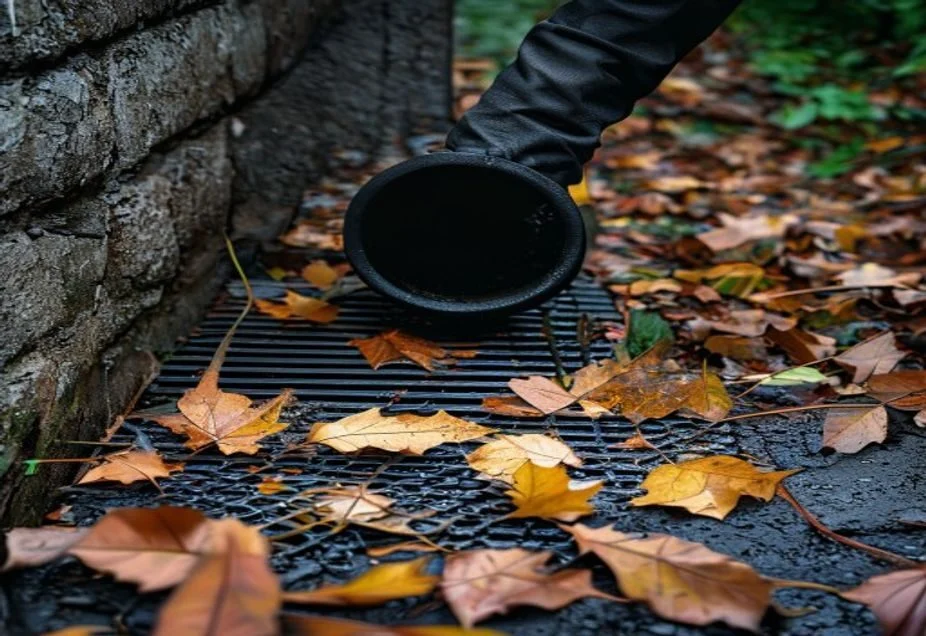
- Bottom of the pipe: clear the drain grid or gully the pipe discharges into. A fistful of leaves at the shoe is the most common cause of a “blocked downpipe” and takes seconds to fix.
- Low bends: feed a drain rod or stiff wire up from the bottom, or flush upwards with the hose on full. You will usually feel the plug give way and hear the backed-up water rush down.
- Top outlet: reachable with the vacuum nozzle or tongs on lower runs. On a two-storey downpipe blocked at the very top, that is where a professional with a ladder or a high-reach vacuum is the sensible choice.
- Afterwards: a wire outlet guard (a small mesh cage that sits in the top of the pipe) keeps the next batch of leaves in the gutter, where your pole can reach it.
Our verdict, and when to hire a professional
For a bungalow or a low roof, a telescopic pole plus a hose wand is the sensible pairing: the pole pulls out the bulk and the wand flushes and tests. For a two-storey house, or heavy leaf fall, a vacuum kit gives the most controlled result. The pressure-washer attachment is the one to use last and gently, if at all.
Ground-level DIY has clear limits. Call someone when the gutters are above two storeys, sit behind a conservatory or porch, are cast iron heavy with moss, are visibly sagging or leaking at joints, or when you simply do not feel safe working with a long pole. Professional firms usually use high-reach vacuum systems with a camera, so ask for before-and-after footage and get a written quote that includes the downpipes. Costs vary with height, length and access, so compare a couple of quotes rather than relying on a figure from a guide. Set against a blocked gutter quietly soaking a wall all winter, a clear-out is cheap insurance.
| Job | Roughly how long | What slows you down |
|---|---|---|
| Single-storey run with a scoop pole | An hour or two for a whole house | Compacted moss and awkward corners |
| Two-storey house with a vacuum kit | Half a day, often split over two sittings | Wet sludge filling the drum and wind on the pole |
| Flush and hose test | Ten to twenty minutes | Finding a tap and enough hose to reach every side |
| Checking with a phone on a pole | A few minutes per side | Glare, and getting the camera angle into the channel |
What to buy
You need very little, and the links below are Amazon UK searches so you can compare lengths, makes and current prices. A telescopic gutter cleaning kit should have a pole that locks firmly at each section and a head that can switch between scoop and tongs. Check that its maximum reach covers your eaves, and be wary of very long, light poles that flex when loaded with wet debris.
A gutter vacuum attachment is a set of curved poles and a nozzle that fits a wet/dry vacuum. Check the hose diameter matches your machine and that the kit includes the adaptors it claims, because mismatched fittings are the common complaint with this kind of accessory. It suits taller houses and heavy leaf fall, and it is pointless without a suitable vacuum.
If leaves keep returning, gutter guard mesh can help under overhanging trees. Look for a rigid, UV-resistant mesh that clips onto the gutter without bending it. Guards cut how often you clean but do not end it, since moss grit and seeds still get through and leaves can sit on top. Fitting them needs access at height, so it is a job to time with a professional visit.
Keeping gutters clear until next time
Most British homes do well with two cleans a year: late autumn once the last leaves are down, and a lighter spring pass for moss, blossom and whatever the birds contributed. Overhanging trees or a mossy north-facing roof can push that to quarterly. Prevention shortens each job:
- Outlet guards in each downpipe top keep blockages where your pole can reach them.
- Treat roof moss if clumps keep appearing in the gutter. Moss slides off the roof in every downpour and is the main filler of gutters that do not sit under trees.
- Trim back overhanging branches. It can reduce what lands in the gutter each autumn considerably.
- Do not pressure-wash old or loose gutters. The blast finds every weak joint.
- Do not skip the check. Without the camera, hose or rain test you are guessing, and ground-level work looks cleaner than it is.
Once the gutters behave, the evidence of their past misbehaviour often stays: green-streaked walls and algae-stained slabs beneath the overflow line. Our block paving guide covers lifting those stains from the driveway, and while you are working at roof level, see how to clean fascias without a ladder.
Gutter questions, answered briefly
Can you clean second-storey gutters from the ground? Usually, yes. Two-storey gutters sit at roughly 5 to 6 metres, within reach of longer telescopic poles and vacuum kits. It is slower and heavier than single-storey work, and you must check with a camera or hose test because you cannot see in. Above two storeys, or behind a conservatory, hand it to a professional.
Do leaf blower gutter attachments work? Only on dry leaves, which is a narrow window in the UK. Wet leaf mulch and moss do not blow, and everything that does lands across your garden and possibly the neighbour’s. If you already own a compatible blower it can be a fast first pass in a dry autumn week, but it is not worth buying for gutters alone.
Why do my gutters overflow even after cleaning? Either the downpipe is still blocked (hose-test it), the gutter has lost its fall so water pools instead of flowing, a joint is leaking, or the run is undersized for the roof area, which is common on extensions. Cleaning fixes debris. Overflow that survives a clean is a repair or capacity problem.
Are gutter guards worth it? Under heavy trees, they can be. Brush or mesh guards keep the channel itself clear and turn the job into sweeping the top of the guard. On a house with little debris they add little and still let moss grit through. Whatever you choose, check that the guard suits your gutter profile before buying.
What time of year is best for cleaning gutters? Late November onwards, once the trees are bare. Clean earlier and the next gale refills them. Choose a mild, still day a couple of days after rain, when debris is damp enough to hold together but not waterlogged. A spring pass in March or April catches moss and winter grit.