Cleaning a roofline from the ground is safer than doing it from a ladder, but it is not risk-free. A long, wet pole can touch overhead cables, old soffit boards can contain asbestos, and strong cleaners can harm skin, eyes, plants and the plastic itself. So the order matters here: check what you are dealing with first, then use the gentlest method that works, and only then reach for anything stronger.
Fascias are the boards along the roof edge that hold the guttering, and soffits are the boards tucked under the overhang. Both are usually white uPVC, and both collect green algae, black weathering streaks and road grime. The guide below covers the pre-checks, the ground-based method, algae and streaks, chalky or yellowed boards, and when to hand the job to someone with the right access equipment.
Disclosure: Cleaners Guide is a participant in the Amazon Associates programme, so if you buy through links on this page we may earn a small commission at no extra cost to you. It never changes our recommendations, we suggest products because they work and we point out cheaper options where they do the same job. Prices and availability change, so always check the current price before buying.
Check these before you lift a pole
- Asbestos in older soffits. Homes built before about 2000 can have asbestos-containing boards, and soffits are one of the places the Health and Safety Executive (HSE) names. If your house is older, or the soffit looks like flat grey-white cement board rather than plastic, do not scrub, scrape or jet-wash it. Intact asbestos is generally not dangerous, but disturbing it releases fibres. Have it identified by a licensed professional or an accredited lab first.
- Overhead power lines and service cables. Look up before you extend the pole. Aluminium and carbon-fibre poles conduct electricity, and a wet pole is worse. If lines run near the roofline, do not use a pole there. Leave that stretch to a professional.
- Condition of the boards. Cracked, sagging or loose fascias, gaps, or soft timber are repair jobs. Brushing loose boards can make things worse, and water can get into the roof space.
- Weather and ground. Pick a calm, dry, overcast day. Wind can swing a long pole, and strong sun dries cleaner on the boards.
- Who and what is underneath. Move cars, bins and garden furniture, keep children and pets away, and check the ground is not slippery with run-off.
Also read the label on any cleaner, restorer or algae wash you use. Wear eye protection and gloves, never mix products, and do not combine bleach with anything else. Our list of cleaning products you should never mix explains why.
The safest method: a telescopic pole, a soft brush and warm soapy water
See telescopic kits on Amazon →
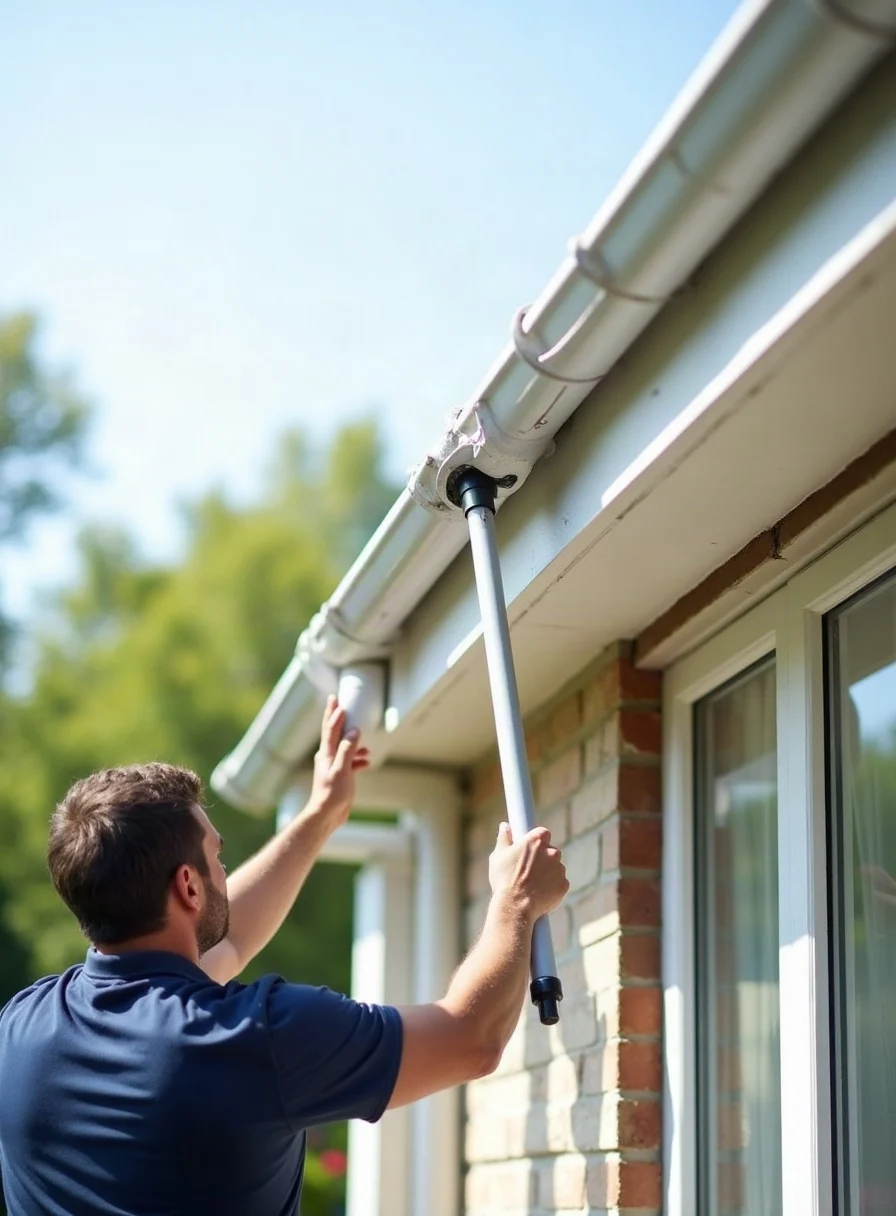
The whole job hinges on one tool, a telescopic pole with the right brush head. Here is what each option does and who it suits.
| Kit | What it does | Best for |
|---|---|---|
| Water-fed telescopic pole and brush | Feeds water through the pole to the brush, so you scrub and rinse at once | Larger roof lines and regular cleaning. Needs a water supply, and the pole must be kept clear of power lines |
| Non-fed telescopic pole and fascia brush | You dip the brush in a bucket | Lighter grime and smaller houses |
| Soft-bristle fascia or flat brush head | A wide, soft head that will not scratch uPVC, reaches the flat face and soffit | Whichever pole you choose. Avoid stiff bristles |
| Hose with a brush attachment | Rinses and lightly scrubs lower roofs | Single-storey runs you can reach safely |
| uPVC cleaner or restorer | Specialist product for stubborn grime or oxidised, chalky plastic | Boards that soap and water cannot lift |
A water-fed pole rinses as you go, so loosened dirt does not dry back on, but an ordinary telescopic pole with a soft brush and bucket does the job on most houses. Just rinse afterwards with a hose or a second pass of clean water.
- Mix your solution: a few drops of washing-up liquid in a bucket of warm water, or a dedicated uPVC cleaner for heavier grime.
- Extend the pole only as far as you can control it. If you are straining or the tip wobbles, stop and reposition rather than over-reach.
- Work top-down in small sections. Start at one end. Wet and gently brush the front edge of the fascia, then its underside, then along the soffit, with light pressure around joints and gutter edges.
- Rinse each section before the loosened dirt dries, with the water-fed pole, a hosepipe or a clean-water pass.
- Do the gutter fronts while you are there. The same brush cleans the outside face of the guttering.
This is the same ground-based approach as cleaning gutters without a ladder, so you can do both on the same afternoon. If the clean-up spills onto the drive, see our block paving driveway guide.
Green algae and black streaks
The green film is algae, and the black streaks are weathering and pollution. Both usually come off with the basic method, but stubborn cases need a little more.
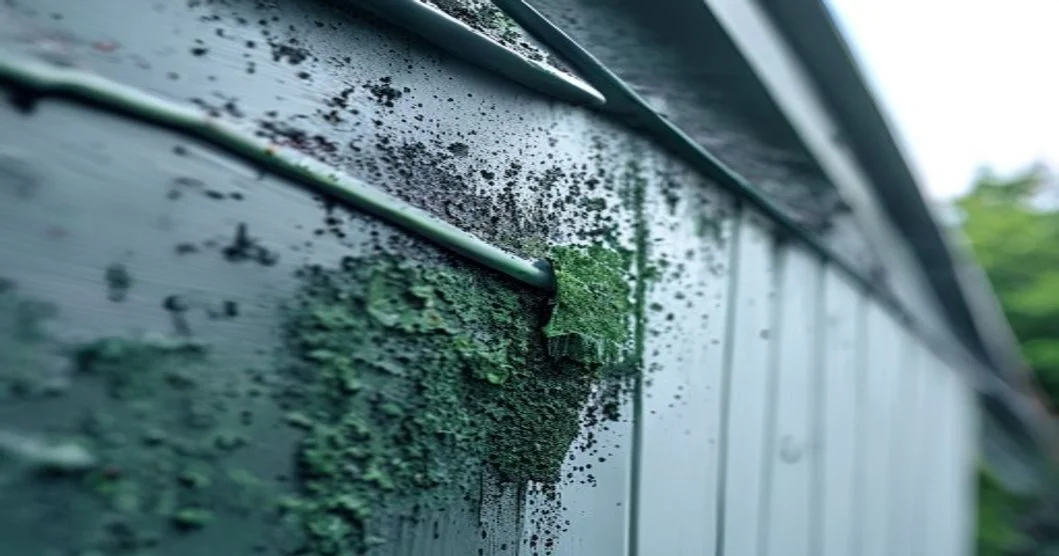
- Green algae: warm soapy water and a soft brush shift most of it. For heavy growth, use a uPVC cleaner or an exterior algae remover that states it is safe for plastic, diluted exactly as the label says, left to dwell for the stated time, then brushed and rinsed.
- Black streaks: a dedicated uPVC cleaner works better than soap. Apply, give it time to act, agitate gently with the soft brush and rinse.
- Do not scrub hard. Pressure and abrasives scratch uPVC, and scratches trap dirt so it re-soils faster. Let the cleaner do the work.
- Do not use a pressure washer up at the roofline. It can force water behind the boards and into the roof space, and can crack or lift older uPVC.
Algae washes are biocides. Rinse run-off from plants and keep it off ponds and drains where the label says so, and wear eye protection when brushing overhead.
Chalky or yellowed boards: stronger options and their cautions
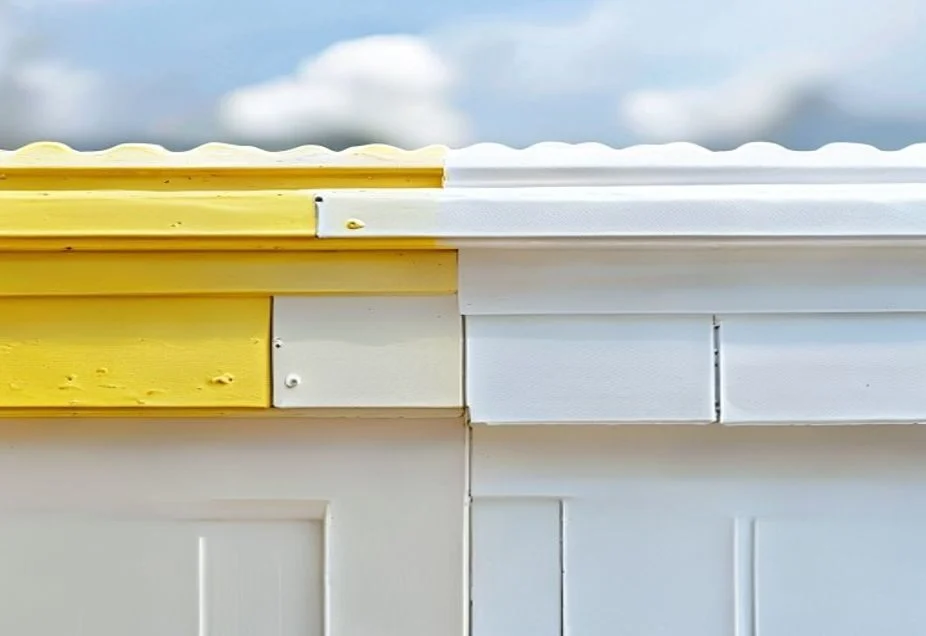
If your fascias have gone dull, faded, yellowish or leave a chalky white residue on your hand, that is oxidation, the surface of the plastic breaking down from years of UV and weather. It is the one problem ordinary cleaning cannot fix, which is why some boards still look tired after a good wash.
- Clean first, so you are treating the plastic and not just dirt.
- Use a uPVC restorer, a product that removes the oxidised layer and brings back colour and shine. Test on a small hidden patch, apply to clean, dry uPVC with a cloth or applicator as the instructions say, and buff. Some are mildly abrasive, so do not overwork them.
- Do not expect bleach or elbow grease to work. Oxidation is a surface breakdown, not surface dirt, and bleach can make yellowing worse.
- For very worn boards, a specialist can spray-paint uPVC, or the boards can be replaced. A restorer is worth trying first.
| Problem | Method | Product type |
|---|---|---|
| General grime | Telescopic brush and soapy water | Water-fed or non-fed brush kit |
| Green algae | Algae wash, leave to dwell, then rinse | Exterior algae or patio and roof cleaner suitable for plastic |
| Black streaks | uPVC cleaner and a soft brush | uPVC cleaner |
| Yellowed or chalky uPVC | Cut back the oxidation | uPVC restorer or oxidation remover |
What damages boards, and what to buy
Bleach and harsh chemicals can discolour, yellow and dull uPVC and damage paint and plants below. Abrasive pads, wire wool and scouring powders leave scratches that trap dirt. Strong sun makes the solution dry and streak. And over-extending the pole is how you knock a gutter or strain your back, so reposition instead.
None of the kit is expensive relative to a ladder, and it is worth choosing it for the job. Here is a featured pick and two alternatives.
When it is a job for a professional
Ground-based cleaning suits most two-storey homes, but some jobs are better paid for. Bring someone in if the roofline is very high or awkward to reach even with a long pole, if cables run close to the boards, if the soffits may contain asbestos, or if you spot cracked boards, gaps or rot on older timber fascias. A professional will have equipment such as water-fed poles or a tower. Prices vary with house size and access, so get a few quotes, and ask how they will reach the roofline and whether they carry public liability insurance. Doing it yourself with a pole costs the price of the kit and an afternoon. Doing it from a ladder is the option to avoid: falls from height are one of the leading causes of serious injury at work and a common cause of DIY accidents, and ladders are best kept for light, short jobs.
Once or twice a year keeps boards fresh and stops algae building into hard layers. Homes near trees, main roads or the coast, and shaded north-facing runs, green up faster. A quick yearly pass also lets you spot cracked boards or blocked gutters early, and while you are outside, our guide on patio cleaning pairs well with it.
Fascia and soffit cleaning questions
How do you clean soffits from the ground?
Soffits are the boards tucked under the fascia, so angle a flat brush head up into them. With the pole extended, brush along in sections with soapy water or uPVC cleaner, paying attention to corners and any ventilation strips where cobwebs gather, then rinse. Check for asbestos risk first on older homes.
What is the best cleaner for uPVC fascias?
For everyday grime, warm water with a few drops of washing-up liquid and a soft brush is enough. For algae and black streaks, a cleaner made for uPVC works better. For chalky or yellowed plastic you need a restorer. Choose products that state they are safe for plastic, and follow the label.
How can I tell if my soffits contain asbestos?
You cannot tell by looking alone. Age is the main clue: homes built before about 2000 may have asbestos-containing boards, which often look like flat, dull, cement-like sheets. If in doubt, leave them alone and ask a licensed asbestos professional or accredited lab to test a sample.
Can you use bleach on uPVC fascias?
It is better not to. Bleach can discolour and dull uPVC over time, and can harm paintwork and plants when it runs off. It must never be mixed with other cleaners. For algae and mould, a specialist exterior cleaner made for uPVC is safer, followed by a thorough rinse.
Will vinegar clean algae off fascias?
Vinegar is a weak acid and has only a limited effect on established algae. It may lift light grime, but a uPVC cleaner or algae wash designed for outdoors is more reliable. If you do use vinegar, rinse thoroughly, keep it off plants and never mix it with bleach.
How much does professional fascia and soffit cleaning cost?
It depends on the size of the house, the height of the roofline and how the cleaner gets access. Quotes are usually based on a fixed price or per job, so ask for two or three, check what is included, and confirm whether the price covers gutters and rinsing.
How often should fascias and soffits be cleaned?
Once or twice a year is usual. Annual cleaning stops algae and grime from building into stubborn layers and lets you catch cracked boards or blocked gutters early. Homes near trees, busy roads or the coast, and shaded walls, may need a second clean.
For the rest of your exterior, see our guides on cleaning double-glazed windows and cleaning windows without streaks.