The fastest way to ruin a suede-look car seat is to clean it with the right method for the wrong material. Real suede is animal hide and marks, stiffens and water-stains when it gets wet. Alcantara, the synthetic microfibre used in most modern “suede” interiors, is designed to be wiped with mild soap and a damp cloth. Those two instructions are close to opposites, so the first job is to find out which one you have.
This guide is organised around caution. It starts with what to check before any liquid goes near the seat (the material, the handbook, airbags, heating and sensors), then gives the safest method for each material, and only then moves on to stronger options and the situations where you should stop. It fits alongside a full car interior deep clean.
Disclosure: Cleaners Guide is a participant in the Amazon Associates programme, so if you buy through links on this page we may earn a small commission at no extra cost to you. It never changes our recommendations, we suggest products because they work and we point out cheaper options where they do the same job. Prices and availability change, so always check the current price before buying.
Before you touch the seat: what to check first
1. Which material is it?
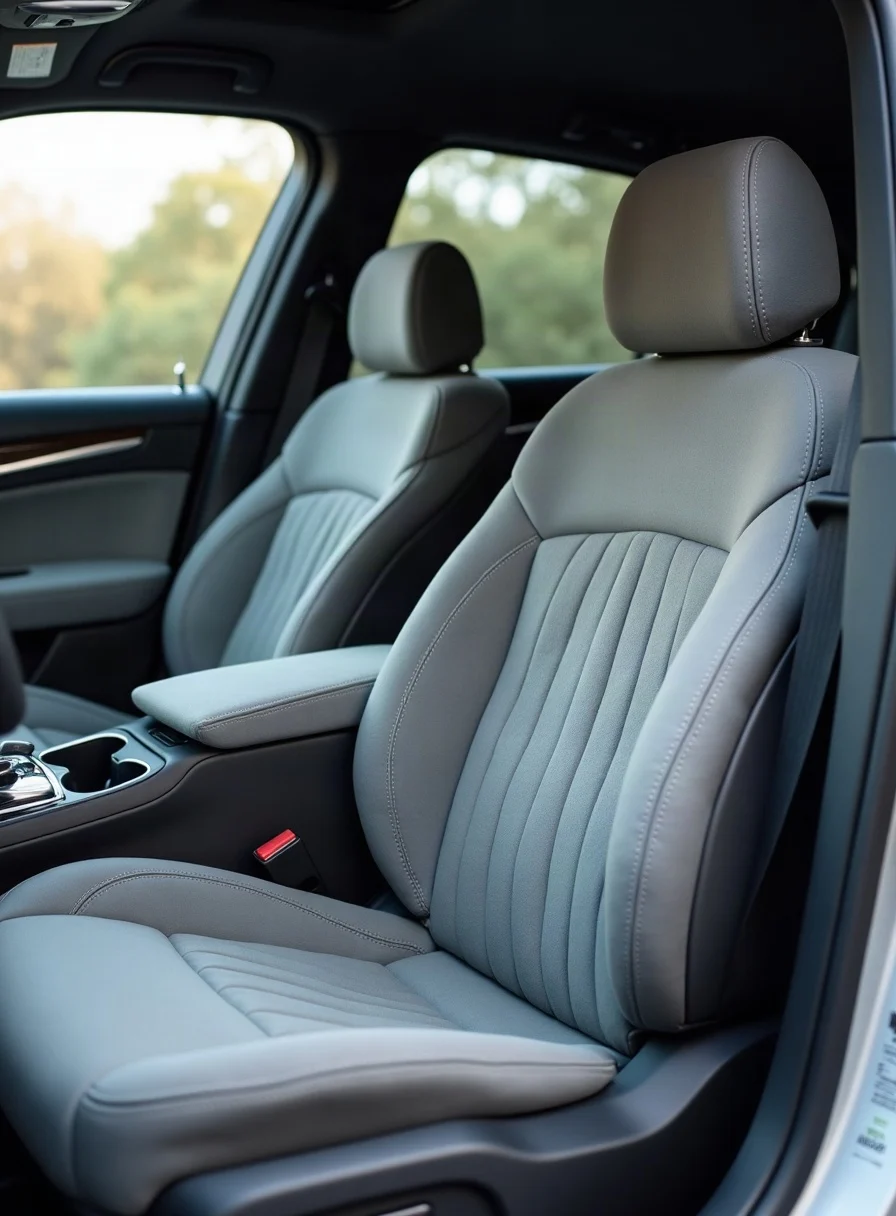
Genuine suede and Alcantara feel similar but behave oppositely around water.
| Real suede | Alcantara (synthetic suede) | |
|---|---|---|
| What it is | Animal hide (the underside of leather) | Man-made microfibre (polyester and polyurethane) |
| Where you will find it | Older or luxury cars, seat inserts, some classic interiors | Most modern “suede” trim: sports seats, steering wheels, headliners, gear surrounds |
| Water | Hates it, water-marks and stiffens | Water-safe, designed to be wiped with a damp cloth |
| Clean with | Suede brush, suede eraser, minimal moisture, specialist suede cleaner | Mild soap and warm water, microfibre cloth, soft brush |
| Manufacturer’s steer | Keep it dry and spot-clean carefully | Alcantara’s care guidance recommends mild soap and water |
Not sure which you have? Check the car’s manual or manufacturer spec. Most modern performance and premium cars use Alcantara, a branded synthetic, rather than real suede. If you genuinely cannot tell, treat it as real suede, which is the more delicate option, and test any moisture on a hidden area first.
2. What is under and inside the seat?
Modern seats are not just fabric on foam. Many have side airbags in the outer bolster, heating elements, and occupant sensors in the cushion. Read the handbook for any warnings about cleaning the seat, keep liquids away from seams marked for airbags, and never soak the cushion. Keep the cloth damp rather than wet, and if your handbook says to use only specific products, follow it.
3. Do a hidden-spot test
Try your cleaning method on an area nobody sees, such as the side of the seat base or under the headrest, and let it dry fully before judging. Colour transfer, stiffness or a water ring means stop and rethink. The same caution applies to any dedicated cleaner or protector you buy, so read the label for the words suede, Alcantara or microfibre and check it says it is safe for that material.
The safest method for Alcantara
Alcantara is far more forgiving than real suede, and the maker’s own advice is mild soap and water. The risk is over-wetting, because too much liquid can reach the foam beneath.

- Vacuum first with a soft brush attachment to lift loose dirt and crumbs from the nap.
- Mix a mild solution: a few drops of gentle soap (or a dedicated Alcantara cleaner) in warm water. You want it soapy, not sudsy-strong.
- Dampen a microfibre cloth, damp and not soaking, and wipe the seat in the direction of the nap, working a small area at a time.
- Agitate gently with a soft brush on grubby patches, then wipe away the loosened dirt with a clean damp cloth.
- Blot dry with a dry microfibre cloth, then brush the nap back up as it dries so it does not dry flat and patchy. This final brushing is what keeps Alcantara looking even.
If you would rather use a purpose-made product, look for an Alcantara cleaner whose label names Alcantara or microfibre suede. Spray it on the cloth rather than the seat, which gives you control over how much moisture goes in. Skip anything with solvents, bleach or strong degreaser unless the label says it is safe for the material.
Letting it dry without brushing the pile back leaves shiny flat patches, so do not skip the last step. Work panel by panel and it comes up well. Leave the doors open while it dries and keep heaters and hair dryers away, because high heat can stiffen the fibres.
The safest method for real suede
Real suede needs the opposite instinct: keep water away and work mechanically. This is the same approach as cleaning suede footwear, scaled to a seat, and the full technique is in our suede cleaning guide. A basic suede brush and eraser kit covers most of the work. For seats, a soft-bristle suede cleaning brush is gentler than the wire or crepe side of combination brushes, so keep those for tough scuffs, and pick a plain, uncoloured eraser that cannot transfer onto pale suede.
- Vacuum with a soft brush attachment to remove loose dirt.
- Brush with a suede brush in one direction to lift the nap and dislodge surface dirt. This alone revives a surprising amount.
- Lift marks with a suede eraser (or a clean pencil eraser). Rub gently over scuffs and dry stains to lift them without water.
- For stubborn stains, use a dedicated suede cleaner sparingly per its instructions, or the tiniest amount of white vinegar on a cloth dabbed on and left to dry. Always test a hidden spot first, as suede water-marks easily.
- Once dry, brush the nap again to restore the even, velvety finish.
Never soak real suede, never use standard upholstery shampoo and never scrub hard, because all of these stiffen and mark it permanently. If the suede is badly stained, or the car is valuable, a professional auto-trimmer or specialist cleaner is cheaper than a ruined seat.
The steering wheel needs its own routine
The Alcantara steering wheel takes the worst punishment: hand oils, sweat, sun cream and grip pressure turn the once-velvety surface shiny, dark and slick at the 10-and-2 positions. It is the same material as the seats, so the method is the same, but it needs doing more often. Cleaning a wheel is also a safety matter, since a slick rim is harder to grip. Keep the car stationary with the engine off, and keep liquid out of the airbag cover seams and any switches.

- Dampen a microfibre cloth with warm water and a drop of mild soap (or dedicated Alcantara cleaner).
- Work the shiny, matted areas firmly but gently, agitating with a soft brush to lift the ingrained oils that have flattened the nap.
- Wipe away the loosened grime with a clean damp cloth, rinsing it often. You will see it come away grey.
- Repeat on the worst spots rather than scrubbing hard once. Deeply ingrained hand oil often needs two or three passes.
- Blot dry and brush the nap back up to restore the matte, grippy texture.
A wheel that has been left shiny for years may never fully return to new, because hand oils permanently flatten and darken the nap over time. Regular cleaning, roughly monthly, keeps it looking good, and clean hands matter as much as the cloth. Hand cream, sun cream and takeaway grease are what flatten Alcantara fastest.
Stains, and when to go stronger
Start with the gentlest option in the table and only step up if it fails. Stronger products are possible, but they carry a higher risk, so test first and use them sparingly.
| Stain | Alcantara | Real suede |
|---|---|---|
| Grease, oil and hand marks | Mild soap and water, agitate, repeat. A little car-interior degreaser only if the label allows it | Suede eraser first. Talc or cornflour to absorb fresh grease, left for a few hours and brushed out when dry |
| Food and drink spills | Blot, then mild soapy water and a microfibre cloth | Blot immediately, let dry, then brush and eraser with minimal water |
| Ink | Test first, then dab (do not flood) with a little surgical spirit on a cloth. Ventilate, and keep it away from flames and heat | Specialist suede cleaner or a professional. Ink is hard on suede |
| Water marks | Rare, because Alcantara is water-safe. Even out with a damp wipe and brush | Lightly dampen the whole panel evenly and let it dry uniformly, then brush. Risky, so test first |
| Dried mud | Let dry, vacuum or brush off, then wipe with soapy water | Let dry, brush off, then eraser. Never rub wet mud into suede |
Whatever the stain, blot spills immediately rather than rubbing, and work from the outside of a stain inward so you do not spread it. On real suede, patience and dry methods win. On Alcantara, mild soapy water and repeat passes do the job. The same logic for mixed materials runs through the full car seats cleaning guide, and similar microfibre fabric on sofas is covered in our microfibre couch guide. For leather seats, see the leather cleaning guide.
Can you use steam?
Cautiously, and only on Alcantara. A low-moisture steam clean can help lift ingrained grime, but keep the steam brief, never soak the surface and always brush the nap back afterwards. On real suede, avoid steam, because the heat and moisture together water-mark and stiffen the hide. If you are not confident which material you have, do not steam it. For most people the mild soap and water method is safer and just as effective without any equipment.
When to stop and call someone
- The stain is on real suede and is ink, dye transfer or a large oil patch.
- The seat is soaked through, smells damp or the foam is wet. A specialist can dry it properly before mould starts.
- The seat has an airbag, heating or sensor fault light after cleaning. Have it checked before you drive with the seat occupied.
- The car is a classic or high-value model with original suede.
Keeping the nap in good shape
Protection is easier than repair. A fabric guard will not make a seat stain-proof, but it can make fresh spills sit on the surface a little longer so you can blot them.
- Vacuum and brush regularly, weekly or so for a daily-driven car, to stop dirt grinding into the nap.
- Deal with spills immediately. Fresh is always easier, and set-in stains on suede are far harder.
- Use a protector spray, in thin coats and with the windows open. A suede protector spray suits real suede, while a general fabric protector is more usual for Alcantara. Check each label says it is safe for your material, test a hidden area, let it cure fully and reapply periodically. Some leave a slightly different feel, so expect that.
- Clean the steering wheel monthly if it is Alcantara. It is the fastest part to go shiny.
- Keep it out of prolonged direct sun where you can, as UV fades both materials over years.
One more caution: avoid mixing cleaners, since combining household products can release harmful fumes in a closed car. Our list of cleaning products you should never mix is worth a look. The most common errors are treating real suede like Alcantara (or the reverse), over-wetting, letting a seat dry without brushing the nap, using harsh chemicals or upholstery shampoo, scrubbing stains hard and ignoring the steering wheel until it is shiny.
Suede and Alcantara seat questions
Can you use baby wipes on suede or Alcantara seats?
It is better not to. Many wipes contain lotions, fragrance or alcohol that can leave residue or dull the nap, and on real suede the moisture can mark it. For Alcantara, a cloth dampened with mild soapy water does the same job without the leftovers. Reserve wipes for hard surfaces.
Is hand sanitiser safe on Alcantara?
Avoid it. Alcohol-based gels can leave marks and may strip colour or leave a patchy finish, and spills on a steering wheel are common. If some gets on the material, blot straight away and wipe the area with a cloth dampened with mild soapy water, then brush the nap back.
Can you use a carpet cleaner or wet vacuum on car seats?
Be careful. These machines drive a lot of water and shampoo into the material, which risks over-wetting Alcantara and ruining real suede. If you do try one on Alcantara, use the lowest moisture setting, test a hidden patch and leave the seat to dry fully with the doors open.
How do you get a smell out of suede car seats?
Air the car with doors open on a dry day first. A light dusting of bicarbonate of soda left for a few hours and vacuumed off can absorb odours, but test a hidden spot, since powders can mark dark suede. If the smell is damp or mouldy, the foam may be wet, so get it assessed.
Can you wash Alcantara seat covers in the washing machine?
Only if the care label says so. Fitted or removable covers vary, and many manufacturers advise a cool, gentle wash or hand wash only. The seat itself is not removable for washing, so treat it with the damp-cloth method. Always check the label before machine washing.
How long does a cleaned Alcantara seat take to dry?
Usually a few hours if you used a damp cloth rather than a soaked one, though thicker foam and cold weather slow it. Keep the doors open or the car in a dry, ventilated space, and avoid heaters and hair dryers. Brush the nap once it is dry.
What should you do if a suede seat gets soaked by a leak or rain?
Blot as much water as possible with dry towels, pressing rather than rubbing, then open the car up to ventilate. A dehumidifier or fan helps. Do not apply direct heat. Brush the nap when completely dry. If the foam stays damp or smells, seek a professional valet before mould sets in.
Does a protector spray change how suede or Alcantara feels?
It can, slightly, especially if applied too heavily. Use thin, even coats in a ventilated space, let each dry, and keep to products that name your material on the label. Test a hidden area first and wait for it to dry before judging the feel and colour.