You open the car door on a damp Monday and the smell reaches you before the sight does. There is a crushed crisp ground into the footwell, a fine grey film on the inside of the windscreen, and something sticky round the cup holder that you would rather not investigate. The car has not been dirty for any one reason. It has just been used, day after day, and nobody has done the whole thing in the right order.
The order matters more than the products. Clean the glass first and you respray dust onto it from the dashboard. Shampoo the carpets before you vacuum and you make mud. Below is a sequence that works from the top down and leaves the glass for last, with the UK-specific problems covered too: what to do without a wet vac, how to dry a car in a damp climate, and which supermarket basics can stand in for branded products. Allow two to three hours and a dry day. If you are prepping a car for sale or reviving a family car, it is all doable on a driveway with a domestic vacuum.
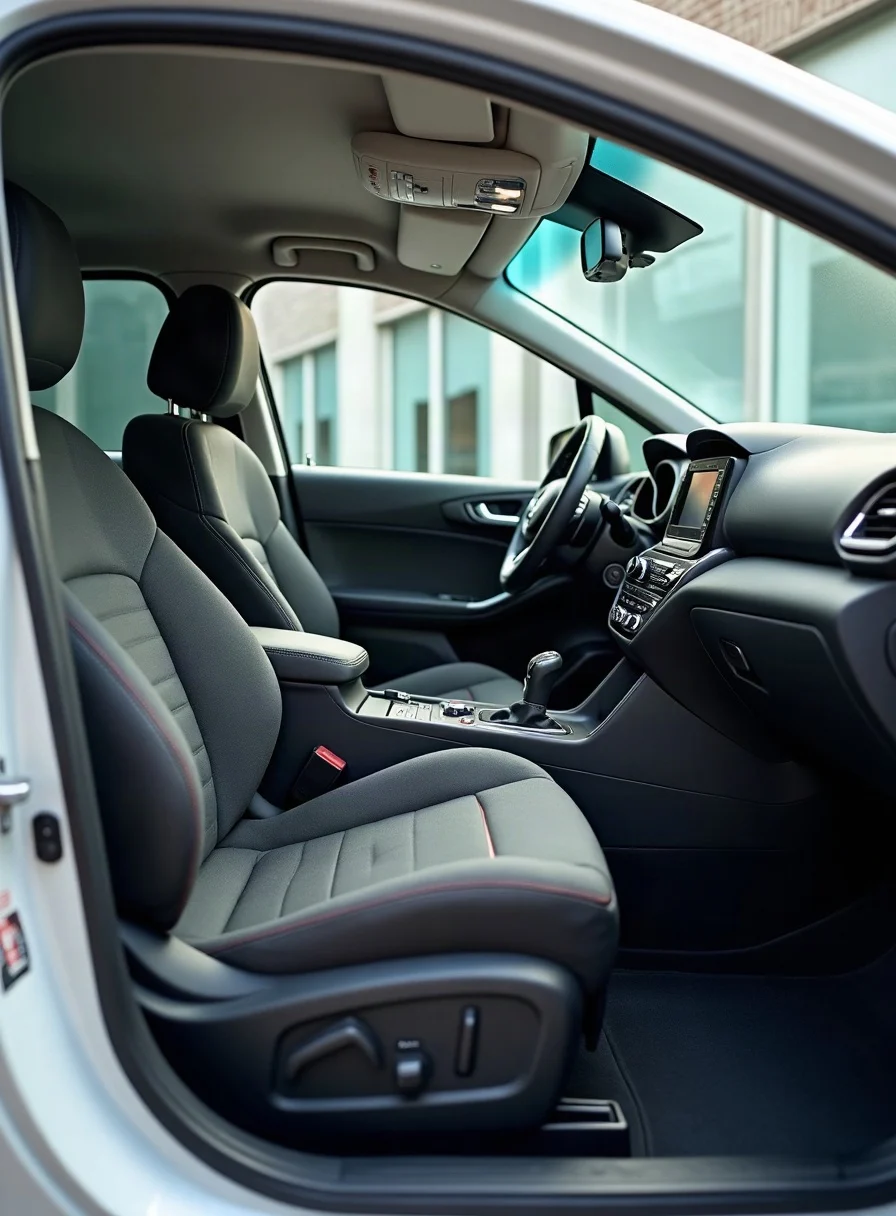
Before you start: kit and cheap swaps
You can do a proper job with a domestic vacuum and household basics. The specialist kit is nice to have, not essential.
| Item | What it is for | Cheap alternative |
|---|---|---|
| Vacuum with crevice and brush tools | The single most important step | Domestic vacuum with a hose extension |
| Microfibre cloths (several) | Wiping, buffing and drying; keep them separate by job | Clean, lint-free old cotton cloths |
| Interior or upholstery shampoo | Cloth seats and carpets | Warm water with a few drops of washing-up liquid |
| Leather cleaner and conditioner | Leather seats only | None. Dedicated products are worth it, so do not improvise |
| All-purpose cleaner (APC), diluted | Plastics, trim, mats, door shuts | Diluted washing-up liquid |
| Detailing brushes or an old toothbrush | Vents, seams, switchgear, seat rails | Old toothbrush and a soft paintbrush |
| Glass cleaner | Windows and mirrors, done last | 50/50 white vinegar and water on glass only |
| Soft brush | Working shampoo into fabric | Nail brush |
Nice to have if you go further: a wet/dry vacuum makes carpet shampooing easier because it extracts the dirty water instead of leaving it to soak, a steam cleaner can lift stains without chemicals, and stiffer detailing brushes make vents and seams quicker. None is required for an excellent result.
Weather matters in the UK. Pick a dry day, ideally with a breeze, and start early so the car has hours to dry with the doors open. A wet interior that cannot dry is how cars end up smelling of damp, the one genuinely bad outcome of a home valet, and the reason drying gets its own step. Before using any liquid, check your handbook for seat-mounted airbags, occupancy sensors and heated seats, and keep liquid away from wiring and electronics.
The sequence, step by step
Work top to bottom, dry work before wet work, and glass last. Follow it and you never clean the same surface twice.
Step 1: Empty the car
Everything out: door bins, glovebox, boot, under the seats, the cup-holder shrapnel. Take the floor mats out entirely, because they are cleaned separately. You cannot clean around clutter, and you will find things you had forgotten. Bin the rubbish now so it is not in your way. If there is a child seat, take it out and follow its maker’s cleaning instructions, since harsh chemicals can damage harnesses and covers.
Step 2: Dust from the top down
Before any vacuuming, gently dust the headliner and work downwards: dashboard top, vents and the area around the switchgear, with a dry microfibre cloth or soft brush. This drops loose dust onto the seats and floor so you vacuum it away in one go. Bang the floor mats out against a wall while you are here. Treat the headliner very gently. It is usually glued fabric, and soaking or scrubbing it can make the adhesive let go, so use a barely damp cloth and dab, never rub.
Step 3: Vacuum thoroughly
A thorough vacuum is most of what makes a car feel detailed, and everything after it works better on a debris-free surface. Seats first, then carpets, then the boot, working the crevice tool down every seam, into the seat runners and along the door-card bottoms where grit collects. Slide the seats fully forward and back to reach underneath.
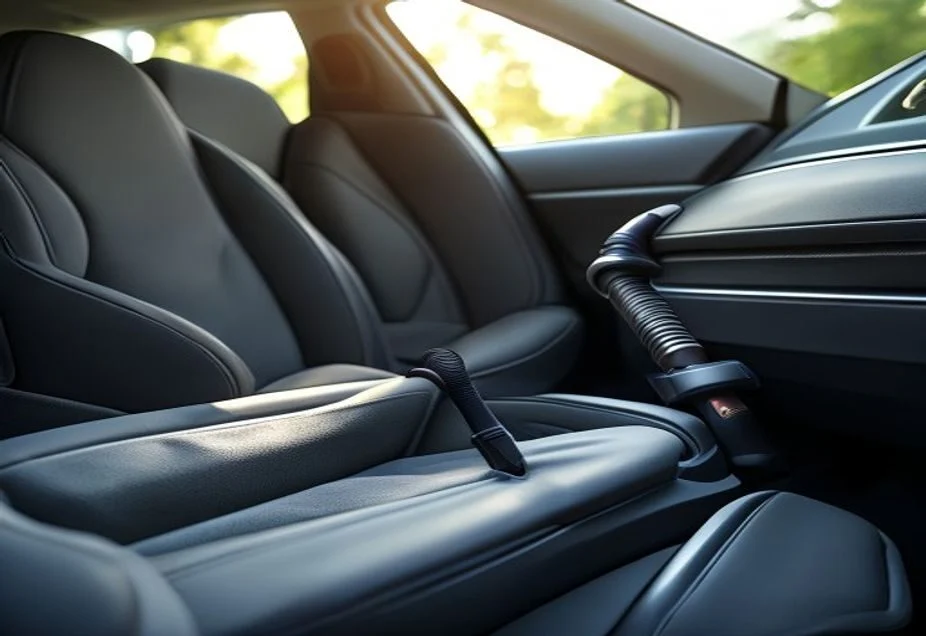
For pet hair that the vacuum will not lift, a rubber glove or a damp rubber sponge dragged across the fabric gathers it into clumps you can pick up. Do not rush this step.
Step 4: Clean the seats, by material
Match the method to the seat. Getting this wrong is how people water-stain fabric or dry out leather.
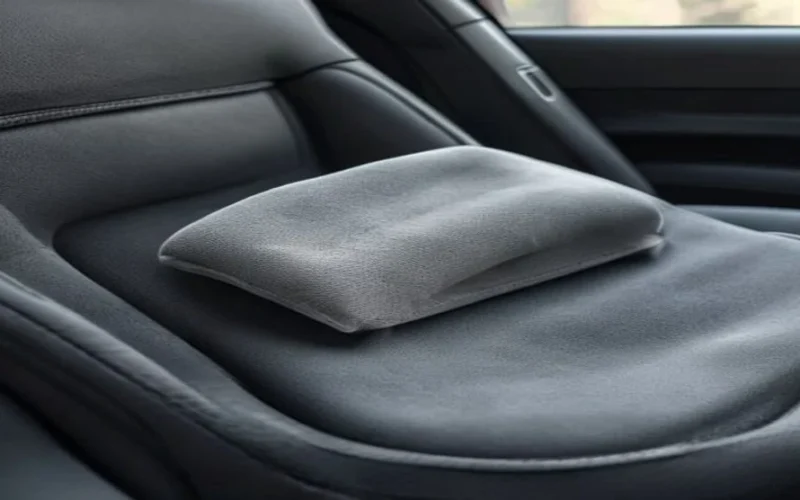
- Cloth seats: mist upholstery shampoo, or a weak washing-up-liquid solution, onto the fabric without soaking it, and agitate with a soft brush to lift the dirt. Blot it out with a clean, damp microfibre cloth, rinsing the cloth as it greys. Less water is better, since a soaked seat takes days to dry in the UK. A wet vac makes this much easier by extracting the water.
- Leather seats: wipe with a dedicated leather cleaner on a microfibre cloth, work seams and perforations with a soft brush, wipe clean, then, once dry, work in a leather conditioner so it stays supple. Do not use washing-up liquid or APC on leather, because they can strip the finish. Our leather cleaning guide covers the conditioning routine, and it applies equally to car leather.
- Suede or Alcantara: the fussiest. Brush only, use minimal moisture and treat spots gently. We cover it in the car seats guide and in our piece on cleaning suede car seats.
For stubborn stains and odours seat by seat, the dedicated how to clean car seats guide goes deeper than we can here. Wipe seat belts with mild soapy water, then let them dry fully before they retract, and never use bleach or strong solvents on the webbing.
Step 5: Shampoo the carpets and mats
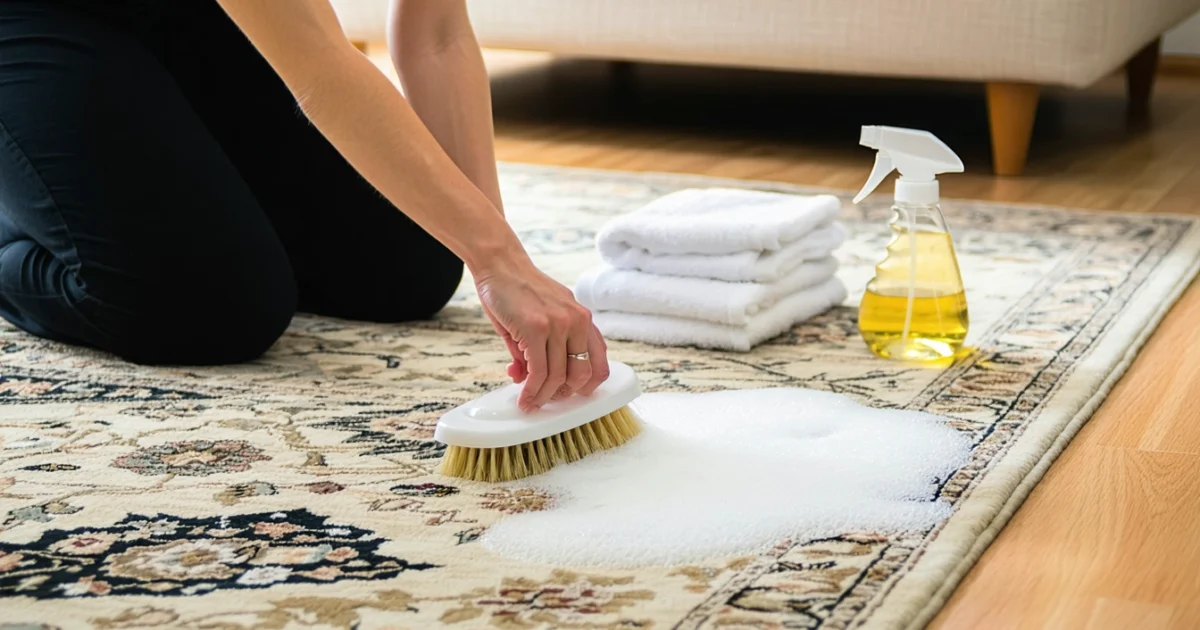
With the mats out and everything vacuumed, work interior shampoo into the carpets with a brush, then blot or extract. Clean the removed mats separately. Rubber mats get hosed, scrubbed with soapy water and left to drip-dry. Carpet mats get shampooed like the interior carpet and dried fully before they go back, because a damp mat under your feet re-humidifies the whole car. Treat any oil or food stains before the overall shampoo, working from the outside of the stain inward so you do not spread it.
Step 6: Wipe plastics, trim and the dashboard
Diluted all-purpose cleaner on a microfibre cloth handles the doors, centre console, dashboard, door shuts and boot sills. Do the fiddly bits, such as vents, seams, buttons, the gearstick surround and cup-holders, with a detailing brush or old toothbrush. That detail is what separates a clean car from a valeted one.
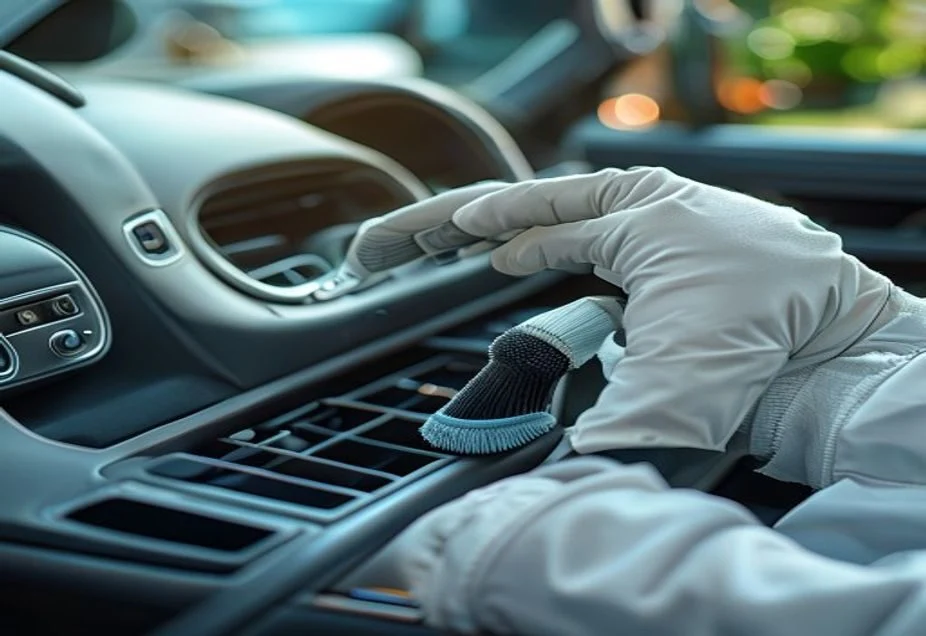
Wring the cloth well. You want damp, not wet, near switchgear or screens. For the infotainment screen use a barely damp microfibre cloth only, because many screen makers warn against ammonia and strong solvents that can strip anti-glare coatings. Our guide to cleaning a TV screen safely explains the same principle. Avoid high-gloss wet-look dashboard sprays if you can. The shiny finish can cause windscreen glare and reflections and attracts dust, whereas a matte dressing, or just a clean wipe, is safer to drive behind.
Step 7: Glass, last, always
Glass goes last so dust and overspray from the dashboard do not land on freshly cleaned windows. Spray glass cleaner onto the cloth, not the glass, to avoid misting the dash, wipe each window, then buff dry with a second clean microfibre cloth. The inside of the windscreen is the one people miss. It builds an oily film from plastics giving off vapour, which causes dazzle when you drive towards low sun. The full streak-free technique is in our windows guide, and the same two-cloth method works on car glass.
Step 8: Dry it properly, then protect
Open every door and the boot and let air move through for as long as you can. This step decides whether the car smells fresh or damp. On a still day a fan pointed into the footwells speeds it up. Only once everything is dry do you apply protection: a UV-protectant on the dashboard and door tops to slow sun cracking, and leather conditioner if you did not already. Put the mats back last, and bone dry.
| Surface | Use | Avoid |
|---|---|---|
| Fabric seats and carpets | Upholstery or interior shampoo, worked in with a soft brush | Soaking, which leaves damp and smells |
| Leather seats | A dedicated leather cleaner, then a conditioner | Household cleaners, which can dry and crack leather |
| Dashboard, plastics and trim | Interior detailer on the cloth, not sprayed on directly | Silicone shine on the steering wheel and pedals |
| Glass (always last) | Glass cleaner on a dry microfibre, buffed with a second | Doing the glass first, so it re-smears |
Places people forget
- Door shuts and sills: they collect grit and grease, and they transfer it to trousers. Wipe them with diluted APC.
- Boot: vacuum the carpet and the spare-wheel well, since water can pool there, and check it is dry.
- Air vents: a soft brush or foam detailing tool lifts dust, and a gentle puff of air shifts the rest. Do not spray liquid into vents.
- Pedals and footwell: clean the mats and carpet, but keep slippery dressings off the pedals and steering wheel.
- Cup holders and door bins: sticky drink residue is best loosened with warm soapy water on a cloth and a brush.
| Stage | Roughly how long | Notes |
|---|---|---|
| Empty, dust and vacuum | 45 to 60 minutes | The step that matters most |
| Seats and carpets | 30 to 45 minutes | Longer if you shampoo and extract |
| Plastics, trim and glass | 30 minutes | Glass last |
| Drying with doors open | A few hours or overnight | Depends on weather and how wet it got |
If it did not work: smells, stains and damp
A lingering smell is almost always a source you have not removed, not air that needs freshening. Chasing it with a hanging tree just layers pine over the problem. Work through the likely causes.
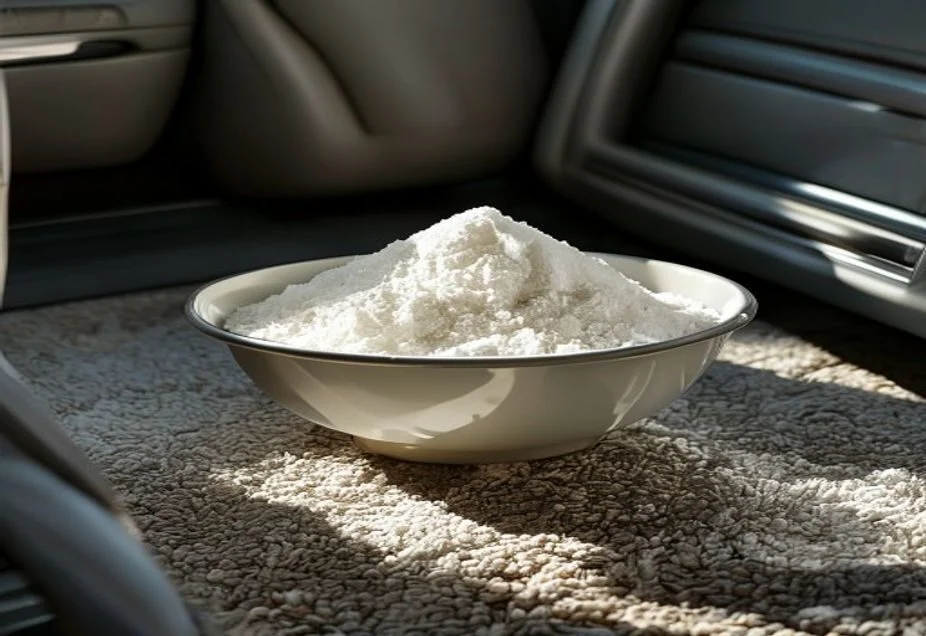
- Damp or musty: trapped moisture, wet carpets, a leaking door seal or a blocked sunroof drain. Dry the car fully first, then sprinkle bicarbonate of soda over the carpets, leave it overnight and vacuum it out. Our piece on baking soda and vinegar explains what bicarbonate can and cannot do.
- Spilled milk or food: among the worst, because it soaks into the carpet underlay. An enzyme cleaner, the kind sold for pet accidents, is the product built to break it down. Apply as directed, wait, then extract.
- Smoke: wipe every hard surface, since smoke leaves a film on everything, shampoo the fabrics and replace the cabin filter.
- General staleness: a bowl of bicarb left in the footwell overnight, or an activated-charcoal bag left in permanently, absorbs odours rather than masking them.
The overlooked culprit is the pollen or cabin filter. If the air smells musty every time the blower comes on, replacing the filter, following your handbook for where it sits, can fix what no amount of shampooing could. If a smell returns repeatedly after the car is dry and clean, there may be a leak, and that is a job for a garage.
Set-in stains sometimes need a second pass rather than harder scrubbing. Re-wet lightly, agitate gently, and blot. If a stain survives two attempts, a professional with extraction equipment is the sensible next step.
How to deep clean a car interior without a vacuum
Not ideal, but workable. A stiff brush and a dustpan gets the bulk off the seats and mats: brush everything towards the door sills and sweep it out. A slightly damp microfibre cloth wiped across fabric lifts surface dust and pet hair, and a rubber glove works even better. Mats come out, get beaten against a wall and then hosed. You will not match a vacuum for embedded grit, but for a tidy-up between proper cleans it is fine, and many petrol stations and car washes have a coin-operated vacuum when you want the deeper version.
DIY or a professional valet?
| DIY deep clean | Professional valet | |
|---|---|---|
| Cost | Products you keep and reuse | Varies widely with car size, condition and region, so get quotes |
| Time | 2 to 3 hours of your own | Often a few hours, but not yours |
| Kit | Domestic vacuum and supermarket products | Wet-vac extraction, steam and sometimes odour treatment |
| Result | Excellent on effort; limited on set-in stains | Best for deep stains, smoke, pre-sale or write-off rescues |
The honest split: DIY handles the routine family-car refresh brilliantly and cheaply. Pay a professional when there is set-in staining, a smoke or flood problem, or you are prepping a car for sale and want the last bit that extraction machines deliver.
How often to do it
- Quick tidy (vacuum, wipe, glass): monthly, or fortnightly with children or pets.
- Full deep clean: twice a year, in spring after the winter salt-and-mud season and again in autumn.
- Straight away: any spill, especially milk or anything sugary, before selling, and after carrying anything that leaked.
- Condition leather: every few months so it never dries to the point of cracking.
Putting damp mats back, using glass cleaner on touchscreens, and cleaning glass before everything else are the three habits that undo most of the work, so keep an eye on those.
One featured pick and two alternatives
You do not need much. As an Amazon Associates participant, we earn from qualifying purchases. The links are Amazon UK searches, so compare options and check the current price before buying.
Featured pick: a car interior cleaning set. Look for an upholstery and carpet cleaner, an interior detailer for plastics, a glass cleaner and a couple of soft brushes, with labels that say they are safe for car interiors. This one covers every surface in the sequence except leather. Check the label for use on screens and on leather before spraying, and test on a hidden patch. Search for car interior detailing kits, car carpet and upholstery cleaners, interior detailers and car glass cleaners.
Alternative one: a car vacuum. A corded or cordless car vacuum with a crevice tool and brush head is worth having if you have no long hose at home. Check the cable length or battery life and whether the filter is washable. Search car vacuums. It will not replace a good domestic vacuum on heavy soiling.
Alternative two: leather cleaner and conditioner. Only if you have leather seats. Choose a pH-balanced cleaner and a separate conditioner, or a two-in-one for light maintenance, and test on a hidden area. Search leather care. Avoid it on suede or Alcantara.
Five quick definitions
What is an APC? An all-purpose cleaner, a general cleaner for hard surfaces. Dilute it as the label says and use it on plastics and mats, never on leather or screens.
What is an interior detailer? A light spray used on a cloth to clean and dress dashboard plastics and trim. Choose a matte one to avoid glare, and keep it off pedals and the steering wheel.
What is a cabin or pollen filter? A filter that cleans the air coming through the vents. A dirty one can smell musty when the blower runs. Your handbook shows where it sits and how often to change it.
What is an enzyme cleaner? A cleaner containing enzymes that break down organic mess such as milk, food and pet accidents. It works best when left to act, then blotted out. Test on a hidden patch first.
Is a steam cleaner safe for car interiors? Often, on fabric, with care. Keep steam away from electronics, leather and the headliner, avoid soaking, and follow the car and steamer instructions. Dry the car well afterwards.