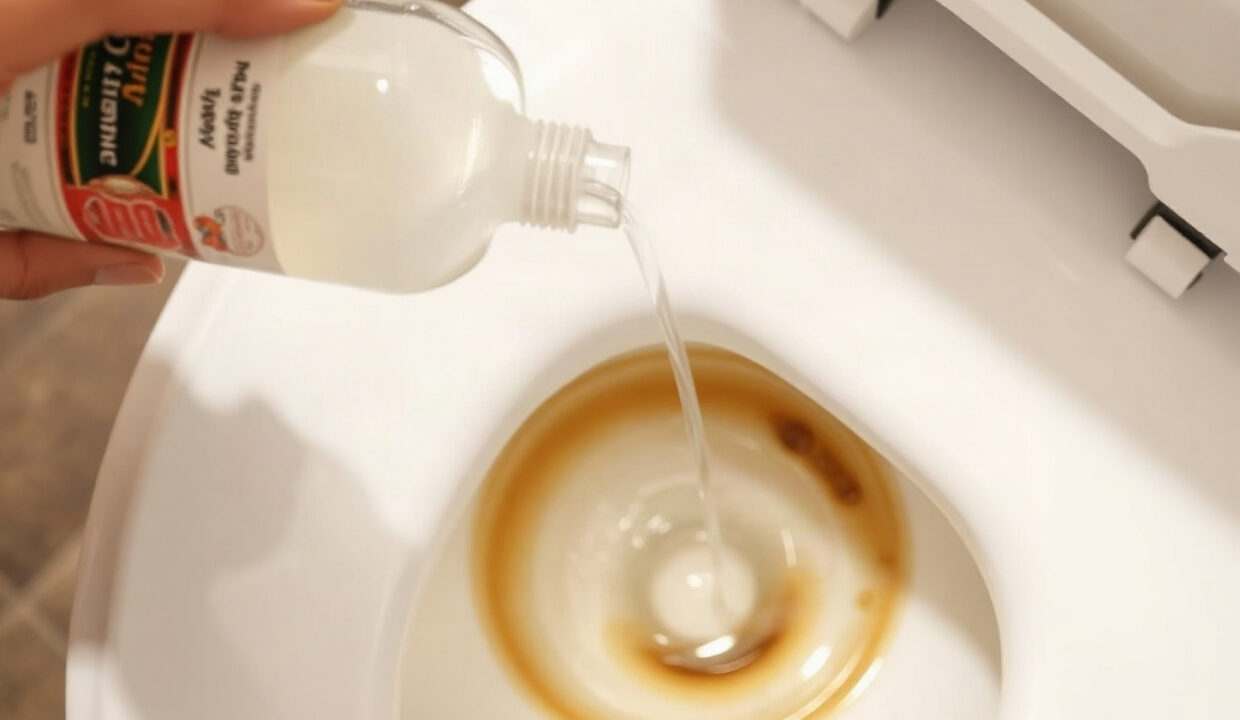
The brown or grey ring at the waterline does not come off with a quick swish of the brush, however hard you press. That is because it is not dirt. It is limescale, mineral deposits left behind by hard water every time the cistern refills, and ordinary toilet cleaner is usually not acidic enough to dissolve it. In hard water areas, visible marks can appear within weeks of the last proper descale.
Work out which kind of mark you have first, because a stain under the rim needs a different approach to a ring at the waterline. Then use the fixes below in order, from the simplest to the strongest, and stop as soon as the porcelain is clear.
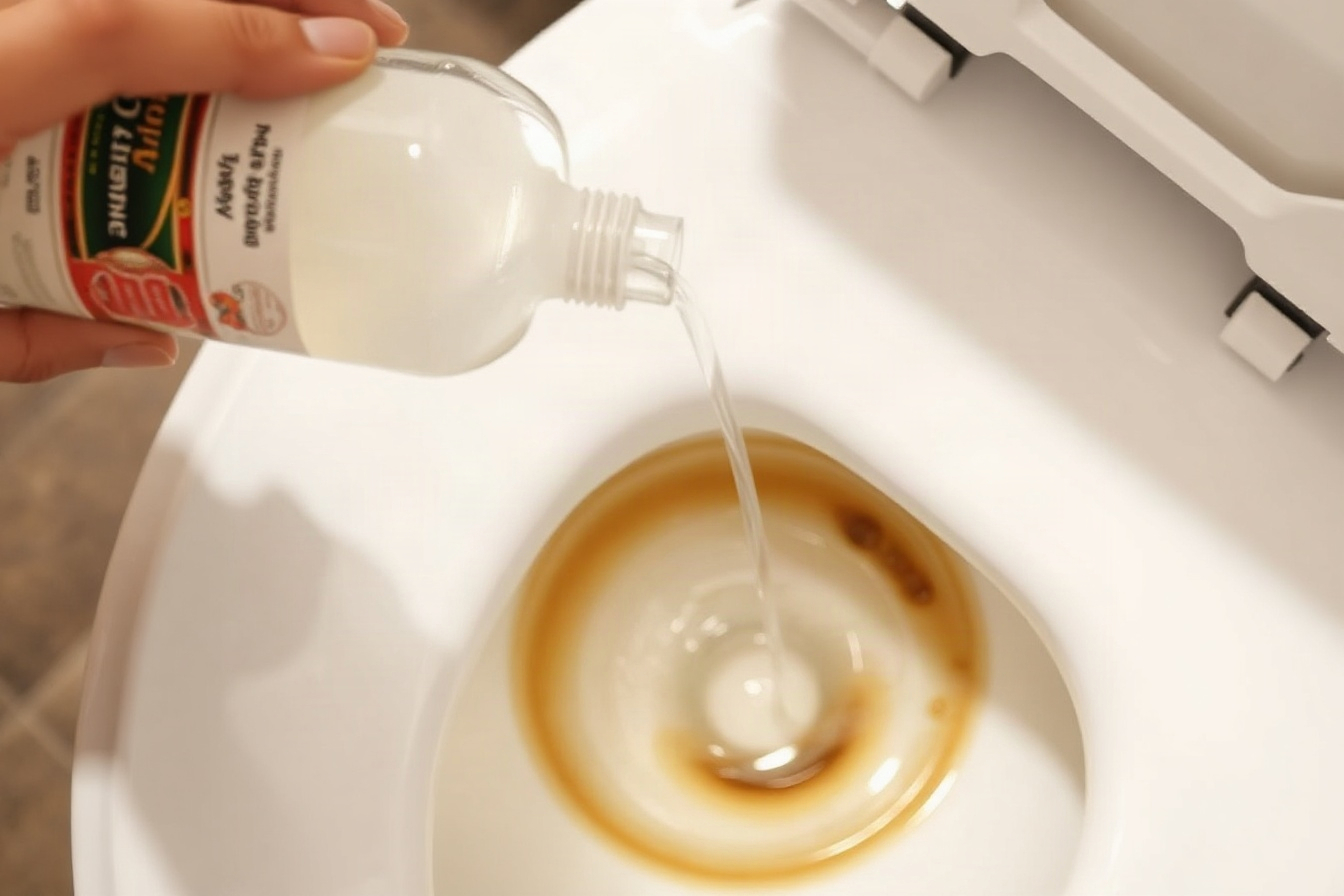
Read the marks before you reach for a cleaner
| What you see | Likely cause | Start with |
|---|---|---|
| Chalky white or grey crust at the waterline | Limescale from hard water | Vinegar soak, then scrub |
| Brown or rust-coloured ring or streaks | Limescale holding iron or manganese from the water, or rusty pipework | Vinegar soak, then an acidic descaling gel |
| Rough, gritty feel under the rim or in the jets | Scale building where water flows out | Descaling gel applied upwards under the rim, plus an angled brush |
| Stain below the standing water that the brush glides over | Scale sitting under the water, diluted by the bowl | Lower the water level, then treat the exposed ring |
| Trickle or dribble stain from one spot | A slow leak from the cistern inlet or overflow | Fix the leak first, then descale |
| Dark streaks that return in days | Heavy build-up giving bacteria and staining something to cling to | Descale properly, not another bleach clean |
Hard water contains dissolved calcium and magnesium. Each flush leaves a thin film that dries between uses, and the film hardens into the chalky grey or rust-coloured deposits you see. Homes in the harder water regions, much of the south and east of England in particular, see it build faster than those in softer water areas. Your water company can tell you how hard your local supply is.
Fixes, easiest first
A white vinegar soak, and the trick that makes it work
White vinegar’s acidity is what dissolves limescale, and it is the simplest method to try first. The problem is that the standing water dilutes whatever you pour in, so the ring just above the water level gets treated while the part under it does not.
- Lower the water: flush, then push the remaining water down the bend with the toilet brush, or pour a bucket of water in fast so it carries the level down.
- Pour white vinegar around the bowl, covering the marked areas, diluted one part water to one part vinegar or neat for tougher deposits. Press toilet roll soaked in vinegar against the ring so it stays in contact with the scale.
- Leave it for at least a few hours, or overnight for heavier limescale. Close the lid so it does not get used in the meantime.
- Scrub with a toilet brush, then flush to rinse away the loosened residue.
Limescale needs time, not just scrubbing. A vinegar soak left overnight does far more work than five minutes of hard scrubbing with a dry cleaner.
Does baking soda add anything?
Adding baking soda to vinegar gives a fizzing reaction that helps agitate thicker deposits, but the baking soda also neutralises some of the acid, so it is a scrubbing aid rather than a stronger descaler. If you want to use it, soak with vinegar first, then sprinkle baking soda over the wet limescale to give the brush some grit, wait 10 to 15 minutes, scrub and flush. It is a useful combination for stubborn stains used alongside scrubbing and a flush, though the time you give the vinegar matters more than the fizz. Our piece on whether baking soda and vinegar really clean goes into why.
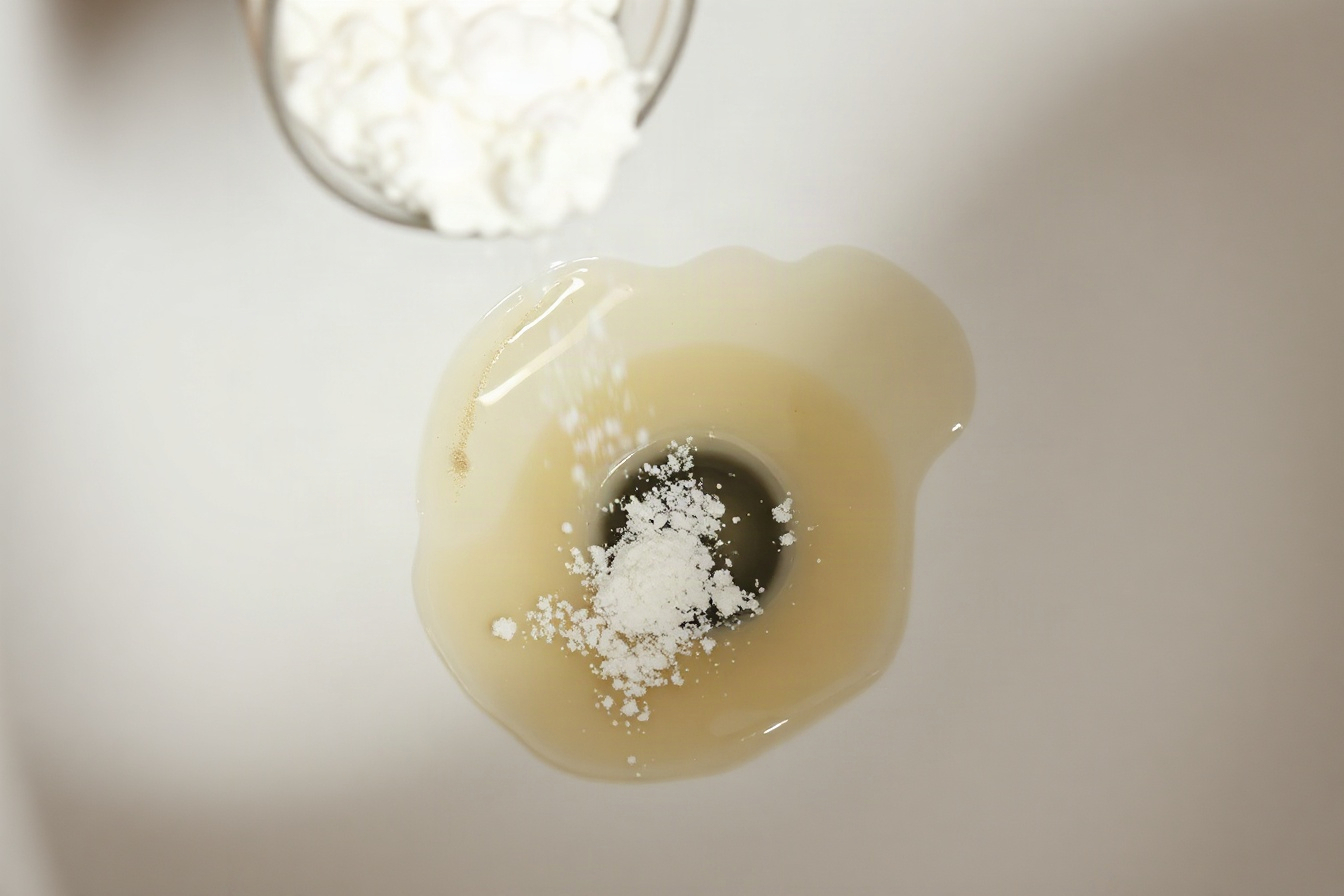
Wear rubber gloves, and keep the bathroom ventilated if you are sensitive to fumes.
A descaling gel for under the rim and below the waterline
The ring below the water level and the build-up under the rim jets are harder to reach, because a pour-and-soak method washes straight into the water. A gel formula with an angled nozzle clings to the porcelain and stays put long enough to work.
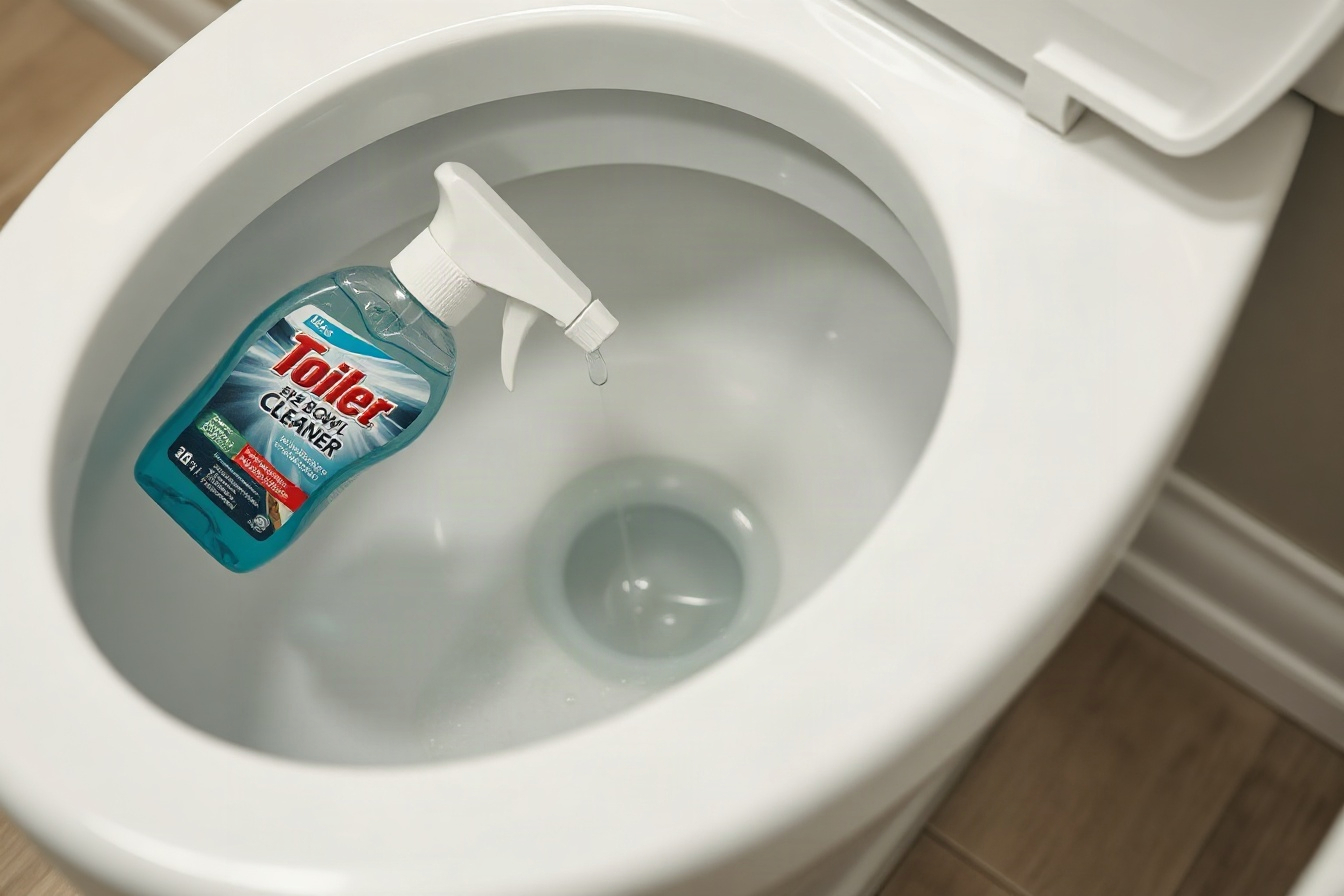
- Choose a gel that names limescale on the label, and apply it under the rim and around the waterline following the product instructions.
- Leave it for the time on the label, commonly 30 minutes to an hour, longer for heavy build-up.
- Scrub with a toilet brush, concentrating on the rim jets, then flush thoroughly.
- Wear rubber gloves throughout, and never combine a descaler with bleach or anything containing ammonia.
| Active ingredient to look for | What it does | Notes |
|---|---|---|
| Hydrochloric acid | Dissolves heavy, long-standing limescale | The strongest option. Ventilate, wear gloves, and never use it with bleach |
| Citric or sulfamic acid | Dissolves scale more gently | Good for regular maintenance and lighter build-up |
| Bleach (sodium hypochlorite) | Whitens stains and disinfects, but does not dissolve scale | Often sold as a gel with an angled nozzle. Never use it straight after, or with, an acid product |
If your descaling gel also contains bleach, treat it as a cleaning and disinfecting product, not a stronger descaler, and read the label for the list of things not to mix. Our guide to cleaning products you should never mix covers the combinations that release harmful gases.
What about Coca-Cola?
It is a popular home remedy, and there is some truth to it. Coca-Cola is mildly acidic, with a pH in the same general range as vinegar, so it can soften a light film if left to sit. In practice it is weaker, sugary and stickier to work with than a proper descaler, so use it only if you have nothing else, and flush well afterwards. Hydrogen peroxide is not a descaler, so it is not worth substituting.
A pumice stone for what is left
If a soak has not fully shifted a patch, a pumice stone provides gentle abrasion that can finish the job. It needs care, because the glaze on a toilet is what keeps it smooth and stain-resistant. Yes, it is generally safe on a toilet bowl, as long as both the stone and the porcelain are thoroughly wet and you use light pressure. Scrubbing dry or pressing hard risks scratching the glaze, which leaves a rougher surface that stains faster.
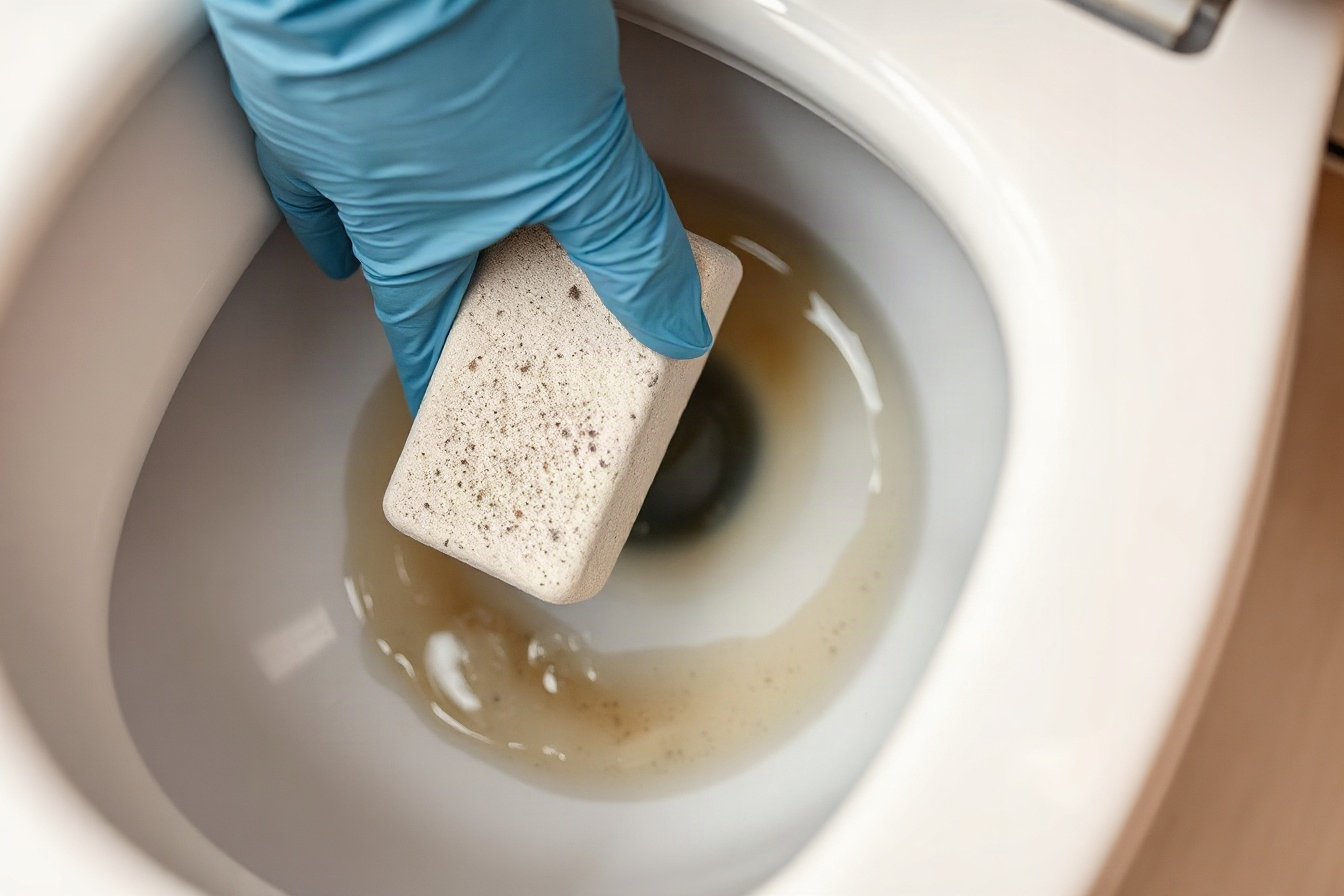
- Wet both the pumice stone and the porcelain before you start. This prevents scratching.
- Rub gently in small circular motions on the limescale patch only.
- Rinse periodically to check progress and avoid pressing hard in one spot.
- Stop if you notice any scratching on the glaze. Continued pressure on a scratched area can make future staining worse.
Check the manufacturer’s care instructions on a newer toilet before using an abrasive, as scouring may be advised against and could affect a warranty claim.
Chemicals worth being careful with
Caustic soda (sodium hydroxide) turns up in searches for toilet descaling, but it is a strong alkali, and limescale needs an acid. It is mainly used to clear blocked drains, it can burn skin and eyes, and it is not the right choice for scale. Unless a product is made and labelled for toilets, do not use it. For limescale, stay with vinegar or a labelled acidic descaler.
- Never mix bleach-based products with vinegar, acid descalers or ammonia-based products, as the mixture can release harmful fumes.
- Do not scrub a dry stain hard before an acidic soak has softened it.
- Do not use sandpaper or aggressive pumice pressure. It scratches the glaze and makes scale cling more easily.
- Do not treat only the visible waterline. The heaviest build-up often hides under the rim and in the jets.
- Keep chemicals off the floor, the seat hinges and any metal fittings, and rinse spills quickly.
When to stop and call someone
Limescale on its own is a cosmetic problem, but some situations are not about cleaning. A toilet that keeps running or dribbles into the bowl needs the fill valve or flush mechanism looked at, and a plumber registered with a recognised scheme, such as a WaterSafe member, is the right person to ask. The same goes if stains return within days of a thorough descale, if the glaze is visibly cracked or crazed, or if you see rust-coloured water from other taps as well, which can point to a pipework or supply issue beyond the bowl.
Blocked as well as scaled? A toilet that drains slowly may have a partial blockage as well, so read how to unblock a toilet before adding more chemicals. For routine upkeep, our guide to deep cleaning a bathroom fits the toilet into a wider schedule.
Keeping the scale from coming back
A quick weekly clean stops marks building, and a fortnightly vinegar spray under the rim slows scale in hard water areas. If limescale is a problem elsewhere in the house too, our guides on removing limescale from a shower head and cleaning a kettle use the same acid-based approach. Fixing a dripping cistern also removes the constant trickle that feeds the stain line.
What to buy, if you want to
As an Amazon Associate we earn from qualifying purchases. You only need one of these, and the links are Amazon UK searches, so you can compare current options.
The featured pick: a toilet limescale remover gel with an angled nozzle. Look for limescale named on the label, a gel that clings under the rim, and a clear contact time. It suits rings and rim build-up that vinegar cannot reach. Keep the bathroom ventilated, and never use it alongside a bleach product.
Alternative one: a pumice cleaning stick on a handle. It suits localised patches after a soak, and you can keep your hand clear of the water. Avoid it on a toilet you want to keep scratch-free, and always use it wet.
Alternative two: citric acid descaling powder. It is a gentler acid you dissolve in warm water for maintenance descaling. Check the pack for dilution, and do not leave it on coloured or damaged surfaces for longer than directed.
Five more limescale questions
What causes brown stains in the toilet bowl?
Brown or rust-coloured marks are usually limescale holding iron or manganese from the water, not a sign of poor hygiene. They build gradually with every flush, and are most common in hard water areas. A slow leak from the cistern can also leave a brown trail.
Is limescale in a toilet harmful?
Limescale itself is not a health risk, but its rough surface gives germs and stains something to cling to, and it makes a toilet harder to keep looking clean. Removing it makes routine cleaning more effective.
Can I leave a descaler in the toilet overnight?
Vinegar can be left overnight, as long as the lid is down and nobody needs the toilet. Shop-bought descalers should only stay for the time on the label, because stronger acids are harsher on seals and fittings.
How often should I descale a toilet?
It depends on your water. In hard water areas, a monthly descale prevents the build-up becoming stubborn, while soft water homes may only need it a few times a year. Weekly brushing keeps the film from setting.
Is vinegar safe for a septic tank?
Occasional use of vinegar in normal household quantities is generally fine, but the manufacturer or installer of your system is the best source of advice. Strong acid descalers and bleach used regularly can upset the bacteria in a septic tank, so check the product label.